General General 2 min read

American wisdom

You’ve heard these American idioms—but their true origins will shock you
Image: Meelika Marzzarella

From colonial times to the modern day, American idioms reflect how the country grew, fought, worked, and talked. From quitting cold turkey to the whole nine yards, these sayings captured the spirit of each era. Some came from the battlefield, others from the frontier or factory floor. But all of these expressions here earned a place in everyday speech—and they still tell a uniquely American story.

1
Manifest Destiny

Image: Wayne Hollman

(1840s – Westward Expansion)

Coined in 1845 by journalist John L. O’Sullivan, "Manifest Destiny" justified America’s push westward, claiming it was the nation’s divine right and duty. Though sometimes controversial, it shaped the national mindset and defined 19th-century American expansionism.

2
Talk turkey
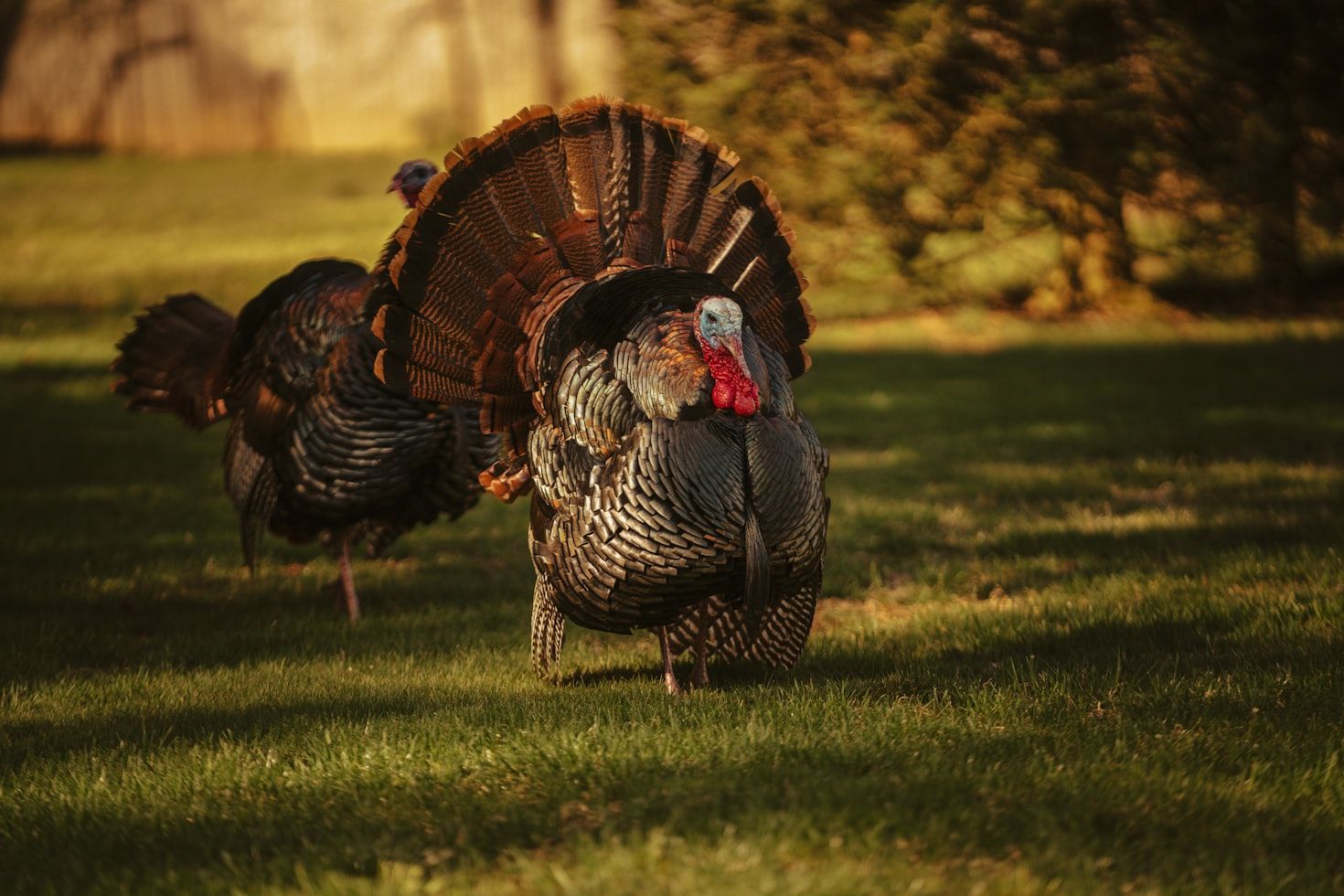
Image: Tyler Donaghy

(1800s – Rural America)

"Talking turkey" originally meant speaking plainly, especially during trade or bargaining sessions around Thanksgiving time. The phrase evolved from settlers' interactions with Native Americans and each other.

3
The whole nine yards

Image: Museums Victoria

(1940s – WWII era)

This phrase likely originated in World War II aviation. Fighter pilots reportedly gave "the whole nine yards" when they unloaded all their ammunition —about 27 feet of bullets. It now means going all out, and its roots in wartime tales made it a lasting piece of American lingo.

4
Cold turkey

Image: Andres Siimon

(1920s – Prohibition era)

"Cold turkey" first emerged in drug withdrawal circles during the 1920s, describing a sudden and complete stop, often painful and abrupt. It became more widespread during Prohibition, when people abruptly quit drinking.

5
Pull yourself up by your bootstraps

Image: Nathan Dumlao

(1930s – Great Depression)

Originally a sarcastic quip about doing the impossible, the phrase took on a new life during the Depression, urging Americans to self-rely and push through adversity. By WWII, it had become a proud motto for working-class Americans.

6
Loose lips sink ships

Image: John Kostyk

(1940s – WWII propaganda)

Created by the U.S. Office of War Information, this saying warned citizens and soldiers against careless talk that might aid enemy spies. It was one of the most effective propaganda slogans of WWII.

7
Duck and cover

Image: Stephen Cobb

(1950s – Cold War drills)

Coined in a 1951 civil defense film, this phrase taught schoolchildren to seek shelter from nuclear blasts. While its actual effectiveness was debatable, "duck and cover" captured the anxious era of nuclear tension. It’s since become shorthand for futile emergency preparedness.

8
Jump on the bandwagon

Image: Museums of History New South Wales

(19th century – American politics)

Originating in the 1848 campaign of circus showman Dan Rice, politicians literally used bandwagons to draw crowds. The term evolved as others "jumped on" to align with the popular cause. It now refers to any late but enthusiastic adoption of a trend.

9
Cut to the chase

Image: Jeremy Yap

(Hollywood – silent film era)

Early films often built up slowly, so impatient viewers and editors began saying, "cut to the chase" —the action scene. Now it means getting straight to the point.

10
Put a sock in it

Image: Denny Müller

(1920s – Gramophone era)

Before volume knobs, people muffled early gramophones by stuffing socks in the horn. The phrase quickly became slang for "be quiet."

History History 5 min read

FORGING OF A NATION

10 Key Moments in the Fight for American Independence

Image: John Trumbull

A pivotal period in our history, the American Revolutionary War saw the original thirteen colonies break free from British rule and establish an independent nation. This era was crucial not only for the struggle that liberated the country from colonial rule but also because it was when the nation and its ideals were conceived and envisioned. Here are 10 key moments that defined the American Revolution, shedding light on our forefathers' immense bravery and genius.

1
No Taxation Without Representation

Image: Board of Stamps

After the French and Indian War in 1763, American colonists were surprised to find that, instead of being rewarded for their efforts, the British Parliament raised their taxes and enacted new ones, such as the Stamp Act and Townshend Acts. Soon, these burdensome laws sparked widespread protests and boycotts under the rallying cry of "No Taxation Without Representation."

Initially, most colonists only wanted to be recognized as rightful British citizens. However, the brutal reaction of the Crown—sending troops to contain the unrest and force compliance—convinced many that independence was the only way to achieve their rights. The tragic incident known as the Boston Massacre on March 5, 1770, was the tipping point in this chain of events, inflaming anti-British sentiment.

2
Boston Tea Party

Image: W.D. Cooper

The Tea Act, enacted on May 10, 1773, granted the British East India Company a monopoly on tea sales in the colonies, further enraging the already weary colonists. This led a group of rebel colonists, known as the Sons of Liberty, to take matters into their own hands. In direct response to the Tea Act, they boarded British ships and dumped 342 chests of tea into Boston Harbor, worth £9,659 (equivalent to $1,700,000 today).

This act of defiance, later known as the Boston Tea Party , was a bold statement against British taxation and control. However, it also prompted the British government to further restrict colonial autonomy by implementing the Intolerable Acts (also known as the Coercive Acts).

3
The Midnight Ride

Image: National Archives and Records Administration

The British government's punitive measures only fueled the burgeoning revolutionary movement. In 1774, the First Continental Congress was convened, with representatives from each colony attending. During these meetings, the delegates agreed to coordinate militia training and resistance.

The situation remained tense for a year until King George ordered British troops to seize the rebels' weapons and arrest their leaders. However, the colonial militia was warned of the approaching British forces the night before, thanks to the heroic midnight ride of Paul Revere and other patriots. Their ride was crucial in mobilizing the Minutemen and ensuring they were prepared for the British assault.

4
Shot Heard 'Round the World

Image: William Barnes Wollen

The first shots of the American Revolutionary War were fired on April 19, 1775, in Massachusetts. British troops aimed to seize colonial arms, but the Minutemen refused to comply and confronted them, leading to a series of skirmishes known as the Battles of Lexington and Concord. These clashes demonstrated the colonies' determination to fight for their rights and ignited an all-out war.

The first significant military encounter of the American Revolutionary War, it resulted in a resounding American victory that encouraged other colonists to support and join the revolutionary efforts. Due to its significance and lasting consequences, the event was later referred to as the "shot heard round the world," a phrase that stems from the first stanza of Ralph Waldo Emerson’s 1837 commemorative poem.

5
Raising the Banner

Image: Winthrop Chandler

The Battle of Bunker Hill, fought on June 17, 1775, proved that the colonists could stand up to the British army. As Loyalist forces sought to capture the strategically important hills surrounding the besieged city of Boston, Patriot Colonel William Prescott directed his troops to occupy these positions in advance.

Though the battle was technically a British victory, the colonial forces inflicted heavy casualties on the British—approximately 1,000 British soldiers compared to around 500 American casualties. This showed the Crown that quelling the fight for independence would be a long and costly campaign, while simultaneously boosting American morale and convincing many that victory was within reach.

6
A Declaration of Independence

Image: John Trumbull

Emboldened by their success, on July 4, 1776, the Continental Congress—at the time the de facto unified colonial government representing each of the former colonies—adopted the Declaration of Independence .

Drafted primarily by Thomas Jefferson, the document declared the colonies' separation from Britain and articulated a vision of liberty and democracy , rejecting monarchy and aristocracy. It was a bold assertion of the colonies' right to self-governance, inspiring similar revolutionary movements around the world and influencing future generations.

7
Crossing the Delaware

Image: Emanuel Leutze

On Christmas night of 1776, General Washington led a daring and successful surprise attack across the icy Delaware River. This bold maneuver demonstrated both Washington's genius and leadership, as well as the Continental Army's resolve to defeat the British forces at any cost.

The subsequent victory at the Battle of Trenton significantly boosted morale and reinvigorated the revolutionary cause across the continent. Despite the British having considerable advantages, including a highly trained and battle-tested army, they systematically underestimated the revolutionaries, believing them to be merely a group of renegades whose defeat would restore loyalist allegiance to the Crown.

8
Turning the Tide

Image: John Trumbull

The American victory at the Battle of Saratoga in late 1777 marked a turning point in the war. Not only did American forces manage to capture a large British invasion army and halt the British advance in the north, but the triumph also resonated across Europe.

When news of General Burgoyne's surrender reached France, it convinced King Louis XVI to join the conflict as an ally to the Americans, providing much-needed military support and resources. This alliance significantly bolstered the American cause and forced the British to view the war as part of a larger global campaign, further straining their already depleted resources.

9
The French Connection

Image: Eugène Delacroix

The Siege of Yorktown in 1781 was the last major land battle of the Revolutionary War. American and French forces, led by General Washington and General Rochambeau, successfully trapped British General Cornwallis's army.

The Franco-American alliance proved decisive, compelling Cornwallis to surrender and prompting the British government to negotiate an end to the increasingly costly conflict. This effectively ended major combat operations and marked the beginning of the end for British rule in America.

10
Negotiating Peace

Image: John D. Morris & Co. after Wilhelm Anton Seiler

The Treaty of Paris , signed on September 3, 1783, officially ended the Revolutionary War. Negotiated by American diplomats Benjamin Franklin, John Adams, and John Jay, it recognized American independence and established borders for the new nation. The treaty delineated the boundaries between British North America, later known as Canada, and the nascent United States.

Although British efforts to undermine the American colonies persisted for decades, eventually leading to the War of 1812, the treaty granted legitimacy to the revolutionaries' efforts on the world stage and marked the beginning of a new era.

Culture Culture 3 min read

You say bark, I say bite

Take a look at 12 of America’s most famous rivalries in history

Image: maks_d

Whether we are talking about sports, politics, soda, sneakers, or even families (and, sometimes, especially families), rivalry runs deep in American culture. Some of these feuds built industries; others shaped history or pop culture. These 12 famous rivalries helped shape this country’s history. Which ones are more important to you?

1
Coca-Cola vs. Pepsi

One could say that the "Cola Wars" began in the early 1900s, but in all truth, they exploded during the TV ad boom of the 1970s and 1980s . Both brands poured millions into marketing, celebrity endorsements, and taste-test campaigns.

While Pepsi tried to appear youthful and rebellious, Coke leaned on its classic Americana image. Everyone has a favorite. Which one is yours?

Image: Declan Sun

2
McDonald’s vs. Burger King

Since the 1950s, these two massive burger chains have fought to define the American fast-food experience. McDonald’s boasted consistency and golden arches recognized worldwide, while Burger King prided itself on flame-grilled flavor .

Each tried to outdo the other with catchy slogans and mascots. Even today, "Have it your way" and "I’m lovin’ it" can be heard and seen from locations all over the world.

Image: P Kara

3
Hatfields vs. McCoys

In the hills along the border between Kentucky and West Virginia, two families embarked on a bloody feud after the Civil War. What began as a dispute over land and livestock transformed into years of violence and revenge .

The feud became a national symbol of rural grudges and lawlessness. Thankfully, today, descendants have made peace.

Image: Kelly Sikkema

4
Democrats vs. Republicans

Since the 19th century, America’s two main political parties have clashed over nearly everything : economics, social policy, and even the role of government itself. Their competition defines national elections.

Though the issues evolve, the rivalry remains constant. Campaign slogans change, but the fight for America’s political throne never ends.

Image: Zoshua Colah

5
Ford vs. Chevrolet

In garages and racetracks across the country, Ford and Chevy fans have argued for generations . From muscle cars to pickup trucks, their rivalry helped shape the American auto identity.

Each brand claimed better performance, style, or reliability. "Built Ford Tough" and "Like a Rock" became slogans that shaped the automobile industry in America.

Image: Dimitri Karastelev

6
Apple vs. Microsoft

Two tech titans named Steve Jobs and Bill Gates , fought for control of the personal computer revolution for decades. Microsoft’s software dominated offices, while Apple excelled in design and innovation .

Their contrasting visions fueled decades of progress and shaped modern computing. Today, the rivalry continues in phones, tablets, and the cloud.

Image: Sahej Brar

7
Nike vs. Adidas

What began as a sneaker battle grew into a global pop culture competition . Nike’s swoosh symbolized American innovation, while Adidas built on European craftsmanship and sport heritage.

Athletes, rappers, and fashion icons fueled the feud. From basketball courts to runways, the feud is very much alive and well.

Image: Malia Moore

8
Yankees vs. Red Sox

Baseball’s most storied rivalry dates back to 1919, when Boston sold Babe Ruth to New York . The "Curse of the Bambino" haunted Red Sox fans for generations.

Decades of heartbreak and dramatic comebacks ensued, and the fans make sure to keep it that way, at least for the fun of it.

Image: Sudan Ouyang

9
Hamilton vs. Burr

In the early days of the country, Alexander Hamilton and Aaron Burr’s political rivalry turned into personal hatred. Their ideological clashes came to a head in 1804.

They met for a duel in New Jersey, where Hamilton was fatally shot . The tragic encounter became one of early America’s defining stories.

Image: Florian Herzog

10
Elvis Presley vs. The Beatles

When The Beatles first came to America in the 1960s, f ans drew lines between the King of Rock ’n’ Roll and the Fab Four . Each represented a cultural moment and a musical evolution.

Though they met once, their contrasting styles symbolized changing generations, and the fictitious rivalry was fueled by the fans.

Image: Max Kukurudziak

11
Edison vs. Tesla

The famous "War of Currents" placed inventor Thomas Edison’s direct current against Nikola Tesla’s alternating current . Both dreamed of lighting up America, but only one system could win.

Their competition sparked demonstrations, smear campaigns, and innovation. In the end, Tesla’s AC prevailed, but Edison’s legacy lives to this day.

Image: Alex Haney

12
Lakers vs. Celtics

For a long time, the NBA’s biggest rivalry has crossed coasts and generations. The Celtics dominated the early years, while the Lakers reigned in more recent decades.

From Russell vs. Chamberlain to Magic vs. Bird, their clashes created unforgettable moments in basketball history.

Explore more American facts

Choose your favorite category!

General
General

As American as apple pie—the very best America has to offer!

Culture
Culture

Delve into the astounding richness of American lore.

Geography
Geography

Hop in and explore vast and diverse American landscapes.

History
History

Discover the key moments that shaped the United States.