General General 3 min read

US money mysteries

Did you notice this detail on the $100 bill? 10 surprising currency facts
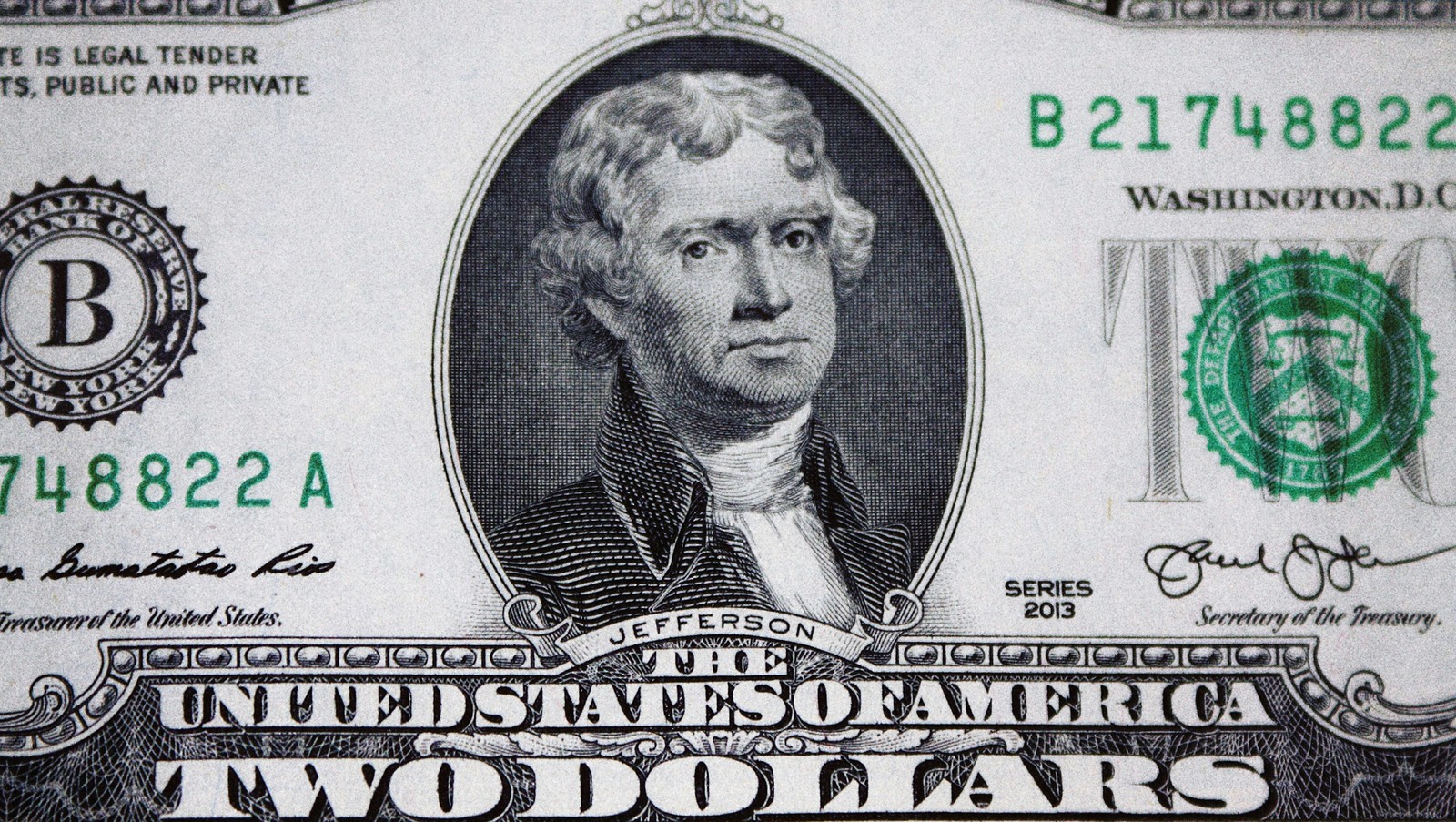
Image: Alicia Razuri

You use it every day, you keep it in a safe place, and yet there are still so many things you may not know about it. Yes, we’re talking about US currency! From their size and composition to the details of their designs, both our bills and coins have a fascinating history behind them, and some secrets you probably never imagined. Join us as we uncover them.

1
Clock change
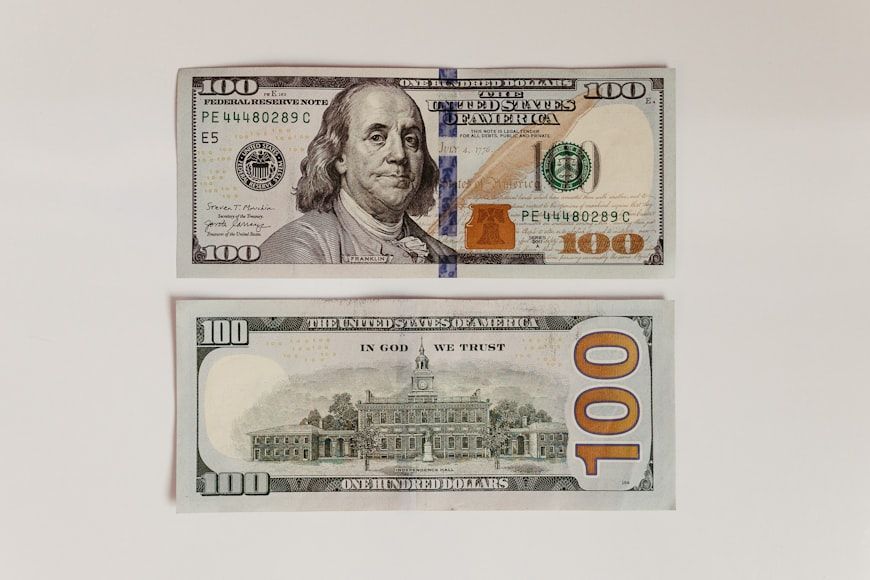
Image: Jonathan Borba

US currency is full of symbolism, and the $100 bill is no exception. Since 1928, we have seen Independence Hall depicted on the back of this bill. But in 2013, it was redesigned, and one change stands out: the clock tower, which previously showed 4:10, now reads 10:30. Did you notice?

2
Jackie Kennedy’s choice
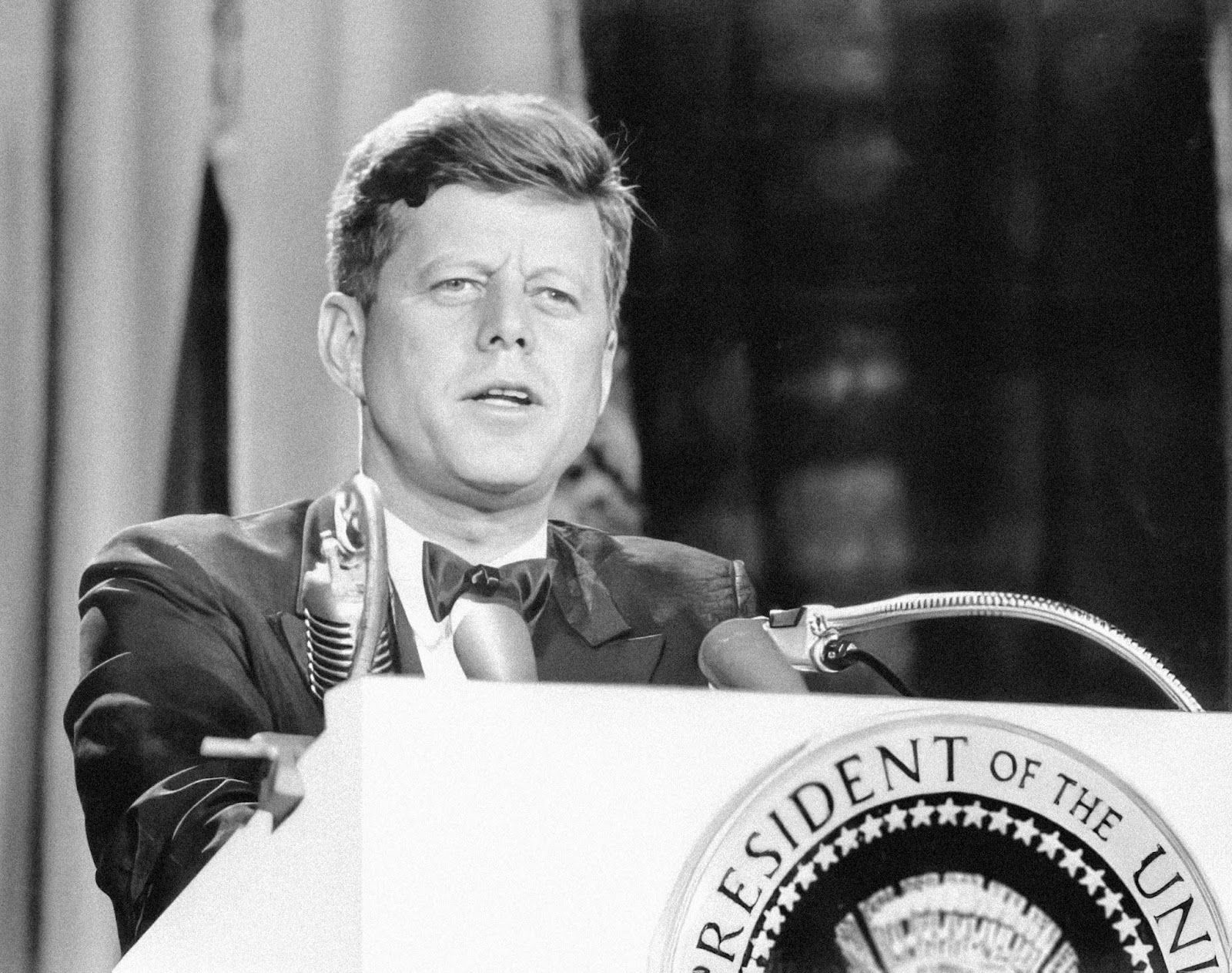
Image: Florida Memory

Jackie Kennedy played a key role in designing the coin that would feature the portrait of her ex-husband. When the U.S. Mint planned the Kennedy half dollar in 1964, she was consulted and provided input on various aspects of the coin, including its imagery and symbolism.

3
Not paper
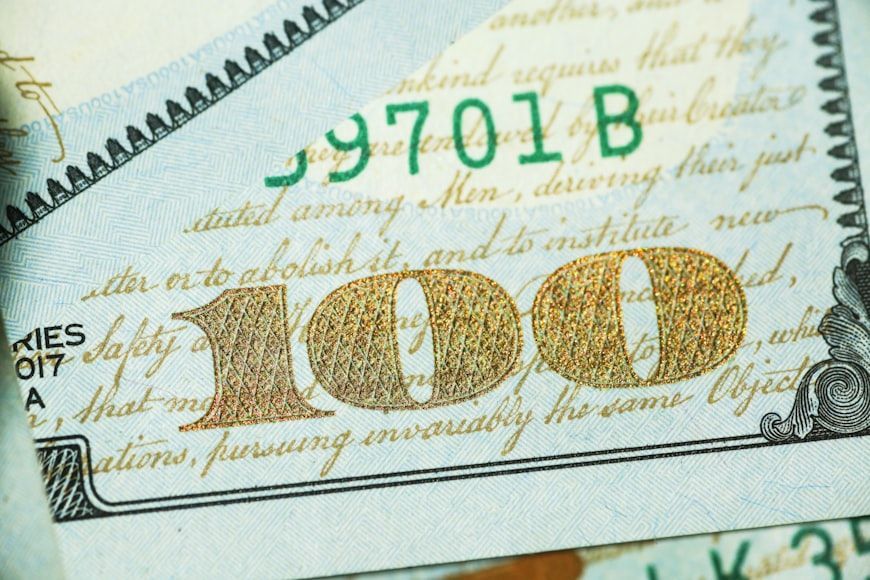
Image: Giorgio Trovato

Although it is called paper money, our bills do not contain any paper at all. In fact, they are made of a blend of 75% cotton, 25% linen, and fine silk fibers embedded. This mixture is not random; it was specially chosen so that your bills can withstand everything: folds, wrinkles, stains, and even an accidental shower in the washing machine.

4
The unfinished pyramid
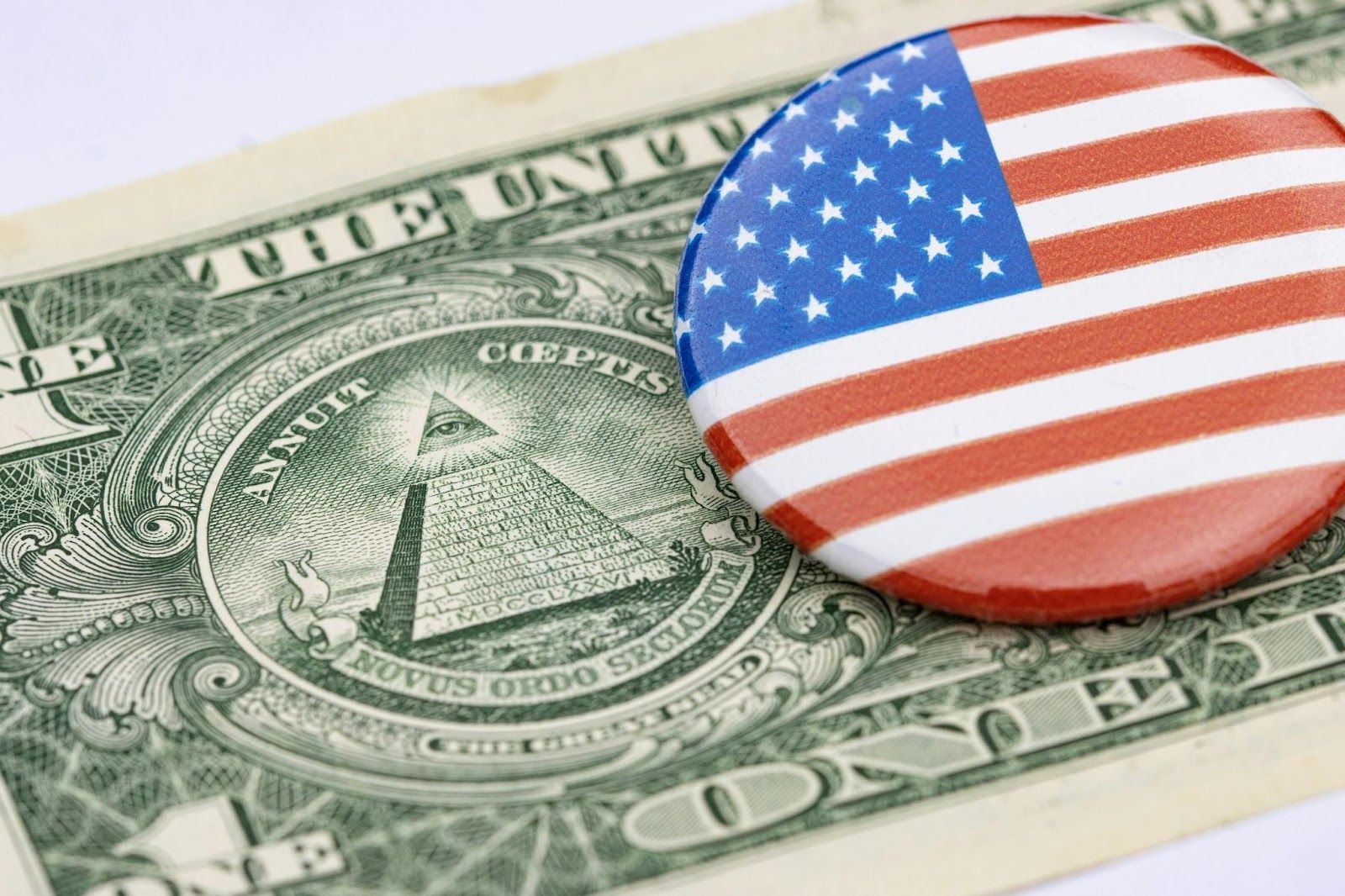
Image: Marek Studzinski

The one-dollar bill also has its secrets and details. On its back, you’ll find an unfinished pyramid, part of the Great Seal of the United States designed in the 1780s. Why unfinished? The pyramid has 13 steps, representing the original 13 colonies, and its incomplete form symbolizes the nation’s ongoing growth and expansion.

5
50% larger
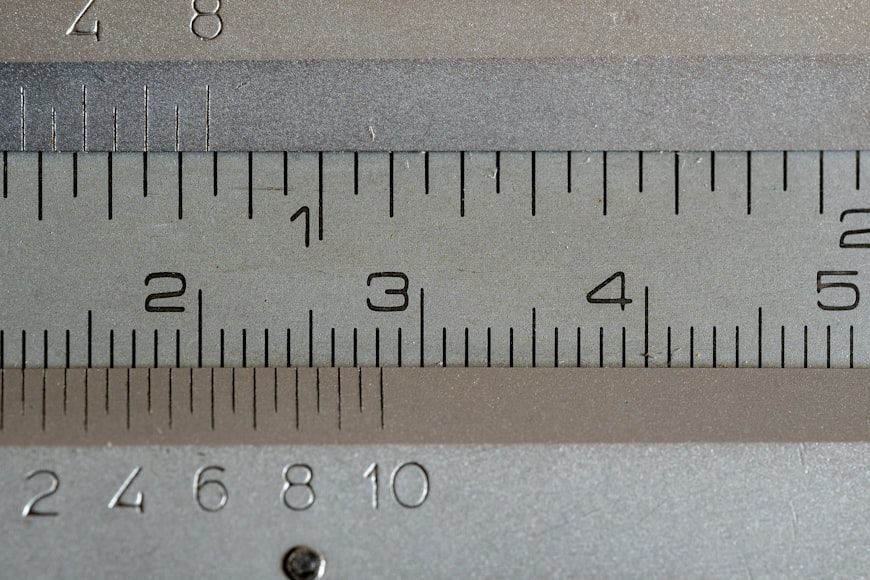
Image: Bozhin Karaivanov

Before 1929, US banknotes were significantly larger, measuring approximately 7.375 x 3.125 inches. Today, collectors refer to these as "large-size" notes, sometimes even nicknamed "Horseblankets." In contrast, modern bills measure just 6.14 x 2.61 inches. The government decided to reduce the bill's size to cut production and design costs.

6
Andrew Jackson’s preference
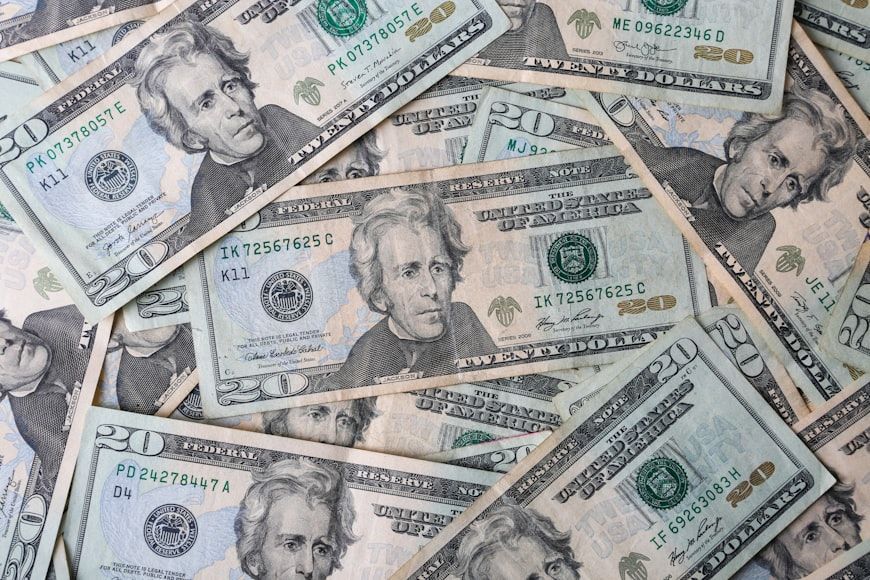
Image: Giorgio Trovato

Andrew Jackson has been the face of the $20 bill since 1928, when he replaced Grover Cleveland. Ironically, Jackson was opposed to paper money. He didn't trust that form of payment, believing it could be easily manipulated. According to historians, the 7th U.S. President favored "hard money": gold and silver coins.

7
Alexander Hamilton’s portrait
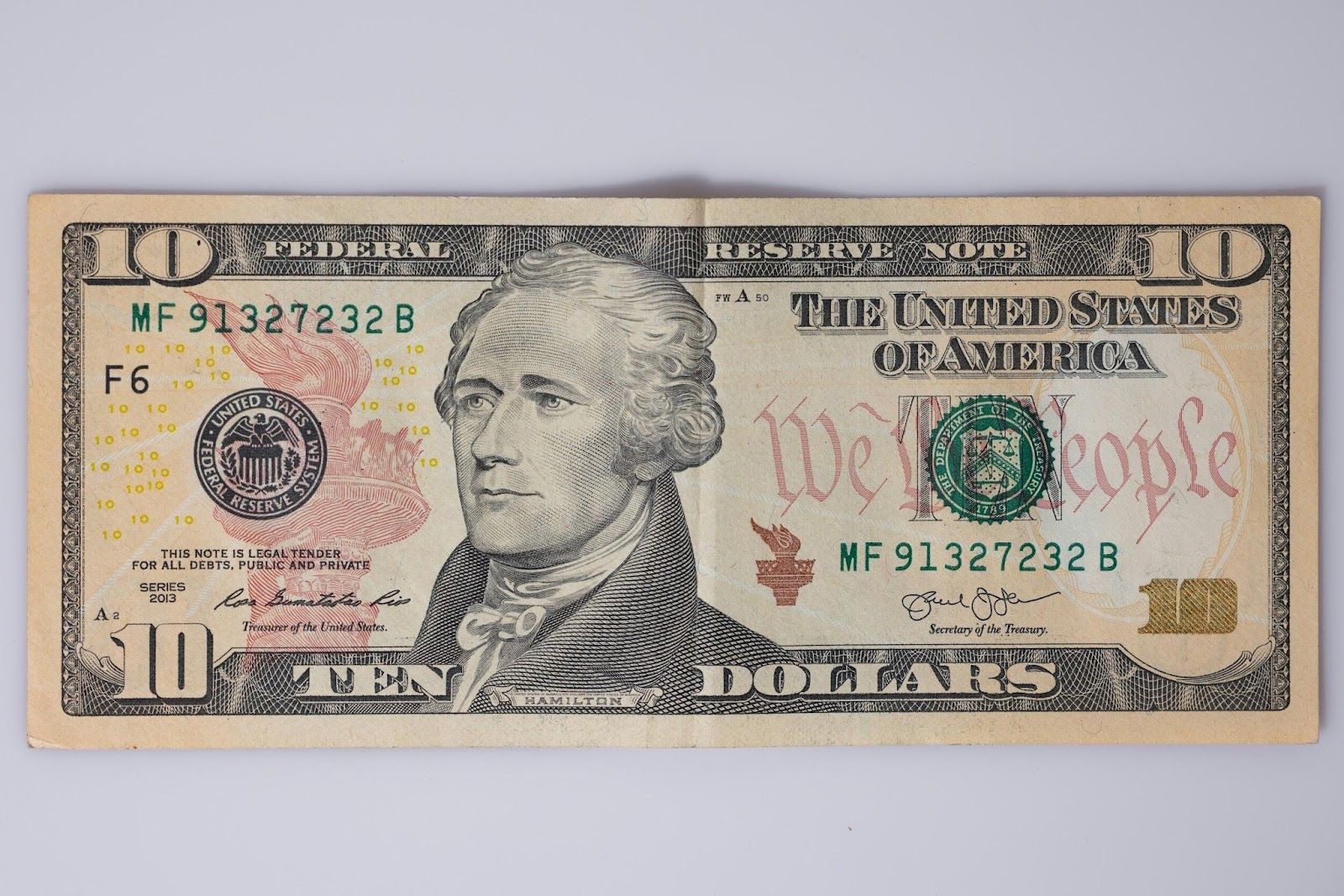
Image: engin akyurt

Most portraits on US bills face left, with one exception: Alexander Hamilton on the $10 bill, the only one facing right (toward the viewer’s left). You might wonder why, but there’s no official explanation; it seems to have been simply a design choice.

8
"In God We Trust"
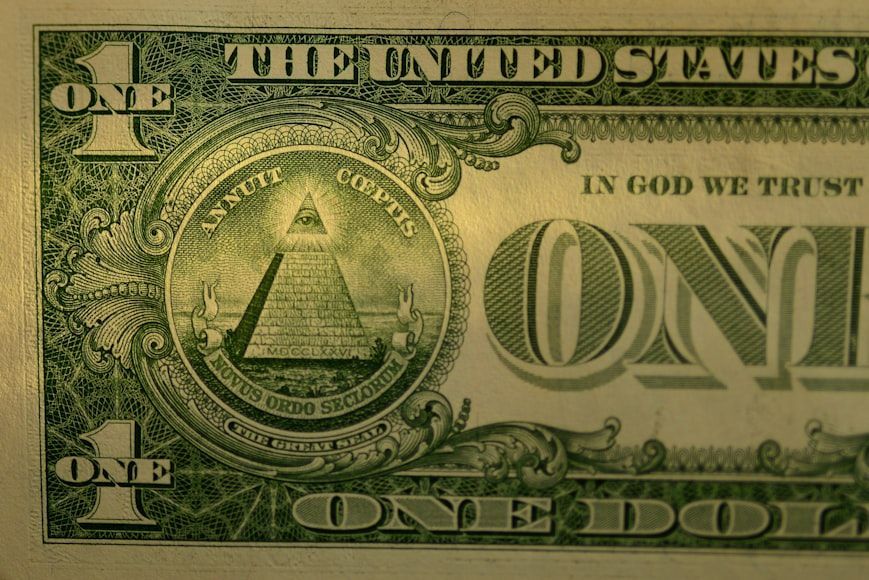
Image: rc.xyz NFT gallery

In 1956, Congress passed a law declaring "In God We Trust" the national motto, making it mandatory on all U.S. coins and banknotes. But this wasn’t its first appearance: the phrase first appeared in 1864 on the two-cent coin. Beyond faith, it also carried political weight, suggesting that God favored the Union during the Civil War.

9
The change that never happened
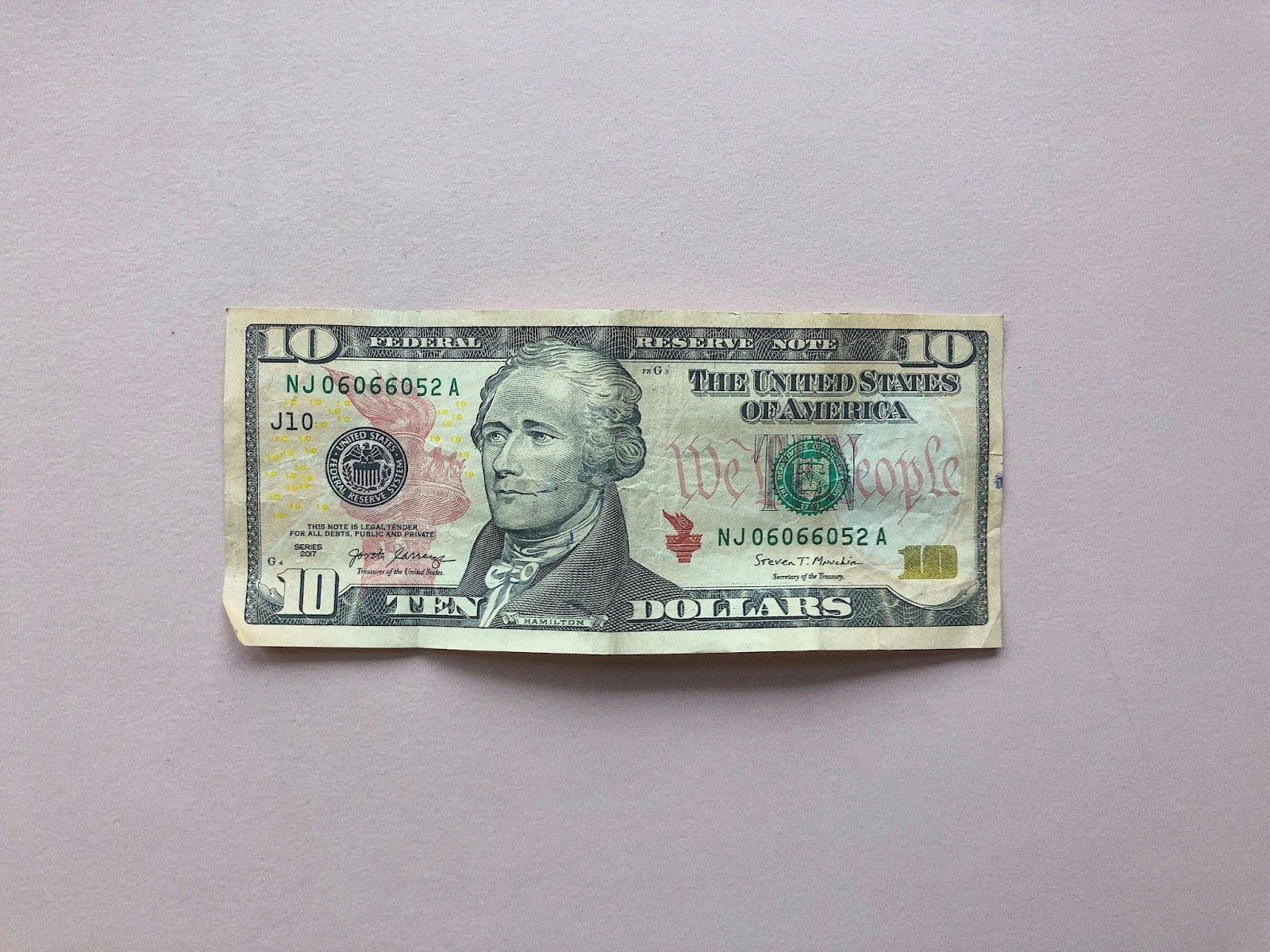
Image: Ryan Quintal

In 2015, the Treasury announced plans to redesign the $10 bill, stating that Hamilton's portrait would be replaced by that of an influential woman from US history. However, the change never happened. Why? Those years saw a surge in Hamilton's popularity thanks to the hit musical of the same name, leading the Treasury to backtrack on the replacement plan.

10
Criteria
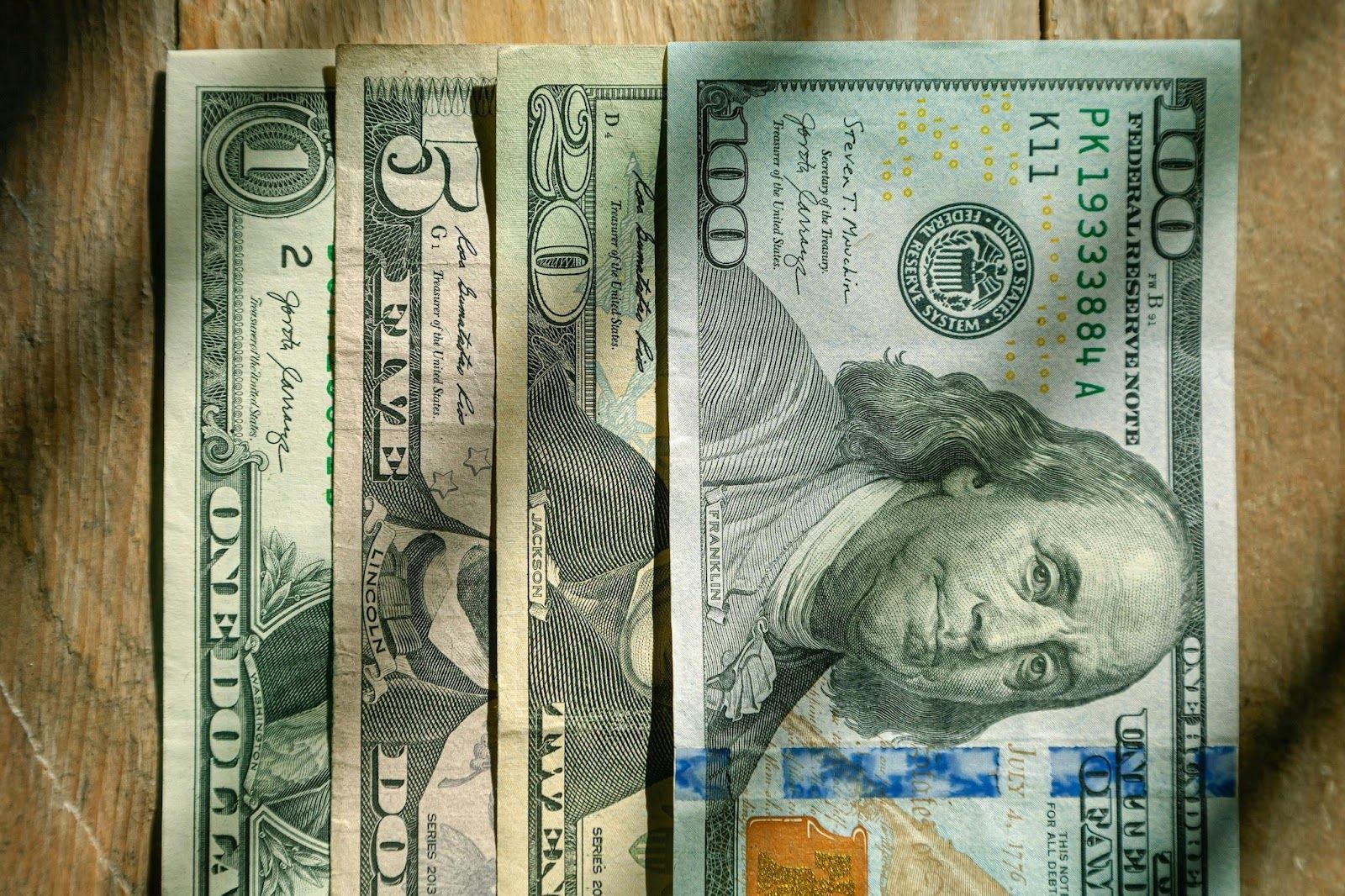
Image: Live Richer

As is well known, not just any portrait can appear on US currency. But beyond historical significance, the figures on our bills and coins must meet other criteria you might not know: They must also be deceased and well recognized by citizens, ensuring that the people represented are familiar and meaningful to the public.
General General 3 min read

On the road

Driving us crazy: Traffic rules too strange to be true (But they are!)

Image: Wolfgang Eckert

We all recognize the red octagon of STOP signs or notice the speed limits, but that’s not all to traffic laws. America’s roads are full of surprises, and if you don’t believe us, just read this article! Today, we’re taking a scenic (and slightly absurd) drive through some of the oddest traffic laws in the country. Buckle up: You won’t believe what’s technically illegal out there!

1
Florida – Meter feeding for elephants

Image: AJ Robbie

Florida’s traffic code once required that if you tied your elephant, goat, or alligator to a parking meter, you had to pay the fee, just as you would for a car. It sounds wild today, but it’s rooted in a time when people actually rode animals into town.

Though it’s not actively enforced (we checked), the law technically still lingers on the books. So, you'd better leave your pet elephant behind from now on!

2
Idaho – Seniors and motorcycles don’t mix

Image: Harley-Davidson

In Idaho Falls, it’s long been rumored that a local ordinance makes it illegal for anyone over 88 to ride a motorcycle. That sounds oddly specific—and a bit ageist. Whether it was meant to encourage safety, misinterpreted, or inspired by one daredevil granny, no one’s quite sure.

While there's no sign of active enforcement (or even proof it still exists), the message seems clear: once you’re nearing 90, it might be time to stick to the golf cart.

3
Arizona – Don’t even think about driving in reverse

Image: Jerry Kavan

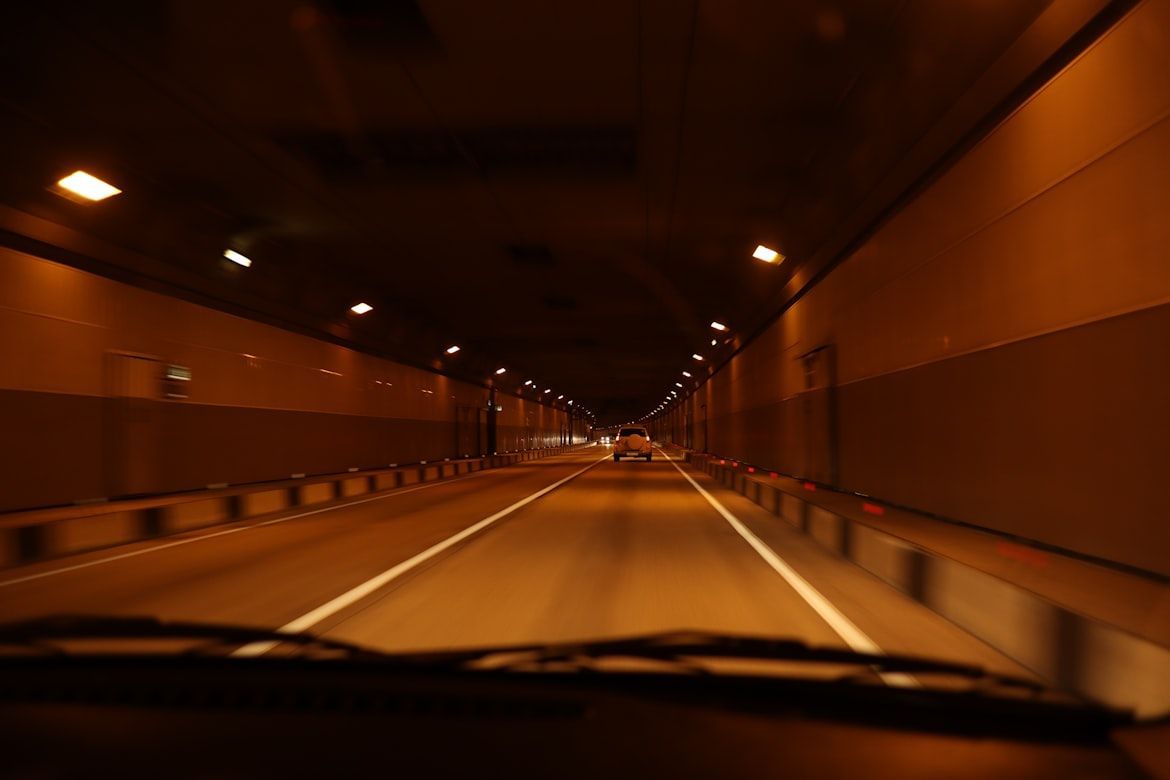
Arizona doesn't mess around when it comes to driving in reverse. On public roads, moving backward is a big no-no. While it’s unlikely you’ll get arrested for backing out of a driveway, pulling a full-speed reverse cruise down Main Street might land you in hot water. Arizona wants you to move forward in life—literally.

4
Illinois – You need a steering wheel to drive

Image: Zach Wiley

Well, isn’t that obvious? Apparently not—because Illinois actually has a law stating that you can’t drive a car without a steering wheel.

Even if it seems like common sense, laws like this were created during the early days of car modifications, when people got creative (and sometimes reckless). So, if you were planning to steer your car using a rope-and-pulley system… maybe don’t.

5
Maine – No Sunday car shopping

Image: Hilbert Hill

In Maine, it’s illegal to buy a car on Sunday. Dealerships are closed by law, making it impossible to seal the deal on the most relaxing day of the weekend. Why? The rule has roots in so-called "blue laws," which were designed to preserve Sunday as a day of rest. So in Maine, if you get a wild urge to car shop after church, you’ll have to wait until Monday.

6
Michigan – Streets are not for reading

Image: bruce mars

Michigan has a law that says you can’t sit in the middle of the road and read a newspaper. Yeah, no joke!

We know—it’s hard to imagine someone actually doing this (unless it was a very juicy headline), but the law’s goal is clearly about safety. Still, you have to admit the mental image is pretty great—just don’t try it unless you want to make the evening news.

7
New Hampshire – Bus fumes are not a high

Image: Lizgrin F

New Hampshire takes a hard stance on inhaling bus fumes "with intent to cause euphoria." That’s a legal phrase, not a band name. It’s part of the state’s broader anti-huffing laws, aimed at curbing substance abuse.

Well, that’s odd!

8
Vermont – Backfiring is a no-go in Rutland

Image: RoonZ nl

In Rutland, Vermont, letting your car backfire could technically get you in trouble. This law was probably put in place to cut down on noise or prevent panic during quieter times in history.

Today, it’s unlikely to get you arrested, but a surprise backfire might still earn you some serious side-eye from the locals. If you ask us, this should be a law everywhere!

9
Wisconsin – Hands off the handlebars? Not allowed

Image: Darko Pribeg

In Wisconsin, you’re not allowed to ride a bicycle with no hands. Even if you’re showing off your balance skills from the 1970s, the law says at least one hand must stay on the handlebars.

It’s all about safety—but if you’re feeling rebellious, maybe show off at the park. Just don’t do it on public roads. Keep it hands-on!

10
South Carolina – No trash hoarding in Hilton Head

Image: Alireza Mirzabegi

In Hilton Head, it’s illegal to store trash in your car. That’s right—your vehicle can’t double as a mobile garbage can. The law aims to keep the area clean and tourist-friendly, but it also sounds like a not-so-subtle jab at anyone using their backseat as a trash bin. Hilton Head wants pristine beaches and clean cars!

Culture Culture 3 min read

Talk about a busy life

So much more than a musical: 10 cool facts about Alexander Hamilton

Image: Engin Akyurt

America’s history is full of great historical figures, and sometimes it can be hard to keep track of all their accomplishments. Lin-Manuel Miranda’s musical Hamilton drew the nation’s and even the world’s attention to this Founding Father and his life. From his orphaned childhood to his political rivalries and the institutions he helped create, Alexander Hamilton lived many lives rolled into one. Did you know these ten facts about him?

1
He was not allowed to attend school

Image: Hennie Stander

It was a different time back then, that is for sure. Because Hamilton’s parents were never married, he was barred from attending school . Fortunately, the young Alexander was privately educated and pored over his family’s collection of classics.

Despite being an orphan from an early age (his father abandoned the family when Hamilton was just a boy, and his mother died not long after), Hamilton stayed on course and remained an avid reader throughout his life.

2
His writing skills helped him leave the Caribbean

Image: Clark Young

Alexander Hamilton was born on the island of Nevis in the British West Indies. A letter he sent to his father detailing a hurricane that struck Saint Croix was reprinted in the Royal Danish American Gazette due to his remarkable penmanship.

The locals were so impressed by his style that they raised money to send Hamilton to a college in the British North American colonies.

3
Self-taught lawyer

Image: Tingey Injury Law Firm

Most people would have been happy with their lot in life if they were George Washington’s personal secretary, but not Alexander Hamilton. After resigning from his post, he was able to study law and passed a legal examination within six months in 1782 .

He had been reading law on his own in Nevis and at King’s College and had studied with John Jay and William Paterson, two future Supreme Court justices.

4
The bulk of the Federalist Papers

Image: Sear Greyson

Hamilton, along with Madison and Jay, was one of the three authors of The Federalist Papers , which helped secure the Constitution's ratification. Hamilton wrote roughly 51 of the 85 essays , which are still consulted today by scholars and the Supreme Court. However, Hamilton’s authorship of the documents wasn’t made public until after his death in 1804.

5
Founded the Treasury Department

Image: Alexander Schimmeck

When Washington became president, he appointed Hamilton as the first Secretary of the Treasury . Hamilton devised a solution to pay off the former colonies’ war debt and then organized the Treasury Department into a powerful unit.

Hamilton also formed the First Bank of the United States and helped convince other nations that the United States was financially stable.

6
Inspired the first American political party

Image: Adam Michael Szuscik

Hamilton’s work as Treasury Secretary and his advocacy for a strong central government led to the unofficial formation of the Federalist Party by 1791 . And, as often happens when a political party arises, a rival is quickly formed.

In response, leaders like James Madison and Thomas Jefferson created a political faction known as the Democratic-Republicans, which directly opposed Hamilton and his ideas.

7
Helped his political rival become President

Image: Alicia Razuri

In the 1800 presidential election, the House of Representatives, controlled by the Federalists, had two Republican candidates to choose from: Jefferson and Aaron Burr. In a private letter to a House member, Hamilton expressed his strong dislike for Burr .

"Mr. Burr loves nothing but himself—thinks of nothing but his own aggrandizement—and will be content with nothing short of permanent power in his own hands. In a choice of Evils, let them take the least—Jefferson is, in my view, less dangerous than Burr."

8
Received Washington’s last letter

Image: Valeria Reverdo

George Washington, the first president of the United States, sent his last written letter to Hamilton two days before his death on December 14, 1799. In it, Washington (who had been a mentor to Hamilton throughout his political career) praised his apprentice’s idea of establishing a national military academy.

Washington wrote to Hamilton that such an institution would be of "primary importance to the country."

9
Founded the New York Post

Image: Roman Kraft

Hamilton conceived his newspaper, originally called the New York Evening Post , as a megaphone for the anti-Jefferson Federalist Party , which he helped create. Hamilton himself wrote many of The Post’s early editorials.

The newspaper was founded in November 1801, and according to its editor, William Coleman, Hamilton personally wrote many of the editorials.

10
His son died in a duel, too

Image: GAIMARD

Just like his father, Philip Hamilton also received a mortal wound in a duel . This tragic event occurred three years before Alexander Hamilton’s own demise, under similar circumstances.

Both duels took place in Weehawken, New Jersey. In a cruel twist of fate, Alexander Hamilton even used the same set of pistols as his son.

Explore more American facts

Choose your favorite category!

General
General

As American as apple pie—the very best America has to offer!

Culture
Culture

Delve into the astounding richness of American lore.

Geography
Geography

Hop in and explore vast and diverse American landscapes.

History
History

Discover the key moments that shaped the United States.