History History 4 min read

Strange events

You won't believe these 10 crazy White House stories!
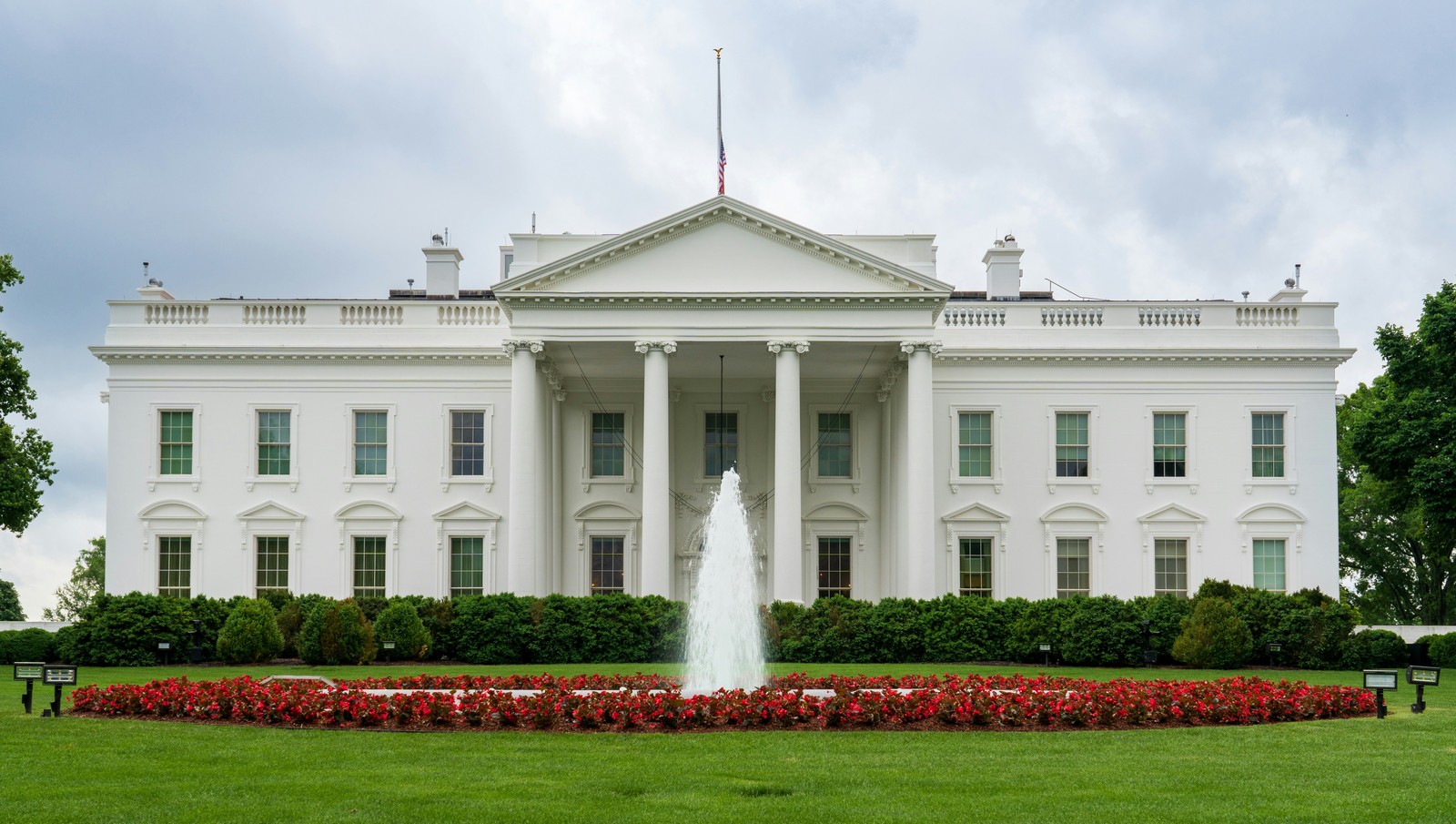
Image: Tomasz Zielonka / Freepik

The White House is the home and workplace of none other than the US president. But beyond that, it has also been the scene of some wild and unexpected moments. Did you know that Andrew Jackson was given a 1,400-pound wheel of cheese? Or that there was once a prom held at the White House? If you have doubts, join us for a tour of 10 stories you won't believe actually happened inside the Executive Mansion!

1
Unexpected gifts

Image: Val Vesa

Among the many objects and people who enter the White House every day, there are many gifts. And it's not just letters, children's drawings, or flower bouquets. Some of the gifts that have arrived at the Executive Mansion are really crazy. Among them, we can mention the giant 1,400-pound wheel of cheese that Andrew Jackson welcomed, the two grains of rice with tiny portraits of himself that Nixon received, the Komodo dragon given to George H.W. Bush, and the three-foot-long jewel-encrusted sword that Obama was given as a gift from Saudi Arabia.

2
Big party

Image: Giorgio Trovato

In the past, the White House was more "accessible." So much so that when Jackson became president in 1829, the thousands of people who followed him to his residence threw a huge party right there in the gardens of the Executive Mansion, with some even entering the house. The party lasted for hours and marked a turning point in the relationship between US presidents and the citizens.

3
Judo at the White House

Image: Nguyen Hung

Visits to the White House are usually steeped in strict protocol, but there's always some room for surprises. One of these unexpected moments happened in 1904 when Teddy Roosevelt welcomed a Swiss diplomat. President Roosevelt was renowned for his physical prowess, and one of his favorite activities was judo. To show off his new skills, he invited the Swiss diplomat to join one of his practice sessions. But the poor man never imagined the president of the US would flip him with a judo throw, leaving the shocked diplomat on the mat!

4
Ghosts?

Image: SHAKEEL AHAMMED

It's not just the living who create memorable moments at the White House. It's said that the spirits of figures such as Abraham Lincoln, Dolley Madison, and Andrew Jackson have been seen in the presidential residence. But one story stands out above the rest. During WWII, Churchill was staying at the White House when, one night after a shower, he reportedly encountered the ghost of President Lincoln! Churchill allegedly said, "Good evening, Mr. President. You seem to have me at a disadvantage."

5
Intruder helicopter

Image: Yassine Khalfalli

The first issue of "People" magazine, the debut episode of Happy Days, and the premiere of The Godfather II all arrived in 1974, a year equally tumultuous for politics. On February 17, a strange event occurred: A US Army private first class stole a helicopter and landed it on the White House lawn without permission. According to various accounts, the soldier had not graduated from the pilot course and, frustrated, stole the helicopter to show off his skills. Bold!

6
Santa

Image: Jesson Mata

Sometimes, Santa shows up with more surprises than a sack full of presents. On December 12, 1983, none other than Mr. T arrived at the White House dressed as Santa! As part of First Lady Nancy Reagan's "Just Say No" campaign, Mr. T played Santa for the children visiting the White House that day. But it wasn't just for the kids: the First Lady herself perched on Mr. T's lap, making a holiday wish.

7
Homemade gin

Image: Laure Noverraz

Every president has their own particular hobbies and preferences, and Dwight D. Eisenhower was no exception. It's said he was a fan of gin-based drinks, particularly martinis, and took a special interest in them. He even made his own gin right inside the White House! While it wasn't exactly classic "bathtub gin," as some like to claim, it was definitely a homemade recipe.

8
Prom

Image: Toria

The White House has seen all kinds of events over the years. But there was someone who made history on that front, and it wasn't a president but his daughter! We're talking about President Gerald Ford's daughter, Susan Ford, who in 1975 became the first —and so far, only— presidential child to host a prom at 1600 Pennsylvania Avenue!

9
Bowling lane

Image: engin akyurt

As we've mentioned, each inhabitant of the Executive Mansion found their way to make the house feel like home. It turns out that President Nixon had a full, modern bowling alley installed inside the White House. And unlike that stationary bike we bought months ago (and it's still in its packaging), he actually used it regularly!

10
Unusual pets

Image: Shelly Collins

The White House has a long list of animal inhabitants! For example, John Quincy Adams’ famous alligator, Theodore Roosevelt's bear cub, Calvin Coolidge's raccoons, Andrew Jackson's foul-mouthed parrot, and one of the most surprising: the tiger cubs gifted to President Martin van Buren.
General General 6 min read

Timeless inventions

12 amazing American patents that shaped technology and culture

Image: Markus Winkler

The United States Patent and Trademark Office has issued over 12 million patents since its establishment in 1836. Many of the inventors who applied for these patents are well known—such as Elisha Graves Otis or Orville and Wilbur Wright —while others may come as a complete surprise, like President Abraham Lincoln . Some of the patents listed in this article are grandiose; others are smaller and seemingly insignificant. However, they all have something in common: they were invented in our country and changed the course of history. Wondering what they might be? Read on to find out!

1
Locomotive steam-engine for rail (Patent #1)

Image: National Archives at College Park - Textual Reference, Public domain, via Wikimedia Commons

Between 1790 and 1836, the United States granted 9,802 patents that were not awarded on their merits and didn’t have an identification number. The Patent Act of 1836, which established the official Patent Office, aimed to make the system more transparent. Among other reforms, it introduced a numbering system for easier identification.

This system started on July 13, 1836, and remains in effect today. United States Patent No. 1 was issued to John Ruggles —an inventor, attorney, and senator from Maine—for improvements in locomotive traction.

2
Anesthesia (Patent #4,848)

Image: National Library of Medicine

How did patients endure surgery before anesthesia? Before the discovery of an effective anesthetic, surgery was synonymous with excruciating pain. Many large hospitals placed their operating rooms in isolated and remote sections of the hospitals so patients’ screams couldn’t be heard. Alcohol, opium, and even hypnotism were tried as methods of pain relief, but these had little effect.

Fortunately, we no longer have to endure such experiences, thanks to a Boston dentist named William T. G. Morton, who—along with Charles T. Jackson—received the first United States patent for an anesthetic in November 1846.

3
Buoying vessels over shoals (Patent #6,469)

Image: invented by Abraham Lincoln. Issued by United States government Patent Office, Public domain, via Wikimedia Commons

This may be the most unique patent ever issued by the United States Patent Office: it is the first and only U.S. patent granted to an inventor who later became president. Although at least three presidents—George Washington, Thomas Jefferson, and Abraham Lincoln—were inventors, Lincoln is the only one who formally applied for and received a patent .

In 1849, he was awarded Patent No. 6,469 for a flotation device designed to lift boats over shoals and other obstacles in the water. While the invention itself had little bearing on his election, Lincoln’s inventive mindset and mechanical curiosity served him well during his presidency. Although the device was never commercially produced, his appreciation for innovation helped shape the nation's future.

4
Beehive (Patent #9,300)

Image: Bianca Ackermann

Beekeeping arrived in America with the early settlers, and by the end of the 18th century, bee colonies were widespread. However, early efforts met with only partial success.

The first U.S. patent for a practical and effective movable-frame beehive—which revolutionized traditional methods of beekeeping—was granted to American apiarist, clergyman, and teacher Lorenzo Lorraine Langstroth on October 5, 1852. His invention of the "bee space" laid the foundation for all modern beekeeping and hive management.

5
Elevator (Patent #31,128)

Image: Copie de gravure ancienne, Public domain, via Wikimedia Commons

The New York skyline would look very different today had it not been for the invention of the elevator. The man responsible for the forerunner of the modern elevator was American industrialist Elisha Graves Otis , who, on January 15, 1861, received the first U.S. patent for a safety-type passenger elevator.

The concept of vertical travel was not new. However, the first successful passenger safety elevator was installed in 1857 by Otis in the E. V. Haughwout & Company building, a department store in Manhattan. Otis also held patents for other inventions, including railroad trucks and brakes, a steam plow, and a bake oven. But it was the elevator with its safety feature that brought him fame and his sons great fortune.

6
Lock (Patent #31,278)

Image: Parastoo Maleki

The idea of the lock probably stems from the time man first acquired goods he wanted to safeguard from others. However, the first commercially successful modern lock and key system was invented by American mechanical engineer and metalsmith Linus Yale Jr., who received a U.S. patent in 1861.

Yale developed several types of locks, including the Yale Double Treasury Bank Lock, created at the request of the U.S. government. These designs brought him nationwide recognition, but the invention that made him truly famous was the pin-tumbler cylinder lock . Yale died just a few years after receiving his patent. However, every lock and key produced by the Yale & Towne Lock Company since then has proudly carried the Yale name.

7
Barbed wire (Patent #157,124)

Image: Lexis Chadwick

In an age of video surveillance, barbed wire might seem obsolete. Yet it was crucial to the settlement of the American plains in the late 19th century—and it remains widely used around the world today .

On November 24, 1874, Joseph F. Glidden, a farmer from Illinois, received a U.S. patent for the first commercially successful barbed wire . While several earlier patents had been granted for wire fencing, it was Glidden’s design that proved durable, affordable, and easy to mass-produce—making it the dominant form of fencing on the frontier**.**

8
Air conditioner (Patent #808,897)

Image: Prasopchok

On those hot and humid days of summer, we should all be thankful for the work of Willis Haviland Carrier, often called the father of air conditioning. For his efforts, he received the first U.S. patent for a modern air conditioning system on January 2, 1906.

Air conditioning is a complex process that involves refrigeration, dehumidification, air purification, and circulation. Before Carrier’s invention, various individuals had worked on these individual components. But it was Carrier, an American engineer, who successfully integrated them —focusing on the crucial relationship between temperature and humidity.

9
Airplane (Patent #821,393)

Image: John T. Daniels, Public domain, via Wikimedia Commons

Orville and Wilbur Wright are credited with achieving the first controlled, manned flight in history. For their pioneering work, they received the first U.S. patent for an airplane, issued on May 22, 1906.

Many had been intrigued by the idea of human flight before them. However, it was the Wright brothers who succeeded in building, flying, and promoting the world's first successful airplane —an invention that revolutionized transportation.

10
Bakelite (Patent #942,809)

Image: Call Me Fred

The modern plastics industry wouldn’t exist without Belgian-American chemist Leo Hendrik Baekeland , who received the first U.S. patent for a thermosetting plastic in 1909. Before him, others had attempted to produce synthetic resins but were unsuccessful.

Baekeland corrected his predecessors’ mistakes. The result was the first thermosetting resin —one that, once set, would not soften under heat. Bakelite was the first in a long series of resins that shaped the U.S. economy, paving the way for materials such as cellophane, acetate, vinyl, Plexiglas, acrylic, Formica, and polyester.

11
Frozen food (Patent #1,773,080)

Image: United States Patent Office (Clarence Birdseye, inventor)., Public domain, via Wikimedia Commons

Do you know where the name Birds Eye Frozen Food comes from? From its inventor! In 1930, American entrepreneur Clarence Birdseye received the first U.S. patent for this type of product.

Food preservation has been a concern since the beginning of time. Techniques such as salting, pickling, smoking, curing, canning, and later inventions like the icebox and home refrigerator have all contributed to preserving food.

However, one of the most successful methods was developed and commercialized by Birdseye. His process involved quick-freezing meat, seafood, vegetables, and fruit in convenient packages without altering their original taste. Birdseye’s name became a household word, and his innovation created a multibillion-dollar industry.

12
Instant photography (Patent #2,543,181)

Image: Missouri Historical Society, Public domain, via Wikimedia Commons

When we think of instant photography, Polaroid is often the first name that comes to mind. But how much do we know about the man behind the company? American scientist, inventor, and co-founder of the Polaroid Corporation, Edwin Herbert Land , was granted the first U.S. patent for a one-step photographic process in 1951.

While on vacation with his family, Land conceived the idea for a camera and film that could produce an immediate photograph. In 1948, the first Polaroid Land Camera went on sale, though without much public approval. Polaroid continued to improve the Land Camera and, in 1965, introduced the affordable Swinger model , which became an immediate success. Throughout his life, Land was granted more than 533 patents, was inducted into the National Inventors Hall of Fame, and received the Presidential Medal of Freedom.

General General 6 min read

COLORFUL COMPANIONS

From Uncle Sam To Toucan Sam, Here Are 10 Of The Most Iconic Mascots!

Image: Library of Congress

Some believe that the concept of mascots is outdated and that we don’t really need to have these cheerful and colorful ambassadors pop up in our daily lives. However, most Americans (us included) not only consider mascots to still be relevant, but we believe that they are heavily ingrained in our country’s pop culture and history. Some of these characters (many of them featured in this article) have been with us for our entire lives, teaching us about responsibility or simply entertaining us while we are enjoying a nice bowl of cereal. We have selected ten of the most iconic and cherished American mascots, in an effort to pay a well-deserved tribute to these amazing and timeless characters. Enjoy!

1
Tony the tiger

Image: Sten Ritterfeld

Tony the Tiger is a strong contender for the title of the world’s most famous cereal mascot: his go get 'em' attitude and amazing design have cemented him as a pop culture icon. Tony has been the quintessential mascot for Frosted Flakes since the 1950s, encouraging families to add this delicious cereal to their kids’ breakfast.

Curiously, Tony first appeared as part of a group of mascots that included characters like Katy the Kangaroo or Elmo the Elephant. However, this tiger’s immense popularity made him Frosted Flakes' sole representative. In due time, Tony’s family got bigger: the character now has a spouse called "Mrs. Tony" and two children, Antoinette and Tony Jr.

2
Ronald McDonald

Image: Erik Mclean

McDonald’s chooses to describe their iconic mascot and symbol, Ronald McDonald as "The Smile Known Around the World." This phrase perfectly summarizes this clown’s unbelievable popularity: McDonald’s claims that Ronald is only second to Santa Claus in terms of recognition and that virtually every schoolchild in America can immediately identify him.

In his 1963 television debut, Ronald McDonald’s appearance was quite different: these television spots featured a clown with yellow hair, striped yellow pants, and a McDonald’s cup on his nose. It wasn’t until 1966 that a real-life clown helped redesign the character, turning him into this instantly recognizable mascot.

3
Snap, Crackle, and Pop

Image: SqueakyMarmot from Vancouver, Canada, CC BY 2.0

Not many people know this, but the names of the three timeless Rice Krispies mascots actually come from a 1930s radio ad. At the time, Rice Krispies was advertised as "the talking cereal" and they promised to "merrily snap, crackle, and pop in a bowl of milk." A few years later, illustrator Vernon Grant took these onomatopoeic sounds to name the trio, calling them Snap, Crackle, and Pop.

Since their first appearance in 1933, these elf-like creatures have appeared in countless ads, often voiced by a myriad of talented actors that include names like Ben Schwartz, Tom Kenny, and Josh Brener.

4
Toucan Sam

Image: Necip Duman

As you might have noticed through their unusual spelling, Froot Loops are all about their loopy shape and the fun times that come with them. In that sense, this colorful breakfast cereal has an equally colorful representative: Toucan Sam, Froot Loops’ mascot since 1963.

Originally voiced by Hollywood legend Mel Blanc (responsible for voicing Bugs Bunny and Barney Rubble, among others), Toucan Sam has an extraordinary sense of smell, which helps him find Froot Loops from a great distance. Most Froot Loops ads end with Sam using his nose to locate a hidden bowl of cereal, before chanting his catchphrase "Follow your nose! It always knows!"

5
Phillie Phanatic

Image: Michael Stokes, CC BY 2.0

Few characters literally stand out as the Phillie Phanatic does. The moment you arrive at Citizens Bank Park to watch the amazing Philadelphia Phillies play, you will immediately notice this furry, green bird dancing somewhere in the stadium. Since 1978, this character has brought joy and treasured memories to countless Philadelphians.

Did you know that the Phanatic is a distant relative of the Muppets ? You would think his green fur made him a long-lost cousin of Kermit the Frog, but this relation comes from the fact that one of the Phanatic’s creators, Bonnie Erickson, also created the Muppets’ Miss Piggy and Statler & Waldorf.

6
Mr. Met

Image: Metropolitan Transportation Authority of the State of New York from United States of America, CC BY 2.0

We hope we don’t start any heated baseball debates by including this mascot, who many believe to be the very first Major League mascot to appear in human form. While Mr. Met first appeared as a cartoon character in programs, it was his 1964 introduction as a live costumed mascot that skyrocketed him to fame.

Although his design has varied over the years, Mr. Met is instantly recognizable through his striped Mets uniform and large baseball head. Soon after his inception, Mr. Met was given a female counterpart companion known as "Mrs. Met," who joins him in Citi Field to cheer on every New York Mets game.

7
Smokey the Bear

Image: Brian Wangenheim

Since 1944, Smokey the Bear has helped U.S. forests and landscapes with his prevention campaigns. Generations of American children have been inspired and encouraged by Smokey and his memorable catchphrase: "Only you can prevent wildfires!"

What’s interesting is that this iconic fictional bear inspired the name of a beloved real bear. In 1950, a three-month black bear cub was rescued from a massive wildfire in the Capitan Mountains in New Mexico. Although he was originally named "Hotfoot Teddy" by his rescuers, the cub was renamed "Smokey" after the fire safety mascot and was relocated to the National Zoo, where he grew up to become an American icon.

8
The California Raisins

Image: Syed F Hashemi

How did a 1986 commercial promoting the California Raisin Advisory Board end up becoming an Emmy-nominated, Billboard Hot 100-listed supergroup? Well, that’s the magic of the California Raisins at work. No one expected these anthropomorphized claymation raisins to be as popular as they were, and yet they went on to become the quintessential mascot for one of California’s most cherished agricultural products.

The Raisins were created by the advertising firm Foote, Cone & Belding. According to legend, one of the firm’s writers came up with the concept after saying "We have tried everything but dancing raisins singing 'I Heard It Through the Grapevine'." To everyone’s surprise, the Raisins' rendition of Marvin Gaye’s classic song became a massive success and paved the way for numerous other TV appearances, including a Saturday morning cartoon and a Christmas special.

9
McGruff the Crime Dog

Image: sydney Rae

In a medium already filled with exemplary TV detectives, McGruff the Crime Dog broke through the ranks and taught an entire generation of American children to "Take a bite out of crime!" Dressed in his iconic beige raincoat (reminiscent of the legendary Frank Columbo), this anthropomorphic hound was created by the National Crime Prevention Council in an effort to help prevent crime in America.

Over 40 years have passed since his national debut, but McGruff the Crime Dog still manages to do his part in increasing the safety of all Americans. This iconic character has appeared in national campaigns as recently as 2022, and will undoubtedly return whenever his country needs him.

10
Uncle Sam

Image: Steve Shook from Moscow, Idaho, USA, CC BY 2.0

We’ll end with what many believe to be the most iconic personification of the United States. While Uncle Sam is perhaps most known for the "I Want You" posters encouraging citizens to enlist in WWI, the truth is that the character is much older than that. In fact, his origins can’t be entirely traced, to the point that the birth of this iconic character is still shrouded in mystery.

Most historians agree that Uncle Sam first came into use during the War of 1812. According to this popular theory, the man who inspired this mascot was Samuel Wilson, a meatpacker from New York who supplied rations to the Army during the war. Apparently, many soldiers jokingly referred to the U.S. initials in their packages (that stood for "United States") as the initials for "Uncle Sam," unknowingly giving birth to this American legend.

Explore more American facts

Choose your favorite category!

General
General

As American as apple pie—the very best America has to offer!

Culture
Culture

Delve into the astounding richness of American lore.

Geography
Geography

Hop in and explore vast and diverse American landscapes.

History
History

Discover the key moments that shaped the United States.