Culture Culture 4 min read

It’s not a small world

You are not supposed to know this about Disney Parks

Image: Capricorn song

What keeps the Happiest Place on Earth running smoothly? It involves even more gears and spinning plates than you could imagine. In this article, we’ll explore both legendary and lesser-known facts about the behind-the-scenes operations of Disney Parks. Rest assured, it’s much more than just underground tunnels and hidden Mickeys!

1
The parks are designed to disorient you

Image: Craig Adderley

Streets curve, landmarks are strategically placed, and sightlines are carefully controlled to keep you exploring. The goal? To encourage you to take in every detail of the park. And if you don’t have enough time to do that, good news—you can always come back !

Walt Disney famously said, "I don’t want the public to see the world they live in while they’re in Disneyland."

2
The smell of freshly baked cookies is not entirely real

Image: Andrijana Bozic

One of Disneyland’s signature details is the smell of vanilla and freshly baked cookies wafting through Main Street, U.S.A. Guests might assume it comes from the snacks others are buying and enjoying, but that’s only part of the source.

The parks use a strategy called "smellitizing," which involves hidden scent-producing systems designed to create an ambiance of coziness and nostalgia.

3
There’s a secret underground tunnel system

Image: Steve DiMatteo

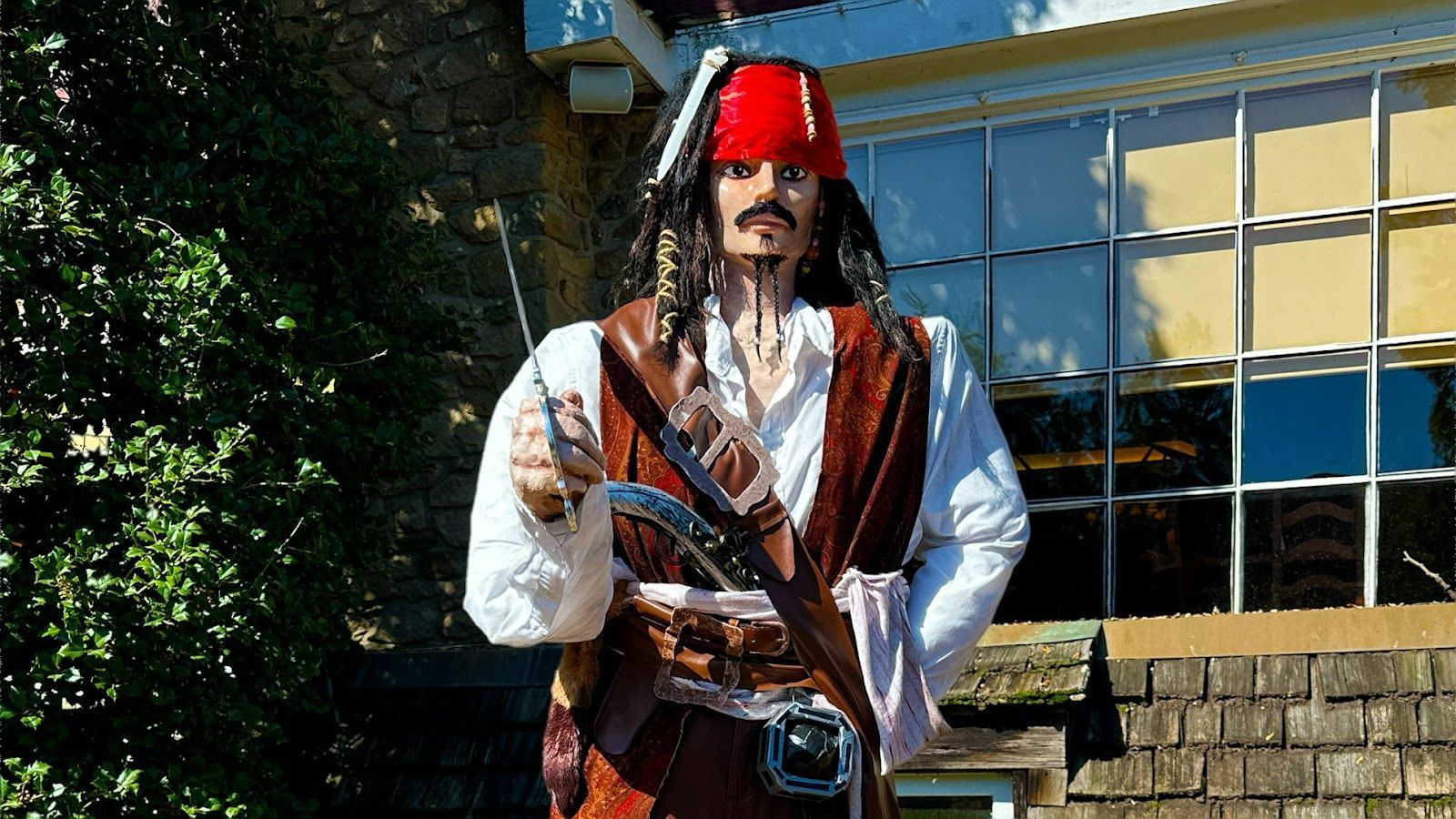
You wouldn’t want to see a cowboy or a pirate casually strolling through Tomorrowland, breaking the illusion of magic! Well, at least Walt Disney wouldn’t want you to. That’s why he proposed a system of underground tunnels to allow cast members to move around unseen.

The Utilidor System is a sprawling network of tunnels in Magic Kingdom that has been in operation since 1971.

4
There’s a secret apartment in Disneyland

Image: Steven Beyer

Above the fire station on Main Street, U.S.A., in Disneyland, there’s a small apartment where Walt Disney himself used to stay. He designed it as a place to oversee the park and host guests. Today, a light is always kept on in the window as a tribute to him.

The apartment is off-limits to the public, though VIPs occasionally get a rare glimpse inside.

5
The height of the castle is an illusion

Image: Martin Robles

Sorry to break it to you, but Disney’s castles are shorter than they appear! Engineers use a technique called forced perspective to create this illusion. The bricks at the top are smaller than those at the bottom, making the castle seem taller and more majestic as you walk in front of it.

Cinderella Castle in the Magic Kingdom, for example, stands at just 189 feet—short enough to avoid FAA regulations for structures over 200 feet.

6
Disney parks are a no-fly zone

Image: Zhen Yao

Speaking of the FAA, Disney Parks have been designated no-fly zones for years . This prevents aircraft from flying overhead, ensuring guest safety and preserving the park’s magical atmosphere. Disney argues that the absence of planes is essential for full immersion.

7
The Hidden Mickey Trend

Image: steven lozano

Hidden Mickeys are scattered throughout Disney parks—in ride designs, architecture, and even landscaping. These subtle Mickey Mouse shapes have become a beloved scavenger hunt for guests.

The trend began in the 1980s when Imagineers started hiding Mickeys as inside jokes. Some fans take the hunt so seriously that they’ve created entire guidebooks to track them.

8
The parks are spotless for a reason

Image: kaleb tapp

Disney’s cleanliness is legendary, thanks to a small army of custodial staff and a clever trick: trash cans are placed every 30 steps . This distance is based on research showing how long the average person will hold onto trash before deciding to litter.

Interestingly, Walt Disney once considered using robots for cleaning but ultimately decided that humans were more reliable—not to mention friendlier!

9
The Secret Club in Disneyland

Image: Steven Beyer

Oh, there’s a secret club—you didn’t know? Club 33, located above the Pirates of the Caribbean ride , is Disneyland’s most exclusive spot. Originally designed as a private lounge for Walt Disney’s VIP guests and sponsors, it has since become a members-only club with a hefty price tag.

Membership costs tens of thousands of dollars, and the waitlist is years long.

10
Not all trees are real

Image: Brian McGowan

We are sad to announce that not all trees in Disney parks are real. Take the iconic Tree of Life in Disney’s Animal Kingdom —it’s actually an enormous sculpture built around a repurposed oil rig, featuring over 300 intricate animal carvings.

Guests probably aren’t surprised to learn it’s not a living tree, but most agree it’s a masterpiece. Interestingly, Disney once considered using real trees for the structure but ultimately decided against it. Can you imagine the maintenance?

11
The parks have their own wildlife

Image: Brian McGowan

Disney World is home to a sizable population of feral cats that help keep the rodent population in check. These cats are cared for by Disney’s animal care team and even have their own feeding stations. Few guests can say they’ve spotted one—they are the true hidden celebrities of the parks.

12
A secret basketball court?

Image: Szabo Viktor

Unfortunately, it’s not accessible to the public, but hidden inside Disneyland’s Matterhorn Bobsleds ride there’s a hidden basketball court. It was built for cast members to use during breaks. The court was added during a refurbishment in the 1970s.

13
They have a "Kiss Goodnight"

Image: Victoria Orozco

After the park closes, the Magic Kingdom plays a special farewell message called the "Kiss Goodnight." This short sequence of music and lights thanks guests for visiting and signals the end of the day.

Some guests stay just to experience it, while others are too tired to notice as they head for the exit!
History History 3 min read

Political zoo

When an alligator lived in the White House—and 9 more presidential pets

Image: Clovis Wood

From alligators in bathtubs to bears roaming the lawn, U.S. presidents have kept some truly bizarre animals as pets. These creatures weren’t just conversation pieces—they reflected the quirks, ambitions, and historical moments of the presidents who owned them. Here are 10 of the strangest, wildest, and most unexpected pets ever to call 1600 Pennsylvania Avenue home.

1
John Quincy Adams’ alligator

Image: Robert Zunikoff

Adams kept an alligator in the White House bathtub, a gift from Marquis de Lafayette. Guests were reportedly startled by the reptile for months before it was relocated.

However, recent historians believe the story may be more myth than fact, reflecting the perceived eccentricity of both Adams and Lafayette rather than actual events.

2
Theodore Roosevelt’s badger

Image: Vincent van Zalinge

It’s clear that Teddy Roosevelt was an animal lover, keeping some of the most bizarre and unusual pets in White House history.

When Roosevelt’s children received a badger named "Josiah" from a girl in Kansas, the president didn’t hesitate to welcome it into the family home. The mischievous animal, however, often nipped at people’s ankles—including White House staff.

3
Martin Van Buren’s tiger cubs

Image: Mystery Cat

Yes—tiger cubs, plural. The Sultan of Oman gifted Van Buren two tiger cubs, but Congress demanded he surrender them to a zoo, citing laws against presidential gifts.

Van Buren fought to keep them but ultimately lost, and the cubs ended up in a public collection, marking one of the earliest disputes over presidential ethics and gifts.

4
Andrew Jackson’s parrot

Image: Ilona Frey

Jackson’s parrot, "Polly" learned to swear so well that it had to be removed from his funeral for cursing during the ceremony.

Known for his fiery temper, Jackson likely found the bird’s language amusing. Polly’s notorious vocabulary made it one of the earliest infamous pets in U.S. political lore.

5
James Buchanan’s elephant

Image: Wolfgang Hasselmann

This was a case of "almost." The King of Siam offered Buchanan a herd of elephants, suggesting they could breed in America. However, Buchanan politely declined—perhaps recalling Van Buren’s short-lived tiger ordeal? Still, he did maintain other exotic animals in Washington.

6
Abraham Lincoln’s turkey

Image: Tyler Jamieson Moulton

Lincoln’s son Tad named their Thanksgiving turkey "Jack" and begged his father to spare it—a story said to inspire the later turkey pardon tradition.

Jack roamed the White House freely and even followed Tad around, charming guests with his odd pet status.

7
Calvin Coolidge’s raccoon

Image: Joshua J. Cotten

Originally sent to be eaten at Thanksgiving—yes, eating raccoon wasn’t that unusual back then—"Rebecca" the raccoon was spared and became a pet. Coolidge even walked her on a leash around the White House gardens.

Rebecca had a custom house and enjoyed baths. Coolidge adored animals and also kept a wallaby, a bobcat, and even pygmy hippos!

8
Theodore Roosevelt’s hyena

Image: Matt Burke

By modern standards, it sounds insane, but Roosevelt was once gifted a hyena named "Bill" by an Ethiopian emperor—and he found the animal surprisingly affectionate.

Bill often roamed the White House lawn freely before eventually being sent to the Smithsonian, adding another chapter to Roosevelt’s legendary fascination with wildlife.

9
Woodrow Wilson’s sheep

Image: Sam Carter

During World War I, Wilson let sheep graze the White House lawn to save labor and raise war funds by auctioning their wool.

The move doubled as an environmental gesture and patriotic fundraiser. "Old Ike," a ram, became infamous for butting staff members and reporters alike.

10
Theodore Roosevelt’s bear cub

Image: Alla Kemelmakher

A black bear named "Jonathan Edwards" was among Roosevelt’s pets, inspired by his love of hunting and the outdoors.

Though kept briefly, the bear contributed to Roosevelt’s reputation as an adventurer—one that even inspired the creation of the "Teddy bear."

General General 3 min read

Looks ain’t everything

How do I choose the best car for me? 12 tips worth remembering

Image: Annie Spratt

When committing to a large expenditure, such as a car, it is always important to pay attention to a few details to ensure that you are getting the most out of your money. Even if you are not a mechanic or an experienced driver, certain tips can help you make a better decision and avoid possible scams and hidden issues. Do you know these 12?

1
Preapproved loan

Image: Alexander Mils

Getting a preapproved loan before going to a car dealer is a good way to be sure of how much money one can spend, and it can also reveal any possible credit issues that were not clearly visible.

2
Safety first

Image: Alexandria Gilliott

It goes without saying; safety is always a top priority when buying your new car. When looking at models, go for vehicles with a high safety rating and features like airbags, anti-lock brakes (ABS), and electronic stability control (ESC).

3
Driving habits

Image: why kei

What kind of driving you will do should influence what kind of car you will buy . If you do a lot of city driving with stop-and-go traffic, a fuel-efficient car like a hybrid or electric vehicle could save you significant money on petrol in the long run. Do you need a large vehicle for cargo or passengers, or is a smaller, more agile car for local errands and weekend adventures?

4
Cargo space

Image: Andraz Lazic

And, since we are on the subject of driving habits, cargo space is a crucial feature of whichever car you decide to buy. How much space do you really need? Even if you only need a lot of space a couple of times a year, you will want to have that space when the time comes, so don’t neglect this aspect.

5
Mileage and vehicle age

Image: Wesley Tingey

A simple rule to consider when buying a used car is the average mileage a car is supposed to have, relative to its age. That average is 10,000 to 12,000 miles per year . If the car you're looking at has a lower average annual mileage than that, it could be considered a good mileage.

6
Outside look

Image: Parker Gibbs

A quick inspection on the outside is advisable . Check the body for imperfections like gaps, dents, or discolored paint, inspect the windows for chips and cracks, get under the vehicle, and check the wheel wells and underbody for rust, which could lead to future problems.

7
Test drive

Image: Mira Kireeva

When buying a used car, it is always important to take it for a test drive, even if you don’t have a lot of mechanical knowledge. Pay attention to odd sounds or noises coming from the engine, brakes, or transmission . Test the AC and ensure that it cools quickly. Test the electronics, brake lights, headlights, windshield wipers, and see if the tires are not too worn off. And if you see or hear something that you are not sure about, check with a mechanic before buying.

8
Check for water damage

Image: Caspian Dahlström

Water damage can be a real problem for the interior, the engine, and the electrical system . Pull back the carpets in the footwells and check for moisture or signs of water damage. There are many flood-damaged cars on the market, and most of the time, the signs are concealed.

9
Try all the seats

Image: Wade Lambert

Try out all the seats, even if you probably won’t sit in the rear . Upholstery shouldn’t be ripped or badly worn, particularly in a car with low mileage. Try all the seat adjustments to make sure that they work properly and that you can find a good driving position.

10
Service records and possible crashes

Image: Usman Malik

The past history of a used car can predict future issues . Has it been in a crash? If yes, ask about the extent of the damage and who did the work. Does the car have service records? A good, used car has been well cared for. It should have had maintenance done at the manufacturer-specified intervals.

11
Keep it simple

Image: Erik Mclean

Avoid buying add-ons, extended warranties, or very long car loans , since those usually have higher interest rates and a much higher interest component is paid in the first years than the actual loan.

12
Resale value

Image: Hilbert Hill

Research the resale value of any used car you are interested in buying . The resale value can affect the overall cost of ownership and the financial return on your investment.

By researching its resale value, popularity, demand, and potential for retaining its value over time, you can decide whether to proceed with the purchase.

Explore more American facts

Choose your favorite category!

General
General

As American as apple pie—the very best America has to offer!

Culture
Culture

Delve into the astounding richness of American lore.

Geography
Geography

Hop in and explore vast and diverse American landscapes.

History
History

Discover the key moments that shaped the United States.