General General 4 min read

Hear them out!

Words of wisdom: These patriotic quotes will speak to your heart

Image: WikiImages

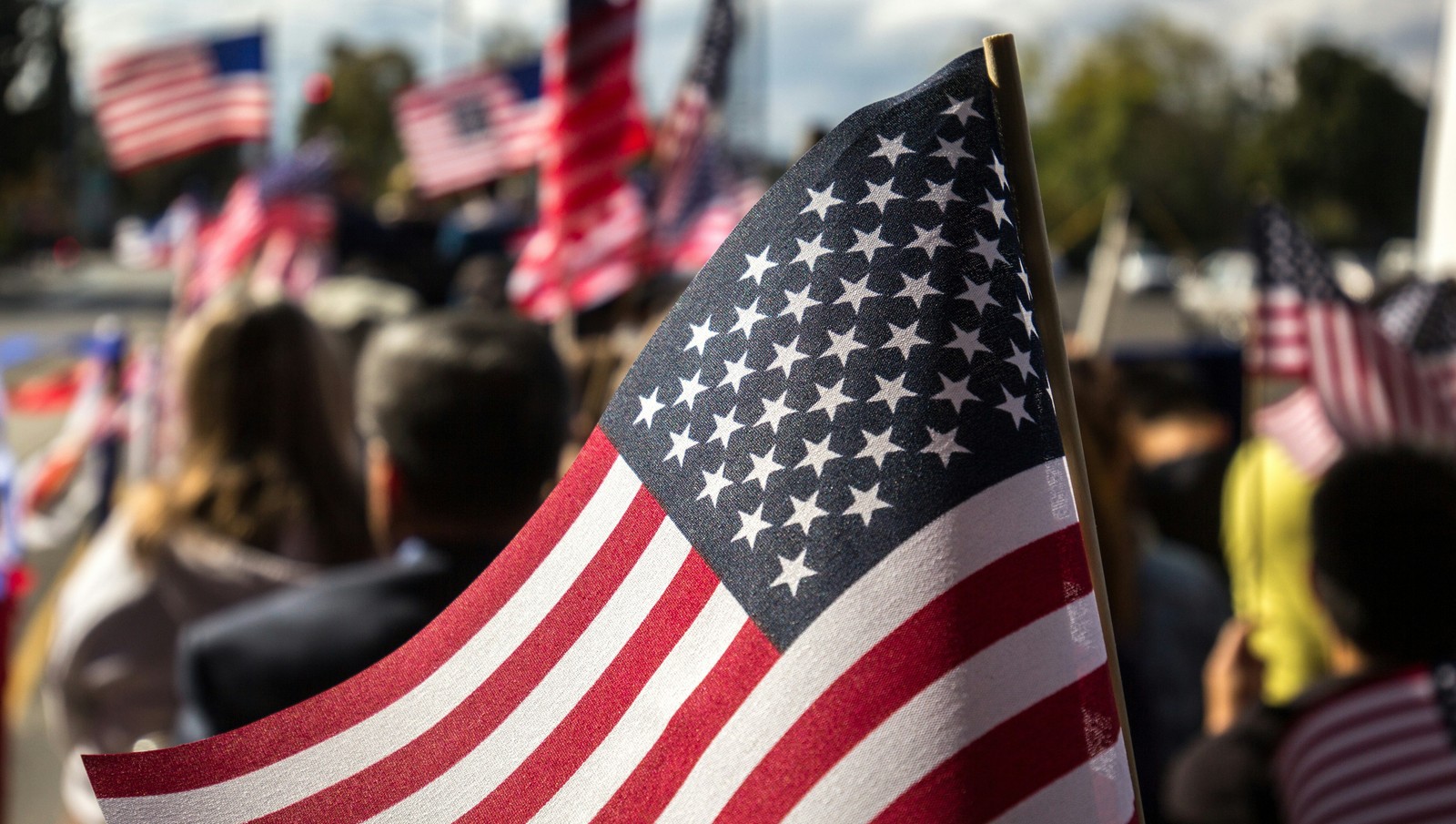
Patriotism isn’t just about fireworks and flags; it’s also about values, courage, and unity. From the Founding Fathers to modern leaders, American history is filled with powerful words and phrases that inspire reflection on freedom, bravery, and responsibility. These quotes speak to the American spirit, reminding us of who we are and what we stand for. Let’s explore these timeless expressions of patriotism and the wise people who said them!

1
Ralph Waldo Emerson

Image: Samantha Jean

Emerson, a celebrated essayist and poet, found joy in trying to describe the essence of the American spirit. His quote "America is another name for opportunity" reflects the belief that America is a land of boundless possibilities where dreams can take root and flourish.

His phrase is from the 19th century, and it resonates with the idea that hard work and determination can turn aspirations into reality. For many, this phrase embodies the American Dream—the promise of a better life through opportunity and perseverance. What do you think about it?

2
Elmer Davis

Image: Wesley Tingey

Elmer Davis, a journalist and WWII-era director of the Office of War Information, deeply understood the connection between freedom and bravery.

His quote "the land of the free… and the home of the brave," emphasizes that liberty doesn’t come without courage. In turn, it’s the bravery of those who defend it that keeps freedom alive.

Quite accurate if we think of the sacrifices many made to build the nation we cherish today. Don’t you agree?

3
John F. Kennedy

Image: History in HD

In his 1961 inaugural address, JFK delivered this unforgettable line: "Ask not what your country can do for you, but what you can do for your country." Do you remember who were the recipients of such a call?

This was a direct appeal to all Americans, to prioritize service over self-interest. It was a rallying cry during a time of change and uncertainty, inspiring citizens to contribute to the greater good. The underlying message? Patriotism isn’t passive, it’s about active participation.

4
Benjamin Franklin

Image: Adam Nir

Benjamin Franklin, one of America’s founding fathers, believed that liberty was the cornerstone of a great nation and we all agree with him! His quote, "Where liberty is, there is my country," underscores his commitment to freedom, wherever it might be found.

During the Revolutionary War, Franklin’s words carried immense weight, symbolizing the fight for independence. For Franklin, protecting freedom wasn’t just a right; it was a responsibility.

5
Calvin Coolidge

Image: William Rudolph

Coolidge, the 30th US president, had a no-nonsense approach to patriotism. To him, it wasn’t about grand gestures or flashy displays but about taking care of your community and nation. His quote, " Patriotism means looking out for your country ," reflects a practical, everyday kind of patriotism—one rooted in responsibility and mutual care.

From lending a hand to a neighbor to preserving natural resources, it’s all about the small acts of kindness that add up to a stronger country.

6
Frederick Douglass

Image: Tim Mossholder

Freedom and bravery are common in patriotic quotes, but Frederick Douglass, a former enslaved man turned abolitionist leader, understood the moral backbone a nation needs to thrive too.

His quote, "Honesty keeps the nation secure," reminds us that truthfulness and virtue are essential for lasting security and justice. His words challenge us to strive for integrity in our actions and decisions. After all, a nation built on truth is a nation that endures, don’t you agree?

7
Thurgood Marshall

Image: Jason Richard

Thurgood Marshall, the first Black Supreme Court Justice, spoke these powerful words about democracy: "Make it. Protect it. Pass it on."

His message is quite clear: democracy and responsibility go hand in hand. It requires effort to build, vigilance to protect, and a commitment to pass it down to future generations. In just three simple steps, he captured the essence of what it takes to sustain democracy—and it’s all up to us.

8
Eleanor Roosevelt

Image: Thomas Park

It was only right to include a woman in this article. Eleanor Roosevelt, First Lady, and human rights advocate, redefined the definition of patriotism to include dignity and equality for all.

Her quote, "True patriotism knows no borders," challenges us to think beyond national lines and embrace universal values like freedom and respect. Her words are a call to take patriotism—and the American ideals of dignity and growth—wherever we go, ensuring that everyone has the opportunity to thrive.

9
Thomas Wolfe

Image: Ian MacDonald

Novelist Thomas Wolfe had a poetic way of capturing the magic of America—and we love it. His quote, "Miracles happen all the time in America," celebrates the idea that this country is a land of endless possibilities, where the extraordinary can feel quite ordinary.

From scientific breakthroughs to everyday acts of kindness, Wolfe saw America as a place where hope and wonder flourish. No wonder we developed the whole concept of the American Dream, huh?

10
Robert Frost

Image: Wilson Hobbs

Another poet makes an appearance in this article—our beloved Robert Frost. He wasn’t afraid to speak his mind, and his quote, "Freedom lies in being bold," is all about that!

For him, freedom is closely tied to courage, and the willingness to take risks and stand firm in the face of adversity. Both in personal choices or collective action, Frost’s words value independence and self-expression.

11
Franklin D. Roosevelt

Image: Daniele La Rosa Messina

This might be the most powerful quote in the article. While the other phrases speak of freedom as something granted, FDR—a president who led America through the Great Depression and WWII—understood the hard work behind true freedom.

His quote, "Freedom must be achieved, not given," takes a step back and makes sure nobody takes it for granted!

History History 3 min read

What would you take?

You'll never believe the things we've sent into space

Image: Pixabay / karen_la_banda

NASA has strict rules about non-essential items. And yet, over the decades, astronauts have managed to bring along all sorts of odd objects in their Personal Preference Kits. Sure, some may have been marketing stunts—like the time Pizza Hut delivered a meal to the International Space Station—but others were personal caprices, like David Walker’s gorilla suit smuggled onboard in 1984. Read on to discover the full list!

1
A gorilla suit

Image: ARTISTIC FRAMES

Space can get boring. It got a little more entertaining for astronaut Scott Kelly in 2016, when his twin brother, Mark Kelly, sent him a vacuum-sealed gorilla suit all the way to the ISS for his birthday.

Kelly’s crewmates didn’t know about it, so he had fun pranking them by suddenly appearing in the suit aboard the station. One of the prank videos went viral. As Kelly put it: "How can you not like space gorilla?"

2
Dirt from Yankee Stadium

Image: Chanan Greenblatt

Astronaut Garrett Reisman, a lifelong Yankees fan, of course, took a little piece of the Bronx to orbit . In 2008, aboard Space Shuttle Endeavour on mission STS-123, he brought a vial of dirt from Yankee Stadium’s pitcher’s mound—along with other Yankees memorabilia, including items autographed by players.

3
Amelia Earhart’s watch

Image: Tomas Martinez

In 2010, astronaut Shannon Walker brought Amelia Earhart’s watch to the International Space Station. The legendary aviator had worn it during two transatlantic flights , and it traveled to space on the 82nd anniversary of her first historic solo flight across the Atlantic.

4
Pizza

Image: Alan Hardman

Space pizza finally became a reality in 2001, when Pizza Hut paid millions to deliver a vacuum-sealed pizza to the International Space Station.

It was, quite literally, a publicity stunt out of this world . The pizza—topped with salami to withstand space conditions—was eaten by Russian cosmonaut Yuri Usachov aboard the ISS.

5
Pieces of the Wright Brothers’ first plane

Image: History in HD

Tucked into Neil Armstrong’s spacesuit was a small piece of fabric and a fragment of wood from the Wright Brothers' 1903 Flyer—carried all the way from Kitty Hawk to the Sea of Tranquility . He took them with him as he became the first person to step onto the Moon in 1969.

6
A set of instruments to play "Jingle Bells"

Image: Ali Rashedi

Just before Christmas in 1965, astronauts Wally Schirra and Tom Stafford pulled off a surprise serenade in space.

They had smuggled a harmonica and a set of sleigh bells aboard their Gemini 6A mission and played "Jingle Bells" for Mission Control—creating the first musical performance ever in space . The instruments are now on display at the Smithsonian Institution.

7
Several LEGO pieces

Image: Eugene Chystiakov

NASA's collaboration with LEGO took a literal leap when, in 2011, sets of LEGO bricks were sent to the International Space Station aboard mission STS-133.

Astronauts assembled models—such as the Hubble Space Telescope—in microgravity, engaging students around the world in STEM education.

8
A Buzz Lightyear toy

Image: Brian McGowan

Buzz Lightyear truly went " to infinity and beyond " when a 12-inch action figure flew aboard Space Shuttle Discovery in 2008. Spending 15 months on the International Space Station, Buzz was part of NASA’s educational outreach efforts.

Upon return, he was honored with a parade at Disney World and now resides in the Smithsonian’s National Air and Space Museum.

9
A lightsaber

Image: superneox lightsaber

In a nod to sci-fi fandom, a lightsaber prop used by Mark Hamill in Return of the Jedi journeyed to space aboard Space Shuttle Discovery in 2007.

The initiative celebrated the 30th anniversary of Star Wars , symbolizing the intersection of science fiction and real-world space exploration.

10
Dinosaur bones

Image: Jesper Aggergaard

In 1985, during NASA's SpaceLab 2 mission, astronaut Loren Acton brought aboard a fossilized bone and a piece of eggshell from Maiasaura peeblesorum , a dinosaur species known for nurturing its young.

These fossils, discovered in Montana , were sent to space to symbolize the connection between Earth’s prehistoric life and space exploration.​

11
Communion bread and wine

Image: James Coleman

In a very profound gesture, Buzz Aldrin privately took Christian communion aboard Apollo 11. As a Presbyterian elder , he carried a tiny wafer and a small pouch of wine, blessing them while orbiting the Moon shortly after the lunar landing.

12
Golf clubs (and golf balls)

Image: Peter Drew

During Apollo 14, Alan Shepard secretly packed a makeshift 6-iron —a golf club head duct-taped to a lunar tool—and two golf balls.

On live TV, he took a couple of awkward, one-handed swings while wearing his stiff spacesuit. The first ball flopped; the second soared "miles and miles," Shepard joked. It actually traveled about 40 yards, which is quite impressive in lunar terms.

History History 4 min read

America through songs

10 songs that preserve America’s greatest stories

Image: Anmol Arora / Chris Robert

Music has always been a way for Americans to reflect on their shared history, both struggles and victories. From heartfelt anthems about our most beautiful landscapes to bittersweet reflections on failed dreams, there is no shortage of melodies that place America at their center. Hum along with us through these 10 unforgettable songs that blend art and history, making us reflect on what was gained and lost along the way.

1
"Born in the U.S.A." – Bruce Springsteen

Image: Jose Antonio Gallego Vázquez

This 1984 anthem by "The Boss" captures the struggles of Vietnam veterans returning to a country that seems to have forgotten them. While often mistaken as a patriotic rally cry, its verses lament economic hardship and societal neglect.

Springsteen's raw vocals and gritty lyrics juxtapose against its rousing melody, making it one of America’s most misunderstood yet powerful songs. The album was a commercial success, solidifying its place in rock history.

2
"American Pie" – Don McLean

Image: Priscilla Du Preez

Released in 1971, McLean’s eight-minute epic recounts America’s loss of innocence following Buddy Holly’s death in 1959. The song’s nostalgic tone and layered storytelling made it an instant classic, with its complex lyrics referencing a myriad of cultural and political events of the 1960s.

While the song is known for its deep, almost cryptic lyrics, McLean chose not to explain its meaning for many years, allowing listeners to interpret it as they saw fit. When asked about the song’s significance, McLean humorously responded, "It means I never have to work again."

3
"We Didn’t Start the Fire" – Billy Joel

Image: Matt C

Another hit song known for its rapid-fire, name-dropping lyrics, "We Didn’t Start the Fire" chronicles major American events and figures from 1949 to 1989—a true history lesson packed into a pop hit.

According to Joel, the idea came from a conversation with a younger friend, who suggested that no era could have been more chaotic than the one they were living in. This prompted Joel to write a song demonstrating that every era has its own share of turmoil, showing that there’s nothing new under the sun.

4
"Take Me Home, Country Roads" – John Denver

Image: Mario Scheibl

This 1971 ode to West Virginia celebrates the beauty of rural America. Denver’s tender vocals and vivid imagery perfectly capture the essence of small-town life and evoke a sense of nostalgia for simpler times.

In the chorus, Denver depicts the roads to West Virginia as a guiding force, leading him back to a place where he truly belongs, affectionately calling the state "Mountain Mama." The song has since become a symbol of Appalachian pride, performed at countless events, and even adopted as an official state anthem.

5
"Paradise" – John Prine

Image: Albert Hyseni

Prine’s 1971 bittersweet ballad tells the story of a small Kentucky town destroyed by coal mining. Although Prine was from Chicago, his family hailed from the Appalachian region, specifically the town of Paradise, Kentucky.

Large-scale strip mining from the 1950s to the 1970s wiped Paradise off the map, as thousands of acres were stripped. During that time, regulation of strip mining was minimal at best, and even today, the environmental and societal scars of this practice are still visible.

6
"Casey Jones" – Mississippi John Hurt

Image: Tim Wildsmith

"The Ballad of Casey Jones," also known as simply "Casey Jones," is a traditional American folk song about railroad engineer Casey Jones and his death while driving the train he was operating.

Although Mississippi John Hurt isn’t the only artist to cover this subject, his version neatly and beautifully sums up the story of this almost forgotten American hero — a heroic railroad engineer who sacrificed his life to save passengers during a train crash in 1900.

7
"Pancho and Lefty" – Townes Van Zandt

Image: Cemrecan Yurtman

Though originally written by Van Zandt, Willie Nelson and Merle Haggard’s 1983 rendition made this tale of two outlaws iconic. It tells the mysterious story of Pancho, a legendary gunslinger betrayed by his partner Lefty.

One reason the song remains so enduring may be its open-ended lyrics, which invite listeners to imagine the untold parts of the story. Plus, who doesn’t love a song about outlaws on the run in the good old days?

8
"The Night They Drove Old Dixie Down" – The Band

Image: Rick Lobs

This 1969 song tells the story of a Confederate soldier reflecting on the fall of the South during the Civil War. Its deeply human perspective makes it stand out, resonating with empathy on the subjects of war and its aftermath.

One of the group's most successful songs, its carefully crafted lyrics bring an overwhelming human sense of history, reminding us of the suffering of those who were quickly forgotten after the war.

9
"Pastures of Plenty" – Woody Guthrie

Image: Samantha Sheppard

This 1941 song tells the story of Dust Bowl migrants seeking work in California. Guthrie's soulful lyrics seek to capture their resilience amid poverty and displacement.

Written as a tribute to these migrant workers, the song evokes the world described in John Steinbeck’s The Grapes of Wrath . Curiously, the tune is based on the ballad "Pretty Polly," a traditional folk song from the British Isles that was also popular in the Appalachians.

10
"Wabash Cannonball" – Roy Acuff

Image: Paul Arky

An anthem of railroad culture, "Wabash Cannonball" follows the predicaments of a mythical train of the same name. There are many theories about the origin of "The Wabash Cannonball." Some believe it originated in American hobo culture, serving as a "death coach" that appeared at the death of a hobo to carry his soul to its reward.

Another theory suggests the song is based on a popular tall tale about Cal S. Bunyan, Paul Bunyan's brother, who supposedly constructed a railroad so the train could travel so fast it arrived at its destination before it even departed.

Explore more American facts

Choose your favorite category!

General
General

As American as apple pie—the very best America has to offer!

Culture
Culture

Delve into the astounding richness of American lore.

Geography
Geography

Hop in and explore vast and diverse American landscapes.

History
History

Discover the key moments that shaped the United States.