Geography Geography 4 min read

Paying homage to fauna

Why is Buffalo, NY, named like that?
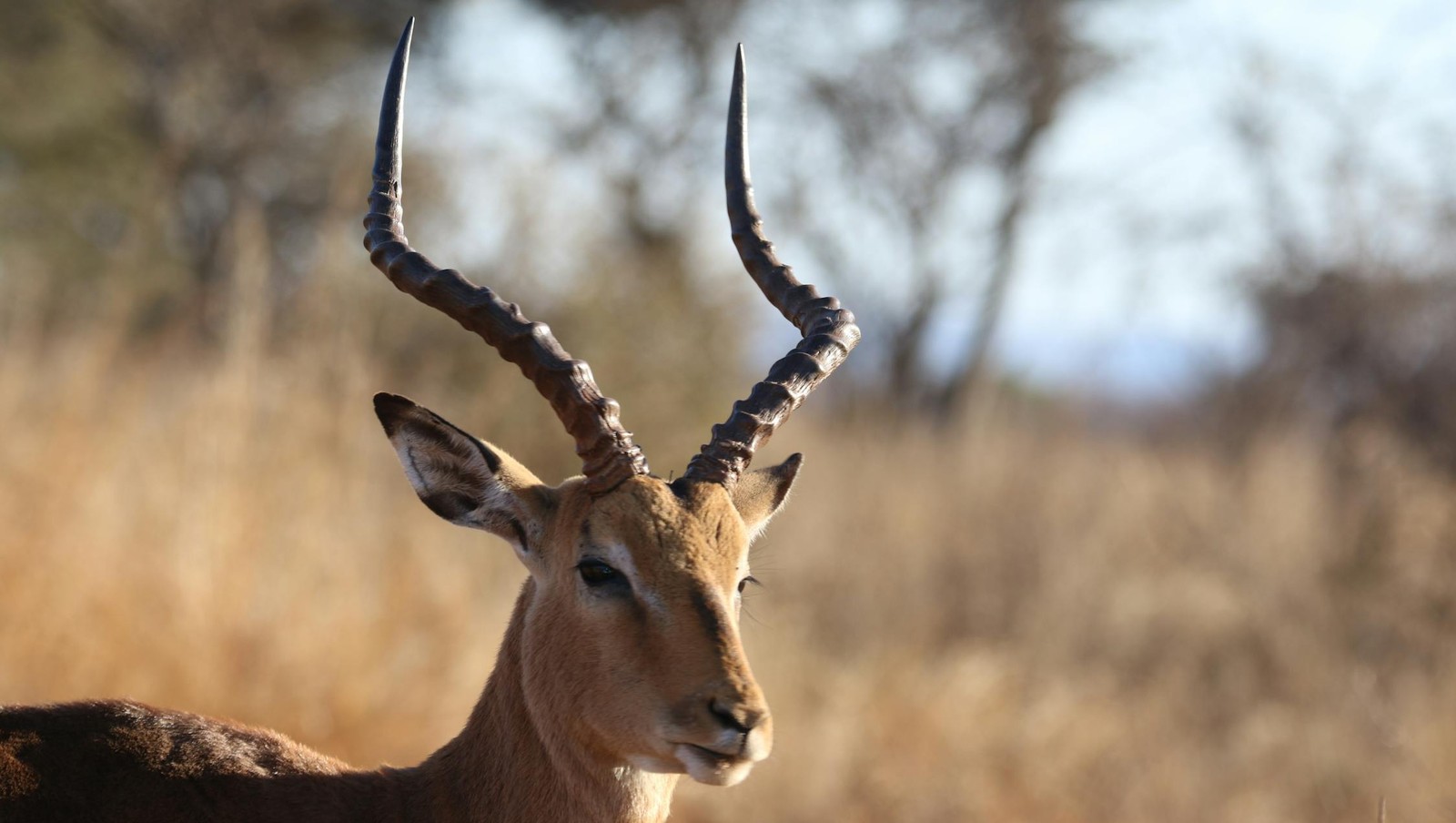
Image: Magda Ehlers

The American landscape is dotted with places named after creatures, great and small. Sometimes these names were a nod to nature, and other times a big misunderstanding. Today, such names remain in slogans and memorabilia around the city, even in places where residents have never seen, say, a White Salmon. So let’s take a cross-country trip through the places where the beasts live on, even if only in bronze statues and welcome signs.

1
Antelope Canyon, Arizona

Image: Paul IJsendoorn

Technically, pronghorns are not true antelopes , but try telling that to early settlers. This stunning slot canyon was named in their honor.

Winding through the Navajo Nation in northern Arizona, its entrance was once grazed by herds of pronghorns gracefully navigating the red rock terrain. Although the original inhabitants have mostly been scared away, the beautiful landscape remains.

2
Buffalo, New York

Image: Pixabay

Despite the name, no actual buffalo roam here—only football fans in snow boots. There are several theories about the origin of the name: some say it comes from the French beau fleuve ("beautiful river"), while others insist early settlers mistook bison sightings for true buffalo .

Either way, the city still honors the animal’s spirit through bronze statues, sports teams, and, of course, Buffalo wings.

3
White Salmon, Washington

Image: Drew Farwell

White Salmon, Washington. This charming town above the Columbia River Gorge got its name from an unusual fish tale. In 1805, Lewis and Clark spotted pale-colored Chinook salmon swimming upstream and named the White Salmon River, which later lent its name to the town.

The white salmon themselves are rare spring sightings, but the name stuck, like a good fishing story.

4
Mammoth Cave, Kentucky

Image: Jonathan Cooper

No, they didn’t find woolly mammoth bones here. The name "Mammoth" refers to the size , not the species, of this mind-bending cave system. With over 400 miles explored, this south-central Kentucky cave is the largest known cave system on Earth.

5
Eagle River, Alaska & Wisconsin

Image: Greg Johnson

Two towns, one majestic bird , and a very straightforward name. In Alaska, Eagle River sits just outside Anchorage, where bald eagles actually soar overhead—and sometimes steal a salmon right out of your hands.

In Wisconsin, Eagle River offers a quieter charm: a hub for lake lovers and snowmobilers who know how often the eagle motif appears on murals, signs, and T-shirts.

6
Wolf Creek Pass, Colorado

Image: Deepak Adhikari

The name alone sounds like it belongs in a Western, and the real place doesn’t disappoint. This high mountain pass in southern Colorado winds its way through the San Juan Mountains, where wolves once prowled the slopes .

Though they’ve long been gone from the area, the name remains, also immortalized in a song by C.W. McCall.

7
Pelican Bay, Florida

Image: J Dean

This coastal enclave near Naples is all palm trees, golf carts, and private beaches, but yes, there are still pelicans.

Big, slightly clumsy, and oddly charming , they’re often seen gliding above the Gulf waters or crash-landing into the surf. The bay itself is a protected estuary, and the birds serve as unofficial greeters.

8
Moose, Wyoming

Image: Danika Perkinson

If you were to walk around the area, you’d understand why this town got its name: actual moose wander here. Just outside Grand Teton National Park, the scenic town of Moose offers ranger stations, cozy lodges, and the occasional 1,200-pound mammal chewing shrubs near the parking lot.

9
Fox River, Illinois & Wisconsin

Image: David Gomez

This river wasn’t named directly after the clever creature, but after the Fox (Meskwaki) Native American tribe . The winding river flows more than 200 miles, passing through Midwest towns, bike trails, and history-rich spots

Today, statues, murals, and local school mascots keep the fox theme alive, although you’re unlikely to spot a red fox along the riverbanks these days.

10
Bear Lake, Utah & Idaho

Image: Megan Nixon

This turquoise lake marks the Utah–Idaho border and was named after, you guessed it, actual bears.

Grizzly and black bears once roamed the surrounding area, though nowadays you’re more likely to spot jet skis than paw prints. Locals call it the "Caribbean of the Rockies," thanks to its unique limestone-rich, electric-blue waters.

11
Cougar, Washington

Image: Leah Huyghe

Cougar, a tiny town in southwestern Washington, gets its name from the sleek mountain lions that once roamed the thick forests nearby. The area is best known for its proximity to Mount St. Helens. A post office called "Cougar" was established there in the early 1900s, and the unincorporated community followed soon after.

12
Coyote, California

Image: Kaylin Pacheco

In what is now Silicon Valley, Coyote was once a standalone ranch town named for the clever canines that run across the hills.

While coyotes still prowl the region—occasionally crashing backyard barbecues—the town itself has been mostly absorbed into San Jose. Still, the name lingers in road signs, local parks, and historic maps.

13
Hawk Mountain, Pennsylvania

Image: Frank Cone

High above the Appalachian ridges of eastern Pennsylvania, Hawk Mountain is a sanctuary. It was transformed into the world’s first refuge for birds of prey in the 1930s.

Today, birdwatchers flock here every fall to witness thousands of hawks, eagles, and falcons gliding overhead. There’s no town—just trails and sky.

Geography Geography 6 min read

Natural wonders worth the trip

From Crater Lake to Devils Tower: Top 10 landmarks in U.S. National Parks

Image: Adam Smotkin

America's national parks are among the most diverse and richest in the world. Deserts, forests, geysers, ancient trees, and giant mountains are just some of the most spectacular features our cherished national parks preserve within their boundaries. In this article, we have selected the 10 must-see landmarks you can’t miss when visiting U.S. National Parks.

1
Grand Teton and its central peaks

Image: Toan Chu

No matter how many national parks you visit, Grand Teton will always rank among the most beautiful in the country. As evocative as it is inspiring, this national park in northwestern Wyoming saw the arrival of the first settlers, the brave frontiersmen. It also offers some of the most breathtaking mountain scenery in the world and is a great place for climbing and hiking enthusiasts.

The highest mountain in the park is Grand Teton itself, standing at 13,770 feet, but there are 10 other peaks that reach an impressive height of more than 11,000 feet. The interesting thing is that, to the naked eye, these mountains appear even larger, since they all rise abruptly from the otherwise flat terrain of the Jackson Hole Valley. Six alpine lakes nestled in the foothills of the central peaks, along with a fascinating array of wildlife, complete the scenery of one of the best parks on the West Coast of the US.

2
Crater Lake in Crater Lake National Park

Image: Joris Beugels

The deep blue color of Crater Lake has been the objective of many attempted descriptions, but none comes close to the impact you feel when you see it with your own eyes. In fact, the first name given to it by non-native Americans was simply "Deep Blue Lake." This intense blue color is a result of the lake’s immense depth —reaching 1,932 feet at its deepest point—making it one of the world’s deepest lakes.

Located in south-central Oregon, this volcanic crater lake spans 5 miles in width and 6 miles in length, with a 20-mile shoreline. The dimensions and color are enough to attract visitors, but its setting, surrounded by lava cliffs ranging from 500 to 2,000 feet above the lake's surface, makes it all the more remarkable.

There are many ways to enjoy Crater Lake, which is beautiful all year round. In winter you can rejoice in a true winter wonderland, and in summer, you can hike the trails and go boating or fishing in the bright blue water.

3
Mount Rainier

Image: Peter Robbins

Perhaps the most famous peak in the Pacific Northwest’s Cascade Range is Mount Rainier. This dormant—but not extinct—ice-clad volcanic mountain stands at an impressive 14,410 feet. Though it is not the highest of mountains, Mount Rainier’s sheer bulk and the fact that it is set apart from its neighboring peaks make it the dominant landmark of the region. So much so that it is commonly referred to by locals simply as "The Mountain."

Located in Washington State, just 59 miles south-southeast of Seattle, Mount Rainier is visible from over 100 miles away on clear days. Rainier’s legendary beauty is as great as its overpowering size. Its 27 glaciers cover more than 34 square miles, making it the largest single-peak glacial system in the lower 48 states.

4
Half Dome in Yosemite

Image: Aaron Lee

Yosemite National Park in California is justifiably one of America's most famous and beloved parks. Its spectacular scenery is sure to impress even those who have seen practically every other park in the country. And, in turn, probably the most iconic landmark of Yosemite is Half Dome, a quartz monzonite batholith that rises 8,800 feet above sea level.

Once considered impossible to climb, Half Dome now draws thousands of adventurers to its distinctive, hooked summit each year. The 14- to 16-mile round-trip hike via the Half Dome Cable Route offers outstanding panoramic views of Vernal and Nevada Falls, Liberty Cap, Yosemite Valley, and the High Sierra. This is a journey you definitely can't miss!

5
Hyperion Tree in Redwoods National Park

Image: Josh Carter

Redwood National Park in Northern California protects nearly 140,000 acres of land and almost 40 miles of Pacific coastline. Bathed in a temperate rainforest climate, the park receives up to 140 inches of rainfall annually. This cool moisture, along with rich forest-floor soil and the trees' ability to sprout new buds, allows coast redwoods to reach lofty heights and venerable old age.

These exceptional conditions have made this park home to the world's tallest tree. Standing at an astonishing 380.3 feet, Hyperion, a Sequoia sempervirens , is considered the tallest living thing on record, including the plant and animal kingdoms. Most experts say it’s 600 years old, although some think it may be as old as 900 years. Currently, the exact location of Hyperion is not publicized to protect it from potential damage from mass tourism.

6
Mount Mckinley in Denali

Image: John Feng

Mount McKinley is the highest point in North America , standing at an awe-inspiring 20,320 feet. The almost-four-mile-high giant was known to the Native Americans of Alaska as Denali , "The Great One," a fitting tribute to one of the world’s best-known mountains.

During winter, on clear days, it is possible to see the glacier-capped summit, and the true power of nature manifests itself. In spring, when the snow melts, nature unfolds, wildflowers bloom, grizzly bears emerge from their long hibernation, and you can find mooses, caribous, foxes, and wolves roaming around the park for a memorable encounter with the wilderness.

7
Devils Tower National Monument

Image: Mick Kirchman

Devils Tower is one of the most recognizable landmarks, not only in Wyoming but in the entire United States. Rising 867 feet, this gigantic monolith is visible from up to 100 miles away on clear days! Devils Tower is particularly striking because of its huge, hexagonal rock columns, estimated to be around 50 million years old. The butte is also among the most unusual of the many geologic formations in the country.

Another interesting fact about Devils Tower is that it was designated as the first U.S. national monument in 1906 by Theodore Roosevelt, under the Antiquities Act, due to its scientific and scenic value. Native Americans have long regarded the Tower as a sacred site too. In fact, over 20 Native American tribes have a cultural connection with it, the Lakota people consider it the birthplace of wisdom.

8
Delicate Arch in Arches National Park

Image: Zoshua Colah

Spanning 76,680 acres of desert land, Arches National Park in eastern Utah protects more than 2,000 natural sandstone arches. But perhaps the most iconic one is the 52-foot-tall Delicate Arch. It’s so famous that its image appears on state license plates as well as on a postage stamp issued in 1996 to commemorate the 100th anniversary of Utah's founding. Fun fact: the Olympic torch for the 2002 Salt Lake City Winter Olympics even passed under this arch!

In addition to checking out its most emblematic landmark, this park is a great place to visit any time of the year thanks to its hot, desert climate . There are lots of activities for outdoor enthusiasts, from biking, horseback riding, and hiking to taking a minute to appreciate the colorful wildflowers while enjoying an idyllic sunset.

9
Old Faithful in Yellowstone National Park

Image: Emily Campbell

Yellowstone is probably the name people are most likely to associate with "national park" and is the very symbol of the American West. It was established by President Ulysses S. Grant in 1872 and is the largest megafauna location in the United States. Apart from its scenic mountains, wildflower meadows, and photogenic canyon, perhaps the most emblematic features of Yellowstone National Park are its geysers.

Among these, Old Faithful is certainly the most famous one. Erupting approximately every 90 minutes, it delights visitors with spectacular displays. Shooting up to 8,400 gallons of boiling water nearly 150 feet in the air, it was the first of its kind to be discovered in 1870 by the Washburn-Langford-Doane Expedition when they entered the Upper Geyser Basin. Today, Old Faithful attracts around 500,000 visitors a month.

10
Angels Landing in Zion National Park

Image: Fineas Anton

Zion National Park in southwestern Utah is famous for its brownish-red mountains with fantastic shades of purple and lilac, skinny slot canyons, and vertigo-inducing cliffs. The most paradigmatic of these rock formations is Angels Landing, a towering 1,488-foot monolith, accessible via a challenging 2.5-mile trail.

The best way to experience Zion is by hiking the trail that hugs the cliffside, crossing a narrow ridge flanked by sheer drops. Sounds too dangerous? Believe us, the reward is worthwhile. Atop Angels Landing you will not only have access to an epic view of Zion Canyon but it's also possible to spot California condors soaring gracefully between the sandstone monoliths, alongside 287 other bird species!

Geography Geography 4 min read

Blue for miles

Can you guess which states have the longest coastlines? Yes, Alaska's one

Image: Nick Perez

Probably all of us know that Alaska is the state with the longest coastline —featuring a whopping 33,904 miles of water sights , including tidal inlets. But can you name the state with the second-longest coastline, or the third? Let’s explore the 13 states with the longest coastlines and their highlights—you might just decide on a future vacation there!

1
Hawaii (1,052 miles)

Image: Karsten Winegeart

Over 1,052 miles of volcanic islands, a unique blend of black sand beaches, lush rainforests, and vibrant coral reefs await.

Snorkel with sea turtles in Hanauma Bay on Oahu, or learn to surf on the legendary waves of Waikiki Beach. You could also visit the dramatic cliffs of Kauai, featured in film sagas like Jurassic Park and Pirates of the Caribbean.

2
Oregon (1,410 miles)

Image: Dave Hoefler

You might remember seeing Haystack Rock featured in the film The Goonies , or glimpses of the charming town of Astoria , where the classic Free Willy was filmed.

These are just two of the many jewels of Oregon's Pacific coastline. Dramatic sea stacks, hidden coves, and beautiful towns like Cannon Beach also await.

3
New York (2,625 miles)

Image: Tommy Kwak

New York's coastline offers a mix of bustling beaches, charming towns, and iconic landmarks. There’s the famous Coney Island boardwalk , as well as the historic lighthouses and sandy shores of Long Island.

If you’ve seen the romantic drama Eternal Sunshine of the Spotless Mind , surely you’ve felt curious about visiting the remote, nostalgic beaches of Montauk.

4
Washington (3,026 miles)

Image: Jennifer Arlem Molina

Rugged beaches, dramatic cliffs, and waterfront cities line the 3,026 miles of Washington's coastline. You can visit Pike Place Market in Seattle, or take a ferry to the Olympic Peninsula to hike through rainforests and explore tide pools.

The Washington State Ferries system can also take you to the San Juan Islands archipelago, famous for its forest waterfalls and whale-watching tours.

5
Virginia (3,315 miles)

Image: Steve Adams

Virginia ranks among the 10 states with the longest coastlines. Its sandy beaches and wide shores are also home to many historical landmarks .

You can explore Colonial Williamsburg, the Virginia Beach Boardwalk, as well as Mount Vernon by the Potomac River.

6
Texas (3,359 miles)

Image: Thomas Park

On Texas's Gulf Coast, you'll find Padre Island, the longest barrier island in the world , with pristine beaches and a haven for wildlife. There’s also Galveston Island, which blends history and entertainment with its Victorian architecture, museums, and family-friendly attractions like Moody Gardens.

7
North Carolina (3,375 miles)

Image: Joe Dudeck

The iconic Cape Hatteras Lighthouse is just one of the stunning views along North Carolina's Outer Banks. This state is famous for its Outer Banks , a chain of barrier islands with windswept beaches.

A notable attraction is the shipwreck-littered Graveyard of the Atlantic, a stretch of treacherous waters that fascinates many and features its own museum. And we can’t forget the historic Kitty Hawk, where the Wright brothers made their first flight.

8
Michigan (3,288 miles)

Image: John Schaidler

With over 3,000 miles of Great Lakes coastline, Michigan offers some of the most diverse shoreline experiences in the US.

You can explore the Sleeping Bear Dunes National Lakeshore along Lake Michigan, or step back in time on Mackinac Island, known for its Victorian charm and car-free roads . Another gem is the Pictured Rocks National Lakeshore on Lake Superior, with its dramatic cliffs.

9
Maine (3,478 miles)

Image: Rachel C

Maine's rugged coastline is a haven for outdoor enthusiasts, featuring cliffs, picturesque fishing villages, and abundant wildlife.

If you love animals in their natural habitat, you can visit seals and puffins in Bar Harbour. If you like hiking to stunning views, you can visit Acadia National Park and make it to the top of Cadillac Mountain .

10
California (3,427 miles)

Image: Meriç Dağlı

The Golden Coast must be included, of course! California's iconic coastline is a dream for beach lovers. Surfers can catch waves in Huntington Beach, a.k.a. "Surf City USA."

Other must-see spots include the Golden Gate Recreation Area, San Diego’s La Jolla, and, of course, Santa Monica’s colorful and bustling pier and boardwalk .

11
Louisiana (7,721 miles)

Image: Brent Woods

Louisiana's bayous and wetlands make its coastline unique. The Mississippi River Delta is an ecological treasure, home to abundant birdlife and fisheries, while the Atchafalaya Basin boasts the largest wetland and swamp in the US.

Of course, New Orleans is the cultural heart of this state, where jazz, gumbo, and beignets summon tourists from all over the world.

12
Florida (8,436 miles)

Image: Lance Asper

Florida! Sun-kissed beaches year-round and magnetic turquoise waters make this state’s coastline one of the most visited in the country.

The Florida Keys offer coral reefs perfect for diving, especially in John Pennekamp Coral Reef State Park. One should explore Miami Beach’s Art Deco District, the Everglades that spill into Florida Bay, and of course, the dreamy sights along Key West.

13
Alaska (33,904 miles)

Image: jesse orrico

Finally, with over 33,904 miles of coastline, there’s Alaska—a treasure trove of natural wonders like the ice formations of Glacier Bay National Park and the playful otters of Kenai Fjords National Park.

In Juneau, the state capital, you can witness humpback whales breaching in Auke Bay. So, if you don’t mind the cold or the long journey, you might want to visit and experience the breathtaking scenery!

Explore more American facts

Choose your favorite category!

General
General

As American as apple pie—the very best America has to offer!

Culture
Culture

Delve into the astounding richness of American lore.

Geography
Geography

Hop in and explore vast and diverse American landscapes.

History
History

Discover the key moments that shaped the United States.