History History 4 min read

American athletic history

Who did America defeat in "The Miracle on Ice"?

Image: Fredrick Lee

Sports have a remarkable way of keeping us on the edge of our seats during an exciting game, filling our hearts with joy when we see our country claim victory. With that in mind, the sports moments we’ve selected are among the most iconic American wins in history. However, we’re putting a twist on this: While we undoubtedly celebrate the incredible Americans behind these achievements, we’ve decided to highlight those who were defeated by the United States in these legendary contests.

Can you remember the teams and athletes who fell to America in these unforgettable moments? Let’s find out! You’ll find the answers at the end of this quiz, so keep reading!

1
The Miracle on Ice

Image: Jerry Yu

We begin with an unforgettable underdog story. At the 1980 Winter Olympics in Lake Placid , New York , the United States faced what many considered a leviathan in ice hockey history. Adding to the challenge, the American team was composed mostly of 21-year-olds, making it the youngest U.S. squad in Olympic history . Yet, against all odds, these determined players triumphed over a heavily favored opponent in what became known as the " Miracle on Ice ."

Do you remember which formidable rival they defeated?

2
Rumble in the Jungle

Image: Attentie Attentie

Many sports historians consider " The Rumble in the Jungle " to be the greatest boxing match in history. Held in 1974 in what is now the Democratic Republic of the Congo, this legendary bout cemented Muhammad Ali’s place in boxing history. Even more impressively, Ali’s victory came against an undisputed and undefeated heavyweight champion, whom he knocked out in the eighth round.

Though he is not as widely remembered as "The Greatest," this American boxer is still regarded as one of the best fighters of his generation. Can you guess his name?

3
Michael Jordan’s Last Shot
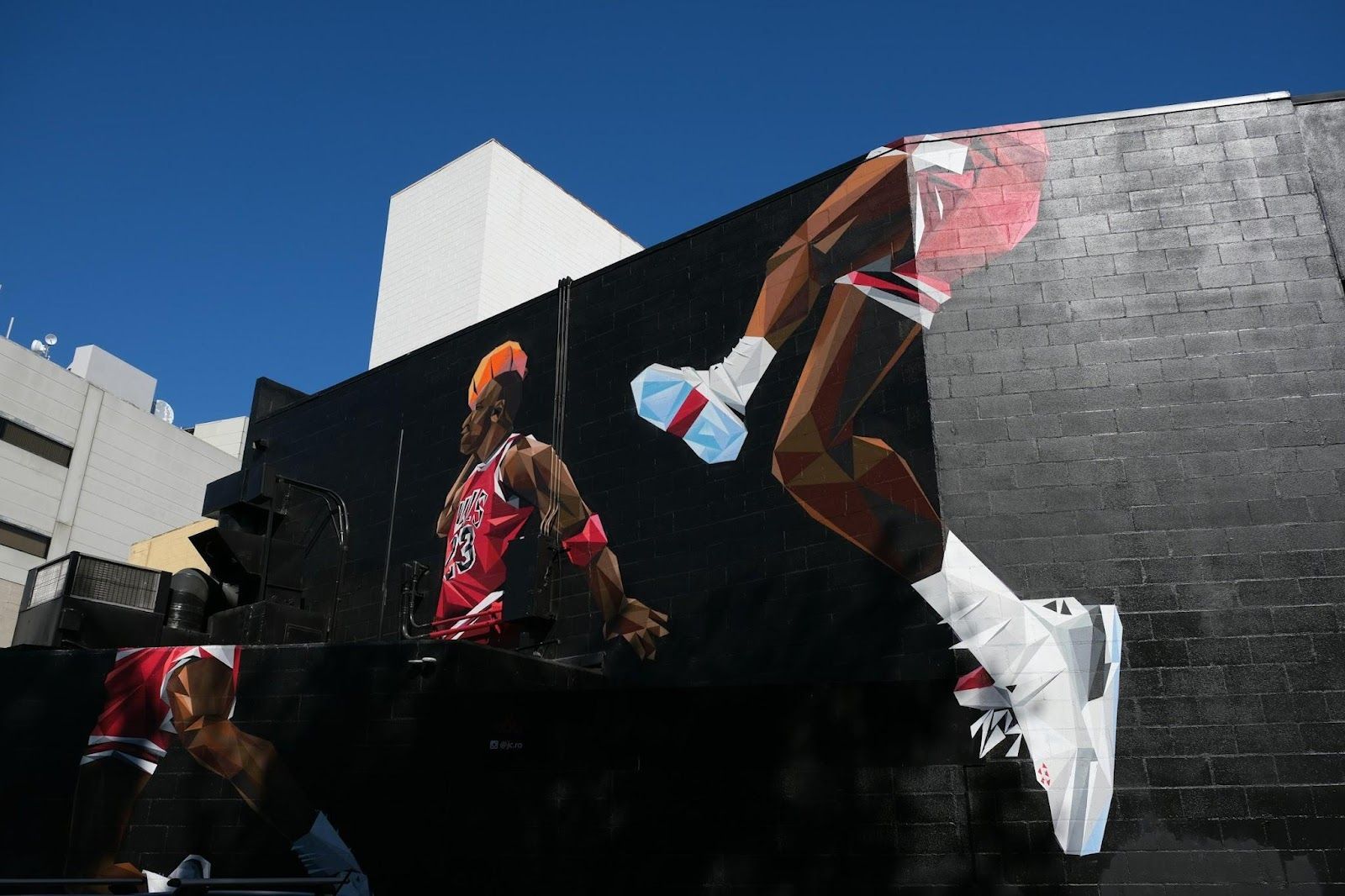
Image: Mike Von

It’s no exaggeration to say that Michael Jordan completely revolutionized basketball worldwide. Over his 15-season career , he delivered countless jaw-dropping moments. As you’d expect, choosing just one was no easy task, but we ultimately selected what is now known as Michael’s "Last Shot."

In the final seconds of the 1998 NBA Finals against the Utah Jazz , Jordan sank a game-winning shot that secured the Bulls’ victory. While you already know which team he scored against, there’s a certain player who is always featured in retellings of this iconic moment. Do you know who we’re talking about?

4
Serena Williams’ Golden Medal in London

Image: Josephine Gasser

What can be said about Serena Williams that hasn’t already been said? Arguably the greatest American tennis player in history, Williams’s career is a collection of remarkable achievements. However, we’ve chosen to highlight one of her later triumphs—her dominant performance at the 2012 London Olympics , where she became only the second woman to complete a career Golden Slam in singles.

Even more impressive was the way she secured her victory, defeating her opponent 6-0, 6-1 to claim the gold medal. Do you know who she faced in that historic match?

5
Michael Phelps's record-breaking achievements in Beijing 2008

Image: Gentrit Sylejmani

During the 2008 Beijing Olympics, the world was introduced to Michael Phelps , an affable kid from Baltimore who achieved the impossible: breaking seven world records and earning eight gold medals —the first step in his journey to becoming the most decorated Olympian of all time.

Phelps’s incredible feats often overshadow his competitors, so we thought we’d take a moment to recognize the swimmers who came close but couldn’t overcome " The Baltimore Bullet ." Do you remember them?

Answers:

6
Miracle on Ice - Soviet Union

Image: Markus Spiske

If you guessed that the Soviet Union was the Goliath defeated by the American team at the Winter Olympics, you were right! At the time of the match, the Soviet team was a four-time defending gold medalist and the heavy favorite to win. Although the United States pulled off a legendary upset, the victory didn’t come easily . The game was a thrilling showdown , with the American team scoring the decisive goal exactly 10 minutes before the final buzzer.

7
Rumble in the Jungle - George Foreman

Image: Johann Walter Bantz

Known as " Big George ," Texas-born boxer George Foreman was defeated by Muhammad Ali in the legendary "Rumble in the Jungle." As mentioned earlier, Ali’s victory was even more remarkable given Foreman’s dominance in the sport—he was a two-time world heavyweight champion , an Olympic gold medalist , and the favorite to win the match. Today, Foreman is remembered not only for his boxing achievements but also for his entrepreneurial success: Since 1994, his iconic George Foreman Grill has sold over 100 million units.

8
Last shot - Bryon Russell

Image: Markus Spiske

The play that would become known as " The Last Shot " began when Michael Jordan stole the ball from Karl Malone and raced down the court. Before taking the shot, he swiftly dodged Utah Jazz defender Bryon Russell , causing him to trip and fall. By the time Russell got back on his feet, the ball was already soaring through the air, swishing through the net and sealing victory for the Bulls.

9
Serena Williams’ Golden Medal - Maria Sharapova

Image: Valentin Balan

Throughout their careers, Serena Williams and Maria Sharapova maintained a high-profile rivalry as two of the biggest names in women’s tennis. Fortunately for tennis lovers everywhere, the 2012 Olympics brought these titans head-to-head, and while Serena dominated the match , it was far from the end of Sharapova’s career—she continued to showcase her talent until retiring in 2020.

10
Michael Phelps - László Cseh and Milorad Čavić

Image: Serena Repice Lentini

As mentioned earlier, Michael Phelps' historic victories at the 2008 Beijing Olympics were unprecedented, and narrowing it down to just one of his competitors wouldn't do justice to the event. Instead, we’d like to highlight a few remarkable runner-ups. Hungarian swimmer László Cseh secured multiple silver medals, often finishing just fractions of a second behind Phelps . Meanwhile, Serbian swimmer Milorad Čavić lost the 100m butterfly by an astonishing one-hundredth of a second —though he still managed to break the European record in the process.

Geography Geography 4 min read

From tropics to glaciers

Land of extremes: 10 climates of the USA

Image: Nihat

From sea to shining sea, America is a vast land, and its diverse climates reflect that. Scorching deserts and icy mountains, the U.S. has it all. And traveling through the country, you can easily experience a heatwave and a snowstorm on the same day. Join us on an epic journey through America's wild extremes, where fierce winds, relentless rain, snowy peaks, and blistering heat reveal the astonishing weather diversity of our nation.

1
Desert Blaze

Image: Manda Hansen

The Mojave Desert spans California, Nevada, and Arizona and is home to Death Valley, where the highest temperature ever recorded on Earth was 134°F in 1913. Despite these hostile conditions, the region still hosts a great diversity of wildlife, including coyotes, bobcats, and desert tortoises, all adapted to survive with minimal water.

The desert’s extreme heat and arid landscape are also home to unique flora such as the Joshua tree, which thrives in spite of the poor soil and dry air.

2
Arctic Frontier

Image: Yuval Zukerman

Alaska's tundra is a cold desert with freezing temperatures and long winters. Permafrost, a layer of permanently frozen ground, covers much of this region, making habitation challenging. However, beneath the ice lies a wealth of natural resources, including vast oil reserves.

During the summer—due to its latitude—the tundra experiences 24-hour daylight, known as the "midnight sun," though the landscape remains largely frozen and treeless. Wildlife, including caribou, arctic foxes, and polar bears, have adapted to survive these extreme conditions.

3
Rocky Peaks

Image: Joshua Woroniecki

The Rockies feature a high-altitude alpine climate, where temperatures drop with elevation, often resulting in snowfall even in the middle of summer. Hikers and tourists from all over the world come to this region to appreciate the striking mountains and its beautiful forests.

These snow-covered peaks are also a crucial part of America’s water supply, as the snowpack feeds major rivers like the Colorado River that provide drinking water to millions in the Southwest.

4
Great Plains Winds

Image: Raychel Sanner

Stretching across the center of the country, the Great Plains is known for its fierce winds and severe weather, particularly tornadoes. Tornado Alley, which covers states like Kansas and Oklahoma, experiences more tornadoes than anywhere else in the world, thanks to the collision of warm Gulf air and cold Arctic fronts.

The region’s semi-arid climate also makes it prone to droughts, as seen during the infamous Dust Bowl of the 1930s. Despite these harsh conditions, the Plains are known as America’s breadbasket, producing massive amounts of wheat, corn, and soybeans that feed the whole nation.

5
Humid South

Image: Michael Sanchez

The Southeast’s humid subtropical climate means long, hot summers with high humidity levels, often reaching over 90%. Frequent thunderstorms and hurricanes are also common in this area, with states like Florida and Louisiana bearing the brunt of some of the most powerful storms in U.S. history, including Hurricane Katrina in 2005.

The warm and wet environment fosters lush and thick vegetation where cypress trees, Spanish moss, and dense wetlands create unique ecosystems. The region is also known for its rich diversity of wildlife, which includes alligators, turtles, and numerous bird species.

6
California Sunshine

Image: Spencer DeMera

Southern California's Mediterranean climate features mild winters and hot, dry summers, with Los Angeles receiving an average of just 15 inches of rain annually. This climate has made the area a global hub for agriculture, especially in the Central Valley, where crops like almonds, avocados, and citrus thrive.

The sunny weather also makes California a popular tourist destination, attracting millions to its beaches and outdoor activities. However, this climate also brings challenges, such as frequent droughts and devastating wildfires that can sweep across the dry landscape.

7
Pacific Northwest Rain

Image: Dave Hoefler

The Pacific Northwest is famous for its temperate rainforests, with areas like the Hoh Rainforest receiving over 140 inches of rain annually. This constant rainfall supports some of the largest and oldest trees in the country, including towering Douglas firs and redwoods.

While the cool air and consistent moisture nourish its rainforests, it also contributes to cloudy skies that block sunlight for much of the year. This prolonged overcast weather is linked to a high incidence of seasonal affective disorder (SAD), as the lack of sunlight affects mood and energy levels for many residents.

8
Tropical Keys

Image: Hector Falcon

The Florida Keys are one of the only regions of the U.S. with true tropical climate, with warm temperatures year-round and rainy and dry seasons rather than the traditional four seasons. Key West, the southernmost point in the country, never experiences freezing temperatures, making it a popular escape during the colder months.

While the tropical breezes make for a laid-back island vibe, the area is also vulnerable to hurricanes, which have historically caused significant damage. Yet, the Keys’ coral reefs, the only living coral barrier reef in the U.S., attract divers from all over the world to explore its colorful marine life.

9
Appalachian Fog

Image: Rachel Davis

The Appalachian Mountains have a temperate climate with heavy rainfall, often shrouded in fog, especially in the Great Smoky Mountains. But the iconic fog of this region isn’t just moisture; it’s actually caused by volatile organic compounds released by the dense forests. These compounds then mix with moisture and sunlight, creating the characteristic blue-tinged haze that gives the Smokies their name.

This consistent moisture also supports the rich biodiversity of the region. The thick forests, often cloaked in mist, provide an ideal environment for countless plant and animal species, making it one of North America's most ecologically diverse areas.

10
New England Winters

Image: Robert Thiemann

New England’s cold, snowy winters have been immortalized in literature and art, and it’s no wonder—states like Maine and Vermont regularly see seasonal snowfalls exceeding 100 inches!

Blizzards and nor’easters are common, with storms bringing fierce winds and heavy snow, sometimes leaving towns isolated for days. The region’s long winters are perfect for skiing, and it is home to some of the oldest ski resorts in America, such as Stowe in Vermont.

Culture Culture 4 min read

If you think you have a busy life, take a look at Franklin’s

What would Franklin do? 10 incredible facts about The First American

Image: Brett Wharton

A true Renaissance man, Benjamin Franklin was a man of many talents who succeeded in almost every field he participated in. He was an editor, author, inventor, scientist, scholar, philosopher, politician, diplomat, and benefactor, among other things. His autobiography—the first of its kind to receive widespread attention—can almost be considered a foolproof manual for living a good and meaningful life. As a humble homage , we have listed below 10 facts about his life, some well-known, some relatively obscure, but all of which help form a picture of this great American character.

1
Printer and newspaper editor

Image: Denny Müller

Benjamin Franklin wanted to be a sailor when he grew up. But his father had lost an older son of his at sea, so he sent him off to learn from his older brother, who was in the printing business. After learning the craft, he left Boston for Philadelphia at age 17 where he became a well-known printer of newspapers and an almanac full of wit and wisdom called Poor Richard’s Almanac , still in print to this day.

Franklin was a prolific author who wrote under several pseudonyms, including Silence Dogood, Polly Baker, and Richard Saunders.

2
Founding father

Image: Dan Mall

A well-known fact about Franklin is his role in the Nation’s foundation. He is the only person in history to have signed all four documents that helped to create the U.S. : the Declaration of Independence, The Treaty of Alliance, Amity, and Commerce with France, the Treaty of Peace between England, France, and the U.S., and the U.S. Constitution.

He famously quipped after signing the Constitution to the people that they had created a republic but warned it would only be one "if you can keep it."

3
American representative abroad

Image: Brett Wharton

A major player abroad, Benjamin Franklin spent years representing the colony of Pennsylvania in England and then later representing the U. S. in France . For his actions abroad, he became universally admired and renowned, playing an important role in securing a French alliance during the Revolutionary War. He also helped to negotiate the Treaty of Paris that officially ended the Revolutionary War.

4
Inventor

Image: AbsolutVision

His restless mind urged Franklin to be on the constant lookout for ways to improve the world through new inventions. His most famous creations were the bifocal glasses and the Franklin stove, but he also invented a pair of swim fins for his hands at age 11, and he was inducted into the International Swimming Hall of Fame in 1968 for his many contributions to the sport.

As for the bifocals, when his vision worsened as he got older, he cut lenses from a pair of glasses that allowed him to see things close up and lenses from another pair of glasses that allowed him to see things far away. He put half of each lens in a single frame to invent bifocals.

5
Scientist

Image: NOAA

The immortal image of Franklin pulling a kite with a key attached to it, while in the middle of a thunderstorm brings us to probably the most famous of all his scientific discoveries: the realization that lightning was an electrical phenomenon . Benjamin Franklin didn’t discover electricity, as some people think, but proved the connection between electricity and lightning.

The whole key-kite-thunderstorm experiment led to his invention of lightning rods for buildings.

6
Musician

Image: Dominik Scythe

Few people know that Benjamin Franklin played several instruments , including the violin, harp, and guitar. He invented the glass armonica after seeing performers make music with glasses of water, which he played by touching the edge of the spinning glass with damp fingers.

In his letters, Franklin recounts many happy evenings playing the armonica alongside his daughter, Sally. "Of all my inventions," Franklin wrote, "the glass armonica has given me the most personal satisfaction."

7
Volunteer Fire Company creator

Image: Sandie Clarke

Worried by the fires that broke out constantly in the area, Franklin founded the Union Fire Company in Philadelphia, Pennsylvania in 1736. This fire company was the first volunteer fire company of its kind in the U.S.

Soon after this volunteer fire company appeared, more and more fire companies spread across the city and soon all over the country, leading to a safer environment in relation to fires.

8
Postmaster

Image: Joanna Kosinska

Franklin was appointed postmaster of Philadelphia in 1737, holding the office until 1753, when he was named deputy postmaster–general of British North America , the first to hold the office. Franklin reorganized the service's accounting system and improved the speed of delivery between Philadelphia, New York, and Boston.

On July 26, 1775, the Second Continental Congress established the United States Post Office and named Franklin as the first United States postmaster general . He had been a postmaster for decades and was a natural choice for the position.

9
Gulf Stream charterer

Image: Max Okhrimenko

Although it was first observed in 1513 by Ponce de Leon, the Gulf Stream was not charted until 1769 by our friend, Benjamin Franklin . Alexander Agassiz, a preeminent oceanographer of the 19th century, attributed the first scientific basis for exploring this stream to Franklin, who had published a map of the Gulf Stream in the previously mentioned year, 200 years before a submersible named after him drifted below the surface to study this river in the ocean.

10
Ben Franklin Effect

Image: Chris Liverani

The final entry on this list is dedicated to a psychological phenomenon known as the Ben Franklin effect. The basic concept behind this phenomenon is that people like someone more after doing a favor for them , and the reasoning is that people believe that they help others because they like them, even if they do not because their minds struggle to maintain logical consistency between their actions and perceptions.

Benjamin quoted what he described as an "old maxim" in his autobiography: "He that has once done you a kindness will be more ready to do you another, than he whom you yourself have obliged."

Explore more American facts

Choose your favorite category!

General
General

As American as apple pie—the very best America has to offer!

Culture
Culture

Delve into the astounding richness of American lore.

Geography
Geography

Hop in and explore vast and diverse American landscapes.

History
History

Discover the key moments that shaped the United States.