Geography Geography 4 min read

Secret cascades worth the trek

Forget Niagara Falls: These hidden American waterfalls are worth the trek
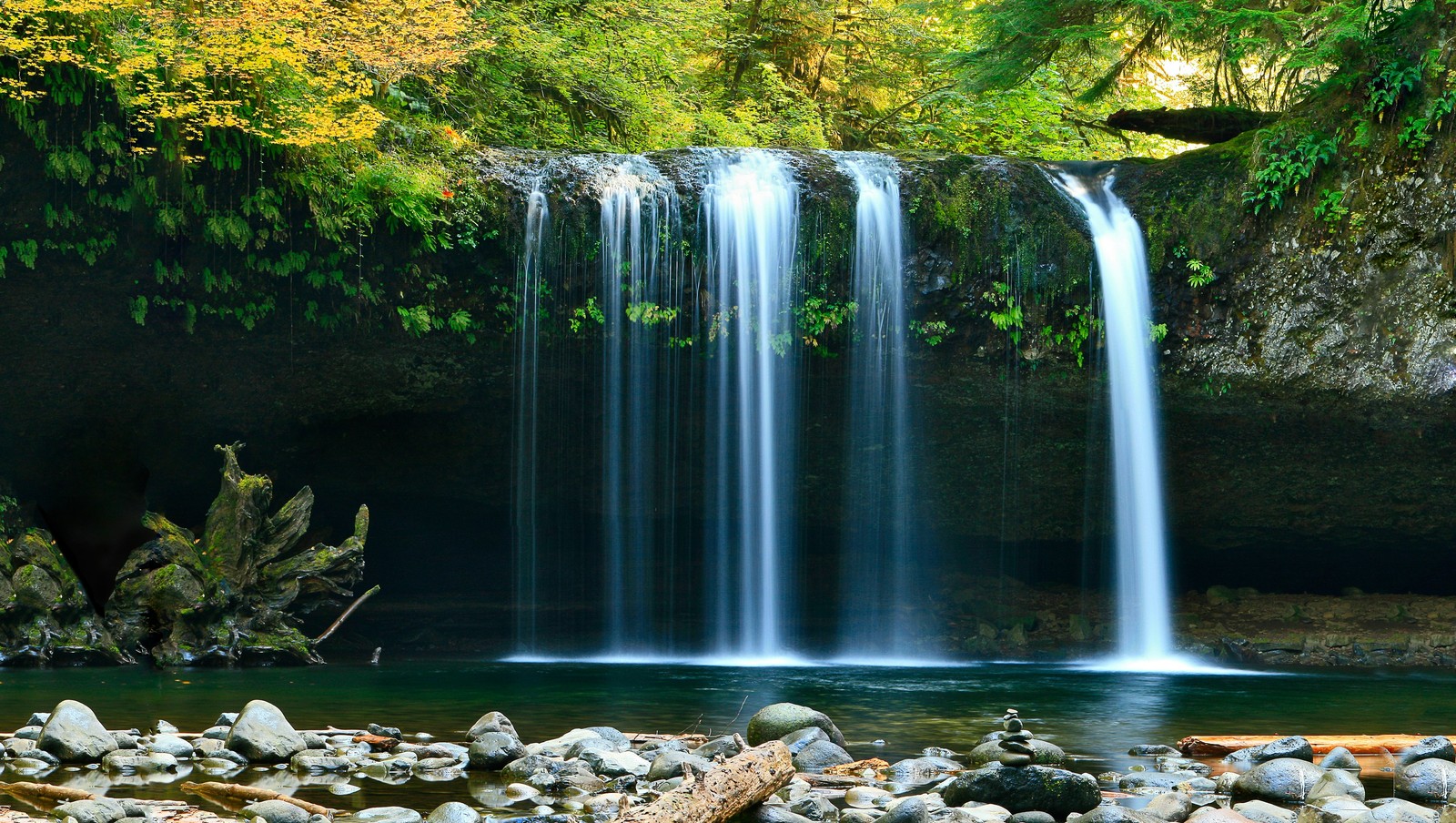
Image: Jeffrey Workman

Forget Niagara Falls and Yosemite's tourist crowds. The real magic happens at waterfalls that most people drive right past without a second thought . These hidden gems don't have gift shops or paved walkways, but that's exactly what makes them special. Grab your hiking boots and a sense of adventure: we're going waterfall hunting.

1
Havasu Falls, Arizona
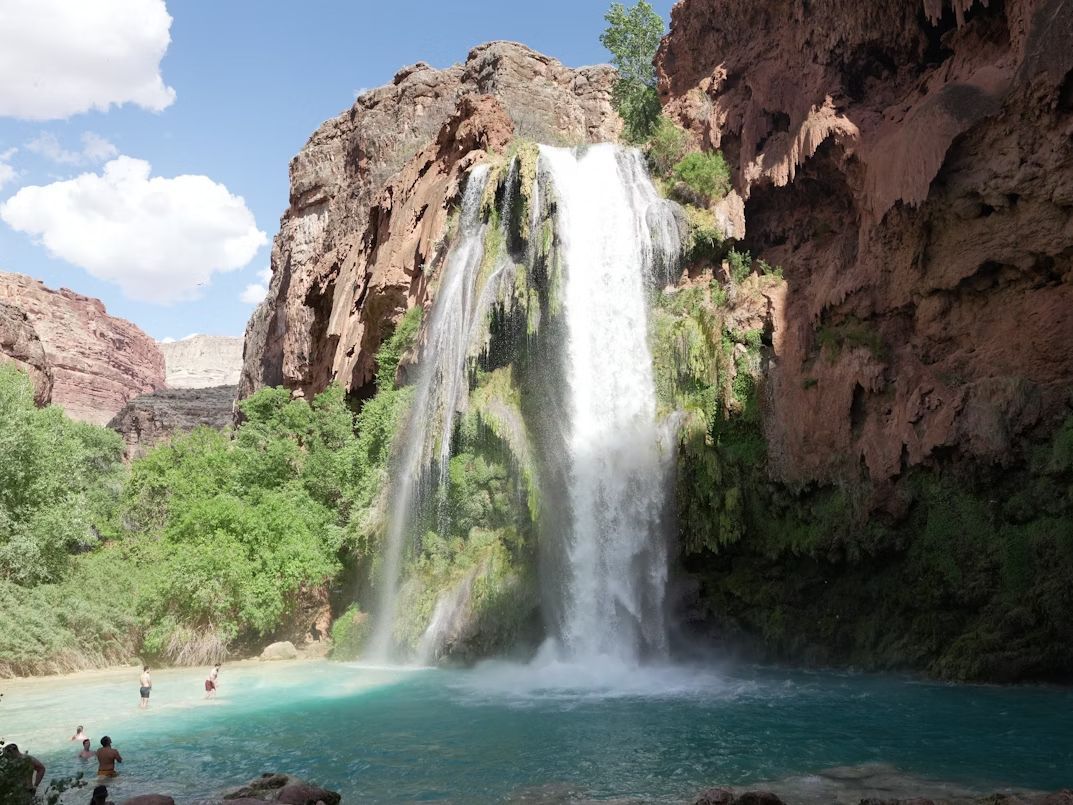
Image: Yacov B

Yes, technically, people know about Havasu Falls, but getting there requires permits, careful planning, and a ten-mile hike into the Grand Canyon that'll have your knees filing for divorce. The turquoise water looks Photoshopped, but it isn't—it's caused by calcium carbonate and magnesium that create that otherworldly blue-green glow. Most tourists snap their Grand Canyon photos from the rim and call it a day, completely unaware that this paradise exists below.

2
Linville Falls, North Carolina
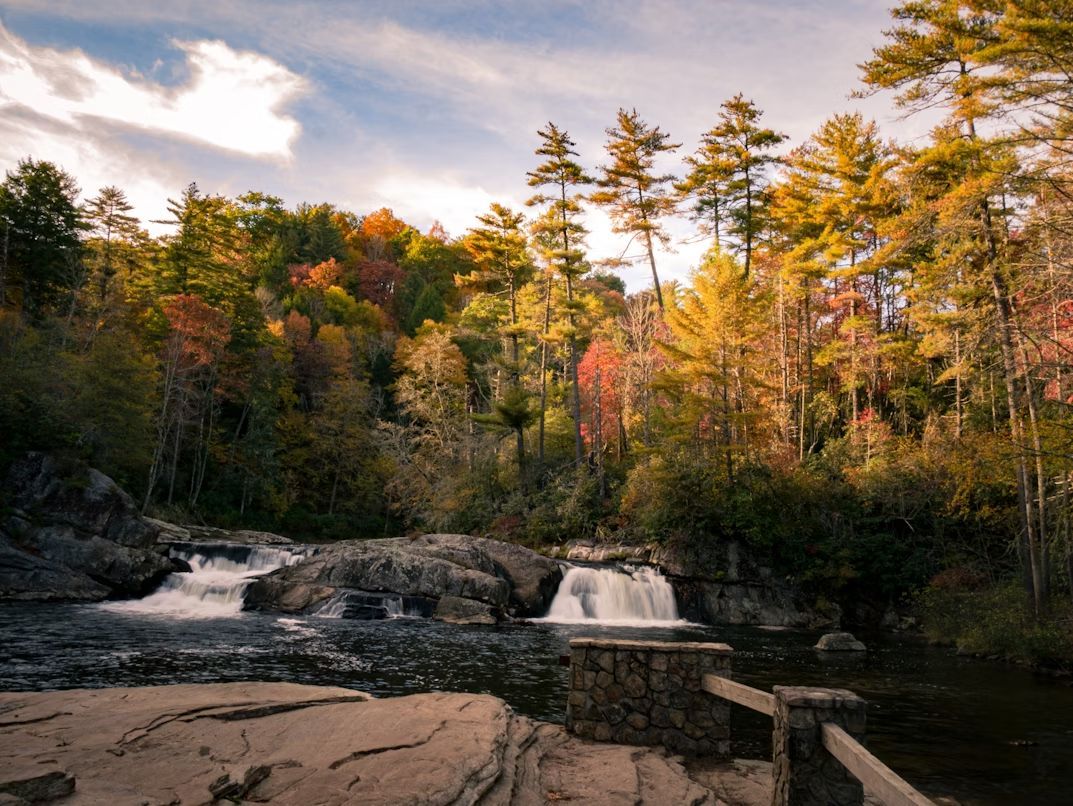
Image: Jeff Miller

Tucked in the Blue Ridge Mountains, this waterfall drops in multiple tiers through Linville Gorge , nicknamed the "Grand Canyon of the East." The upper falls plunge 12 feet, followed by the lower section, which drops another 90 feet into the gorge below.

Multiple trail options mean you can customize your effort level, from an easy quarter-mile stroll to more challenging overlooks. The best view? Probably Chimney View, which gives you the full dramatic drop and a sweeping view of the gorge beyond.

3
Potato River Falls, Wisconsin
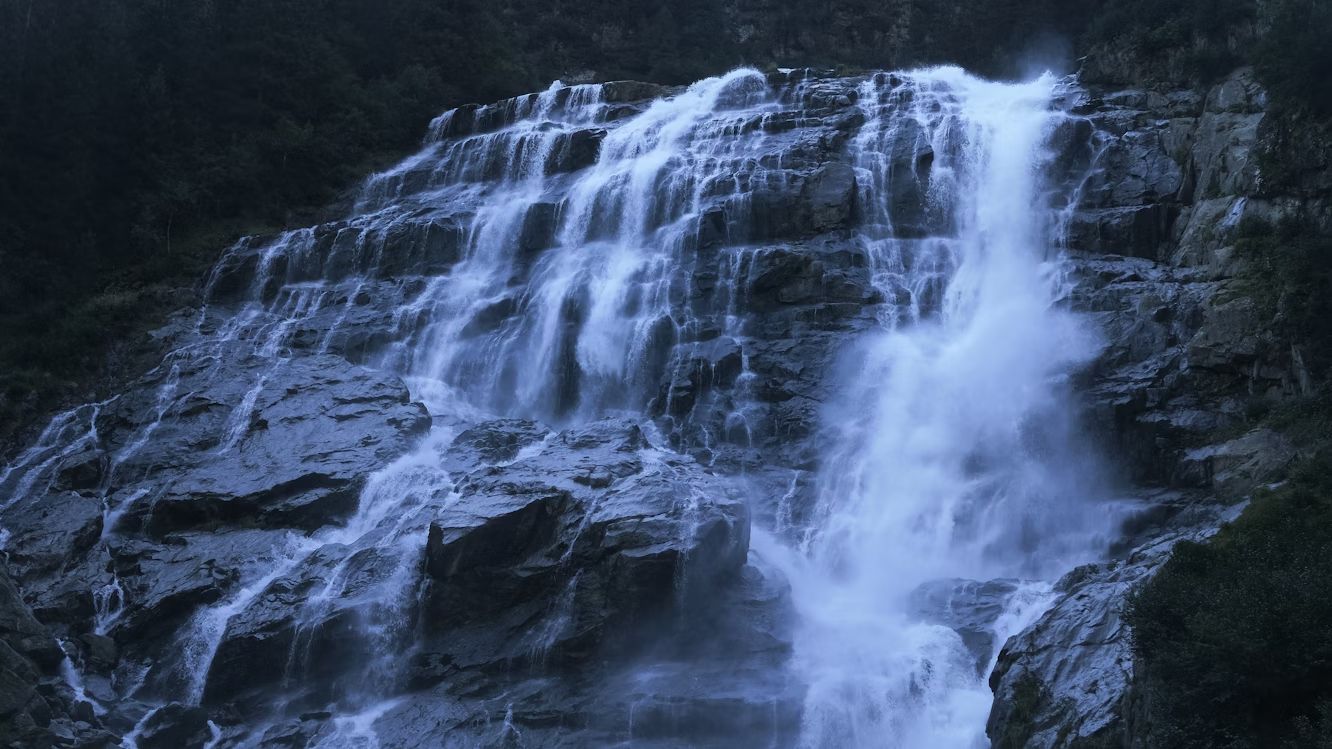
Image: Paul Pastourmatzis

Potato River Falls sits near the Michigan border in the Northwoods, where many visitors are too distracted by fishing and Friday fish fries to notice the waterfall itself. The falls drop about 90 feet in cascading sections, with observation platforms that make viewing easy —no mountain-goat skills required. The surrounding forest feels wonderfully remote, even though you're only a short walk from the parking area.

4
Natural Falls, Oklahoma
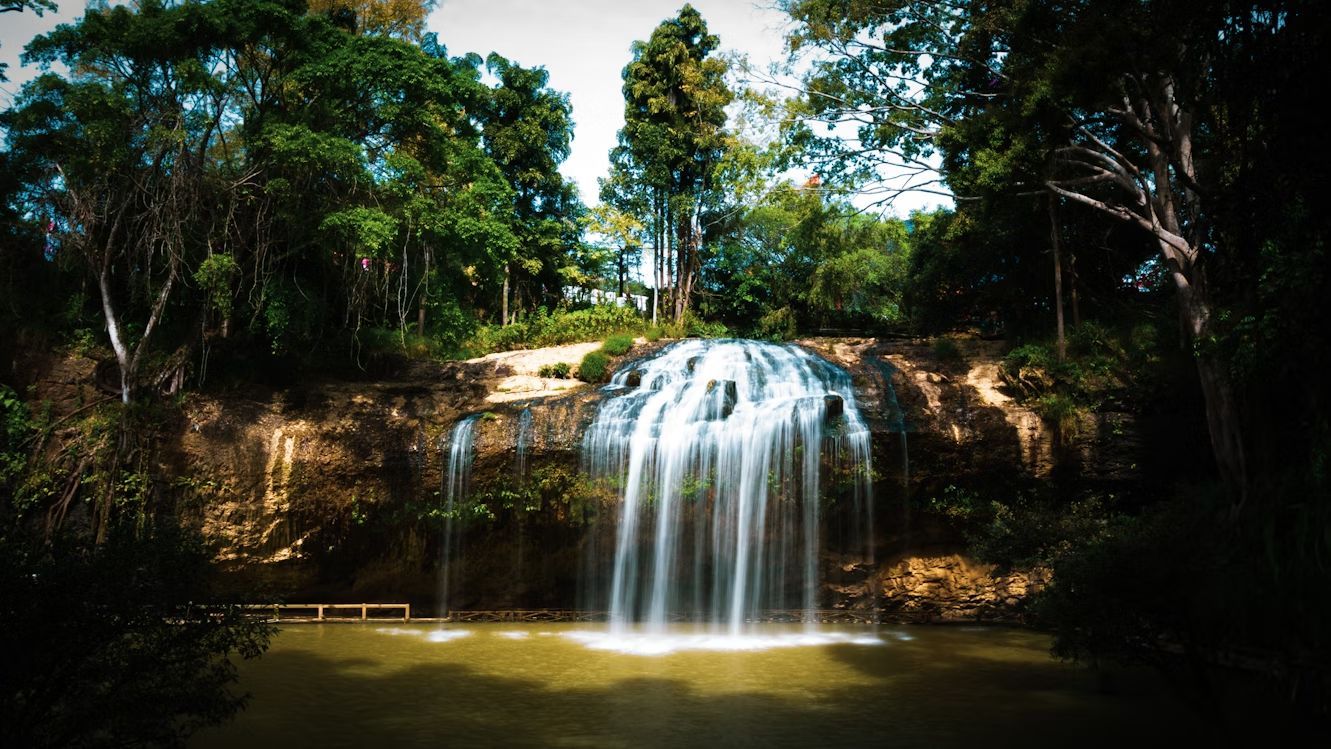
Image: Tien Vu Ngoc

Yes, Oklahoma has waterfalls, and Natural Falls State Park proves it, dropping 77 feet into a surprisingly lush canyon . The trail to the viewing platform takes about ten minutes, making this possibly one of the best effort-to-reward ratios on this list.

The falls flow year-round thanks to a spring-fed creek, though spring brings the most dramatic water volume. A large amphitheater-like alcove behind the falls provided the backdrop for parts of the 1974 movie Where the Red Fern Grows , if you're into vintage cinema trivia. Visit early in the morning to have the place to yourself and contemplate the geographical surprises America still holds.

5
Fall Creek Falls, Tennessee
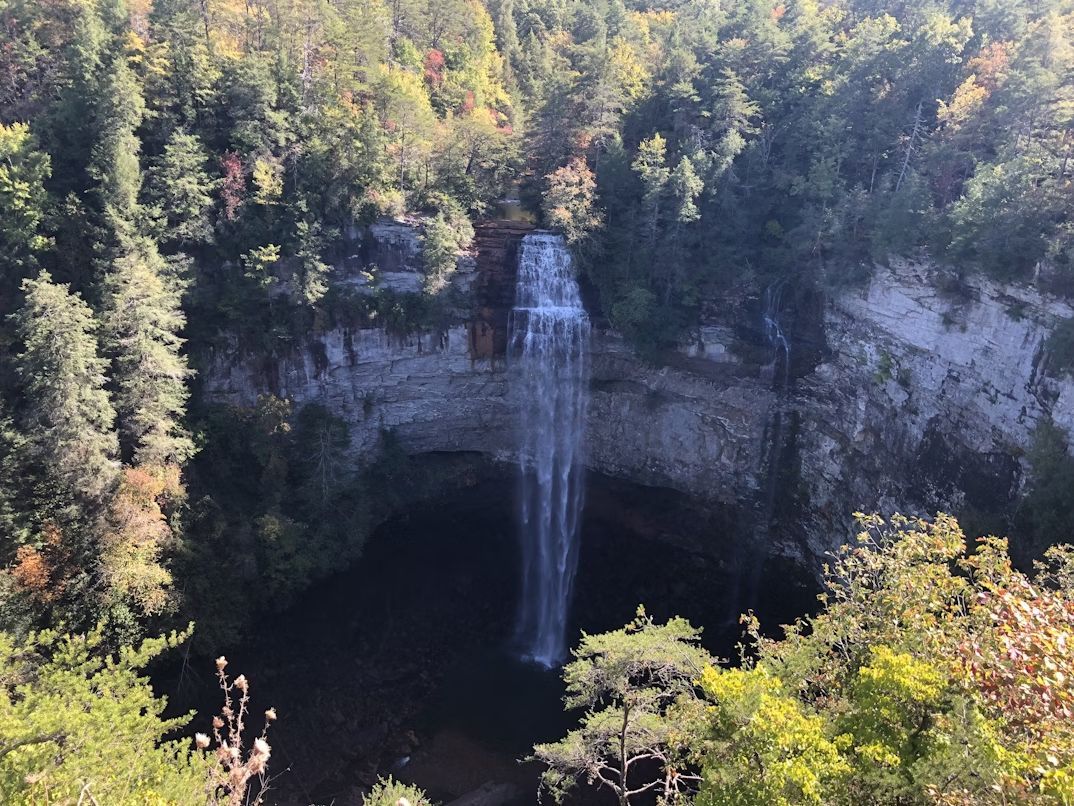
Image: Joshua Woods

At 256 feet, Fall Creek Falls is one of the tallest waterfalls east of the Mississippi , yet somehow remains less famous than Graceland. Located in a state park of the same name, it's the crown jewel among several waterfalls in the area, meaning you can actually hit multiple cascades in one day if you're feeling ambitious. The main overlook requires minimal effort, but trails wind down to the base if you want the full experience and don't mind plenty of stairs.

6
Alamere Falls, California
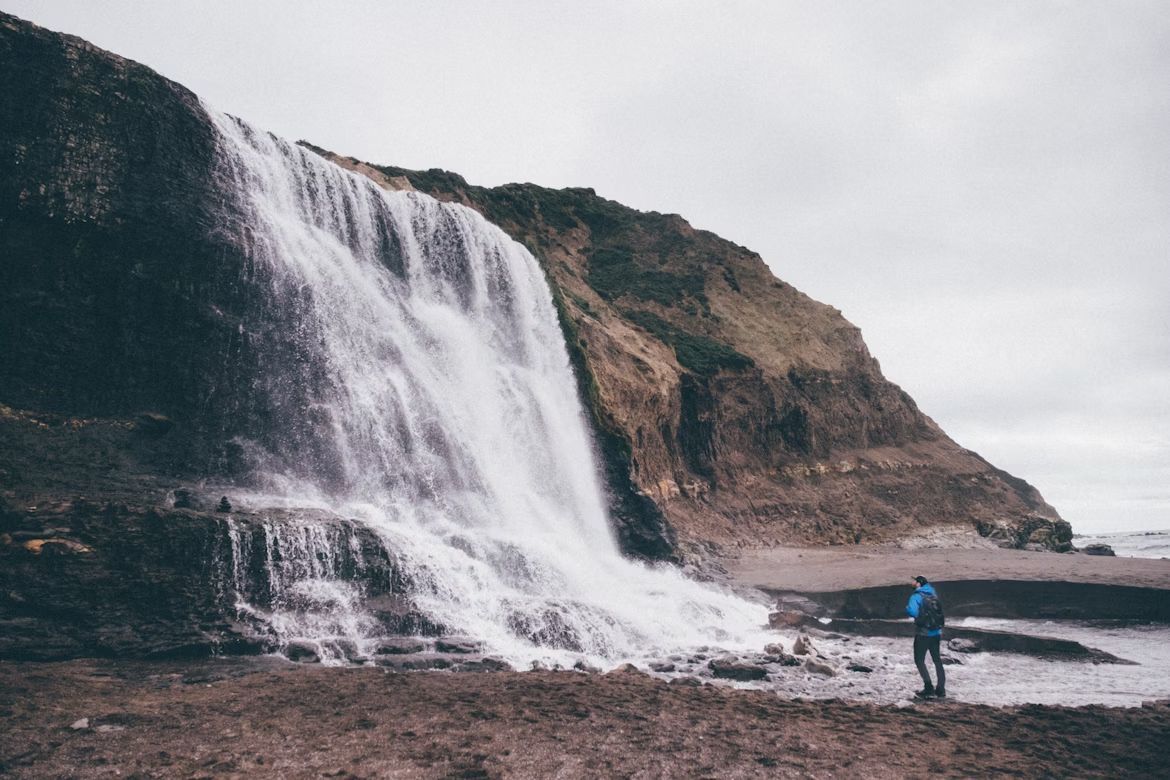
Image: Matt Bennett

California has no shortage of waterfalls, but Alamere Falls does something truly special: it drops directly onto the beach . This rare "tidefall" spills over cliffs at Point Reyes National Seashore, creating a scene that looks like a screensaver come to life. Getting there requires an 8-mile round-trip hike that's moderately strenuous but manageable for anyone in reasonable shape. The trail winds through coastal forest before emerging onto wind-swept beaches.

The falls flow strongest in winter and spring when California actually gets rain, becoming a mere trickle by late summer. Time your visit right, and you can stand on the beach while 40-foot waterfalls crash onto sand beside tide pools and sea stacks.

7
Kaaterskill Falls, New York
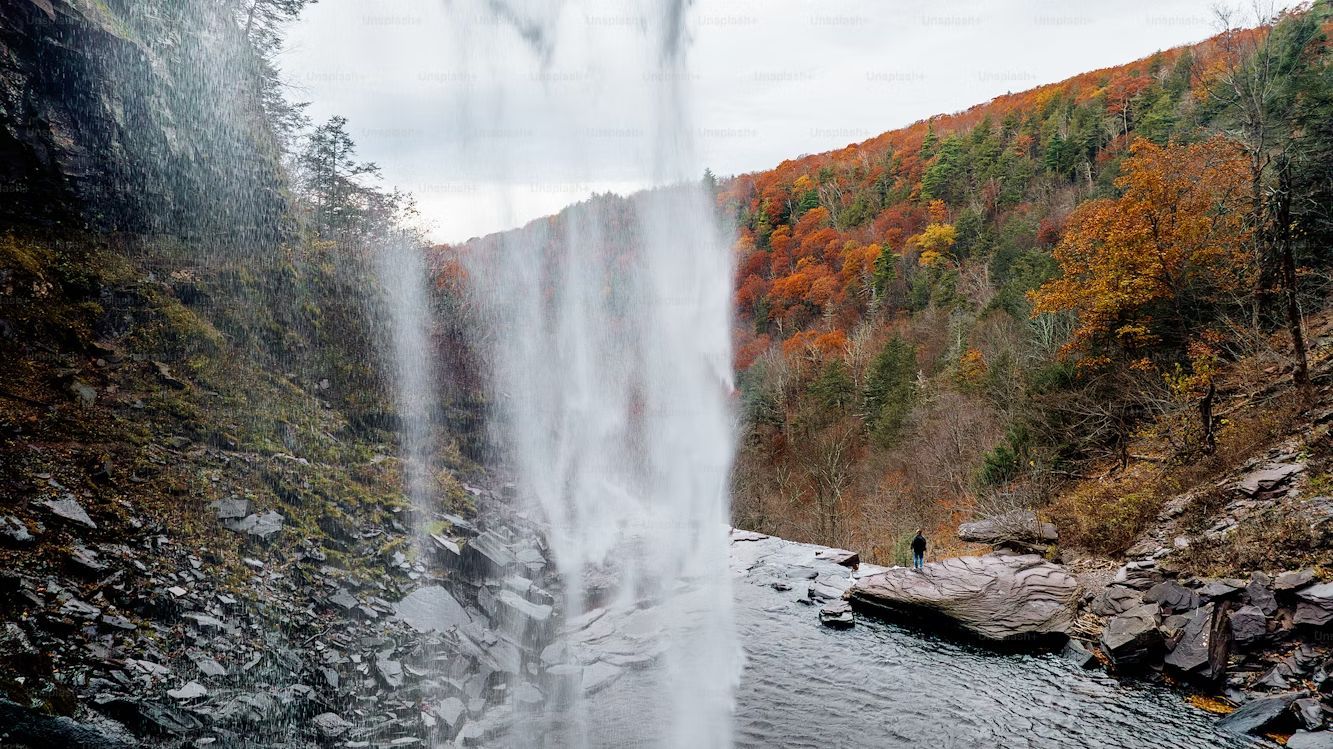
Image: Joshua Earle

The Catskill Mountains hide New York's tallest waterfall, a two-tiered, 260-foot cascade that inspired Hudson River School painters back when America was young, and landscape painting was the closest thing to Instagram. Kaaterskill Falls sits just off Route 23A, and the short trail to the base viewpoint feels properly wild. Adventurous types sometimes scramble between the tiers, though this requires caution and a complete disregard for your mother's warnings about safety.

Winter transforms the falls into a frozen sculpture, attracting ice climbers who've made interesting life choices. The surrounding forest looks like something from a fairy tale, all moss and ferns and filtered light.

8
Bridal Veil Falls, Colorado
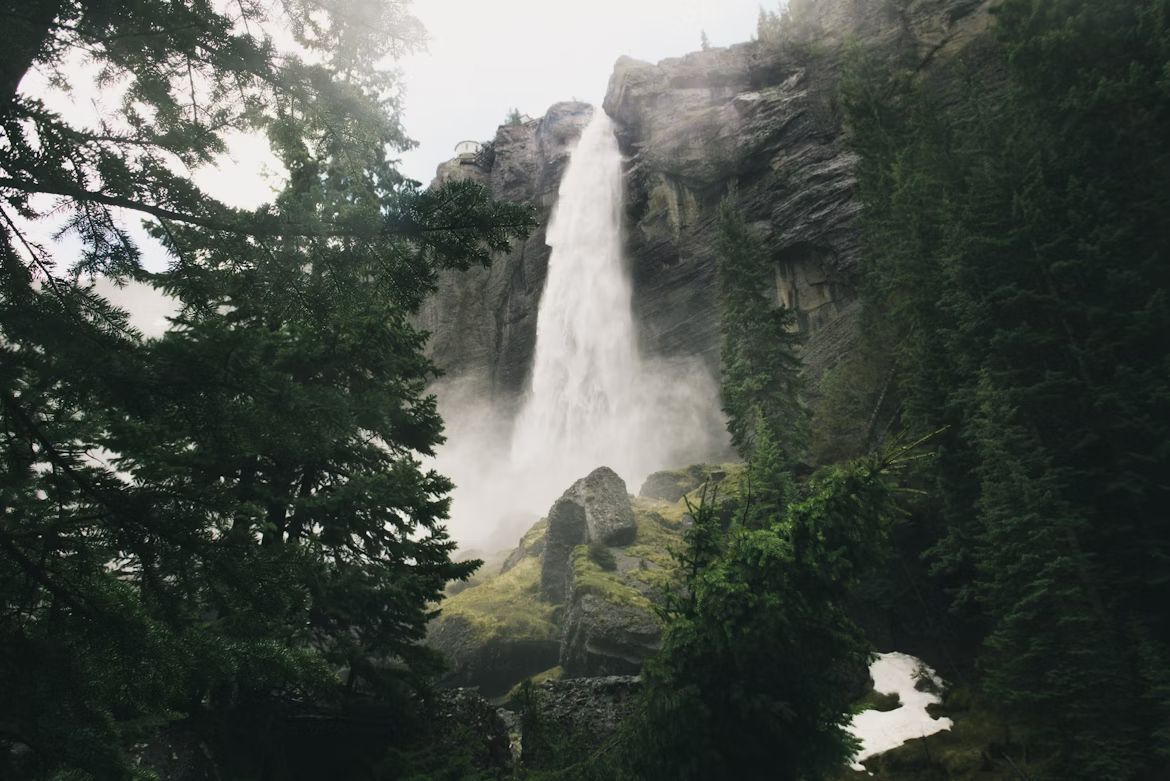
Image: Chad Madden

Bridal Veil Falls near Telluride claims the title of the state's tallest free-falling waterfall at 365 feet . The waterfall cascades like a lace curtain—hence the name—from a hanging valley, and at the top sits a power plant that's somehow still photogenic. The hike up is steep and challenging, gaining about 1,800 feet over roughly two miles, which sounds reasonable until you remember you're doing this at high altitude.

9
Cloudland Canyon Falls, Georgia
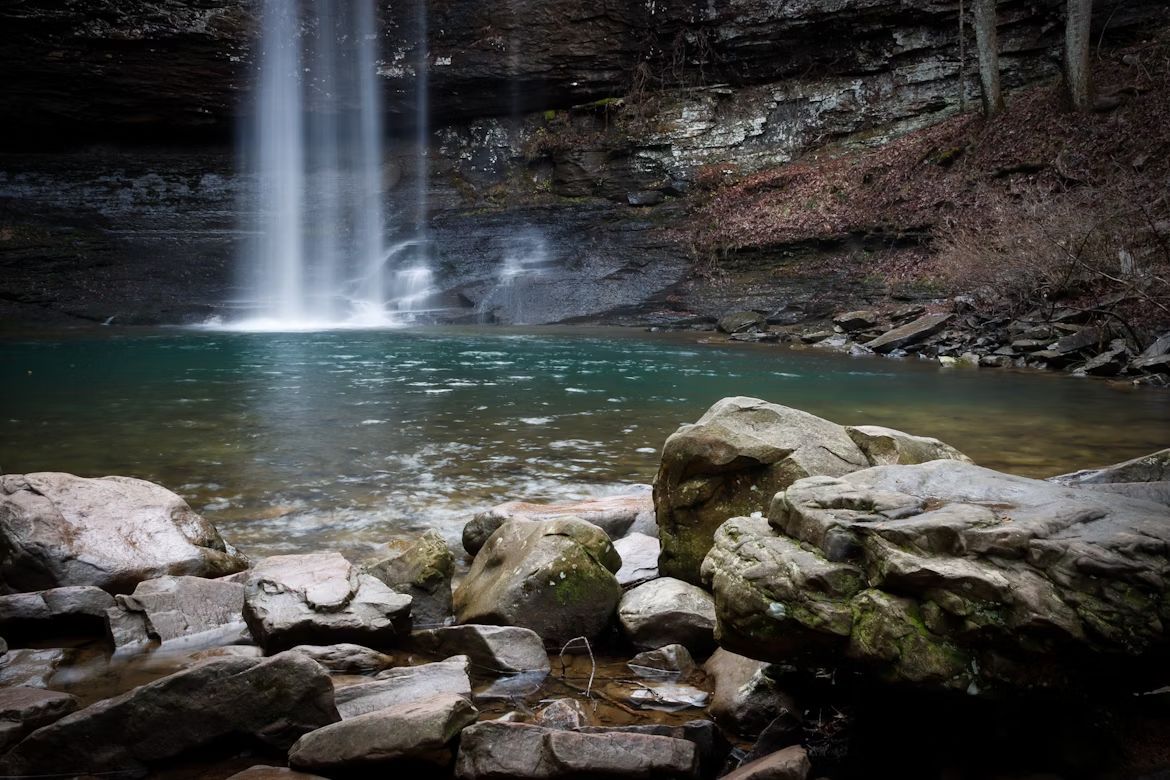
Image: Alla Kemelmakher

Georgia surprises people with its waterfalls, and Cloudland Canyon State Park delivers two beauties: Cherokee Falls and Hemlock Falls , accessible via a moderately strenuous trail system. The park sits on the western edge of Lookout Mountain, where the canyon cuts deep into the plateau. Cherokee Falls drops about 60 feet, while Hemlock Falls offers a 95-foot cascade. Both require descending (and later climbing back up) hundreds of stairs, so consider this your ultimate leg-day workout.

10
Fairy Falls, Wyoming
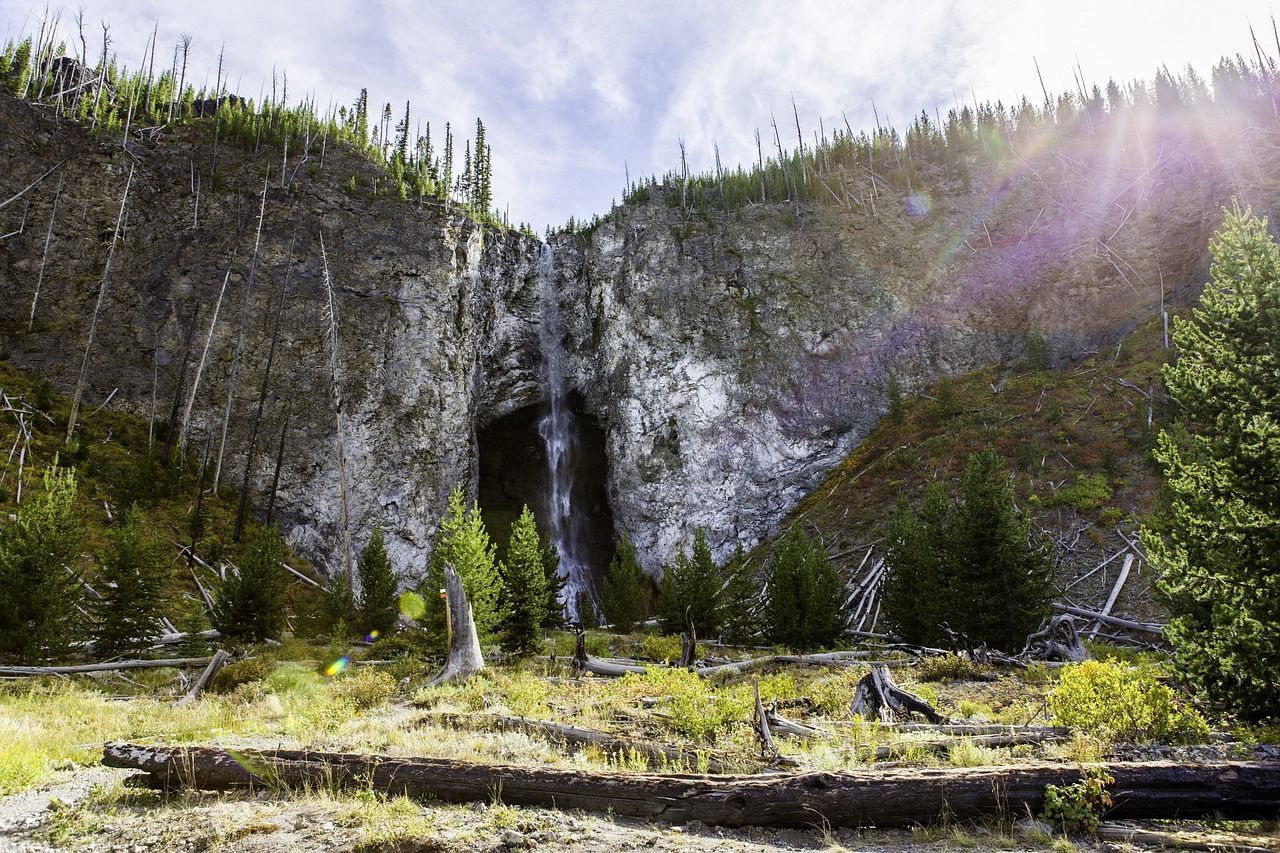
Image: Veenvorm

Yellowstone gets all the geothermal glory, but Fairy Falls offers a quieter experience just a few miles from the madness of Old Faithful. At 200 feet, this ribbon of water drops from the Madison Plateau into a peaceful forest clearing . The trail is about five miles round-trip along old fire roads, flat and easy enough for most fitness levels.

Most Yellowstone visitors stick to the main loop, which means Fairy Falls sees only a fraction of the park's three million annual tourists. The falls flow strongest during spring snowmelt, becoming more modest by late summer.

General General 4 min read

Into the Executive Mansion

A bowling lane in the White House? Read all about this national landmark!

Image: Tomasz Zielonka / Bravo Prince

The White House isn’t just where the president lives; it represents American history, power, and plenty of peculiar stories. This iconic building has seen it all, and probably so have you, but have you ever wondered about the number of rooms or secret passages within? Did you know it suffered a fire? Whether you’ve toured it yourself or admired it from afar, there’s always more to learn about this national landmark. Let’s pull back the curtain and explore some fun and surprising facts about 1600 Pennsylvania Avenue.

1
The numbers behind it

Image: Melo Liu

One could say the White House is a home, but a more accurate description would be "small city." With 132 rooms, 32 bathrooms, and six levels, it accommodates everyone from the First Family to visiting dignitaries.

As if that wasn’t enough in terms of numbers, add 412 doors, 147 windows, 28 fireplaces, seven staircases, and three elevators, and you’ve got a place that’s as grand as it is functional. The only number left to wonder about is how many people it takes to clean it! With so much going on, it’s safe to say the White House is always buzzing.

2
From "President’s House" to "The White House"

Image: Saul Rodriguez

Did you know the White House wasn’t always called that? Over the years, it’s been referred to as the "President’s Palace," the "President’s House," and the "Executive Mansion."

But it wasn’t until 1901 that President Theodore Roosevelt made "The White House" the official name. The change reflected a more democratic image, distancing the building from European-style palaces.

3
6,000 visitors a day: A popular destination

Image: Saul Rodriguez

You have probably toured the White House at least once, haven’t you? Well, on any given day, the White House welcomes around 6,000 visitors.

From local and foreign tourists on a guided tour, diplomats, to school groups, the building sees a steady stream of guests. That’s a lot of handshakes, selfies, and security checks! More than power and politics, the charm of the White House lies in the national history it holds.

4
Presidential firsts: Planes, photos, and more

Image: Jainam Sheth

Every president brings something new to the White House, but some have achieved truly historic "firsts."

For example, John Tyler was the first to have his photograph taken. Theodore Roosevelt rode in the first presidential car and became the first president to travel abroad, to Panama. Franklin Roosevelt added air travel to the mix as the first president to fly.

You may be wondering who the first president to live there was, but we’ll cover that fact later in this article!

5
A kitchen built for a crowd

Image: Odiseo Castrejon

We may not know about the cleaning crew, but we do have some facts about the chefs!

There are five full-time chefs in the White House, so the kitchen is ready for any occasion. It can serve dinner to 140 guests or hors d’oeuvres to more than 1,000 people at a time. From state dinners to casual family meals, the kitchen staff handles it all with finesse. Five stars for them, please!

6
Painting the town (or the House) White

Image: Steve Johnson

Keeping the White House pristine is no small task: Can you guess how much paint it takes to cover it? Here’s the answer: It takes a whopping 570 gallons of paint to cover its iconic exterior. This monumental paint job ensures the building remains the picture of elegance and charm. Over the years, this white coat has become a symbol of the presidency itself. Who knew painting could carry so much historical weight? Fun fact: ours is not the only presidential home with a trademark color!

7
Fun and games at 1600 Pennsylvania Avenue

Image: Jay Wennington

When you think of the Executive Mansion, you probably picture people in suits going from one point to another, solving national and international matters, right? Well, that may be true, but the White House isn’t all business; there are some recreational rooms, too.

Residents (which range from the presidential family to diplomats to staff) enjoy a tennis court, jogging track, swimming pool, movie theater, billiard room, and even a bowling lane. Talk about a house with some serious amenities, huh?

8
George Washington never slept here

Image: Kenny Eliason

While George Washington oversaw the creation of the White House, he never got to live in it. The mansion wasn’t completed until 1800, a year after Washington’s death.

So, to answer the question from the "presidential firsts" section, John Adams became the first president to move in, and it’s been the home of every president since. Washington’s influence is still felt, but don’t expect to see his ghost wandering the halls.

9
The White House has survived two fires

Image: Cullan Smith

Well, the title pretty much covers it, right? The White House has faced fire twice in its history.

In 1814, British forces burned it during the War of 1812, though some exterior walls and the famous Gilbert Stuart portrait of George Washington were saved. Then, on Christmas Eve in 1929, a chimney flue sparked a blaze that gutted parts of the West Wing. President Herbert Hoover even directed firefighting efforts during the chaos. Now, this is proof of its true Americanness: It only came back stronger and taller!

10
Teddy Roosevelt built the West Wing

Image: Srikanta H. U

Teddy Roosevelt is the man behind the West Wing. In 1902, he expanded the White House by adding this now-famous section to house presidential offices.

The project replaced some old conservatories and introduced the colonnaded gallery that connects it to the main residence. Later presidents, like Taft and Franklin Roosevelt, expanded the West Wing further, but it all started with Teddy’s vision. Today, the West Wing is the spinal cord of the presidency as it holds the Oval Office.

General General 3 min read

About the Star-Spangled Banner

Did you know these 11 obscure facts about our National Anthem?

Image: RDNE Stock project

How much do you really know about "The Star-Spangled Banner" ? It’s the song that kicks off baseball games, gives stadiums goosebumps, and has been passionately performed—or completely butchered—by countless singers. Its colorful story starts by crossing a poem and the tune of a British drinking song, runs through an electric guitar at Woodstock in the 60s, and keeps going. Read on to discover some surprising facts about America’s most patriotic anthem!

1
It had a different name

Image: Luke Michael

Originally, the lyrics came from a poem titled "Defence of Fort M’Henry," written by Francis Scott Key in 1814 after he witnessed the bombardment of Fort McHenry during the War of 1812. The sight of the American flag still flying after the battle inspired him.

The poem was printed in newspapers and set to music, but it wasn’t until more than a century later that it officially became the national anthem we know today.

2
It has four verses

Image: Serena Koi

Most of us only belt out the first one, but did you know "The Star-Spangled Banner" actually has four verses? The other three are rarely heard .

Francis Scott Key wrote additional verses exploring themes of resilience and freedom, but most people have never read those stanzas.

3
Key wasn’t a musician

Image: Steve Johnson

Contrary to what you might expect from the author of the nation’s most patriotic song, Francis Scott Key wasn’t a musician .

He was a lawyer and an amateur poet. He didn’t collaborate with a composer or choose a melody to set his lyrics to, either. He simply wrote the poem, which was later published nationally by The Analectic Magazine .

4
The tune was actually borrowed

Image: Ylanite Koppens

So how did the anthem get its music, then? A relative of Key realized that the lyrics of his poem fit perfectly with the tune of an already popular song, "To Anacreon in Heaven."

That song was actually a British drinking tune frequently sung in 18th-century gentlemen’s clubs. The melody was catchy, but its origins were anything but patriotic.

5
It was first sung in a Baltimore tavern

Image: andrew welch

One account claims that the anthem’s first public performance wasn’t at a grand concert or a government event, but in a Baltimore tavern in 1814.

According to the story, just weeks after Key wrote the lyrics, a local actor sang them to the tune of "To Anacreon in Heaven." The crowd loved it, and the song quickly spread.

6
It wasn’t the first choice

Image: Wesley Tingey

Believe it or not, "The Star-Spangled Banner" wasn’t America’s first choice for a national anthem. For over a century, songs like "Hail, Columbia" and "My Country, ’Tis of Thee" filled the role. It wasn’t until 1931 that Congress, under President Herbert Hoover, officially designated Key’s anthem as the nation’s song.

7
The tradition of singing it before sports

Image: Frankie Lopez

The tradition of singing the anthem at sporting events began during the 1918 World Series . The crowd’s emotional response was so powerful that more and more baseball games adopted the practice.

Today, it’s hard to imagine a baseball game without it. Many other sports—including American football, hockey, and basketball—have since followed suit.

8
Aretha Franklin’s rendition is the longest

Image: Stas Knop

Aretha Franklin's rendition of "Star-Spangled Banner" is the longest recorded performance of the national anthem, lasting an impressive 4 minutes and 55 seconds . In contrast, most renditions take under two minutes!

She performed it in 2016 at an NFL game, breaking the previous record set by Alicia Keys three years earlier, whose version lasted 2 minutes and 36 seconds.

9
An unsuspected first recording voice

Image: Sudhith Xavier

The first known recording of "The Star-Spangled Banner" was made in 1915 by Margaret Woodrow Wilson . Yes, the daughter of President Woodrow Wilson.

Her rendition, though not as polished as modern versions, marked the anthem’s entry into the world of recorded music. Who would have thought the president’s daughter would be a trailblazer?

10
Jimi Hendrix’s Woodstock performance

Image: Xie lipton

Jimi Hendrix’s electric guitar rendition of "The Star-Spangled Banner" at Woodstock in 1969 remains one of the most famous—and controversial—performances of the anthem.

His distorted, soulful, and modern interpretation hypnotized the crowds and became a powerful cultural statement amid the turbulence of the 1960s. Some saw it as a protest; others, as a masterpiece. Either way, we still talk about it.

11
A song for all occasions

Image: frank mckenna

Originally, "The Star-Spangled Banner" wasn’t intended solely as a national anthem. It was a patriotic song for all occasions —political rallies, public celebrations, and more. The anthem is as popular as it is versatile, and so it has been played in endless scenarios—and in countless versions!

Explore more American facts

Choose your favorite category!

General
General

As American as apple pie—the very best America has to offer!

Culture
Culture

Delve into the astounding richness of American lore.

Geography
Geography

Hop in and explore vast and diverse American landscapes.

History
History

Discover the key moments that shaped the United States.