History History 4 min read

Versions to remember

Whitney's was unforgettable but so were these 10 National Anthem versions

Image: Xach Hill

Which version of The Star-Spangled Banner comes to mind when you hear the anthem mentioned? Is it the one you heard most often as a kid? The one that gave you goosebumps? Or perhaps the one that keeps showing up on social media? We decided to explore some of the most beloved versions of the National Anthem , as well as the most unforgettable performances. Let’s see if your favorite made the list!

1
Cher – Super Bowl of 1999

Image: Daniel Robert Dinu

Many consider Cher’s rendition of the "Star-Spangled Banner" at Super Bowl XXXIII in 1999 to be their favorite. Her velvety voice left some speechless—especially those who had only ever heard her sing pop!

The star brought her signature stage presence to the performance. Her deep, resonant voice filled the stadium. Dressed in a sleek, glittering gown, Cher let her vocals take center stage while elaborate choreography unfolded nearby.

2
Marvin Gaye – NBA All-Star Game (1983)

Image: Jon Tyson

Marvin Gaye’s rendition of "The Star-Spangled Banner" at the 1983 NBA All-Star Game was truly unforgettable. It remains one of the most iconic performances of the anthem. With a modern backing beat , the "Prince of Soul" infused the song with his signature smooth vocals and soulful style.

Featuring a slow, deliberate tempo and a drum machine backing track, Gaye encouraged the audience to clap along to the beat and created a unique, signature version.

3
Luther Vandross – Super Bowl of 1997
Image: Coppa Cover

The maestro of love ballads brought his signature smooth style to his version at Super Bowl XXXI in 1997 at the Louisiana Superdome.

Known for his romantic R&B hits, Luther Vandross infused the anthem with soul. Accompanied by slow drums and warm synths, he delivered a heartfelt and respectful rendition—with a distinctive ’90s twist.

4
Lady Gaga – Super Bowl of 2016

Image: Daniel Lazar

Lady Gaga was already an Academy Award nominee and multiple Grammy winner when she was invited to showcase her vocal prowess at Super Bowl 50.

She did not disappoint! Her powerful, theatrical voice delivered a vibrating version, accompanied only by a subtle piano. Dressed in glittering versions of the national colors, she moved the entire stadium.

5
Beyoncé – Presidential Inauguration of 2013

Image: Paul Weaver

"Queen Bey’s" performance of "The Star-Spangled Banner " at President Barack Obama’s second inauguration in 2013 was a moment of vocal brilliance.

Backed by a full, blaring orchestra , the global superstar showcased her impeccable voice control and a palpable sense of respect for the ceremony. While rumors swirled afterward about whether she had used a backing track—a claim she later addressed—the performance itself was undeniably impactful.

6
Diana Ross - Super Bowl of 1982

Image: Dave Adamson

What a voice! And she did it first ! Diana Ross was the first pop star to sing the national anthem at a Super Bowl. She took the mic and delivered an a cappella rendition for the entire stadium and viewers across the country—a feat that would have required courage from a less incredible singer!

The entire stadium joined in, creating an unforgettable, intimate feeling moment that ended in an uproar of cheers. Truly, a goosebump-inducing performance!

7
Jennifer Hudson – Super Bowl of 2009

Image: Ben Mater

Jennifer Hudson brought many to tears with her performance of "The Star-Spangled Banner" at Super Bowl XLIII in 2009. Already an Academy Award winner and celebrated musician, the American Idol star had firmly established herself as a force to be reckoned with.

Fans also cherished this performance as Hudson’s first public appearance following the tragic loss of three family members. Her powerful delivery was filled with chilling resilience.

8
Aretha Franklin & Aaron Neville – Super Bowl XL (2006)

Image: Ricardo IV Tamayo

The combined vocal power of Aretha Franklin and Aaron Neville at Super Bowl XL in 2006 resulted in a truly unforgettable rendition.

The undisputed Queen of Soul paired with Neville—renowned for his angelic falsetto—for a masterclass in soulful delivery . Backed by an impressive choir, the two legends crafted a unique and deeply moving performance.

9
Duke Ellington - Carnegie Hall Concerts

Image: Volodymyr Hryshchenko

Duke Ellington, the legendary composer and bandleader, graced the nation with his unique interpretation of "The Star-Spangled Banner" on multiple occasions, most notably during his Carnegie Hall concerts in the 1940s.

Renowned for his innovative big band jazz style, Ellington infused the anthem with swing and sophistication, creating a rendition that was both patriotic and unmistakably his own. His arrangement featured a dynamic brass section and lively percussion—timeless and elegant!

10
Jimi Hendrix – Woodstock in 1969

Image: Odair Faléco

Jimi Hendrix’s rendition of "The Star-Spangled Banner" at Woodstock deserves a place on the podium. It remains one of the most iconic—and controversial—performances of the anthem.

Known for his revolutionary electric guitar playing and psychedelic rock style, Hendrix reimagined the traditional melody as a powerful statement against the Vietnam War. While some found it disrespectful, others viewed it as a raw and relevant reflection of the era’s turbulence.

11
Whitney Houston – Super Bowl of 1991

Image: Roland Kay-Smith

Finally, the performance that many consider their all-time favorite: Whitney Houston’s. We should bear in mind that her rendition was so powerful that it even reached the Billboard Hot 100 faster than any of her previous hits!

Released as a single, the version raised funds for soldiers and the families of those involved in the Persian Gulf War. With one of the greatest voices of her generation and an undeniable passion for her country, Houston delivered a truly unforgettable anthem.

History History 6 min read

Out with the new, in with the old

Would you sit on a flagpole? 10 American fads from the early 20th Century

Image: Ali Bakhtiari

The early 20th century was a wild time in America, and the fads that swept across the nation were just as colorful and curious as the era itself. The world was changing for sure and teens had to find new ways to have fun and adapt to the evolving times. From that came some of the weirdest trends, and today we’re taking a look back at ten of the most popular fads that shaped the first half of the 20th century. You might even remember a few of these yourself, or perhaps you’ve heard stories from the "good old days." Let’s dive into these blasts from the past!

1
Dance marathons

Image: Ardian Lumi

Dancing has always been a praised activity for having some fun and passing the time. It’s simple and requires nothing but a music-playing device. So, back in the ‘20s, people felt the need to find a new twist for this basic entertainment and so they thought making dance marathons was a great idea.

How did they work? The concept was as simple as dancing: Couples would compete to see who could dance the longest all for a shot at cash prizes. But we’re not talking hours here—the contest could last for days! Audiences watched in fascination (and a bit of morbid curiosity, we might add) as exhausted dancers pushed their bodies to the limit. Remember, this was a time when missing out on a chance for quick money and a bit of fun was not a possibility!

2
Flagpole sitting

Image: Jonathan Simcoe

We don’t know if he was trying to break a record or if he just needed some alone time, but after Alvin "Shipwreck" Kelly climbed atop a flagpole in 1924 and stayed there for over 13 hours, a new fad was born: flagpole sitting.

And speaking of basic trends, this is exactly as you read it: People all over America were climbing up and sitting on flagpoles to see how long they could stay up there. We can all agree that these people were after entertainment and a bit of competition. And it got so serious the record eventually stretched to an astonishing 49 days!

By the 1930s, though, the thrill wore off and the fad faded, but the absurdity of it all remains—and earned it a spot on this list!

3
Stickball and stoopball

Image: Jeremy Stewardson

Sports today are no longer just about playing the game. For most of them, you need a lot of equipment, which is rather expensive, especially if you’re going to use it in the streets with your friends from the block.

Back in the ‘20s, baseball equipment was hard to come by. As a result, American kids in crowded urban areas came up with their own inventive versions of the game: stickball and stoopball. The fun behind this trend? Using whatever they had on hand to play: Broomsticks for bats, rubber balls, and parked cars or stoops as bases. The games required nothing more than creativity and a few friends. And no one can deny—the 1920s were indeed a creative time!

4
Johnny on a pony

Image: freestocks

This is a trend that started in the 1940s, and the names used for this game are simply hilarious: "Strong horses, weak donkeys," "Hunch, Cuddy, Hunch," just to name a few.

Johnny on a Pony, or Buck Buck, was a rough-and-tumble game in which one team bent over to form a "horse" while the other team took turns jumping on their backs, trying to knock them over .

You may think this was innocent, but not quite—it was chaotic, sometimes painful, and, more often than not, left participants in a pile of tangled limbs.

Kids do not care for those things, but the game’s physical nature made it exhilarating and dangerous at the same time. That’s why, eventually, concerned parents and schools stepped in and banned it—one too many injuries to keep it going!

5
Drive-In movie theaters

Image: Tim Mossholder

Movie theaters are great, but drive-in movie theaters are even better—they were the ultimate fusion of America’s love for cars and entertainment.

The first official drive-in theater opened in 1933, and it was an alternative for families to a fun and affordable night out under the night sky, watching a movie from the comfort of their car . No wonder this quickly became a beloved American pastime. And you can already imagine whose favorite this was: Teens and young couples, who enjoyed the privacy of their cars while watching the latest films of the time.

The trend slowly faded as film rentals became more popular, and later with the rise of streaming platforms. However, keep an eye out for this one, because it’s definitely making a comeback!

6
Miniature golf

Image: Will Porada

Some may argue that the fad behind miniature golf never actually died, and that’s partially true. But let’s go back to the time it first appeared and all the craze that erupted around it.

It wasn’t until Garnet Carter opened his "Tom Thumb" golf course in 1927 that miniature golf became a true sensation . Located in Lookout Mountain, Tennessee, Carter’s course wasn’t just about putting greens; it also featured miniature goblins, gnomes, and other fun obstacles for players.

We don’t know if he knew this would be so successful, but Carter went all in: He patented the design, and it hit the jackpot—miniature golf became a nationwide success.

7
Hood ornaments

Image: Clem Onojeghuo

Funny thing about the past: You didn’t always need to be extravagant to be trendy—sometimes, just a tiny ornament on your car was enough.

In the 1920s and ‘30s, no car was complete without a stylish hood ornament adorning its radiator . At first, these ornaments were designed to check on the engine temperature. But they soon evolved into artistic expressions of each brand to showcase wealth and personality.

We all recognize the winged goddess or the jaguar jumping out of the car, right?

However, this trend didn’t last long. As car designs modernized and safety became a concern, hood ornaments became less common, and eventually, all but disappeared. If you see a car with one of these today, you can bet it’s worth more than one can get in a lifetime!

8
Kilroy was here

Image: Richard Cohrs

There are two generations: One is looking for Waldo, and the other is looking for Kilroy. Which one do you belong to? Now, if you’re wondering who Kilroy is, let us tell you.

Kilroy was a doodle, and the complete drawing consisted of Kilroy and a message that read "Kilroy Was Here." This graffiti popped up just about everywhere during World War II.

The doodle, featuring a bald, long-nosed figure peeking over a wall, was a symbol of American presence and humor. It’s said that Kilroy was originally the work of James J. Kilroy, a shipyard inspector who scrawled it on equipment he inspected.

But that was just the beginning—the drawing spread to every corner of the globe. Have you ever come across one?

9
Swing dancing

Image: Clarisse Meyer

Few things are as time-sensitive and culturally reflective of an era, don’t you think? In the early 20th century, specifically during the 1920s and 1930s, the dance that dominated every dance floor was swing . And it makes perfect sense—this was the Jazz Age, so swing dancing perfectly matched the exuberance of that music!

Dances like the Lindy Hop, Charleston, and Jitterbug took over dance halls, with young people spinning, jumping, and flipping to the infectious rhythm of big bands.

Older generations sometimes frowned upon the flashy, intimate dance styles, but that only made them more appealing to rebellious youth. Some things never change!

10
Stamp collecting

Image: Tolga deniz Aran

Philately is the collection of stamps or the study of them, and it became a fad across the United States during the 1920s and the ‘30s. Why? Here is the reason.

Stamps offered people a way to explore history, geography, and art. They were everyday items, easy to access, and nobody could escape them. For example, President Franklin D. Roosevelt was an avid stamp collector. Not that he needed them to learn about history or art—it was just a way to have fun.

Contrary to other trends we have discussed, schools encouraged this hobby, because it was both educational and enjoyable. Collecting stuff is a never-ending trend; there are all kinds of collections today and stamp collections today are almost invaluable!

Culture Culture 4 min read

Echoes from History

Who said, "I'm losing"? Discover the last words of American figures!

Image: WikiImages

Some icons in our history stood out for their wisdom or wit, even in their final moments. And their clever, wise, profound, funny, or unexpected last words are proof of that. Read on to discover the final words of American figures that will definitely leave you thinking!

1
Frank Sinatra

Image: Dushawn Jovic

Frank Sinatra was one of America’s—and the world’s—most recognized artists, and even today, his name remains an unmistakable icon. We’ll never forget hits like "New York, New York," "My Way," "Fly Me to the Moon," and many others. And his last words were no less poetic than his life: "I'm losing," he allegedly said.

2
Groucho Marx

Image: Alan Hardman

They say humor follows comedians in all aspects of their lives—even to the very end. This was true for the great Groucho Marx, who passed away in 1977 at the age of 86 after bringing laughter to millions during his lifetime. As for his last words, there are two versions of the story, and both are funny! One version claims he said, " Die, my dear? That’s the last thing I’ll do! " while the other has him exclaiming, "This is no way to live!"

3
Buddy Rich

Image: Katherine Hanlon

Bernard "Buddy" Rich was a legendary American drummer renowned for his unique improvisational ability. He passed away at age 69 after brain surgery. Reportedly, his last words were a witty response to a nurse who asked if he was allergic to anything: "Yeah, country music," he said.

4
Donald O'Connor

Image: Nikko Balanial

Some artists never separate themselves from their work. Perhaps that’s what was going through the mind of dancer, singer, and actor Donald O’Connor—famous for his role in Singin’ in the Rain —when heart failure caused his death. His last words were, "I'd like to thank the Academy for my lifetime achievement award that I will eventually get." He still hasn’t received one.

5
George Washington

Image: Priscilla Gyamfi

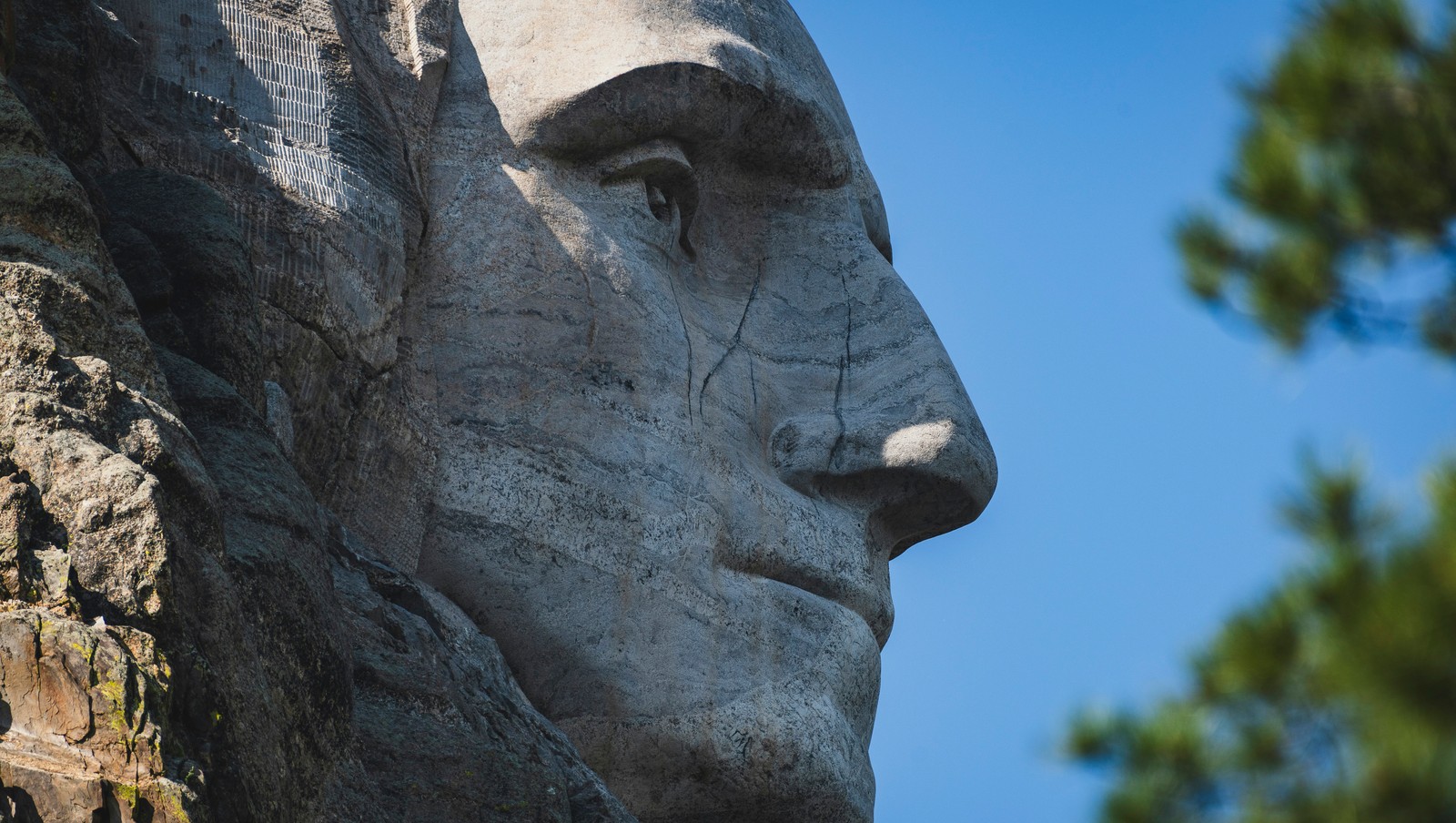
George Washington will always be remembered as the Father of his Country, who led the Continental Army to victory in the Revolutionary War and served as the first president of the United States. In 1799, George Washington fell ill with respiratory infections that grew more severe over time. He passed away that year at the age of 67 at his Mount Vernon estate. According to historical accounts, his last words were an expression of acceptance: "Tis well."

6
T.S. Eliot

Image: anotherxlife

T.S. Eliot, the famous Missouri-born writer known for works such as The Waste Land and Four Quartets, passed away on January 4, 1965, at the age of 76. It's said that, in his last moments, the poet was reflective and serene, and his last word was the name of his love: "Valerie."

7
Joan Crawford

Image: Noom Peerapong

The great American actress Joan Crawford was much more than a pretty face. Her talent and complex personality were evident throughout her fruitful career, which was crowned with films such as Mildred Pierce . She died in 1977 of a heart attack. According to a biography, while a nurse was praying at her bedside, the actress exclaimed her last words: "Don't you dare ask God to help me!"

8
Humphrey Bogart

Image: JOSHUA COLEMAN

Say Casablanca, The Treasure of the Sierra Madre, and The Maltese Falcon, and one face automatically comes to mind: the iconic Humphrey Bogart. He was 57 years old when he died of cancer in 1957. According to sources, his wife, Laura, was leaving the hospital to pick up their children from school when he uttered his last words: "Goodbye, kid. Hurry back."

9
Eugene O'Neill

Image: Gwen King

Eugene O'Neill, the celebrated American playwright, faced numerous health issues throughout his life, which worsened in his later years. He passed away in 1953 at the age of 65. As one might expect from a talented playwright, his dramatic last words were full of intensity: "I knew it, I knew it! Born in a goddamn hotel room and dying in a hotel room."

10
Emily Dickinson

Image: Gülfer ERGİN

The famous poet Emily Dickinson is one of our country’s literary prides, known for beautiful works such as "Because I could not stop for Death" and "Hope is the thing with feathers." She was born in 1830 and died in 1886 in Massachusetts. Her last words were as poetic as her life: "I must go in, the fog is rising."

Explore more American facts

Choose your favorite category!

General
General

As American as apple pie—the very best America has to offer!

Culture
Culture

Delve into the astounding richness of American lore.

Geography
Geography

Hop in and explore vast and diverse American landscapes.

History
History

Discover the key moments that shaped the United States.