General General 4 min read

Meet your local fauna

Which animals can only be found in North America? 11 native species
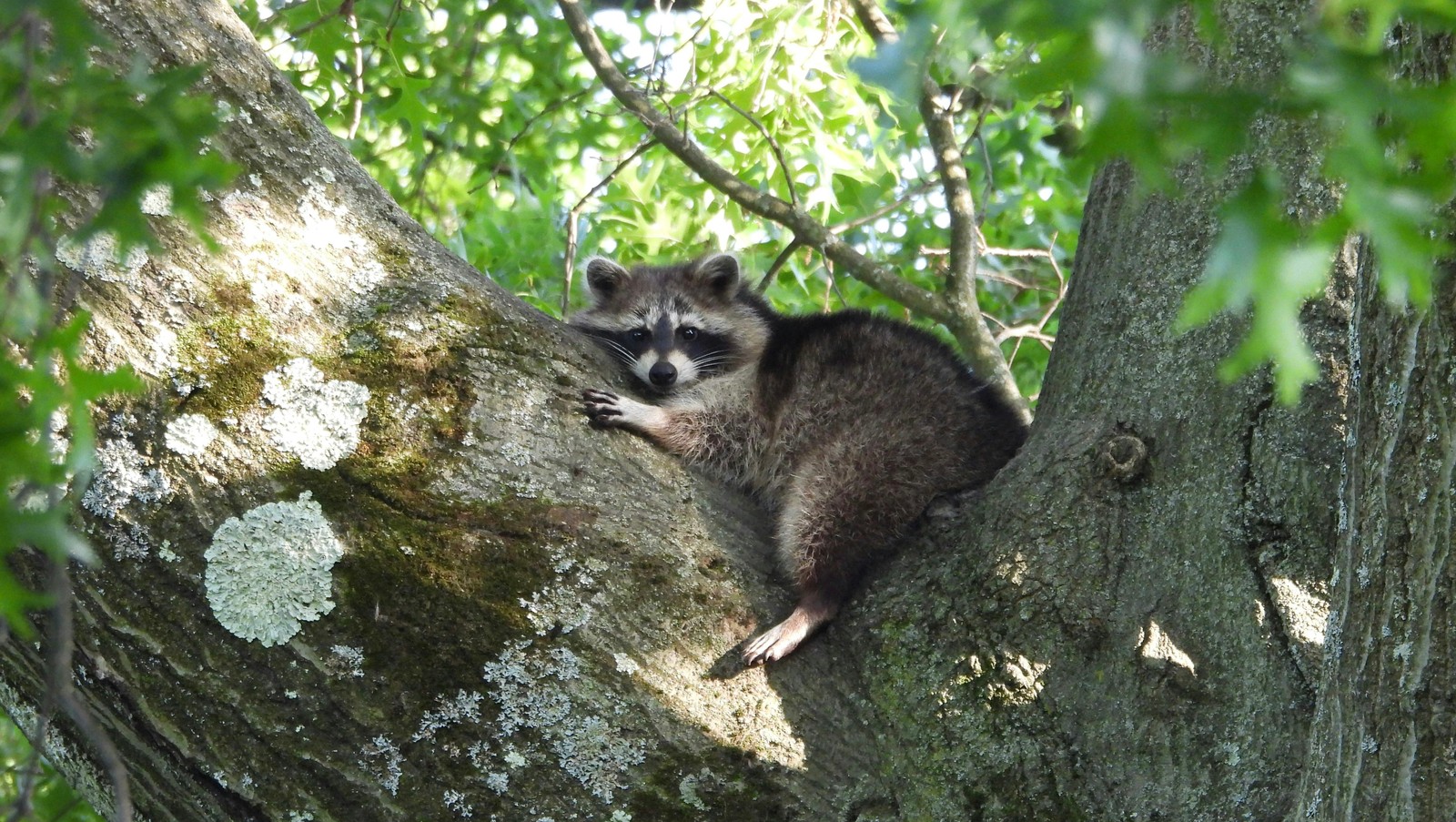
Image: Tracy Jentzsch

In today’s globalized world, we sometimes forget that many animal species are native to a specific region , despite having been introduced to other habitats. Some of these species seamlessly adapt to their new environments with minimal to no negative impact, but many become invasive, disrupting ecosystems and preying on native fauna and flora. North America’s ecosystems have their fair share of native species that have become so familiar worldwide that their origins are often overlooked. Here are 11 species that originated in North America!

1
American Alligator
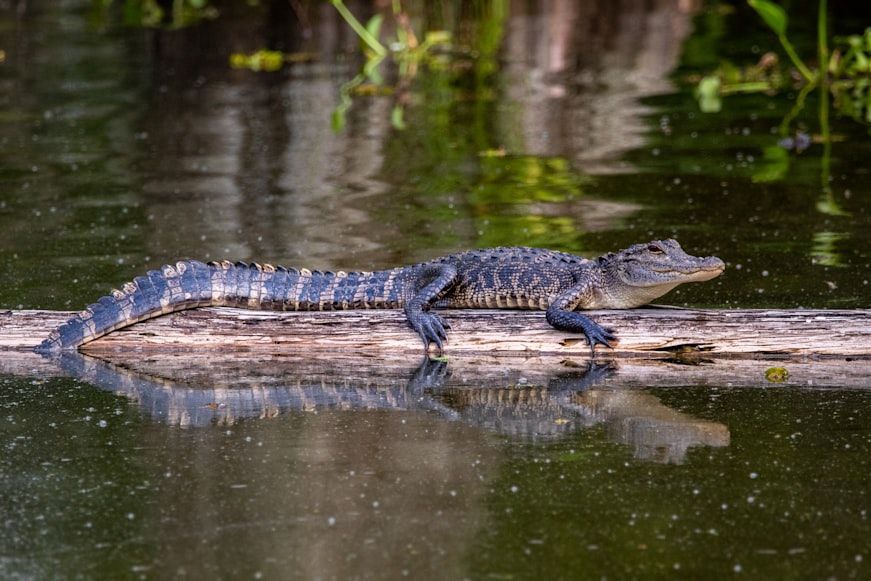
Image: Joshua J. Cotten

Did you know that American alligators are one of only two alligator species in the whole world ? China is the only other place with an alligator species, the Chinese alligator. Often confused with their relatives, the crocodiles and the caimans, alligators can be differentiated by the shape of their teeth, their round snouts, their darker color, and their preference for freshwater habitats. An inhabitant of tropical and subtropical wetlands, the American alligator can be found throughout the Southeastern U.S.

2
Nene
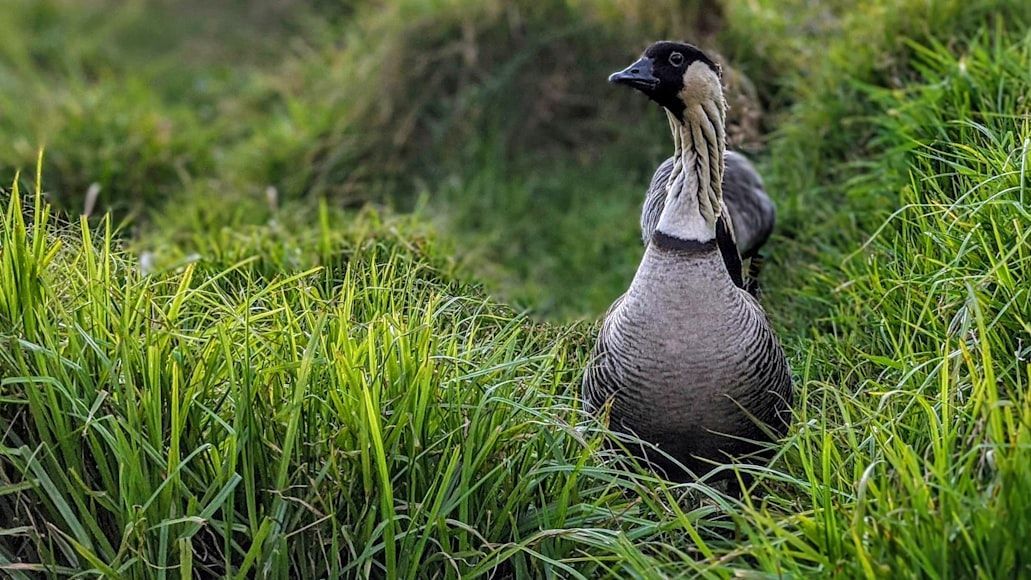
Image: Lyle Wilkinson

Also known as the Hawaiian goose, this bird can only be found in its wild state across the islands of Maui, Kauaʻi, Molokai, and Hawaiʻi . Believed to be distantly related to the Canada goose, the nēnē is considered the rarest goose species in the world and is a protected species. Thanks to successful conservation efforts, it has been reclassified from endangered to near threatened. It has also been designated as the official state bird of Hawaiʻi.

3
Common Raccoon
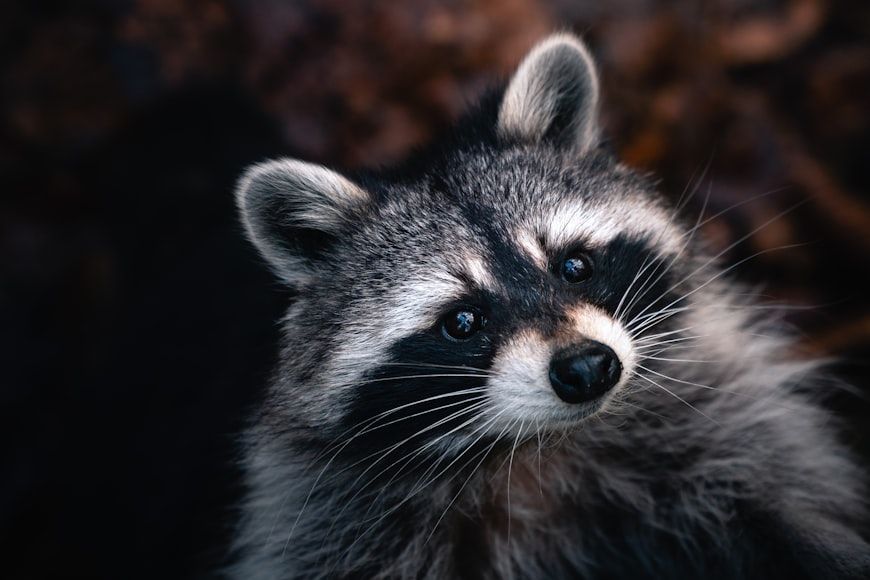
Image: Chris Ensminger

If you are asked to describe a raccoon, the common raccoon, native to North America, will most likely come to mind. The other two species of raccoon—also native to the Americas—present marked differences in color and size. Their name is derived from the Algonquian aroughcoune , meaning ‘he who scratches with his hands.’ The unusual shape of their thumbs, combined with their cleverness, allows them to open closed containers to access food and trash, which has earned them the nickname of "trash pandas." Due to human intervention, they have become a highly invasive species in European and Asian ecosystems.

4
Monarch Butterfly
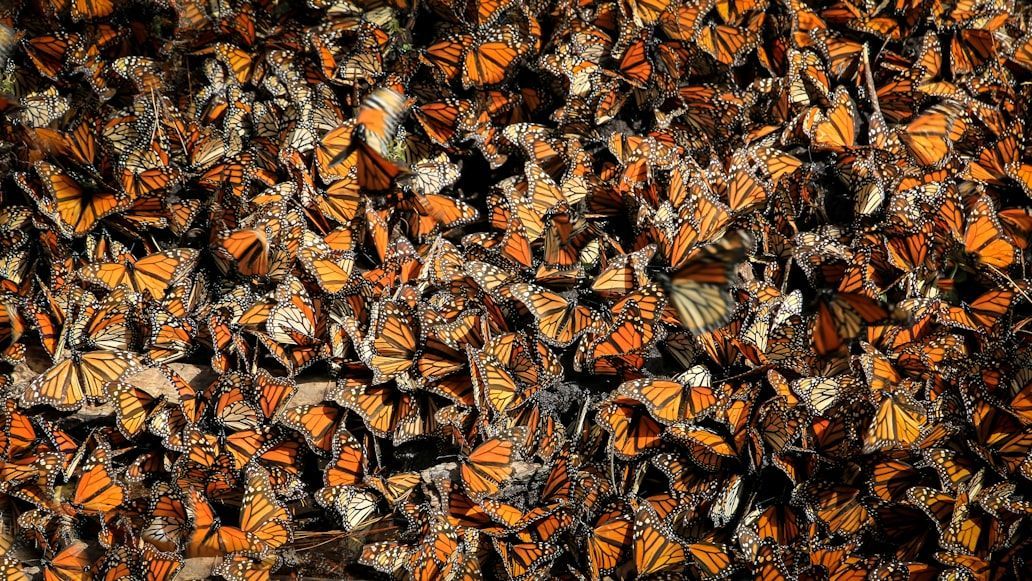
Image: Alex Guillaume

One of the most recognizable butterfly species, the Monarch can be identified by its orange and black wings with white spots . Monarch subspecies can be found across the Americas, but the North American monarch is especially known for its remarkable migratory behavior. As winter approaches, monarch butterflies in the northern United States travel thousands of miles to overwintering sites in California and central Mexico. In spring, they will return home in time for summer.

5
North American Beaver
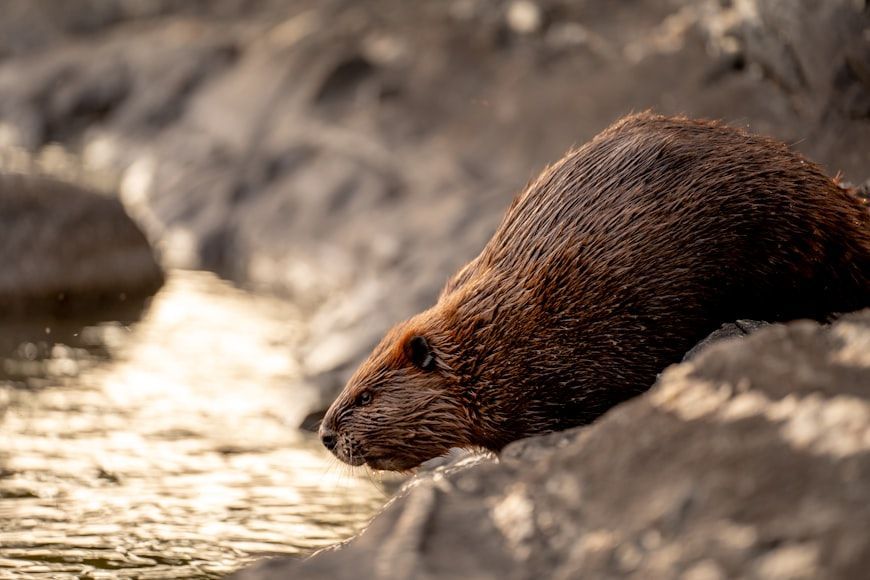
Image: Tim Umphreys

Though North American beavers are related to those found in Asia and Europe, their genetics are so different that they are unable to mix. North American beavers are generally larger and darker than their Eurasian counterparts , and they have a broader and longer tail. They are a widespread species across the Continental U.S., Canada, and northern Mexico and have been chosen as the official state mammal of Oregon and New York.

6
Bald Eagle
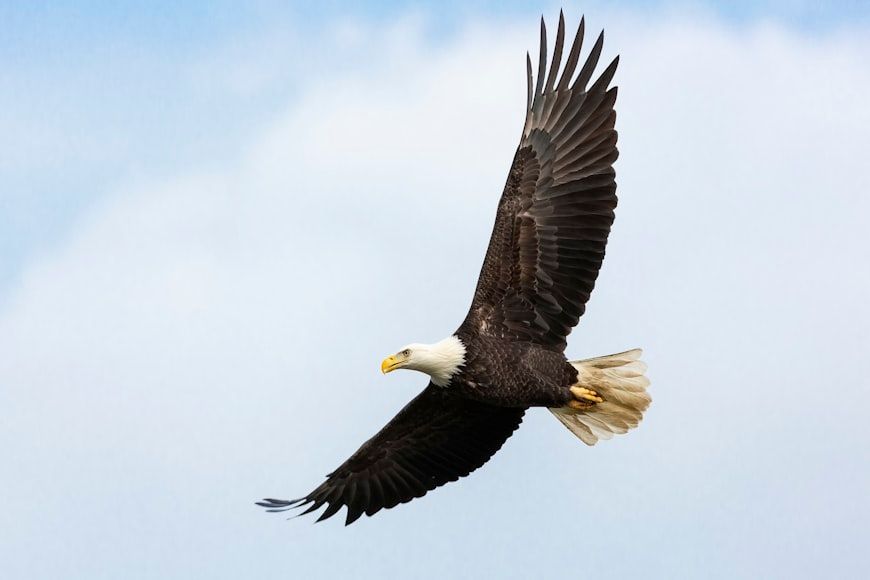
Image: Mathew Schwartz

Widely recognized as a national U.S. symbol and featured in multiple official imagery , the bald eagle came close to extinction in the late 20th century. Found across most of North America, it favors habitats near large bodies of water. Fun fact: bald eagles were named after the color of their head feathers, as the word ‘bald’ was anciently used for ‘having a white head.’

7
Alligator Snapping Turtle
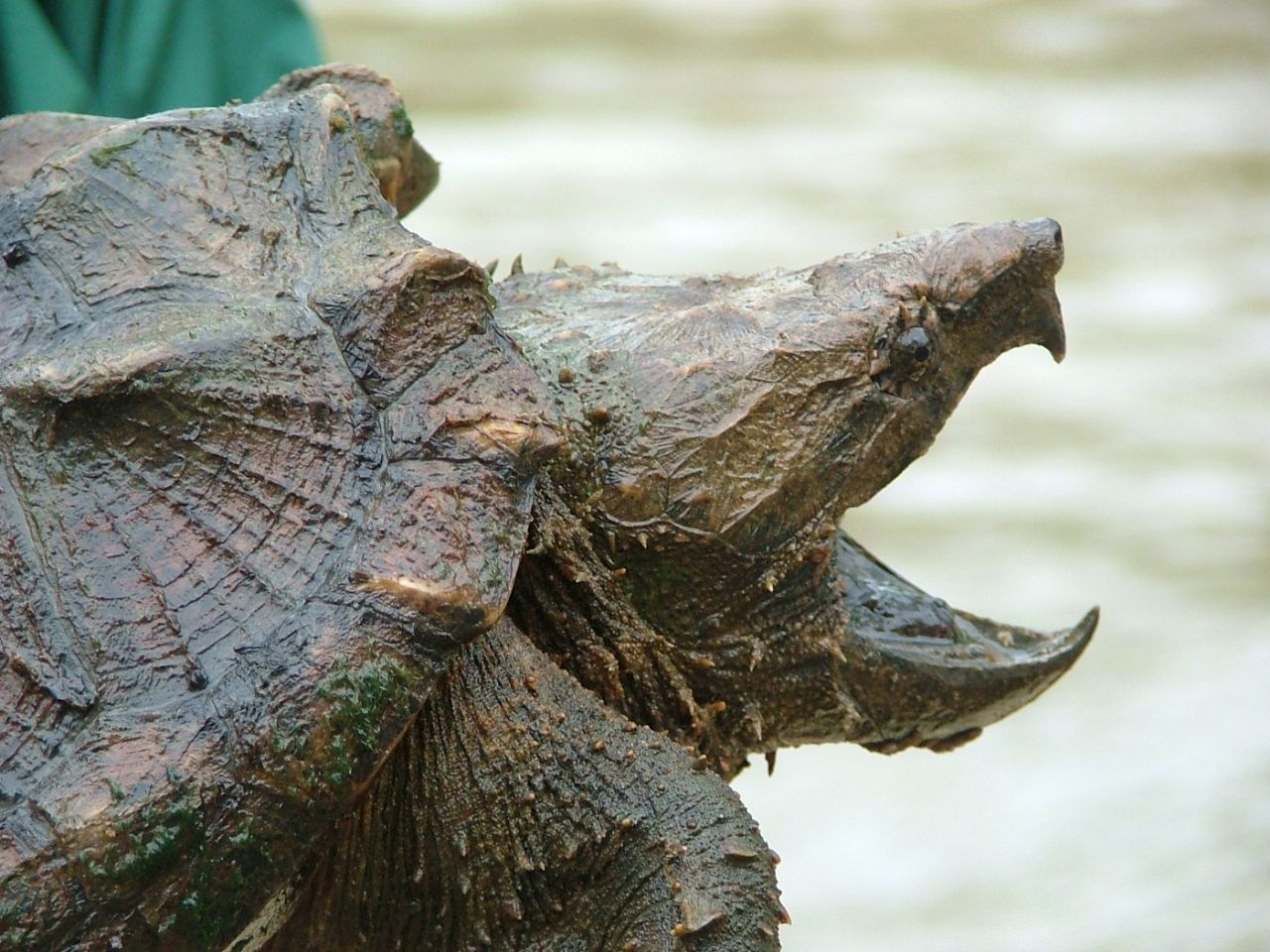
Image: U.S. Fish and Wildlife Service Southeast Region, Public domain, via Wikimedia Commons

Like the reptile it takes its name from, this pointy reptile is only found in freshwater habitats across the U.S. The spiky ridges on its shell give it an armored tank appearance, but these will flatten as the turtle ages. They have an extremely powerful bite , and they have been known for biting human fingers off, which makes them a dangerous animal that should be approached with caution.

8
Texas Blind Salamander

Image: Ryan Hagerty/USFWS, Public domain, via Wikimedia Commons

Unlike other entries on this list, this amphibian can only be found in a very specific place: San Marcos, Texas . Considered to be a critically endangered species, the Texas blind salamander lives in underground caves and streams and is highly sensitive to water pollution and droughts.

9
Coyote
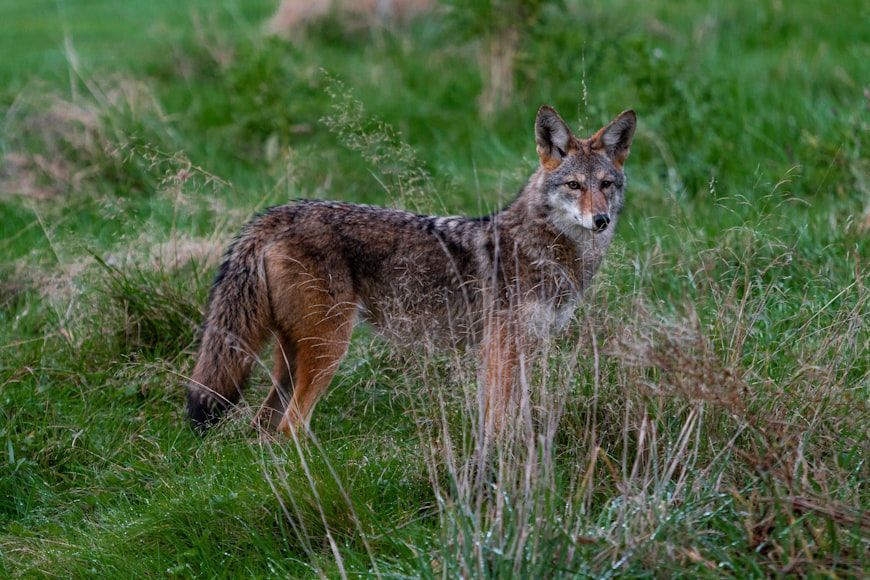
Image: Dylan Ferreira

Also known as the American jackal or prairie wolf, the coyote fulfills a key role in North American ecosystems by helping regulate the population of smaller animals and consuming carrion that could otherwise spread disease. Somewhat friendly toward humans, coyotes play an important role in Native American folklore, and there are recorded cases of domesticated coyotes.

10
Giant Kangaroo Rat
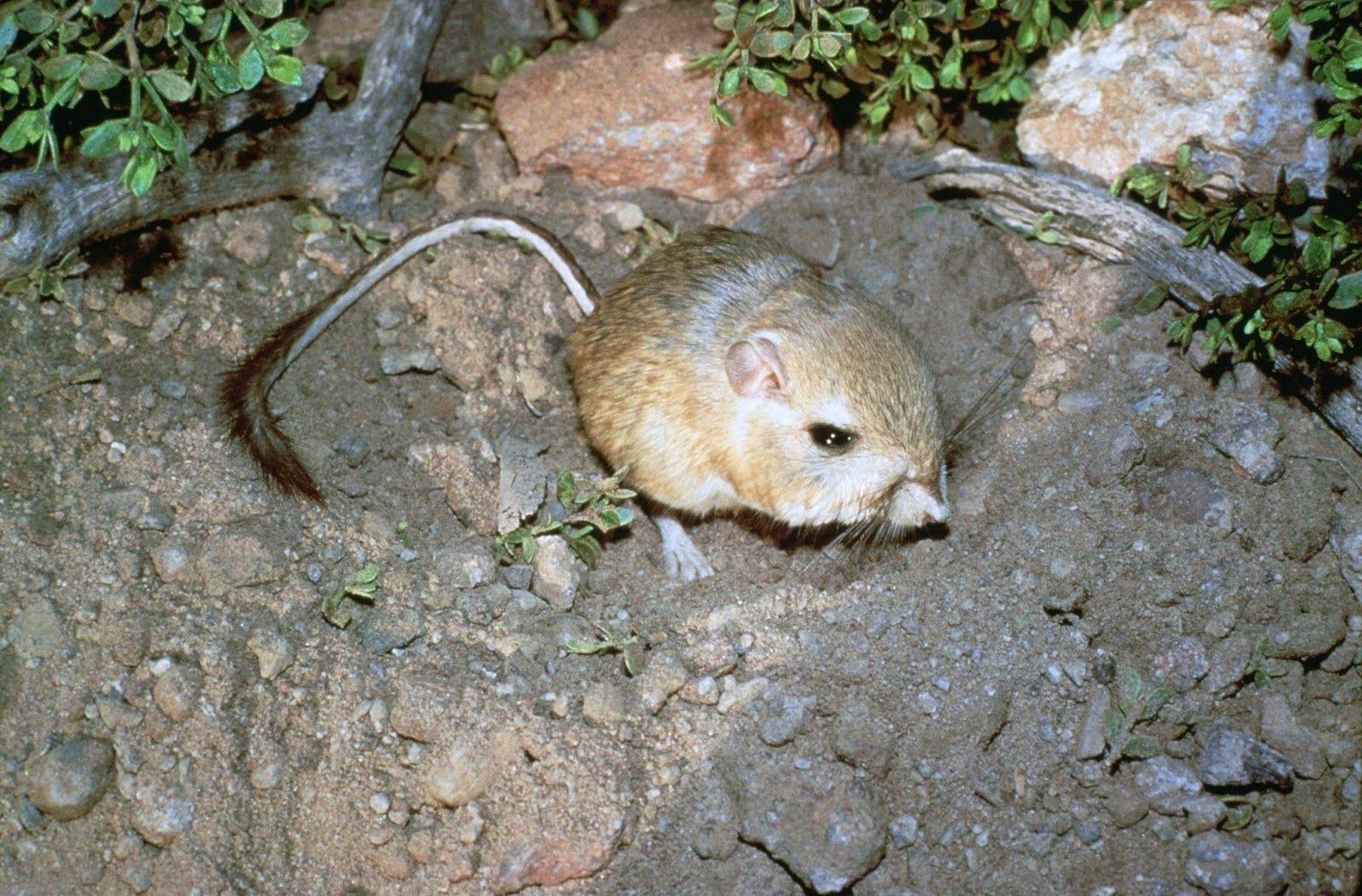
Image: Harrison, George, Public domain, via Wikimedia Commons

Although kangaroos are native to Australia, giant kangaroo rats are found only in California . Preferring dry, sandy habitats that allow them to dig burrows, these rodents are known for using foot stomps as a way of communicating. Due to habitat loss caused by agriculture, the giant kangaroo rat has been classified as an endangered species.

11
American Mink
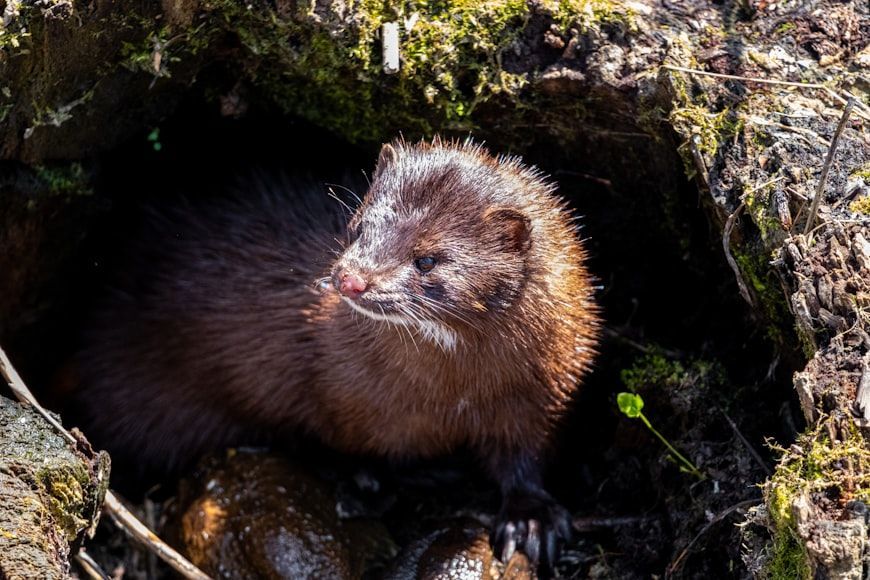
Image: Alexandre Daoust

American minks can be found across Alaska, Canada, and the northern and central United States, both in the wild and on farms. Although they are not specifically bred to be tame, they are officially considered suitable to be pets if trained from a young age. Their introduction to many parts of Europe, Asia, and South America has harmed native species, and they have been classified as invasive in many of these regions.

Geography Geography 6 min read

THE STRANGE AND THE UNUSUAL

10 Quirky Museums to Visit in America

Image: Liza Rusalskaya

If your idea of a museum involves dusty paintings and ancient artifacts behind glass, it is time to broaden your horizons.

America, with its boundless creativity and penchant for the peculiar, is home to some of the most bizarre and fascinating museums you can imagine . From the absurdly specific to the downright strange, these offbeat institutions offer a refreshing and often hilarious take on the concept of a museum.

Buckle up and join us as we go through 10 of the weirdest museums across the United States , from the Neon Museum to the Museum of Bad Art. Prepare to be amused, amazed, and utterly bewildered!

1
Neon Museum - Las Vegas, Nevada

Image: 李林Alwen

Let’s kick off this list with the Neon Museum in Las Vegas. The location seems just about right since Las Vegas is always bright and shining with luminous signs.

This museum, founded in 1996, holds a collection of over 250 historic signs from the city. It is located a few blocks away from the iconic Las Vegas Strip and exhibitions and projections display signs that once adorned the venue. Moreover, you will be able to see some paradigmatic signs restored like the Silver Slipper and Benny Binion’s Horseshoe.

2
International Spy Museum - Washington, D.C.

Image: Marten Newhall

Haven’t we all dreamed of becoming an international secret spy? Well, you can make your dream come true, at least for a few hours, at the International Spy Museum in Washington.

This museum was established in 2002 and it features the largest collection of international espionage artifacts ever displayed. From spy gadgets and concealed weapons to covert operations and famous espionage cases, you’ll get inside the life of a true spy.

Furthermore, it is an interactive museum so visitors can test their own skills with the experiences offered within the establishment.

3
National Mustard Museum - Middleton, Wisconsin

Image: Simona Sergi

Mustard is so much more than just a condiment, and if you think it is not, the National Mustard Museum is here to challenge that notion.

Founded in 1992 by Barry Levenson, this quirky museum celebrates all things mustard with the world’s largest collection of mustards and mustard memorabilia. It showcases over 6000 mustards from over 70 countries and visitors can learn about the mustard history and take a look at antique elements like tins, mustard pots, vintage signs, and advertisements.

If you are a foodie or a culinary curious, you can’t miss this museum!

4
Idaho Potato Museum - Blackfoot, Idaho

Image: Lars Blankers

Idaho’s love and pride for potatoes is so big, that they had to build a museum to display it and they are waiting for you!

The Idaho Potato Museum is a spud-tacular tribute to the beloved potato, fittingly located in the "potato capital of the world." Housed in the former Oregon Short Line Railroad Depot, this space of over 5,500 square feet offers exhibits on the history, cultivation, and nutritional value of the humble tuber.

Highlights include one of the world’s largest collections of potato mashers and the biggest potato crips ever made. Visitors can even perform experiments in the Potato Lab and savor a freshly baked potato in the museum’s cafe.

5
International UFO Museum and Research Center - Roswell, New Mexico

Image: Danie Franco

UFOs have always raised curiosity and the theories behind sightings and paranormal activities are one too many, right? Or at least enough to create a museum devoted to exhibiting all things UFOs.

The International UFO Museum and Research Center offers an intriguing exploration into the world of UFOs, and it is housed in a former movie theater. The creation of the museum was inspired by the Rosewell incident in 1947, a crash of a flying saucer, and it presents a variety of written, audio, and visual materials.

This museum is pet friendly and visitors can enjoy exhibits like a spinning UFO with aliens and an outdoor "Rosewell Belevies" mural. When are you paying a visit?

6
National Museum of Funeral History - Houston, Texas

Image: panyawat auitpol

There’s no denying it, we are going to die eventually. However, is death enough of an intriguing topic to open a museum devoted to it? Apparently, it is, and you can find one in Houston.

The National Museum of Funeral History houses the country’s largest collection of funeral service items, including caskets, coffins, and hearses.

The museum is over 30,000 feet and it features 19 permanent exhibits covering topics that range from embalming to the history of cremation and mourning photography. To make it even more interesting, the museum offers a unique look at funeral traditions and culture from ancient Egypt to modern times around the world.

7
Museum of Bad Art - Somerville, Massachusetts

Image: Rainer Bleek

Even if art is not for everyone, we can all agree there are standards for what is considered good or bad, right? Well, The Museum of Bad Art is here to prove us wrong!

Located in Somerville, the Museum of Bad Art is a delightful celebration of artistic mishaps and quirky creativity. What began in 1993 in a Boston basement has now expanded to the Somerville Theater’s basement in Davis Square.

This unique museum boasts over 700 pieces from artists, amateurs, and anonymous creators, featuring donations, thrift store finds, and gifts from the artists themselves. Despite its impressive collection, only about 25 works are displayed at a time , ensuring a fresh experience with each visit. Best of all, it’s free! For a fun and offbeat adventure, this is the place you need to visit!

8
National Bottle Museum - Ballston Spa, New York

Image: James Cousins

Here’s a museum you never thought would exist! But considering bottles are part of our everyday life, have you ever stopped and thought about how bottles are made? Wonder no more, better visit the museum!

The National Bottle Museum is a charming three-story brick building and it showcases over 3,000 bottles on its first floor alone! With seven permanent exhibits, you can marvel at pre-machine-made bottles from every state and even see glowing uranium glass!

Don’t miss the quirky temporary exhibits that go from Coca-Cola bottles to shot glasses, and spa bottles! And, if you are a bottle collector yourself, you’ll love the extensive library available!

9
Sindecuse Museum of Dentistry - Ann Arbor, Michigan

Image: Jonathan Borba

Teeth are the subject of contrarian opinions! Some love it, some find it disgusting. But that wasn’t enough of a reason to prevent Michigan from having a museum devoted to dentistry.

The Sindecuse Museum of Dentistry in Ann Arbor is a hidden gem tucked away in the atrium of the University of Michigan School of Dentistry. It’s one of the few museums in the world dedicated entirely to dentistry!

With over 25,000 objects on display, you will find everything from antique dental tools to quirky historical products dating back to the 18th century. The museum also features fascinating temporary exhibits and engaging programs. Plus, admission is free, so you can enjoy this unique journey through dental history without spending a dime.

10
Museum of Jurassic Technology - Los Angeles, California

Image: Mauro Sbicego

You read that right, the words "Jurassic" and "technology" are part of the same name and they have nothing to do with Spielberg’s millionaire production.

The Museum of Jurassic Technology in Los Angeles is an enigma wrapped in a mystery. Despite its name, there’s nothing particularly Jurassic about it. Instead, this delightfully bizarre museum leads you through dimly lit halls filled with curiosities, from mini models of Napoleon and Daffy Duck to oil portraits of Soviet space dogs.

It’s a wonderfully chaotic mix that keeps visitors scratching their heads and smiling. Perfect for those who love a good mystery, the museum’s quirky collection is as baffling as it is fascinating. Come ready to be amused and bewildered!

Culture Culture 4 min read

Brand stars

This is how these 10 brand mascots became bigger than their products

Image: P. L.

Every brand dreams of being instantly recognized by its logo or mascot, and some US brands have truly achieved this. In fact, a few have grown far beyond their products, becoming icons of American culture. From the beloved Pillsbury Doughboy to the unmistakable Colonel Sanders, join us as we take a walk through this brand-mascot hall of fame!

1
The Pillsbury Doughboy

Image: Dan Depew, CC BY 4.0 <https://creativecommons.org/licenses/by/4.0>, via Wikimedia Commons

You only need to see a tiny bit of his fluffy body to recognize him: Poppin’ Fresh, better known as the Pillsbury Doughboy, is a global star. The Pillsbury Company created him in 1965, and over the decades, he has appeared in hundreds of commercials and on all kinds of merchandise. Now, 60 years later, his cute image is still familiar to Americans everywhere. He’s even part of the Macy's Thanksgiving Day Parade!

2
Tony the Tiger

Image: SqueakyMarmot from Vancouver, Canada, CC BY 2.0 <https://creativecommons.org/licenses/by/2.0>, via Wikimedia Commons

Our childhood memories include a character who was and still is right there at the breakfast table. We're talking about Tony the Tiger, the beloved mascot of Frosted Flakes. Introduced in 1952 by Kellogg’s, many of us grew up with him and watched him become a cereal icon. And of course, no one can forget his iconic catchphrase: "They’re grrrreat!"

3
The Energizer Bunny

Image: Jazz Guy from New Jersey, United States, CC BY 2.0 <https://creativecommons.org/licenses/by/2.0>, via Wikimedia Commons

Style, attitude, energy: The Energizer Bunny has it all. With his signature sunglasses, drum, and flip-flops, this bunny first appeared in 1989 as a parody of the Duracell bunny, and he quickly grew far beyond Energizer batteries. In fact, he became a symbol of vitality and nonstop energy, so much so that when someone can’t sit still, they’re often compared to this bunny. You know, he just keeps going and going and going.

4
Mr. Clean

Image: JESHOOTS.COM

His style is unmistakable: that celebrity tan, bald head, bright white eyebrows, and even a cool earring. Of course! It’s Mr. Clean, the magical helper who shows up when stains get stubborn. Procter & Gamble introduced him in 1958, and he quickly became more than just the face of a product; he is a full character with his own personality and identity, deeply tied to the idea of household cleaning.

5
Mr. Monopoly

Image: Fluffybuns, CC BY-SA 4.0 <https://creativecommons.org/licenses/by-sa/4.0>, via Wikimedia Commons

We already talked about Mr. Clean, but there’s another Mister who is just as famous, if not more: Mr. Monopoly. While we all know him by that name today, he originally had a much funnier one: "Rich Uncle Pennybags." His mustache and top hat are unmistakable, and his fame has long transcended the Monopoly game, turning him into a visual symbol of wealth and capitalism in pop culture.

6
The Jolly Green Giant

Image: greefus groinks, CC BY-SA 2.0 <https://creativecommons.org/licenses/by-sa/2.0>, via Wikimedia Commons

The Green Giant Company introduced its giant mascot in 1928, and he quickly became synonymous with frozen vegetables across America. The Jolly Green Giant originally had a somewhat intimidating look, but a later redesign turned him into the friendly, smiling giant everyone knows and loves today. Decades of TV commercials, packaging, toys, and pop-culture references made him famous even among people who don’t buy the products.

7
Mr. Peanut

Image: InOttawa.ca, CC BY 2.0 <https://creativecommons.org/licenses/by/2.0>, via Wikimedia Commons

With his classic top hat and monocle, Mr. Peanut is undoubtedly a sophisticated mascot. And since he’s literally a peanut, it’s almost impossible not to think of Planters every time we grab a handful, right? Surprisingly, despite his excellent condition, Mr. Peanut is over 100 years old, having been introduced in 1916.

8
Mickey Mouse

Image: Brian McGowan

If there’s one truly world-famous mascot, it’s definitely Mickey Mouse. His round ears, white gloves, red shorts, and big yellow shoes are so familiar that most of us could sketch them from memory. Mickey started as a character but quickly became the unmistakable icon of Disney. Over time, he even transcended the brand itself, appearing in all kinds of products, commercials, shows, and parades, becoming a symbol of childhood around the world.

9
Colonel Sanders

Image: Marques Thomas

Every time you see this face, you instantly crave fried chicken. That’s the magic of the iconic Colonel Sanders, who is much more than a mascot. He was a real person, the founder of KFC. Because of that, his face has become so familiar to Americans that he feels almost like a father figure. His fame is so strong that KFC often doesn’t even need the brand name; the Colonel’s friendly face says it all.

10
Geico Gecko

Image: Roland Balik, Public domain, via Wikimedia Commons

The GEICO Gecko is so famous that seeing any lizard instantly brings him to mind. This friendly character has been tied to the brand since 1999, and the idea for him came from people mispronouncing "GEICO" as "gecko." Over the years, he has become a celebrity, so recognizable that he doesn’t even need the brand name for people to know exactly who he is.

Explore more American facts

Choose your favorite category!

General
General

As American as apple pie—the very best America has to offer!

Culture
Culture

Delve into the astounding richness of American lore.

Geography
Geography

Hop in and explore vast and diverse American landscapes.

History
History

Discover the key moments that shaped the United States.