Culture Culture 6 min read

How do the most powerful blow off steam?

Which US President spent a quarter of his presidency at a ranch in Texas?
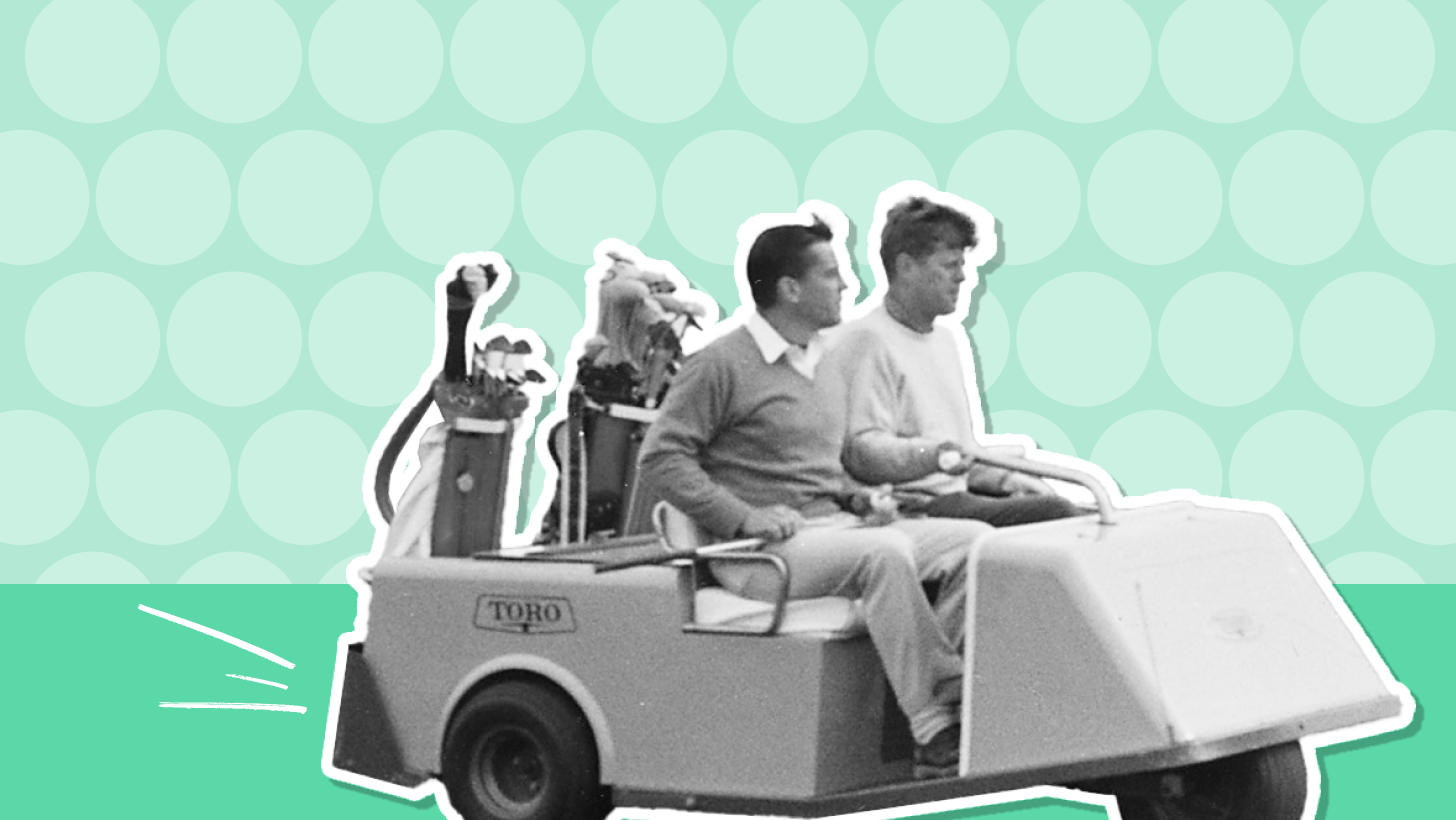
Image: Robert LeRoy Knudsen, Public domain, via Wikimedia Commons

Running the White House is a highly demanding job, so throughout history, many presidents have found ways to relieve the pressure and stress of leading at the highest level of government. When not shaping the path of the nation, presidents have enjoyed a variety of hobbies and pastimes that provide them with leisure time to relax, unwind, and clear their minds. From golfing and swimming to reading and painting, here are 12 U.S. Presidents who found the perfect balance between pleasure and duty.

1
George Washington

Image: Alonzo Chappel, CC0, via Wikimedia Commons

Founding Father and first president of the United States, George Washington, enjoyed many recreational activities during his free time. He was a true outdoorsman—he loved hunting and fishing and was a devoted gardener and farmer .

It’s common knowledge that after deciding not to run for a third term, he retired to his Virginia farm and dedicated the rest of his life to farming. But one fact you may not know is that, in his youth, Washington was a frequent dancer —and rumor has it, he was even extremely good at it! He considered dancing an important social interaction, describing it as "so agreeable and innocent an amusement."

2
Franklin D. Roosevelt
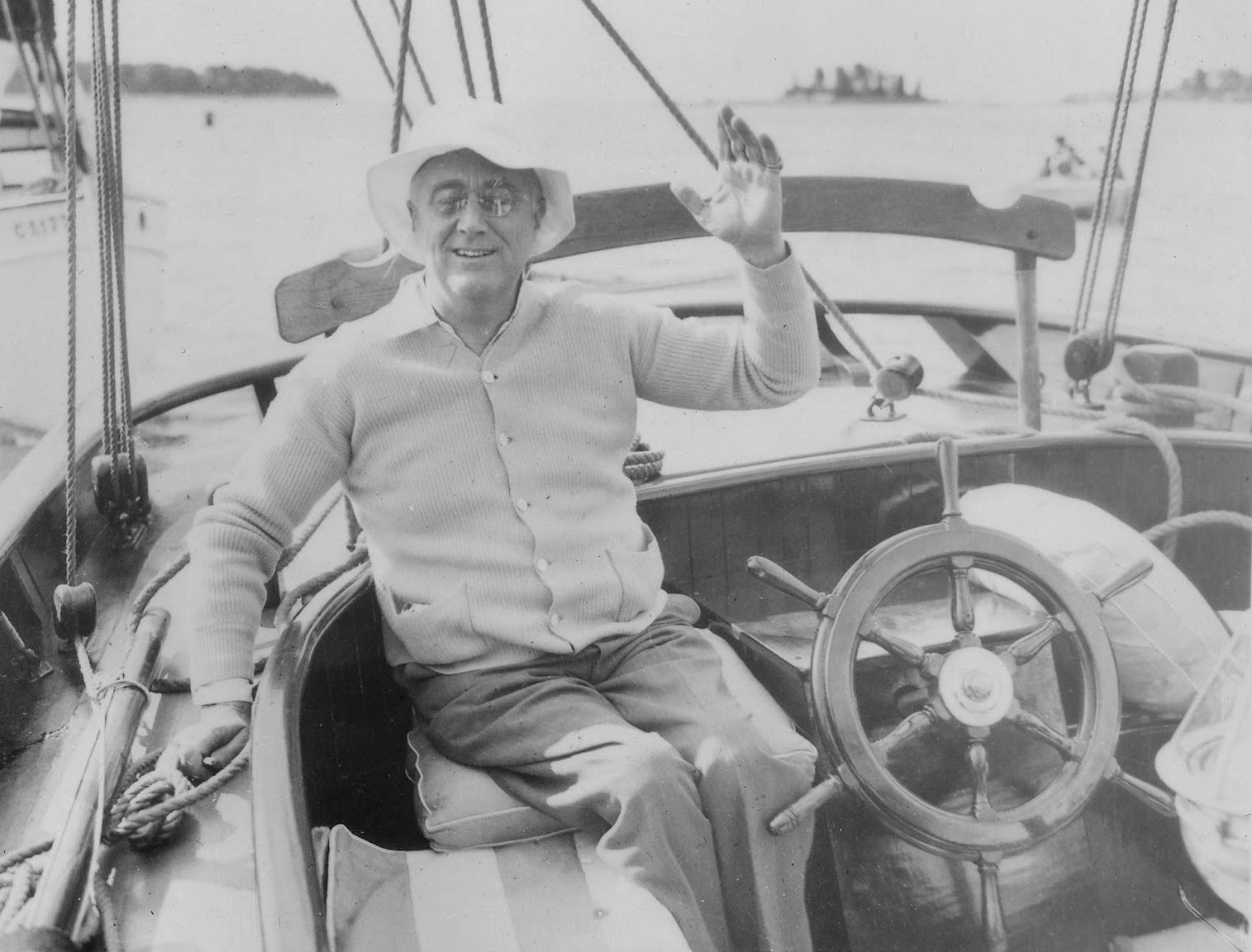
Image: National Archives and Records Administration, Public domain, via Wikimedia Commons

Franklin D. Roosevelt, the only president to be elected to four consecutive terms, led the country through the critical years of the Great Depression and World War II. To maintain a clear mind while navigating such tumultuous times, Roosevelt embraced a number of pastimes. He collected books , stamps , and ship models , for example.

In addition, he was an avid swimmer . After losing the ability to walk due to polio, Roosevelt began swimming three times a week to strengthen his muscles. Following his election, the New York Daily News donated a swimming pool to the White House so he could continue his practice.

3
James A. Garfield

Image: Unknown; part of Brady-Handy Photograph Collection., Public domain, via Wikimedia Commons

Before becoming the 20th president, James A. Garfield enjoyed fishing , hunting , and playing billiards . But he was also exceptionally intelligent and studious.

Though many people may know Garfield for serving just four months in office, he was also the first ambidextrous president of the United States . Not only could he write with both hands, but when asked a question, he could simultaneously write the answer in ancient Greek with one hand and Latin with the other. Pretty impressive, don’t you think?

4
Calvin Coolidge

Image: National Photo Company Collection, Public domain, via Wikimedia Commons

The 30th president of the United States liked riding horses so much that he had an electronic horse installed in the White House. The device had two speeds—trot and canter—and he rode it every day.

That said, Calvin Coolidge was a taciturn man of few words, who enjoyed taking afternoon naps, earning him the nickname "Silent Cal." He also had a very particular sense of humor . He reportedly enjoyed pressing the alarm buttons in the Oval Office or hiding in the garden shrubbery to startle his Secret Service agents.

5
Jimmy Carter

Image: Tuntematon, Valkoisen talon valokuvaajat (01/20/1977 - 01/20/1981), Public domain, via Wikimedia Commons

Throughout his life, Jimmy Carter was a curious man who never stopped doing things. He studied nuclear physics in college, could read two thousand words a minute, wrote numerous books, and even won a Nobel Peace Prize in 2002.

But what did this brilliant man like to do in his spare time? Carter had a variety of hobbies, including painting , poetry , tennis , cycling , fly fishing , and skiing . However, the one activity in which he perhaps excelled most was woodworking . After retiring, the 39th president of the United States set up a garage workshop on his Georgia ranch, where he built furniture that was later auctioned to benefit the Carter Center.

6
John Quincy Adams

Image: Pieter Van Huffel, 1769 - 1844, CC0, via Wikimedia Commons

John Quincy Adams was notoriously meticulous and kept a diary detailing his daily routine. Thanks to this, we now know that the sixth president of the United States liked to relieve the stress of the presidency with an early morning swim .

After waking up around 4 or 5 a.m., Adams would walk two miles to the Potomac River and leave his clothes on the shore before taking a swim. According to lore, one morning, a reporter named Anne Royall snatched his clothes and demanded that the president give her an interview. Adams had no choice but to answer her questions while standing deep in the river, completely naked.

7
Harry S. Truman

Image: Abbie Rowe, Public domain, via Wikimedia Commons

Harry S. Truman governed the United States from 1945 to 1953, right after World War II—a difficult and stressful time, to be sure. To blow off some steam, the 33rd president liked to immerse himself in one of his two long-time passions: reading and music .

Truman had eye problems, which prevented him from participating in sports. As a result, he became an avid reader from an early age—in fact, he once boasted of having read every book in the library by the age of 14. He was also a very skilled piano player , having started lessons at the age of seven.

8
Lyndon B. Johnson

Image: Yoichi Okamoto, Public domain, via Wikimedia Commons

Living up to the legacy of one of the most popular presidents in American history can't be easy. But it appears that the 36th president of the United States knew just how to maintain a good balance between responsibility and leisure. During his five-year administration, Lyndon B. Johnson spent 490 days —about a quarter of his presidency— at the LBJ Ranch in Stonewall , Texas, combining work and vacation so seamlessly that the place became known as "The Texas White House."

At this ranch, Johnson had an extensive collection of vehicles . Among them was the Amphicar, an amphibious passenger car built in the 1960s, which he used to play pranks on his visitors.

9
Richard Nixon

Image: White House Photographer, Public domain, via Wikimedia Commons

Not many people know this, but Richard Nixon was an artistic man. He enjoyed theater—he even met his future wife during a community theater audition—and he could play five musical instruments : piano, saxophone, violin, clarinet, and accordion.

But he was also into sports. In addition to being a huge football fan, he and First Lady Pat Nixon enjoyed bowling . In fact, the Nixons were responsible for moving the White House bowling alley back to the Executive Mansion after it had been relocated to a nearby building years earlier.

10
George W. Bush

Image: Series: Photographs Related to the George W. Bush Administration, 1/20/2001 - 1/20/2009Collection: Records of the White House Photo Office (George W. Bush Administration), 1/20/2001 - 1/20/2009, Public domain, via Wikimedia Commons

During his free time, George W. Bush enjoyed golfing, biking, attending baseball games, and reading American history. He was also a very competitive runner .

However, when the 43rd president of the United States left office, he was only 62 years old—plenty of time to acquire a new pastime. In the years following his time in the White House, Bush surprised many by turning to painting . "I’m a painter," he told Jay Leno on The Tonight Show .

11
Dwight D. Eisenhower

Image: ddd

To relieve the stress of leadership, Dwight D. Eisenhower maintained a number of hobbies that he cultivated throughout his life. One of his main passions was golf , which he played during and after his presidency. He even kept a small putting green in the White House garden and had a four-hole practice course installed at Camp David.

But that’s not all. Ike enjoyed fishing, hunting, shooting, watching Western movies, and playing bridge. He was also an avid painter who often captured natural landscapes and gave them as gifts to friends. After leaving the White House, Ike settled on a farm near Gettysburg, Pennsylvania, where he raised Black Angus show cows that won blue ribbons at state and county fairs.

12
John F. Kennedy

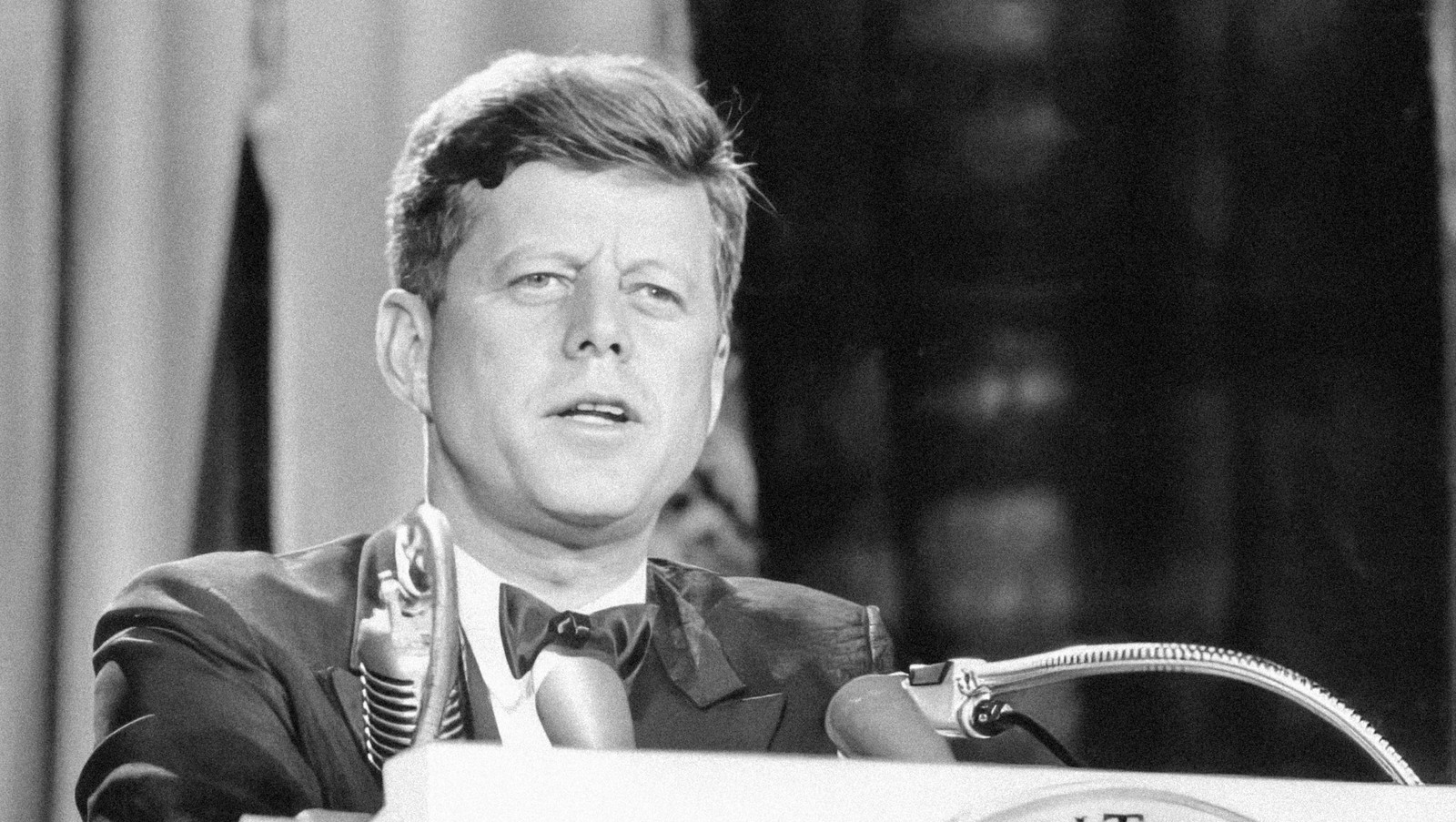
Image: Robert LeRoy Knudsen, Public domain, via Wikimedia Commons

John F. Kennedy was an exercise enthusiast and something of a jock. He played many sports : golf, tennis, swimming, baseball, and football. Despite being an athletic man, he enjoyed smoking between four and five cigars a day—his favorite brands were Upmanns and Monticellos!

But perhaps the hobby that most helped him relax from the tensions of the presidency was boating. Like many members of his family, John F. Kennedy loved to sail and was often photographed at sea with his wife and young children.

Culture Culture 5 min read

The best animated antagonists

Don't let evil win: take a look at these 12 scary Disney villains

Image: inspiredbythemuse

The great qualities and feats of animated movie heroes are always spotlighted, but what about their antagonists? Most Disney films have a villain who is as interesting as the protagonists. From evil stepmothers and pirates to terrifying sorcerers, these films have given us the most iconic characters in animated film history. Join us to reminisce about 12 of our childhood's most popular —and scariest— villains.

1
Cruella De Vil

Image: Helena Lopes

The Disney adventure comedy One Hundred and One Dalmatians premiered in 1961, and since then, Cruella de Vil has been one of the most iconic villains in animated film history.

This wicked woman is ambitious and capable of doing anything to get new fur for her coats. With the help of her henchmen, she steals the Dalmatian puppies her friends Anita and Roger had refused to sell her. Anyone who hurts cute little puppies to make coats deserves to be on the podium of the most evil villains in history!

2
Jafar

Image: Boris Hamer

Conspiracy and ruthlessness define any bad guy, and _Aladdin_’s villain is no exception. Jafar is capable of destroying anyone who stands in his way to gain more power.

Posing as an honest man, this evil sorcerer takes advantage of his role as the right hand of the Sultan of Agrabah and attempts to marry Princess Jasmine. His true intention, in fact, is to take over her father’s kingdom. If these traits don’t convince you that he is a true villain, just look at how he treats his sidekick, the charismatic parrot Iago.

3
Shan-Yu

Image: Stijn Dijkstra

Shan Yu is the main villain of the Disney movie Mulan (1998). This ruthless leader of the Huns is determined to conquer China. He and his army invade the land to prove his superiority to the emperor.

Cunning and sadistic, Shan-Yu feels no remorse when it comes to taking a life. Luckily, the brave Mulan manages to defeat him and ultimately saves the emperor.

4
Ursula

Image: Brian McGowan

Her tentacles and terrifying appearance are enough to make any child tremble. Ursula, the villain in The Little Mermaid (1989), uses magic to "help" others, although her deals are deceitful and become impossible to accomplish.

Ariel, the protagonist of this story, makes a deal with Ursula, who promises to turn her into a human for three days in exchange for her beautiful voice. If Ariel receives a "true love's kiss," she can be human forever. Despite the villain's attempts to make Ariel fail, she manages to keep her part of the deal by making Prince Eric fall in love with her.

5
Scar

Image: Brian McGowan

In The Lion King (1994), the second heir to the throne becomes one of the most ruthless villains when he murders his own brother and attempts to do the same to his nephew, Simba.

Although Scar only succeeds in causing Mufasa's demise, he convinces his nephew that it was his fault and that he must leave the kingdom forever. Scar orders the hyenas to destroy Simba, but what the evil lion could never have imagined is that the little boy would survive and return to avenge his father's death.

6
Queen Grimhilde

Image: Steven Beyer

Queen Grimhilde, better known as the Evil Queen, is the wicked stepmother in the 1937 film Snow White and the Seven Dwarfs . She is considered the first Disney villain.

Obsessed with being the most beautiful in the whole kingdom, she plots to have her stepdaughter —and competition— eliminated and demands Snow White’s heart. She even uses witchcraft to transform into an old lady, which allows her to give a poisoned apple to the naive princess. Can you think of anything more terrifying?

7
Gaston

Image: brunapazini0

In the beginning, the Beast is presented as an irascible and cruel monster, but the real villain of Beauty and the Beast (1991) is Gaston.

The arrogant hunter is determined to marry Belle, even if it has to be by force. This obsession turns him into a ruthless being, capable of doing anything to have his love reciprocated. Luckily, Bella has no time to waste with this evil kind of man.

8
Maleficent

Image: professional_Designers

When it comes to villains, no one can match Maleficent. The powerful sorceress doesn't hesitate when it comes to summoning an army of monsters or using her magic for revenge.

In Sleeping Beauty (1959), Maleficent curses Princess Aurora with eternal sleep for not being invited to her christening. This villain is so popular that Disney has produced two live-action movies with Angelina Jolie in the lead role: Maleficent (2014) and Maleficent: Mistress of Evil (2019).

9
Captain Hook

Image: Lalelu2000

One of Disney's most iconic villains is, without a doubt, Captain Hook. In Peter Pan (1953), the ruthless pirate seeks to destroy the Boy Who Would Never Grow Up for being responsible for the loss of his hand and also for taunting him every time their paths cross.

Despite his inherent evilness, we can't help but laugh at Captain Hook and his irrational fear of the crocodile that ate his hand. A villain with such a weakness can't be all that terrifying, don't you think?

10
Lady Tremaine

Image: Gary Cooper

Wicked stepmothers are a classic of Disney movies and the one in Cinderella (1950) is perhaps one of the most iconic. Lady Tremaine made us shudder every time she appeared from the shadows stroking her cat, Lucifer.

To be fair, this stepmother might not have been so scary without the presence of her equally evil daughters, Anastasia and Drizella. Dead jealous, the three women make life miserable for poor Cinderella, relegated to serving and being exploited in her own home after the passing of her father. Perhaps the most terrifying thing about Lady Tremaine is that she successfully manages to inflict extreme suffering on Cinderella without laying a finger on her.

11
Governor Ratcliffe

Image: EricThriller

Governor Ratcliffe is the main villain in Disney's historical drama Pocahontas (1995). This money-hungry English settler is greedy, and he doesn't trust the "savages." He sends his men to attack them because he believes they're hiding a gold treasure.

Even when they discover that the Native Americans don't possess the riches, he still declares war on them. In a confrontation, Ratcliffe fires his musket at Chief Powhatan, but Captain John Smith —Pocahontas' love interest— takes the shot to save him. Finally, the settlers turn on Ratcliffe and arrest him for hurting their comrade.

12
Queen of Hearts

Image: Laine Cooper

Although the Queen of Hearts appears only at the end of Disney's version of Alice in Wonderland (1951), it is enough for us to notice the fear she inflicts on her subjects. This villainess is a childish, hotheaded monarch whose catchphrase is "Off with their heads!"

After feeling humiliated during a game of croquet, she loses her temper. The king convinces her to put Alice on trial before cutting off her head. Nothing seems to go right for the girl who must escape to save her life. Luckily, she finally realizes that she is in a dream and manages to wake up before she is caught by the tyrant queen.

History History 5 min read

Stages that made history

Were you there? 10 legendary music concerts held in the U.S.

Image: Johannes Havn

Some performances stay with us forever. Moments like Jimi Hendrix setting his guitar on fire, Prince playing Purple Rain in the pouring rain, or The Beatles being drowned out by the roaring crowd at Shea Stadium are etched in the minds of millions. Some people witnessed them live, while others saw them in documentaries or YouTube videos that continue to amass views decade after decade. Regardless of the medium, generations agree that these 10 performances are among the most unforgettable shows ever staged in the US.

1
The Beatle’s Shea Stadium Concert

Image: Fedor

The Beatles couldn’t hear themselves over the overwhelming roar of the crowd during their first U.S. performance. The concert that the band from Liverpool gave at Shea Stadium in the summer of 1965 made history. It drew 55,000 fans—the largest rock concert audience at the time—and marked the first time a rock band played in a large stadium.

This event set a new standard for live music performances, highlighting the need for stadium sound systems capable of supporting massive concerts—since the one used that day was rudimentary. Though the band arrived by helicopter, sparked a frenzy of Beatlemania hysteria, and delivered a performance that would be rewatched for decades, they played only 12 songs in just 30 minutes .

2
1985’s Live Aid

Image: Andreas Talseth

Did you know that Phil Collins insisted on performing at both the U.K. and U.S. venues on the same day for 1985’s Live Aid? He boarded a Concorde jet to fly from Wembley Stadium to JFK Stadium in Philadelphia, where the U.S. leg of the famine relief fundraiser for Ethiopia was taking place.

The event was broadcast in 150 countries and reached nearly 1.9 billion people. The U.S. stage of Live Aid raised over $125 million and set the standard for large-scale charity concerts, inspiring similar events in the years that followed. Madonna, Bob Dylan, Mick Jagger with Tina Turner, Duran Duran, and Eric Clapton were just a few of the stars who performed that day.

3
Bob Dylan at Newport Folk Festival

Image: Nikoloz Gachechiladze

The 1965 Newport Folk Festival will always be remembered as the day Bob Dylan "went electric." His decision was controversial—he had long been associated with folk and blues, and his unexpected leap into rock divided the audience, with some cheering and others booing. Some believe the booing was directed at the poor sound quality rather than his choice to go electric. Regardless, Dylan left the stage after just three songs .

This moment is seen as a pivotal merger of folk and rock music. Afterward, Dylan fully embraced rock, releasing albums that included his hit "Like a Rolling Stone."

4
Simon & Garfunkel’s Concert in Central Park

Image: David Vives

In September 1981, Simon & Garfunkel reunited at Central Park in New York for their first performance together in over a decade. The duo had publicly announced their breakup in 1970, after friction and disagreements that had forced them apart. Their immense popularity drew a crowd of half a million people to Central Park to witness the event.

The duo performed some of their biggest hits along with a few of Paul Simon’s solo songs. The concert was a benefit to raise funds for the park’s restoration. It was broadcast live, and the recording was later released as a live album . The event reignited their popularity and led to a successful reunion tour.

5
The Allman Brothers Band’s Fillmore East Concerts

Image: Pixabay

During the spring of 1971, The Allman Brothers Band performed for three nights at the Fillmore East in New York City. These performances were recorded and released as the live album At Fillmore East , which became one of the greatest live albums in rock history.

What made these recordings particularly compelling for fans was the inclusion of extended jam versions of songs like "Whipping Post," "You Don't Love Me," and "In Memory of Elizabeth Reed." The band’s improvisational skills and seamless fusion of blues, jazz, and rock made this weekend in New York a legendary and widely acclaimed performance.

6
Johnny Cash at Folsom Prison

Image: M Shiva

In 1968, Johnny Cash made a decision that would revive his career and solidify his image as both empathetic and rebellious. Following a decline in popularity and struggles with addiction, he arranged a performance for the inmates at California’s Folsom Prison, about which he had written the hit Folsom Prison Blues years earlier.

Cash had played in prisons before, but this time, he chose to record it. The resulting album captured the raw energy of his direct engagement with the audience. At Folsom Prison became a massive success, marking the first in a series of prison concerts that would go on to become some of his best-selling records .

7
The Last Waltz of The Band

Image: William Krause

The Last Waltz was billed as The Band’s farewell concert , designed as a celebration of their remarkable career. Filmed by Martin Scorsese, the event featured an all-star lineup of guest musicians, including Bob Dylan, Joni Mitchell, Van Morrison, Muddy Waters, and Ringo Starr—just to name a few.

Held in 1976 at San Francisco’s Winterland Ballroom, the concert was later released as a documentary film , becoming one of the greatest concert films of all time. With its chandeliers and grand ballroom atmosphere , The Last Waltz set a new standard for farewell concerts.

8
Prince’s Super Bowl Halftime Show

Image: Daniel Robert Dinu

Many will always remember when Prince performed "Purple Rain" in the pouring rain during the 2007 Super Bowl Halftime Show . Despite the adverse weather, he commanded the "P"-shaped stage at Miami’s Dolphin Stadium during the break in the game between the Colts and the Bears.

He opened with his anthem "Let's Go Crazy" and included covers of songs by Bob Dylan and Foo Fighters. Legend has it that before the show, Prince was asked if he was worried about performing in the rain. His alleged response? A playful, " Can you make it rain harder ?" He then stepped out and delivered one of the greatest halftime shows in history.

9
Jimi Hendrix at the Monterey Pop Festival

Image: mirkosajkov

Until the Monterey Pop Festival in 1967, Jimi Hendrix had yet to break through in the US. It was none other than Paul McCartney who convinced organizers that the festival would be incomplete without the rising star.

American audiences were introduced to Hendrix’s guitar wizardry at this concert, where he showcased his newly released album Are You Experienced. The moment that cemented him as a force to be reckoned with came during a dramatic rendition of "Wild Thing," when he set his guitar on fire before smashing it.

10
Woodstock Music and Art Fair

Image: PeterKraayvanger

Finally, we can’t overlook the legendary Woodstock Music and Art Fair, forever known simply as "Woodstock." Held on a dairy farm in Bethel, New York, the festival became a symbol of the 1960s counterculture . Nearly half a million people gathered for this three-day event, which was originally planned as a profit-making venture but turned into an open festival when the crowds became overwhelming.

The lineup featured many stars who became emblems of the era, including Jimi Hendrix, Janis Joplin, The Who, Santana, and Joe Cocker, among others. Despite its iconic status today, Woodstock faced challenges such as food and water shortages, heavy rain, and overwhelmed medical services. Although the festival initially resulted in a financial loss , the costs were eventually recovered through profits from the film and soundtrack releases.

Explore more American facts

Choose your favorite category!

General
General

As American as apple pie—the very best America has to offer!

Culture
Culture

Delve into the astounding richness of American lore.

Geography
Geography

Hop in and explore vast and diverse American landscapes.

History
History

Discover the key moments that shaped the United States.