Geography Geography 4 min read

Road trip time

Off the beaten path: 12 bizarre roadside wonders across the U.S.

Image: RDNE Stock project

Picture this: You’re on a road trip and stumble across something so odd you have to pull over and snap a photo. Has that ever happened to you? It probably has—because that’s the magic of the American roadside attraction. It’s part charm, part mystery, and entirely unforgettable. Our highways are full of creative (and often head-scratching) stops that are well worth stretching your legs for. Here’s a look at some of the most bizarre places you’ll ever visit.

1
Carhenge – Alliance, Nebraska

Image: John Dame

Imagine driving through the Great Plains and stumbling across Stonehenge—only this version is made entirely of old cars. That’s Carhenge. Built in 1987 by artist Jim Reinders, this auto-art installation mirrors the original monument’s dimensions using vintage American cars, all painted gray. It’s history with a humorous twist, you know!

2
Salvation Mountain – Niland, California

Image: Megan Ellis

Located near the edge of the desert, Salvation Mountain is a wonder filled with color and faith. Leonard Knight spent decades slathering adobe and straw with thick coats of paint, spreading a message of love through hand-lettered Bible verses. You don’t have to be religious to appreciate the heart behind this monument—it’s pure passion on display.

3
The Enchanted Highway – Regent, North Dakota

Image: Carol Highsmith's America

This isn’t your average country drive. The Enchanted Highway is a 32-mile stretch of open road lined with enormous metal sculptures—everything from geese in flight to grasshoppers the size of RVs. Created by Gary Greff, a small-town schoolteacher turned roadside visionary, this whimsical parade of artwork proves that a little welding—and a lot of heart—can turn even the quietest town into a road trip highlight.

4
The Paper House – Rockport, Massachusetts
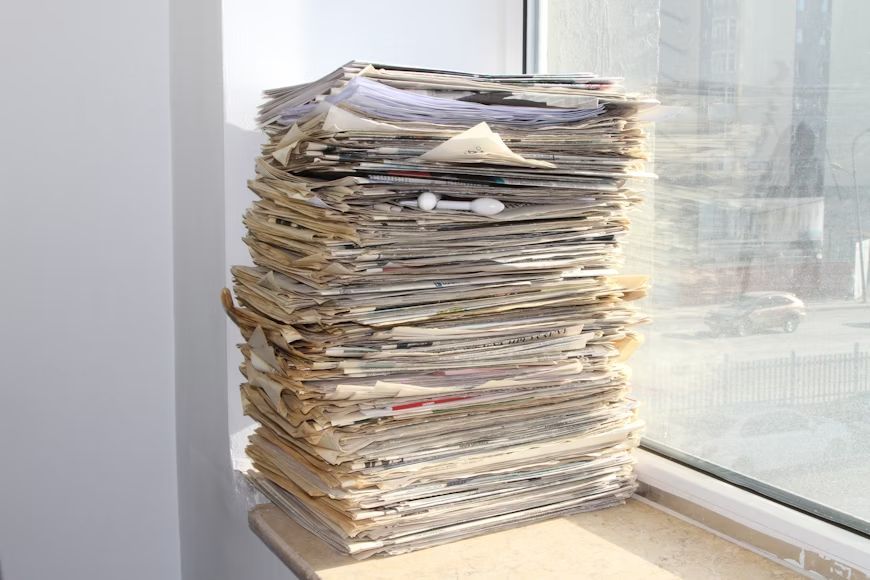
Image: Unlimited Access

If you’ve ever wondered what to do with old newspapers, how about building a house? In the 1920s, engineer Elis Stenman did just that. The walls, furniture—even the curtains—are made from varnished newspapers. It’s cozy, clever, and surprisingly sturdy. Part architecture, part recycling marvel, this little New England oddity is well worth the detour.

5
The Museum of Bad Art – Boston, Massachusetts

Image: Marishka Tsiklauri

Some artwork takes your breath away. Other pieces make you laugh out loud—and that’s exactly the goal at the Museum of Bad Art. This small but mighty gallery celebrates delightfully terrible creations. It’s not about mocking; quite the opposite. It’s about finding joy in the offbeat and honoring artists who dared to create something totally different. Trust us—you’ll leave smiling.

6
The Unclaimed Baggage Center – Scottsboro, Alabama
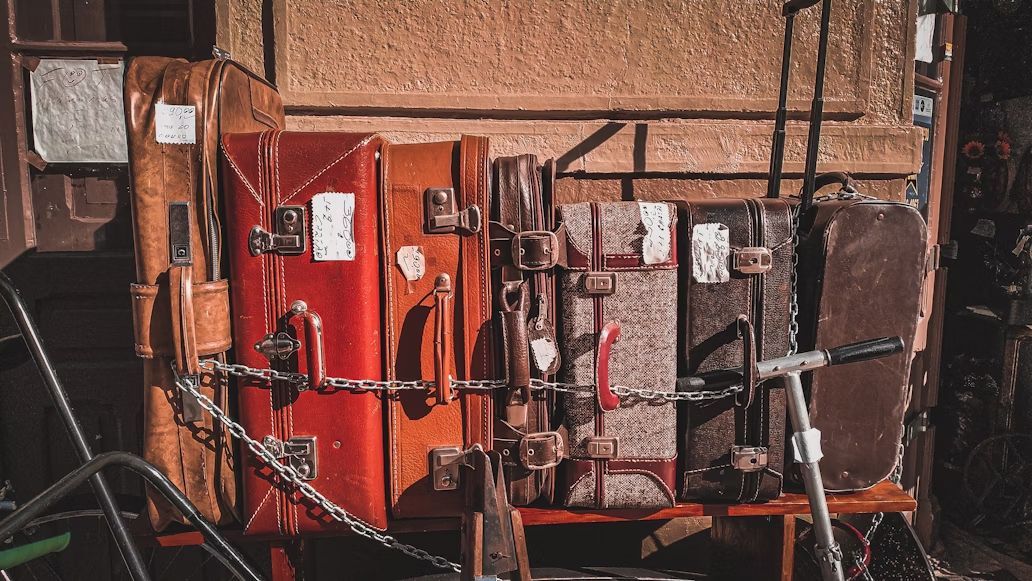
Image: Raquel Brepohl

Ever wonder where your missing suitcase ended up? Chances are, it’s here. The Unclaimed Baggage Center is part retail store, part treasure hunt. Spread across 40,000 square feet, it sells items left behind at airports—from clothes and gadgets to the occasional surprise oddity. If you enjoy thrifting, this is a must-stop on your trip.

7
The Wigwam Motel – Holbrook, Arizona
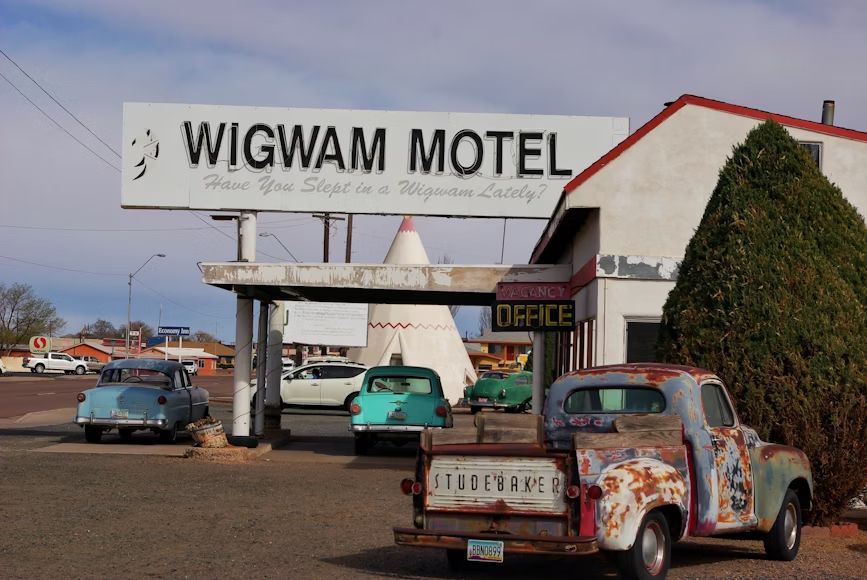
Image: Johnathan Ciarrocca

Nothing screams classic Americana like Route 66, and the Wigwam Motel delivers. Here, you’ll sleep in your very own concrete teepee. It’s one of only three surviving "Wigwam Villages" from the 1950s. It’s kitschy, it’s cozy, and it’s a nostalgic nod to the road trips of yesteryear. Want a bonus? Check out the vintage cars parked out front.

8
The House on the Rock – Spring Green, Wisconsin
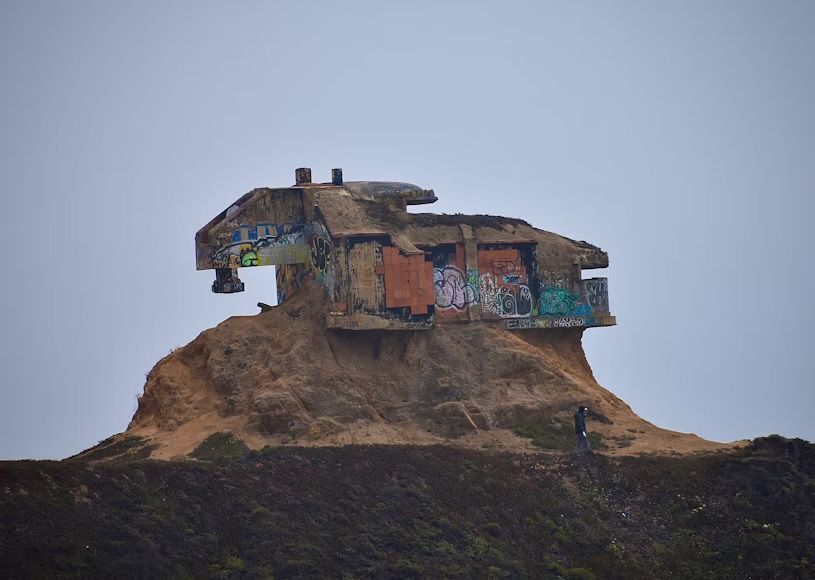
Image: Cristina Glebova

Imagine a mansion crossed with a carnival funhouse—that’s The House on the Rock. Started in the 1940s by Alex Jordan Jr., this labyrinth of rooms features bizarre collections, from a giant carousel to self-playing orchestras and a hall filled with model ships. It’s overwhelming, wonderful, and completely unforgettable—a place where your inner child will be wide-eyed the entire time.

9
The Grotto of the Redemption – West Bend, Iowa
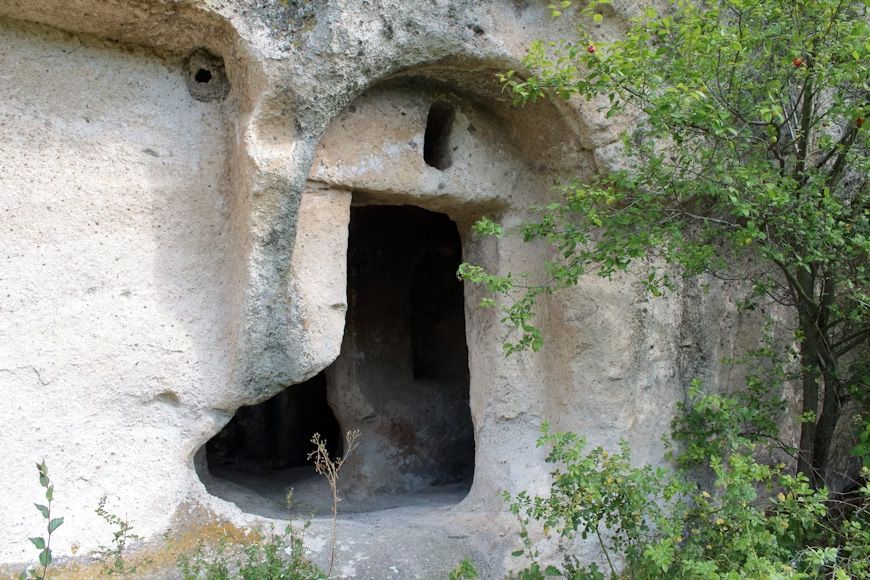
Image: Mustafa akın

Part spiritual sanctuary, part geological marvel, the Grotto of the Redemption is made of millions of stones, gems, and fossils. Started by Father Paul Dobberstein in 1912, this labor of love took over 40 years to complete. The result? A jaw-dropping series of religious scenes and structures that glitter in the sunlight. Bring your sunglasses—you’re in for a dazzling experience.

10
The UFO Watchtower – Hooper, Colorado

Image: Gabriel Tovar

For those who believe in aliens—or just love a good alien yarn—the UFO Watchtower is a must-see. Located in the San Luis Valley, a hotspot for sightings, this quirky site offers 360-degree views of the sky, a garden filled with visitor trinkets, and plenty of stories. Try it out—what if you spot a flying saucer? Let’s face it, we’re all a little curious about what’s out there.

11
The World’s Largest Ball of Twine – Cawker City, Kansas

Image: Amie Bell

It started small. Then the neighbors added to it. Then visitors joined in. Now, it’s a Midwest legend. The World’s Largest Ball of Twine keeps growing, with a yearly "twine-a-thon" that invites everyone to contribute. It’s quirky, community-powered, and a great example of how something ordinary can become roadside-worthy.

12
The World’s Largest Collection of the World’s Smallest Versions of the World’s Largest Things – Lucas, Kansas

Image: Nik

Yes, that’s the real name. And yes, it’s every bit as whimsical as it sounds. Artist Erika Nelson created this traveling museum of tiny replicas, honoring America’s obsession with "world’s largest" attractions. It’s part satire, part celebration, and completely charming.

General General 3 min read

Ghost in the machine?

12 warning signs that can reveal a virus in your computer

Image: Michael Geiger

Computer viruses can be sneaky, as they attempt to go as undetected as possible while their nasty work is being accomplished. They can be picked up by clicking on malicious attachments or links, or they may be installed on your computer without your knowledge. Fortunately, most antivirus programs today can handle these threats, but it’s always wise to be aware of these 12 warning signs—just in case.

1
Too slow

Image: Milad Fakurian

If your computer suddenly starts running much slower than usual, this could be a virus infection giveaway, since viruses can cause a computer to perform significantly worse than usual by consuming a lot of resources .

2
Too hot

Image: Artur Solarz

If your computer's fan suddenly becomes unusually loud, this could be a virus warning. If this happens, the computer is being pushed to its limits by some software , possibly a virus, causing the CPU to heat up.

3
Increased random pop-ups

Image: KOBU Agency

Pop-ups are a common nuisance on the internet. However, if you notice a sudden increase in random pop-ups, it could indicate that your computer is infected with a virus. Some pop-up ads contain malware that, if clicked, can install itself on your computer and run without your knowledge. These pop-ups may appear as error messages, or even messages claiming your computer has a virus .

4
Repeated crashes and freezes

Image: Joshua Hoehne

A computer may crash or freeze when running a resource-intensive program or app. However, if it crashes or freezes frequently without any demanding programs running , it could be a sign of a virus infection .

5
Browser homepage changes

Image: Nathana Rebouças

A browser’s homepage should not change unless the user modifies it. At most, it may open a separate tab after an update, but it won’t alter the homepage. If your browser’s homepage unexpectedly switches to a different website , your computer may be infected with a virus .

6
Unknown programs

Image: KOBU Agency

An unknown program or app appearing on a computer could be an indicator of virus presence. A hidden virus may be launching programs that the user did not download .

7
Computer battery draining

Image: Roberto Sorin

As we’ve learned, viruses consume a lot of resources, and a computer’s battery is no exception . When a computer’s battery life quickly drops, this could mean a virus is running in the background and spreading to affect the system.

8
Missing files and corrupted data

Image: Markus Spiske

Missing or corrupted files can also indicate a virus infection on a computer. Heuristic viruses often target files, causing them to disappear or become unreadable . This not only disrupts the workflow but also poses a significant threat to personal and professional information, such as important documents, cherished photos, or critical work files.

9
Unfamiliar files and folders

Image: Cookie the Pom

Computer viruses not only make files disappear but also create files and folders to disguise their presence. Some viruses modify files on a computer by giving them almost identical names, allowing them to blend in with the rest of the documents.

10
Disabled security tools

Image: Ed Hardie

Antivirus programs and security tools are some of our best allies against computer viruses. That’s why, when a virus infects a computer, it often disables security features to make its job easier. Some viruses are specifically designed to disable security tools, giving them access to the computer’s data and private information. If an antivirus program has been disabled, it could be a sign that a virus has shut it down.

11
Unknown emails in the Sent folder

Image: Justin Morgan

Checking the Sent messages folder in one’s Inbox every once in a while is a smart thing to do. Some viruses gain access to a target’s contact list and send emails from their address , spreading malware to other recipients.

12
Unable to access the computer or accounts

Image: Simon Hattinga Verschure

A computer virus may completely block a genuine user’s access . If you realize that you can’t access your online accounts or your entire computer, this can be a sure sign that a virus is running on your computer.

History History 4 min read

Young bright minds

Did you know these 11 things were children's ideas?

Image: Pexels

Do you remember how you spent your free time at age 12? As it turns out, some young creative minds were running around inventing things like popsicles, trampolines, and earmuffs. Sure, most kids come up with new stuff all the time, but today we’re looking at inventions that adults actually paid attention to—and they worked!

1
Swim fins

Image: NEOM

If you don’t know who invented swim fins, this one might startle you! Before he was flying kites in thunderstorms, Benjamin Franklin was just an 11-year-old boy who loved to swim.

He invented early swim fins, but not the kind we wear on our feet. He designed wooden paddles with thumb holes that could be held in the hands to help propel a swimmer through the water faster. He also tried strapping fins to his feet, but found them less effective and even painful.

2
Popsicles

Image: Jill Wellington

The brand Popsicle tells the legendary story: eleven-year-old Frank Epperson left his soda drink with a stirring stick on the porch overnight. When he returned the next morning, he discovered a brilliant idea— frozen juice on a stick !

Originally named the "Epsicle" (after himself), the invention was patented in the 1920s. His children called them "Pop’s ’sicles," and the name Popsicle stuck.

3
Earmuffs

Image: Ellen Kerbey

Chester Greenwood couldn’t endure Maine winters. At 15 years old, his ears got cold, and he didn’t like the feeling of wool hats on his skin. So he devised a creative solution: his grandmother sewed beaver fur onto a wire headband that he shaped into circular ear loops.

That invention was later patented in the 1870s, becoming the world’s first earmuffs, according to historical records.

4
Toy trucks

Image: Allison Astorga

Using bottle caps, cardboard, and ingenuity, Robert W. Patch created a toy truck that could transform into multiple styles: a dump truck, flatbed, or box truck. And he was only 5 years old.

The modular vehicle concept was so compelling that his father, who happened to be a patent attorney, filed for official recognition. By the time Patch turned six, he had been granted a U.S. patent, making him one of the youngest inventors in history.

5
Superman

Image: Esteban López

Jerry Siegel and artist Joe Shuster were both high school students when they came up with the idea for the Man of Steel in 1933.

They created Superman as the ultimate underdog: an alien orphan who fights for justice. The character was sold to Action Comics in 1938, launching the entire superhero genre.

6
Hot seat

Image: Erik Mclean

A heartbreaking story of a baby dying after being left inside a hot car reached Bishop Curry V when he was 10 years old.

This inspired him to design a device he called Oasis (often referred to in the media as the "Hot Seat"). His invention detects rising temperatures in a car, blows cool air, and alerts parents and emergency services.

7
Water skis

Image: Wyatt Harrom

Ralph Samuelson was a teenager when he had an idea: if people could ski on snow, why not on water? In the early 1920s, he took two pine staves , curved the tips using boiling water , and hit the lake with his brother, towing him behind a motorboat.

After many belly flops, he figured out the proper posture and became the first water skier in history. Although he never patented his creation, he spent years performing and became known as the "Father of Water Skiing."

8
Trampolines

Image: Jasper Garratt

Who knew? George Nissen was just 16 when he devised the bouncy fun. In the early 1930s, he watched circus trapeze artists drop and land into safety nets and realized: what if you could bounce back ?

Working out of his parents’ garage, he stretched canvas across a frame and added springs. Initially, trampolines were used for gymnastics training, but even NASA later adopted them to train astronauts.

9
Makin’ Bacon

Image: Polina Tankilevitch

Michigan native Abbey Fleck did not invent bacon itself, but at 8 years old, she had grown tired of soggy bacon and paper towels. She brainstormed a simpler solution: hang the bacon while it cooked, allowing grease to drip away cleanly.

Together with her dad, she built a prototype in the 1990s and earned a U.S. patent for the microwavable "Makin’ Bacon" tray. It became a retail hit .

10
Wristies

Image: Valeriy Borzov

Cold, wet sleeves are a winter misery. 10-year-old Kathryn Gregory grew frustrated with snow slipping between her mittens and coat sleeves, so she sewed together a pair of warm fleece tubes to cover the gap between glove and sleeve .

She called them Wristies. Her invention was such a hit with friends and family that her Girl Scout troop encouraged her to patent it—and she did! Kathryn became one of the youngest inventors to receive a U.S. patent.

11
Crayon holders

Image: AlexanderStein

Ever struggled to hold a crayon that’s worn down to a stub? So did 11-year-old Cassidy Goldstein. She noticed how frustrating tiny crayons could be, especially for kids just learning to grip.

She came up with a simple solution: a plastic cylinder that could hold broken or short crayons , making them easier to use. Patenting the design earned Cassidy the Youth Inventor of the Year Award.

Explore more American facts

Choose your favorite category!

General
General

As American as apple pie—the very best America has to offer!

Culture
Culture

Delve into the astounding richness of American lore.

Geography
Geography

Hop in and explore vast and diverse American landscapes.

History
History

Discover the key moments that shaped the United States.