Geography Geography 3 min read

When words cross the border

USA vs. Canada: Who wins in the battle of words?
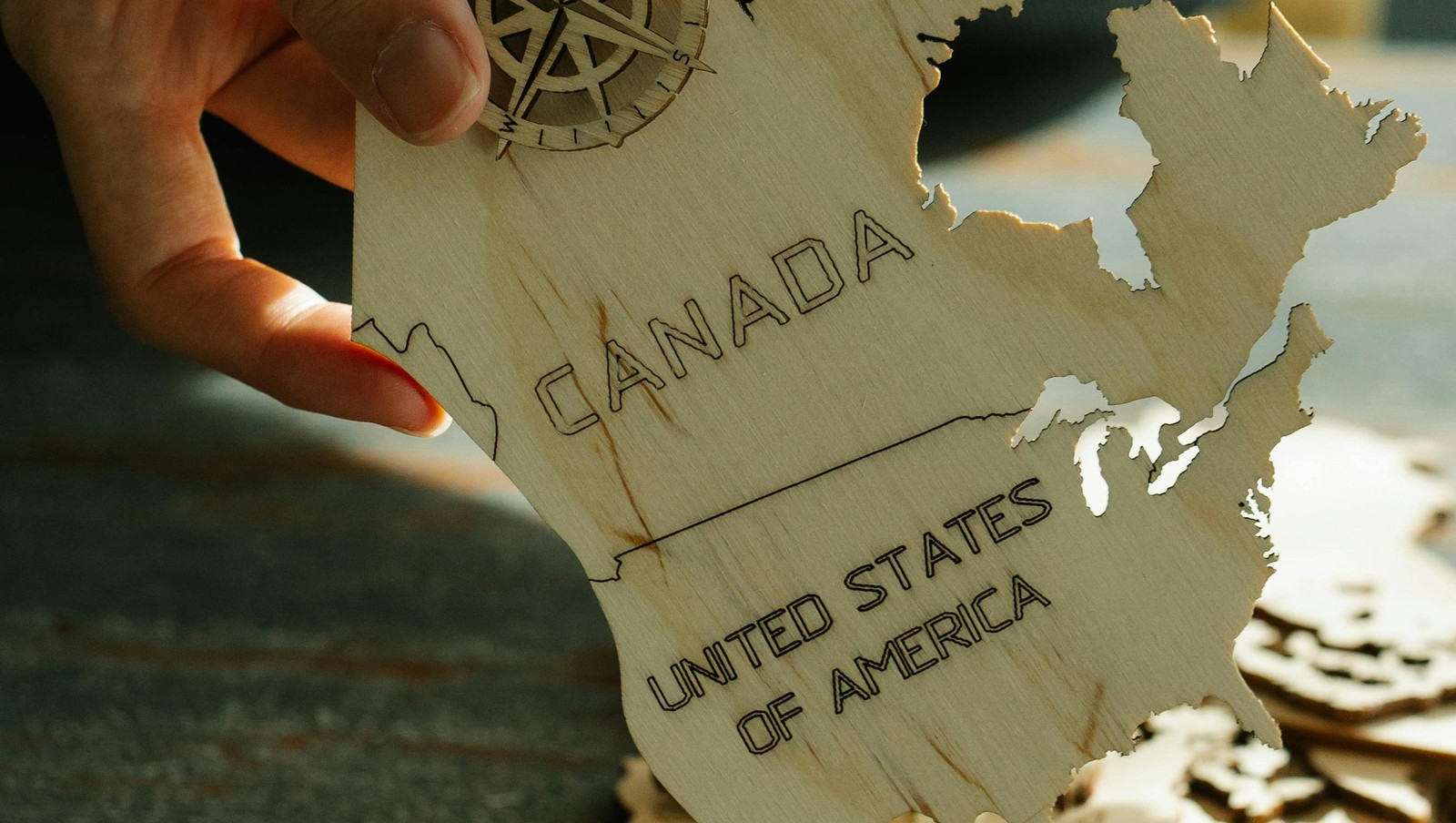
Image: Lara Jameson

When it's time for dinner, do you set out "serviettes" or "napkins"? People in the US and Canada may share a language, but you'd be surprised how many everyday objects have completely different names in each country. If you’re an American planning a trip to Canada—or a Canadian heading south—this article is for you!

1
Table manners
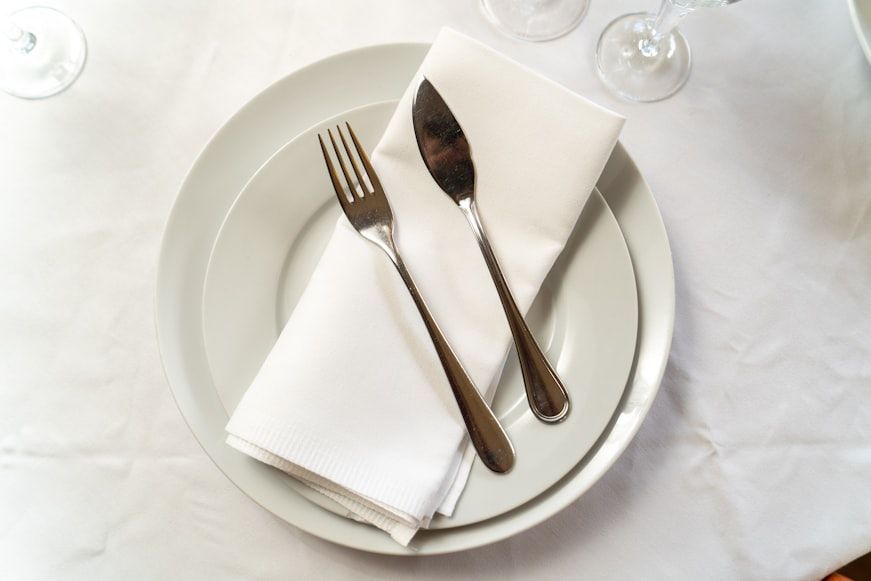
Image: Mika Baumeister

If you're dining out in Canada, don't be surprised if you hear someone ask for a "serviette." It might sound really fancy, but it's just the Canadian way of saying what Americans call a "napkin!"

2
Leftovers confusion

Image: Henry Kobutra

When it's time to clear the table and clean the dishes, things can get confusing between Americans and Canadians. In the US, you'll hear "throw the leftovers in the garbage disposal," but up north in Canada, it's called the "Garburator."

Though it might sound like they’re talking about two different things, it’s the same device—just different names!

3
Let's run

Image: Bruno Nascimento

Both Canadians and Americans use the term "running shoes" to mean athletic shoes designed for jogging or exercise. But there's one word that sets them apart: "runners."

In Canada, "runners" are what you wear on your feet. In the US, they are the people wearing them!

4
A matter of power
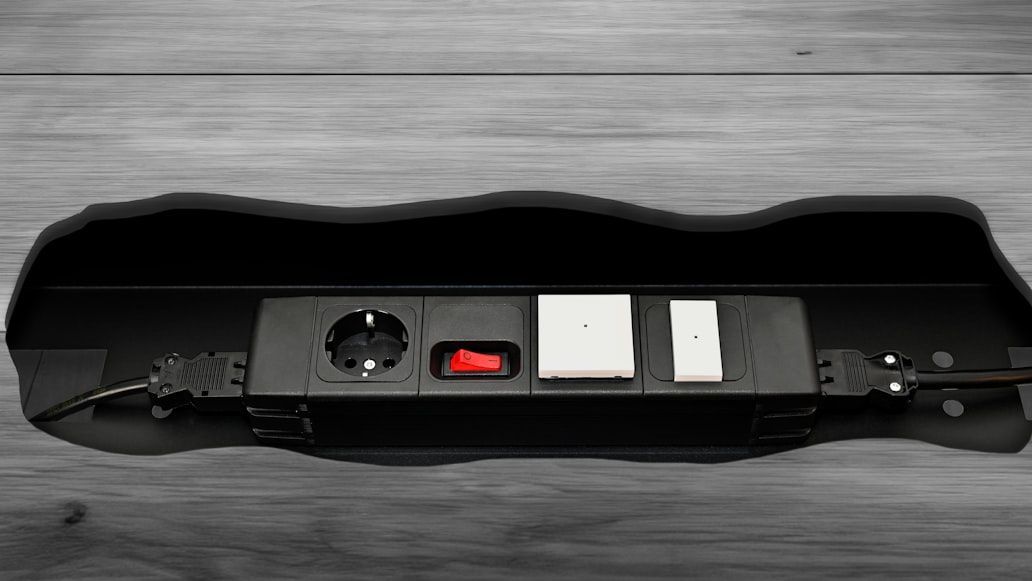
Image: Mike Winkler

What do you call that thing you use to plug in several devices at once? Your answer might reveal where you're from. If you say "power strip," chances are you're American. But if you call it a "power bar," you're probably Canadian!

5
Rubber bands
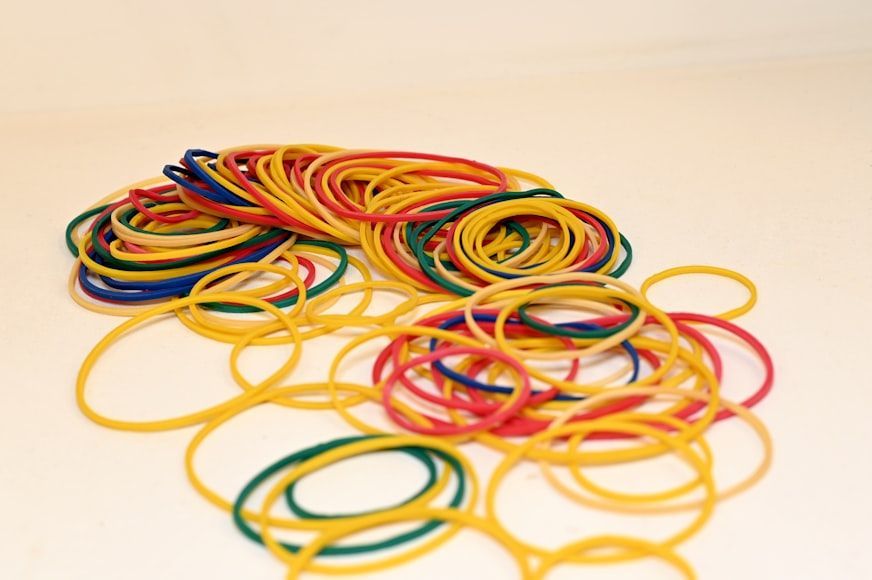
Image: Andres Siimon

They're small but super handy, so it's worth knowing what to call them no matter where you are! In Canada, people ask for "elastics" when they need to bundle papers or bills. But ask for "elastics" in the US, and you might get a confused look. Americans almost always just call them "rubber bands" instead.

6
Colorful vocabulary

Image: Sara Torda

Coloring was undoubtedly one of the most delightful parts of childhood, and some people still enjoy it as adults! If you're one of them, you probably have a good collection of colored pencils. But if you're in Canada and need to buy some, keep in mind they call them "pencil crayons" up there.

7
It's all about gas

Image: Ali Mkumbwa

In both the United States and Canada, a "gas station" is the place where you stop to fill up your car with fuel. But while that term is widely understood and used in both countries, in some regions of Canada, you might also hear it referred to as a "gas bar."

8
Park…

Image: John Matychuk

If you’re Canadian, don’t ask an American where the "parkade" is— they’ll probably look confused . While "parkade" is perfectly normal in Canada, Americans usually say "parking garage," "parking deck," or just "parking lot."

9
Sweet words
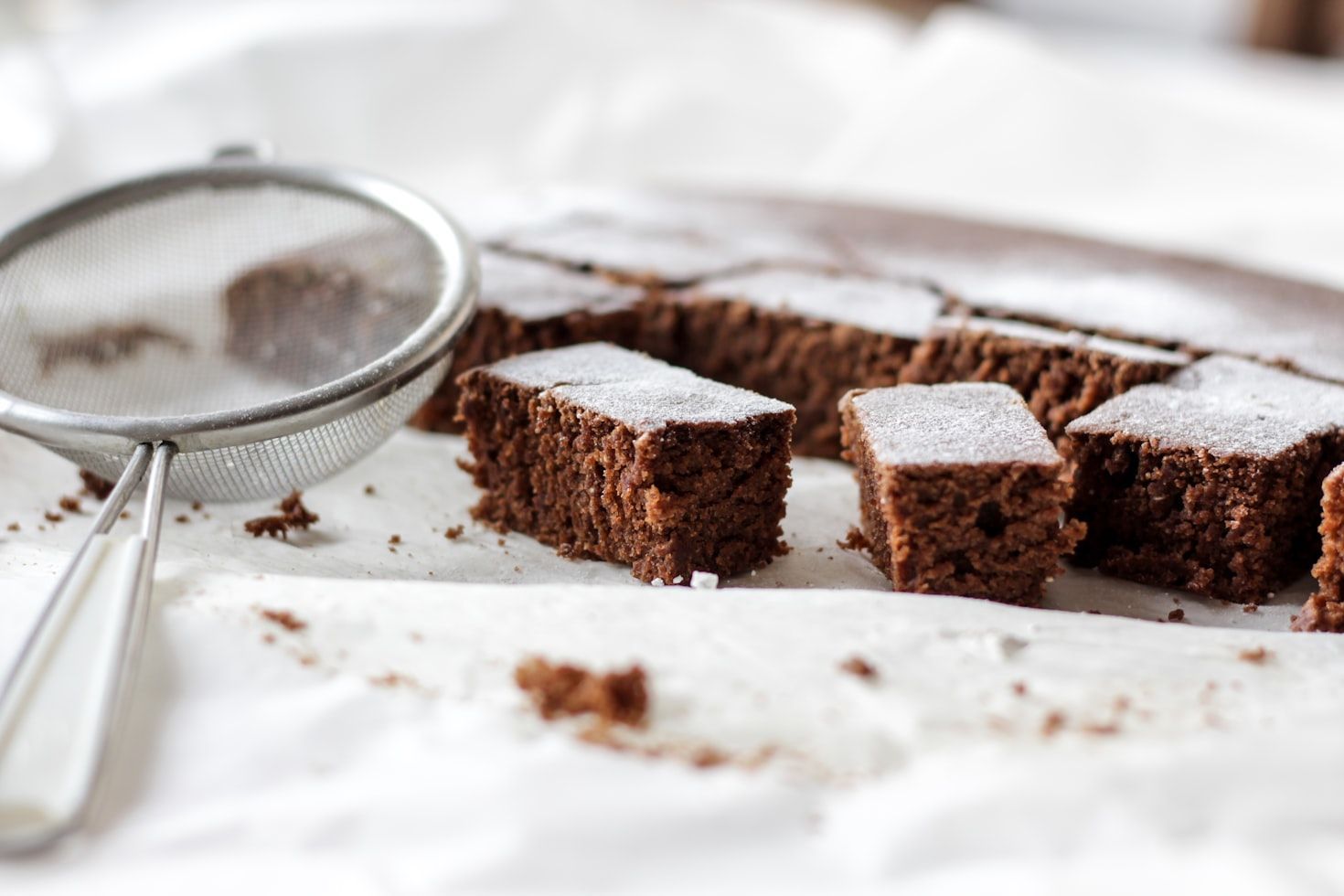
Image: NordWood Themes

Those delicious brownies wouldn't be the same without a nice layer of powdered sugar on top, right? And while we can agree on how tasty it is, we don't all agree on what to call it. Here, it is "confectioners' sugar" or simply "powdered sugar," but in Canada, they prefer another name for the same product: "icing sugar."

10
Folder/ Duotang
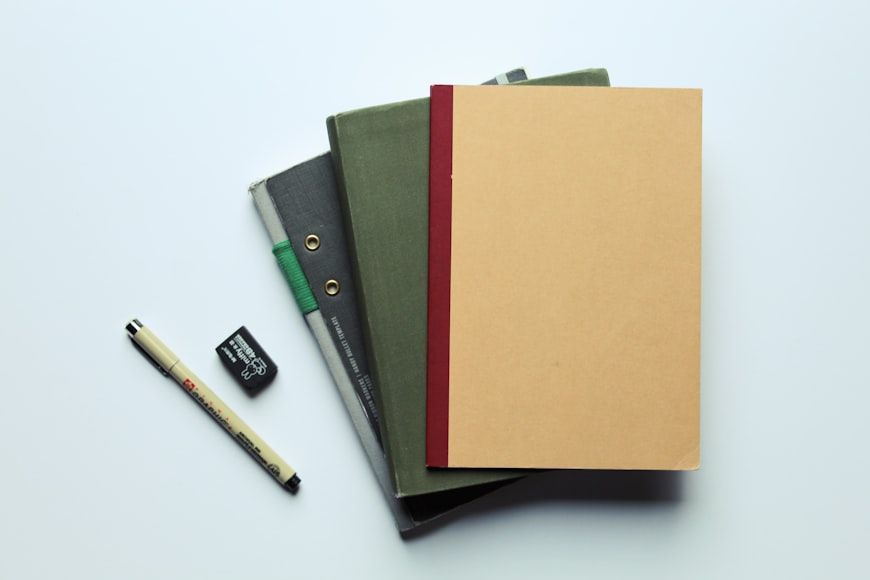
Image: Savannah Wakefield

Remember that school folder with metal prongs to hold your papers, the ones you could easily add or remove pages from? In the US, we just call it a "pronged folder." But in Canada, they have a totally different name for it: they call it a "duotang!" Have you ever heard of that one?
General General 3 min read

Middle matters

Guess which president didn’t even have a real middle name!

Image: Tim Mossholder

Ever wonder about the names of our presidents? Turns out those middle names often tell family stories, reveal forgotten traditions, or, sometimes, just show how human our most powerful leaders really are. Some honored relatives, others used their middle names to stand out, and one didn’t have a middle name at all. Here are some fascinating tales hidden in the middle of history.

1
John Adams

Image: Mark Olsen

Middle name: Quincy

Our sixth president, John Quincy Adams, was the son of the second president, John Adams. He was named "Quincy" after his maternal great-grandfather, John Quincy, and later signed his initials as "JQA" to avoid confusion with his father. A strong mind clearly ran in the family.

2
William Harrison

Image: STEPHEN POORE

Middle name: Henry

William Henry Harrison, the ninth president, was named for both his grandfather and uncle. Sadly, his presidency was the shortest in history, just one month after he caught pneumonia giving a long speech in the rain.

3
James Polk

Image: Daniel Weiss

Middle name: Knox

James Knox Polk carried his grandfather’s name with pride. Born in North Carolina in 1795, he expanded the nation’s territory by more than a third during his single term, finally stretching the U.S. from coast to coast. Quite an accomplishment for one presidency.

4
Ulysses Grant

Image: Jake Blucker

Middle name: Ulysses

Fun fact: "Ulysses S. Grant" wasn’t his real name. He was born Hiram Ulysses Grant, but a paperwork mix-up at West Point changed it forever. The "S" came later as a nickname, "US" Grant, something that fit a general far better than "H.U.G." ever could.

5
Rutherford Hayes

Image: Matt Koffel

Middle name: Birchard

Rutherford Birchard Hayes got his middle name from his mother’s maiden name. Born in 1822, he lost his father before birth but grew up to become the 19th president. He’s remembered for restoring faith in the presidency after a rough patch in American politics.

6
Grover Cleveland

Image: Manisha Raghunath

Middle name: Grover

Stephen Grover Cleveland dropped his first name early in life and stuck with Grover. It worked out well for him: he’s the only president in history to serve two nonconsecutive terms, making him both the 22nd and 24th president. That’s a comeback story.

7
William Taft

Image: Jake Blucker

Middle name: Howard

William Howard Taft’s middle name honored his grandmother’s family, the Howards. He remains the only person to ever serve as both U.S. president and Chief Justice of the Supreme Court. That’s two of the toughest jobs in one lifetime.

8
Woodrow Wilson

Image: STEPHEN POORE

Middle name: Woodrow

Born Thomas Woodrow Wilson, he eventually dropped his first name and went by Woodrow instead. It sounded distinguished, and clearly, it worked for him. As our 28th president, he guided the nation through World War I and helped shape modern international relations.

9
Warren Harding

Image: Oz Seyrek

Middle name: Gamaliel

Warren Gamaliel Harding, born in Ohio in 1865, left his mark on American vocabulary by coining the word "normalcy." He wanted life to return to normal after World War I. His middle name, likely biblical, matched his calm, reassuring image.

10
Calvin Coolidge

Image: John Holm

Middle name: Calvin

John Calvin Coolidge, our 30th president, was named for his father but went by his middle name from childhood. Known as "Silent Cal," he led with few words and steady leadership during the Roaring Twenties.

11
Herbert Hoover

Image: Niko Vassios

Middle name: Clark

Herbert Clark Hoover shared his middle name with his father, Jesse Clark Hoover. Born in Iowa in 1874, he was a self-made man long before entering politics. Sadly, his presidency became synonymous with the Great Depression, but he remained known for his work ethic and humanitarian efforts.

12
Harry Truman

Image: Mike Gattorna

Middle name: S.

Harry S. Truman’s middle initial doesn’t stand for anything at all. His parents couldn’t decide between his two grandfathers, Solomon and Shippe, so they settled on "S." It’s a fitting story for a man known for making tough choices, including some of history’s most remembered.

13
Gerald Ford

Image: John Matychuk

Middle name: Lynch / Rudolph

Gerald Ford had two middle names in his lifetime. He was born Leslie Lynch King Jr., but after his mother remarried, his name was changed to Gerald Rudolph Ford Jr., in honor of his stepfather. He’s also the only president who never won an election but took office after Nixon’s resignation.

History History 3 min read

I want to believe

Why do we knock on wood for good luck? 12 common superstitions explained

Image: Susannehs

We’ve all heard about the seven years of bad luck that are said to follow if we break a mirror, or why tossing salt over one’s shoulder is supposed to keep misfortune away. Superstitions have been a part of everyday life in the U.S., often passed down through generations without much thought to their origins. Let’s take a look at the origins of 12 common superstitions that continue to influence how people think and act today.

1
Breaking a mirror

Image: Savannah B.

As we’ve all heard, breaking a mirror is said to bring seven years of bad luck— a belief that dates back to the Romans . They thought a mirror didn’t just reflect your face, but also your soul.

Because the Romans also believed that life renewed itself every seven years, the curse was thought to last exactly that long.

2
Walking under a ladder

Image: Nick Fewings

This superstition has its roots in medieval Europe, where ladders leaning against walls formed a triangle, a shape that symbolized the Holy Trinity .

Walking through it was seen as breaking the sacred shape and inviting misfortune. Today, most people avoid it not only out of superstition but also for simple safety.

3
A black cat in your path

Image: Emmeli M

In the Middle Ages, black cats were linked to witchcraft and were thought to be witches’ companions—or even witches in disguise. Crossing paths with one was considered dangerous .

Though many cultures view black cats as lucky, in the U.S., the old stigma has persisted.

4
Knocking on wood

Image: Glen Carrie

The habit of knocking on wood to ward off bad luck likely comes from ancient pagan traditions. Trees—especially oaks—were believed to house protective spirits .

Touching or knocking on wood was a way to call on those spirits for protection. The phrase and the action traveled across centuries, and now it’s a common phrase in everyday conversations.

5
Opening an umbrella indoors

Image: Kato Blackmore 🇺🇦

The superstition that opening an umbrella indoors brings bad luck originates from 18th-century England. Early umbrellas were large, stiff, and often had metal spokes.

Opening one indoors could cause injury or break household items , so the "bad luck" warning worked as a practical safety rule.

6
Friday the 13th

Image: Nik

Friday has long been considered unlucky in Christian tradition because it was said to be the day of the Crucifixion. The number thirteen was also viewed as ominous, connected to the Last Supper .

When the two were combined, Friday the 13th gained its spooky reputation. Despite rational explanations, some hotels skip floor 13, and many people still avoid major plans on that date.

7
Spilling salt

Image: ekaterina shishina

Salt was once precious and expensive, symbolizing purity and friendship. Spilling it was considered wasteful and unlucky in ancient times.

The practice of tossing a pinch over your left shoulder comes from folklore, supposedly to blind the devil lurking there . It’s a tiny gesture that still lingers on dinner tables today.

8
Four-leaf clover

Image: Barbara Krysztofiak

The four-leaf clover is a symbol of good fortune dating back to the Celts, who believed the rare leaves provided protection against evil spirits .

Since clovers typically have only three leaves, the fourth leaf came to symbolize rarity and luck.

9
Rabbit’s foot

Image: Timofei Adrian

Carrying a rabbit’s foot for luck traces back to African and European folklore, where rabbits were seen as fertile, magical creatures .

The superstition spread through American culture in the 19th century, especially in the South. Even though it might seem unusual—and potentially unsanitary—the lucky rabbit’s foot remains a well-known charm today.

10
Wishbone

Image: Museum of New Zealand Te Papa Tongarewa

The tradition of making a wish on a wishbone originates with the Romans, who, in turn, borrowed it from the Etruscans. They believed that birds held divine powers .

Breaking the bone with someone else was thought to transfer luck to the person who ended up with the larger piece .

11
Coin in a fountain

Image: Lila Mitchell

Tossing a coin into water to make a wish has its roots in ancient Europe. Wells and springs were considered sacred, often associated with gods or spirits.

People dropped coins as offerings for health or good fortune . Today, fountains across the U.S. and around the world collect millions of coins.

12
Wishing upon a star

Image: Ali

The superstition of wishing upon a star comes from ancient Greece and Rome, where falling stars were believed to carry messages from the gods .

Even today, looking up at the night sky and spotting a shooting star inspires many people to make a wish.

Explore more American facts

Choose your favorite category!

General
General

As American as apple pie—the very best America has to offer!

Culture
Culture

Delve into the astounding richness of American lore.

Geography
Geography

Hop in and explore vast and diverse American landscapes.

History
History

Discover the key moments that shaped the United States.