Geography Geography 3 min read

Waving wild

Why does Oregon have a design on the back of its flag? Find out here!
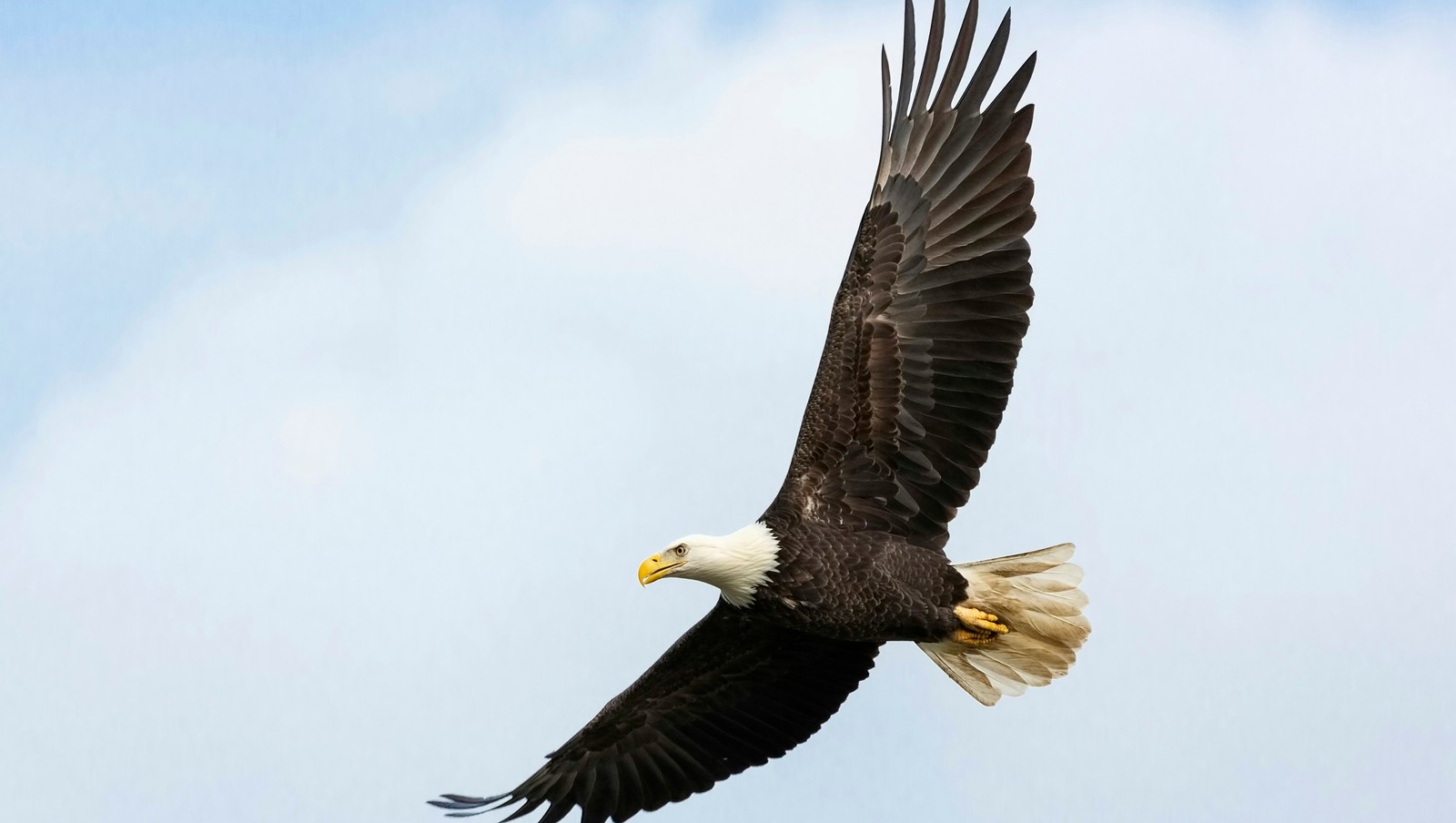
Image: Mathew Schwartz

Every state has its own symbols, and among them, those related to wildlife are often in the spotlight. From tiny bees or birds to huge bears and bison, our state flags display an amazing variety of creatures. But why were they chosen? Let’s find out!

1
Beaver – Oregon (reverse)
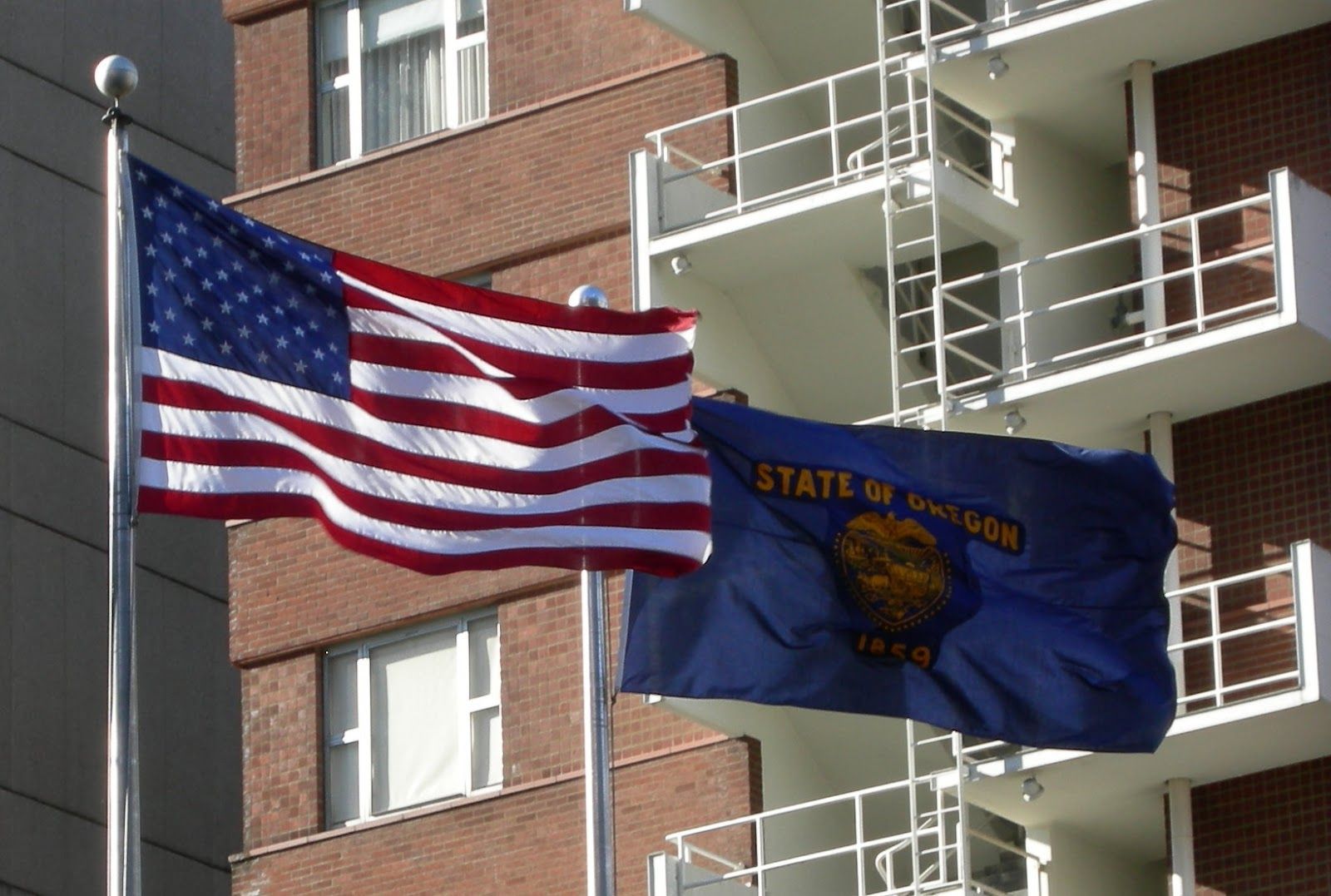
Image: Makaristos, Public domain, via Wikimedia Commons

As you’d expect from the Beaver State, this rodent appears on Oregon’s flag. The thing is, you just can’t see it here because it’s on the reverse side! That’s right, Oregon is the only state with designs on both sides of the flag. But why that animal? In the 19th century, the beaver fur trade played a key role in Oregon’s economic growth, forever linking this clever creature to the state’s identity.

2
Bear – California
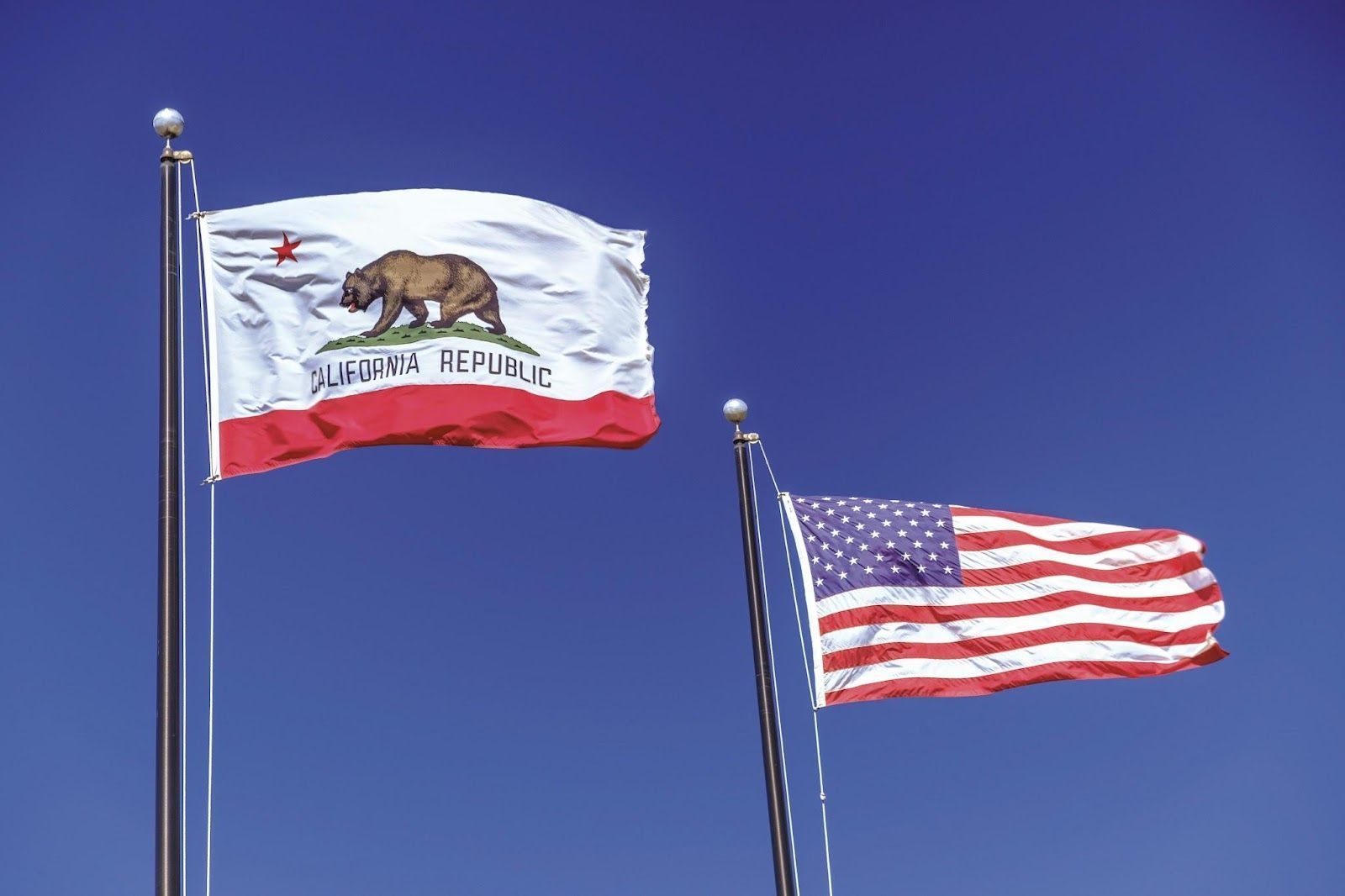
Image: Drei Kubik

When you think of grizzly bears, California is probably the first state that comes to mind, and for good reason. Its flag is one of the most recognizable in the country. Grizzlies once roamed the region, and although they’re now extinct in the state, the animal lives on as a symbol. Back in the 1840s, American settlers pushing for independence from Mexico raised a flag with a grizzly and a star to mark their revolution. The design has evolved since then, but the iconic bear remains!

3
Bison – Wyoming
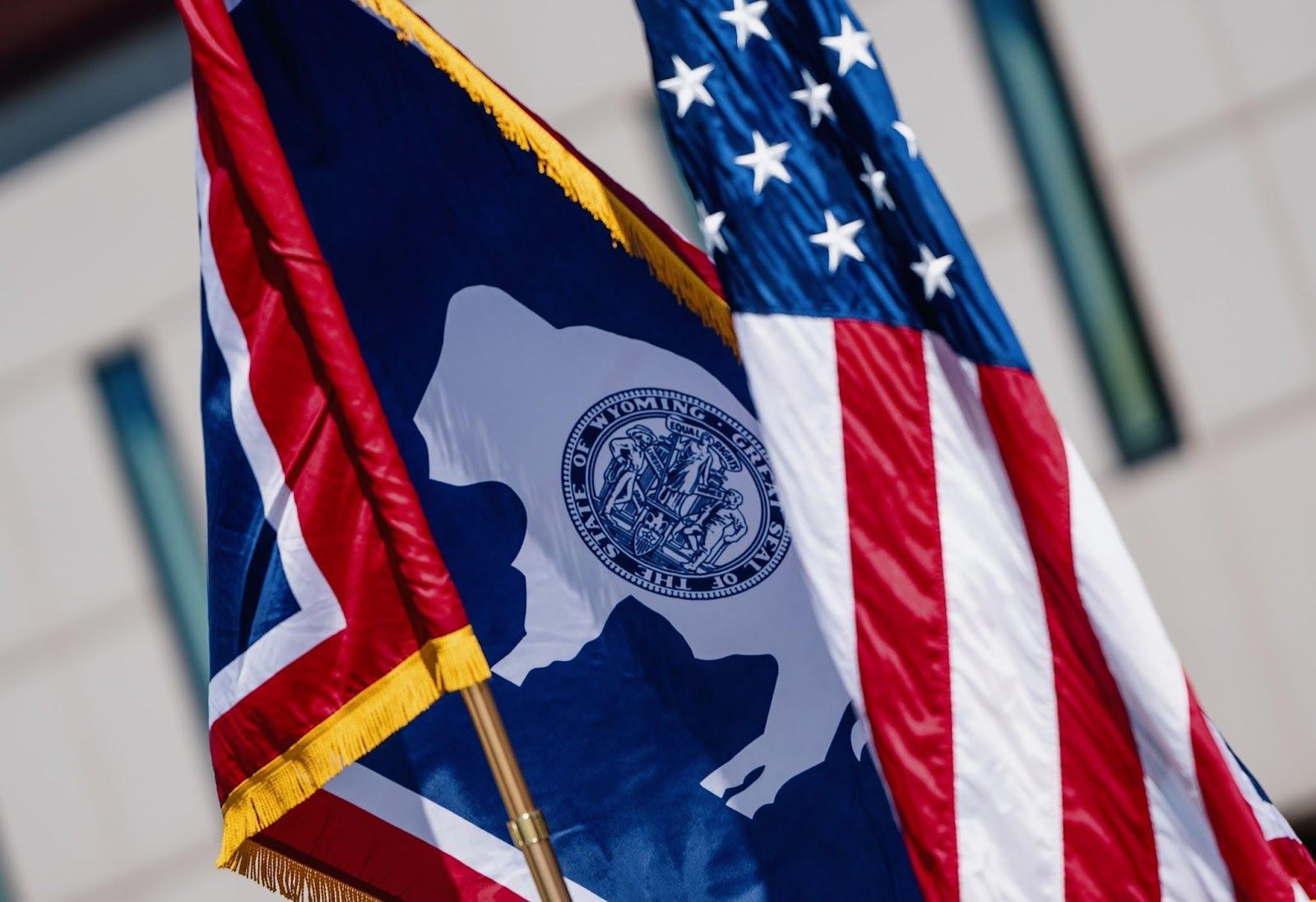
Image: Tony Webster, CC BY 2.0 <https://creativecommons.org/licenses/by/2.0>, via Wikimedia Commons

As one of the few places where American bison have roamed freely for centuries, it’s no surprise that this animal was chosen to represent the state of Wyoming. At the center of its flag, the white silhouette of the bison (often called a buffalo) features Wyoming’s coat of arms, which honors the state's key industries: livestock, mining, grain, and oil.

4
Bees – Utah
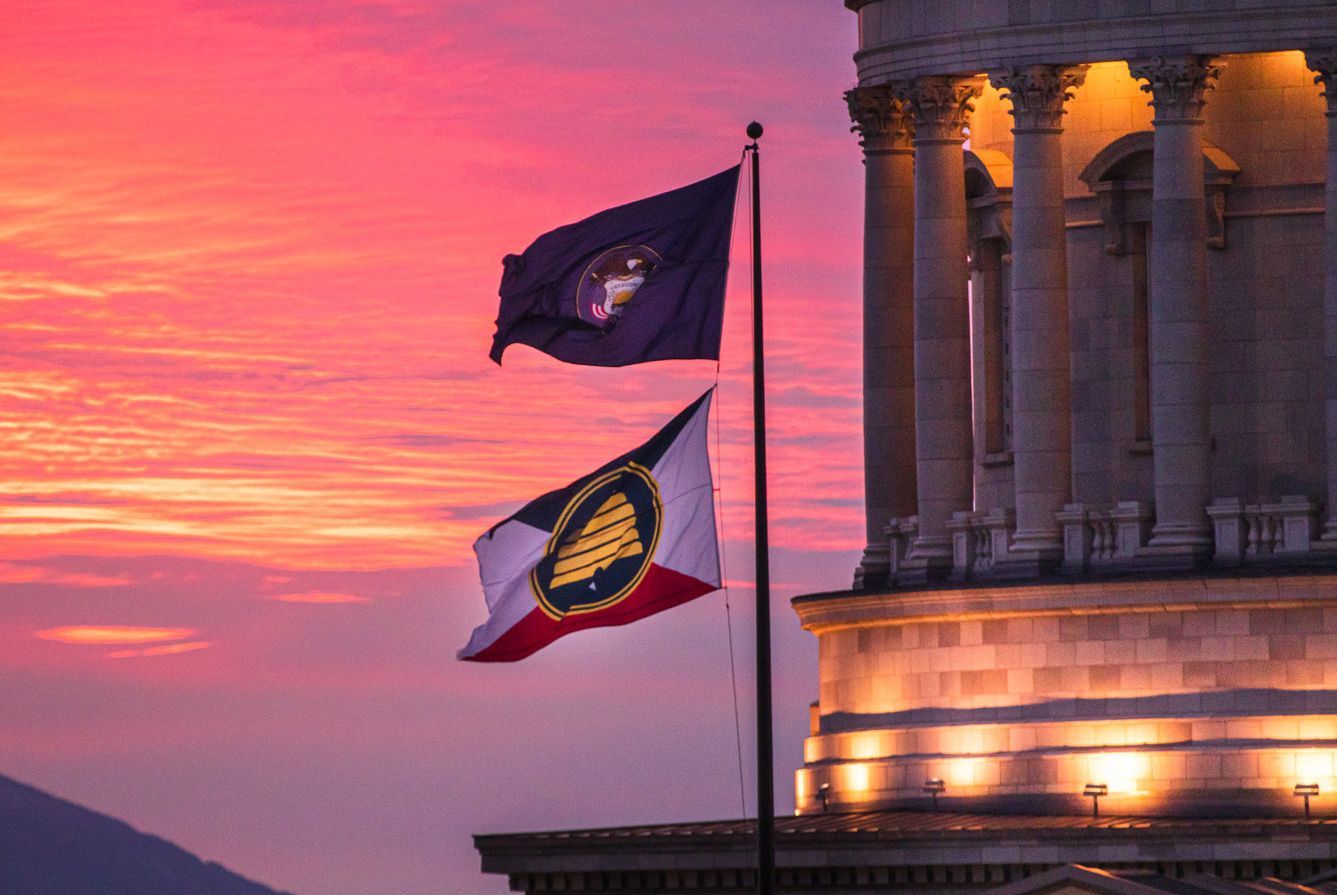
Image: JohnnyAstros, CC BY-SA 4.0 <https://creativecommons.org/licenses/by-sa/4.0>, via Wikimedia Commons

The new Utah flag, adopted in 2024, has a peculiar and modern design. The main characters in this story are none other than bees. Or, actually, a beehive, which was chosen to symbolize community, cooperation, and the hard work that reflects Utah’s industrial spirit.

5
Badger – Wisconsin
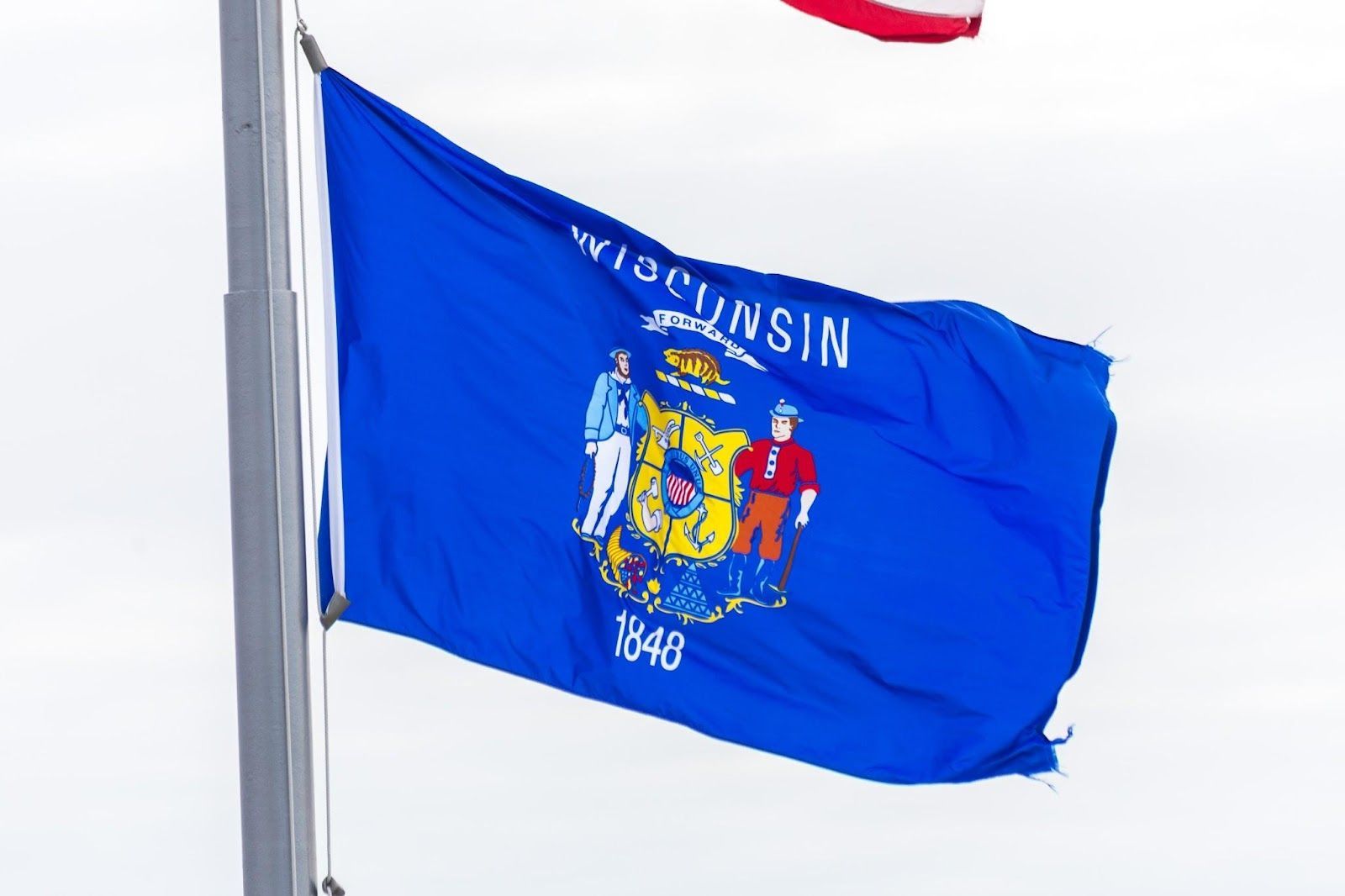
Image: Kenneth C. Zirkel, CC BY-SA 4.0 <https://creativecommons.org/licenses/by-sa/4.0>, via Wikimedia Commons

See that small yellow-and-brown figure above the shield on Wisconsin’s flag? Although many people don't notice it, that’s a badger, the state animal. But why a badger? Back in the 1800s, the first lead miners who worked in southern Wisconsin used to live in hillside tunnels during the winter, which resembled badger burrows. These workers were the first to be given the nickname, which was later transferred to the state.

6
Deer and cow- Vermont
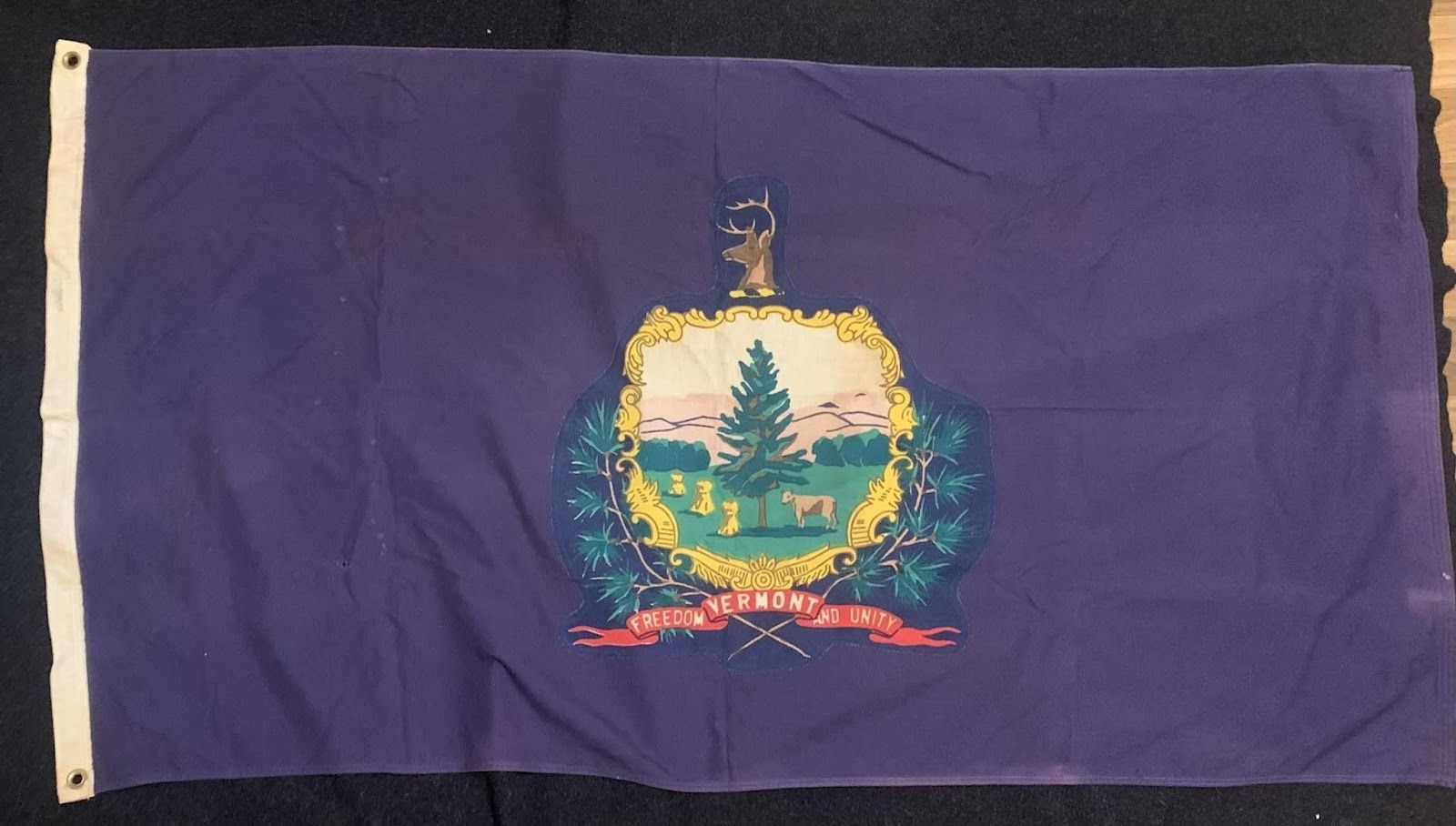
Image: Tablelegs6, CC0, via Wikimedia Commons

The Vermont flag has plenty to see, but the most striking feature is the deer head that tops the shield. With deer abundant throughout the state, it was chosen to represent all of Vermont’s wildlife. But what about the cow? Tucked inside the shield, this small figure symbolizes the state’s dairy and agricultural industry.

7
Horse – New Jersey
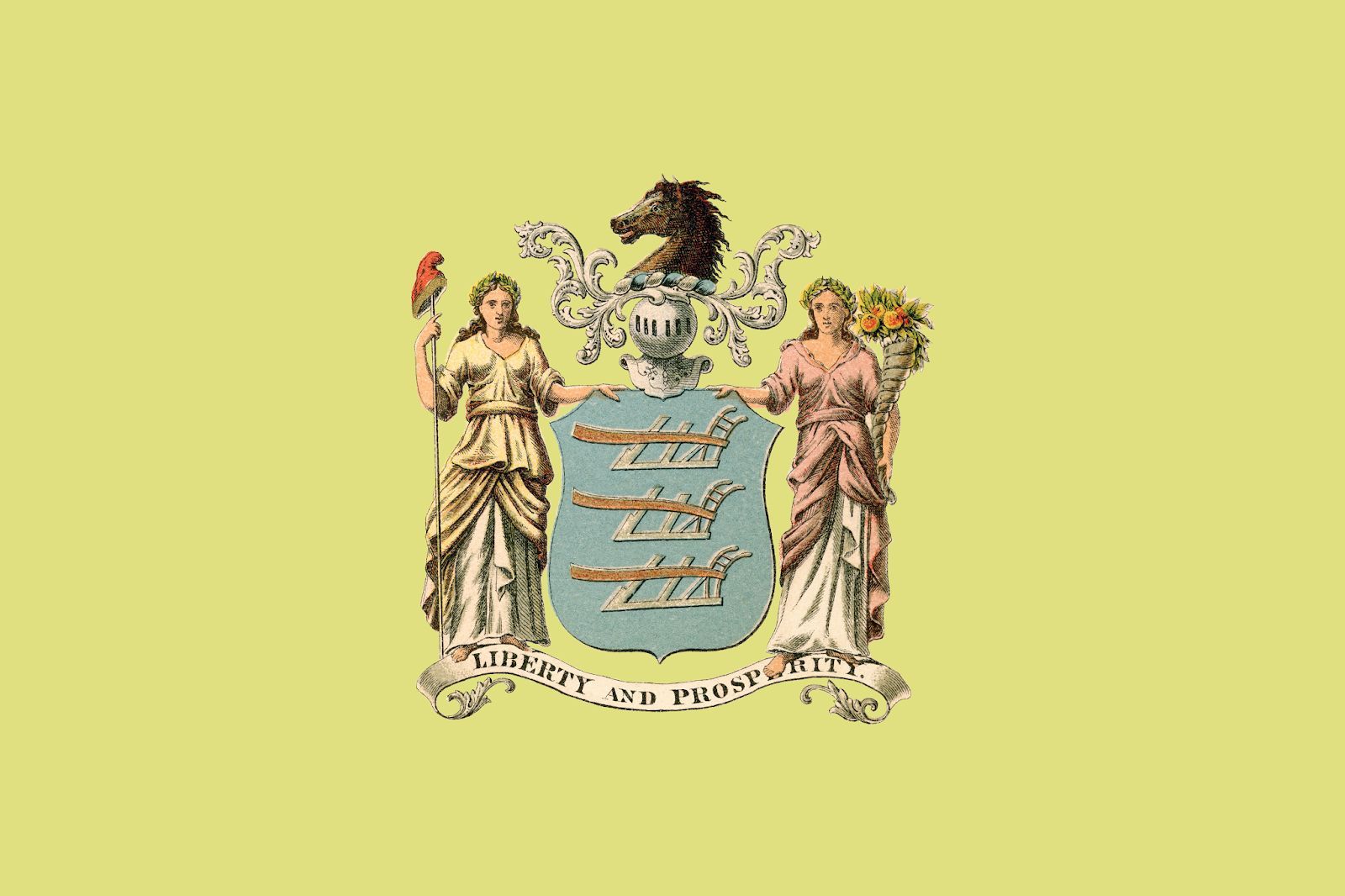
Image: Public domain, via Wikimedia Commons

As part of the state coat of arms, a horse appears atop the beautiful New Jersey state flag. As in many other regions, horses were vital to New Jersey’s colonial economy, playing a key role in agriculture. For that reason, in 1777, the coat of arms’ designer placed the horse at the top, symbolizing both strength and the speed of the state’s growth. On both sides of the shield are two women: Liberty and Ceres, the Roman goddess of agriculture, honoring the state motto, "Liberty and prosperity."

8
Moose/Elk – Michigan
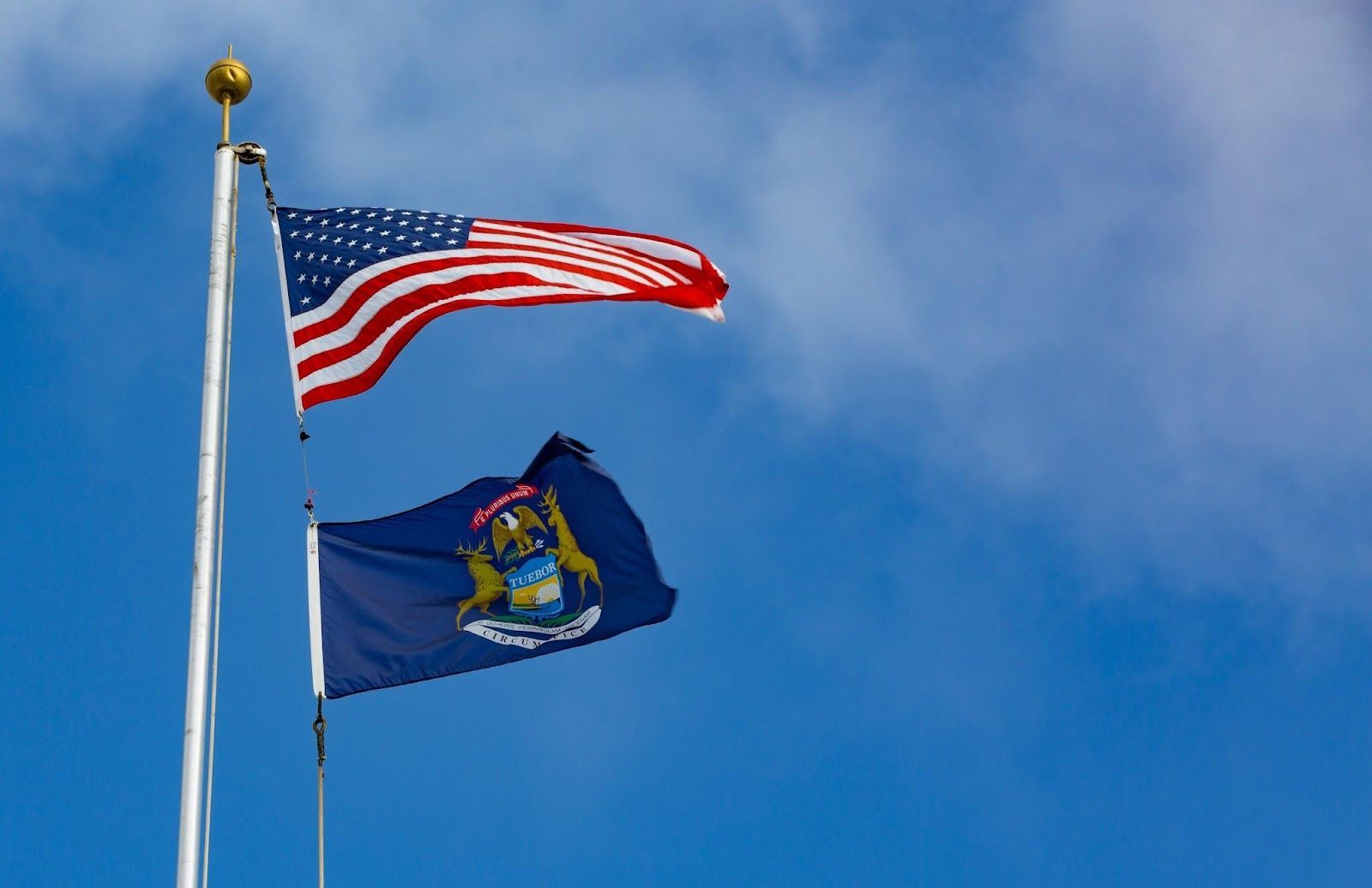
Image: Tony Webster, CC BY 2.0 <https://creativecommons.org/licenses/by/2.0>, via Wikimedia Commons

A moose and an elk seem like great choices for offering support, don’t they? That’s exactly what the designers of Michigan’s flag and coat of arms thought. These two majestic animals appear standing on their hind legs, as if holding up the shield. Both native to the state, they symbolize Michigan’s abundant wildlife and natural resources.

9
Pelican – Louisiana
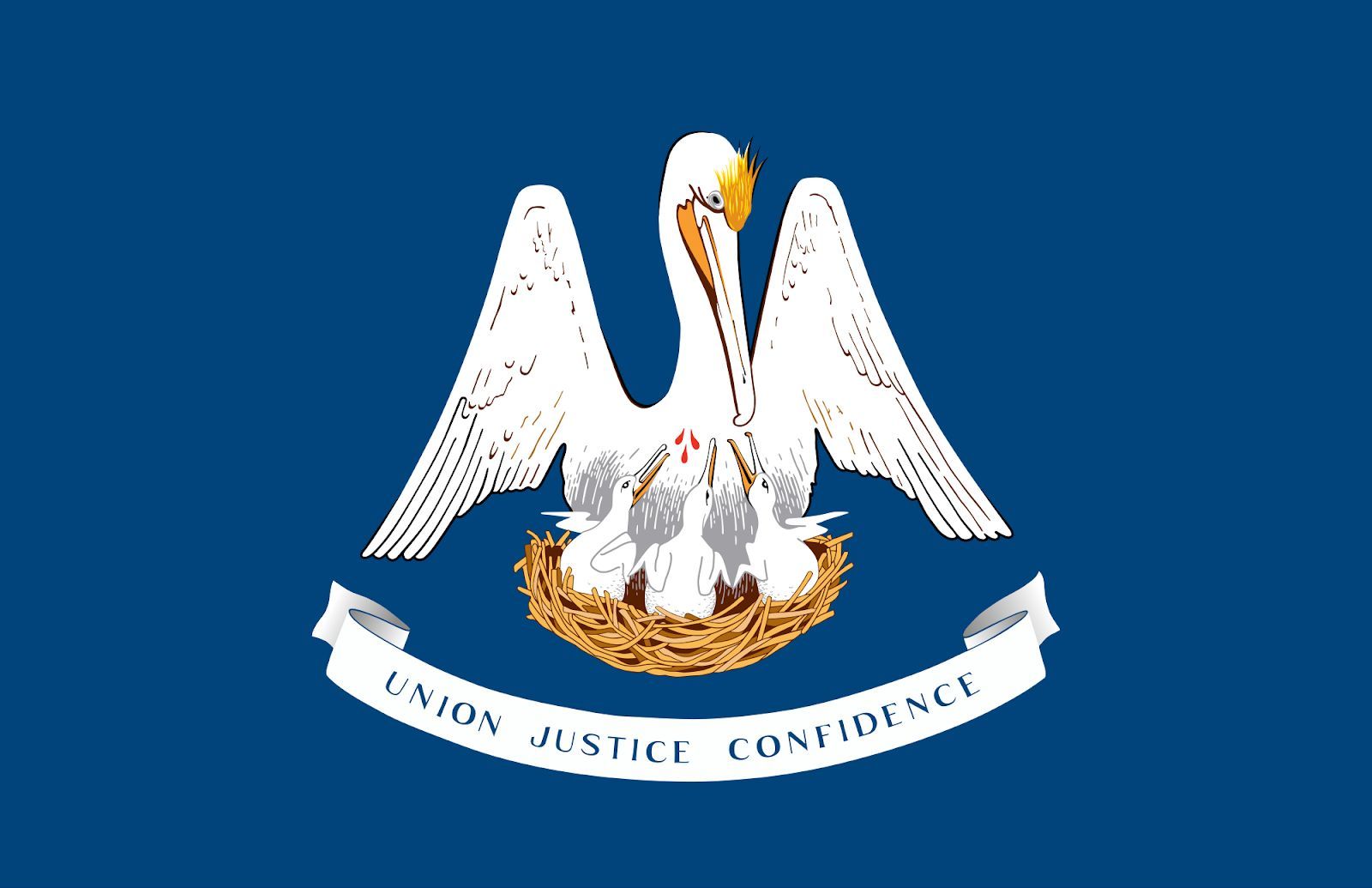
Image: Public domain, via Wikimedia Commons

Although the pelican on Louisiana’s state flag is white, its actual name is "brown pelican", a species that abounds along the state’s coast. On both the flag and the coat of arms, the bird is shown wounding itself to feed its young; a strong symbol of devotion and sacrifice that reflects Louisiana’s motto: "Union, Justice, and Confidence."

10
Bald Eagle – Many
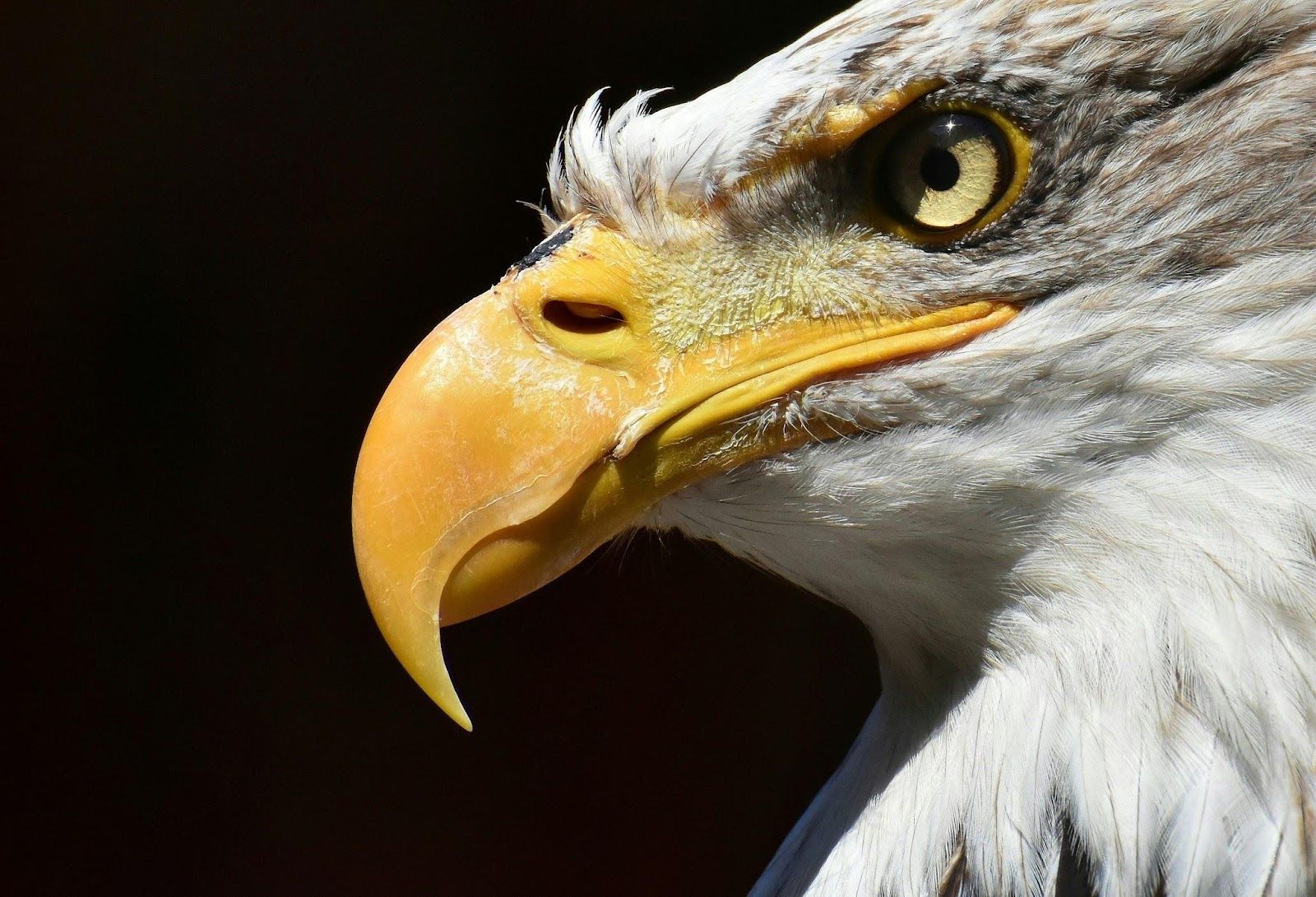
Image: Alexas_Fotos

We saved the unmistakable bald eagle for last. Native to North America, this majestic bird has become a symbol of the United States, representing strength, courage, freedom, and longevity. But the eagle isn’t just on the national coat of arms; it also appears on many state seals and flags, including Illinois, Iowa, Michigan, Missouri, New York, North Dakota, Pennsylvania, and Utah’s historic flag.

Culture Culture 6 min read

An urban musical journey

The ultimate New York playlist: 12 iconic songs about the Empire City

Image: Olga Fil

New York is a city of luxurious skyscrapers, yellow cabs, and wild dreams. The Big Apple has been the cradle, home, and inspiration for hundreds of musicians who have dedicated lines—and even entire songs—to its spirit and people. In this article, we've selected 12 tunes about New York City that have helped fuel the myth of the world’s most iconic metropolis . Read on to discover songs beyond Sinatra’s "New York, New York"!

1
"New York, New York" - Frank Sinatra

Image: Adrian Falcon

Of course, when we think of songs about the Big Apple, the first that comes to mind is the iconic "New York, New York," popularized by Frank Sinatra. Perhaps this is because it’s the tune that best captures the essence , resilient spirit, and unwavering magnetism of the city that never sleeps.

It was written in 1977 by John Kander and Fred Ebb as the theme song for New York, New York , a film directed by Martin Scorsese and starring Robert De Niro and Liza Minnelli. Minnelli performed the song in the film, but it wasn’t very successful at the time. It was The Voice 's 1980 version that would turn it into the city's unofficial—yet unquestionable—anthem .

2
"Chelsea Hotel #2" - Leonard Cohen

Image: Thought Catalog

The Chelsea Hotel is one of the most emblematic hotels in New York City. Artists such as William S. Burroughs, Bob Dylan, and Chet Baker, among many others, have stayed there. So, it makes perfect sense that some of these stars were inspired by the iconic building to create some of their most famous works.

Such is the case with Leonard Cohen’s "Chelsea Hotel #2," released in 1974. The lyrics not only recount a romantic encounter between the singer-songwriter and Janis Joplin but also capture the city’s bohemian atmosphere at the time.

3
"New York State of Mind" - Billy Joel

Image: Stefano Zocca

In the mid-1970s, after a long stint in Los Angeles, Bronx-born songwriter Billy Joel was terribly missing his hometown. During a return trip to the Big Apple while on tour, the Piano Man wrote his tribute to the city he loved most: "New York State of Mind."

At the time, the song wasn’t even released as a single and went largely unnoticed. However, over time, it became one of Joel’s signature songs . Decades later, the timeless tune would go on to inspire a hip-hop version—the next one on our list.

4
"Empire State of Mind" - Jay-Z & Alicia Keys

Image: ian dooley

With its evocative lyrics, Jay-Z’s modern rhythm, and Alicia Keys’ poignant backing vocals, "Empire State of Mind" captures the essence, energy, and resilient spirit of those who inhabit the city of New York. Released in 2009, the song was an instant hit. It achieved commercial success worldwide and has been featured on multiple critics' top 10 lists of best songs.

As mentioned earlier, the song’s title nods not only to Billy Joel’s "New York State of Mind," but also to rapper Nas’s 1994 single "N.Y. State of Mind."

5
"Autumn in New York" - Billie Holiday

Image: Josh Couch

Did you know that the famous "Autumn in New York" was originally conceived as a poem rather than a song? Its composer, Vernon Duke, wrote it in 1934 while vacationing in Westport, Connecticut, and added the music sometime later. Since then, many artists have recorded their own renditions, including Frank Sinatra, who helped popularize it in 1949.

But perhaps the version that best conveys the haunting melancholy of this iconic jazz standard is Billie Holiday’s, recorded in 1952. With her deep, raspy voice, the Angel of Harlem (see the next song on our list) delivers this love letter to the Empire City like no one else.

6
"Angel of Harlem" - U2

Image: The New York Public Library

"Angel of Harlem," a 1988 single by the Irish band U2, alludes to several New York City landmarks but is also a heartfelt tribute to Billie Holiday.

According to Bono, the song was inspired by the band’s first trip to the Big Apple . When they landed at JFK Airport, a limousine picked them up, and the driver had the radio tuned to Lady Day’s voice. They were so captivated by her sound that they couldn’t help but compose a song in honor of one of the city’s most influential musical figures.

7
"Englishman in New York" – Sting

Image: George Bakos

Bono wasn’t the only foreign artist who was inspired by the Empire City to pen a song. In the late 1980s, Sting released the single "Englishman in New York" as part of his second solo album after the dissolution of The Police. The song quickly became a global hit.

The "Englishman" in question is Sting’s friend, British writer and LGBTQ+ icon Quentin Crisp, who had recently relocated to New York. The singer-songwriter said that the different musical references in the song seek to capture the mood of someone walking down the street and listening to different styles, representing what it's like to walk around New York.

8
"Chelsea Morning" - Joni Mitchell

Image: Dan Braga

One of the most celebrated voices in American folk music, Joni Mitchell, wrote this song about her apartment in New York City’s Chelsea neighborhood. The song was inspired by the colorful reflections that danced on her walls when sunlight filtered through a mobile made of colored glass she had found in the street.

"Chelsea Morning" is part of her second album Clouds from 1969. Her sweet voice, merry acoustic guitar chords, and hopeful lyrics convey the deep emotions of the hippie lifestyle of a young woman living in 1960s New York.

9
"The Only Living Boy in New York" – Simon & Garfunkel

Image: Camila Fernández

Many songs about New York City explore the loneliness of living in a vast metropolis—and "The Only Living Boy in New York" is no exception. Paul Simon wrote the track when his musical partner, Art Garfunkel, left him behind in the city to film a movie in Mexico.

The song is part of the duo's fifth studio album, Bridge over Troubled Water released in 1970. The song blends bittersweet lyrics with a gentle, introspective melody. Its themes of solitude and longing have resonated with many over the years, inspiring a variety of heartfelt covers by artists who connected with its quiet sorrow.

10
"New York City Serenade" – Bruce Springsteen

Image: Danny Lyon, Public domain, via Wikimedia Commons

While Bruce Springsteen is known for being a New Jersey native, his prolific career also allowed him to write about the city across the Hudson River. "New York City Serenade" is part of the 1973 album The Wild, the Innocent & the E Street Shuffle , considered by some critics to be one of the greatest albums in rock n' roll history.

The song tells the tormented love story of Billy and Diamonds Jackie as they wander the dark streets of Gotham in the 1970s. Blending Springsteen’s signature suburban rock with elements of jazz and gospel , "New York City Serenade" is one of his most atmospheric and musically ambitious pieces—a sprawling homage to the city’s grit, soul, and romance.

11
"Rhapsody in Blue" – George Gershwin

Image: rosanna17

Although it has no lyrics, we can all agree that this composition is a true musical portrait of 20th-century New York City. Written by George Gershwin in 1924, the piece blends classical tradition with jazz-inflected flourishes, capturing the vibrant, chaotic spirit of the Big Apple in full swing.

The speed and rhythm of the tune perfectly reflect the frenetic life of one of the world's greatest metropolises. "Rhapsody in Blue" is so quintessentially New York that even Woody Allen used it for the opening sequence of his film Manhattan alongside gorgeous vistas of the most iconic locations and buildings in the city.

12
"Downtown Train" – Tom Waits

Image: Erik Calonius, Public domain, via Wikimedia Commons

You may know this song best from Rod Stewart’s 1989 hit version, but "Downtown Train" was originally written and performed by Tom Waits for his 1985 album Rain Dogs . Without leaving behind his jazz and blues influences —and his trademark avant-garde style—this tune has an unmistakable pop touch.

Set against the backdrop of New York’s restless nightlife, the song paints a wistful portrait of longing and unattainable love—particularly for the elusive Brooklyn girls. Through his gravelly voice and poetic imagery, Waits cements his place as one of the great modern chroniclers of the Big Apple .

History History 6 min read

Out with the new, in with the old

Would you sit on a flagpole? 10 American fads from the early 20th Century

Image: Ali Bakhtiari

The early 20th century was a wild time in America, and the fads that swept across the nation were just as colorful and curious as the era itself. The world was changing for sure and teens had to find new ways to have fun and adapt to the evolving times. From that came some of the weirdest trends, and today we’re taking a look back at ten of the most popular fads that shaped the first half of the 20th century. You might even remember a few of these yourself, or perhaps you’ve heard stories from the "good old days." Let’s dive into these blasts from the past!

1
Dance marathons

Image: Ardian Lumi

Dancing has always been a praised activity for having some fun and passing the time. It’s simple and requires nothing but a music-playing device. So, back in the ‘20s, people felt the need to find a new twist for this basic entertainment and so they thought making dance marathons was a great idea.

How did they work? The concept was as simple as dancing: Couples would compete to see who could dance the longest all for a shot at cash prizes. But we’re not talking hours here—the contest could last for days! Audiences watched in fascination (and a bit of morbid curiosity, we might add) as exhausted dancers pushed their bodies to the limit. Remember, this was a time when missing out on a chance for quick money and a bit of fun was not a possibility!

2
Flagpole sitting

Image: Jonathan Simcoe

We don’t know if he was trying to break a record or if he just needed some alone time, but after Alvin "Shipwreck" Kelly climbed atop a flagpole in 1924 and stayed there for over 13 hours, a new fad was born: flagpole sitting.

And speaking of basic trends, this is exactly as you read it: People all over America were climbing up and sitting on flagpoles to see how long they could stay up there. We can all agree that these people were after entertainment and a bit of competition. And it got so serious the record eventually stretched to an astonishing 49 days!

By the 1930s, though, the thrill wore off and the fad faded, but the absurdity of it all remains—and earned it a spot on this list!

3
Stickball and stoopball

Image: Jeremy Stewardson

Sports today are no longer just about playing the game. For most of them, you need a lot of equipment, which is rather expensive, especially if you’re going to use it in the streets with your friends from the block.

Back in the ‘20s, baseball equipment was hard to come by. As a result, American kids in crowded urban areas came up with their own inventive versions of the game: stickball and stoopball. The fun behind this trend? Using whatever they had on hand to play: Broomsticks for bats, rubber balls, and parked cars or stoops as bases. The games required nothing more than creativity and a few friends. And no one can deny—the 1920s were indeed a creative time!

4
Johnny on a pony

Image: freestocks

This is a trend that started in the 1940s, and the names used for this game are simply hilarious: "Strong horses, weak donkeys," "Hunch, Cuddy, Hunch," just to name a few.

Johnny on a Pony, or Buck Buck, was a rough-and-tumble game in which one team bent over to form a "horse" while the other team took turns jumping on their backs, trying to knock them over .

You may think this was innocent, but not quite—it was chaotic, sometimes painful, and, more often than not, left participants in a pile of tangled limbs.

Kids do not care for those things, but the game’s physical nature made it exhilarating and dangerous at the same time. That’s why, eventually, concerned parents and schools stepped in and banned it—one too many injuries to keep it going!

5
Drive-In movie theaters

Image: Tim Mossholder

Movie theaters are great, but drive-in movie theaters are even better—they were the ultimate fusion of America’s love for cars and entertainment.

The first official drive-in theater opened in 1933, and it was an alternative for families to a fun and affordable night out under the night sky, watching a movie from the comfort of their car . No wonder this quickly became a beloved American pastime. And you can already imagine whose favorite this was: Teens and young couples, who enjoyed the privacy of their cars while watching the latest films of the time.

The trend slowly faded as film rentals became more popular, and later with the rise of streaming platforms. However, keep an eye out for this one, because it’s definitely making a comeback!

6
Miniature golf

Image: Will Porada

Some may argue that the fad behind miniature golf never actually died, and that’s partially true. But let’s go back to the time it first appeared and all the craze that erupted around it.

It wasn’t until Garnet Carter opened his "Tom Thumb" golf course in 1927 that miniature golf became a true sensation . Located in Lookout Mountain, Tennessee, Carter’s course wasn’t just about putting greens; it also featured miniature goblins, gnomes, and other fun obstacles for players.

We don’t know if he knew this would be so successful, but Carter went all in: He patented the design, and it hit the jackpot—miniature golf became a nationwide success.

7
Hood ornaments

Image: Clem Onojeghuo

Funny thing about the past: You didn’t always need to be extravagant to be trendy—sometimes, just a tiny ornament on your car was enough.

In the 1920s and ‘30s, no car was complete without a stylish hood ornament adorning its radiator . At first, these ornaments were designed to check on the engine temperature. But they soon evolved into artistic expressions of each brand to showcase wealth and personality.

We all recognize the winged goddess or the jaguar jumping out of the car, right?

However, this trend didn’t last long. As car designs modernized and safety became a concern, hood ornaments became less common, and eventually, all but disappeared. If you see a car with one of these today, you can bet it’s worth more than one can get in a lifetime!

8
Kilroy was here

Image: Richard Cohrs

There are two generations: One is looking for Waldo, and the other is looking for Kilroy. Which one do you belong to? Now, if you’re wondering who Kilroy is, let us tell you.

Kilroy was a doodle, and the complete drawing consisted of Kilroy and a message that read "Kilroy Was Here." This graffiti popped up just about everywhere during World War II.

The doodle, featuring a bald, long-nosed figure peeking over a wall, was a symbol of American presence and humor. It’s said that Kilroy was originally the work of James J. Kilroy, a shipyard inspector who scrawled it on equipment he inspected.

But that was just the beginning—the drawing spread to every corner of the globe. Have you ever come across one?

9
Swing dancing

Image: Clarisse Meyer

Few things are as time-sensitive and culturally reflective of an era, don’t you think? In the early 20th century, specifically during the 1920s and 1930s, the dance that dominated every dance floor was swing . And it makes perfect sense—this was the Jazz Age, so swing dancing perfectly matched the exuberance of that music!

Dances like the Lindy Hop, Charleston, and Jitterbug took over dance halls, with young people spinning, jumping, and flipping to the infectious rhythm of big bands.

Older generations sometimes frowned upon the flashy, intimate dance styles, but that only made them more appealing to rebellious youth. Some things never change!

10
Stamp collecting

Image: Tolga deniz Aran

Philately is the collection of stamps or the study of them, and it became a fad across the United States during the 1920s and the ‘30s. Why? Here is the reason.

Stamps offered people a way to explore history, geography, and art. They were everyday items, easy to access, and nobody could escape them. For example, President Franklin D. Roosevelt was an avid stamp collector. Not that he needed them to learn about history or art—it was just a way to have fun.

Contrary to other trends we have discussed, schools encouraged this hobby, because it was both educational and enjoyable. Collecting stuff is a never-ending trend; there are all kinds of collections today and stamp collections today are almost invaluable!

Explore more American facts

Choose your favorite category!

General
General

As American as apple pie—the very best America has to offer!

Culture
Culture

Delve into the astounding richness of American lore.

Geography
Geography

Hop in and explore vast and diverse American landscapes.

History
History

Discover the key moments that shaped the United States.