Culture Culture 3 min read

What’s going on?

The name changes on these songs saved them from oblivion
Image: Mick Haupt

It’s hard to believe now, but some of the most famous hit songs in pop music history began with completely different titles.

Whether they would’ve had the same success with those alternate names, we’ll never know, but these shifts transformed a good idea into a timeless anthem. Take a look at these 11 musical backstories and see what could’ve been.

1
"Born to Run" (1975) - Bruce Springsteen

Image: Mick Haupt

The list’s opener is a Springsteen anthem of escape that was not immediately destined to carry its famous title. In early drafts, the Boss called it "Wings for Wheels" . As the song evolved, the chorus took on a new intensity.

Switching to "Born to Run" sharpened the message, capturing the concept of youth that is expressed in the song.

2
"Hotel California" (1976) - Eagles

Image: Mick Haupt

Before becoming a haunting allegory of excess, the track carried the placeholder name "Mexican Reggae." The band used that phrase to describe the unusual rhythm and guitar feel they had stumbled upon in rehearsal.

But when Don Henley and Glenn Frey shaped the lyrics, the story became much larger, and the now-classic title stuck.

3
"Good Vibrations" (1966) - The Beach Boys

Image: Mick Haupt

Brian Wilson envisioned his experimental pop masterpiece under the simpler working title "Good Vibes." The phrase matched the psychedelic optimism of the era, but it didn’t quite sing.

By expanding to "Good Vibrations," Wilson captured the idea of mystical, almost spiritual energy.

4
"Free Fallin’" (1989) - Tom Petty

Image: Sean Benesh

This timeless ballad started life with the less evocative title "It’s a Long Day," borrowed directly from the opening lyric of the second verse. The phrase, while descriptive, lacked the lyrical punch Petty wanted for a chorus.

As the song took shape, "Free Fallin’ " emerged as the hook that defined the track.

5
"Superstition" (1972)- Stevie Wonder

Image: Mick Haupt

Stevie Wonder’s funk classic nearly went to press as "Very Superstitious. " That title echoed the first line and emphasized the theme, but it felt slightly clunky when repeated.

Stripping it down to "Superstition" lent the track greater impact. With it, the song became one of Wonder’s defining masterpieces.

6
"Respect" (1967) - Aretha Franklin

Image: Clay Banks

Aretha’s most famous song was nearly titled "Take Care, TCB," highlighting her famous line about "Taking Care of Business."

In the end, keeping it simply "Respect" made the track timeless. The title embodied empowerment and self-worth.

7
"What’s Going On" (1971) - Marvin Gaye

Image: Clem Onojeghuo

When Marvin Gaye began work on his masterpiece, the track carried the working name "What’s Happenin’ Brother." That phrase later became the title of a different song on the same album.

By renaming it "What’s Going On," Gaye gave the song broader resonance.

8
"Blowin’ in the Wind" (1962) - Bob Dylan
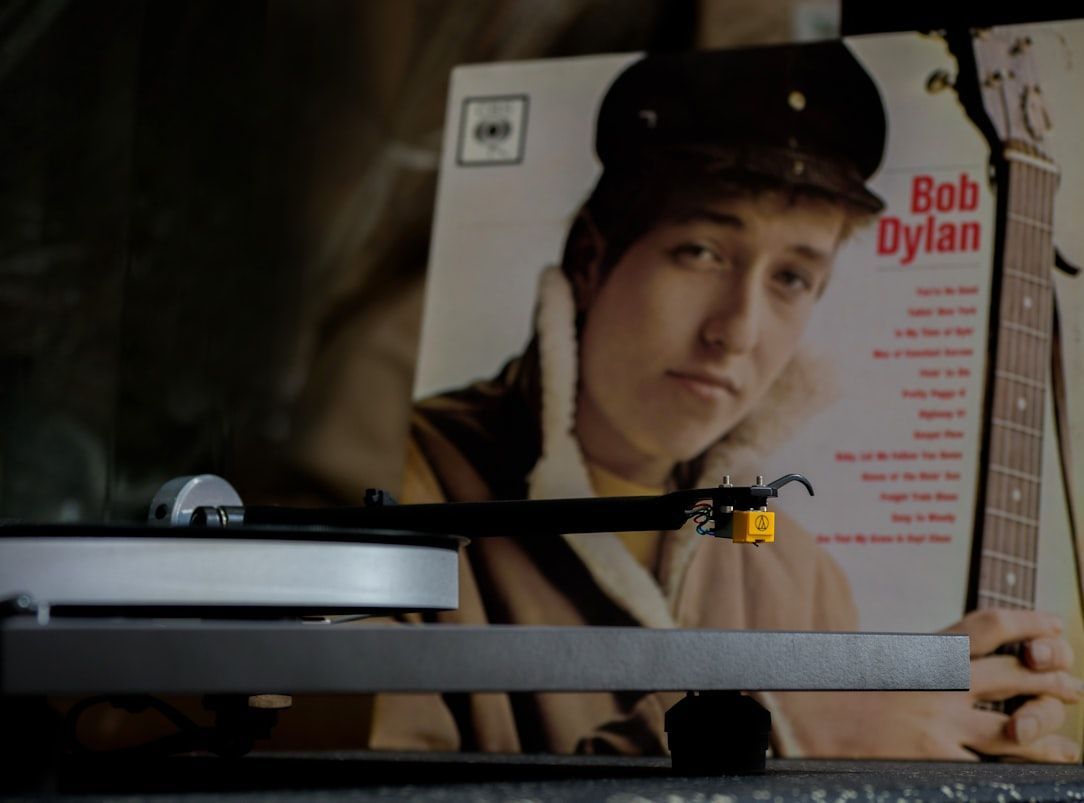
Image: Brett Jordan

Bob Dylan’s folk anthem once had a far more literal title in mind: "Answer, My Friend." The phrase came from the chorus line that would become the song’s most quoted passage.

Choosing "Blowin’ in the Wind" turned a straightforward lyric into a metaphor for freedom and justice.

9
"Crazy" (1961) - Patsy Cline

Image: Florencia Viadana

Willie Nelson originally drafted this ballad under the blunt title "Stupid." Though catchy, it didn’t capture the tenderness he wanted for the song.

Delivered with Patsy Cline’s aching vocals, "Crazy" became a country standard and one of the most recorded ballads of its era.

10
"Born in the U.S.A." (1984) - Bruce Springsteen
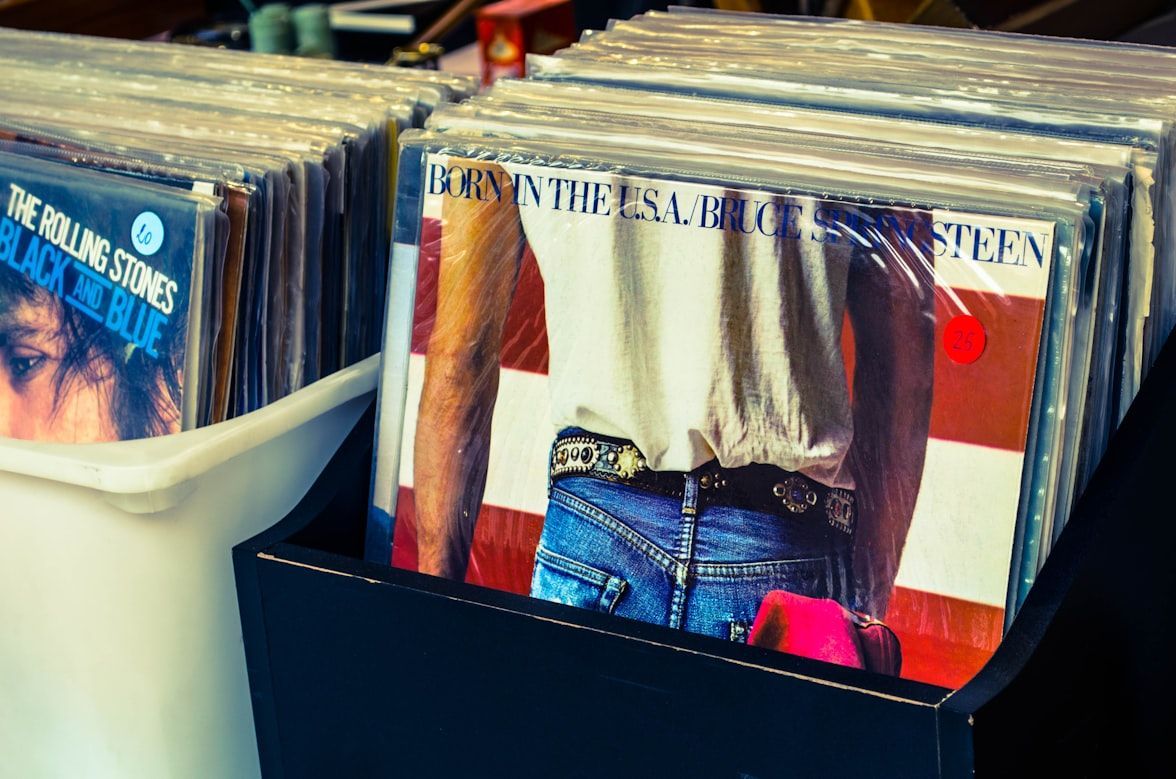
Image: Jose Antonio Gallego Vázquez

This track was first conceived under the stark working title "Vietnam." Its focus was originally narrower, highlighting the struggles of veterans returning home from war.

By renaming it "Born in the U.S.A.," Springsteen expanded the scope. The patriotic-sounding title created a powerful contrast with the song’s harsh lyrics.

11
"Material Girl" (1985) - Madonna

Image: Sebastian

Written by Peter Brown and Robert Rans, the pop hit almost debuted as "Living in a Material World." The longer phrase fit the chorus but lacked the commercial hook they wanted.

Shortening it to "Material Girl" made all the difference. The title captured Madonna’s persona — a moniker that stuck with her for the duration of her legendary career — and helped define an era.

Geography Geography 3 min read

Pushing the limits

From deadly heat to brutal cold: 10 most extreme places in the U.S.

Image: Micaela Parente

The United States is home to some of the most extreme landscapes on Earth. From the hottest deserts to the coldest tundras, America’s diverse geography pushes the limits of nature. Each of these places holds a record for being the highest, lowest, or most intense in some way—whether by temperature, elevation, or sheer remoteness. Buckle up as we take you on a journey through the most extreme places in the U.S., listed in the order they were first explored or recorded.

1
Northern frontier

Image: UC Berkeley, Department of Geography

Location: Point Barrow, AK

Point Barrow, the northernmost point in the U.S., was first explored by Europeans in 1826. Sitting at 71°23′N, it endures long, brutal winters with near-constant darkness.

Winter temperatures drop below -50°F, and the sea remains frozen for much of the year. Despite the conditions, native Iñupiat communities have thrived here for centuries. Today, it remains a key site for Arctic research.

2
Lowest land

Image: Karsten Winegeart

Location: Badwater Basin, CA

First documented in the mid-1800s, Badwater Basin in Death Valley is the lowest point in North America at 282 feet below sea level. It was named after a surveyor’s horse that refused to drink the salty water.

The basin’s extreme location means temperatures here frequently top 130°F in summer. Salt flats stretch for miles, remnants of an ancient lake that dried up thousands of years ago.

3
Hottest spot

Image: Pablo García Saldaña

Location: Furnace Creek, CA

On July 10, 1913, Furnace Creek recorded 134°F, the highest temperature ever measured on Earth. This Death Valley outpost still holds the title for the hottest inhabited place in the U.S.

Despite the heat, Furnace Creek has a permanent population and even a golf course, making it one of the strangest places where people manage to live. The area’s extreme conditions attract researchers studying heat endurance.

4
Coldest cold

Location: Prospect Creek, AK

Alaska’s Prospect Creek hit -80°F in 1971, the lowest temperature ever recorded in the U.S. Originally an outpost for pipeline workers, it’s now abandoned due to its brutal winters.

At this temperature, exposed skin can freeze in seconds, and vehicles must run continuously to avoid freezing. The area sees only a few hours of daylight in winter, making survival nearly impossible without proper equipment.

5
Windiest place

Image: Dan Meyers

Location: Mount Washington, NH

Mount Washington holds the record for the fastest surface wind speed ever recorded outside a tornado: 231 mph, measured in 1934. This New Hampshire peak is notorious for its deadly weather.

Though just 6,288 feet tall, its location at the convergence of several storm systems makes it feel like the roof of the world. Hikers often face hurricane-force winds, whiteouts, and below-zero temperatures even in summer.

6
Wettest town

Image: Martin Zangerl

Location: Kukui, HI

Kukui, on the Hawaiian island of Kauai, receives an average of 460 inches of rain annually. In 1982, it saw a staggering 683 inches, making it one of the wettest places on Earth.

The rain feeds lush tropical forests and countless waterfalls, but the steep terrain means flash floods are a constant danger. Despite its beauty, the relentless downpours make long-term settlement nearly impossible.

7
Deepest cave

Image: Joshua Sortino

Location: Lechuguilla Cave, NM

Discovered in 1986, Lechuguilla Cave is the deepest in the U.S., plunging 1,604 feet below New Mexico’s surface. It remained hidden for centuries due to its small, concealed entrance.

Its vast chambers contain formations found nowhere else on Earth, including giant gypsum chandeliers. Access is restricted to scientists, as the cave’s unique ecosystem is still being studied.

8
Largest volcano

Image: Sherry Jiang

Location: Mauna Loa, HI

Mauna Loa is the world’s largest volcano, covering half of Hawaii’s Big Island. It last erupted in 2022, continuing a pattern of activity dating back over 700,000 years.

Rising 33,500 feet from the ocean floor, Mauna Loa dwarfs even Everest when measured from base to peak. Its slow-moving lava flows have repeatedly reshaped the island’s landscape.

9
Deepest lake

Image: Jeff Hopper

Location: Crater Lake, OR

Formed by a collapsed volcano 7,700 years ago, Crater Lake is the deepest in the U.S. at 1,949 feet. Its intense blue waters come from rain and snowmelt, with no rivers flowing in or out.

The lake’s purity allows sunlight to penetrate to great depths, creating an otherworldly glow. Among its many wonders, the submerged "Old Man of the Lake," a floating log, has been drifting in its waters for over a century.

10
Most remote

Image: Harrison Hargrave

Location: Yellowstone Thorofare, WY

The Yellowstone Thorofare, 32 miles from the nearest road, is the most remote place in the Lower 48. It remains nearly unchanged since its first mapping in the 19th century.

Even experienced hikers struggle here, as grizzly bears, sudden storms, and subzero temperatures make survival difficult. This untouched wilderness offers a rare glimpse of what America once was.

General General 4 min read

No champignons on this list

Read this before picking mushrooms: 10 toxic species in America

Image: Hans Veth

Mushrooms can be found everywhere—not just deep in the woods but also in our neighborhoods, growing in the little grass patches on our sidewalks, under ornamental bushes and plants, and nearly anywhere else. Their ubiquitous presence is a testament to the evolutionary wonder of fungi in general. While many species can be safely consumed, others are toxic or even lethal. Names like "Death Cap" or "Destroying Angel" are warning enough, but, alas, nature does not provide little tags with the names we humans assign to things. Therefore, having a general knowledge of this subject is always advisable.

1
Death Cap (Amanita phalloides)

Image: Rémi Müller

The first mushroom in our list is also the most toxic in the world. It was originally found only in Europe until imported trees transported it to America and everywhere else. Over time, Death Caps adapted to native trees, enhancing their ability to proliferate.

These unassuming-looking mushrooms have tinted green caps, white stems, white gills, and a white partial veil . They grow around oak, beech, chestnut, birches, hornbeams, spruce, and pine. Death Caps fruit in summer through fall underneath these trees, and are responsible for more than 90% of all mushroom poisonings and fatalities worldwide.

2
Destroying Angel (Amanita bisporigera)

Image: Sai Kiran Belana

Another member of the Amanita species with an ominous name, the Destroying Angel is the number one toxic mushroom in North America and is extremely widespread. Its all-white cap and stem often lead to mistaken identity with button mushrooms and meadow mushrooms.

The Destroying Angel grows from a white volva egg-like sac, features gills, and has a tall, slender stem . Its stems typically range from 3 to 8 inches in length, making it stand out in the forest like an all-white apparition. None of the common lookalikes grow this tall.

3
Funeral Bell (Galerina marginata)

Image: Lucas van Oort

The Funeral Bell appears somewhat harmless, and most poisonings are from mistaken identification. This "little brown mushroom" closely resembles several edible species, including the widespread Sheathed Woodtuft.

Funeral Bells grow on rotting wood, preferring conifer species, though they are not limited to them. They are found across North America, Asia, Australia, and Europe. This mushroom features a cone-shaped brown cap, light brown gills, and a tan to rusty-brown stem . A key distinguishing feature is a membranous ring around the upper part of the stem.

4
Pholiotina rugosa (previously Conocybe filaris)

Image: Kadri Võsumäe

A common lawn mushroom prevalent in the Pacific Northwest, this deadly fungus contains amatoxins, which destroy the liver and can cause death. Pholiotina rugosa is slender, petite, and rather innocent-looking. The cap is smooth, brown, and conical, with rusty brown gills underneath . The stem is also brown and features a distinctive, prominent ring around the middle—a key identification feature.

This deadly mushroom isn’t picky about habitat. It will grow on the lawn, soil, compost, and woodchips. P. rugosa is easily transported to new locations through woodchip and compost deliveries and adapts to new environments with little trouble.

5
Fool’s Funnel (Clitocybe rivulosa)

Image: Hoejin Iwai

Fool’s Funnel grows across North America in meadows, lawns, and other grassy areas from summer through autumn. It often grows in fairy rings, and accidental consumption by children or pets is a significant concern. These toxic mushrooms are small, white, and benign-looking . The caps are white and funnel-shaped, with crowded white gills underneath. Fool’s Funnel stems are also white and lack distinctive markings.

While this fungus rarely causes death, its ingestion will cause severe pain. This mushroom contains high levels of muscarine which acts as a nerve agent when ingested.

6
Deadly Webcap (Cortinarius rubellus)

Image: Markus Spiske

Another mushroom with a foreboding name, the Deadly Webcap, is found in coniferous and mixed forests across North America. It contains a toxin called orellanine, which can cause severe kidney failure when ingested.

The Deadly Webcap bears a close resemblance to edible species like the Chanterelle , making it especially dangerous for foragers.

7
False Morel (Gyromitra esculenta)

Image: jaStra

As the name implies, the False Morel is a toxic mushroom closely resembling the highly prized Morel mushroom . It contains a toxin called gyromitrin, which can cause severe gastrointestinal symptoms, seizures, and even death if ingested in large quantities.

There are multiple species of False Morels, and current evidence suggests that many are safe to eat, while Gyromitra esculenta should still be foraged with caution. Many people consume this mushroom, but only with proper preparation. This is not a mushroom you can simply sauté and eat; proper preparation is necessary to remove most of the toxins, making it "safe.

8
Common Conecap (Pholiotina rugosa)

Image: Oliver Fetter

This small brown mushroom contains the same deadly amatoxins found in the Death Cap and Destroying Angel. It is commonly found on or around wood mulch , particularly in landscaped areas. Its tendency to appear in yards makes it especially dangerous. Ingesting even a small amount of this toxic fungus can result in severe illness or death.

9
Amanita Muscaria

Image: Егор Камелев

Probably the most recognizable mushroom shape in the world is Amanita muscaria . Its stereotypical toadstool stands out in the woods thanks to its bright red cap with white spots and a white stem . These mushrooms are considered toxic and can cause pain but are unlikely to cause death.

Few mushrooms share the same scarlet hue that makes them so visible in green and brown underbrush. The white bumps on the cap also create a distinct, eye-catching pattern.

10
Green-Spored Parasol

Image: Timothy Dykes

Known as "the vomiter" for the effects it can have on anyone who consumes it, the Green-Spored Parasol has the same general shape as the Death Cap and Destroying Angel. Its stem is tall and thin, with a skirt that sits just under the cap . This cap ranges from rounded downward to wide and flat, depending on the mushroom’s age.

The symptoms from its ingestion range from extreme stomach irritation to bloody diarrhea, as well as the aforementioned vomiting. Therefore, caution is advised.

Explore more American facts

Choose your favorite category!

General
General

As American as apple pie—the very best America has to offer!

Culture
Culture

Delve into the astounding richness of American lore.

Geography
Geography

Hop in and explore vast and diverse American landscapes.

History
History

Discover the key moments that shaped the United States.