General General 5 min read

Dusting off some old memories

Playground love: 12 outdoor games everyone played as a child

Image: cottonbro studio

Playing outdoors is one of the most enjoyable and memorable experiences of childhood. Our childhoods didn’t require modern technology to feel complete or entertaining. We could spend hours at the park or during school breaks playing tag, jumping rope, or hiding for our friends to find us. Do you remember these games? If you’d like to jog your memory, read on to revisit the games you played most as a kid!

1
Hopscotch

Image: MOHAMMADREZA Kr

When we were kids, before computer games and smartphones, we didn’t need much to keep us entertained in the afternoons. Playing hopscotch, for example, required only a piece of chalk and a large enough asphalt area to draw on and jump around.

There are numerous variations, but children have played hopscotch for centuries . The basic principle remains the same: a series of numbered rectangles is outlined on the ground, and the player tosses a pebble into each one in turn. The player then hops through the course without touching the lines, picking up the pebble along the way, and returns—still hopping—to the starting point.

2
Tag

Image: Aleksandar Andreev

Tag is undoubtedly the most famous chasing and catching game of all time. It also serves as the foundation for many other games. This is no coincidence—tag has existed since ancient times, with different versions in civilizations as dissimilar as Greece and India.

In the simplest form of tag, one player tries to tap another player; the tagged player then becomes "it —a.k.a. "the chaser"—and it all starts all over again. Which version was your favorite? Ours was freeze tag!

3
Jump-rope and Double Dutch

Image: cottonbro studio

Jumping rope was another childhood favorite, whether on street corners or in school playgrounds. Whether alone or in a group, it kept us entertained for hours. Among the countless variations, Double Dutch—a version in which one or more players jump between two long ropes turning in opposite directions—was probably the most fun and most challenging of all.

The origin of Double Dutch is not entirely clear. Some claim Dutch settlers brought it to America, while others argue it was invented in the early 1900s in the U.S. What is certain is that this game, which combines motor skill training and physical exercise , became so popular that it evolved into a competitive sport with worldwide tournaments.

4
Simon says

Image: Arthur Krijgsman

"Simon says… touch your nose!" Remember these commands? As kids, we could spend hours playing this game, where one player took on the role of "Simon" and gave instructions that the rest of us had to follow to the letter.

Records of this game’s existence in the United States date back to the mid-19th century ; however, its origins may be traced back to ancient Rome. Some historians suggest that the name Simon comes from Simon de Montfort, a 13th-century French-English nobleman who was known for his ability to command authority over his subjects.

5
Hide-and-seek

Image: Annie Spratt

Hide-and-seek is one of the simplest games but, at the same time, one of the most fun when we were children. In this game, one player would close their eyes and count to a certain number while the others searched for a place to hide. The challenge was to find as many hidden players as possible before they reached "home base."

Hide-and-seek, which has different variants worldwide, has been played since ancient times. In fact, historians have discovered a strikingly similar game in ancient Greece called apodidraskinda , which followed rules much like the ones we know today.

6
Hula Hoop contest

Image: Annie Spratt

The hula hoop became popular in the late 1950s when the American toy company Wham-O introduced a plastic version to the market. However, hula hoops have been used by children since ancient times. Over the centuries, they have been made from a variety of materials, including willow, grapevines, rattan, stiff grasses, wood, and metal.

Growing up, most schools had hula hoops available during PE classes. It was the ideal game for young children to have fun and get fit at the same time. Teachers often organized contests in which players twirled the hula hoop around their waist for as long as possible. The winner was the one who kept the hoop spinning the longest before it dropped to the floor.

7
Marco Polo

Image: Library of Congress

This game, which shares its name with the 13th-century Italian explorer, was a summer-exclusive tradition we eagerly anticipated all year long. Many of us still vividly remember our friends, siblings, and cousins shouting "Marco!" and responding "Polo!" as kids.

Played in a swimming pool, Marco Polo is a location-based game in which players must find each other using auditory clues. It became popular in America in the 1960s and is now played worldwide with various adaptations.

8
Musical statues

Image: Robert Collins

Musical Statues, also known as Freeze Dance, is a variation of Musical Chairs that can be played outdoors. It was a popular game at birthday parties and involved running around while music played. When the music stopped, players had to freeze in place. Anyone who moved was instantly out, and the last one remaining won the game.

Musical Statues originated in the United Kingdom, likely in the mid-1950s , when music players became more common in people's homes.

9
Tug of war

Image: RDNE Stock project

Did you know that before the 19th century, the game we now call tug of war was known as French and English ? Tug of war—or rope pulling—is an ancient game , with different versions found in Egypt, Greece, India, China, and Cambodia.

In tug of war, two teams compete in a test of strength and strategy, pulling a rope in opposite directions. Though this game is popular at school events for its mix of teamwork, exercise, and friendly competition, it was once an official sport . In fact, from 1900 to 1920, tug of war was part of the Olympic Games.

10
Dodgeball
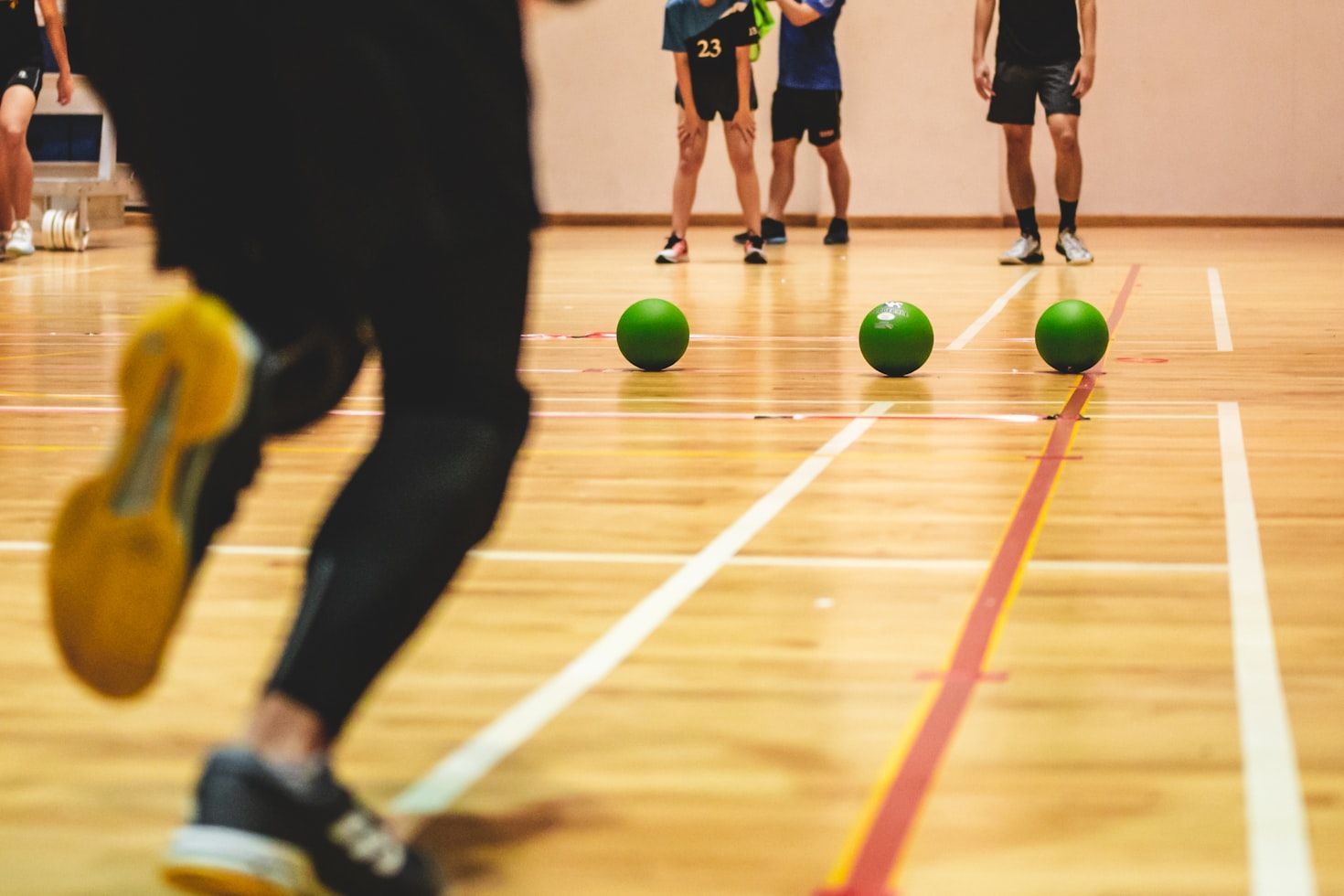
Image: Wan San Yip

Dodgeball is another game we used to play in school that is now also considered a sport . In this game, the objective is to eliminate all members of the opposing team by hitting them with thrown balls.

Though it’s now a fun and friendly game, that wasn’t always the case. Dodgeball originated in Africa approximately two hundred years ago. Back then, it was much more dangerous and violent. Instead of using soft balls, participants threw rocks found in nature. Fortunately, in the mid-19th century, an English missionary saw the game and transformed it into a more enjoyable, non-life-threatening activity.

11
Duck, duck, goose!

Image: Kampus Production

You probably haven’t played this game since preschool or kindergarten, and you might have even forgotten about it completely. However, it was one of the most popular games on the playground .

In this traditional children's game, participants sit in a circle, and one is chosen to touch the heads of the others. The player who is "it" goes around saying "duck" until they choose someone and say "goose." Then the chase begins!

12
Scavenger hunt

Image: Nellie Adamyan

This was a more complex game that required much more development and preparation time. But perhaps because of that, it was so appealing to us. Scavenger hunts were so much fun that we still play them as adults, and they remain a popular activity at some universities , for example.

This game, which involves finding specific items from a list, evolved from ancient folk games. The modern version we play today, however, was popularized by American gossip columnist and socialite Elsa Maxwell in New York City during the 1930s .

History History 2 min read

We did it first!

Few people know that these massive inventions were created here. Do you?

Image: Vitaly Gariev

America has been witness to many firsts in history, from protecting natural sites to creating everyday conveniences, from founding cultural institutions to achieving industrial breakthroughs. Some are famous, others barely remembered. Here are 10 of those pioneering firsts, each marking a moment when America led the way.

1
World’s first national park

Image: Kedar Gadge

In March 1872, Congress passed the law establishing Yellowstone National Park as a protected public reservation: the first national park ever created on Earth.

By dedicating 2.2 million acres to preservation rather than development, the U.S. set a precedent for conservation worldwide, inspiring national park systems around the world.

2
First sustained and controlled, powered airplane flight

Image: History in HD

In 1903, the Wright brothers successfully flew a powered, heavier-than-air controlled aircraft , known as the Wright Flyer, at Kitty Hawk, North Carolina.

That breakthrough marked the beginning of the aviation age and forever redefined travel, warfare, and global communication.

3
Self-service grocery store

Image: Raul Gonzalez Escobar

In 1916, American grocers opened the self-service supermarket. Instead of clerks fetching food, customers helped themselves to the items they wanted from the shelves.

This change transformed retail: it lowered costs, sped up shopping, and laid the foundation for modern supermarkets all over the world.

4
First cinema house

Image: Elijah Mears

New York City saw the first public "movie theater" in 1894, when a parlor opened using the Kinetoscope, a peep-box device for viewing short motion pictures .

That small parlor marked the beginning of the cinema business, an idea that would grow into a global film-making and entertainment industry.

5
Drive-in movie theater

Image: Josh Sanabria

One could argue that with the rise of cinemas and the boom in automobiles, the drive-in theater was an obvious business idea. But somebody had to do it first.

In 1933, Richard Hollingshead Jr. opened the first drive-in theater in New Jersey , where people watched films from their cars.

6
First affordable and mass produced car

Image: Andrew Lancaster

In 1908, the U.S. auto industry delivered the Ford Model T, the first reliable, affordable automobile that was mass-produced for everyday Americans (and not just millionaires).

It revolutionized transportation by enabling mobility for the masses, reshaping how Americans lived, worked, and traveled across the country.

7
Fast food

Image: Jonathan Borba

As it couldn’t be otherwise, this concept was born in America. In 1916, a Wichita stand began selling hamburgers prepared hygienically and cooked quickly : The foundation for what became the fast food culture.

That modest stand evolved into larger chains and helped launch a global phenomenon of quick and affordable meals.

8
Film studios

Image: Vincentas Liskauskas

Another concept spawned from a previously mentioned American first, the commercial moving pictures studio was all ours. During the late 19th century, the U.S. saw the creation of the first film studio system .

This early film production set the stage for storytelling, entertainment, and cultural exports that would spread worldwide.

9
Diving flippers

Image: Jakob Owens

In 1717, long before modern diving became common, the U.S. saw the first patent for swim-fins (flippers) , attributed to none other than the great Benjamin Franklin.

A small invention, perhaps, but one that revolutionized swimming, diving, and underwater exploration equipment worldwide.

10
Standardized patent-office system

Image: Ray Shrewsberry

When the U.S. patent law was reformed in 1836, a central patent office was established, creating a system to review, grant, and catalogue inventions in a formal and systematic manner .

This institutional framework helped make the U.S. a global hub of invention and innovation, sustaining centuries of technological growth.

General General 3 min read

Are you a cat or a dog person?

New pet at home? Take a look at these 12 tips for better care!

Image: Karsten Winegeart

Bringing a new pet into your home is an exciting event for everyone involved, and it can be an incredibly rewarding experience if you take a few simple steps to ensure your new family member feels safe and comfortable. Take a look at the following 12 easy yet important tips—you’ll thank us later!

1
Supplies

Image: Diego Marín

Pets may not need as many things as humans do, but they still require a few essentials of their own. Depending on your pet, this may include items like a bed , food and water bowls , a litter box , toys , and a kennel or enclosure, if needed. Make sure to have these items ready in advance to help your pet feel comfortable as soon as it arrives.

2
Pet-proofing your home

Image: Prasad Panchakshari

Another important consideration is whether your home is a safe environment for your new pet or if it needs some adjustments. Check if your windows, balconies, or fences require nets to prevent your pet from escaping. Also, examine toilet seats , electrical cords and outlets , houseplants , garbage cans, and fragile items—all these things should be examined from the perspective of a pet owner.

3
No cuddling and playing

Image: Manuel Meza

While puppies and kittens are especially playful and love to fool around, it’s important to let them gain confidence at their own pace . Allow them to sniff around and explore so they can find safe spaces and feel more at ease.

This doesn’t mean you should ignore them, but rather resist the temptation to overwhelm them with attention or surround them with a crowd of family and friends. There will be plenty of time for that, once the pet is relaxed.

4
Vaccinations

Image: Judy Beth Morris

Young puppies and kittens are especially vulnerable to infectious diseases because their immune systems are not yet fully developed. That’s why it’s essential to take your new pets to the veterinarian and ensure they receive their vaccinations on time .

5
Appropriate diet

Image: Bonnie Kittle

Before bringing your new pet home, make sure to consult with a veterinarian regarding the best type of food , and check with the breeder or rescue center to find out what your pet has been eating. If you want to change their diet, do so gradually—otherwise, a sudden change could make them sick.

6
Bathroom training

Image: Andrew S

If your new pet is a dog, consistency and patience are paramount . Establish a regular potty schedule, take your puppy out frequently, and reward them for using the designated area. If your new pet is a cat, place a litter box in a quiet, easily accessible spot and use a clumping litter that’s gentle on their paws.

7
Toys

Image: Amy Chen

Pets can turn almost anything into a toy, but both cats and dogs will especially enjoy age- and size-appropriate pet toys . Be mindful of objects or toys that might seem interesting or edible to your pet, as they could be swallowed and cause serious problems.

8
Collar ID

Image: Jake Oates

If your new pet already has a name, make sure they have a sturdy collar ID with their name and your phone number. Pets can get lost in various situations, and a collar ID is essential to ensure anyone who finds your furry friend can contact you .

9
Consistent rules

Image: Christopher Cassidy

If your new pet is going to live in a house where there are other people besides yourself, make sure the rest of the household knows which behaviors to reward and which to ignore . Consistency in training is crucial to ensure your pet becomes polite and obedient.

10
Older pets

Image: Christian V.

Maybe your new pet isn’t a young pup or kitten. If your new friend is an older dog or cat, try to learn as much as possible about any training or health issues they might have , and be proactive by making a plan to address them. Don’t try to tackle everything at once—gradually introduce new experiences in controlled circumstances.

11
Exercise

Image: Arjan Stalpers

A bored pet can quickly become a mischievous one. A healthy dog should be taken for a walk at least 20–30 minutes a day . Cats naturally love to jump, climb, and scratch. If your cat is indoor-only, provide one or more cat trees to climb and scratching posts . Wand toys or laser pointers are great for stimulating cats and getting them moving.

12
Keep a Routine

Image: Paul Hanaoka

Routines are beneficial for all animals, and pets are no exception . Schedules give them a sense of security and stability. You can promote this by establishing regular feeding times, walk schedules, and play sessions.

Remember what we said about consistency? Regular routines help reduce anxiety and prevent behavioral issues. For puppies, maintaining a routine is especially important as it aids in house training and social development.

Explore more American facts

Choose your favorite category!

General
General

As American as apple pie—the very best America has to offer!

Culture
Culture

Delve into the astounding richness of American lore.

Geography
Geography

Hop in and explore vast and diverse American landscapes.

History
History

Discover the key moments that shaped the United States.