General General 6 min read

Gloriously weird America

Not even travel guides will tell you about these 10 odd American stores
Image: Ricky Singh

You've been to the mall. You've been to the big-box stores. But have you ever walked into a shop and thought: what on earth is this place, and why am I already in love with it? The stores on this list will do exactly that; and fair warning, you'll probably want to visit more than one. We'll ease you in gently, starting with a store that sells everything in a single color and a gift shop that celebrates terrible paintings, before working our way toward bizarre things you won't be able to unsee. Which one would you visit first?

1
The Purple Store – Online (with a location at Pike Place Market, Seattle, WA)
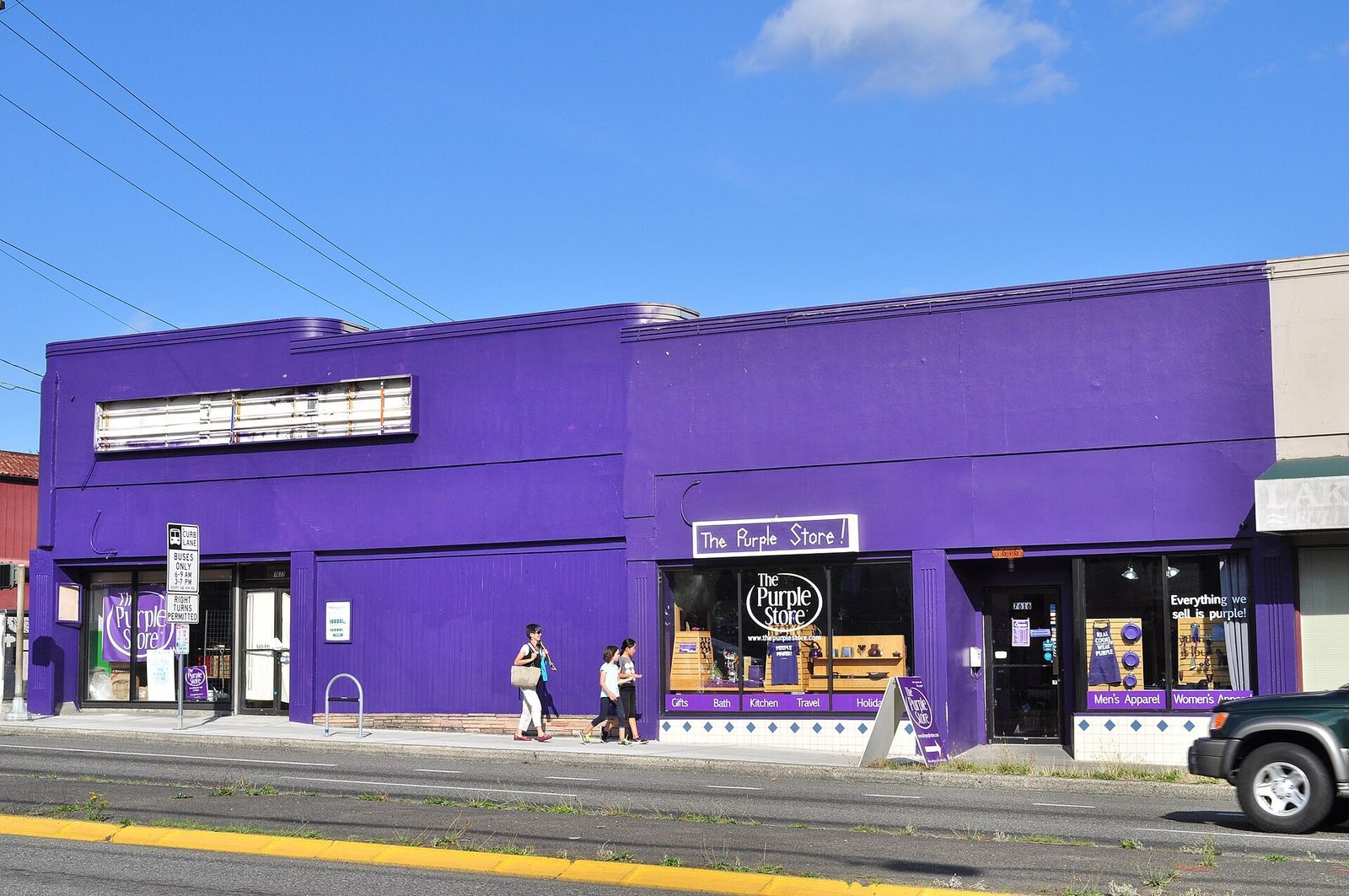
Image: Joe Mabel, CC BY-SA 3.0, via Wikimedia Commons

The Purple Store does exactly one thing: it sells purple items. Every single thing in the store is purple . Shirts, socks, kitchen appliances, furniture, jewelry, dog collars, dice, cowboy hats—if it exists and can be purple, The Purple Store has it.

This is the store for the person in your life who is very, very serious about their favorite color, or for anyone who finds the concept of a store with a strictly enforced color policy absolutely hilarious and also kind of admirable.

2
The Museum of Bad Art Store: Somerville, MA
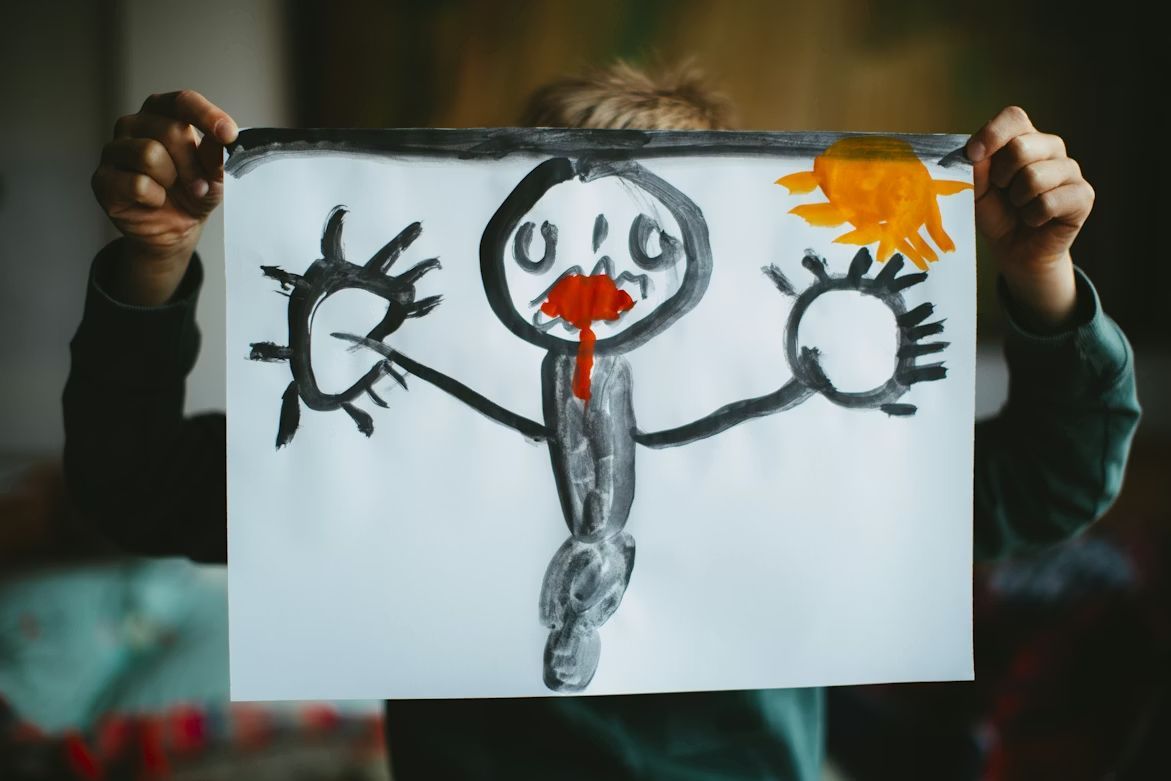
Image: Markus Spiske

The Museum of Bad Art exists to celebrate paintings that tried hard, fell short, and ended up magnificent for entirely the wrong reasons. The gift shop sells prints, books, and merchandise built around the museum's collection of gloriously terrible masterpieces .

Nobody here is embarrassed: the art is bad, everyone knows it, and that's precisely the point. This is the store for people who believe that effort deserves recognition regardless of outcome, and for anyone who has ever hung a painting in their living room that wasn't quite right and left it there for fifteen years anyway.

3
Marty's Reliable Cycle: Westfield, NJ
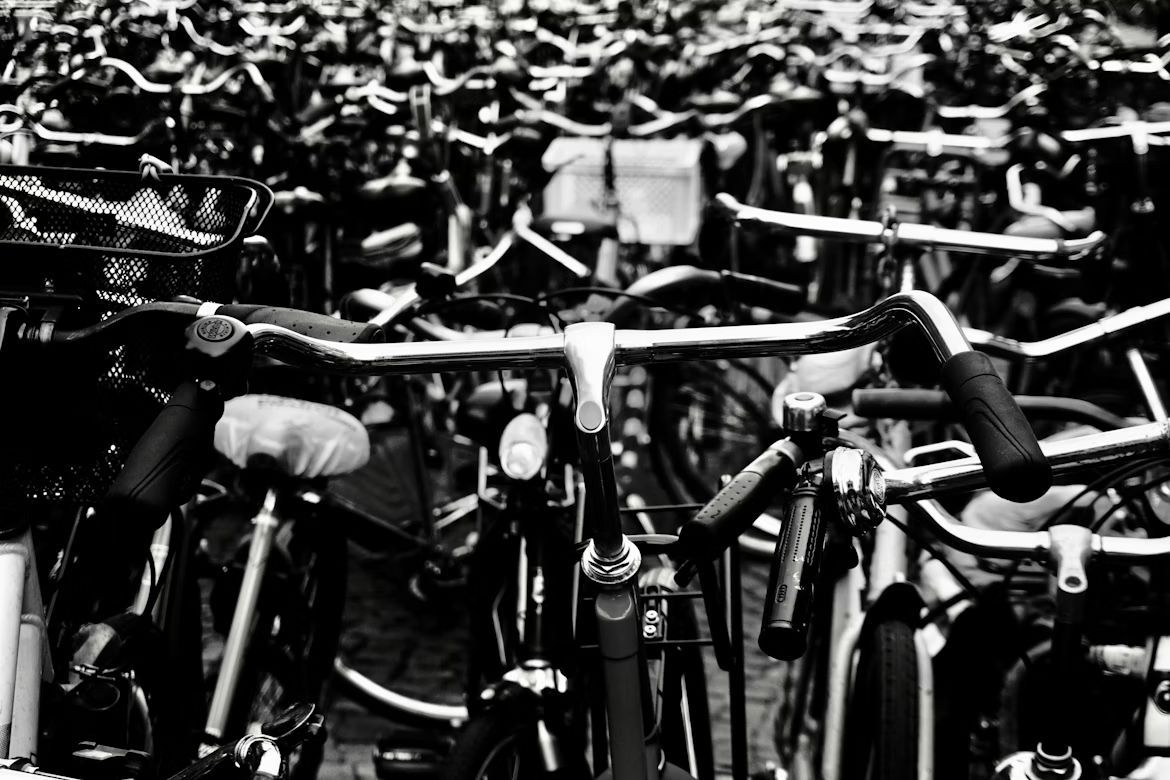
Image: hidde schalm

Operating since 1946, Marty's Reliable Cycle is the kind of place that shouldn't still exist but absolutely does. It's famous nationwide not just for its vintage bicycle inventory, but for its ceiling-to-floor stacks of cycling memorabilia, spare parts, and decades of accumulated everything that give it the feel of a very organized avalanche.

Walking in feels like stepping into a time capsule where someone hit pause around 1978. Cyclists make pilgrimages here. If you're passing through New Jersey and remotely enjoy bicycles, nostalgia, or both, it's worth the detour.

4
The Sock Drawer: Providence, RI
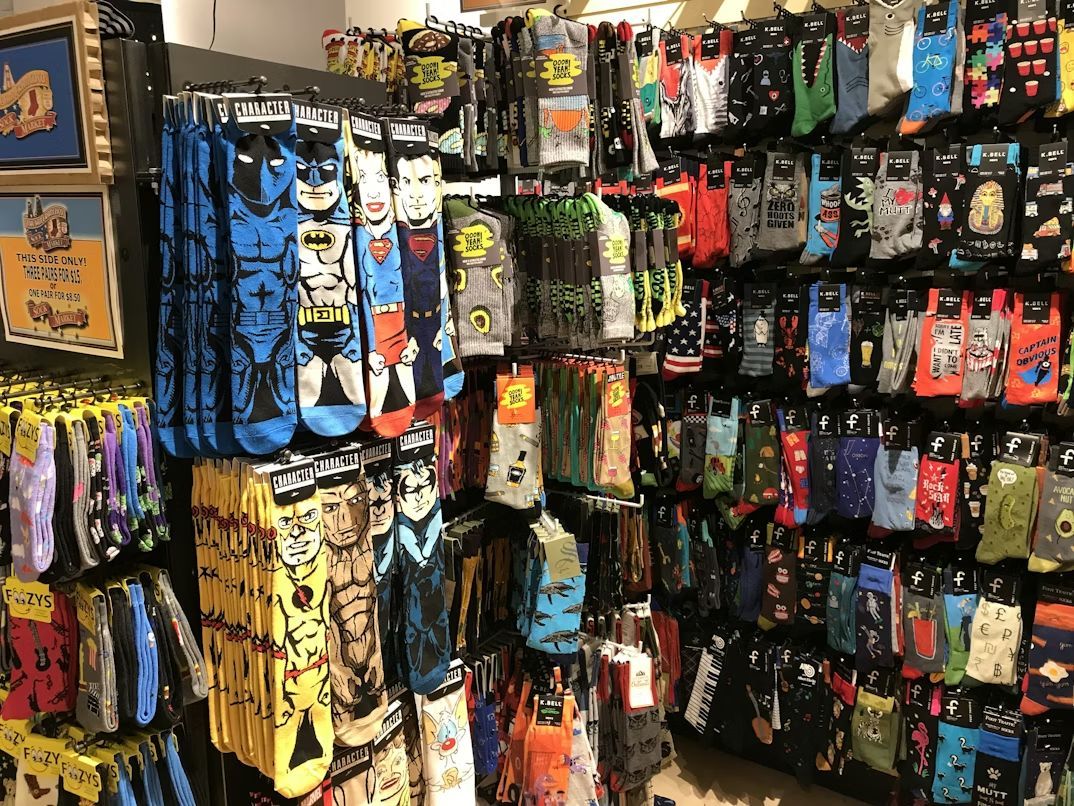
Image: Guido Coppa

The Sock Drawer is devoted entirely to novelty and compression socks in every pattern, theme, and level of absurdity imaginable . Cats riding tacos. Flaming hot dogs. Historical figures on argyle. If you can think of it, there’s a good chance The Sock Drawer already has it in stock.

What makes it more than a joke is that it also carries medical-grade compression socks for people who need them, meaning you can solve a circulation problem and walk out with a pair of socks featuring a screaming eagle at the exact same time.

5
Archie McPhee: Seattle, WA
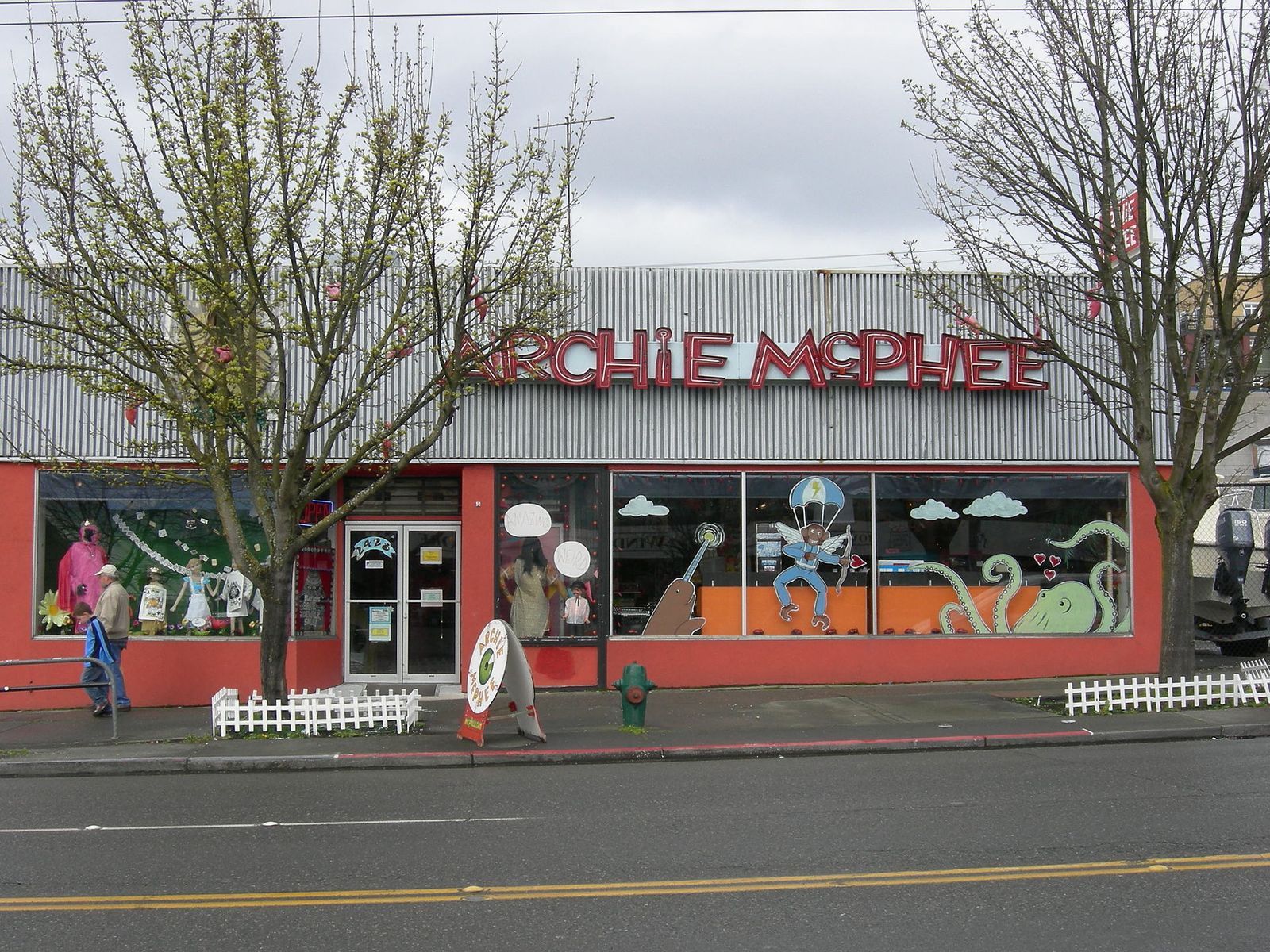
Image: Joe Mabel, CC BY-SA 3.0, via Wikimedia Commons

Archie McPhee has been selling rubber chickens, bacon-scented soap, canned unicorn meat, and inflatable Stonehenge for decades, and it shows no signs of slowing down or becoming even slightly more sensible. It is the undisputed gold standard of American novelty shops: the place other weird stores aspire to be when they grow up .

The genius of Archie McPhee is that everything is absurd, but nothing feels accidental. Someone sat down, thought very carefully about what the world needed, and concluded the answer was a horse head mask and a bag of dismembered gummy bears. They were right, and the store has the loyal following to prove it.

6
Wall Drug: Wall, SD
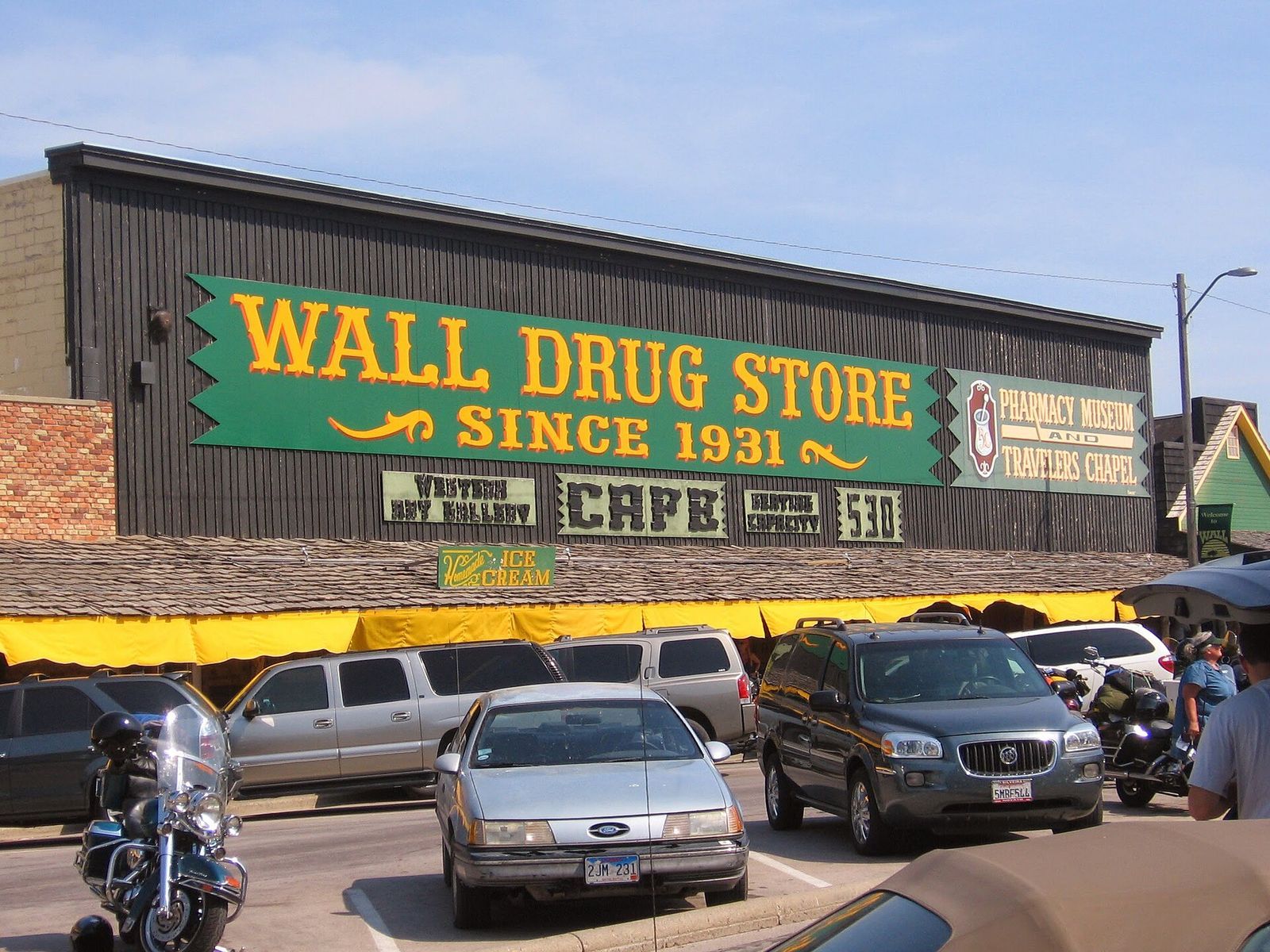
Image: Runner1928, CC BY-SA 4.0, via Wikimedia Commons

Wall Drug started as a modest drugstore in 1931 in the middle of South Dakota and somehow became one of the most aggressively advertised destinations in America. Signs for it appear thousands of miles away, and the complex has grown to fill an entire block with shops, exhibits, animatronic dinosaurs, and attractions that resist easy categorization. A five-cent cup of coffee is still on the menu.

Nobody drives to Wall Drug because they need something. They go because the signs wore them down over five straight states and they finally gave in. Once inside, the sheer scale of the thing (part store, part roadside attraction, part collective hallucination) becomes impressive.

7
Possumbilities: Fredericksburg, VA
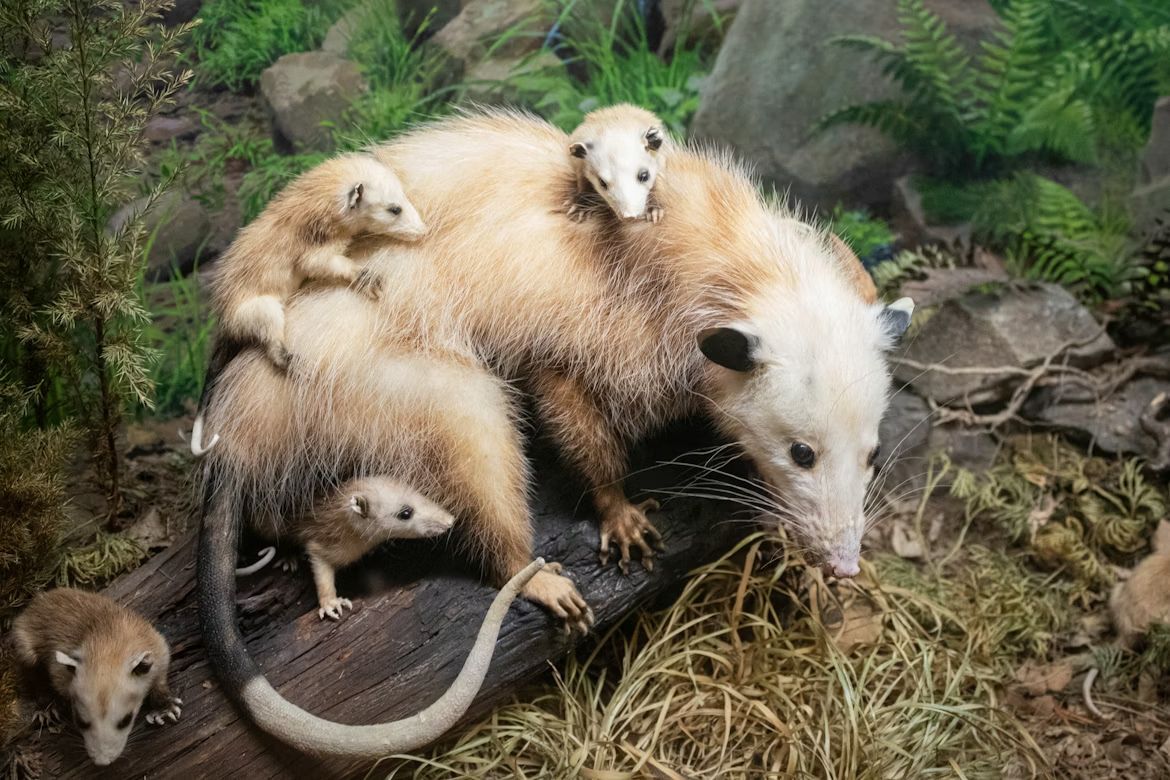
Image: Khải Đồng

Possumbilities is a gift shop, wildlife education center, and opossum advocacy organization all rolled into one cheerfully strange package. Run by a licensed wildlife rehabilitator named Karen Brace, the store sells opossum-themed merchandise —plushies, mugs, apparel, hand-crocheted baby opossum figures— and features live opossum ambassadors on-site Thursday through Monday.

This is the store for anyone who has ever been told that opossums are ugly and gross and wants to argue the point. Imagine stopping in Fredericksburg on a road trip, wandering into what looks like a small gift shop, and coming face-to-face with a real, live opossum named Stuart. That is a story you'll tell at every barbecue for the rest of your life.

8
Unclaimed Baggage: Scottsboro, AL
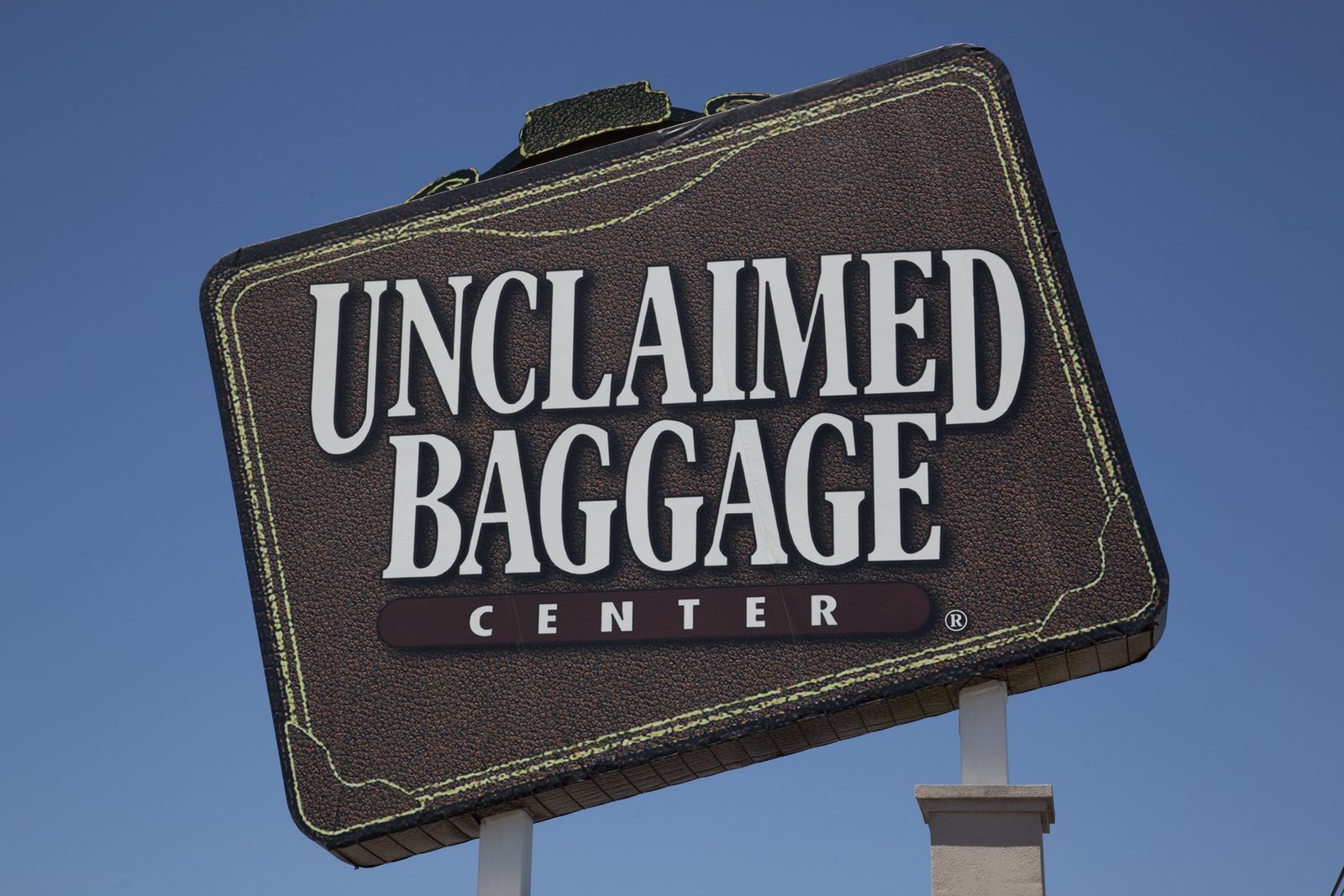
Image: Carol M. Highsmith, Public domain, via Wikimedia Commons

Unclaimed Baggage is exactly what it sounds like : a store that buys luggage that airlines have given up on reuniting with its owners—after a full three-month search—and sells the contents to the public . Items are cleaned, tested, appraised, and priced at up to 80% below retail value. New inventory arrives daily, because bags are lost daily.

Over the years, the store has turned up a NASA Space Shuttle camera, an Egyptian burial mask from around 1500 BC, a live rattlesnake, and a puppet from the Jim Henson film Labyrinth . The everyday inventory includes designer clothes, electronics, jewelry, and sporting goods, but the real draw is the promise that you have no idea what you'll find.

9
Ye Olde Curiosity Shop: Seattle, WA
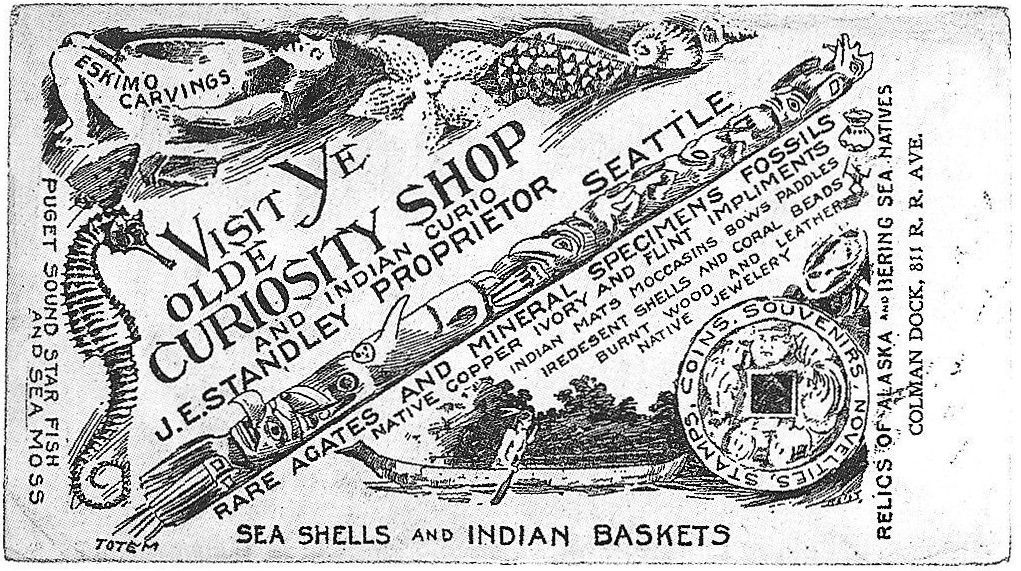
Image: Ye Olde Curiosity Shop, Public domain, via Wikimedia Commons

Ye Olde Curiosity Shop has been operating on Seattle's waterfront since 1899 and in that time has assembled a collection of genuine mummies, shrunken heads, narwhal tusks, and oddities that blur the line between souvenir shop and sideshow attraction. You can buy a snow globe or stand two feet from an actual mummified human body.

It’s the kind of place that would be impossible to open today and which survives partly on reputation, and partly on morbid curiosity.

10
The Mütter Museum Store: Philadelphia, PA
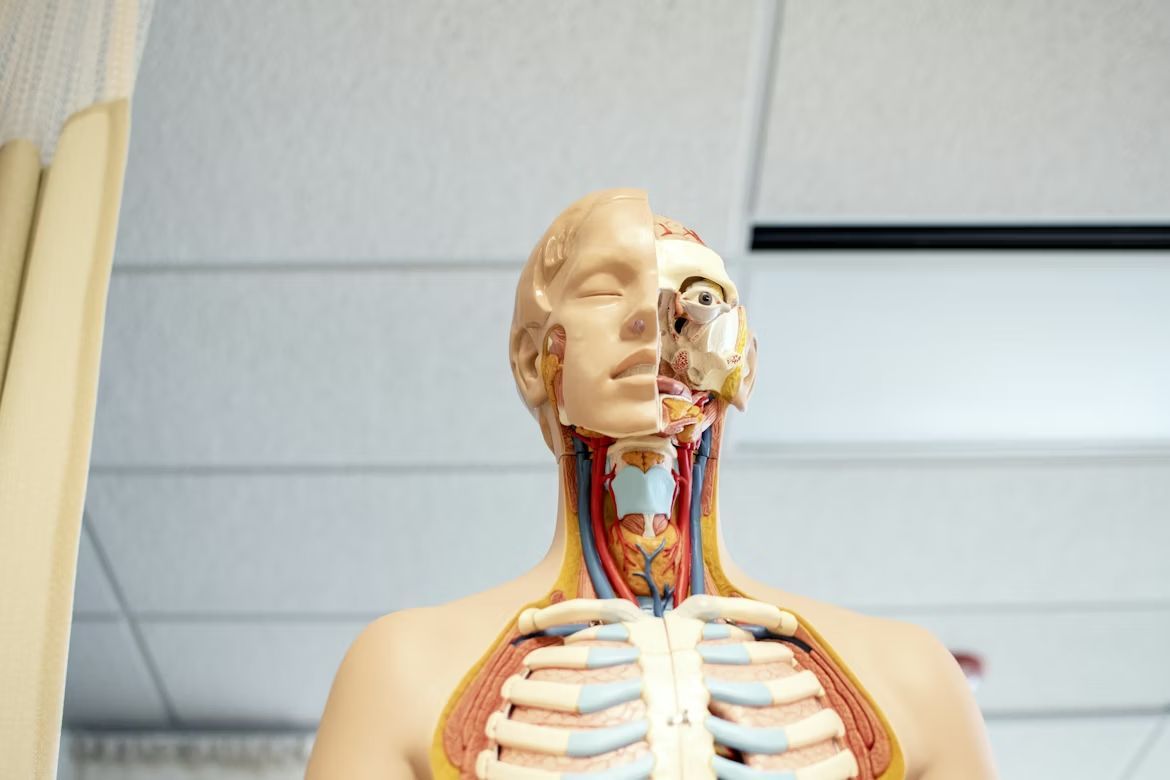
Image: Nhia Moua

The Mütter Museum is a medical history museum housing anatomical specimens, preserved human remains, and things in jars that no one entirely expects to find in downtown Philadelphia . Its gift shop sells anatomical models, medical curiosity replicas, and books that somehow make the whole experience feel educational and gift-able rather than deeply alarming—most of the time.

You can buy a soap shaped like a human brain, a replica Civil War surgical kit, or a calendar featuring unusual medical case studies from the 1800s. It's oddly tasteful given the subject matter, and the store has developed a devoted following.

Culture Culture 6 min read

Geniuses at work

We're here today because of them! Meet 10 Americans who changed history

Image: Quino Al

The United States is a land of progress and innovation, so it makes sense that many of the world's most important inventors and scientists are Americans. From breakthroughs like the lightning rod and the light bulb to advancements in the world of medicine, biology, and astronomy, there have been many men and women who, from different fields of study, have contributed to the scientific progress of our country and the entire world. Join us as we review these 10 American inventors and scientists who changed history!

1
Thomas Edison

Image: Call Me Fred

When it comes to inventors, we can't fail to mention the incredible Thomas Alva Edison.

Edison was born on February 11, 1847, in Milan, Ohio, and since he was a child, he showed his interest and talent in mechanics and electricity. At the age of 11, he set up his first laboratory in his parents' home, and by the age of 12, he ran his own business: a newspaper he designed, printed, and sold himself.

Creator of the phonograph (the first device capable of recording and reproducing sounds) and a fundamental part in the development and popularization of inventions such as the electric light bulb and the motion picture camera, Edison patented more than 1000 creations during his lifetime. Impressive!

2
Benjamin Franklin

Image: Dan Mall

Born in Boston, Benjamin Franklin was one of our Founding Fathers, the men whose principles, values, and ideas shaped America. But as if that weren't enough, Franklin was also a renowned scientist, inventor, and polymath.

A pioneer in the field of electricity, he's remembered for his famous kite experiment, which demonstrated the electrical nature of lightning and led to the invention of nothing less than the lightning rod. In addition, he's also credited with iconic inventions such as the first efficient wood-burning stove (later known as "the Franklin Stove"), the bifocal glasses, and the glass armonica.

3
Samuel Morse

Image: The New York Public Library

Unlike other scientists and inventors on this list, Samuel Morse began his journey in a completely different field: art.

Morse studied at Yale, where he completed his studies in 1810. He then embarked on a trip to Europe to continue his artistic education, but this trip awakened another peculiar interest in him. Frustrated by the communication methods of his time, Morse focused his creativity on finding ways to transmit information over long distances using electrical signals. Thus, the revolutionary telegraph was born, along with its way of communication, the Morse code.

4
The Wright Brothers

Image: Simon Fitall

The Wright Brothers were the famous siblings who, in the 20th century, achieved a goal long sought by humanity: flight.

Wilbur and Orville Wright are credited with inventing, building, and flying the world's first successful airplane. As you probably know, on December 17, 1903, they made the first sustained flight in history using the Wright Flyer, their iconic invention.

On that December morning, the brothers flipped a coin, letting fate decide who would be the first to test the aircraft. Although Wilbur won, that first attempt failed. So it was Orville who flew for 12 seconds, traveling 120 feet over Kitty Hawk, North Carolina.

5
George Washington Carver

Image: Tom Hermans

George Washington Carver was born in the 1860s in Diamond, Missouri. In the 1890s, his intelligence and hard work enabled him to enter Iowa State College (now Iowa State University), where he earned a master's degree in agricultural sciences. In 1896, he became the head of the agriculture department at Tuskegee Institute in Alabama, where his career as a professor and a researcher took off.

Thanks to his investigations and tests, George Washington Carver made major contributions to agriculture, including his innovative techniques for crop rotation . In addition, he developed many and varied peanut products, such as oil, flour, soap, and ink, helping to make this crop one of the key products of the country's economy.

6
Carl Sagan

Image: Vaibhaw Kumar

The stars and the mysteries of the universe captivated the famous Carl Sagan from an early age. Born in Brooklyn, New York, in 1934, Sagan studied at the University of Chicago, where he earned degrees in physics, astronomy, and astrophysics, eventually working and collaborating with NASA.

His contributions to the field of astronomy earned him a position in projects such as the Mariner, Viking, Voyager, and Galileo missions, thanks to which we have learned a lot about Venus, Mars, and Jupiter. The famous high temperatures of Venus, for example, were confirmed thanks to his work.

Additionally, his book and series Cosmos attracted the public's interest in astronomy, inspiring many others to follow in his footsteps.

7
Grace Hopper

Image: Museums Victoria

While computer programming may seem like a modern issue, the pioneers of this field were already working as early as the 1940s.

Grace Hopper graduated in mathematics and physics in 1928 and obtained a master's degree and a Ph.D in mathematics from Yale University in 1934. Famous as a pioneer in the world of programming, Hopper's work began during World War II when she joined the US Naval Reserve. There, she worked on the earliest electromechanical computers and developed extensive and complex manuals to operate them.

Her greatest contribution came from her work with mathematical codes, which she translated and adapted into innovative machine-readable language. That innovation led to the creation of the first high-level programming languages.

8
Jonas Salk

Image: Олег Мороз

Jonas Salk is none other than the mind behind a medical milestone: the polio vaccine.

In the 1940s, Salk was beginning his career in medical research. While working at the University of Michigan, his work was crucial in developing the first successful influenza vaccine for the military during WWII. This event marked his later study of the poliovirus.

Polio was devastating during the first decades of the 20th century, but that changed dramatically thanks to Salk's work. The scientist led a team that succeeded in developing the first safe and effective injectable inactivated poliovirus vaccine (IPV) in 1955, and the rest is history.

9
Barbara McClintock

Image: digitale.de

Although her name may not be as instantly recognizable as some others on this list, her work definitely is. Barbara McClintock has undoubtedly made one of the most significant contributions to medicine and genetics.

In the 1940s and 1950s, she worked with chromosomes, investigating their role in inheritance, which led to discoveries that forever changed our understanding of genes.

Before her, genes were believed to be fixed and immutable. But McClintock came to change that idea with her most famous contribution: the discovery of transposable elements, aka "jumping genes." She demonstrated that jumping genes are present in multiple organisms, including humans, and play an essential role in genetic evolution.

10
Alexander Graham Bell

Image: Misho Tektumanidze

Alexander Graham Bell became interested in sound and communication at a young age, something that led to his greatest and most remembered contribution: the telephone.

Although born in 1847 in Edinburgh, Scotland, Alexander Graham Bell settled in the United States in 1871 and became an American citizen years later. It was here that he developed most of his experiments and research.

After years of experimenting with methods to transmit sound through electrical currents, Bell finally spoke into his invention on March 10, 1876, saying to his assistant, "Mr. Watson, come here. I want to see you." That was the first successful telephone call in history.

Geography Geography 5 min read

A guide to the Mother Road

Did you know Route 66 has a halfway point and a crater?

Image: madeleine craine

Route 66 is more than just a highway. If you do it right, it can be an epic journey through America’s past and present. With many roadside attractions, iconic landmarks, and mouthwatering pit stops, it’s the ultimate bucket-list road trip . Have you ever dreamed of kicking up dust in the desert or soaking in the nostalgia of the past? Well, we’ve put together 12 stops along the Mother Road that have something for everyone. So pack your snacks, gas up the car, and let’s hit the road. Ready to roll?

1
122 S. Michigan Ave.

Image: Allen Boguslavsky

Why not start the trip at the place where it all began? For Route 66, the beginning is right in the heart of Chicago , at 122 S. Michigan Ave. Look for the iconic pylon near the intersection of South Michigan Avenue and East Adams Street.

Fun fact: the Mother Road didn’t always start there. Back in 1926, Jackson Boulevard at Michigan Avenue was the official launch point for travelers!

2
Gateway Arch

Image: Intricate Explorer

Follow your adventure in St. Louis with the Gateway Arch, a towering 630-foot tribute to westward expansion. This stainless-steel beauty isn’t just a landmark, it’s an experience in itself.

Ride the tram to the top for jaw-dropping views of the Mississippi River and the city skyline. It’s the perfect way to set the tone for the rest of your journey.

3
Route 66 Drive-In Theater

Image: Tim Mossholder

Ready for some vintage vibes? Swing by the Route 66 Drive-In Theater in Carthage, Missouri. This blast from the past offers double features under the stars , just like in the good old days.

Opened in 1949, closed in 1985, and re-opened in 1998, this drive-in theatre has functioned ever since and plays two movies from Friday to Sunday every single week. Bring your lawn chairs and a cooler, or cozy up in your car for the full retro experience.

4
The Golden Driller

Image: Jametlene Reskp

Now it’s time to meet the Golden Driller, a 76-foot-tall oil worker who’s been standing proud in Tulsa, Oklahoma, since the 1960s.

It’s one of the largest freestanding statues in the country and a nod to Oklahoma’s rich oil history. At the base, there’s a sign that reads: "The Golden Driller, a symbol of the International Petroleum Exposition. Dedicated to the men of the petroleum industry who, by their vision and daring, have created from God’s abundance a better life for mankind." Strike a pose with this gentle giant, and you’ll feel downright tiny.

5
Route 66 Museum

Image: Carol Highsmith's America

For the following stop, you can take a break to explore the Oklahoma Route 66 Museum in Clinton. In it, you’ll be able to see artifacts, photos, and exhibits celebrating the history of the Mother Road.

Wander through rooms themed by decade, and you’ll feel like you’re traveling through time. From the Dust Bowl to the heyday of diners, this museum paints quite a vivid picture of Route 66’s golden era. And, of course, you can go by the gift shop to get a road trip memento.

6
Cadillac Ranch

Image: Heidi Kaden

If you’ve ever wanted to graffiti a Cadillac, this is your chance. Cadillac Ranch in Amarillo, Texas, features 10 half-buried cars sticking nose-first out of the ground. It’s an open-air art installation that’s as weird as it is wonderful.

Grab a can of spray paint (provided by friendly locals or your fellow travelers) and leave your mark. Just be warned, it might only last a day before someone else paints over it!

7
Route 66 Halfway Point

Image: Vicky McLain

Welcome to Adrian, Texas, the official halfway point of Route 66! You’re 1,139 miles from both Chicago and Los Angeles, so take a breath and celebrate!

The MidPoint Café is famous for its "ugly crust" pies. Don’t trust the name; they are actually delicious! It’s a perfect pit stop to recharge and think about the fact that you’ve conquered half of the Mother Road. Only halfway to go!

8
Meteor Crater

Image: John Ballem - a collection of personal photos

Arizona is home to some magical attractions, and Meteor Crater is no exception. This massive impact site, located near Meteor City, was created by a meteorite over 50,000 years ago . Standing on the rim and peering into the 560-foot-deep crater, you’ll feel like a tiny speck in the universe. The visitor center has some cool exhibits on space and meteors, which is perfect for science lovers or anyone who likes their roadside stops with a side of awe.

9
Old Trails Bridge

Image: Jimmy Whitson

Crossing the Colorado River into Arizona, the Old Trails Bridge in Topock is a picturesque reminder of Route 66’s early days. Though it’s no longer open to traffic , it’s a popular photo spot for travelers.

The rusted steel beams and sweeping desert views will give you a beautiful moment. Pause here, take in the history, and imagine the countless cars that once went across its span.

10
Burger Hut

Image: Haseeb Jamil

Needless, California, may be small, but it’s big on charm, especially at Burger Hut. This unassuming little eatery is beloved for its old-school burgers, fries, and milkshakes. It’s the kind of place where the food is made with love , and the portions are hearty. Don’t take our word for it; just go try it!

After hours on the road, there’s nothing better than a juicy burger and a chance to stretch your legs. This spot is a gem along Route 66!

11
Hollywood sign

Image: Scott Greer

As you approach the end of Route 66, why not take a detour to see the world-famous Hollywood Sign? Perched on the hills overlooking Los Angeles, it’s a symbol of dreams and stardom .

Take a hike to the best viewpoints for some exercise (and epic photos, of course). Sure, it’s a bit off the beaten path, but what’s a road trip without a side quest?

12
Santa Monica Pier

Image: Joel Mott

You’ve made it! The Santa Monica Pier marks the official end of Route 66 . With its iconic Ferris wheel, arcade games, and ocean views, it’s the perfect spot to celebrate completing your journey.

Now you’re done, dip your toes in the Pacific, grab a cone of soft-serve, and reflect on all the memories you’ve made along the way. The Mother Road may end here, but the stories you’ve collected will last a lifetime.

Explore more American facts

Choose your favorite category!

General
General

As American as apple pie—the very best America has to offer!

Culture
Culture

Delve into the astounding richness of American lore.

Geography
Geography

Hop in and explore vast and diverse American landscapes.

History
History

Discover the key moments that shaped the United States.