General General 3 min read

Not all laws make sense

No bear wrestling in Missouri: Learn 12 American laws concerning animals

Image: Nataliya Vaitkevich

Most well-intentioned laws are created to make things easier for us. But, for different reasons, some of them have become obsolete over time. Many of these laws concern animals and, to our modern eyes, can seem too obvious in some cases and downright odd in others. Did you know about these 12?

1
No opening umbrellas on the street

Image: Edu Lauton

In Montgomery, Alabama, it is considered an offense to open an umbrella on a street for fear of spooking horses .

This raises questions about whether one should open an umbrella since the main use of it happens in the street.

2
No driving over 2000 sheep down Hollywood Boulevard

Image: Andrea Lightfoot

In Hollywood, California, it is illegal to drive more than two thousand sheep down Hollywood Boulevard at one time .

Apparently, you can drive one thousand and nineteen hundred and ninety-nine sheep, no problem. But not two thousand at one time.

3
No loose cats without tail lights

Image: Pacto Visual

In Sterling, Colorado, cats may not run loose without having been fitted with a taillight . Maybe this originated in some road accident involving a feline but one has to wonder if this is the best method of action. Especially since attaching a taillight to a cat does not seem like an easy thing to do.

4
No educating dogs

Image: Caleb Fisher

For whatever reason, you may not educate dogs in Connecticut . Something must have happened at some point in history serious enough for the local legislators to forbid the Connecticuters from educating their dogs.

5
No leaving the ship, if you are a rat

Image: Joshua J. Cotten

In Tampa Bay, Florida, rats are forbidden by law to leave the ships docked at port. The spirit of the law probably requires ship owners to prevent rats from leaving the ship but, for some reason, the phrasing of the text makes it seem as if it is directed to the rats themselves.

6
No road crossing, if you are a chicken.

Image: Vidi Drone

In Quitman, Georgia, it is illegal for a chicken to cross the road . Quite probably, this law is directed to chicken owners so that they prevent their feathered friends from roaming on the roads and causing accidents. But, still, it should be more clearly stated.

7
No fishing from a giraffe’s back

Image: MARIOLA GROBELSKA

Who in their right mind would attempt to fish from a giraffe’s back , right? Apparently, this exact thing happened in Boise, Idaho, prompting the passing of a law to forbid this outrageous behavior from happening ever again.

8
No flying over the village, if you are a bee

Image: Dmitry Grigoriev

In Kirkland, Illinois, bees are not allowed to fly over the village or through any of its streets . How exactly did the legislators who passed that law expect to enforce it, we honestly do not know.

9
No lions at the movies

Image: Andrew Liu

In Baltimore, Maryland, it is illegal to take a lion to the movies . As it should be. No one should be taking live lions into a movie theater filled with people, ever, anywhere in the world. Not even if the showcased movie is The Lion King.

10
No pant-less horses

Image: Silje Midtgård

As with most of the other examples in this list, this is a law that -hopefully- no one is paying any attention to. Horses are required to wear pants at all times in Fountain Inn, South Carolina. Seriously, how do you put pants on a horse?

11
No laying eggs at night

Image: Anita Austvika

It is unlawful for chickens to lay eggs before 8 AM and after 4 PM in West Virginia. Thankfully for chickens, they sleep at night and are active during the day, which prevents them from breaking the law.

12
No pictures of rabbits in June

Image: Gary Bendig

The State of Wyoming doesn’t allow you to take a picture of a rabbit during the month of June . The reason for this curious law is, perhaps, more understandable than most of the previous ones, and it has to do with avoiding harassment of the local wildlife.
History History 3 min read

Black blood

How oil powered the world: a story of America’s most lucrative industry

Image: Provincial Archives of Alberta

Since the first oil well was drilled, the United States’ crude oil industry has been a story of ambition, innovation, and power. Here are 10 pivotal moments—from the first black gold gush to the modern shale surge—that defined the role of oil in America.

1
1851: Early refining emerges

Image: Cedrik Wesche

Just before the drilling boom, chemists like Samuel Kier developed small stills to refine crude oil into kerosene for lamps.

That innovation turned oil from a curiosity into a practical commodity. Kerosene replaced whale oil, making lighting cheaper and more widely available, and it created demand for a reliable crude supply.

2
1859: First commercial well

Image: Provincial Archives of Alberta

On August 27, 1859, Drake Well near Titusville, Pennsylvania, drilled by Edwin L. Drake, became the first purposefully drilled commercial oil well in U.S. history.

This moment ignited the first true American oil boom. Suddenly, it was possible to produce large volumes of crude—not just collect surface seepage—and to refine it into useful fuels.

3
1860s–1870s: Pennsylvania oil rush

Image: Jeff W

Word of the Drake success spread fast, and drilling spiked throughout Pennsylvania. Towns such as Titusville swelled almost overnight as wells and refineries spread along Oil Creek Valley.

Railroads extended into western Pennsylvania to transport oil across the country, embedding petroleum into America’s emerging industrial infrastructure.

4
1890s: Dawn of the automobile

Image: Matthew Lancaster

By the 1890s and into the early 20th century, the rise of the automobile created growing demand for gasoline , which had previously been a relatively minor byproduct of crude oil refining.

This shift moved oil’s primary role away from lighting and industrial lubrication and toward transportation fuel , setting the stage for petroleum to dominate America’s energy needs in the decades that followed.

5
1900s–1910s: Rise of big oil companies

Image: Russel Bailo

Following early successes, oil refining and distribution consolidated. Firms like Standard Oil Company rose to dominate refining, pipelines, and distribution networks.

At the same time, new oil fields and competition still challenged monopolies and spread oil wealth and infrastructure across more regions of the country.

6
1914–1945: Oil & war

Image: Roman

During both World War I and World War II, U.S. oil production and refining capacity became critical to the Allied war effort , fueling ships, vehicles, aircraft, and manufacturing.

That strategic role cemented oil’s position not only in industry but also in American global power, military strategy, and foreign policy.

7
1960: A global oil cartel forms

Image: Christian Harb

On September 14, 1960, the main oil‑exporting nations formed the Organization of the Petroleum Exporting Countries (OPEC) to coordinate oil production and influence prices globally.

Though initially limited in power, OPEC’s rise began to challenge American dominance , setting the stage for decades of geopolitical tension around oil supply.

8
1969: Santa Barbara oil spill

Image: matt brown

In early 1969, a blowout from an offshore drilling platform released tens of thousands of barrels of oil into the waters off California’s coast, devastating marine life and beaches.

The resulting public outrage helped trigger a surge in environmental awareness and regulation, marking a turning point in how the oil industry was perceived socially and politically.

9
1970–1973: Peak and decline

Image: Documerica

By 1970, U.S. conventional oil production reached its peak, but soon after began a decline as domestic fields matured and couldn’t keep up with the growing demand.

As American production fell, the country gradually became more reliant on foreign oil, a shift that would have major economic and political repercussions.

10
2000s–2010s: Top oil producer again

Image: engin akyurt

In the early 2000s, engineers refined techniques like hydraulic fracturing and horizontal drilling. This unlocked vast shale‑oil and shale‑gas reserves previously uneconomical to tap.

From about 2010 onward, U.S. crude oil production rose sharply, reversing decades of decline. By 2019, the country was producing at levels not seen since the early 1970s.

History History 4 min read

Fur, feathers, and fame

The first pets: The surprising, funny, and furry side of history!

Image: Sara Kurfeß

Before social media and spin doctors, some of the most beloved figures in Washington had four legs or wings. From dogs to horses, rabbits, and even raccoons, presidents have shared the White House with a colorful parade of creatures. These pets weren’t just sidekicks; they were family, confidants, and sometimes even headline-makers.

1
George Washington’s hungry hound

Image: Mitchell Orr

George Washington didn’t just lead a new nation; he also led a lively pack of dogs . His favorite, Vulcan, became a bit of a legend after sneaking into the kitchen and stealing a ham right before a fancy dinner party. Washington’s home was full of animals, from hounds with names like Sweet Lips and Madam Moose to strong horses such as Nelson and Blueskin, who carried him through the Revolution. The father of our country clearly had a soft spot for man’s best friend.

2
Thomas Jefferson’s exotic companions

Image: 🇸🇮 Janko Ferlič

When Thomas Jefferson returned from France, he brought back more than political ideas. He also brought home a dog named Bergere, who had puppies during the voyage. Later, explorers Lewis and Clark sent him two bear cubs that lived for a time at Monticello. Jefferson also kept birds, which showed a curious and gentle side to the man remembered for serious debates and historic documents.

3
Abraham Lincoln’s family menagerie

Image: Sergiu Vălenaș

Abraham Lincoln’s household was full of affection, laughter, and animals. His loyal dog, Fido, stayed behind in Springfield when the family moved to Washington, but Lincoln made sure he was cared for. The White House soon filled up with two playful goats named Nanny and Nanko , horses, cats named Tabby and Dixie, and even a few rabbits. Lincoln’s kindness toward animals mirrored his compassion for people.

4
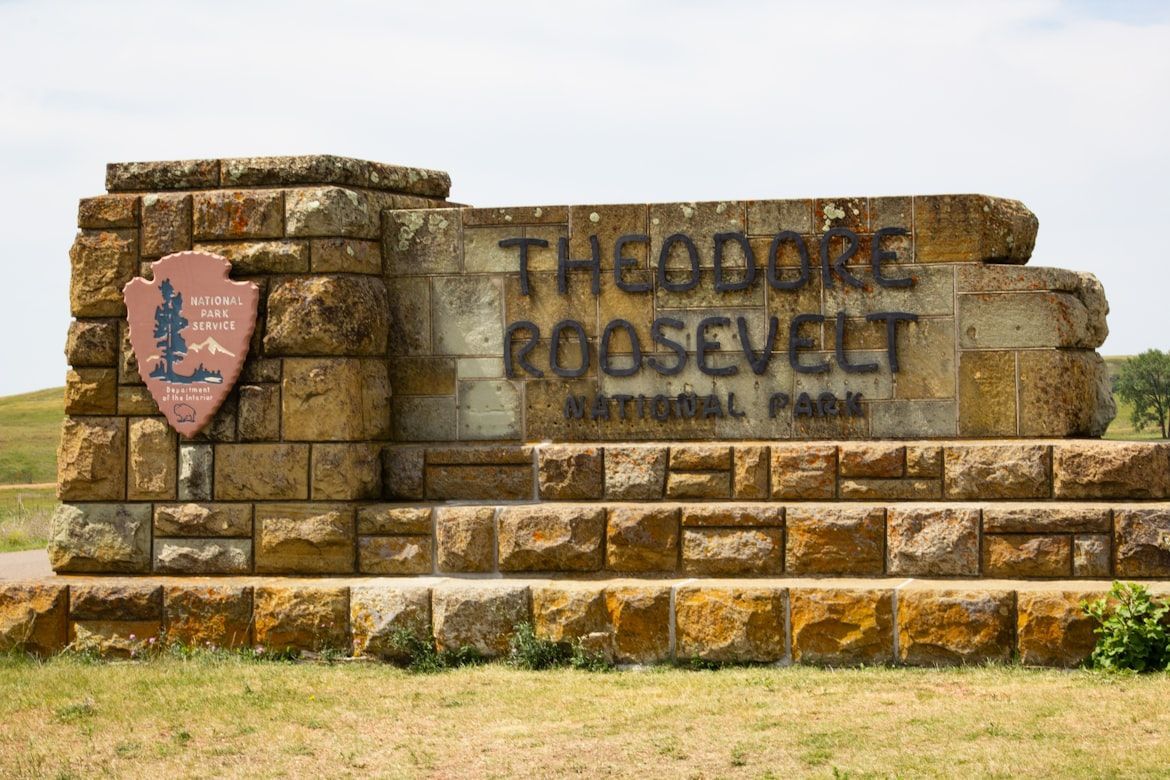
Theodore Roosevelt’s White House zoo

Image: Jaroslaw Slodkiewicz

Theodore Roosevelt didn’t just bring energy to politics; he brought it to pet ownership too. His home was a whirlwind of fur, feathers, and scales. Alongside horses and dogs, there were guinea pigs, a macaw, a badger, a snake named Emily Spinach, and even a bear called Jonathan Edwards. Roosevelt’s six kids were always introducing new creatures, turning the White House into a joyful, unpredictable zoo.

5
Woodrow Wilson’s tobacco-chewing ram

Image: Livin4wheel

Woodrow Wilson’s presidency wasn’t all about policy and world affairs. He also had a ram named Old Ike, who was known for chewing on cigars . Wilson kept a flock of sheep on the White House lawn during World War I to help raise money for the Red Cross by selling their wool. Along with dogs, birds, and a cat named Puffins, the Wilson White House looked more like a small farm than a seat of government.

6
Calvin Coolidge’s cheerful chaos

Image: Christian Hess Araya

If anyone rivaled Roosevelt’s menagerie, it was Calvin Coolidge. He and his wife, Grace, were devoted animal lovers. Their White House included twelve dogs, two cats, seven birds, a donkey named Ebenezer, two raccoons called Reuben and Rebecca, and even a bobcat named Smoky. Rob Roy, their white collie, was so beloved that he appeared in Grace Coolidge’s official portrait. With so many paws and claws around, quiet moments were rare, but laughter was constant.

7
Franklin D. Roosevelt’s loyal Fala

Image: Chris Arthur-Collins

Few pets have reached celebrity status quite like Franklin Roosevelt’s Scottish terrier, Fala . The little dog went everywhere with the president and even had his own fan club. When critics accused Roosevelt of forgetting Fala during a trip to Alaska, the president jokingly denied it in a speech that won over the crowd. Fala stayed faithfully by his side through good times and bad, a symbol of loyalty during some of the nation’s hardest years.

8
John F. Kennedy’s household of charm

Image: Gary Bendig

The Kennedys filled the White House with laughter and animals. Their pets included Pushinka, a gift from Soviet leader Nikita Khrushchev, who had puppies with the family’s dog, Charlie. The Kennedys gave the puppies to children who wrote to them. They also had horses, cats, birds, hamsters, and even a rabbit named Zsa Zsa . Caroline’s pony, Macaroni, became a favorite of photographers and fans, perfectly matching the family’s youthful, warm image.

9
Lyndon B. Johnson’s famous beagles

Image: Doğan Alpaslan DEMİR

Lyndon B. Johnson’s dogs, Him and Her, became almost as well known as their owner. Johnson once caused a stir by lifting one of them by the ears for a photo, but he truly loved his pets. He kept several dogs, along with birds and hamsters that entertained his family. Johnson was the last president to keep anything beyond the usual cats and dogs at the White House, marking the end of a particularly lively era for presidential pets.

10
Ronald Reagan’s ranch companions

Image: Florin Palamarciuc

For Ronald Reagan, animals were part of the good life. His dogs, Lucky and Rex, often joined him at the family ranch, where he could ride horses and enjoy the open air away from Washington. Rex even had his own miniature White House doghouse . The Reagans saw their pets as family and often talked about how much joy they brought to their lives, proof that even presidents need a wagging tail to make a house feel like home.

Explore more American facts

Choose your favorite category!

General
General

As American as apple pie—the very best America has to offer!

Culture
Culture

Delve into the astounding richness of American lore.

Geography
Geography

Hop in and explore vast and diverse American landscapes.

History
History

Discover the key moments that shaped the United States.