General General 3 min read

Pizza Paradise

Is your favorite pizza topping among the most popular in America?

Image: Polina Tankilevitch

Some swear New York makes the best pizza, while others argue Chicago's is unbeatable. But there's one thing we can all agree on: pizza is an undeniable staple of American cuisine. What's your favorite topping? It seems that most Americans have already set a clear trend. Join us to discover America's most popular pizza toppings!

1
Extra cheese

Image: Ivan Torres

Let's start with a wild card: extra cheese pizza. It's no surprise it's one of the most popular choices, with its unbeatable trio of classic ingredients: dough, a lot of mozzarella cheese, and a simple tomato sauce. And who doesn't like cheese?

However, its simplicity doesn't make it any less delicious; it can be one of the best pizzas you'll ever taste! And if you want to try something new, some suggest swapping mozzarella for provolone.

2
Pepperoni

Image: Alan Hardman

A total winner of all rankings, pepperoni pizza is undoubtedly one of Americans' favorites. And that's no surprise at all. The combination of delicious melted cheese with a tasty tomato sauce and spicy, smoky pepperoni slices makes it an irresistible variety for most palates. Is it your favorite, too?

3
Sausage

Image: Nadya Spetnitskaya

Thanks to pizza's unlimited variety of toppings, you don't have to pick between protein and carbohydrates; you can enjoy both!

Sausage pizza is now a staple on the menus of many restaurants and pizza chains. And it's no wonder, given that it's one of the most popular choices among Americans. Traditionally, pizza-makers opt for Italian sausage, but you can always choose your favorite type!

4
Mushrooms

Image: Lavi Perchik

Along with pepperoni, sausage, and extra cheese, mushrooms are also one of the most popular pizza toppings in America.

Because of their versatility, mushrooms are a great choice to complement any pizza, whether it's a vegetarian or a meat pizza. In addition, they are a recommended topping for their flavor, nutritional value, and low-calorie content.

5
Green Peppers

Image: engin akyurt

Green peppers also make the top 5. If sausage isn't your choice or you follow a vegetarian diet, green pepper pizza is likely one of your favorites.

The crunchy texture and slightly sweet flavor of green peppers make a fantastic team with pizza crust and tomato sauce, making it one of the most popular.

6
Onions

Image: Adonyi Gábor

There is an alternative that's a must-have on any menu: onion pizza. Although it may not have as many staunch and expressive fans as other varieties, onion pizza is actually one of the most requested options across the country.

Onion, like tomato and cheese, is a widely used ingredient in Italian cuisine, making it a classic that's also included in other varieties and sauces.

7
Black olives

Image: Carissa Gan

Black olives have earned a spot in this ranking, as it is a very appreciated option for those who demand a briny touch on their pizza.

Some people hate them, others love them, but if you've never tried black olives on your pizza, we recommend giving it a shot. Many people have tried them and come back for more!

8
Fresh garlic

Image: Sébastien Marchand

Hand in hand with onion, garlic is a must when it comes to giving a punch of flavor to food. And pizza is no exception. In fact, fresh garlic pizza is also one of the most widely eaten pizzas in America.

While it may not have as large a fan base as other toppings, those who choose garlic as their favorite are incredibly loyal! This variety offers an exquisite combination: Often paired with mozzarella cheese and olive oil, garlic gives a unique touch.

9
Margherita

Image: Aldward Castillo

If we talk about perfect combinations, we can't leave out the legendary Margherita, a fabulous Italian pizza. Created in the 19th century in Naples, Italy, this pizza was invented especially for the Queen Margherita of Savoy, with flavors that represent the Italian flag: the green of the basil, the red of the tomato, and the white of the mozzarella cheese. Irresistible!

10
BBQ Chicken

Image: serjan midili

Chain restaurants and pizzerias wouldn't be the same without the delicious BBQ chicken pizza, a blend of flavor, heartiness, and creativity.

If the more traditional varieties have bored you, this is the perfect option for you. With a combination of sweet and smoky, this variety is undoubtedly a top choice for those who appreciate audacious tastes.
History History 4 min read

Wild wild country

Remember the Storm of the Century? 10 storms that reshaped the U.S.

Image: Lillian Fisher

America has experienced weather events so violent and bizarre that they rewrote the record books, reshaped entire regions, and left scientists stunned. From blizzards that prompted urban reforms to heat waves that buckled rail lines, these 10 moments remind us that nature has a habit of pushing boundaries without warning.

1
A searing summer

Image: Stacey Martin

1936 North American Heat Wave (July 4, 1936)

During one of the worst periods in American history, the Great Depression, a relentless heat wave scorched much of the country, pushing temperatures to unprecedented highs that still haven’t been surpassed in many places.

The heat wave is blamed for more than 5,000 deaths, widespread crop failures, and worsening the environmental disaster already unfolding in the Dust Bowl.

2
Dust blizzard

Image: Bernd Dittrich

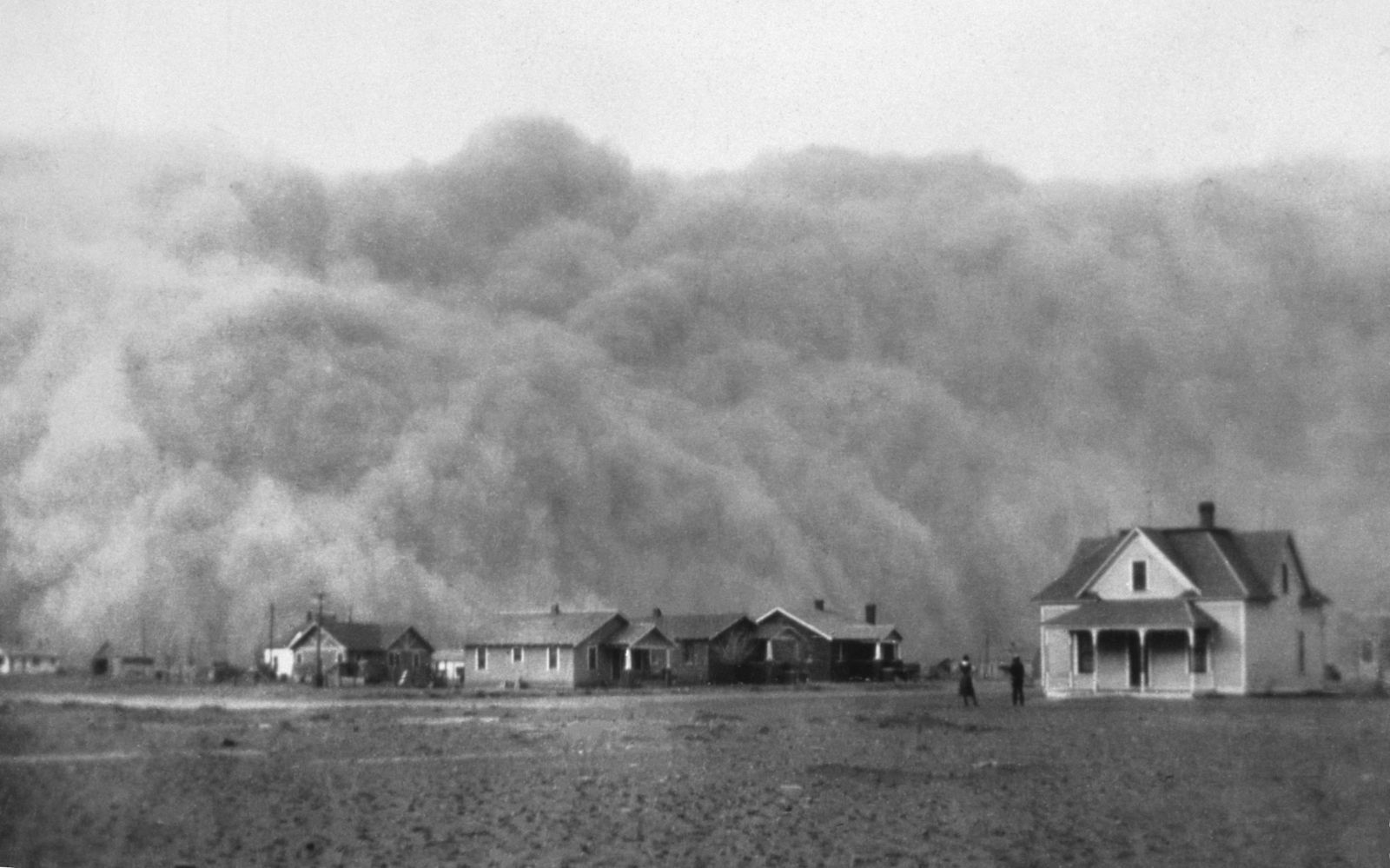
Black Sunday Dust Storm (April 14, 1935)

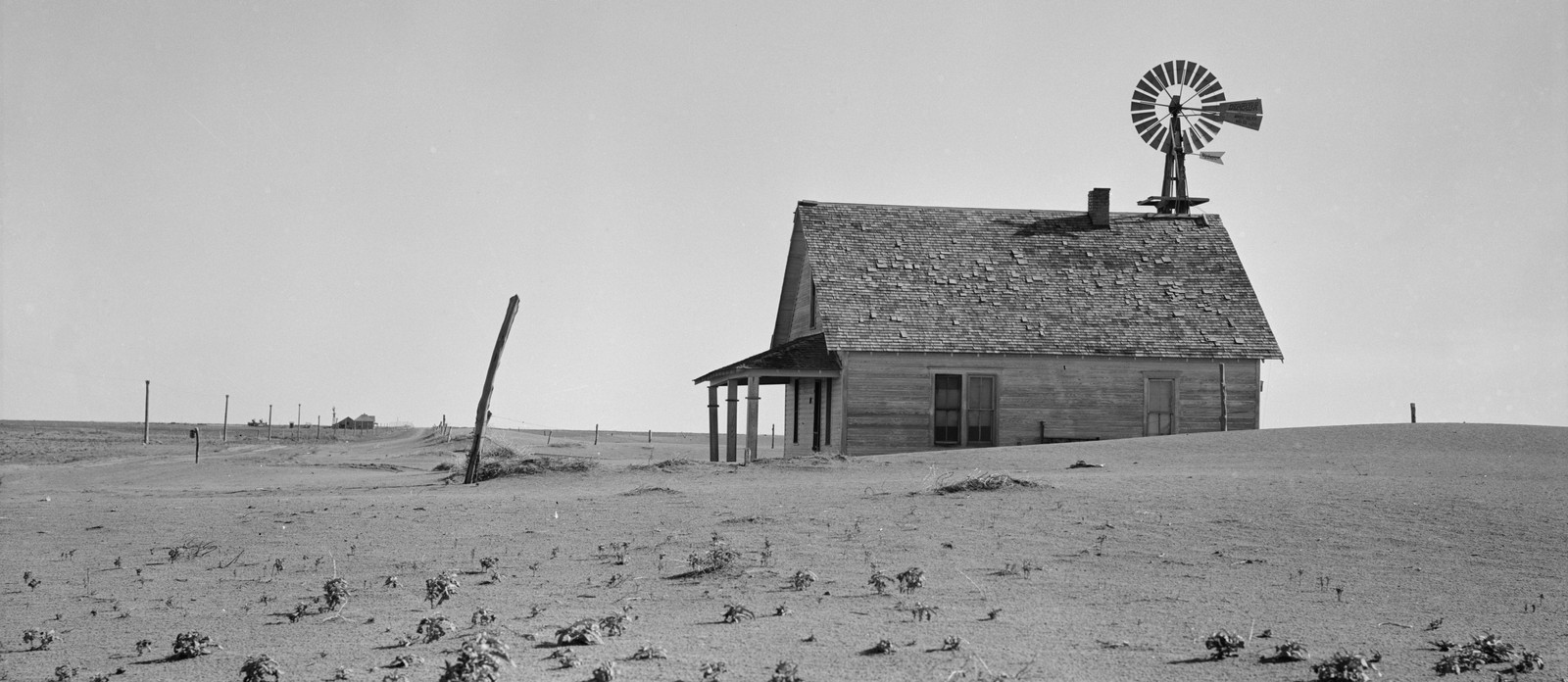
One of the most extreme dust storms in U.S. history, Black Sunday was emblematic of the Dust Bowl era. In April 1935, a massive "blizzard" of dust struck the Oklahoma and Texas panhandles and beyond, displacing an estimated 300,000 tons of topsoil and blackening the sky for miles.

The event devastated agriculture, displaced entire communities, and became a defining symbol of the environmental collapse that had been unfolding across the Great Plains for years.

3
The king of tornadoes

Image: Greg Johnson

2013 El Reno tornado (May 31, 2013)

This tornado set a record for width, possibly the widest ever documented in the U.S . On May 31, 2013, it expanded to a staggering 2.6 miles wide as it barreled south of El Reno, Oklahoma.

Doppler radar recorded sub‑vortices with wind speeds near 295 mph—among the highest ever observed—though damage assessments limited its official rating to EF‑3.

4
Straight‑line fury

Image: Moody Potato

2020 Midwest Derecho (Aug 10, 2020)

Beyond the challenges of COVID‑19, the 2020s were marked by an unusually destructive inland windstorm in the Midwest—rare for both its intensity and impact.

This derecho raced 770 miles across multiple states with wind gusts up to 140 mph, causing widespread structural and agricultural damage. To date, it remains the costliest thunderstorm event in U.S. history, with damages totaling more than US $11 billion.

5
Tornado armageddon

Image: Greg Johnson

2011 Super Outbreak (April 25, 2011)

The 2011 Super Outbreak—ominously nicknamed "Tornado Armageddon"—stands as one of the deadliest and most widespread multi-tornado events in U.S. history.

Over four relentless days, nearly 500 tornadoes tore through dozens of states ; April 27 alone claimed 316 lives. Overall damage surpassed $10.2 billion, cementing it as the costliest tornado outbreak ever recorded in the United States.

6
A storm to remember

Image: Patino Jhon

1993 Storm of the Century (March 12, 1993)

The massive nor’easter known as the Storm of the Century blanketed the eastern U.S. from March 12–14, 1993, permanently reshaping how winter storms are understood.

It delivered record snowfall—up to 56 inches in some areas—hurricane‑force winds, and sub‑zero temperatures, an entire arsenal packed into one deadly system. The destruction stretched from Canada to the Caribbean, causing $5.5 billion in damages and cutting power to more than 10 million households.

7
Wrath of the Mississippi

Image: Jonathan Ford

Great Flood of 1993 (April – October, 1993)

One of the most prolonged and costly inland floods in U.S. history, the Great Flood of 1993 resulted from record rainfall—over 40 inches in some areas—falling on already saturated soils from a wet fall and heavy snowmelt, overwhelming the Mississippi and Missouri River basins.

Between April and October, roughly 30,000 square miles were inundated across multiple states . At least 38–50 people died, damages reached $12–16 billion, and entire towns were submerged as levees failed and transportation networks collapsed.

8
Superstorm devastation

Image: NASA

Hurricane Sandy (October 22, 2012)

Also known as "Superstorm Sandy," this vast hybrid hurricane–extratropical storm struck the U.S. East Coast in October 2012, impacting 24 states. Its massive wind field— spanning nearly 1,000 miles —drove catastrophic storm surge into New Jersey and New York, while heavy rain, coastal flooding, and even blizzard conditions affected regions as far inland as the Appalachians.

Sandy claimed 160 lives, left over 8 million customers without power, and destroyed or damaged tens of thousands of homes and businesses. It was one of the costliest storms in American history and prompted major reforms in coastal preparedness and infrastructure.

9
Freshwater fury

Image: Matthew Rumph

Great Lakes Storm of 1913 (November 6, 1913)

From November 6–10, 1913, a massive winter storm swept across the Great Lakes region, bringing hurricane‑force winds and blizzard conditions . Ships capsized and sank, coastal towns were battered, and waves overwhelmed harbors across the lakes.

It remains the deadliest and most destructive natural disaster to strike the Great Lakes, with over 250 fatalities and catastrophic damage to maritime traffic and shoreline communities.

10
Whiteout chaos

Image: Zac Durant

The Great Blizzard of 1888 (March 11, 1888)

One of the most legendary winter storms in U.S. history, the Great Blizzard of 1888 struck the Northeast from March 11–14, dumping up to 55 inches of snow in parts of New York, Connecticut, and New Jersey . Snowdrifts buried homes, streets, and rail lines for days.

The storm killed more than 400 people and brought major cities like New York and Boston to a standstill. Telegraph lines collapsed, rail travel ground to a halt, and entire neighborhoods were cut off, prompting a long-term shift toward underground utilities and the expansion of subway systems in the decades that followed.

History History 6 min read

Nicknames with lore

What did Delaware do to be called 'The First State'?

Image: Emiliano Bar

U.S states often have more than one nickname, be it those officially adopted or those bestowed on the state by their neighbors (or their adversaries). Some are used as advertisements for their resources and attractions, some are a result of a unique quality of the territory and its people, and some are related to the state’s history and traditions. Here is the history behind 10 state nicknames you have certainly heard of, but never knew how they came to be.

1
New York, The Empire State

Image: Michael Discenza

Probably the most famous and recognizable state nickname, no one really knows who was the first to call New York State the "Empire State", but everyone agrees on the reason for the nickname. The state of New York has always been one of the richest, most developed, and strategically important territories in America , a powerhouse akin to an empire. George Washington himself had described it as "the seat of the Empire" in 1785, and many believe that these words were the source of the nickname.

2
Indiana, The Hoosier State

Image: Ginger Jordan

Another instantly recognisable nickname, the origin of the term ‘Hoosier’ is also widely debated. Believed to have emerged in the 1830s, some say that it is a deformation of the phrase "Who's here?". No matter its actual origin, the term was popularized by John Finley's 1833 poem "The Hoosier's Nest" , a description of rugged but welcoming Indiana pioneers, and it became a source of pride for the state, so much so that ‘Hoosier’ was officially adopted as a demonym by the state of Indiana in 2017.

3
Delaware, The First State

Image: Anthony Garand

Delaware was not the first colony to exist or to become a state. In fact, Delaware wasn’t even a colony: it was technically part of Pennsylvania. The ‘first’ referenced in the nickname alludes to Delaware’s role in the ratification of the U.S. Constitution , a task that took time and political compromise, as several states had concerns about the document and its articles. But while it took nearly two years for all the states to ratify the Constitution, it took less than three months for Delaware to do so unanimously, setting a precedent for other states.

4
Virginia, The Old Dominion

Image: Matthew Lancaster

Probably the oldest state nickname still in use, Virginia’s ‘Old Dominion’ nickname has existed for more than 400 years. The first English colony in America, Virginia was also the main colony to remain faithful to the monarchy during the English Civil War , supporting the exiled King, inviting him to take refuge in their territory, and resisting the siege from the Parliamentary fleet for a long time. After the restoration, King Charles II conferred the colony the title of ‘dominion’ —similar to a kingdom in rank— and affectionately called it "the most Ancient Colloney and Dominion."

5
Oklahoma, The Sooner State

Image: See page for author, Public domain, via Wikimedia Commons

Although it is now used as a symbol of a competitive and pioneering attitude, the term ‘Sooner’ was not always seen as positive. During the Land Rush of April 22, 1889, the U.S. government opened a territory —freed by the forced displacement of thousands on ative Americans— for pioneers to take. At noon, a bugle would signal that settlers could enter and claim areas of land. However, several pioneers broke the rules, entering the territory ‘sooner’ , before the signal. Initially a pejorative nickname, the people of Oklahoma eventually owned the term as a symbol of their ‘can-do’ attitude.

6
Connecticut, The Constitution State

Image: Rusty Watson

Unlike what many people think, Connecticut’s nickname is not related to the U.S. Constitution. In fact, the ‘constitution’ referenced in it predates the American Constitution by more than a century. Unlike other colonies, established by royal charters, the Connecticut Colony was established through The Fundamental Orders , a document delineating a representative government based on "the free consent of the people". The Fundamental Orders are considered to be the first written constitution in Western modern history, a fact that gave Connecticut its nickname.

7
Tennessee, The Volunteer State

Image: Scan by NYPL, Public domain, via Wikimedia Commons

Out of the many things that showcase Tennessee’s patriotism, none is as old or as well-documented as its volunteer vocation. Starting during the Revolutionary War, with the Appalachian Overmountain men volunteering to fight during the Battle of King's Mountain, Tennessee’s men's willingness to volunteer as soldiers became known during the War of 1812 , with hundreds fighting under Andrew Jackson’s command and earning Tennessee the name of the Volunteer State. To further solidify it, when President James K. Polk asked Tennessee for 2,800 volunteers during the Mexican-American War of 1846, the state responded to the call by sending 30,000 volunteer troops.

8
Vermont, The Brave Little State

Image: Bob P. B., CC BY 2.0, via Wikimedia Commons

A relatively more recent nickname than others in this list, the description of Vermont as a ‘brave little state’ dates back to 1928. After a flood in 1927 resulted in nearly 100 casualties and millions of dollars in damages, President Coolidge, a Vermont native, visited the state to assess the situation. Coolidge, often seen as calm and taciturn, gave an emotional speech praising the efforts and the resilience of his fellow Vermonters , and their ties to a land that gave them sustenance but posed the hazard of natural disasters. Coolidge ended his speech by acknowledging the generosity of the people of "this brave little state of Vermont", a phrase that became so popular that it was later inscribed in the Vermont State House and became a common nickname for the state.

9
Wisconsin, The Badger State

Image: Neil Bates

Though badgers can be found across Wisconsin, they are far less common than one would think, especially considering the state’s nickname. But this nickname has little to do with real badgers and much to do with people behaving like a badger. In the 1820s, prospectors all over America travelled to Wisconsin to look for lead ore. Working all day in the mines and lacking proper housing, the miners usually ended up living in the mines or digging holes in the hillsides to serve as shelter , which led people to compare them with burrowing badgers. Eventually, the ‘badger’ nickname became a symbol of the tenacity of the miners, and a point of pride for all Wisconsinites, who campaigned in 1957 to officially adopt the badger as their state animal.

10
Nebraska, The Cornhusker State

Image: Maize & Blue Nation, CC BY 2.0, via Wikimedia Commons

Though this famous nickname for Nebraska has ties with the agricultural identity of the state, it actually originated in the world of college football. Before 1900, the University of Nebraska football team had used several nicknames, such as Bugeaters, Tree Planters, or Rattlesnake Boys. Following a rough patch and wanting to give the team a new direction, sportswriter Charles Sherman suggested the nickname ‘cornhusker’ as a homage to the traditional corn husking done by hand by the Nebraska settlers . The name caught on and was eventually made extensive to all Nebraskans, being officially adopted by the state in 1945.

Explore more American facts

Choose your favorite category!

General
General

As American as apple pie—the very best America has to offer!

Culture
Culture

Delve into the astounding richness of American lore.

Geography
Geography

Hop in and explore vast and diverse American landscapes.

History
History

Discover the key moments that shaped the United States.