Culture Culture 6 min read

What’s in a name?

Nickname nation: How famous Americans earned their monikers

Image: JR Harris / Mitya Ivanov

Some people were great—we know that, we know their names and what they did. But some people were so extraordinarily great that they've earned a nickname that has stuck as firmly as their contributions . And we're not just talking about scientific contributions; we're talking about artists, athletes, and politicians, too. Have you ever wondered how "The Sultan of Swat" got his unique nickname? You don’t need us to tell you who "Lady Lindy" was. In this article, we’ve gathered 10 figures, their amazing nicknames, and the stories behind them.

1
The King of Rock and Roll

Image: Drew Beamer

Elvis Presley didn’t just sing rock and roll; he embodied it. With a signature blend of charisma, flashy outfits, and unmistakable dance moves, Elvis became a household name in the 1950s—but, of course, you knew that already.

His groundbreaking hits like "Jailhouse Rock" and "Hound Dog" resonated across generations, earning him the crown of "The King." The title wasn’t just about record sales, it also reflected his status as a cultural icon who changed the music scene forever. So much so that it is still the number one place in this article! He bridged gaps between musical styles, influencing countless artists to follow. His legacy lives on, proving that some kings don’t need a throne—just a stage and a guitar. Long live the King!

2
The Sultan of Swat

Image: Lesly Juarez

Baseball is one of the best American traditions, and some figures have even outgrown the sport to become national treasures. Babe Ruth is proof of that! The player had more than one nickname , but "The Sultan of Swat," was a tribute to his legendary baseball career.

He was known for his massive home runs and larger-than-life personality. With that, Ruth transformed baseball from a strategic game to a spectacle—a characteristic that is still true of the sport today. During his time with the New York Yankees, he set records that seemed untouchable, like his famous 60-home-run season in 1927. Crowds would pack stadiums just to watch him swing, and he rarely disappointed.

Ruth’s influence was undeniable, and he became a symbol of hope during the Roaring Twenties. After saying all this, "Sultan" doesn’t seem enough, don’t you think?

3
Moses

Image: Kirt Morris

No, we’re not talking about the real Moses, but what did Harriet Tubman have to do to earn a nickname like this? Let’s see.

The nickname is, of course, a comparison. Tubman was a heroic figure, and like the biblical Moses, she led people to freedom—only her path was the Underground Railroad.

Tubman escaped slavery herself , and as if that wasn’t remarkable enough, she then risked her life to guide others north to safety. Her bravery and strategic brilliance helped free over 70 individuals directly, and she advised countless others.

This was no easy task, as you can imagine. It involved evading slave catchers and facing all kinds of risks, especially during the night. After such heroic deeds, "Moses" was the fitting nickname!

4
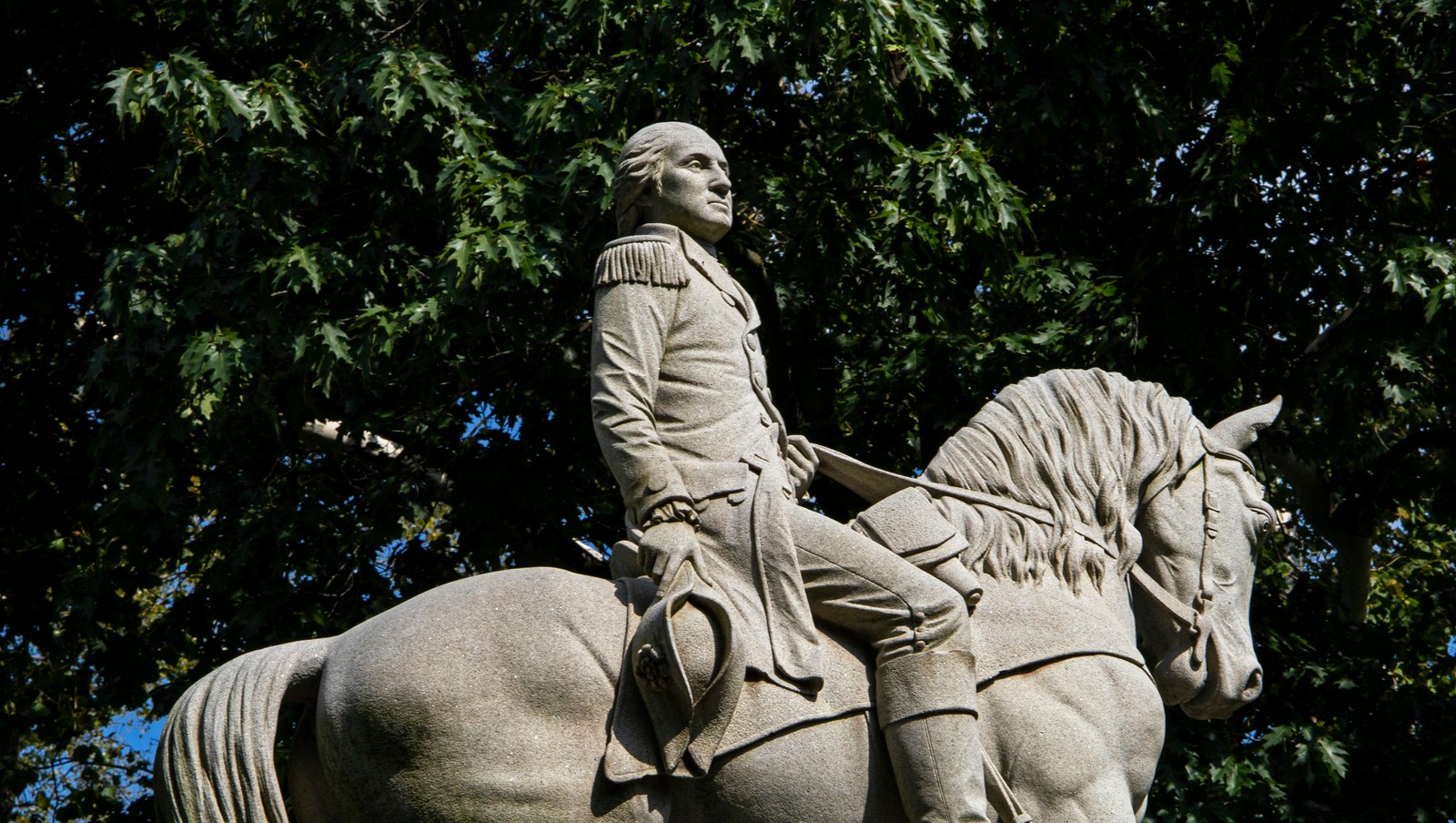
The Father of His Country

Image: Library of Congress

We can’t exclude Washington from this list and, even though he had more than one nickname, this one sums it all up perfectly: They don’t call George Washington "The Father of His Country" for nothing!

As the first President of the US , he essentially set the standard for everything, from leadership to integrity. But before becoming president, he led the Continental Army to victory in the Revolutionary War, helping America gain independence.

What’s truly remarkable? Well, we could just enumerate a long list of reasons, but the fact that he stepped away from power when he could’ve held onto it, was a move that showed his true character. He didn’t want to be a king; he just wanted a country where power was passed peacefully. He acted like a true father, and his legacy is as rock-solid as the monuments built in his honor!

5
Ol' Blue Eyes

Image: Andrea Riondino

Back to the music world and the stars our country has created, we need to mention Frank Sinatra’s nickname, "Ol' Blue Eyes," which perfectly captures his good looks (and served as great publicity, too!).

With a voice as smooth as velvet , Sinatra enchanted the world through classics like "My Way" and "New York, New York." But it was his piercing blue eyes that added to his mystique, charming audiences everywhere.

He wasn’t just a singer; he was a seasoned performer who brought a sense of drama and romance to every song. His career spanned decades, influencing both music and film. Now, did you know this wasn’t the only nickname? He was also known as "Chairman of the Board"—you can already imagine why!

6
The Greatest

Image: Nelson Ndongala

Not Muhammad, nor "The Greatest," he was actually born Cassius Marcellus Clay Jr. The story of how he came to be named Muhammad is tied to his religious choices, but "The Greatest" was simply a result of his dominance in boxing.

Muhammad Ali’s nickname wasn’t just bravado; he lived up to it with his unparalleled skill in the boxing ring . He moved his feet at a disorienting speed and had some witty pre-fight rhymes, Ali changed the way the world saw boxing. Ali won the heavyweight title three times and defeated legends like Sonny Liston and George Foreman.

Beyond the sport, Ali stood up for his beliefs. He refused military service on moral grounds and spoke out for civil rights. His legacy goes beyond boxing because Ali wasn’t just a fighter; he was a champion in every sense. He truly was the greatest!

7
Lady Lindy

Image: Tomas Martinez

This is the story every little kid should hear before going to bed, dreaming about adventures and dreams coming true. Now, aside from that, let’s see how Amelia Earhart got her nickname, "Lady Lindy."

This moniker is actually a nod to Charles Lindbergh , an American aviator who made the first non-stop flight from New York to Paris. In 1932, Earhart made history by becoming the first woman to fly solo across the Atlantic Ocean.

This may not sound impressive today, but her daring feats challenged gender norms and inspired women to pursue their own ambitions, something that wasn’t really encouraged back then! Even after her mysterious disappearance in 1937, she remains an icon of adventure and courage. She dared to dream—and to fly—big!

8
Old Hickory

Image: Elsa Olofsson

If America is great today, that’s because the first men who ruled dared to be brave! And Andrew Jackson wasn’t just brave—he was also tough as hickory wood . Andrew Jackson’s nickname "Old Hickory," was a testament to his grit and toughness.

As a general, he led troops to victory during the War of 1812, most famously at the Battle of New Orleans. His soldiers compared him to hickory wood, known for its resilience and strength. Jackson carried this reputation into his presidency, where he championed the common man and fought fiercely against political opponents. No president in US history escaped controversy, but his leadership style was as unyielding as his nickname suggests. Whether admired or criticized, Jackson’s stubbornness defined his legacy. Old Hickory, indeed, was as tough as they come.

9
The Queen of Soul

Image: Mick Haupt

If you get a nickname that starts with "King" or "Queen" you better be either Elvis Presley or Aretha Franklin. She wasn’t just a singer; she was the singer, which earned her the title "The Queen of Soul."

Her voice could move mountains, and she brought gospel roots to mainstream music with hits like "Respect" and "(You Make Me Feel Like) A Natural Woman." Aretha’s influence extended beyond her music—she became an emblem of civil rights and female empowerment. Her powerful performances transcended genres, and people all over the world adored her.

Even after her passing, her songs remain anthems of empowerment. Franklin’s reign over soul music is unchallenged and timeless. We couldn’t expect less—that’s the job of a true Queen!

10
The Man Behind the Mouse

Image: Travis Gergen

We say "Mouse" and you can only think of Mickey, and if we say "The Man Behind the Mouse," you can only picture Walt . And you’d be right, indeed!

Walt Disney’s nickname, "The Man Behind the Mouse," hints at the magic he brought to life with Mickey Mouse and hundreds of other iconic characters. He was a visionary entrepreneur who transformed the animation industry, creating classics like Snow White and Cinderella . But it was Mickey Mouse that started it all—a symbol of hope and imagination during the Great Depression.

That was the beginning, but certainly not the end as the little mouse quickly turned into theme parks, bigger studios, millions of merchandise products, and countless dreams for people all over the world!

Geography Geography 6 min read

Natural wonders worth the trip

From Crater Lake to Devils Tower: Top 10 landmarks in U.S. National Parks

Image: Adam Smotkin

America's national parks are among the most diverse and richest in the world. Deserts, forests, geysers, ancient trees, and giant mountains are just some of the most spectacular features our cherished national parks preserve within their boundaries. In this article, we have selected the 10 must-see landmarks you can’t miss when visiting U.S. National Parks.

1
Grand Teton and its central peaks

Image: Toan Chu

No matter how many national parks you visit, Grand Teton will always rank among the most beautiful in the country. As evocative as it is inspiring, this national park in northwestern Wyoming saw the arrival of the first settlers, the brave frontiersmen. It also offers some of the most breathtaking mountain scenery in the world and is a great place for climbing and hiking enthusiasts.

The highest mountain in the park is Grand Teton itself, standing at 13,770 feet, but there are 10 other peaks that reach an impressive height of more than 11,000 feet. The interesting thing is that, to the naked eye, these mountains appear even larger, since they all rise abruptly from the otherwise flat terrain of the Jackson Hole Valley. Six alpine lakes nestled in the foothills of the central peaks, along with a fascinating array of wildlife, complete the scenery of one of the best parks on the West Coast of the US.

2
Crater Lake in Crater Lake National Park

Image: Joris Beugels

The deep blue color of Crater Lake has been the objective of many attempted descriptions, but none comes close to the impact you feel when you see it with your own eyes. In fact, the first name given to it by non-native Americans was simply "Deep Blue Lake." This intense blue color is a result of the lake’s immense depth —reaching 1,932 feet at its deepest point—making it one of the world’s deepest lakes.

Located in south-central Oregon, this volcanic crater lake spans 5 miles in width and 6 miles in length, with a 20-mile shoreline. The dimensions and color are enough to attract visitors, but its setting, surrounded by lava cliffs ranging from 500 to 2,000 feet above the lake's surface, makes it all the more remarkable.

There are many ways to enjoy Crater Lake, which is beautiful all year round. In winter you can rejoice in a true winter wonderland, and in summer, you can hike the trails and go boating or fishing in the bright blue water.

3
Mount Rainier

Image: Peter Robbins

Perhaps the most famous peak in the Pacific Northwest’s Cascade Range is Mount Rainier. This dormant—but not extinct—ice-clad volcanic mountain stands at an impressive 14,410 feet. Though it is not the highest of mountains, Mount Rainier’s sheer bulk and the fact that it is set apart from its neighboring peaks make it the dominant landmark of the region. So much so that it is commonly referred to by locals simply as "The Mountain."

Located in Washington State, just 59 miles south-southeast of Seattle, Mount Rainier is visible from over 100 miles away on clear days. Rainier’s legendary beauty is as great as its overpowering size. Its 27 glaciers cover more than 34 square miles, making it the largest single-peak glacial system in the lower 48 states.

4
Half Dome in Yosemite

Image: Aaron Lee

Yosemite National Park in California is justifiably one of America's most famous and beloved parks. Its spectacular scenery is sure to impress even those who have seen practically every other park in the country. And, in turn, probably the most iconic landmark of Yosemite is Half Dome, a quartz monzonite batholith that rises 8,800 feet above sea level.

Once considered impossible to climb, Half Dome now draws thousands of adventurers to its distinctive, hooked summit each year. The 14- to 16-mile round-trip hike via the Half Dome Cable Route offers outstanding panoramic views of Vernal and Nevada Falls, Liberty Cap, Yosemite Valley, and the High Sierra. This is a journey you definitely can't miss!

5
Hyperion Tree in Redwoods National Park

Image: Josh Carter

Redwood National Park in Northern California protects nearly 140,000 acres of land and almost 40 miles of Pacific coastline. Bathed in a temperate rainforest climate, the park receives up to 140 inches of rainfall annually. This cool moisture, along with rich forest-floor soil and the trees' ability to sprout new buds, allows coast redwoods to reach lofty heights and venerable old age.

These exceptional conditions have made this park home to the world's tallest tree. Standing at an astonishing 380.3 feet, Hyperion, a Sequoia sempervirens , is considered the tallest living thing on record, including the plant and animal kingdoms. Most experts say it’s 600 years old, although some think it may be as old as 900 years. Currently, the exact location of Hyperion is not publicized to protect it from potential damage from mass tourism.

6
Mount Mckinley in Denali

Image: John Feng

Mount McKinley is the highest point in North America , standing at an awe-inspiring 20,320 feet. The almost-four-mile-high giant was known to the Native Americans of Alaska as Denali , "The Great One," a fitting tribute to one of the world’s best-known mountains.

During winter, on clear days, it is possible to see the glacier-capped summit, and the true power of nature manifests itself. In spring, when the snow melts, nature unfolds, wildflowers bloom, grizzly bears emerge from their long hibernation, and you can find mooses, caribous, foxes, and wolves roaming around the park for a memorable encounter with the wilderness.

7
Devils Tower National Monument

Image: Mick Kirchman

Devils Tower is one of the most recognizable landmarks, not only in Wyoming but in the entire United States. Rising 867 feet, this gigantic monolith is visible from up to 100 miles away on clear days! Devils Tower is particularly striking because of its huge, hexagonal rock columns, estimated to be around 50 million years old. The butte is also among the most unusual of the many geologic formations in the country.

Another interesting fact about Devils Tower is that it was designated as the first U.S. national monument in 1906 by Theodore Roosevelt, under the Antiquities Act, due to its scientific and scenic value. Native Americans have long regarded the Tower as a sacred site too. In fact, over 20 Native American tribes have a cultural connection with it, the Lakota people consider it the birthplace of wisdom.

8
Delicate Arch in Arches National Park

Image: Zoshua Colah

Spanning 76,680 acres of desert land, Arches National Park in eastern Utah protects more than 2,000 natural sandstone arches. But perhaps the most iconic one is the 52-foot-tall Delicate Arch. It’s so famous that its image appears on state license plates as well as on a postage stamp issued in 1996 to commemorate the 100th anniversary of Utah's founding. Fun fact: the Olympic torch for the 2002 Salt Lake City Winter Olympics even passed under this arch!

In addition to checking out its most emblematic landmark, this park is a great place to visit any time of the year thanks to its hot, desert climate . There are lots of activities for outdoor enthusiasts, from biking, horseback riding, and hiking to taking a minute to appreciate the colorful wildflowers while enjoying an idyllic sunset.

9
Old Faithful in Yellowstone National Park

Image: Emily Campbell

Yellowstone is probably the name people are most likely to associate with "national park" and is the very symbol of the American West. It was established by President Ulysses S. Grant in 1872 and is the largest megafauna location in the United States. Apart from its scenic mountains, wildflower meadows, and photogenic canyon, perhaps the most emblematic features of Yellowstone National Park are its geysers.

Among these, Old Faithful is certainly the most famous one. Erupting approximately every 90 minutes, it delights visitors with spectacular displays. Shooting up to 8,400 gallons of boiling water nearly 150 feet in the air, it was the first of its kind to be discovered in 1870 by the Washburn-Langford-Doane Expedition when they entered the Upper Geyser Basin. Today, Old Faithful attracts around 500,000 visitors a month.

10
Angels Landing in Zion National Park

Image: Fineas Anton

Zion National Park in southwestern Utah is famous for its brownish-red mountains with fantastic shades of purple and lilac, skinny slot canyons, and vertigo-inducing cliffs. The most paradigmatic of these rock formations is Angels Landing, a towering 1,488-foot monolith, accessible via a challenging 2.5-mile trail.

The best way to experience Zion is by hiking the trail that hugs the cliffside, crossing a narrow ridge flanked by sheer drops. Sounds too dangerous? Believe us, the reward is worthwhile. Atop Angels Landing you will not only have access to an epic view of Zion Canyon but it's also possible to spot California condors soaring gracefully between the sandstone monoliths, alongside 287 other bird species!

Culture Culture 4 min read

More than a dream

Was MLK's "I Have a Dream" speech improvised? Discover more!

Image: Tim Simons

We all know the legendary Martin Luther King Jr., the father of the civil rights movement and the man behind four words that changed the course of our nation's history: "I have a dream." However, Martin Luther King Jr. was a multifaceted man, and there’s probably much you don’t know about him yet . If you’re up for a surprise, join us as we explore 10 fun facts about MLK!

1
Federal holiday

Image: Kyrie kim

Every year in America, we celebrate Martin Luther King Jr. Day on the 3rd Monday of January. This date was chosen because MLK was born on January 15, 1929, which fell on a Thursday.

But did you know that MLK Day is the only US federal holiday that celebrates the birthday of someone who wasn't a US president? Can you guess what the other one is? That’s right—it’s Presidents’ Day, observed on the 3rd Monday of February in honor of George Washington’s birthday.

2
Not afraid

Image: Grant Durr

If there’s one thing that defines MLK, it’s his bravery. And just as he was not afraid to confront the oppressive norms of his time, neither was he afraid of jail. In fact, he was arrested between 25 and 30 times, always for reasons related to his nonviolent activism.

It was during one of these arrests, in 1963, that he wrote his famous Letter from Birmingham Jail.

3
Improvisation

Image: Demure Storyteller

Martin Luther King Jr.'s " I Have a Dream" speech remains one of the most famous speeches in the world to this day. Those powerful, inspiring words could only come from a brilliant mind. But did you know that part of his speech was improvised?

That's right! On August 28, 1963, MLK impressed the world from the Lincoln Memorial steps with a carefully prepared speech, but he also added spontaneous thoughts inspired by the excitement of the moment. In fact, the speech's most famous words—the ones that gave it its title—weren’t part of the original draft.

4
Star Trek fan

Image: Stefan Cosma

MLK was also someone who appreciated quality TV. He was known to be a fan of the original Star Trek series.

But he wasn't just a fan—he went on to influence the show! Actress Nichelle Nichols, best known for playing Lieutenant Uhura, was about to leave the show, but she met King, and he encouraged her to stay. He believed that Nichols' role was crucial in inspiring young African Americans.

5
Birth name

Image: insung yoon

The famous Martin Luther King Jr. was born on January 15, 1929, as Michael King Jr. in Atlanta, Georgia, named after his father, Michael King Sr. However, a few years later, that would change.

In 1934, after learning about Martin Luther, the leader of the Protestant Reformation, Michael King Sr. decided to change both his own name and his son’s to Martin Luther King Sr. and Martin Luther King Jr., respectively.

6
College at 15

Image: Priscilla Du Preez 🇨🇦

Martin Luther King Jr. skipped several grades and entered college at the young age of 15! Given his remarkable intelligence, this isn’t surprising, but his brilliance never fails to impress.

In 1944, he was admitted to Morehouse College in Atlanta, where he earned a Bachelor of Arts degree in Sociology. His studies there helped shape his critical perspective on society and its dynamics. Additionally, it was during his time at Morehouse that he decided to become a minister.

7
The first on Time

Image: NordWood Themes

Time magazine's Person of the Year (originally called "Man of the Year") debuted in 1927, with American aviator Charles Lindbergh gracing the cover.

It took 36 years for the first African American to earn this recognition. Of course, that honor went to Martin Luther King Jr., who was named Person of the Year in 1963 , following the historic March on Washington and his unforgettable " I Have a Dream " speech.

8
Julia Roberts!

Image: Nikhil Mistry

Just when you think there are no more surprises , here’s a fact that will astonish you: What do Martin Luther King Jr. and actress Julia Roberts have in common?

It turns out that Julia Roberts’ mom, Betty Lou Bredemus, was an active member of the Civil Rights Movement—even during her pregnancy—making her well-known to Martin Luther King Jr.'s family. And here’s the surprising part: MLK’s parents helped cover the medical expenses for Julia Roberts’ birth!

9
He lived to 39

Image: Unseen Histories

His impressive career, filled with groundbreaking achievements, might lead us to believe that he had many years to achieve all of it.

However, the minister was still a young man when he was tragically attacked on April 4, 1968, in Memphis, Tennessee. Sadly, Martin Luther King Jr. lived to be only 39 years old.

10
Writer

Image: Aaron Burden

MLK was not only a leader, activist, thinker, pastor, and Nobel Peace Prize winner; he was also a writer. That's right! King Jr. wrote several articles, letters, and books.

Among the most cited are his books Stride Toward Freedom: The Montgomery Story (1958), Strength to Love (1963), Why We Can't Wait (1964), Where Do We Go from Here: Chaos or Community? (1967), and the Letter from Birmingham Jail (1963).

Explore more American facts

Choose your favorite category!

General
General

As American as apple pie—the very best America has to offer!

Culture
Culture

Delve into the astounding richness of American lore.

Geography
Geography

Hop in and explore vast and diverse American landscapes.

History
History

Discover the key moments that shaped the United States.