General General 3 min read

What’s your dog of choice?

NYC, Sonoran, Italian, and more: 10 regional hot dogs

Image: Ball Park Brand

Hot dogs are not merely food, but an American institution in and of themselves. But what constitutes a proper hot dog? Residents of various states can only agree on two elements, a sausage and a bun, but even those elements can create controversy. And if we go into toppings, condiments, and cooking methods, well, we could be here all day. Let’s have a look at some of the most popular hot dog variants!

1
NYC

Image: Pedro Durigan

Buying a hot dog in New York City is as easy as breathing. Just get out on the street, and you will find a hot dog cart. The key components are simple, but tried and true. A beef frankfurter (usually boiled) on a hot dog bun, onions, and sauerkraut. For the condiments, mustard does the trick. Decades of New Yorkers repeating the recipe tell us that it works.

2
Chicago

Image: SuckerPunch Gourmet

Chicagoans do not share the New Yorkers' simple approach to hot dogs. They are all about the accoutrements. On a poppy-seed bun, a beef frankfurter is loaded with seven specific toppings: yellow mustard, white onions, sweet pickle relish, dill pickle, tomatoes, pickled peppers, and celery salt. Not for the faint of heart.

3
Cincinnati Coney

Image: Anju Ravindranath

One of the most famous coneys —or hot dogs topped with meat sauce—a Cincinnati-style hot dog takes toppings in a totally different direction. The usual frankfurter and bun (toasted, obviously) are now the vehicle for a spread of mustard, a generous scoop of Cincinnati chili —much more spiced than your regular chili con carne, with cinnamon, allspice, cumin, and cloves—, and a helping of finely-diced yellow onions. If you are in the mood for a cheese coney, you can add shredded cheddar cheese to your heart's desire.

4
Sonoran

Image: Jenna E.

Popular in Arizona but with roots in the Mexican state of Sonora, this hot dog proudly displays its ancestry. The typical bun is replaced by a Mexican-style bolillo bun, with a crunchy crust but a soft interior. The sausage is wrapped in bacon, grilled, and topped with onions, tomatoes, and pinto beans. Popular condiments include mustard, mayonnaise, and jalapeño salsa.

5
Kansas City

Image: Kelsey Todd

Kansas City deviates from the usual all-beef frankfurter. Instead, a pork sausage(grilled or steamed) is served on a sesame bun and topped with mustard, sauerkraut, and melted Swiss cheese. Another popular variant replaces these toppings with brisket burnt ends and barbecue sauce.

6
Michigan Coney

Image: U.S. Air Force photo by Airman 1st Class Riley Johnson, Public domain, via Wikimedia Commons

Allegedly born among Greek immigrants, the Michigan coney is much more straightforward than its Cincinnati counterpart. While the key elements are the same —an all-beef frankfurter on a steamed bun, topped with chili, mustard, and onions— they are set apart by the meat sauce. Where Cincinnati’s flavors rely on a multitude of spices, Michigan’s chili is beanless, meat-forward, and savory. Different, but not less comforting.

7
Italian Dog

Image: Sergio Contreras

A New Jersey delicacy, the Italian dog has multiple versions. The og recipe features a deep-fried sausage on an Italian roll, mustard, and a combination of fried peppers, onions, and potatoes. Variations include swapping the traditional hot dog for a different protein or replacing the potatoes with French fries. The addition of ketchup is a point of contention for locals.

8
Seattle

Image: Megumi Nachev

Seattle-style hot dogs feature an unlikely choice as their star ingredient: cream cheese. Created by a former bagel vendor, the original buns were also bagel-style; however, standard hot dog buns or hogies are now the norm. The buns are toasted and slathered with cream cheese, topped with a grilled sausage and caramelized onions. Jalapeños are also a common addition, and vendors might offer different types of cream cheese.

9
Cleveland Polish Boy

Image: Allen Rad

The star element of a Polish boy is, no doubt, the sausage. In this case, the choice is kielbasa, a smoked meat sausage, either grilled or fried. The typical toppings are barbecue sauce, French fries, and coleslaw. Fun fact: the Polish boy is the center of an ongoing discussion. While it has all the components of a hot dog, many consider it a sandwich.

10
Texas Tommy
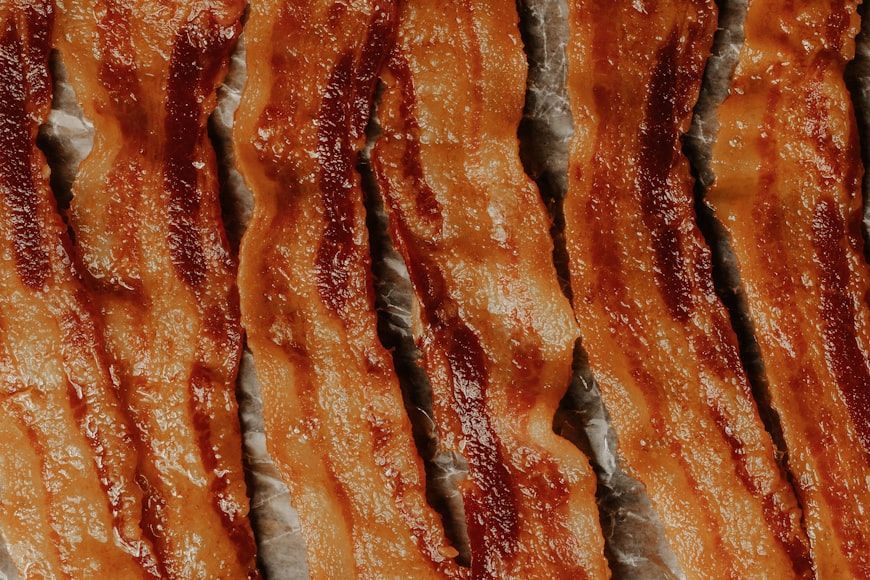
Image: Wright Brand Bacon

Don’t be fooled by the name; this hot dog comes from Philadelphia. Some say that ‘Texan’ was a common way to refer to all hot dogs, and it caught on. What makes a Texas Tommy different? The sausage is opened lengthwise, stuffed with cheese, wrapped with bacon, and then grilled or fried until the bacon is crispy. Considering all that’s going on with the sausage, toppings are left to the consumer’s discretion, although mustard, onions, chili, or extra cheese are popular choices.

Geography Geography 3 min read

A deep look at the map

America’s place names have wild origins – here are 12 of the strangest

Image: Mackenzie Cruz

Every place name has a story— especially in America ! While some come from Indigenous languages, others trace their origins to European tongues or ancient legends. These names are more than just labels; they offer glimpses into our past , revealing the diverse cultures and pivotal events that have shaped the nation. From Greek influences to names that predate European conquest, we've gathered 12 of the most fascinating origins behind America's place names.

1
Miami

Image: Avi Werde

Miami’s name comes from the Mayaimi people, who lived around Lake Okeechobee. The name itself is thought to refer to the "big water" of the lake, a defining feature for the region's Indigenous inhabitants.

2
Chicago

Image: Neal Kharawala

The name "Chicago" comes from the Potawatomi word shikaakwa, meaning "wild onion" or "wild garlic." These plants were once abundant along the banks of the Chicago River, and early French explorers who heard this term adapted it into the city's name.

3
Philadelphia

Image: Chris Murray

The name "Philadelphia" comes from the Greek words philos (love) and adelphos (brother). Founded in 1682 by William Penn, the city was intended to be a haven for religious freedom and peaceful coexistence—hence its name.

4
Cincinnati

Image: Matt Koffel

Cincinnati's name comes from the Society of the Cincinnati, a patriotic organization formed in 1783 to honor officers of the Continental Army. The society itself was named after Lucius Quinctius Cincinnatus, a legendary hero of the Roman Republic.

5
California

Image: Vital Sinkevich

The name "California" comes from Las Sergas de Esplandián, a 16th-century Spanish novel by Garci Rodríguez de Montalvo. The book describes a mythical island where gold could be found in great quantities. When Spanish explorers reached the Baja Peninsula, they mistakenly believed it was an island and, inspired by the novel, named it after the fictional paradise.

6
Boise

Image: Attorney Sluice

The name "Boise" comes from the French word boisé, meaning "wooded" or "forest." French fur traders were some of the earliest European explorers in the region, and they named the Boise River after observing the thick forests that lined its banks.

7
Albuquerque

Image: Raychel Sanner

Albuquerque was named by the Spanish in the 18th century, but its origins trace back to the Latin words albus (white) and quercus (oak), referring to the white oak trees that are found in the area.

8
Mississippi River

Image: Mathew Benoit

The Mississippi River gets its name from the Ojibwe word Misi-ziibi, meaning "Great River." Certainly a fitting name, given the river’s key role in the development of American trade and transportation, a vital route for settlers and Indigenous people alike.

9
Yellowstone National Park

Image: Meina Yin

Yellowstone National Park takes its name from the Yellowstone River, which was in turn named by fur trappers who used the word "yellow" to describe the river’s striking sandstone cliffs . Established in 1872, Yellowstone became the first national park in the U.S., preserving its unique geological and natural wonders.

10
Appalachian Mountains

Image: Elijah Mears

The Appalachian Mountains, among the oldest in the world, take their name from Apalachee , a term used by the Spanish to refer to a Native American tribe in northwestern Florida . Interestingly, the name was later applied to the distant mountain range, despite no direct connection between the two—perhaps they had run out of names?

11
Niagara Falls

Image: Sergey Pesterev

Niagara Falls takes its name from the nearby Niagara River, which derives from the Iroquois word Onguiaahra , meaning "the strait" or "narrow water." Unsurprisingly, given their breathtaking beauty, the falls have long been a significant natural landmark for both Indigenous peoples and European explorers.

12
Adirondack Mountains

Image: Ty Finck

The Adirondack Mountains in New York are believed to take their name from the Algonquin word adirondacks , meaning "they eat trees" or "bark eaters." This name likely referred to another group of Indigenous inhabitants who relied on the region’s lush forests for food and shelter.

General General 4 min read

Science usually starts as science fiction

Trip to Mars, anyone? Discover 10 American science fiction authors

Image: RDNE Stock project

It takes a special kind of talent to be a science fiction writer. Whether you are writing about a dystopian future or a utopian one, you are creating a new world with its own rules and systems to guide it. Long before Elon Musk started seriously considering a trip to Mars, science fiction authors were already exploring how this might turn out. Many writers have attempted this genre, but only a few have made a significant impact. The following ten belong to that prestigious group. If you haven’t read any of these authors, we encourage you to do so. Not only is it a lot of fun, but it also fuels your own imagination.

1
Ray Bradbury

Image: Rod Long

Perhaps the most emblematic name in American science fiction, Ray Bradbury was an author and screenwriter best known for his novel Fahrenheit 451 , and his short story collections The Martian Chronicles , and The Illustrated Man .

His works not only imagine what extraterrestrial colonies might be like but also explore how such experiences would affect humans on a deeply personal level. His prose is both poetic and informative, making it accessible to both young and adult readers alike.

2
Philip K. Dick

Image: Filip Filkovic Philatz

If you’ve ever seen the movie Blade Runner or the TV series The Man in the High Castle , then you’ve been exposed to the work of Philip K. Dick. This prolific novelist wrote numerous novels and short stories that explore philosophical and social questions such as the nature of reality, human nature, and characters struggling against illusory environments, monopolistic corporations, and authoritarian governments.

His novel Do Androids Dream of Electric Sheep? was the basis for Blade Runner and his works have earned him countless awards all over the world.

3
William Gibson

Image: Brian McGowan

The creator of the now-ubiquitous term "cyberspace," William Gibson was a speculative fiction writer whose works explore the effects of technology, cybernetics, and computer networks on humans (fans of Black Mirror will likely find this author to their liking).

His first novel, Neuromancer , was credited with revitalizing science fiction literature in the 1980s, and he was described in 1999 as "probably the most important novelist of the past two decades.

4
L. Ron Hubbard

Image: Luna Wang

"While he is now more famous for founding Scientology, L. Ron Hubbard was a genuine science fiction writer who authored works such as Battlefield Earth, To the Stars, Buckskin Brigades, and Death’s Deputy , among other titles.

Hubbard was quite a prolific pulp science fiction and fantasy writer in his early career and, in 1950, he published Dianetics: The Modern Science of Mental Health , establishing organizations to promote and practice Dianetics techniques.

5
Theodore Sturgeon

Image: Rod Long

A critic turned writer, Theodore Sturgeon wrote over 120 short stories, 11 novels, and even a handful of scripts for the original Star Trek television series. His first science fiction novel, More Than Human , won the 1954 International Fantasy Award for that year's best novel.

Though he was not as well known to the general public as contemporaries like Isaac Asimov or Ray Bradbury, Sturgeon gained recognition among readers of mid-20th-century science fiction anthologies. At the height of his popularity in the 1950s, he was the most anthologized English-language author alive.

6
Alfred Bester

Image: Steve Johnson

One of the few writers credited with inventing modern science fiction, according to one of his colleagues, Alfred Bester was an author, TV, radio, and comics scriptwriter, and magazine editor. His novel, The Demolished Man , was the first winner of the Hugo Awards in 1953.

While working as a scriptwriter for DC Comics, he created the supervillain Solomon Grundy and also wrote extensively for television, magazines, and radio.

7
H. P. Lovecraft

Image: Alejandro Piñero Amerio

An author whose work is as famous in the science fiction genre as it is in horror, H. P. Lovecraft was a writer of science fiction, fantasy, horror fiction, and a mixture of all these genres. His most notable work is the Cthulhu Mythos .

Some of his more popular works include The Call of Cthulhu, At the Mountains of Madness, The Shadow over Innsmouth , and The Shadow Out of Time . The central theme of his books is cosmicism, a theory dictating that "there is no recognizable divine presence, such as a god, in the universe, and that humans are particularly insignificant in the larger scheme of intergalactic existence."

8
Frank Herbert

Image: Pierre Bamin

Franklin Patrick Herbert Jr. is best known for writing the best-selling science fiction novel of all time, 1965's Dune , along with its five sequels. He also wrote short stories and worked as a newspaper journalist, photographer, book reviewer, ecological consultant, and lecturer.

His famous saga, set in the distant future and spanning millennia, explores complex themes, such as the long-term survival of the human species, human evolution, planetary science and ecology, and the intersection of religion, politics, economics, sex, and power in a future where humanity has long since developed interstellar travel and colonized thousands of worlds.

9
Ursula K. Le Guin

Image: Karsten Klemme

With a literary career spanning nearly sixty years, Ursula Kroeber Le Guin is another legendary name on this list. She is best known for her works of speculative fiction, including science fiction works set in her Hainish universe and the Earthsea fantasy series.

Frequently described as a science fiction author, Le Guin has also been called a "major voice in American letters," though she once said she would prefer to be known as an "American novelist."

10
Orson Scott Card

Image: Greg Rakozy

The only person to have won a Hugo Award and a Nebula Award in consecutive years, both for his novel Ender’s Game , and its sequel, Speaker for the Dead , Orson Scott Card is a science fiction writer who often features characters with exceptional gifts who make difficult choices with high stakes. Since 1979, he has published over 50 novels and 45 short stories.

During his childhood, Card read children's classics and popular novels, his favorite book being Mark Twain's The Prince and the Pauper . He often refers to works by Robert A. Heinlein and J. R. R. Tolkien as sources of inspiration.

Explore more American facts

Choose your favorite category!

General
General

As American as apple pie—the very best America has to offer!

Culture
Culture

Delve into the astounding richness of American lore.

Geography
Geography

Hop in and explore vast and diverse American landscapes.

History
History

Discover the key moments that shaped the United States.