General General 2 min read

Shocking the neighbors

These things are not as common outside the US

Image: Jennifer Kalenberg

America is a land of unique customs and rituals, many of which leave outsiders scratching their heads. From super-sized food to partying habits, these traditions reflect the country’s history, creativity, and widespread patriotism. Here are 10 American practices that are often admired, misunderstood, or simply confusing to people abroad.

1
Tipping everywhere

Image: Sam Dan Truong

Americans tip for almost every service, from coffee to taxis. The standard is 15–20% of the bill. Unlike most countries where service charges are included, tipping is often expected and essential for workers’ income.

Restaurants, bars, and even hair salons rely on it. Since this is not as common elsewhere, tourists often miscalculate or under-tip, causing awkward interactions.

2
Super-sized portions

Image: Nima Naseri

Restaurant portions in the U.S. are notoriously large, often doubling or tripling international standards.

This stems from both historical abundance and marketing strategies that equate quantity with value. All-you-can-eat and combo meals reinforce the "more is better" mentality.

3
College tailgating

Image: Josh Applegate

Fans arrive hours before football games, grilling and partying in parking lots. Tailgating mixes sports passion with social gatherings, showing regional pride and university loyalty.

This uniquely American tradition often shocks outsiders with the devotion shown to local sports.

4
Black Friday mania

Image: Artem Beliaikin

Originating in Philadelphia in the 1960s, Black Friday marks the start of the holiday shopping season. It’s a consumer spectacle tied as much to capitalism as to tradition.

Retailers use extreme discounts to generate sales; the frenzy often leaves international observers bewildered by the ensuing chaos.

5
Wearing patriotic clothes year-round
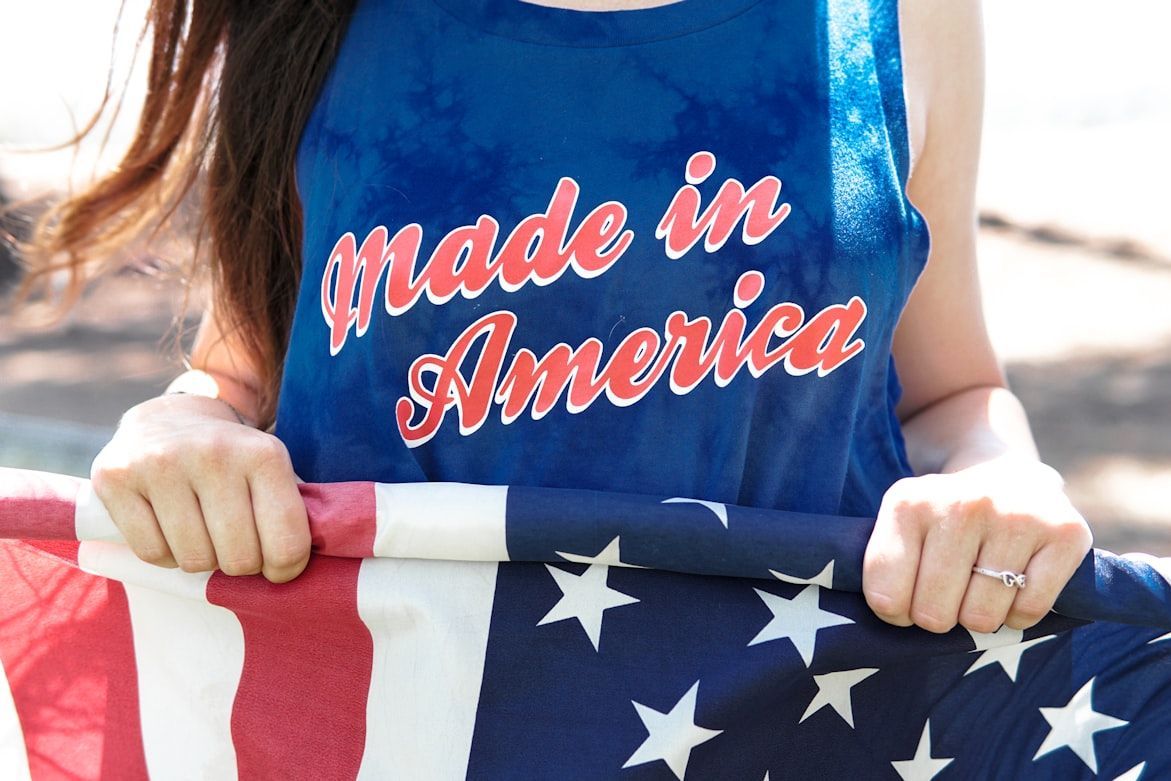
Image: Shari Sirotnak

Americans often wear flag-themed clothing even outside national holidays. The practice intensifies during major sporting events, but displaying the flag as apparel reflects civic pride in everyday life.

For many outsiders, wearing a flag as clothing seems unusual, yet this custom embodies American individualism and patriotism.

6
Driving everywhere

Image: why kei

Unlike many countries with extensive public transit, Americans rely heavily on cars. Suburban expansion and urban planning favor personal vehicles.

Gas prices, infrastructure, and cultural identity reinforce driving as normal. Tourists accustomed to walking or trains find long drives mandatory, and as a result, the layout of U.S. cities is unusually spread out.

7
High school proms

Image: Long Truong

Proms evolved in the 20th century as a rite of passage. Teenagers dress formally for dances with elaborate rituals, including crowning kings and queens.

While other countries almost always have some form of graduation celebrations, the formality, expense, and emphasis on dating customs in American proms often confuse foreigners.

8
Obsession with college sports
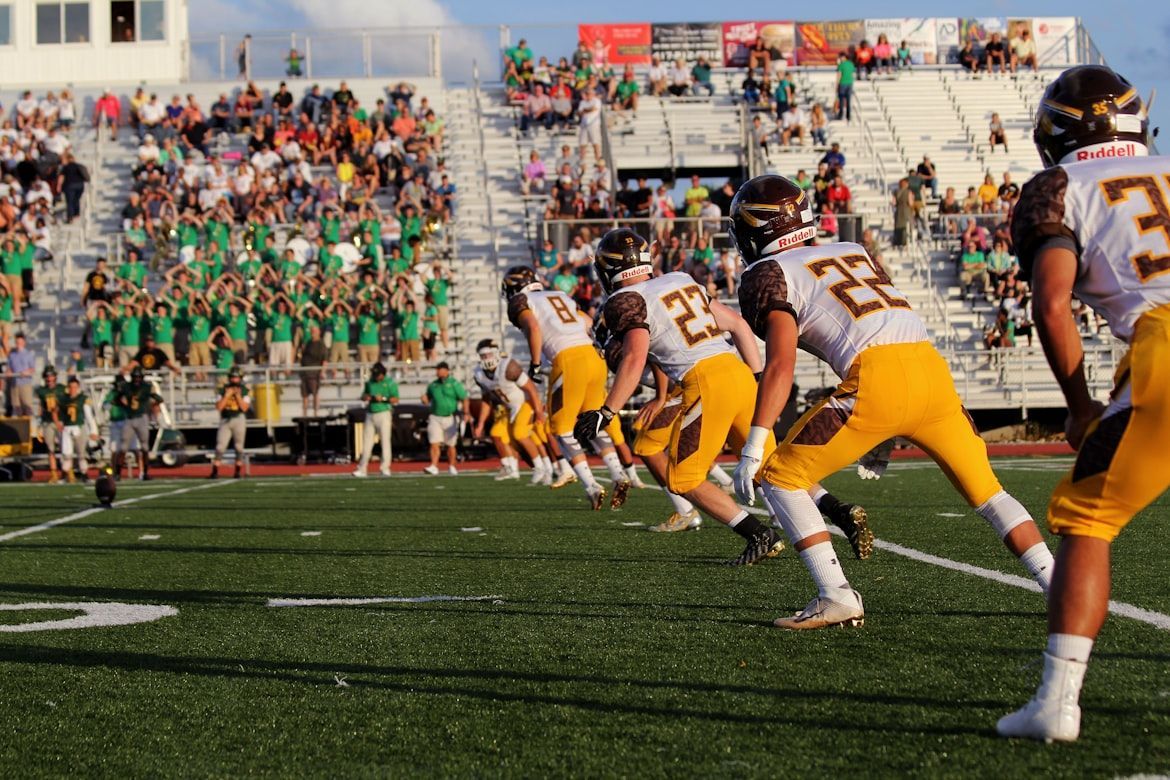
Image: Riley McCullough

Universities dominate cities with massive stadiums and fanfare. College football and basketball inspire loyalty rivaling professional leagues.

The intensity is unusual internationally, where professional sports typically overshadow collegiate athletics.

9
Yard sales

Image: Clem Onojeghuo

Communities host sidewalk sales for secondhand goods. This tradition emphasizes recycling, community interaction, and bargain hunting.

This casual sale of used goods in public spaces is uncommon in many countries, making it a uniquely American practice.

10
Spelling bees

Image: Brett Jordan

Americans hold intense competitions where kids spell increasingly difficult words aloud. Spelling bees originated in the 19th century as educational contests, promoting literacy and vocabulary skills.

The National Spelling Bee, held annually since 1925, draws contestants nationwide and often surprises outsiders due to English’s tricky spelling rules.

Culture Culture 5 min read

HOLLYWOOD REGRETS

What If: 10 Actors Who Turned Down Big Roles

Image: Shlag / Kal Visuals

Forrest Gump played by an actor other than Tom Hanks? What would "Gone with the Wind" be like with Cary Grant in the lead role? Or the blockbuster "Titanic" without Kate Winslet as Rose? Characters become classics mostly thanks to the actors who bring them to life. Hollywood history is full of examples in which incredibly famous characters came close to being played by someone else . In this article, we present 10 stars who, for various reasons, dropped iconic roles that ended up being played by other actors who knew exactly how to make the most of them.

1
Sean Connery, The Lord of the Rings

Image: Thomas Schweighofer

One of the actors who has turned down the most iconic roles in cinema history is probably Sean Connery. For example, he passed on to interpret the evil cannibal in "The Silence of the Lambs", which later earned Sir Anthony Hopkins an Academy Award for Best Actor.

But perhaps the most curious decision of his career was to refuse the role of Gandalf in the 2001 adaptation of "The Lord of the Rings". The producers went so far as to offer him up to ten million dollars and 15% of the film's profits, which would have amounted to around 400 million dollars. Years later the actor declared that he didn’t understand the script and that he didn’t find Tolkien's work attractive enough. Go figure!

2
Gwyneth Paltrow, Titanic

Image: David_Do

More than 25 years after its premiere, we can’t imagine any actress other than Kate Winslet playing the young socialite Rose Bukater in Titanic . However, the director's first choice for the role was American actress Gwyneth Paltrow . After reading the text, Paltrow told her agents that she found the story too corny and ended up turning down the role.

James Cameron's film was a box-office success and Winslet was nominated for an Oscar for her work . But there was another plot twist: a year later, in 1988, the British actress turned down the "Shakespeare in Love" project for which Paltrow won the golden statuette.

3
Al Pacino, Star Wars

Image: Saksham Gangwar

Al Pacino, who starred in great films such as "The Godfather" and "Scent of a Woman", admitted that he was offered the role of Han Solo in "Star Wars", but didn’t accept it because he didn’t understand George Lucas' script .

Recently, he said at an event: "They offered me so much money. I don't understand it.... So I said I couldn't do it. I gave Harrison Ford a career." Truth be told, other actors like Christopher Walken didn't trust the project either . Perhaps in the mid-1970s, no one could have imagined that this fantasy saga would become a multi-million franchise still widely revered by audiences to this day.

4
Marilyn Monroe, Breakfast at Tiffany’s

Image: pure julia

Starring an iconic Audrey Hepburn, "Breakfast at Tiffany’s" was released in 1961. That role marked a turning point in Hepburn’s career, consolidating her as a serious actress. However, Truman Capote, author of the original novel, was totally against her being the protagonist .

Apparently, he wrote the story with Marilyn Monroe as the carefree Holly Golightly in mind . As it turns out, Monroe's acting coach rejected the idea because she didn't want the actress to play "a lady of the night." Capote was never happy with the result and even said, "It is the most miscast film I've ever seen. It made me want to throw up."

5
Gary Cooper, Gone with the Wind

Image: Ian Wagg

Producer David O. Selznick's first choice for the role of Rhett Butler in "Gone With the Wind" was the great Gary Cooper. However, the actor from "The Virginian" didn't want it, and he showed it quite strongly. Cooper reportedly predicted that the film would be the biggest flop in Hollywood history . He allegedly said, "I'm just glad it'll be Clark Gable who's falling on his face and not Gary Cooper."

Of course, he couldn't have been more wrong. Not only is the film considered one of cinema's greatest masterpieces, but it also earned Clark Gable an Oscar nomination for Best Actor and made him one of the most iconic actors of the 20th century. Did Cooper regret it later?

6
Kim Basinger, Basic Instinct

Image: Vlad Deep

Sharon Stone's name will always be associated with the thriller "Basic Instinct" and that famous leg-crossing scene. Although it was the role that made her famous, she got it because other actresses such as Julia Roberts, Michelle Pfeiffer, Geena Davis, Kathleen Turner, and Meg Ryan had previously rejected it.

In the beginning, the film's leading man, Michael Douglas, had recommended Kim Basinger , who had already starred in the erotic romantic drama "9½ Weeks" in 1986. However, Basinger considered Paul Verhoeven's film too extreme for her and chose not to do it. In the end, "Basic Instinct" was one of the highest-grossing films of 1992, although not without controversy.

7
John Travolta, Forrest Gump

Image: Yosuke Ota

The producers' first choice to play the lead role in "Forrest Gump" was John Travolta . The "Grease" and "Saturday Night Fever" actor turned down the role that would later earn Tom Hanks his second Academy Award.

With hindsight, however, we know that Travolta did the right thing . Besides the fact that we couldn't imagine anyone else playing the tender, naïve Forrest, Travolta said no because he had another project in the works. That other film ended up giving him the best character of his entire career: Vince Vega in Pulp Fiction —probably also Quentin Tarantino's best film.

8
Molly Ringwald, Pretty Woman

Image: Look Studio

Vivian Ward's character in "Pretty Woman", which made Julia Roberts a star and for which she won a Golden Globe, had been previously offered to Molly Ringwald . At just twenty years old, Ringwald was already an icon and a reference for the girls of her generation and one of the most sought-after and best-positioned actresses in Hollywood. However, she decided to turn down the offer and go to Paris.

Around that time, she also didn't land roles in "The Silence of the Lambs" and "Working Girl". Those decisions cost her dearly and although she tried to resume her career in the United States years later, it was not easy for her to regain the star status she had had during the 80s.

9
Leonardo DiCaprio, Boogie Nights

Image: Regina Valetova

Leonardo DiCaprio as charismatic porn star Dirk Diggler? Believe it or not, it could have happened. However, at the time DiCaprio felt that director Paul Thomas Anderson didn't have much experience and turned down the lead role in "Boogie Nights" to make "Titanic".

Years later, Di Caprio said in an interview that the 1997 period drama was a film he would have loved to make. "Boogie Nights" is certainly both an audience and critics favorite and the one that catapulted Mark Wahlberg to fame. But if Di Caprio hadn't starred in "Titanic", would he have the career he has today? Luckily, we'll never know!

10
Bette Midler, Sister Act

Image: cottonbro studio

The lead character in "Sister Act" had originally been written for Bette Midler . However, the actress, singer, and comedian was hesitant because she was worried that her fans would not want to see her play a nun.

Producers pestered her for several weeks but Midler felt she could wear anything but a nun's costume and ended up not accepting it. The job eventually went to Oscar winner Whoopi Goldberg who, due to the film's huge success, returned for a sequel in 1992.

General General 5 min read

CONCRETE JUNGLE

Explore “The Big Apple” With These 10 Iconic New York City Landmarks!

Image: Barth Bailey

Is New York the most iconic city in America, if not the world? Countless songs and books have been written about 'The City That Never Sleeps.' From its jaw-dropping architecture to its amazing culture, New York City draws millions of tourists every year. Naturally, this magnificent metropolis can be a bit intimidating for first-time visitors. Bearing that in mind, we have selected ten of the most iconic NYC landmarks that celebrate everything that makes this city so wonderful. Enjoy!

1
Statue of Liberty

Image: Erik Lindgren

We’ll start with what’s probably this city’s most famous icon. Lady Liberty has welcomed the "huddled masses" that arrived in NYC since the 19th century. You probably know that this statue was a gift from France to the American people, but did you know Gustave Eiffel, the engineer behind the iconic Eiffel Tower, built its metalwork?

Another fun fact: While nowadays the Statue of Liberty is world-known for its green hue, this wasn’t always the case. In fact, when she was inaugurated in 1886, Lady Liberty sported a reddish-brown color more befitting of copper , the metal she is made of. However, after years of oxidation due to exposure, the statue eventually became green.

2
Empire State Building

Image: Dana Andreea Gheorghe

The state of New York’s official nickname is "The Empire State": Some credit George Washington with coming up with this term, inspired by this state’s wealth and disposition. In that sense, this magnificent skyscraper stands as a proud homage to this sentiment and is one of the most recognizable figures in NYC’s skyline.

This 102-story skyscraper is located in the Manhattan borough and was, for a while, the tallest building in the world. It has been featured in over 250 films and TV shows since one of the most iconic scenes in movie history was filmed there: 1933’s King Kong showed the titular giant ape perched on top of the tower.

3
Brooklyn Bridge

Image: Brandon Day

At the time of its inauguration in 1883, the Brooklyn Bridge was the longest suspension bridge in the world: It stood as an engineering masterwork, both for its length and its innovative and unique design. But what’s truly amazing is that the Brooklyn Bridge has continued to amaze and inspire millions of New Yorkers for over 140 years.

The bridge was designed by John A. Roebling, assisted by his son and chief engineer Washington Roebling. This NYC landmark eventually became a family affair: After John Roebling fell ill and was bedridden, his wife Emily contributed to see the project to completion.

4
Broadway

Image: Eddie Bugajewski

Looking for a night at the theatre? Then Broadway is the place to be. This street is synonymous with excellent plays and musicals, up to the point that it has become a metonym for the entire industry. Broadway offers 41 professional theaters, each with 500 seats or more, offering quality performances for thousands of people each year.

Alongside London West End’s district, Broadway is known as the highest level of theater entertainment in the English-speaking world. In that sense, Broadway represents the crème de la crème of American theater, up to the point of inspiring the name of other NYC theaters, which are known as "Off-Broadway" or "Off-off-Broadway".

5
Central Park

Image: Dana Andreea Gheorghe

Looking for a quick stroll through green scenery? Then head on to the most famous NYC park. While definitively the most iconic, you might be surprised to learn that Central Park is not the biggest park in the city: In fact, it’s only in sixth place. Having said that, this iconic location is still massive enough to fill a big part of New York City’s skyline with its lush green.

Central Park was built over a period of approximately 50 years during the 19th century, from its proposal in the 1840s to its completion in 1876. Nowadays, it features several iconic monuments and features, like the USS Maine National Monument, the Strawberry Fields Memorial, and the Central Park Zoo, which showcases over 160 different animal species.

6
New York Public Library Main Branch

Image: Chris Ladouceur

Libraries are known as "the guardians of knowledge", and New York City’s Public Library is no exception: With approximately 53 million items, this New York institution has preserved American culture and knowledge since 1895.

While the library has over 90 locations across the city, its most famous location is probably the main branch building, located in Manhattan. This location, officially known as the Stephen A. Schwarzman Building, showcases the library’s famous stone lions guarding its entrance. Fun fact: These lions were nicknamed ‘Patience’ and ‘Fortitude’ by NYC Mayor Fiorello La Guardia.

7
Brooklyn Botanic Garden

Image: Pascale Amez

Standing at the heart of Brooklyn since 1911, Brooklyn Botanic Garden houses over 14,000 plants and trees, which welcome approximately 800,000 visitors every year. Besides showcasing these lovely specimens, the Garden offers educational and conservation programs, as well as a special garden inspired by the works of William Shakespeare.

While everything in the Brooklyn Botanic Garden is certainly worth visiting, its main attraction is its 200 cherry trees, featured across its Cherry Walk and Cherry Esplanade. Thousands of tourists from all around the world gather in the garden during Spring, to watch these gorgeous trees blossom.

8
Grand Central Terminal

Image: Afif Ramdhasuma

You would think there’s not a lot of tourist value in a train station, but trust us: Grand Central Terminal is definitively worth the visit. This stationnot only showcases beautiful Beaux-Arts architecture and design, but it also perfectly encapsulates the busy and energetic everyday that New Yorkers take so much pride in.

Notably, the terminal has been featured in countless films and TV shows: Approximately 25 large-scale films are shot in the terminal each year. Most of these films have been shot on the famous 'Track 34,' which doesn’t block filming since it doesn’t have structural columns.

9
Met Museum

Image: Changqing Lu

We could have included a great number of museums in this list: After all, New York City is home to hundreds of fine art institutions. However, we ended up choosing the most visited museum in the United States, and one of the most respected cultural establishments in the world: The Metropolitan Museum of Art, also known as " the Met ".

Founded in 1870, the Met is located in located right next to the eastern edge of Central Park. The museum houses over 1.5 million objects, including Ancient Egyptian art and paintings from masters like Van Gogh, Monet, and Picasso.

10
Flatiron Building

Image: Serge Pelletier

This iconic building showcases the resilience and strength of New Yorkers. While nowadays is known as a New York institution, at the time of its opening it was sometimes called "Burnham's Folly": Many believed that the building, designed by Daniel Burnham, would eventually be knocked down by the wind due to its unique triangular shape.

And yet, this skyscraper still stands, 120 years after its inauguration. Its sleek and avant-garde design has truly cemented the Flatiron building as an architectural wonder.

Explore more American facts

Choose your favorite category!

General
General

As American as apple pie—the very best America has to offer!

Culture
Culture

Delve into the astounding richness of American lore.

Geography
Geography

Hop in and explore vast and diverse American landscapes.

History
History

Discover the key moments that shaped the United States.