History History 5 min read

Would you survive these situations?

Many people don’t believe these 10 real survival stories. Do you?

Image: Yaroslava Borz

True survival tales make for the best motivational stories. Realizing the kind of challenges that a human being can withstand while continuing to persevere is both captivating and inspiring. The women, children, and men we are about to mention managed to pull off incredible feats and save their lives under terrible circumstances. Do you think you have what is necessary to survive in these situations?

1
Skydiving accident survivor

Image: Eun-Kwang Bae

Jordan Hatmaker was not an expert, but she had done enough skydiving jumps to recognize when something was wrong. On November 14, 2021, she jumped from a height of 4,100 meters and deployed her parachute. But a series of unfortunate malfunctions led to the chutes opening at the very last moment—and in a disastrous way—causing her to crash land.

Although Jordan survived, she suffered a spinal injury, broke her shin, completely shattered her ankle, and was paralyzed from the waist down. The doctors couldn’t tell if she would ever walk again. Yet, just three months after the accident, she defied expectations and began walking. Since then, she’s even climbed Mount Everest base camp.

2
Survived being frozen for 6 hours

Image: Jared Erondu

Imagine being frozen solid for a full six hours. Almost anybody who has been in a similar situation, even for a much shorter time, has experienced serious consequences or even death. But not Jean Hilliard, who slipped in the ice in the harsh Minnesota winter, knocked herself unconscious and remained frozen for six hours until a friend discovered her.

After her friend took her to the hospital, doctors had trouble inserting an IV cannula because her arm was frozen solid. But, after thawing her with heat pads, Jean came back to life and her body returned to its normal state. Her extremities took a bit longer to come around; her toes, especially, were numb for some time. Remarkably, Jean recovered quickly and has experienced no lasting physical effects from that fateful December night frozen in the ice.

3
Survived a self-amputation

Image: Justin Luebke

If you have seen the film 127 Hours then you’ll recognize this story: Aron Ralston was hiking in a remote Utah canyon when a boulder fell, trapping his arm . With no one around to hear his cries for help and his water supply dwindling, Aron made the excruciating decision to sever his arm below the elbow using a dull multitool.

After freeing himself, Ralston rappelled down a 65-foot cliff and hiked several miles through the rugged terrain before being discovered by a search and rescue helicopter.

4
Military jet crash survivor

Image: Albert Stoynov

David Steeves, a U.S. Air Force lieutenant, was ordered to fly a Lockheed T-33A trainer jet from an Air Force base near San Francisco to Craig Air Force Base near Selma, Alabama, on May 9, 1957. Shortly after takeoff, Steeves and the jet disappeared without a trace, and he was declared dead after an extensive search yielded no results. After the incident, during the height of the Cold War, Steeves faced unfounded accusations of defecting and giving the trainer jet to the USSR.

However, Steeves appeared out of the Sierra Nevada the following July. He claimed that after an explosion in the jet, he had ejected and parachuted to safety. For two weeks, he survived without food until he discovered a ranger’s cabin in Kings Canyon National Park, where he found fishhooks, beans, and a canned ham to sustain himself.

5
Rode off a cliff in her vehicle

Image: Fabian Quintero

In a scene straight out of a movie, Angela Hernandez swerved to avoid hitting a small animal on the road and accidentally drove her SUV off a cliff. Her vehicle tumbled about 200 feet to a desolate, rocky beach.

Despite suffering a brain hemorrhage, fractured ribs, a broken collarbone, ruptured blood vessels in both eyes, and a collapsed lung, Hernandez managed to pull herself out of the sinking car. She walked for days until hikers stumbled across her wrecked Jeep and scoured the beach. Eventually, they found Hernandez crumpled up, sleeping on some rocks. After surviving seven harrowing days, she was finally rescued.

6
Three-year-old survives 2 days in the wilderness

Image: Jeremy McKnight

Three-year-old Ryker Webb was playing with his dog when he decided to take a walk on his own and wandered off. After his disappearance, a massive search was launched, and for two days the search team made no progress. Then, a family visiting their remote cabin in the middle of the wilderness heard the faint cries of a little boy coming from behind a shed.

Ryker was found tucked into a lawnmower bag. He was dressed in a light blue onesie that had been covered in dirt. After they called the police, the family was shocked to learn about the massive search that had been going on. The little boy survived two days in Montana wilderness, in near-freezing temperatures in an area, that according to locals, is heavily populated with bears and mountain lions.

7
Saved his family from a plane crash

Image: Gianluca Bei

Saving oneself from a plane crash is an extraordinary feat in itself. But saving an entire family as well is exponentially harder. On August 13, 2011, Donald Evans and his family were flying to their new home in Anvik, Alaska, aboard a Cessna plane when tragedy struck. The plane crashed into the mountains, killing the pilot and another passenger, and leaving Donald and his family— including his pregnant wife—badly injured .

Despite his own injuries, Donald managed to keep his family alive until the National Guard arrived by helicopter to rescue them. Amazingly, every member of the family survived, including their unborn daughter.

8
Quicksand survivor

Image: Sumner Mahaffey

Quicksand is a threat much more present in child stories than in real life but it does exist, as Ryan Osmun discovered in the worst possible way. While hiking in Utah’s Zion National Park he and his girlfriend tried to cross an innocent-looking pond that turned out to be quicksand.

After managing to save his girlfriend, Ryan sank into the sandy bottom to no avail. He had to wait for long hours until help arrived at the scene, just in time to save his life with a pulley system to yank him out of the ordeal.

9
Surviving the Desert

Image: Max Templeton

At 72 years old, Ann Rodgers spent nine days lost in the Arizona desert keeping herself alive thanks to skills acquired at a survival course and her own knowledge of nature. After getting lost on a distant dirt road and running out of gas, she left her car and started wandering the desert.

Had she stayed in her car, police would have found her 3 days later. Despite this misstep, Ann managed to survive. After 9 days, a helicopter found her thanks to a large "HELP" sign she had crafted out of rocks and took her to the hospital, where she made a full recovery.

10
Lost in the woods with poor eyesight

Image: Jeremy Bishop

Being lost in the woods is a bad thing as it is. But being lost in the woods with very bad eyesight and no glasses is much worse. This is exactly what happened to Marcus Mazzaferri at Yosemite National Park when he tried to traverse a river by foot, slipped on a rock, and was pulled by the rapids.

Marcus was able to reach a river bank and wandered through the woods, challenged by cold and darkness, without his much-needed glasses. He hiked using deer tracks, which he was barely able to see, as his only guide. Eventually, he was able to contact a plow crew near the river and was saved.


General General 6 min read

Don’t break the law

Home haircuts are technically a felony, and so are all these small things

Image: Michał Jakubowski

Maybe you think of yourself as a law-abiding citizen who stays on the straight and narrow, but the truth is that the American legal system is full of weird rules that might catch you off guard. From honking without a real reason to cutting your partner’s hair, there are dozens of little things we do every day that could be considered a felony . Most of these laws were written a long time ago with good intentions, but they seem somewhat outdated today. Join us as we learn these offenses that could make an "outlaw" out of any common citizen.

1
Being annoying

Image: Andre Hunter

We all have bad days where our mood goes south, but in Florida, you’d better keep those frustrations to yourself . Ever since 1832, the Sunshine State has had a broad nuisance statute that classifies anything that "annoys the community, injures public health, or corrupts public morals" as a second-degree misdemeanor. Of course, the law was intended to address community hazards like toxic waste disposal or unsafe buildings. Modern enforcement targets environmental hazards and serious health violations. Personal annoyances are off-limits, since what qualifies as "annoying" is completely subjective.

2
Honking with no purpose

Image: Hitanshu Patel

We’ve all used our car horn to wave at a neighbor or used it to vent a little frustration in traffic. However, in New Jersey, according to their traffic code, your horn is legally reserved for safety warnings only . In this state, using it for any non-emergency reason is technically a traffic violation since 1968. Unless you are trying to prevent a fender-bender or warn a distracted driver, it is best to keep your hands off the steering wheel's center and just give a friendly wave instead.

3
Dangling car decorations

Image: Daniel Hobiera

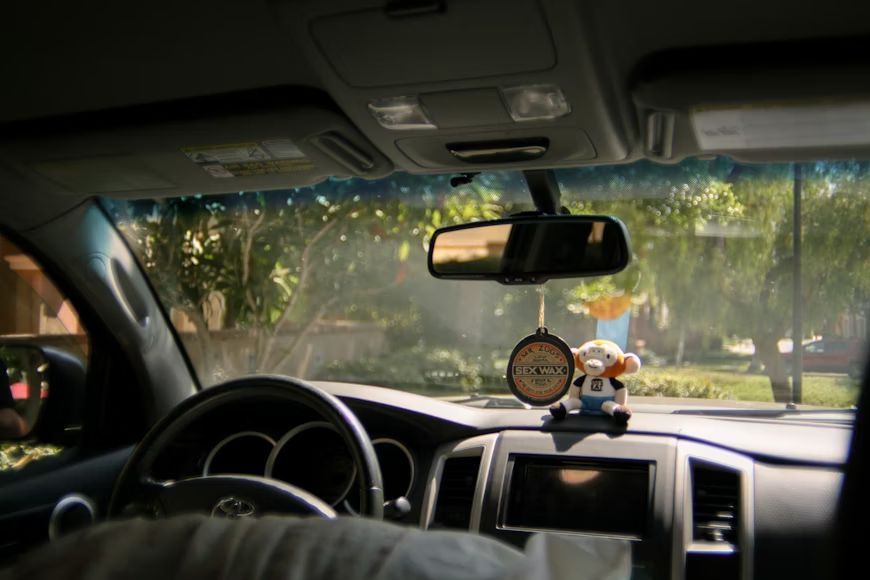
If you have a pine-scented air freshener or a set of graduation tassels swinging from your rearview mirror, you might be looking at a ticket in some states. Laws vary across the country, but for example, in California, the law states that there cannot be anything obstructing the view through the windshield or side window . This rule is part of the California Vehicle Code, enforced in 1959. In Texas, the regulation is similar according to the state Transportation Code, and Minnesota, in turn, has had a law since 1957 making it strictly illegal to hang anything from the mirror. Nobody has anything against a nice-smelling car or a beautiful lucky charm, but when they obstruct your view , that’s a problem for everyone on the road.

4
Handling a stranger’s mail

Image: sue hughes

It’s not unusual to find a stack of letters addressed to the person who lived in your house three years ago, right? Now, your first instinct might be to toss it in the bin . Believe it or not, that’s a big no-no since 1948, clearly stated in the U.S. Code. Tossing out mail intended for someone else into the garbage is considered a federal felony, and penalties can be severe, including up to five years in federal prison and fines up to $250,000. The proper way to proceed is to write "refused" or "return to sender" on the envelope and let the post office take it from there.

5
Forgetting to tell the DMV you moved

Image: Erik Mclean

Life gets busy and messy when you move to a new house, so it’s easy for updating your driver's license to fall to the bottom of the to-do list. However, in most states, you are legally required to notify the DMV of your change of address within a very short window, usually ten to thirty days . In California, for example, you must do this within ten days. If you get pulled over and your license doesn't match your current address, you could get a fine. Time really flies when moving, but make sure to write this on the very top of your to-do list, and you’ll be fine!

6
Letting the engine on

Image: Carbyn Wu

Isn’t it common to start the car on a frosty morning to let it warm up while you finish getting ready? Well, if you do this, you’re technically breaking the law in some states: since 2004, in Ohio and Colorado, this is actually a citable offense known as "puffing." Leaving an unattended vehicle idling in your driveway is illegal because it invites car theft and contributes to unnecessary exhaust emissions. If you want to get the heater going, the law expects you to stay right there in the driver's seat until you’re ready to pull away.

7
Prank pizzas

Image: Mariya

In Louisiana, ordering a stack of pizzas to be delivered to an unsuspecting friend as a prank is more than just a lousy joke; it’s a crime. Believe it or not, there’s a reason behind this law. Passed in 2018, the Louisiana Revised Statute was specifically written to protect small businesses from losing time and money on fake orders. Can you imagine how annoying it must be to deal with a pranked customer who doesn’t want the five pizzas they got out of the blue? Even if it started as a joke, the authorities now view it as a form of theft that can result in a fine of up to $500, imprisonment for up to six months, or both.

8
Playing hairdresser

Image: Gabriela

If you’ve ever offered to give a friend a quick perm or some highlights in your kitchen, you might be an accidental criminal. In the US, performing any kind of cosmetology service on another person without a professional license is illegal. Forms of enforcement and penalties depend on each state, but most follow the rules established by the National-Interstate Council of State Boards of Cosmetology, which grants licenses following pertinent examinations. Of course, a bangs cut is not always a problem, but these kinds of regulations were created to ensure that chemicals and sharp tools are handled safely by trained experts.

9
No-hands bike riding

Image: Florian Kurrasch Disponible para contratación

Riding a bike is fun, especially for kids who like to do tricks and take both hands off the handlebars. But in North Carolina, that’s a traffic violation, according to the city code. The statute requires cyclists to keep at least one hand on the grip at all times to maintain control of the bike. Fines for this behavior can go up to $50 and even imprisonment for up to 30 days. Riding a bike without using your hands might feel like a fun way to show off skills, but the consequences can be serious.

10
Tossing out old batteries

Image: Syed Ahmad

When the remote dies, most people are tempted to just drop the old batteries into the kitchen trash can, but you might want to think that over, especially if you live in California. As of 2005, in this state, household batteries are classified as hazardous waste because they contain chemicals that leak into the soil. The California Rechargeable Battery Recycling Act requires you to take them to a proper recycling center instead of the regular landfill. It takes a little more effort to do the right thing, but it keeps the local environment a lot cleaner for everyone.

11
Lending your Wi-Fi password

Image: Dreamlike Street

You’ve just moved, and you ask your friendly neighbor to share their Wi-Fi password until your internet is set up. That’s pretty common, but that’s also been a felony since 1986. The feds view this as unauthorized access to a computer network . Under the Computer Fraud and Abuse Act, jumping on a signal you don't have explicit and formal permission to use is technically a crime. It’s better to stick to the local coffee shop than risk a run-in over a bit of borrowed bandwidth.

General General 6 min read

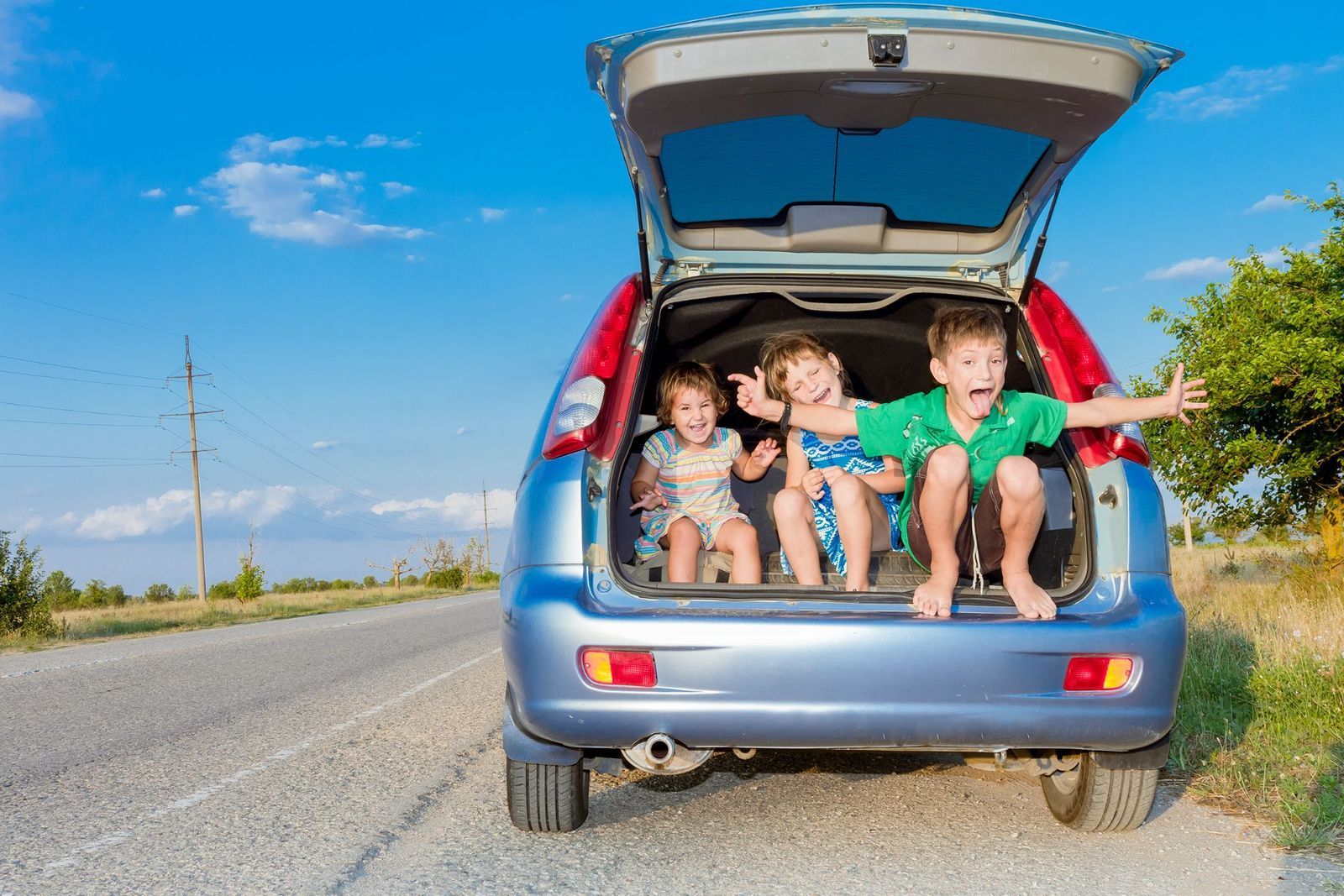
Are we there yet?

Every parent should read this article before embarking on a road trip

Image: LeManna

Traveling with children can be one of life's most rewarding adventures and one of its biggest challenges. A trip that looks effortless on social media often involves careful planning, a healthy dose of flexibility, patience, and a willingness to expect the unexpected. Fortunately, experienced parents, pediatricians, and travel experts agree on several practical habits that help reduce stress and keep kids happier on the road.

1
Choose flights that work with your child’s schedule

Image: minho jeong

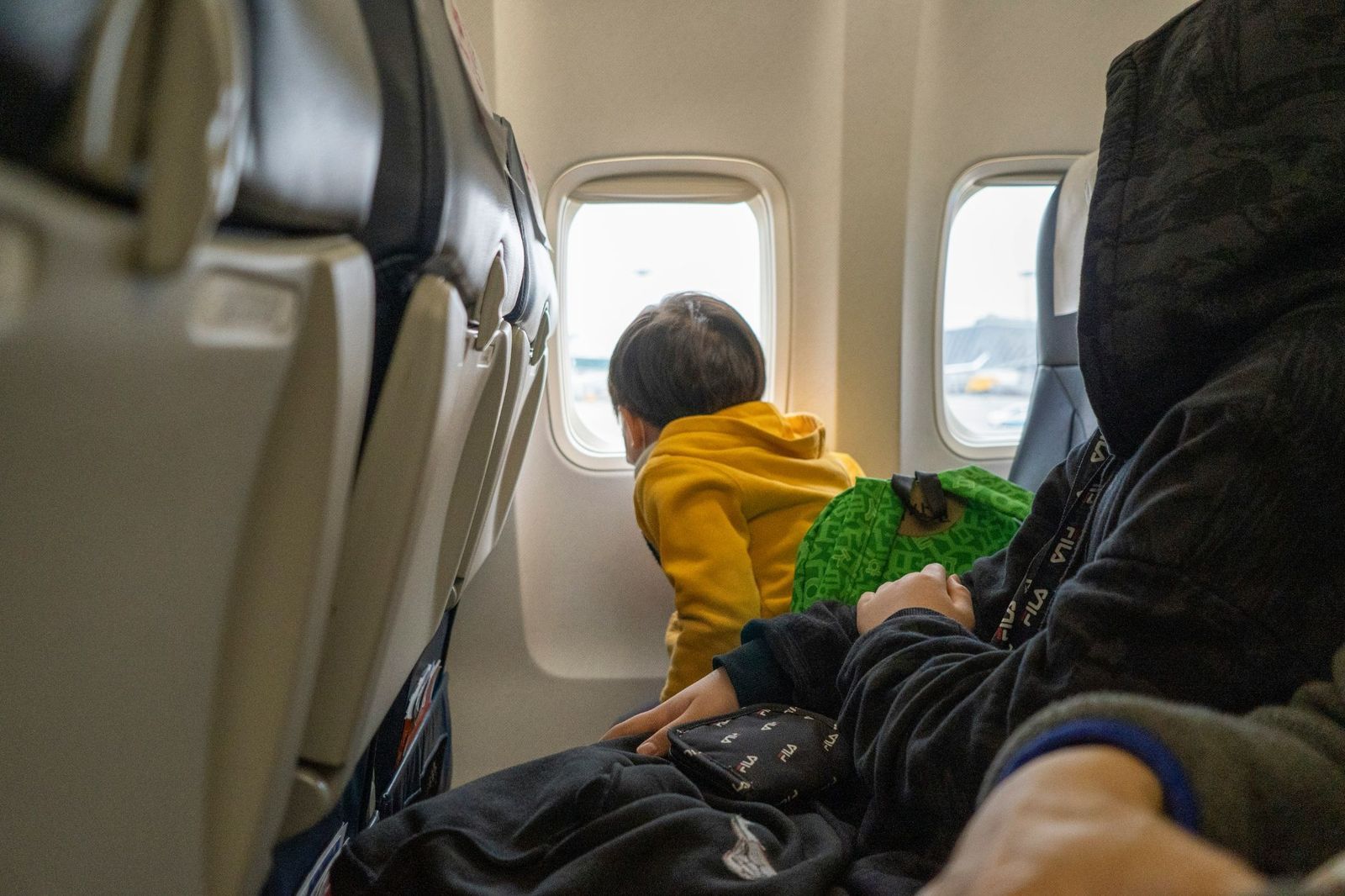
Of course, it’s tempting to book the cheapest flight available, but the lowest fare isn't always the best value when you're traveling with young children. Whenever possible, look for departure times that line up with your child's regular nap or bedtime . A sleepy child is often far more likely to relax, or even sleep, through a good portion of the journey, making the experience easier for everyone on board.

Direct flights can also be worth paying a little extra for. Every layover means another security check, another boarding process, and another opportunity for delays to throw off routines. Pediatric experts also recommend arriving at the airport with plenty of time to spare, reducing the stress of rushing through terminals with children and luggage. Starting the trip calmly often sets the tone for everything that follows.

2
Bring more snacks than you think you’ll need

Image: laowaika

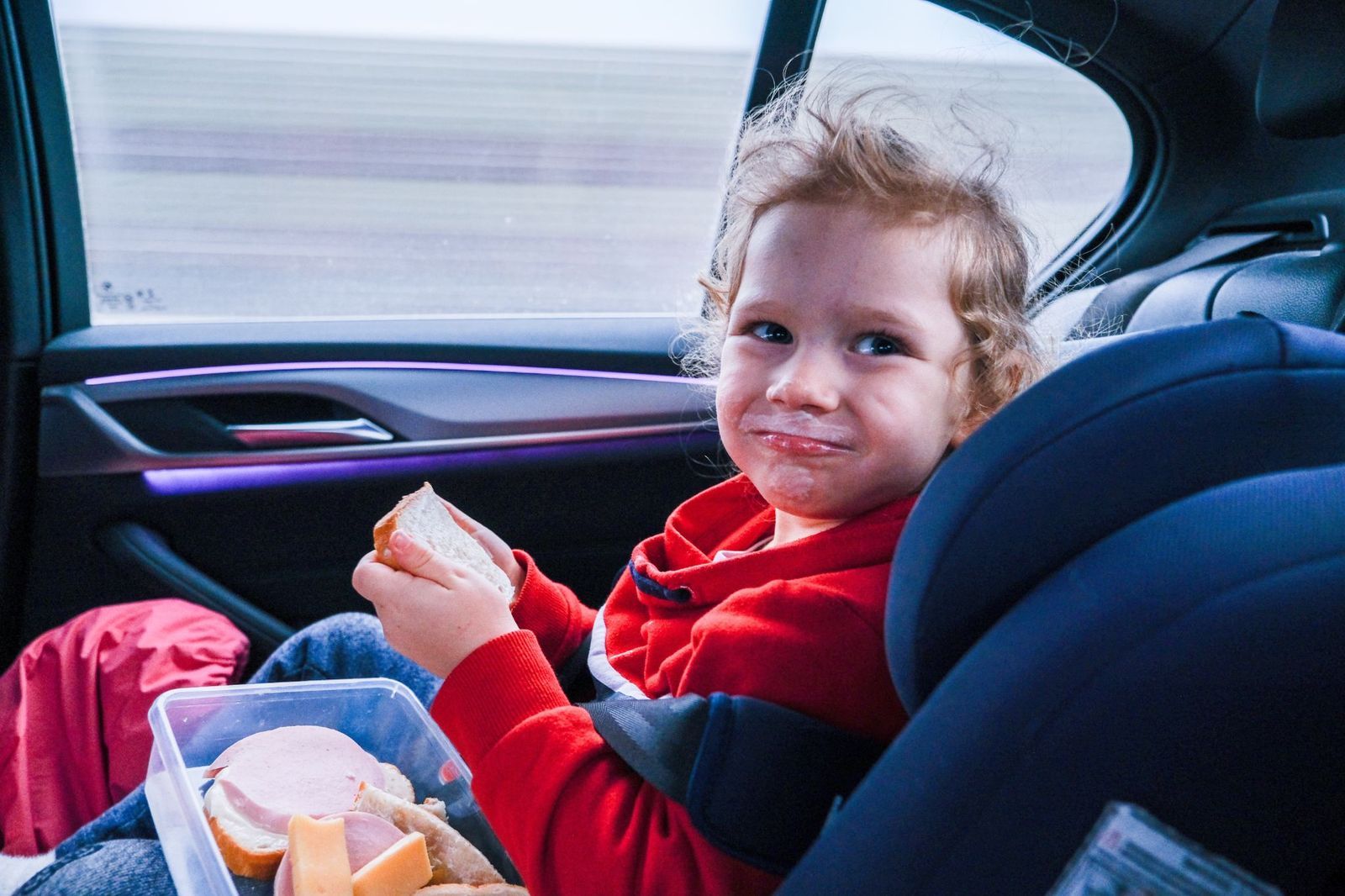
If there's one piece of advice nearly every experienced parent agrees on, it's this: pack extra snacks. Delayed flights, long security lines, traffic jams, and unexpected detours have a way of stretching meal times, and hungry children rarely become more patient as the hours pass .

Choose foods that travel well and don't require refrigeration, such as crackers, granola bars, dried fruit, applesauce pouches, or pretzels. Keeping familiar snacks within easy reach can also help picky eaters adjust to new surroundings. Even if you never open every bag, having plenty available provides peace of mind—and may help avoid an expensive airport food stop.

3
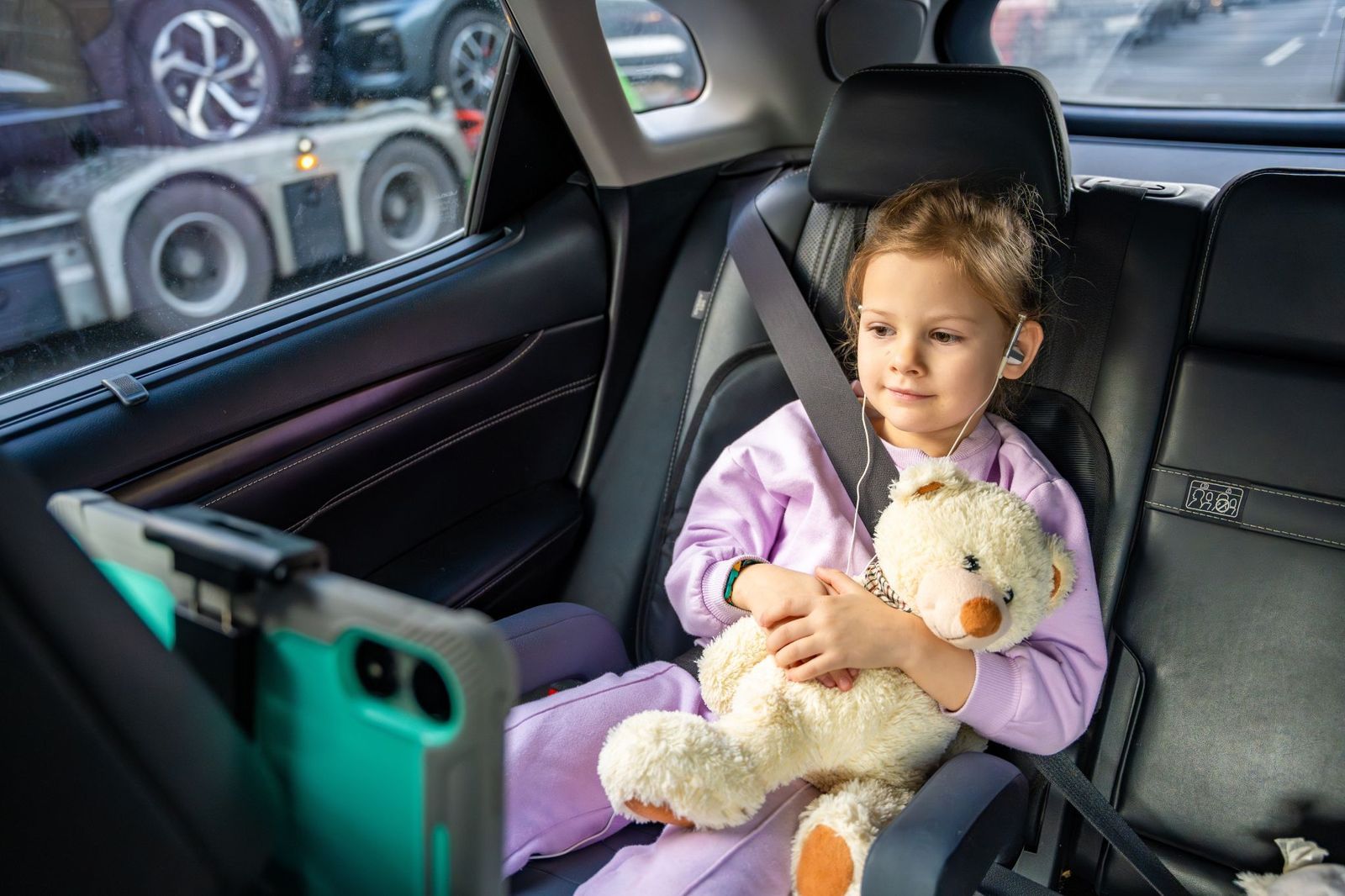
Download entertainment before you leave

Image: Tatiana Diuvbanova

Modern travel has become much easier thanks to tablets and smartphones, but they're only helpful if the content is actually available when you need it. Airplane Wi-Fi isn't always reliable, mobile signals disappear in remote areas, and onboard entertainment systems occasionally malfunction.

Before leaving home, download favorite movies, television shows, audiobooks, music playlists, and age-appropriate games directly onto your devices . Packing headphones and portable chargers is just as important. Having entertainment ready to go means you'll never have to rely on an internet connection to keep little travelers happily occupied during long stretches of the journey.

4
Pack a complete change of clothes

Image: Vika Strawberrika

Children have an incredible talent for finding the one puddle, juice box, or muddy patch capable of soaking an entire outfit. That's why seasoned travelers rarely leave home without packing at least one complete change of clothes in their carry-on luggage .

Include fresh socks, underwear, and a lightweight sweater in addition to a clean outfit. A plastic bag for dirty clothing is another simple addition that can make life much easier. Some parents even pack an extra shirt for themselves, since babies and toddlers have a remarkable ability to spread spills well beyond their own clothes.

5
Reserve seats together whenever possible

Image: KieferPix

Sitting together isn't simply more convenient; it makes traveling significantly easier. Being close allows parents to quickly hand over snacks, help with entertainment, comfort nervous children, and manage unexpected situations without disturbing other passengers .

While many airlines try to seat families together, it's never guaranteed unless seats are selected in advance. Booking early increases your chances of staying together throughout the flight. For infants and toddlers traveling in their own seats, using an FAA-approved child restraint system provides an additional layer of safety during turbulence and takeoff.

6
Include flexibility in your plans

Image: Davor Geber

One of the quickest ways to create unnecessary stress is to try to pack every hour of the vacation with activities. Children naturally move at a different pace than adults, and even the most exciting attraction can become overwhelming after a long day.

Instead of scheduling four major attractions in a single afternoon, consider planning one primary activity with plenty of free time around it . Unexpected playground visits, leisurely lunches, or simply taking a break at the hotel often become some of the most enjoyable parts of a family vacation. Leaving room for spontaneity allows everyone to enjoy the trip rather than race through it.

7
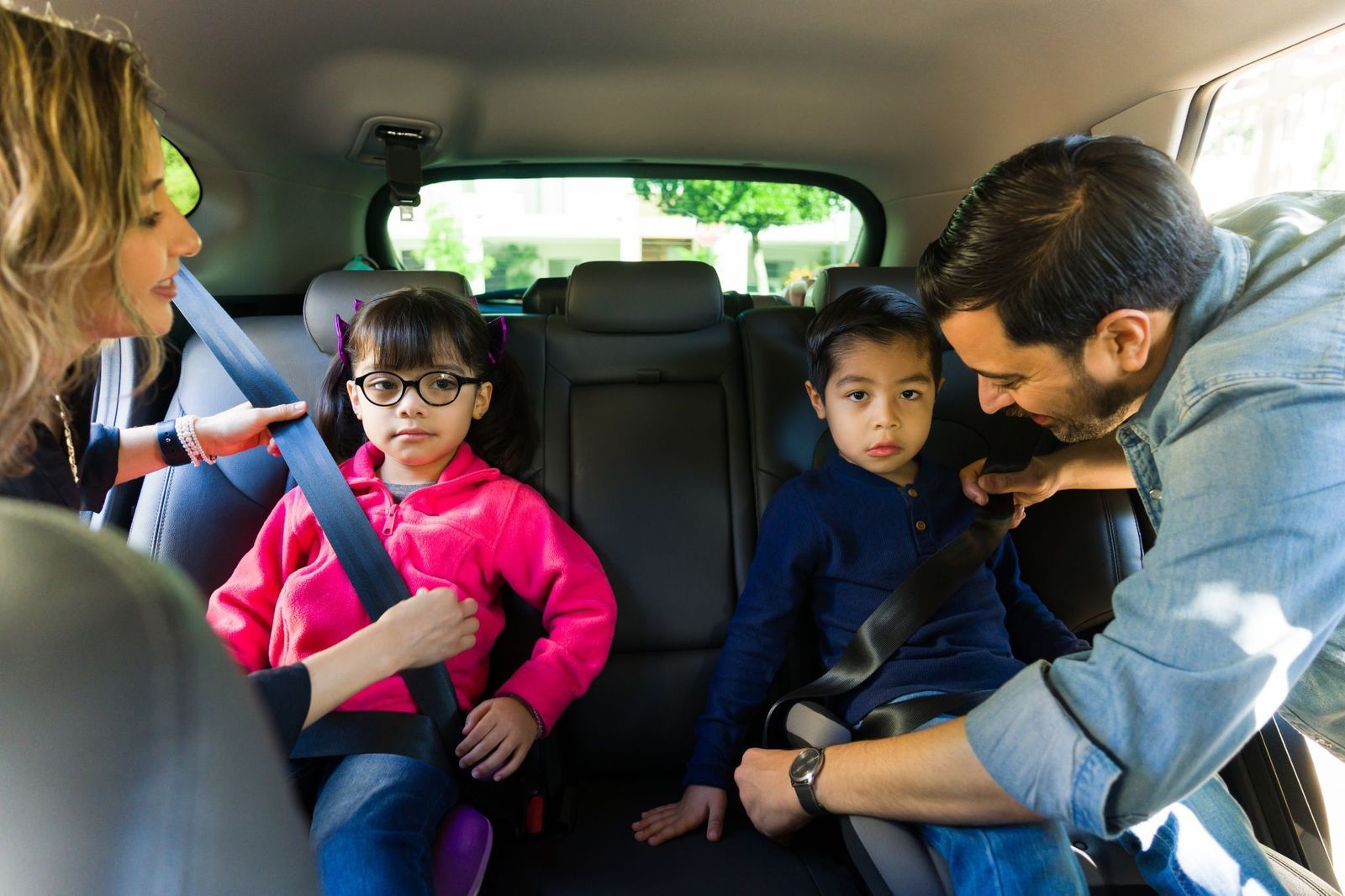
Follow proper car seat and booster seat rules

Image: antoniodiaz

Whether you're driving your own vehicle or renting one at your destination, using the correct child restraint is one of the most important safety decisions you'll make. Motor vehicle crashes remain one of the leading causes of injury and death for children, making proper car seat use essential.

Health and safety experts recommend keeping children rear-facing as long as possible before transitioning to forward-facing seats, followed by booster seats until an adult seat belt fits correctly . Children under 13 are generally safest riding in the back seat. Taking a few extra minutes to install a seat correctly can make a tremendous difference in protecting young passengers.

8
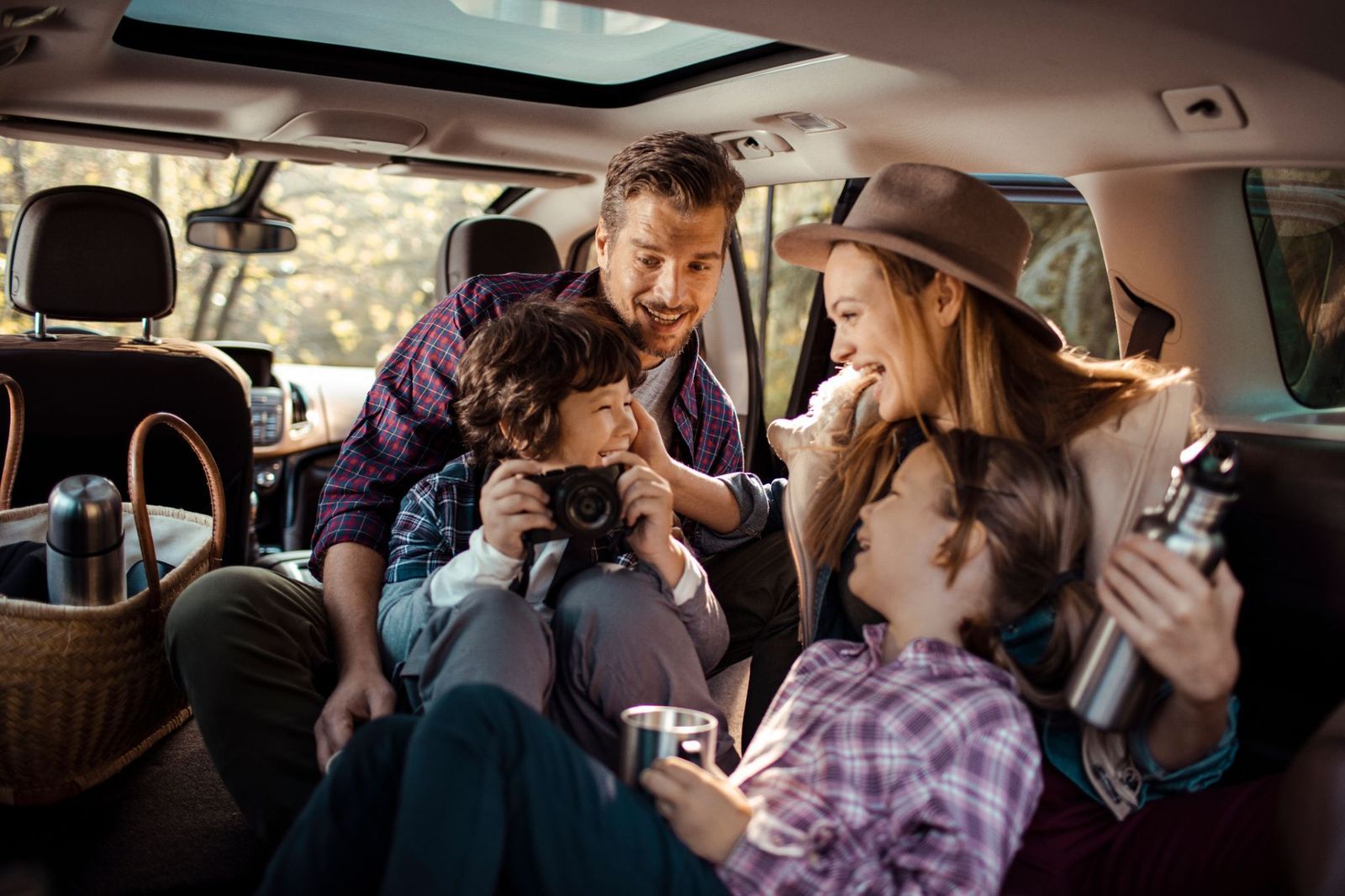
Plan regular breaks on road trips

Image: Romvy

Adults may be able to drive for hours without stopping, but children usually need regular opportunities to stretch, move around, and burn off energy. Long periods of sitting can quickly lead to boredom, frustration, and restless behavior.

Planning a break every two or three hours gives everyone a chance to use the restroom, grab a snack, or simply walk around for a few minutes . Scenic overlooks, parks, picnic areas, and playgrounds can transform routine stops into enjoyable parts of the journey while helping drivers stay refreshed as well.

9
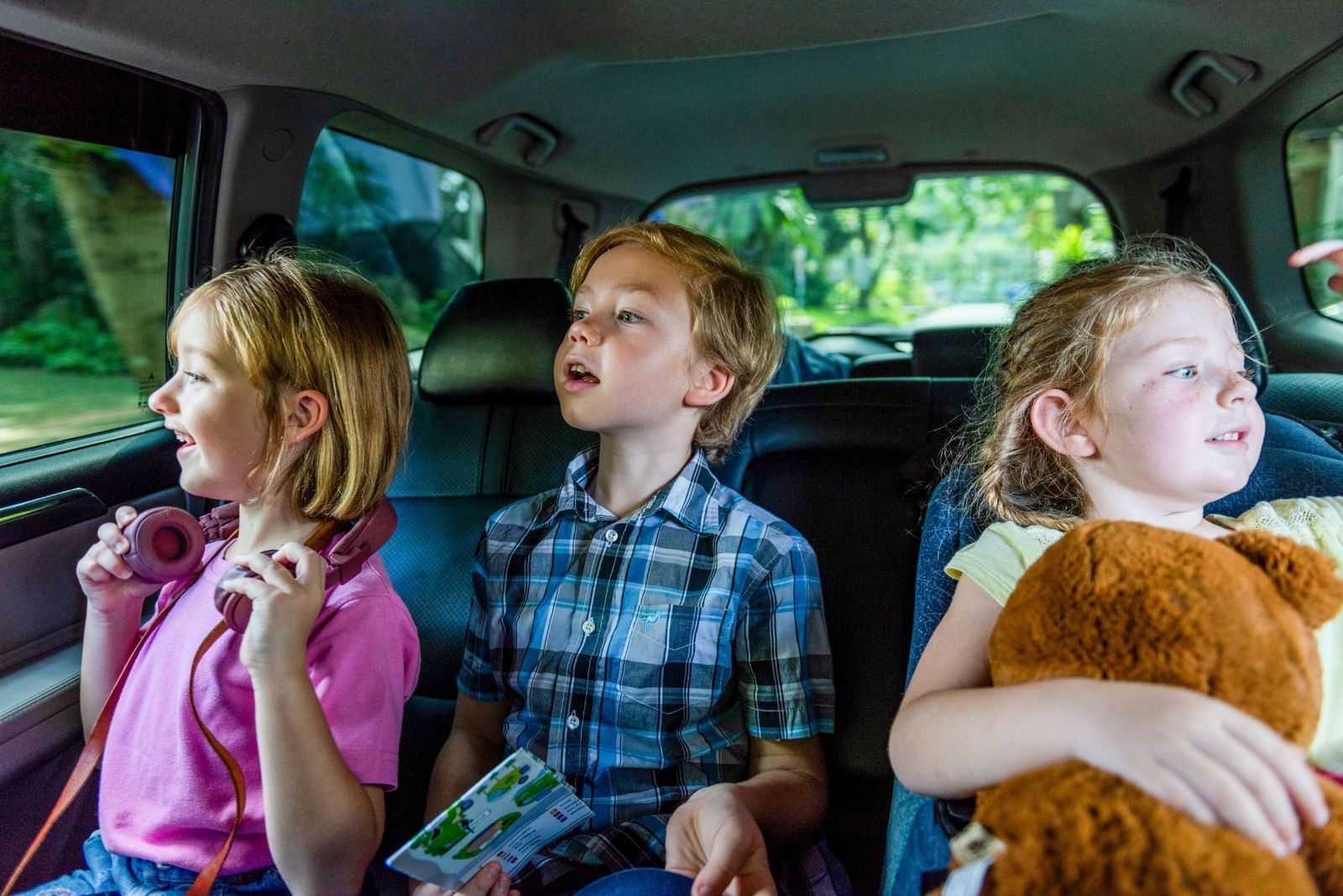
Bring a familiar comfort item

Image: Rawpixel.com

New places can be exciting, but they can also feel overwhelming for younger travelers. A favorite stuffed animal, blanket, bedtime book, or small pillow provides a comforting reminder of home when everything else feels unfamiliar .

Psychologists often refer to these cherished belongings as "transitional objects" because they help children cope with change and unfamiliar situations. Even older children sometimes appreciate having a familiar item nearby while sleeping in hotels or staying with relatives. Small comforts can make a surprisingly big difference after a busy day of sightseeing.

10
Involve kids in the planning

Image: Ground Picture

Vacations become even more exciting when children feel like active participants instead of passive passengers. Depending on their age, let them help choose a restaurant, pick one attraction to visit, or learn interesting facts about the destination before leaving home .

Younger children often enjoy marking locations on a map or helping pack their own travel bag, while older kids may enjoy researching museums, hiking trails, or local foods. Giving every child one special choice during the trip encourages enthusiasm and creates memories they'll feel personally connected to.

11
Keep bedtime routines as consistent as possible

Image: BaLL LunLa

Travel naturally disrupts daily schedules, but maintaining familiar bedtime habits can help children settle down more easily in new surroundings . Reading the same bedtime story, brushing teeth in the usual order, or listening to a familiar lullaby signals that it's time to sleep, even if bedtime happens in a hotel halfway around the world.

Well-rested children generally handle busy sightseeing days, long flights, and unfamiliar environments much better than overtired ones. While vacations don't require military precision, preserving a few comforting routines often helps the entire family enjoy each day a little more.

12
Remember that perfect trips don’t exist

Image: Elena Yakusheva

Perhaps the best family travel advice has nothing to do with luggage, flights, or packing lists. Even the most carefully planned vacation will probably include a delayed flight, unexpected rainstorm, forgotten toy, or missed reservation somewhere along the way .

The families who seem to enjoy traveling the most aren't necessarily the ones whose trips go perfectly; they're the ones who treat surprises as part of the adventure. Years later, it's often the unexpected moments that become the funniest stories and the happiest memories. A successful family vacation isn't measured by perfection, but by the experiences you share along the way.

Explore more American facts

Choose your favorite category!

General
General

As American as apple pie—the very best America has to offer!

Culture
Culture

Delve into the astounding richness of American lore.

Geography
Geography

Hop in and explore vast and diverse American landscapes.

History
History

Discover the key moments that shaped the United States.