Culture Culture 6 min read

The life and death of the teenage outlaw of the Southwest

Living legend: 10 actors who played Billy The Kid in movies & TV

Image: Boston Public Library, Public domain, via Wikimedia Commons

Did you know that Billy the Kid holds the record as the most portrayed individual in cinematic history ? The most wanted man on the American frontier has been played by numerous actors—and even actresses—from 1911 to the present day. From Paul Newman to Val Kilmer, each one of them gave the famous outlaw their peculiarity, keeping his legend alive in the collective memory of the American public for generations. Do you remember any of them? Don't worry, in this article, we review 10 actors who portrayed Billy the Kid in movies and TV shows.

1
Edna Foster and Edith Storey (1911)

Image: University of Washington, Public domain, via Wikimedia Commons

Even just thirty years after his death, the figure of Billy the Kid was so legendary that films were already being produced based on his life. The first two, both silent shorts, date from 1911 and share an intriguing peculiarity: both star women.

Billy the Kid was directed by Laurence Trimble and is very loosely based on the life of the famous outlaw. It is, however, believed to be a lost film. Edith Storey , an American actress who had played male characters in films such as Oliver Twist , stars as "the Kid."

The Adventures of Billy , on the other hand, was directed by the great pioneer American motion-picture director D. W. Griffith. In this film, the role of Billy is played by American child actress Edna Foster.

2
Johnny Mack Brown (1930)

Image: Ruth Harriet Louise, Public domain, via Wikimedia Commons

American college football player and film actor John Mack Brown was the first to play Billy the Kid in the talkies. He was directed by none other than the great film director and producer King Vidor in 1930's Billy the Kid . This film is a pre-Code Western and tells the story of Billy's escape after avenging his boss and the subsequent manhunt by Sheriff Pat Garret.

Johnny Mack Brown had started his career by appearing in a few minor films until he got his big break with this movie. Unfortunately, his career in mainstream cinema did not flourish, leading him to transition into low-budget Westerns. Eventually, he found significant success as a B-movie cowboy , becoming a beloved figure in the genre.

3
Jack Buetel (1943)

Image: here, Public domain, via Wikimedia Commons

Jack Buetel was an inexperienced actor when tycoon Howard Hughes cast him in his next film, The Outlaw , in 1940. Buetel signed a seven-year contract after Hughes promised him that he would make him a star.

The film faced many difficulties. It wasn’t immediately approved due to its erotic scenes, and although it was officially released in 1943, it was not until 1946 that the public was able to finally see it. Produced during the golden age of the genre, The Outlaw is considered a psychological Western. However, it was not well received by the critics of the time, and Buetel's work was especially bashed. After this, Hughes refused to allow Buetel to participate in other films, and his career never really took off.

4
Paul Newman (1958)

Image: Unknown authorUnknown author, dedicated to Bettmann Archive, Public domain, via Wikimedia Commons

Paul Newman is one of the most celebrated actors of the 20th century and is best known for his roles in several classic Westerns. But did you know that the first Western character Paul Newman portrayed was Billy the Kid? In the mid-1950s, Newman was cast to replace James Dean in The Left Handed Gun after Dean's untimely death. This was the beginning of a series of films about the Old West that the beloved American actor would play throughout his career.

Based on a teleplay by Gore Vidal and directed by Arthur Penn, The Left Handed Gun departs from the classic genre iconography to present the famous bandit much closer to the rebellious and tormented antiheroes of the era. Thus, in this film the characters are complex and nuanced, questioning and revising the traditional portrayal of the savage outlaw.

5
Clu Gulager (1960 - 1962)

Image: NBC Television, Public domain, via Wikimedia Commons

The first television series about Billy the Kid was The Tall Man , which aired on NBC from September 10, 1960, to September 1, 1962. Although we all know that the real story ends with Billy being killed by Pat Garrett, this light-hearted action series focuses on the duo's alleged happier days, when they had more of a father-and-son relationship.

Clu Gulager, born in Oklahoma and the son of a cowboy entertainer, plays Billy. Although he was already 32 years old when cast, the actor earned his well-deserved place in the role. After the success of this series, Gulager worked in other Westerns and later had a second career as a horror film actor. His last appearance on the big screen was in 2019, in Quentin Tarantino's Once Upon a Time in Hollywood.

6
Geoffrey Deuel (1970)

Image: Unsigned, Public domain, via Wikimedia Commons

While this is not a film specifically about Billy the Kid's life, he does appear as a supporting character. Starring the legendary John Wayne, Chisum tells the story of the 1878 Lincoln County War, an Old West conflict between rival factions involving some famous gunslingers, including William H. Bonney, better known as Billy the Kid.

In this film, Geoffrey Deuel plays Billy the Kid. Although he had already participated in some television series, Chisum was his debut on the big screen.

7
Kris Kristofferson (1973)

Image: Republic Country Club, CC BY 2.0 <https://creativecommons.org/licenses/by/2.0>, via Wikimedia Commons

Kris Kristofferson is best known for his career as a country musician and his appearance in the 1976 version of A Star is Born alongside Barbra Streisand. But did you know he also portrayed Billy the Kid? In 1973, he was cast in the revisionist Western film Pat Garrett and Billy the Kid , directed by Sam Peckinpah.

One of the most intriguing aspects of Kristofferson's involvement in this film is that he introduced Bob Dylan to the director. Dylan was initially hired to write the title song, but ended up composing the whole score and even played the role of "Alias." Among the songs Dylan wrote for the film was the iconic "Knockin' on Heaven's Door."

8
Val Kilmer (1989)

Image: Billy Hathorn at English Wikipedia, CC BY-SA 3.0 <http://creativecommons.org/licenses/by-sa/3.0/>, via Wikimedia Commons

American writer Gore Vidal was not pleased with the adaptation of his teleplay for The Left Handed Gun , so he decided to produce his own version. The resulting TV movie premiered on TNT in May 1989, with Val Kilmer cast as Billy the Kid.

Kilmer's version of Billy the Kid is a bit friendlier than his predecessors. He was also the right age for the character, making Gore Vidal's Billy the Kid one of the most historically rigorous accounts of the outlaw's life.

After this film, Val Kilmer's career continued to grow, with standout roles in The Doors and Batman Forever . Billy the Kid wasn’t the only gunslinger he portrayed—Kilmer also famously played Doc Holliday in the 1993 film Tombstone .

9
Dane DeHaan (2019)

Image: Gage Skidmore from Peoria, AZ, United States of America, CC BY-SA 2.0 <https://creativecommons.org/licenses/by-sa/2.0>, via Wikimedia Commons

American actor Dane DeHaan portrays Billy the Kid in the 2019 film The Kid , alongside Ethan Hawke as lawman Pat Garrett. The physical resemblance between DeHaan—a younger Leonardo DiCaprio lookalike—and the real William H. Bonney is striking, making the Vincent D'Onofrio-directed film not only a fresh take but also one of the closest onscreen renditions of the mythical character.

In an interview, DeHaan said that he accepted the role because he thought it was a very interesting character to play. He also explained that he considered Billy The Kid a victim of the media and explained that the film aims to depict the harsh realities of the Wild West, where survival often drove people to desperate and terrible actions.

10
Tom Blyth (2022 - )

Image: Asagan at English Wikipedia, CC BY-SA 3.0 <https://creativecommons.org/licenses/by-sa/3.0>, via Wikimedia Commons

The most recent version of Billy the Kid is played by Tom Blyth, a 29-year-old English actor from Birmingham. Blyth plays the infamous outlaw in the television series Billy the Kid, which premiered on MGM+ in April 2022. Produced by Michael Hirst, the English producer behind hits like The Tudors and Vikings , the series was renewed for a third and final season in 2024.

To prepare for this character, Blyth didn't just read a ton of books about Billy's story, he felt the need to do something more tangible to get into the skin of the famous outlaw. He traveled to Arizona, rented a car, and began a 7-day pilgrimage around New Mexico visiting all the places William H. Bonney had once been. He even visited his grave! His intention was to make the character more palpable and real as opposed to this exaggerated image of the mythical character we are used to.

Geography Geography 3 min read

What's behind American cities' nicknames? Prepare to be surprised!

Image: Trev W. Adams

We love giving our cities all sorts of nicknames—and American cities wear them like badges of honor! But do you know where they come from? Some seem obvious, while others have mysterious origins, but all have a unique connection to the places they describe . Join us for a fun guessing game as we explore the nicknames of six iconic U.S. cities, with their surprising origins revealed in the second half of this list .

1
The Big Apple: New York City

Image: Nik Shuliahin

Everybody knows "The Big Apple" refers to New York— the city that never sleeps . But why, exactly? Is it because there’s a worm (the subway) underneath it? Or is it a metaphor for something we strive for?

2
The Big Easy: New Orleans

Image: mana5280

It sure feels easy to stroll through New Orleans, a city known for its laid-back atmosphere and rich cultural energy, where jazz bands can spontaneously form on any corner and lively public celebrations are always just around the bend. But what’s the story behind its nickname?

3
Motor City: Detroit

Image: Doug Zuba

The most populous city in Michigan, the nickname "Motor City" certainly feels right for its bustling streets and large industrial background —but what exactly led to the adoption of this powerful nickname?

4
Sin City: Las Vegas

Image: Grant Cai

We all know the famous adage: "What happens in Vegas, stays in Vegas." Given the city’s notorious nightlife and gambling scene , it’s understandable—you might prefer to forget how you lost all your savings on a slot machine. But is that the only reason it earned its infamous nickname?

5
The Windy City: Chicago

Image: Ozzie Stern

Situated on the shores of Lake Michigan, Chicago's nickname might seem to stem from its exposure to harsh weather —but sometimes, the obvious answer isn’t the correct one. Is it really the weather, or is something stranger at play?

6
The Mile High City: Denver

Image: Emmanuel Appiah

Is Denver really a "Mile High" city because of its geographical proximity to the towering Rockies, or is it just a nod to its ever-expanding skyline? Keep reading to find out!

And now, the answers:

7
The Big Apple: Horse-racing origins

Image: Taylor Sondgeroth

The nickname originated in the 1920s as horse-racing slang , where "The Big Apple" informally referred to New York’s prize racetracks. Jazz musicians later popularized it, and a 1970s tourism campaign ultimately cemented it as a symbol of the city’s cultural and financial prominence.

8
The Big Easy: Chill and jazz

Image: Robson Hatsukami Morgan

If you followed our line of thought—you were right! This nickname emerged from the city's reputation for its relaxed lifestyle and vibrant jazz scene . While there are many theories about who first used the term—and whether it was originally meant to be derogatory—one thing is certain: all New Orleanians agree it 100% reflects the city’s unique blend of music, culture, and laissez-faire attitude.

9
Motor City: Infinite assembly lines

Image: Austrian National Library

Detroit earned its nickname as the birthplace of the American auto industry. Henry Ford’s revolutionary assembly line and the rise of car manufacturing giants cemented the city’s status as the global automotive capital of the 20th century. In fact, it remains home to the headquarters of America’s largest auto manufacturers—General Motors, Ford, and Chrysler.

10
Sin City: Prohibition defiance

Image: Jakub Dziubak

For a city founded by religious missionaries, "Sin City" is certainly an ironic nickname. In truth, its origins trace back to the construction of the nearby Hoover Dam in the 1930s. Thousands of workers flocked to the city in search of lodging and—presumably—entertainment. This led to the rapid rise of casinos and a thriving underground alcohol industry that—during Prohibition—was as profitable as it was illegal.

11
The Windy City: Long-winded speeches

Image: Kristina Paparo

While many assume it refers to Chicago’s weather, the nickname was actually coined by journalists mocking the boastful speeches of local politicians as they aggressively promoted the city as the ideal location for the World’s Fair. The term was meant to highlight the "hot air" of their rhetoric rather than the city's literal windiness.

12
The Mile High City: A matter of altitude

Image: Bill Griepenstroh

Denver sits exactly 5,280 feet one mile above sea level , earning its nickname, the "Mile High City," quite literally. Its natural elevation, combined with stunning Rocky Mountain views, makes it truly unique. Even more interesting, Denver’s altitude leads to some unusual effects: golf balls can travel up to 10% farther than at sea level, and alcohol tends to hit harder since high altitudes reduce the body's ability to process it efficiently.

History History 4 min read

Lands that were only dreams

Superior, Transylvania, Sequoyah, and other states that never were

Image: Chris Lawton

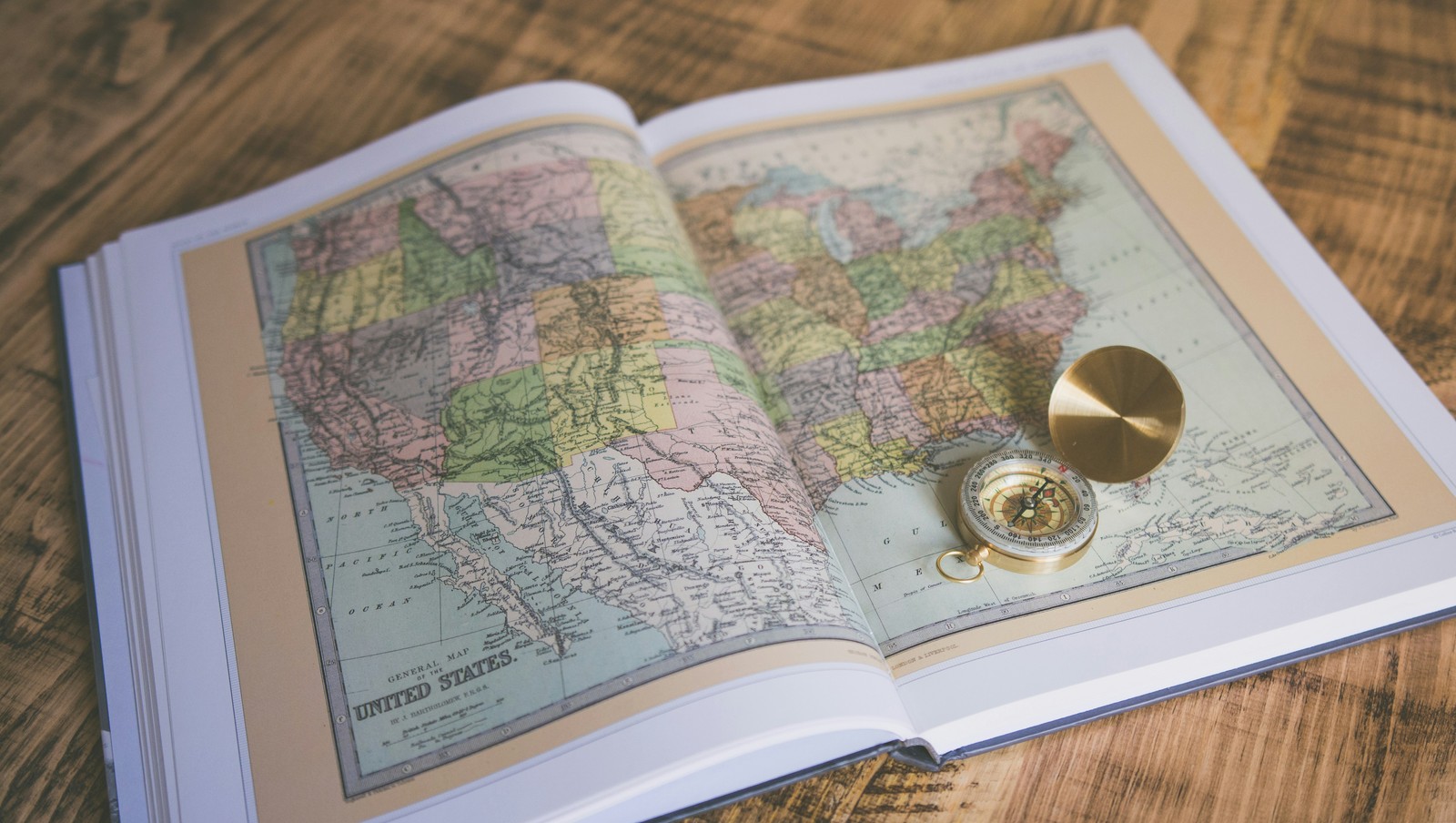
The map of the United States could have looked very different—perhaps with around 70 states, each having its own capital and constitution. For example, have you ever heard of the proposed states of Franklin or Westsylvania? And can you guess where Superior was supposed to be located? Let’s dive into 13 states that almost—but never—found a place on the map.

1
Superior

Image: Brian Beckwith

As we know, Michigan is divided into the Upper and Lower Peninsulas. The discussion about whether the Upper Peninsula should become its own state dates back as far as 1858.

During the 19th and 20th centuries, residents of the region proposed creating the State of Superior , named after the Great Lake that defines the region. Although the movement never gained enough traction, some people still support the idea today, even though Superior would become the state with the smallest population.

2
Jefferson

Image: Kirk Thornton

Jefferson was a proposed state, much like Washington was before it became a state. Picture this: a state straddling Northern California and Southern Oregon, rich in timber and minerals. This was the vision for Jefferson , first proposed in the mid-19th century and revived in 1941.

Residents even declared a symbolic "secession" and distributed pamphlets proclaiming their independence. However, World War II shifted priorities , and the movement eventually fizzled out.

3
Deseret

Image: Wolfgang Hasselmann

Mormon settlers had big dreams in 1849—they proposed Deseret , a massive theocratic state . The name, meaning "honeybee" in the Book of Mormon , symbolized industry and cooperation. But Congress wasn’t exactly buzzing with enthusiasm.

Instead, Congress created the smaller Utah Territory , which at the time included present-day Utah as well as parts of Nevada, Colorado, and Wyoming.

4
Sequoyah

Image: Nina Luong

In 1905, Native American tribes in eastern Oklahoma proposed the State of Sequoyah , named after the Cherokee scholar who created the Cherokee syllabary .

It was a bold move to create a Native-majority state. However, Congress chose instead to merge the area with Oklahoma Territory to form the state of Oklahoma . The constitution drafted for the proposed State of Sequoyah went on to influence the final Constitution of Oklahoma.

5
Lincoln

Image: Clark Van Der Beken

The proposed State of Lincoln had multiple identities. One version placed it in eastern Washington and northern Idaho. Although the name was intended to honor Abraham Lincoln, other names, such as Columbia and Eastern (East) Washington , were also considered.

Another proposal envisioned Lincoln in southern Texas. This version reportedly had a prepared constitution and a distinctive red flag featuring Lincoln’s face inside a yellow circle.

6
East and West Jersey

Image: Nick Fewings

Can you imagine two New Jerseys? Back in 1674, when the area was still a British province, New Jersey was divided into East Jersey and West Jersey , each with its own government and constitution.

But the separation lasted only 28 years . The territories were rejoined in 1702, and the first New Jersey state constitution wasn’t adopted until 1776, following independence from Britain.

7
Franklin

Image: Dan Mall

The State of Franklin was another plan, except this one worked, for a while. In 1784, settlers in eastern Tennessee had had enough with what they saw as North Carolina’s neglect. They declared independence and formed the State of Franklin , named after Benjamin Franklin, of course.

For four years, Franklin operated as a de facto state , complete with its own constitution and government. However, Congress refused to recognize it, and by 1788, the State of Franklin ceased to exist.

8
Transylvania

Image: Julia Volk

Transylvania (from the Latin for "beyond the woods" ) is more than just a remote land of vampire legends—it was also nearly the name of a short-lived American colony in what is now mostly Tennessee and parts of Kentucky.

In 1775, land speculator Richard Henderson struck a deal with the Cherokee to create the Colony of Transylvania , in parts of Kentucky, Tennessee, and Virginia. But Virginia and North Carolina declared the venture illegal. Still, the name lives on today in Transylvania University in Lexington, Kentucky.

9
Nickajack

Image: lauren barton

During the Civil War, Union sympathizers in northern Alabama, northern Georgia, and eastern Tennessee proposed the creation of the State of Nickajack . The name came from a Cherokee village, but the idea never gained much traction.

Today, the Nickajack Dam and Nickajack Lake reservoir mark areas that would have fallen within the boundaries of this proposed state.

10
Absaroka

Image: Mohan Nannapaneni

Have you ever heard of Absaroka ? During the Great Depression, residents of parts of Wyoming, South Dakota, and Montana proposed the creation of the State of Absaroka , named after the Crow Nation’s word for "children of the large-beaked bird."

The movement was largely a symbolic protest against federal neglect. Absaroka even had its own license plates and a self-declared "governor," but the state never came to fruition.

11
Westsylvania

Image: Isaac Wendland

Yet another -vania . In the late 18th century, settlers west of the Appalachian Mountains proposed the creation of the State of Westsylvania . Frustrated by neglect from eastern state governments—especially Virginia and Pennsylvania—they wanted a state of their own.

But like many other separatist efforts, the proposal was rejected by Congress and never became a reality.

12
Madison

Image: Library of Congress

Another president nearly had a state named after him—but didn’t. The name of the fourth U.S. president, James Madison, was once proposed for the area that is now part of the Dakotas.

In the late 19th century, residents of what is now southwestern North Dakota proposed the creation of the State of Madison . However, the idea faced a major hurdle: Congress was already considering dividing the Dakota Territory into two separate states. In 1889, North and South Dakota were admitted to the Union, and the Madison proposal was quietly shelved.

Explore more American facts

Choose your favorite category!

General
General

As American as apple pie—the very best America has to offer!

Culture
Culture

Delve into the astounding richness of American lore.

Geography
Geography

Hop in and explore vast and diverse American landscapes.

History
History

Discover the key moments that shaped the United States.