Culture Culture 7 min read

The Crossroads of the World

From "Satan's Circus" to 50 million visitors: 10 Times Square secrets
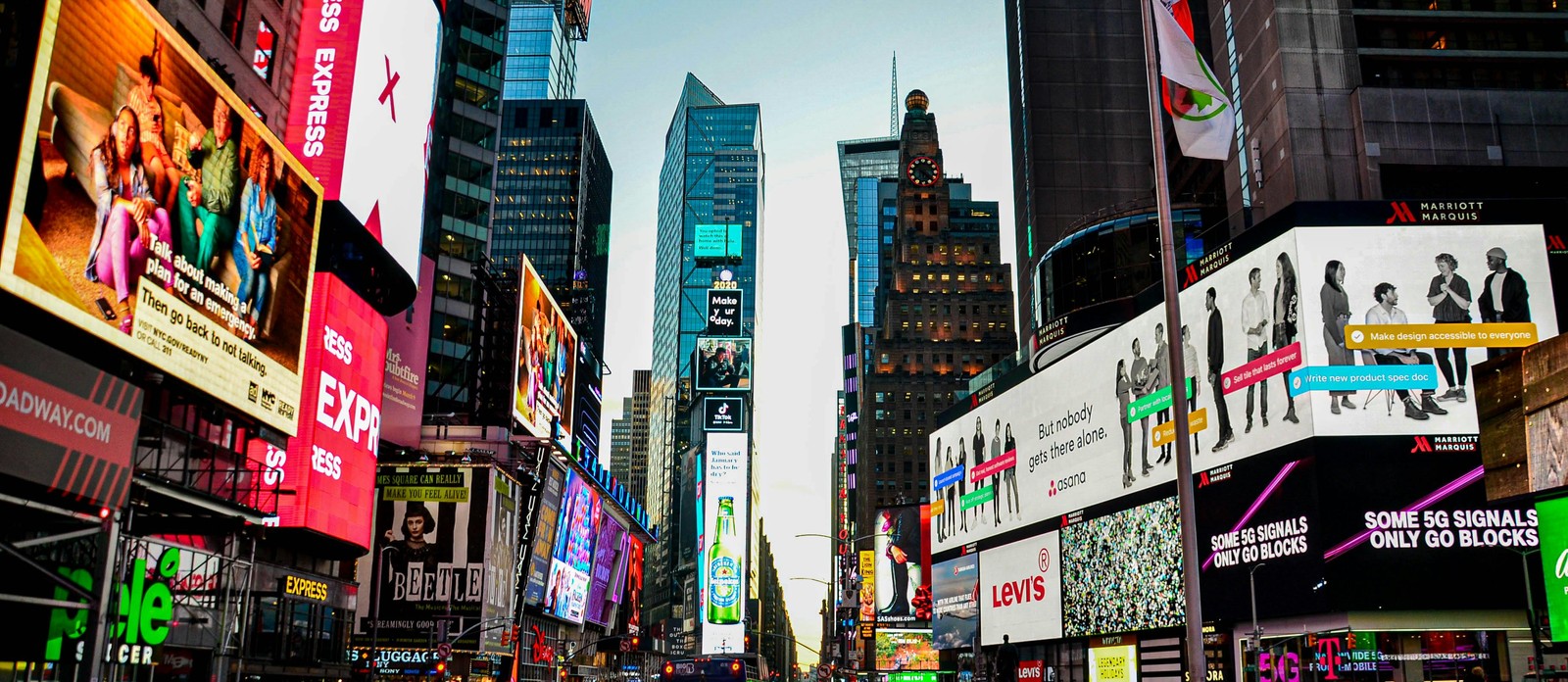
Image: Roberto M.

You've seen Times Square on TV a thousand times. You may have even stood there. But there are plenty of secrets about the site that most people don’t know. For example, the building that the world watches every New Year's Eve is almost empty inside. The red stairs everyone poses on are actually a roof. The ball only exists because the city banned fireworks in 1907. And before any of that, the neighborhood was so vice-ridden that locals called it "Satan's Circus." Here are 10 facts about the most visited place in America.

1
The ball drop only exists because the city banned fireworks
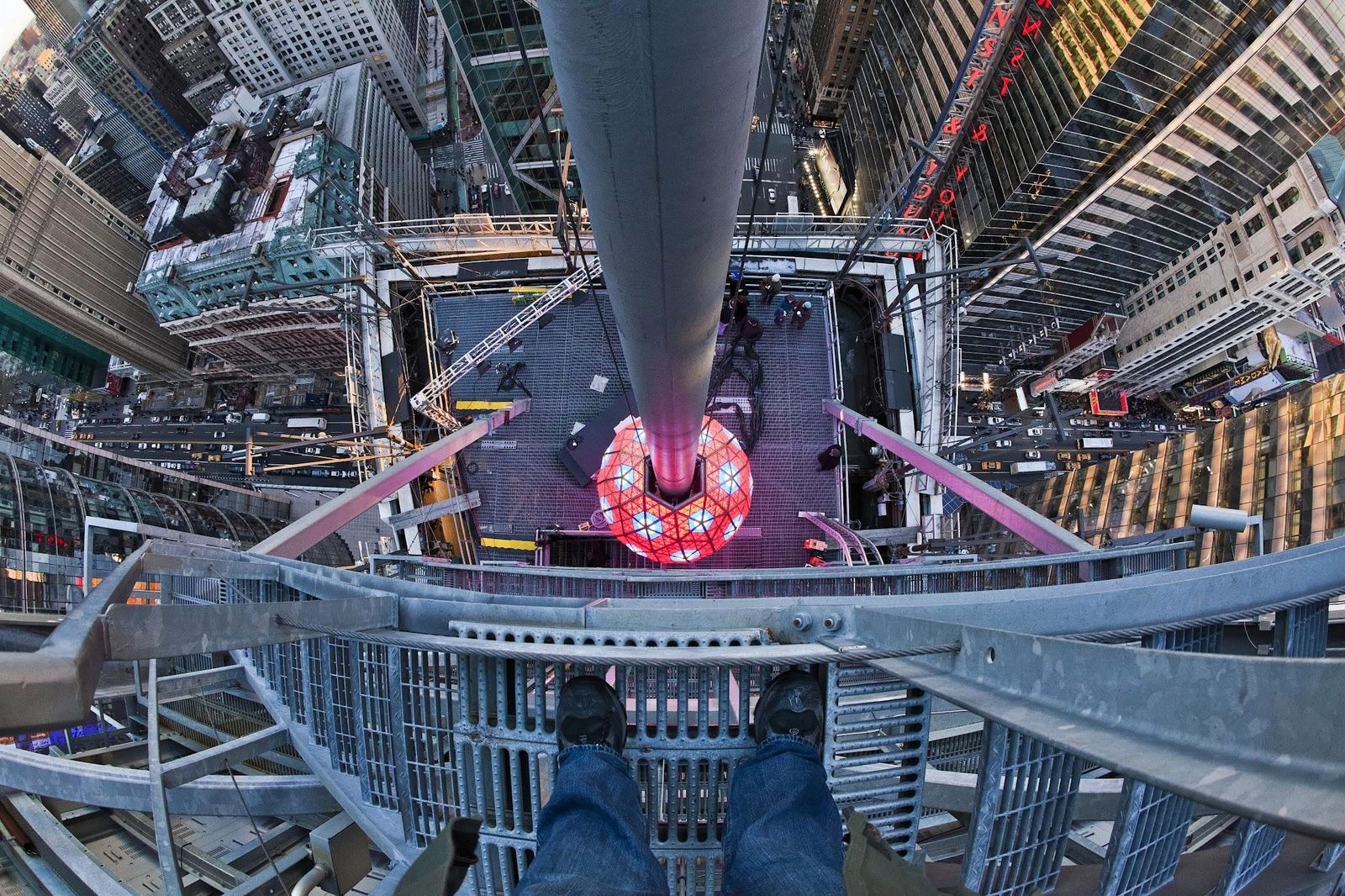
Image: Anthony Quintano, CC BY 2.0, via Wikimedia Commons

New Year’s Eve celebrations began in Times Square as early as 1904. That year, New York Times owner Adolph Ochs threw an extravagant fireworks party to christen the paper’s new headquarters.

Two years later, the city banned fireworks over fire hazard concerns. Ochs’ chief electrician, Walter Palmer, proposed a "time-ball" to replace the pyrotechnics. This would imitate a navigational device used by ships. So, on December 31, 1907, a 700-pound iron-and-wood ball, five feet in diameter, lit by 100 twenty-five-watt bulbs, made its first descent from the flagpole atop One Times Square.

The tradition has continued every year since, except in the wartime dimouts of 1942 and 1943. Today’s ball is the ninth version and is the largest ever: 12.5 feet wide, weighing 12,350 pounds, and covered in 5,280 handcrafted Waterford crystal discs.

2
It used to be called "Satan’s Circus"
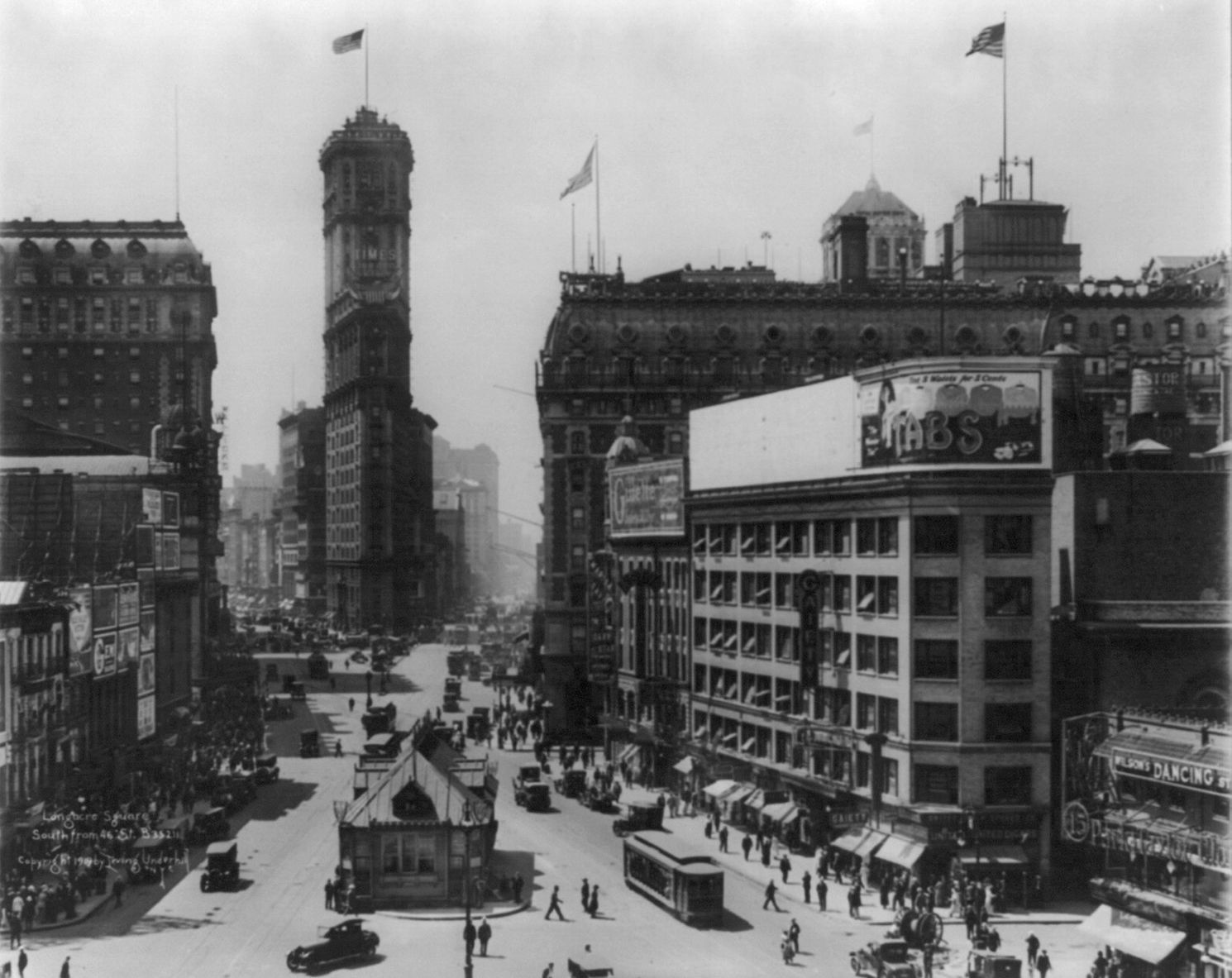
Image: Miscellaneous Items in High Demand, PPOC, Library of Congress, Public domain, via Wikimedia Commons

The area was once called Longacre Square, named after London’s carriage district, because the neighborhood was the center of New York City’s horse carriage industry. It was also one of the most vice-ridden corners of Manhattan. In 1901, the surrounding blocks contained 132 brothels and at least as many saloons. Police called the area "the Tenderloin." Locals called it "Satan’s Circus."

The transformation began when the New York Times decided to build its new headquarters there, betting on the city’s first subway line, which was already planned to run beneath the block. In 1904, the area was officially renamed Times Square in a public ceremony. Later that year, the newspaper moved into its gleaming new tower, then the city’s second-tallest building. The Times only stayed there for 9 years before relocating to larger offices on West 43rd Street. But the name it left behind proved permanent.

3
It was once one of the most dangerous blocks in America
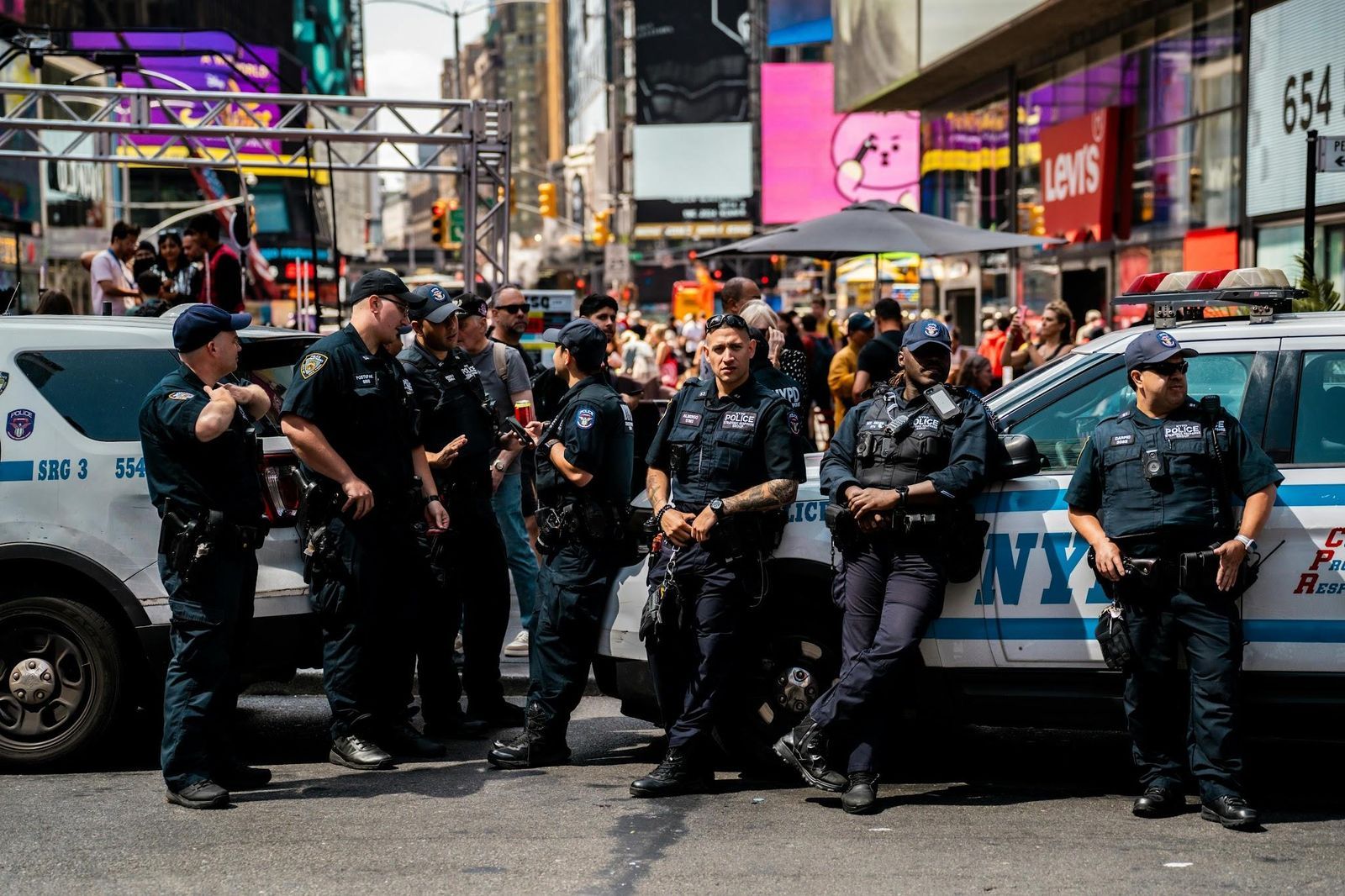
Image: Charles A. Pickup

While it lost its "Satan’s Circus" nickname long ago, the tourist-friendly Times Square most visitors know today is almost unrecognizable from what it was just four decades ago. By 1984, more than 2,300 crimes were being committed every year within a single-block radius.

The streets were dominated by drug dealers, street crime, porn and peep show theaters, and open prostitution. The TKTS discount theater ticket booth, opened in 1973, was conceived as an emergency measure, an attempt to pull foot traffic back into a neighborhood that businesses had abandoned. The City of New York and the State of New York, as well as private investors and the non-profit Times Square Alliance, collaborated to reduce the crime rate and welcome the commerce and brands that eventually turned Times Square into a tourist hub.

By 2001, major felony offenses had fallen 62.3% from their 1993 peak. Today, Times Square is one of the most policed and most surveilled public spaces in the United States, with a dedicated NYPD substation on the premises. The same block that was America’s most notorious danger zone now draws 50 million visitors a year.

4
The TKTS red stairs are actually a roof
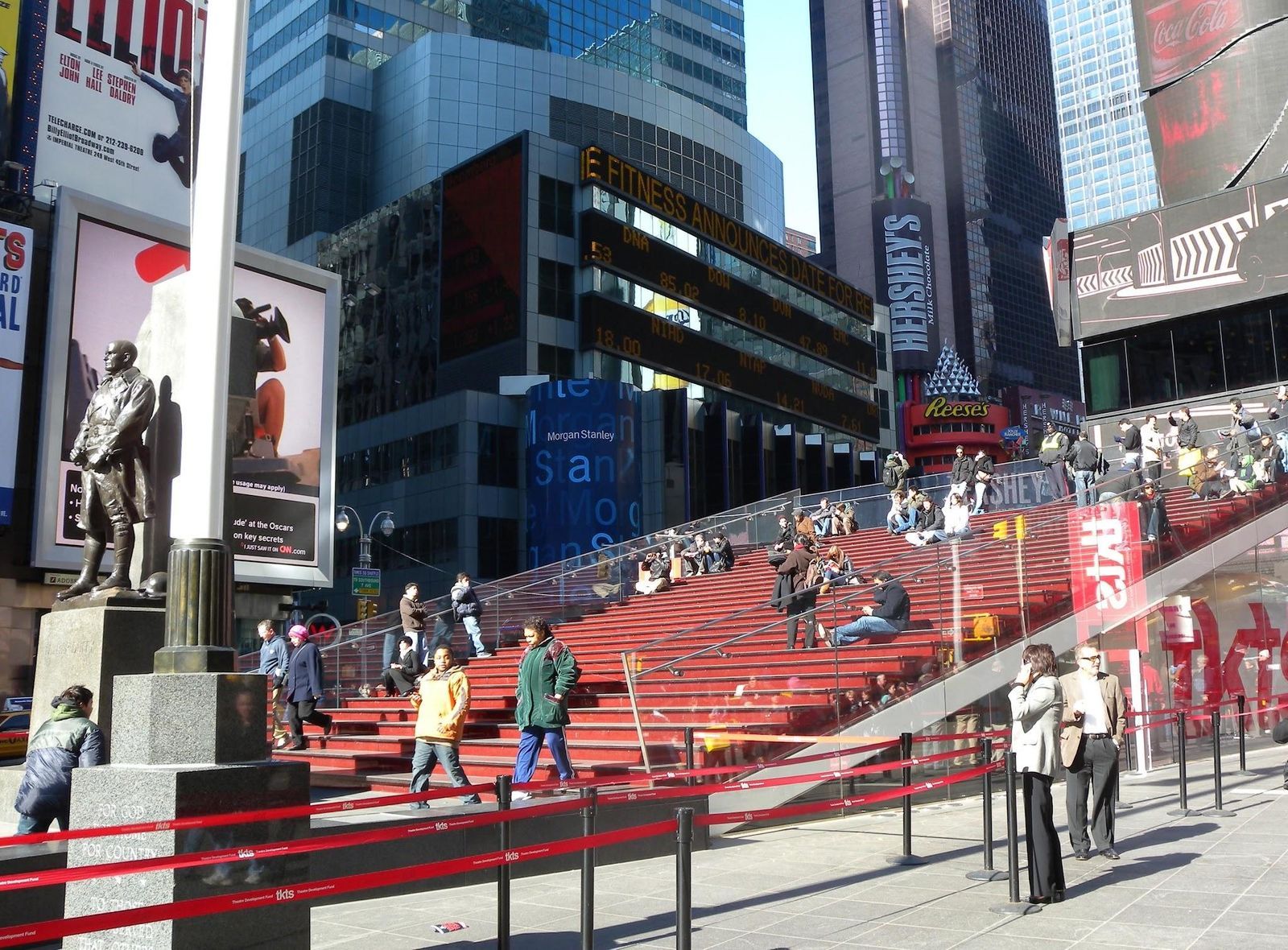
Image: Jim.henderson, Public domain, via Wikimedia Commons

Most of the millions of tourists who climb the famous ruby-red stairs in Times Square assume they’re just a viewing platform. In fact, they’re a roof. Underneath the 27 steps sits the TKTS booth, operated by the Theatre Development Fund, where theatergoers can buy same-day Broadway and off-Broadway tickets at discounts of up to 50%.

In 1999, a design competition was held for a permanent replacement. The winning concept proposed building the new booth’s roof as a public staircase. It would be a bleacher-style ascent that would give visitors an elevated vantage point over the square. The structure was completed in October 2008. It glows red at night because it is lit entirely from below. About 13,000 people walk past it every day.

5
New York City law requires the lights to stay on
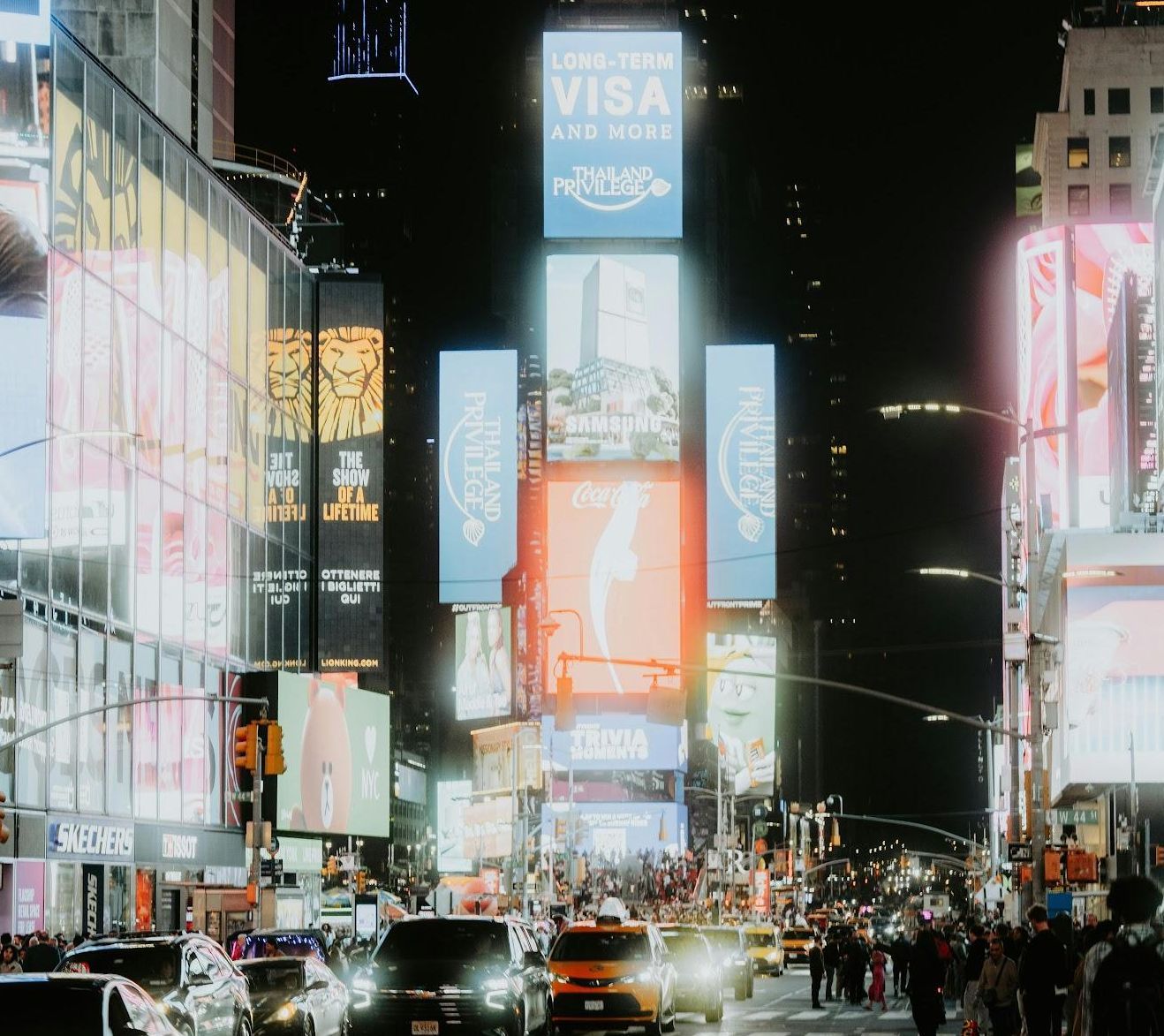
Image: Luke Miller

Did you know that Times Square stays aglow by law? A 1987 New York City zoning ordinance requires all new developments and major enlargements on blocks in the area, with frontage on Seventh Avenue or Broadway, to include large-scale illuminated signage.

The regulation was introduced to protect the district’s visual character after years of blank-faced modernist towers had dulled its energy. Buildings are legally required to display a minimum illuminated surface area, and signage must remain lit during designated hours.

6
The most famous building there is almost empty
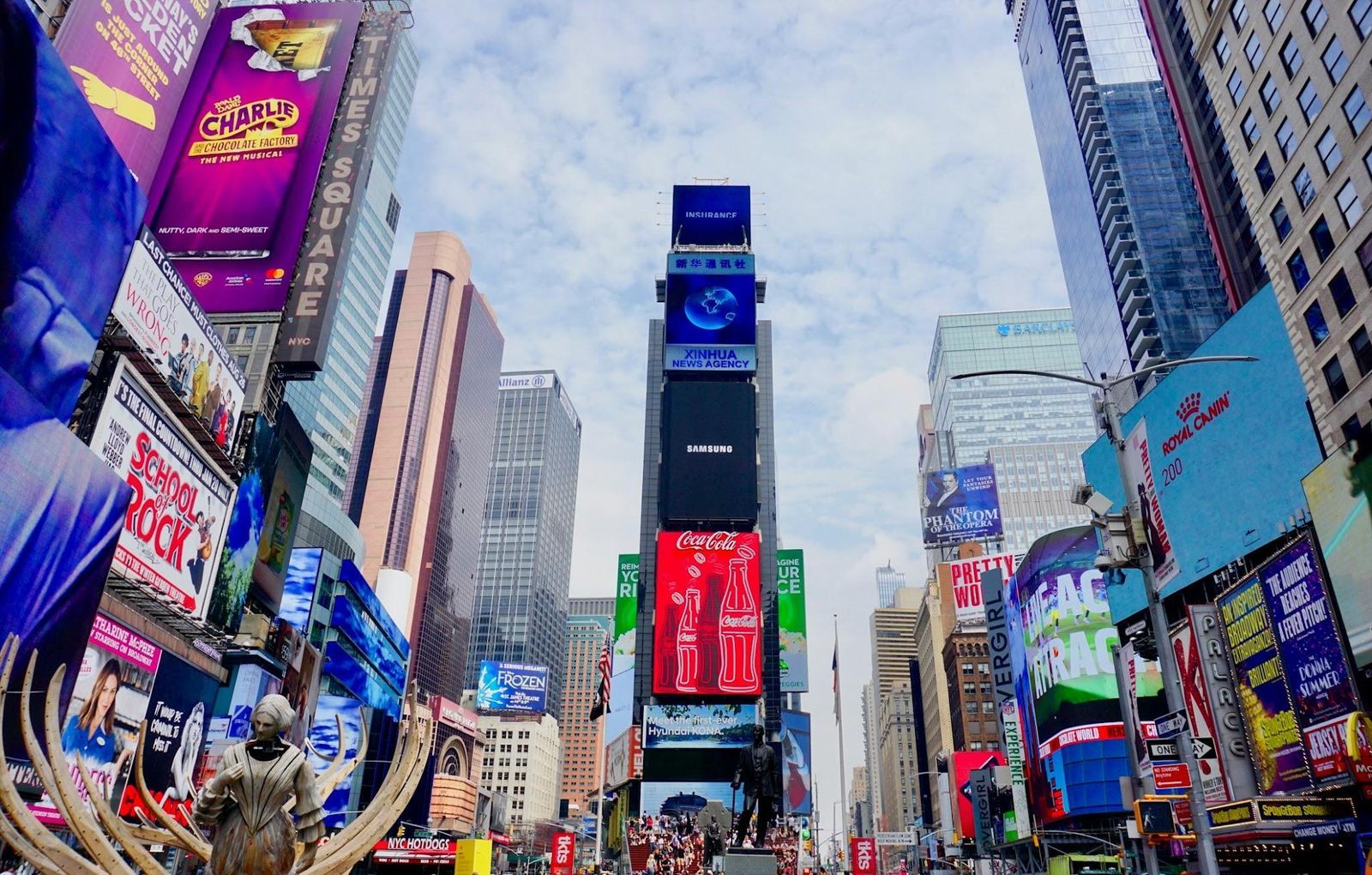
Image: Quick PS

One Times Square building is famous; the whole world watches the ball drop from it every New Year's Eve. But few people know that it’s all but empty inside. It has no regular office tenants. Its upper floors are largely unused.

When the New York Times vacated in 1913, the building passed through several owners and eventually became what it is today: a structure whose primary economic purpose is its skin. Still, the billboard faces on its exterior generate millions of dollars per year — a single advertising slot can command upwards of $4 million annually. In effect, One Times Square is a 25-story billboard dressed as a skyscraper.

7
50 million people visit every year, more than all Disney Parks combined
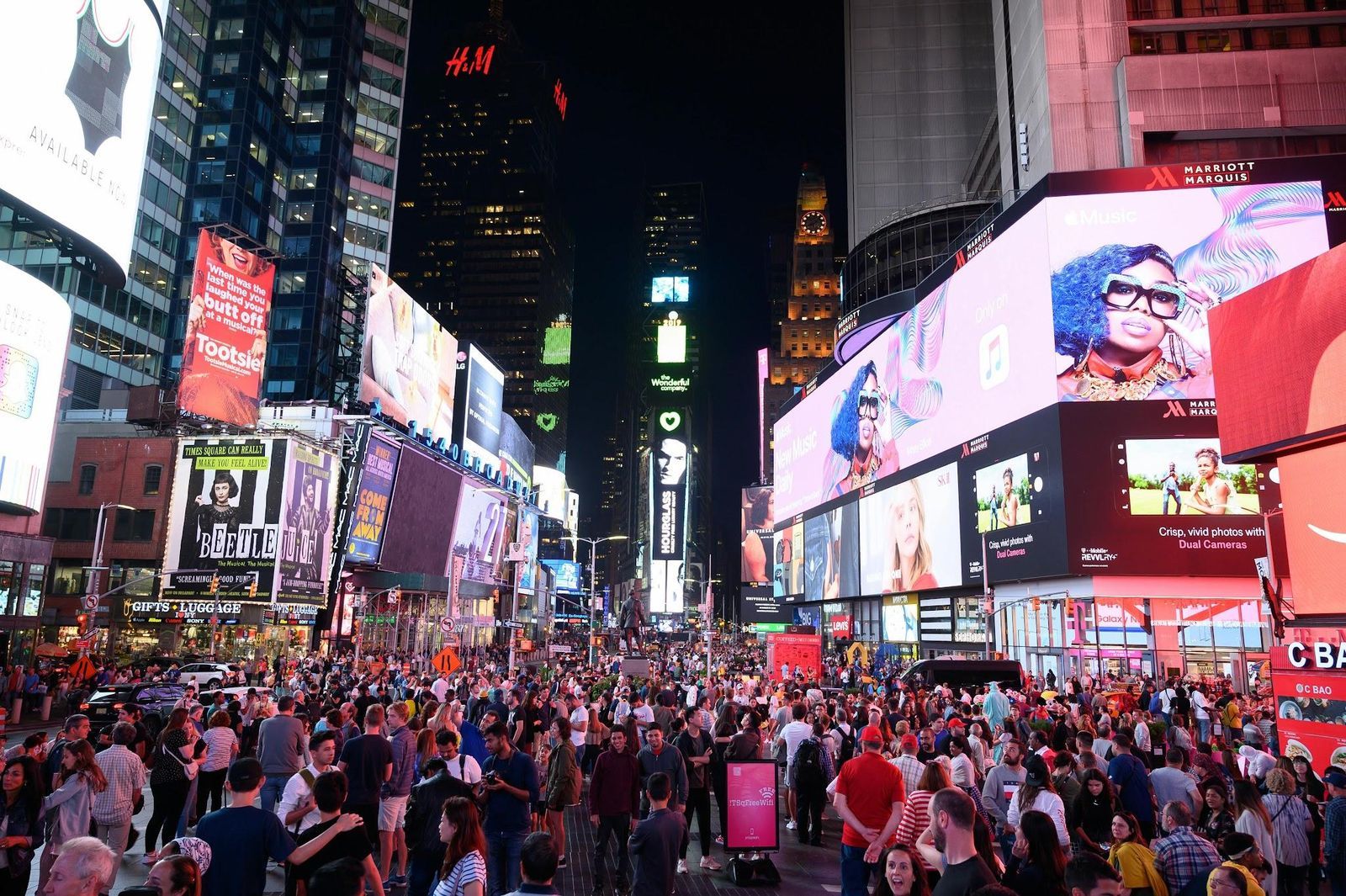
Image: Benoit Dujardin

Times Square draws an estimated 50 million visitors annually —more than all Disney theme parks worldwide combined. On a typical day, approximately 330,000 people pass through. On peak days, that number exceeds 460,000.

Its official website notes that more people walk through Times Square each year than live in the entire country of Iceland. Visitor spending totals roughly $4.8 billion per year, and for every dollar a tourist spends anywhere in New York City, approximately 22 cents are spent within Times Square’s few blocks.

After a dip during the pandemic, tourism to New York City has rebounded strongly, with the city welcoming over 65 million visitors in 2025 and projecting 67 million in 2027. Times Square remains the single biggest draw within the city, accounting for a disproportionate share of that spending.

8
It’s not actually a square; it’s two triangles
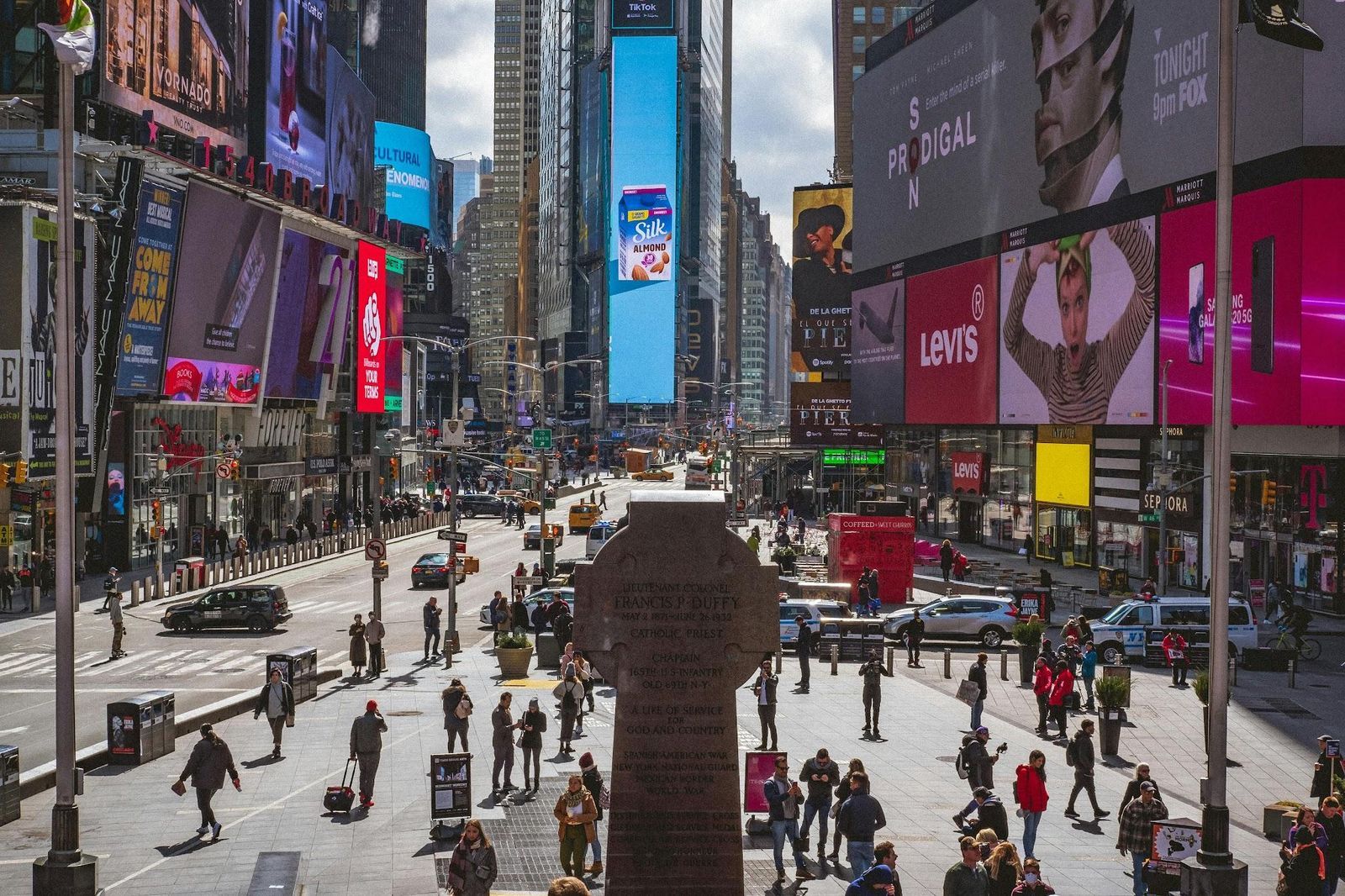
Image: Cesar Done

Geometrically speaking, Times Square is not a square. It’s more like a bowtie; two elongated triangles formed where Broadway, a diagonal road that predates the Manhattan street grid by centuries, cuts across Seventh Avenue.

The city’s famous grid was laid out by the Commissioners’ Plan of 1811. Broadway, an ancient Indigenous trade route that became a colonial road, was already there and simply too important to straighten. Every point where it crosses a major avenue creates an irregular intersection, and Times Square is the most famous of them.

9
It has witnessed incredible moments in American history
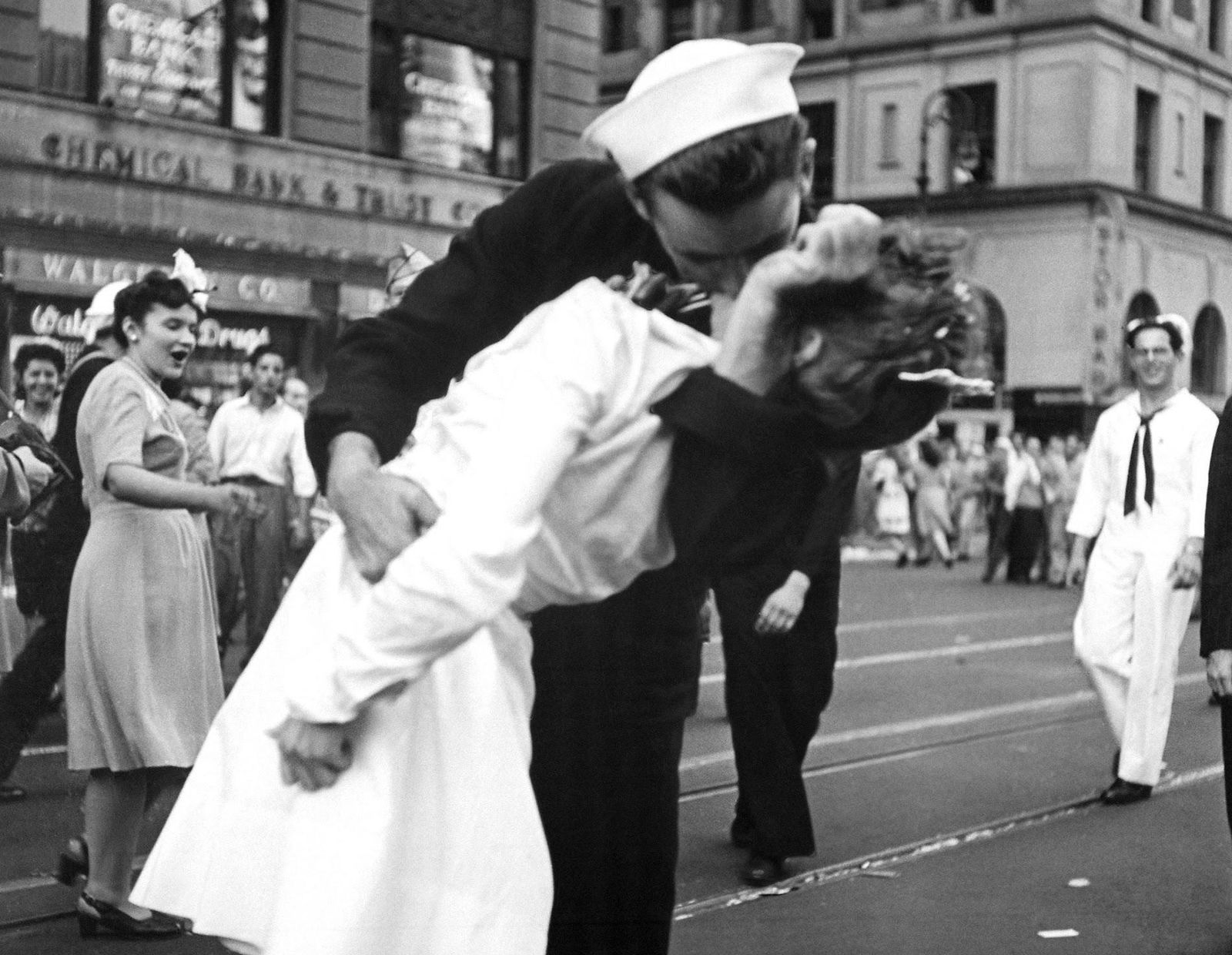
Image: Victor Jorgensen, Public domain, via Wikimedia Commons

Times Square has functioned, again and again, as the place where Americans gather when history breaks. On May 8, 1945, a.k.a. V-E Day, crowds flooded the streets to celebrate the end of the war in Europe. Three months later, on August 14, 1945, a.k.a. V-J Day, the moment Japan’s surrender was announced, ending World War II entirely, the square erupted again.

Life magazine photographer Alfred Eisenstaedt was in the crowd and photographed a sailor spontaneously grabbing a nurse in white uniform and kissing her, an image published in the magazine. Also, on December 31, 1999, the world watched Times Square’s ball drop as the year 2000 arrived and Y2K fears proved unfounded.

10
Buildings are required by law to display bright signage
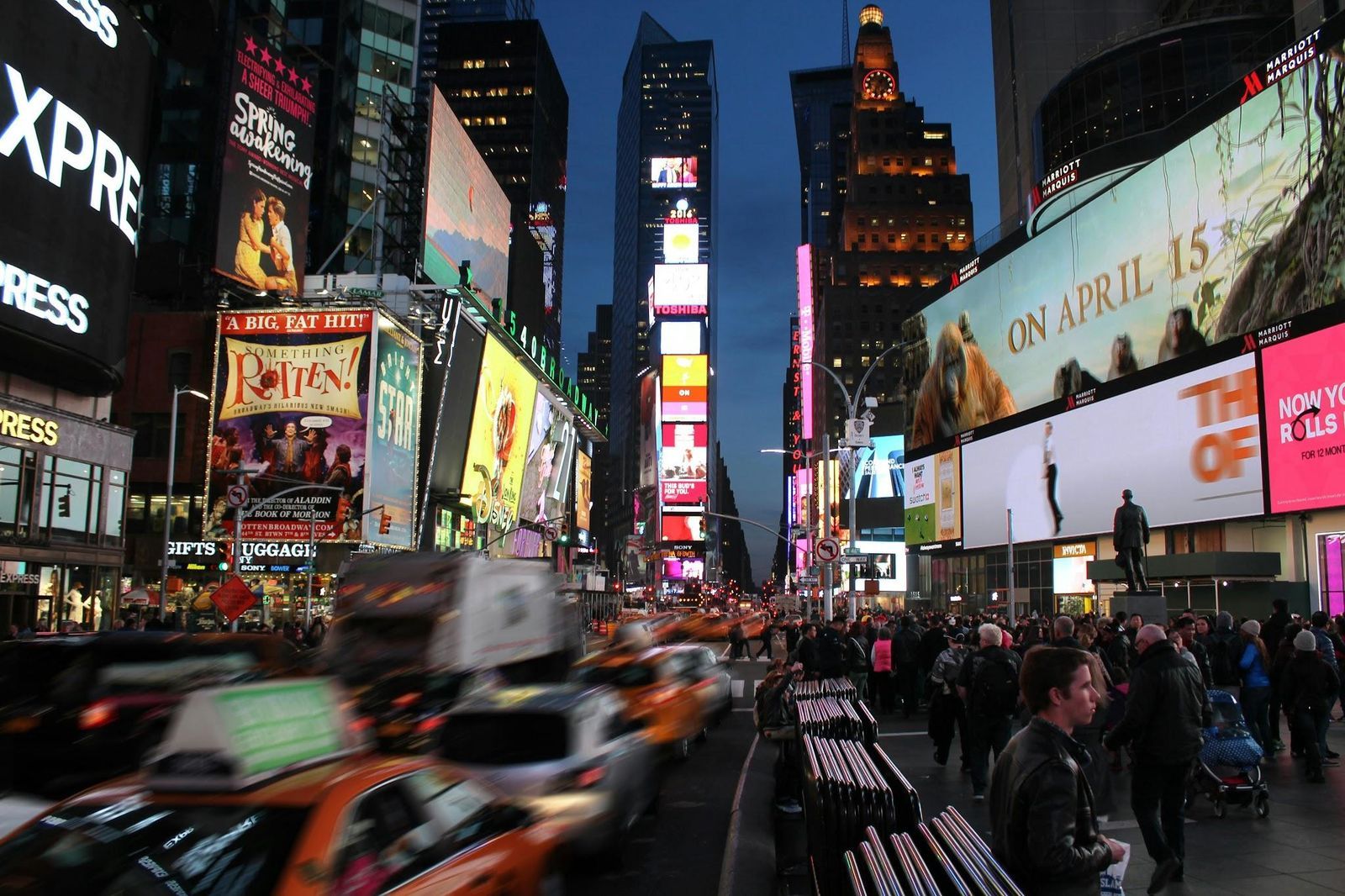
Image: Owen Barker

The exterior of a Times Square building generates more revenue per square foot than almost any interior use could. Running a single billboard requires no HVAC, no tenant improvements, no elevator maintenance, no building management. It requires a screen and electricity. The result is a district where the most valuable real estate in America is literally the surface of things.

Building owners sometimes spend tens of millions of dollars on facade renovations not to improve the building but to improve the view of the building.

History History 3 min read

Lawn and order

How the American lawn was born: 10 moments that shaped our frontyards

Image: Gunnar Ridderström

The American lawn didn’t sprout overnight. It grew from European ideals, industrial changes, suburban planning, and clever marketing. From elite colonial estates to postwar tract homes, each step shaped how grass became a national obsession. Here are 10 factual milestones that explain how a simple patch of green became a defining feature of U.S. domestic life.

1
European origins

Image: Martin Zenker

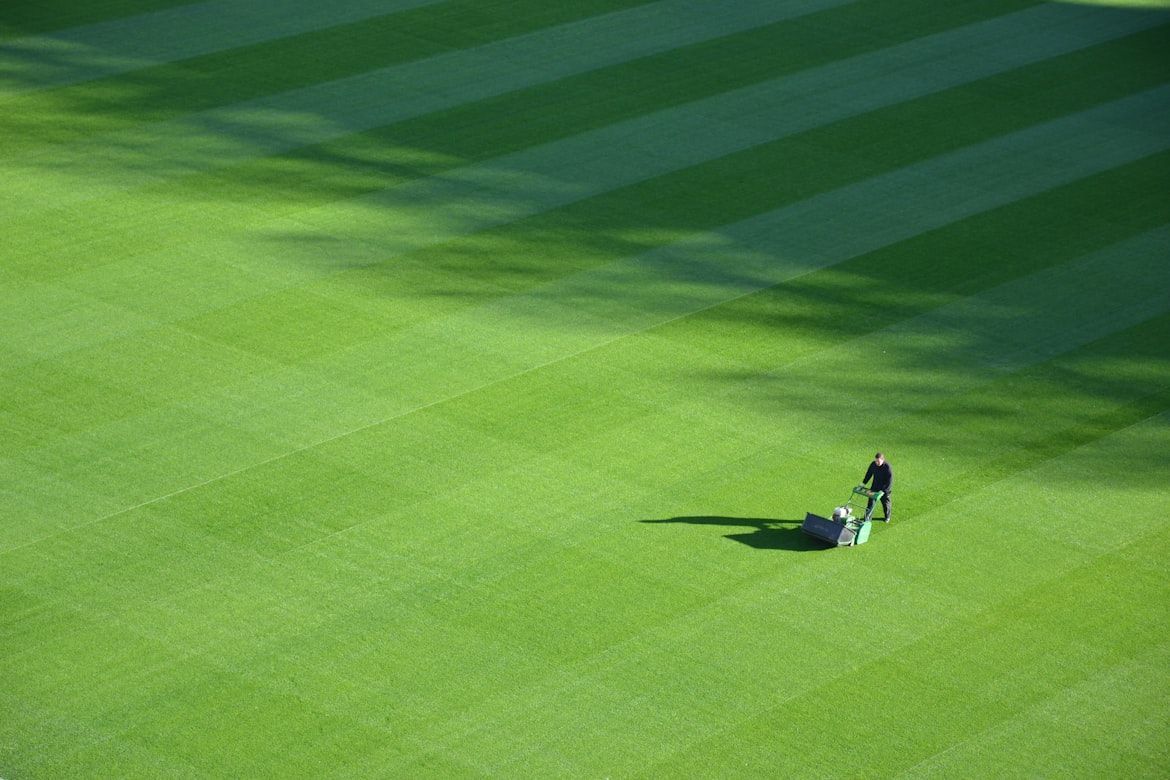
Lawns — and by lawns we mean closely mown grassy spaces — began appearing in 17th- and 18th-century Britain and France as signs of wealth. This was because only aristocrats or large estates could afford to keep grass short and manageable.

Before mechanized tools, scythes, shears, or grazing animals were used to maintain lawns, so turf was largely limited to those who could own the necessary manpower or animals. Early American colonists imported these aesthetics and tried to replicate them in their architecture and homes, albeit less formally.

2
Public parks set the bar

Image: Carl Newton

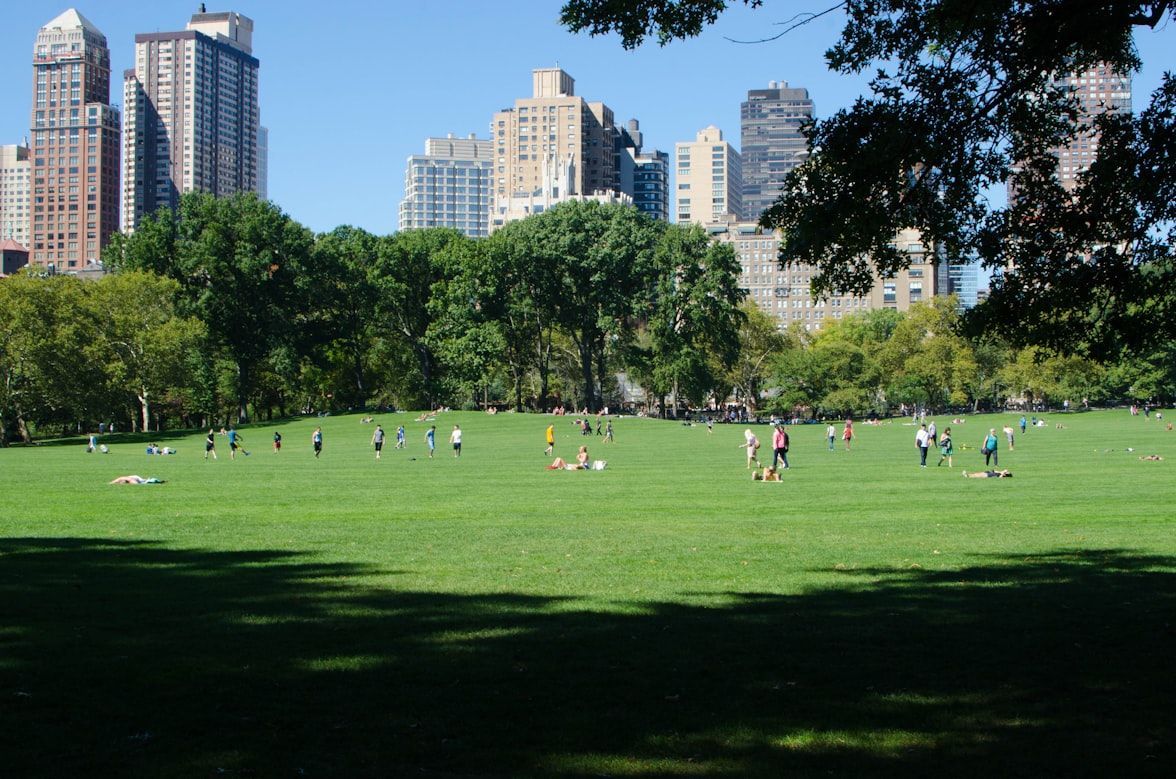
Early urban park designers, strongly influenced by European landscaping ideas, laid out wide expanses of turf in city parks, showing the public a "civilized" green aesthetic. That made clipped lawns part of the civic-space ideal, and not just a private luxury.

These parks helped cement the association between grass lawns, order, leisure, and modern urban life in American culture.

3
Mechanical breakthroughs

Image: Daniel Watson

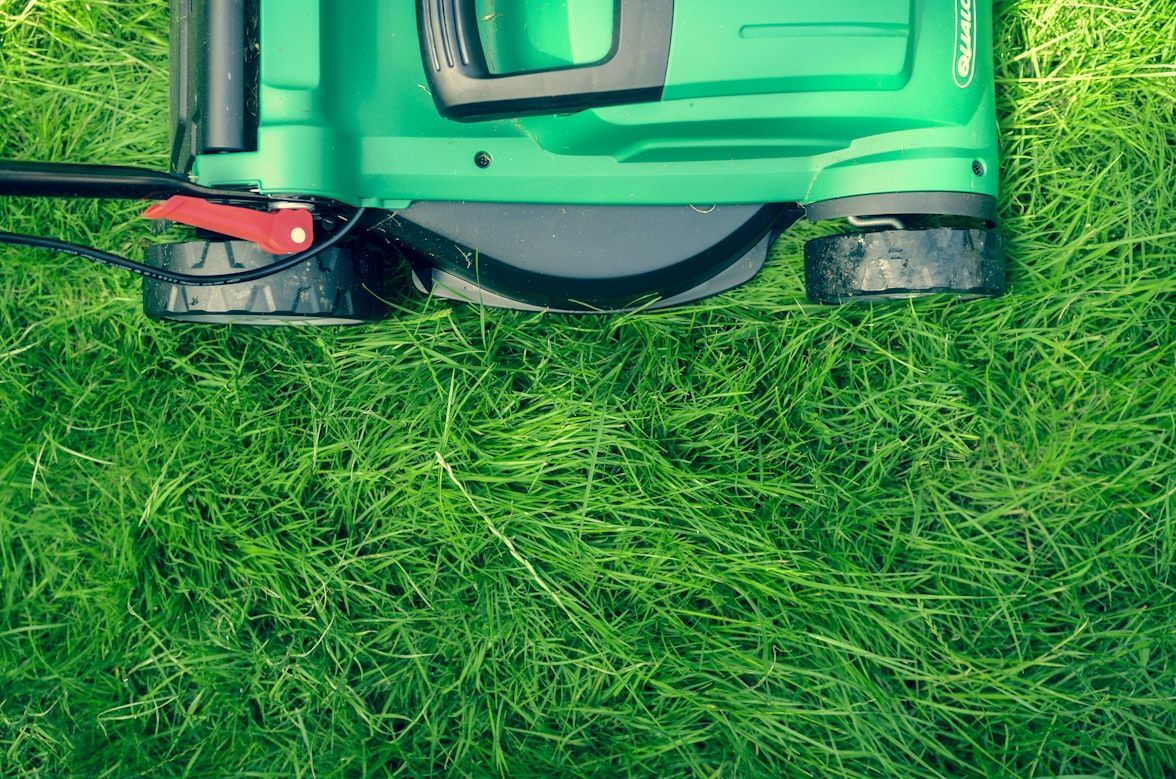
In 1830, English engineer Edwin Beard Budding patented the first mechanical lawn mower, inspired by a wool-mill reel used to trim cloth.

Budding’s design used a cylinder of blades powered by a rear roller, making it easier to cut grass evenly, and largely replaced laborious scything or grazing, cutting down the cost of maintaining such status symbols in the process.

4
Et pluribus lawnus

Image: Gang Hao

Once affordable lawn mowers—including lighter push-mower variants in America—became popular, maintaining a lawn became feasible for aspiring middle-class homeowners.

This sparked a major transformation in both private and public architecture, as many well-to-do homes that before could not afford it began attempting to replicate the European lawn style in some fashion or another.

5
Suburban dreams

Image: Venrick Azcueta

For decades, lawns remained a steady feature of American architecture and green-space design; however, it wasn’t until after WWII that the true lawn boom began. Returning veterans and government-backed mortgages fueled rapidly expanding suburbs.

Developer William Jaird Levitt and his company built thousands of nearly identical homes, each with its own front and back lawn. By the 1950s and ’60s, lawns had become central to the "American Dream," symbolizing stability, middle-class respectability, and neighborhood uniformity.

6
A bit of chemical help

Image: Victor Furtuna

After the war, synthetic fertilizers (derived partly from wartime chemical technologies) became widely available to consumers, enabling lush, uniform lawns even in soil and climate conditions unsuited to grass.

This lowered the barrier to achieving a "perfect" lawn, further popularizing lawns as part of the American identity and raising the expectations of what the perfect lawn should look like.

7
Begone, pesky weeds!

Image: Dmitry Burdakov

In addition to fertilizers, in 1944, researchers discovered 2,4‑Dichlorophenoxyacetic acid (2,4-D), the first widely effective selective herbicide — killing broadleaf weeds while leaving grasses largely unharmed.

Deployed commercially soon after WWII, 2,4-D made maintaining uniform, weed-free lawns much easier and was quickly adopted in home lawn products.

8
Thou shalt keep thy lawn green

Image: Tiago Rodrigues

As suburbs proliferated, lawn maintenance became a shared social norm — homeowners' associations and neighborhood covenants often started to expect regular mowing and upkeep.

Keeping a well-groomed lawn became not just an aesthetic choice but also a mark of civic responsibility and conformity to norms.

9
Environmental worries

Image: Rémi Müller

By the mid- to late 20th century, the ecological cost of the lawn aesthetic became visible: heavy water use for irrigation, chemical runoff from fertilizers and herbicides, and reduced biodiversity as a consequence.

These drawbacks spurred both scientific and public debate about the sustainability of the traditional lawn model — especially in water-scarce regions, where it was both impractical and resource-intensive.

10
The birth of mixed lawns

Image: Ruben Sukatendel

Growing environmental awareness, droughts, and changing tastes have prompted many homeowners and municipalities to adopt drought-tolerant landscaping, native plants, or mixed-species yards instead of the traditional uniform turf.

As a result, today the "ideal lawn" is evolving as we speak: classic turfgrass still remains common, but alternative yard styles now offer more varied ecological, economic, and aesthetic options.

History History 5 min read

We all have secrets

10 historical figures with secrets very few knew about

Image: Adam Nir

Some of America’s most famous figures led lives far more surprising than the history books suggest. Behind the public image of authors, athletes, inventors, and activists were hidden careers, secret missions, and little-known accomplishments. Some worked for intelligence agencies, others concealed entire identities, and a few quietly changed history without telling anyone.

1
Harriet Tubman secretly worked as a Union spy

Image: Kirt Morris

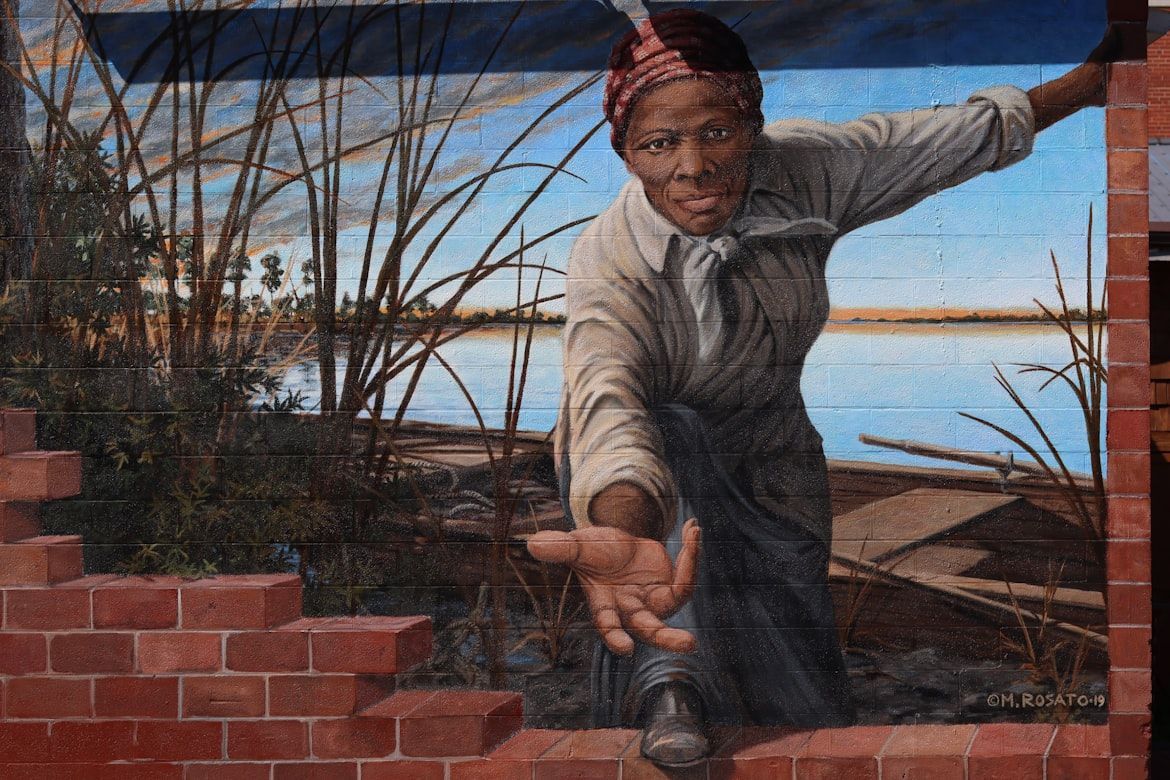
Most Americans know Harriet Tubman for her leadership of the Underground Railroad, but during the Civil War, she also became a Union scout and spy in South Carolina. Working with Colonel James Montgomery, Tubman gathered intelligence from enslaved people living behind Confederate lines near the Combahee River .

In June 1863, Tubman helped lead the Combahee River Raid, guiding Union gunboats through Confederate waters filled with hidden mines. The operation freed more than 700 enslaved people and made Tubman the first woman known to lead a major U.S. military mission.

2
Julia Child worked for the U.S. intelligence agency

Image: FerEstrada, CC BY-SA 4.0, via Wikimedia Commons

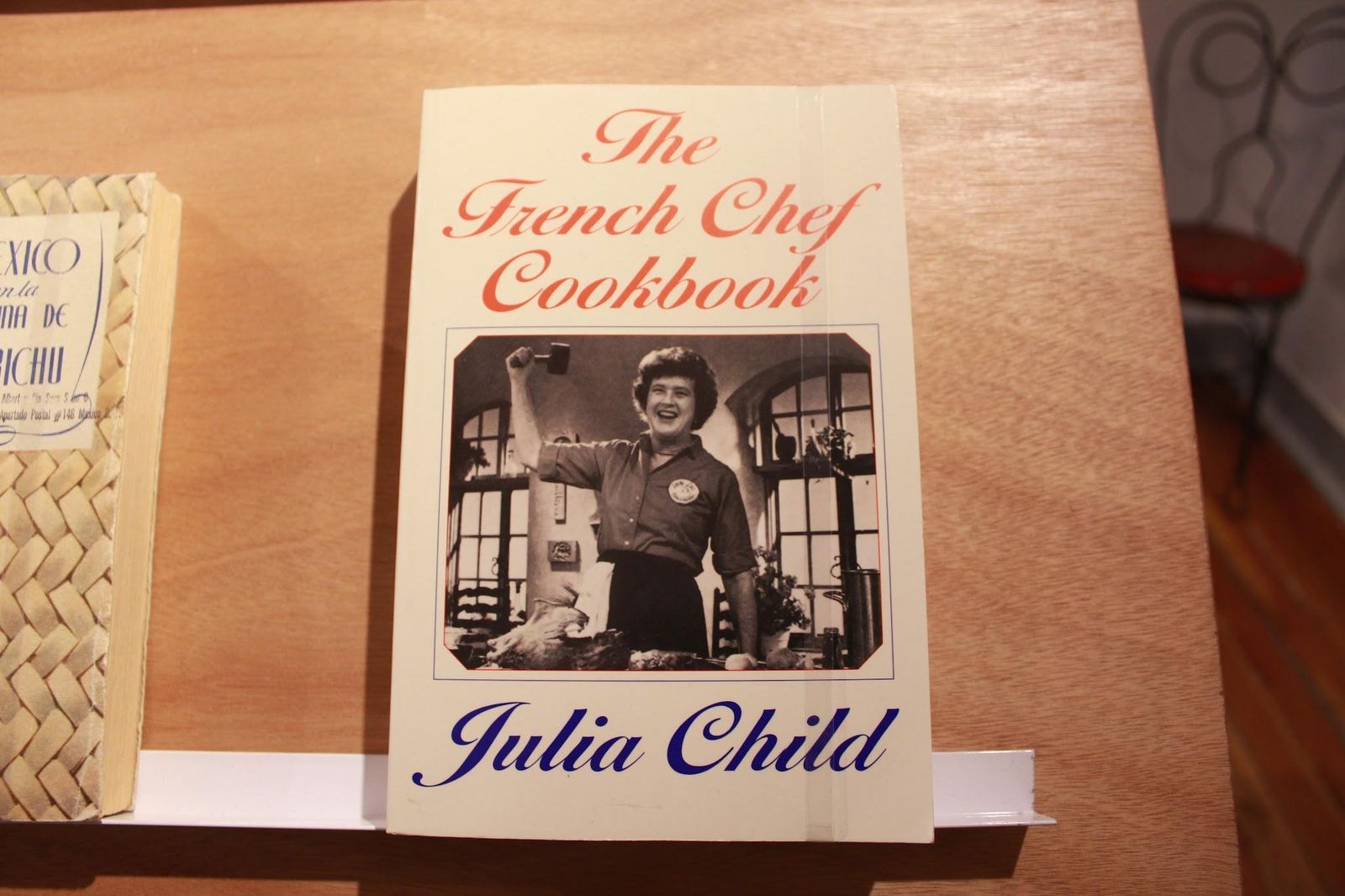
Before becoming television’s most famous chef, Julia Child joined the Office of Strategic Services, or OSS, in 1942 during World War II. The OSS later evolved into the CIA. Too tall to enlist in the Women’s Army Corps, Child instead classified files and overseas communications in Asia.

One of her strangest assignments involved helping researchers develop shark repellent for Navy explosives and emergency rescue kits . The repellent used copper acetate and black dye to create an odor similar to a dead shark.

3
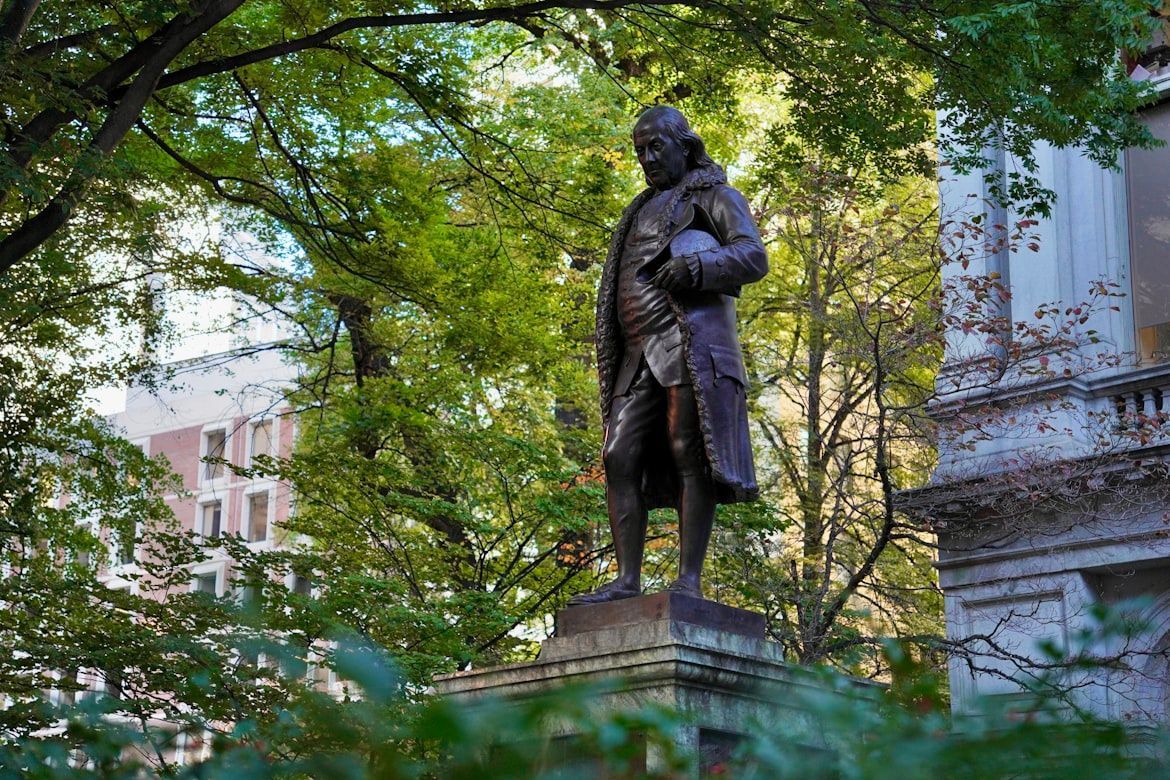
Benjamin Franklin conducted unofficial spy work in Europe

Image: Brett Wharton

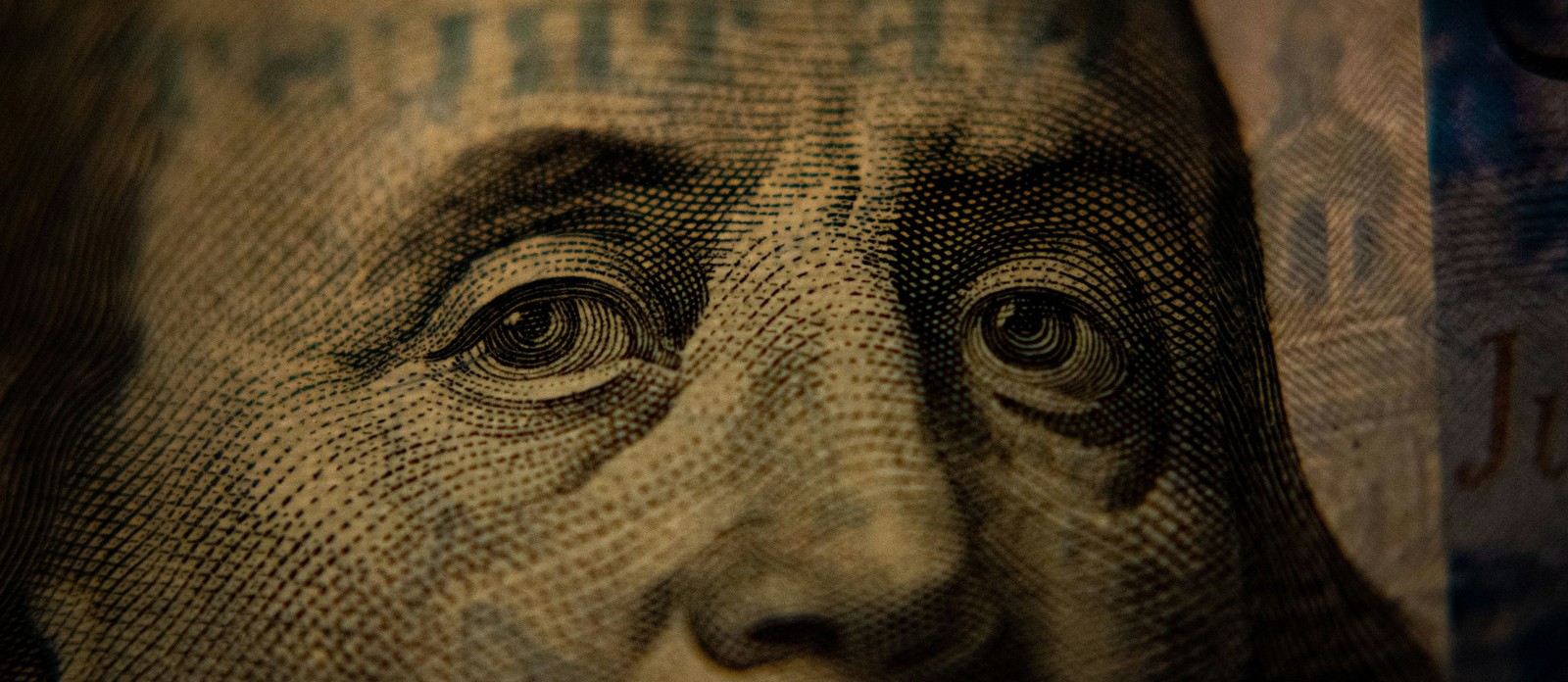
Benjamin Franklin was more than a scientist and Founding Father. During the American Revolution, he quietly acted as an intelligence organizer while serving as ambassador to France beginning in 1776 . Franklin cultivated secret alliances, intercepted information, and used coded correspondence to support the colonies’ fight against Britain.

Operating from Paris, Franklin built relationships with French officials and helped persuade France to support the American cause with money, troops, and naval power. Historians consider his diplomatic intelligence efforts essential to the American victory at Yorktown in 1781 and eventual independence.

4
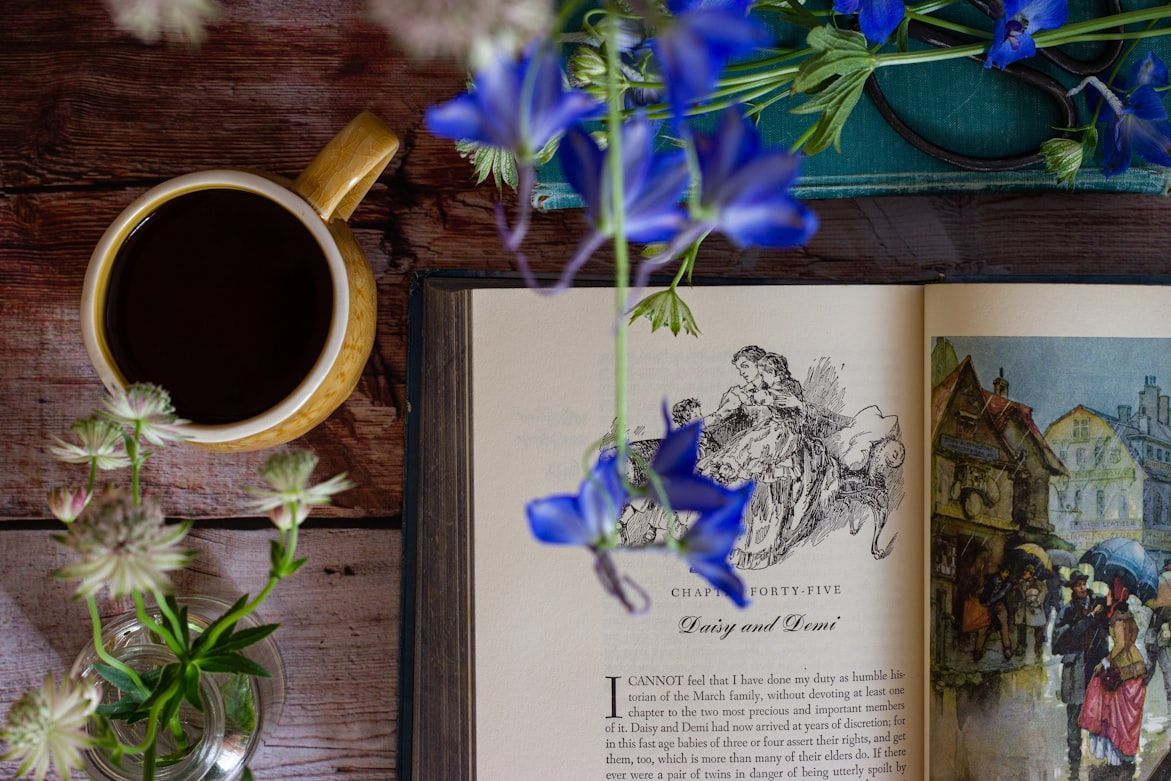
Louisa May Alcott published thrillers under another name

Image: micheile henderson

Louisa May Alcott became a literary icon after publishing Little Women in 1868, but few readers knew that she had already written sensational thrillers under the pen name "A.M. Barnard." These stories featured revenge, hidden identities, forbidden romance, and dramatic crime plots that shocked Victorian audiences.

Alcott used a pseudonym because publishers often expected women writers to produce respectable domestic fiction. Many of her darker stories remained forgotten until scholars rediscovered them in the 1940s. Today, titles like Behind a Mask reveal a far more rebellious side of the beloved author.

5
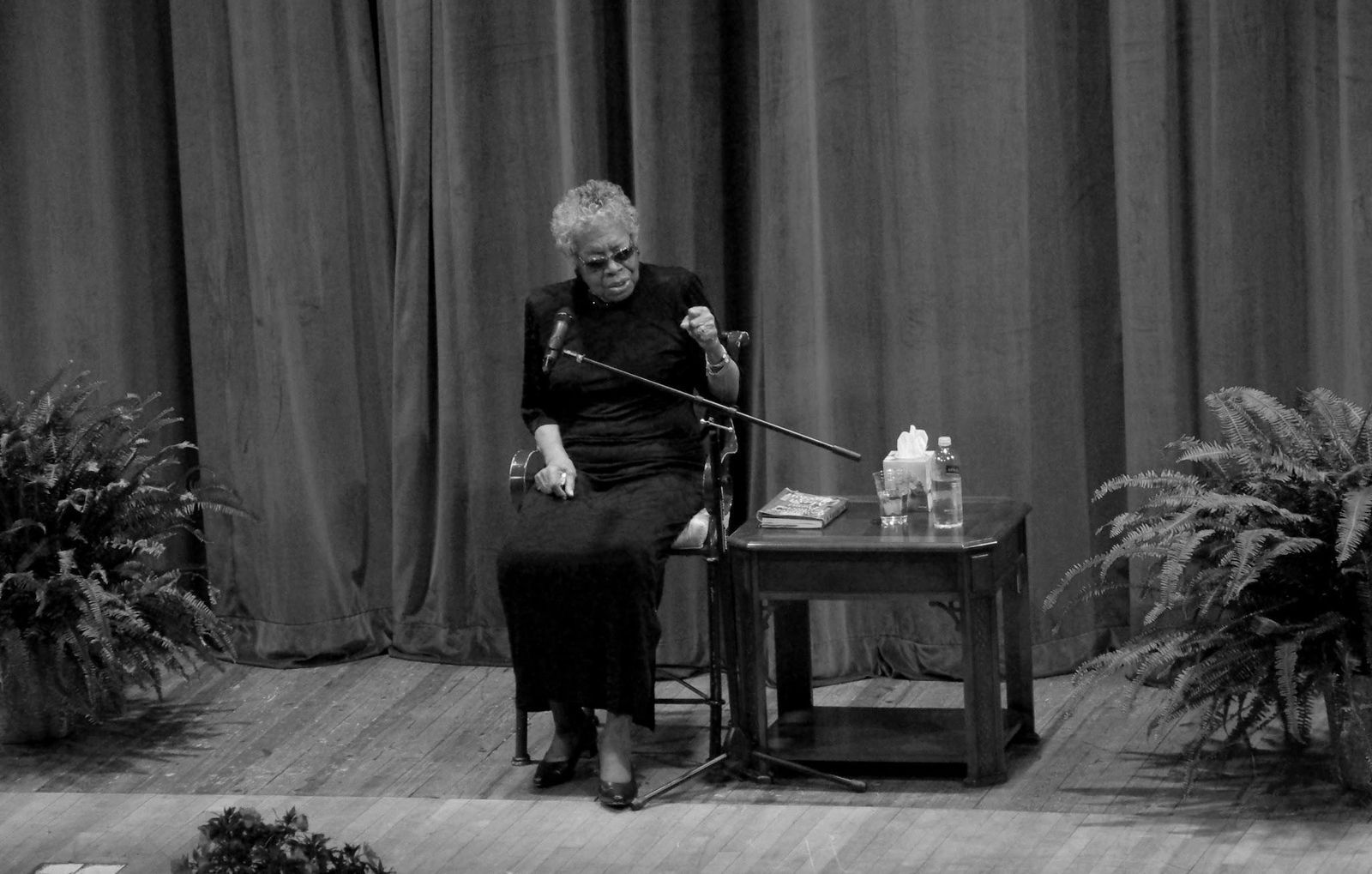
Maya Angelou worked as San Francisco’s first black female cable car conductor

Image: Brian Stansberry (photographer), CC BY 3.0, via Wikimedia Commons

Long before becoming a celebrated poet and author, Maya Angelou made history in San Francisco during the 1940s. At only 16 years old, she applied repeatedly for a conductor job on the city’s cable cars after seeing an advertisement that excluded Black applicants .

Angelou refused to give up despite repeated rejection. She eventually became San Francisco’s first Black female cable car conductor in 1944. Years later, she described proudly wearing the blue uniform while working long shifts across the city before launching her writing and civil rights careers.

6
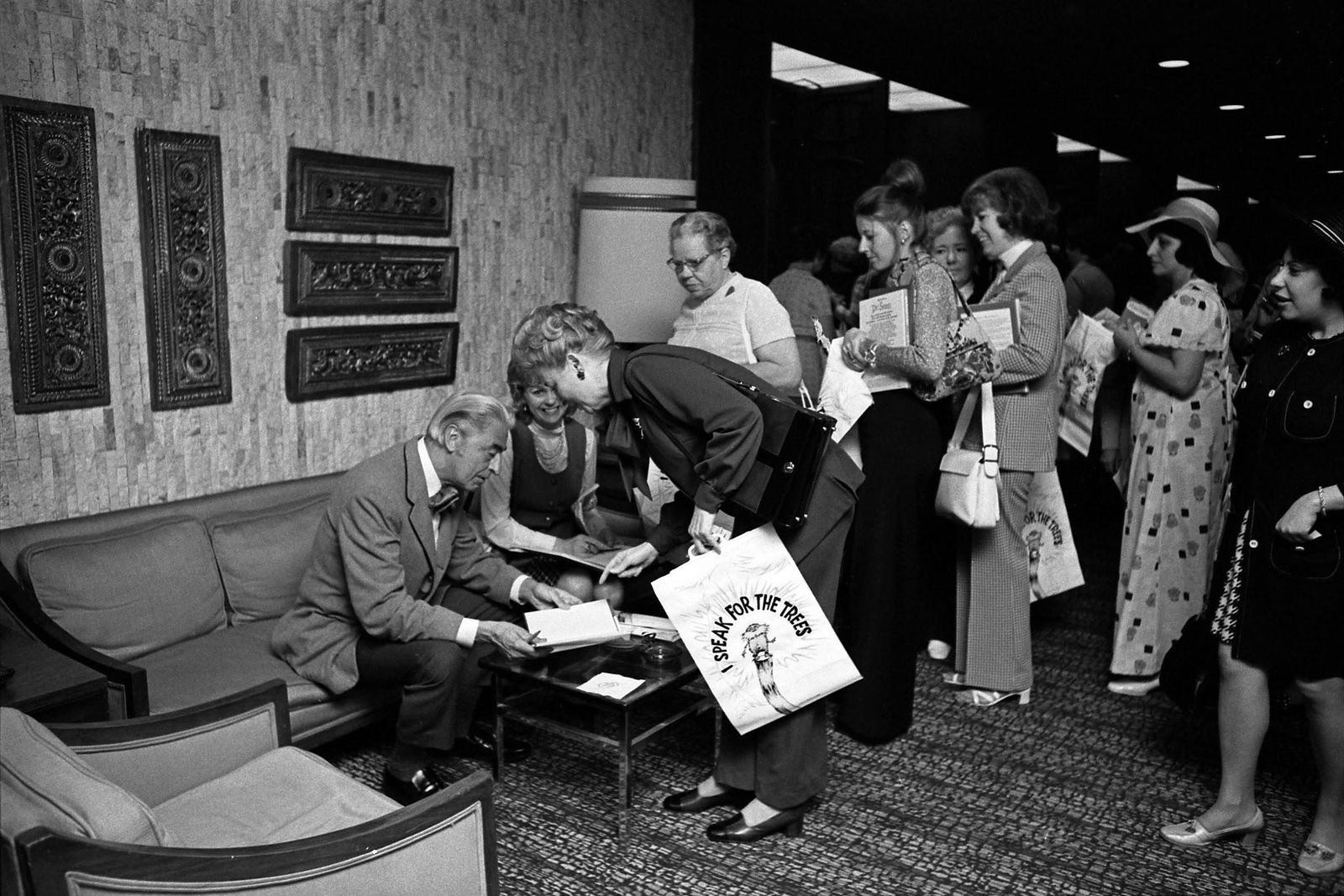
Dr. Seuss created classified wartime propaganda films

Image: Larry Bessel, Los Angeles Times, CC BY 4.0, via Wikimedia Commons

Before writing Green Eggs and Ham and The Cat in the Hat , Theodor Geisel, better known as Dr. Seuss, worked on wartime propaganda during World War II. Between 1943 and 1945, he joined director Frank Capra’s Signal Corps unit to produce military training films for American soldiers .

Geisel also drew political cartoons supporting the Allied war effort and criticizing fascism. Some of his films were classified during the war because they contained military training material. His animated work helped explain battlefield strategy and morale issues to thousands of U.S. troops overseas.

7
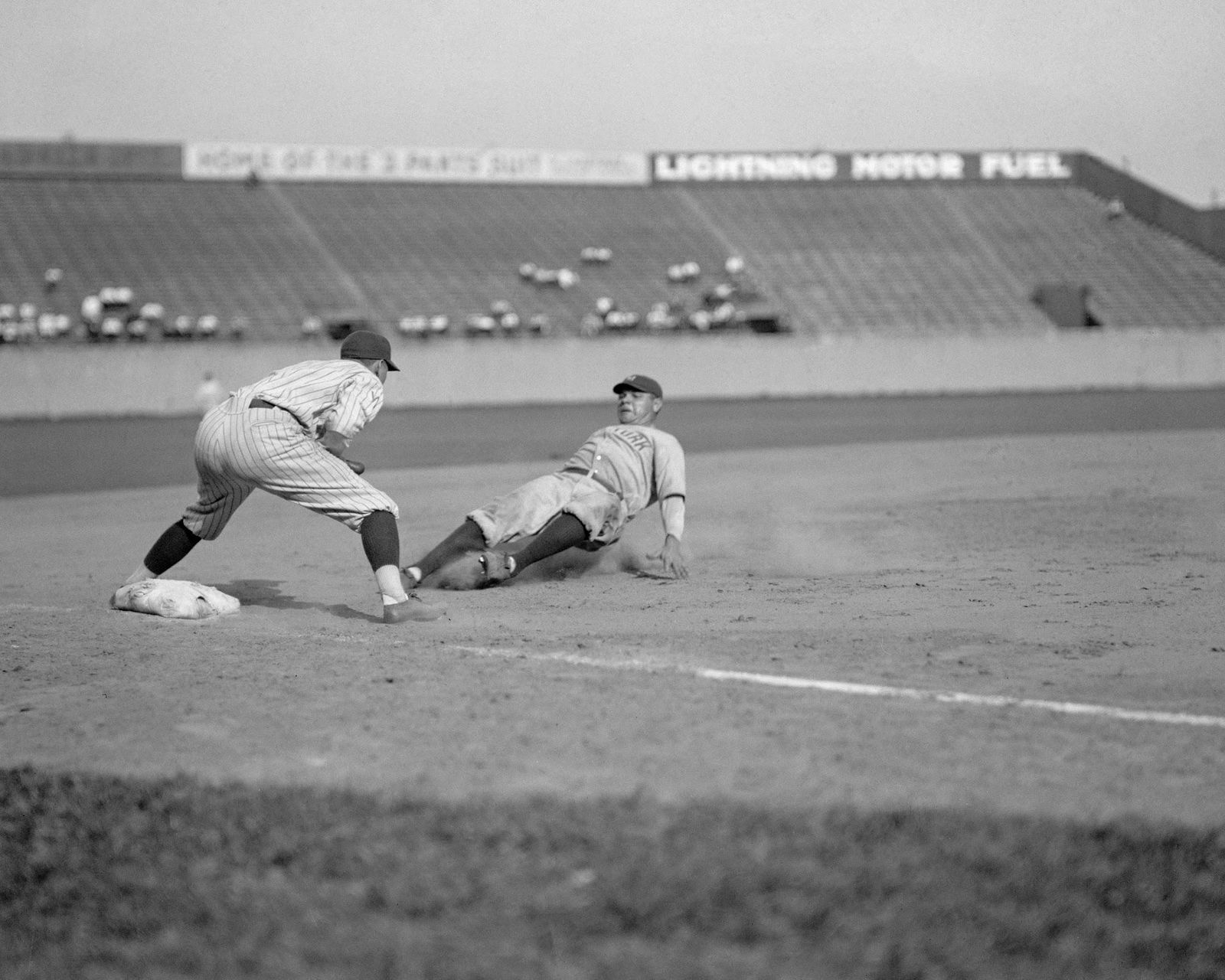
Babe Ruth once played an entire game with a fever over 102 degrees

Image: National Photo Company, Public domain, via Wikimedia Commons

In 1925, Babe Ruth became seriously ill during spring training and collapsed while traveling by train . Newspapers nicknamed the incident "the bellyache heard around the world." Reports from the time described Ruth suffering from a fever above 102 degrees while still insisting on returning to baseball activities.

Despite his condition, Ruth’s determination became part of baseball legend. The illness hurt his performance during the 1925 season, when the New York Yankees finished seventh in the American League. Even so, Ruth rebounded quickly and helped lead the Yankees to championships in later years.

8
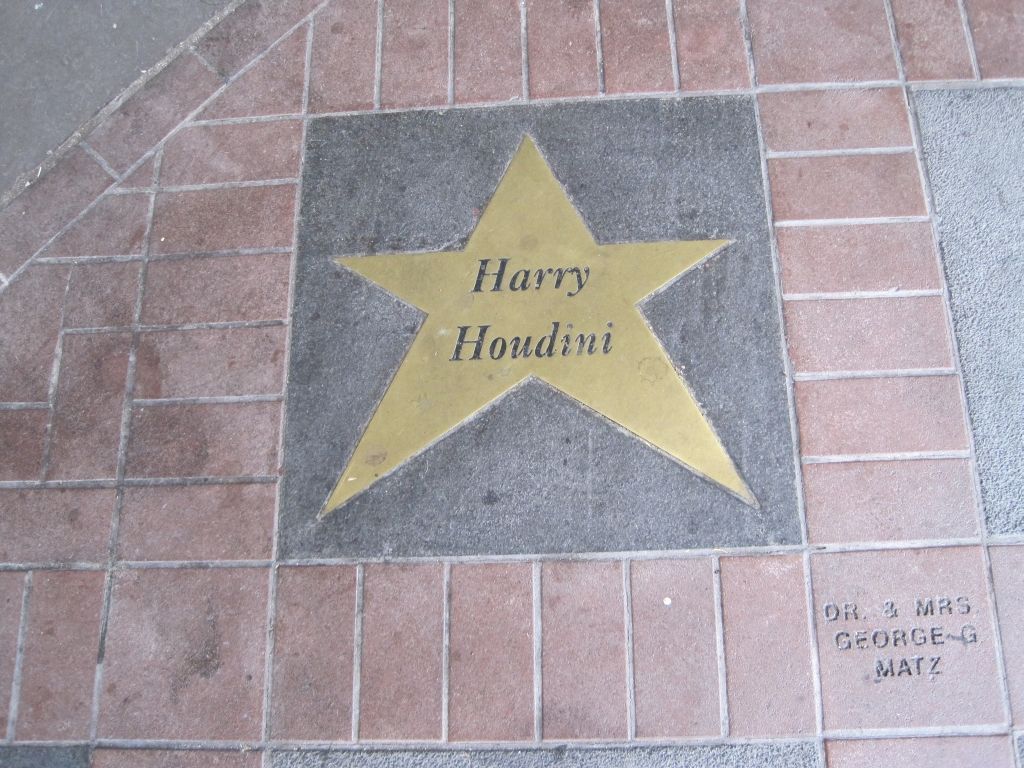
Harry Houdini worked with police departments

Image: Thomas R Machnitzki, CC BY 3.0, via Wikimedia Commons

Harry Houdini’s famous escape acts fascinated police departments across America and Europe in the early 1900s. Officers regularly challenged him to escape from handcuffs, prison wagons, and locked jail cells. Houdini often invited local police to inspect restraints before his performances began.

Beyond entertainment, Houdini also worked closely with law enforcement to expose fraudulent mediums and fake spiritualists during the 1920s . Using his knowledge of locks, hidden compartments, and deception, he publicly demonstrated how many supposed supernatural tricks were actually carefully staged illusions.

9
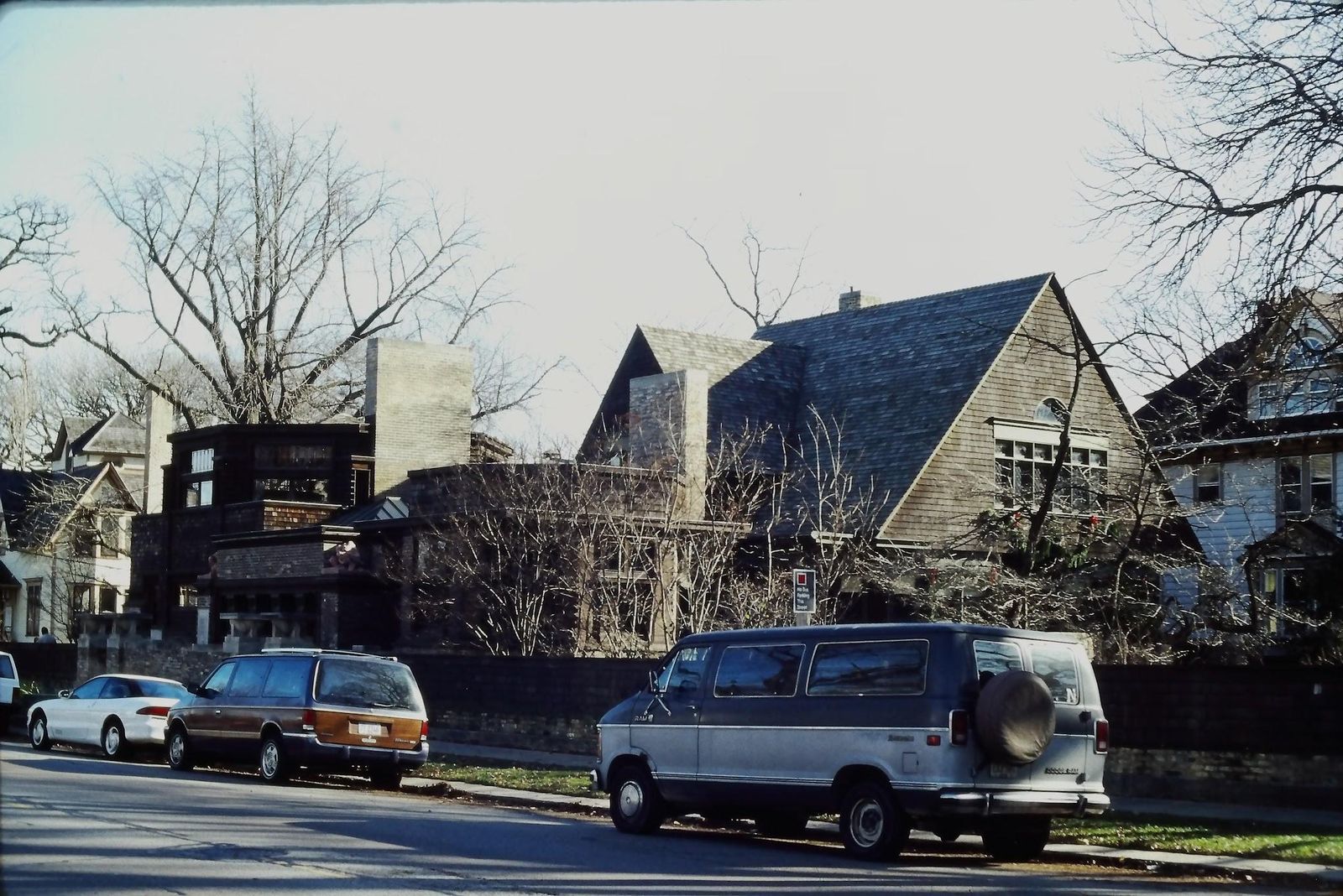
Frank Lloyd Wright hid a private apartment inside one of his buildings

Image: Bmzuckerman, CC BY 4.0, via Wikimedia Commons

Architect Frank Lloyd Wright secretly maintained a private apartment inside his famous Oak Park Studio near Chicago, Illinois. Built in the 1890s, the studio served as both his workplace and personal retreat while he designed many of his early Prairie-style homes across the Midwest.

The hidden living quarters allowed Wright to work late into the night and host select guests away from public attention. The building itself became one of the most important centers of American architecture, producing groundbreaking residential designs that influenced modern architecture around the world.

10
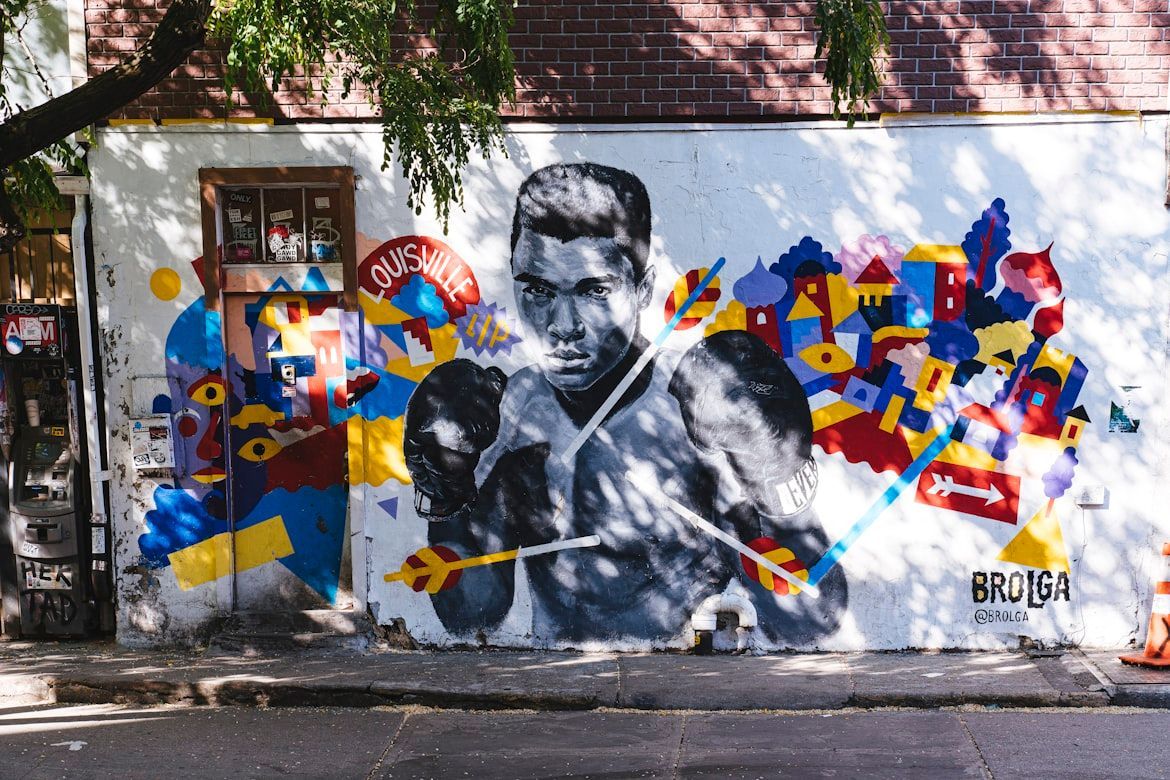
Muhammad Ali quietly funded humanitarian causes for years

Image: Nelson Ndongala

Muhammad Ali’s boxing fame often overshadowed his enormous charitable work. For decades, Ali quietly donated money to hospitals, food programs, children’s charities, and international humanitarian efforts . Friends and family later revealed that many of his contributions were intentionally kept private.

In 1990, Ali traveled to Iraq during tensions leading up to the Gulf War and helped secure the release of 15 American hostages. He also supported global relief organizations and Parkinson’s disease research after his own diagnosis. In 2005, President George W. Bush awarded Ali the Presidential Medal of Freedom.

Explore more American facts

Choose your favorite category!

General
General

As American as apple pie—the very best America has to offer!

Culture
Culture

Delve into the astounding richness of American lore.

Geography
Geography

Hop in and explore vast and diverse American landscapes.

History
History

Discover the key moments that shaped the United States.