Geography Geography 3 min read

A deep look at the map

From Philly to Miami: These U.S. place names don't mean what you think!

Image: Mackenzie Cruz

Every place name has a story— especially in America ! While some come from Indigenous languages, others trace their origins to European tongues or ancient legends. These names are more than just labels; they offer glimpses into our past , revealing the diverse cultures and pivotal events that have shaped the nation. From Greek influences to names that predate European conquest, we've gathered 12 of the most fascinating origins behind America's place names.

1
Miami

Image: Avi Werde

Miami’s name comes from the Mayaimi people, who lived around Lake Okeechobee. The name itself is thought to refer to the "big water" of the lake, a defining feature for the region's Indigenous inhabitants.

2
Chicago

Image: Neal Kharawala

The name "Chicago" comes from the Potawatomi word shikaakwa, meaning "wild onion" or "wild garlic." These plants were once abundant along the banks of the Chicago River, and early French explorers who heard this term adapted it into the city's name.

3
Philadelphia

Image: Chris Murray

The name "Philadelphia" comes from the Greek words philos (love) and adelphos (brother). Founded in 1682 by William Penn, the city was intended to be a haven for religious freedom and peaceful coexistence—hence its name.

4
Cincinnati

Image: Matt Koffel

Cincinnati's name comes from the Society of the Cincinnati, a patriotic organization formed in 1783 to honor officers of the Continental Army. The society itself was named after Lucius Quinctius Cincinnatus, a legendary hero of the Roman Republic.

5
California

Image: Vital Sinkevich

The name "California" comes from Las Sergas de Esplandián, a 16th-century Spanish novel by Garci Rodríguez de Montalvo. The book describes a mythical island where gold could be found in great quantities. When Spanish explorers reached the Baja Peninsula, they mistakenly believed it was an island and, inspired by the novel, named it after the fictional paradise.

6
Boise

Image: Attorney Sluice

The name "Boise" comes from the French word boisé, meaning "wooded" or "forest." French fur traders were some of the earliest European explorers in the region, and they named the Boise River after observing the thick forests that lined its banks.

7
Albuquerque

Image: Raychel Sanner

Albuquerque was named by the Spanish in the 18th century, but its origins trace back to the Latin words albus (white) and quercus (oak), referring to the white oak trees that are found in the area.

8
Mississippi River

Image: Mathew Benoit

The Mississippi River gets its name from the Ojibwe word Misi-ziibi, meaning "Great River." Certainly a fitting name, given the river’s key role in the development of American trade and transportation, a vital route for settlers and Indigenous people alike.

9
Yellowstone National Park
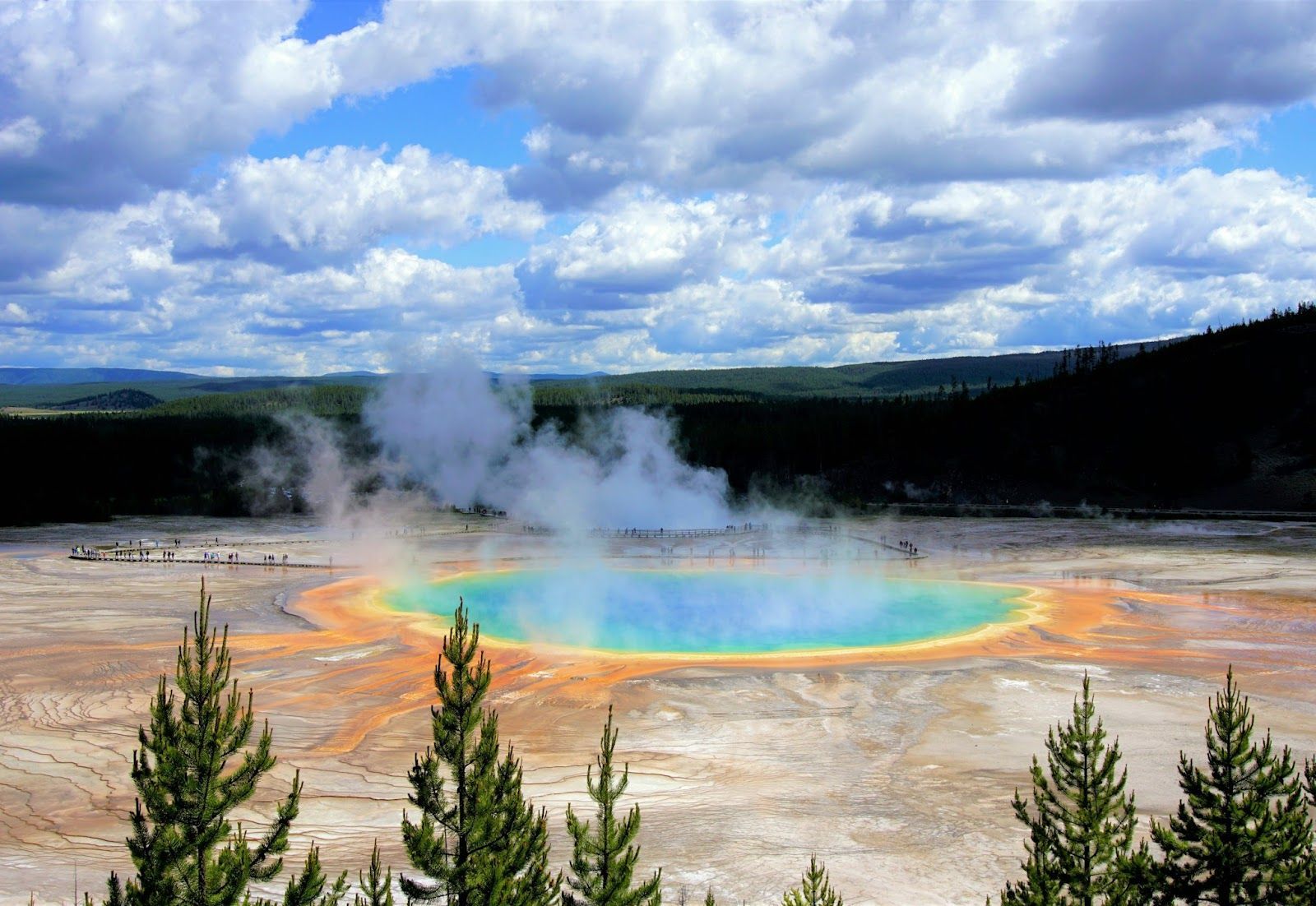
Image: Meina Yin

Yellowstone National Park takes its name from the Yellowstone River, which was in turn named by fur trappers who used the word "yellow" to describe the river’s striking sandstone cliffs . Established in 1872, Yellowstone became the first national park in the U.S., preserving its unique geological and natural wonders.

10
Appalachian Mountains

Image: Elijah Mears

The Appalachian Mountains, among the oldest in the world, take their name from Apalachee , a term used by the Spanish to refer to a Native American tribe in northwestern Florida . Interestingly, the name was later applied to the distant mountain range, despite no direct connection between the two—perhaps they had run out of names?

11
Niagara Falls

Image: Sergey Pesterev

Niagara Falls takes its name from the nearby Niagara River, which derives from the Iroquois word Onguiaahra , meaning "the strait" or "narrow water." Unsurprisingly, given their breathtaking beauty, the falls have long been a significant natural landmark for both Indigenous peoples and European explorers.

12
Adirondack Mountains

Image: Ty Finck

The Adirondack Mountains in New York are believed to take their name from the Algonquin word adirondacks , meaning "they eat trees" or "bark eaters." This name likely referred to another group of Indigenous inhabitants who relied on the region’s lush forests for food and shelter.

History History 5 min read

MOST WANTED

Do You Recognize These 10 Outlaws Who Captured the Nation's Attention?

In the annals of history , some people have dominated the skill of breaking and evading the law. Immortalized in numerous stories both written and oral, and depicted in movies and other forms of art, these American outlaws-–like Billy the Kid or Bonnie and Clyde— have earned a questionable fame that kept them alive long after they left this world. Follow us as we tour the names and lives of these 10 infamous American outlaws!

1
Jesse James

Image: Jaye Haych

Born in 1847 and raised in western Missouri , Jesse James and his brother Frank earned a reputation robbing banks, trains, and stagecoaches, and committing other offenses throughout the Midwest .

After gaining national fame as an elusive criminal, Jesse James's illegal career came to an end in 1882 . He was betrayed by one of his own, Robert Ford , who had met with the governor of Missouri to make a deal and bring James down.

Jesse James lived only 34 years, but the wild story of his life is full of infamous acts that seem like something out of a movie. And here's a fun fact: his son, Jesse James Jr., starred in two silent films playing his father!

2
Billy the Kid

Image: rod m

Ever heard the name Henry McCarty ? Maybe the alias William H. Bonney? If the answer is "no," you probably recognize him by his nickname: Billy the Kid .

In addition to committing robberies and assaults, this 19th-century outlaw gained notoriety for his role in New Mexico's Lincoln County War. Billy, born in 1859 , was arrested several times throughout his life but consistently managed to escape. However, his luck ended in the 1880s.

In the year 1881 , to be exact, Billy the Kid was caught by Sheriff Pat Garrett. That same year, a few months after his last escape, he was struck down at the young age of 21 by Garrett.

3
Butch Cassidy

Image: The National Library of Norway

You've probably heard of the Wild Bunch , a gang that intimidated the American West during the late 19th and early 20th centuries . Often considered the most successful train robbery gang in history, its members were feared guys, but the most notorious was its leader: Butch Cassidy.

Cassidy, born in 1866 , started his criminal career very early. Many historical sources state that he committed his first minor crime—store robbery—when he was only 14 years old !

However, as with most outlaws, his luck ran out. Escaping the law, he traveled to Latin America. The tales say he was in Argentina and then Bolivia , where he met his end in a shootout in 1908 .

4
Sundance Kid

Image: Ady TeenagerInRO

Another iconic figure in Cassidy's gang was Harry Alonzo Longabaugh, more famously known as the Sundance Kid .

Born in 1867 , his distinctive nickname originated during his time in the Sundance, Wyoming, jail, where he landed for one of his early crimes, horse theft. Legend has it that the Sundance Kid was a man of many skills, known particularly for his talent for poker and his ability to escape the law.

The tales suggest that Longabaugh traveled with Cassidy to Bolivia, where he met the same fate as the gang leader. Another theory says that the Sundance Kid returned to the U.S. under another name and lived in a small town in Utah.

5
Black Bart

Image: Joanna Kosinska

While crime and poetry might seem like an unlikely pairing, the outlaw known as Black Bart managed to blend these two things very well.

Probably less famed than the other names on this list, Black Bart was born Charles E. Boles (or Bolton) in England in 1829 . However, he relocated to New York with his family when he was just a toddler.

Between 1875 and 1883, Boles is believed to have robbed about 28 stagecoaches in Northern California and southern Oregon. But one thing distinguished this outlaw: on several occasions, he left behind poems at the robbery sites!

6
Al Capone

Image: Ashim D’Silva

It might be hard to believe, but before Al Capone became synonymous with organized crime, he actually worked at a candy store ! Can you picture him among candies and lollipops?

Definitely one of the best-known gangsters of the Prohibition era , Al Capone was born in New York as Alphonse Gabriel Capone in 1899 . Born to Italian immigrants, Capone moved to Chicago at a young age. By the 1920s , he had already made a name for himself among the city's criminals, smuggling and selling alcohol.

In 1931, his luck ran out, as he was sentenced to 11 years in federal prison for tax evasion. He was released in 1939 and passed away 8 years later.

7
Bonnie and Clyde

Image: Tengyart

Some say love's power knows no bounds, and the story of this couple seems to prove this.

Bonnie Elizabeth Parker and Clyde Chestnut "Champion" Barrow, known worldwide as Bonnie and Clyde , were two outlaws who committed a wide range of crimes across states such as Oklahoma, Texas, and Missouri during the Great Depression era . Literally partners in crime, they became popular icons over the years.

These two were recurring names in the headlines of their times, gaining notoriety for their robberies, both to banks and small stores. Together until the end, Bonnie and Clyde were fatally wounded in a police ambush in 1934 , when they were still very young. At the time, she was 23 and he was 25.

8
John Dillinger

Image: Tim Evans

John Dillinger , a mobster born in 1903 , led what was known as "the Dillinger Gang." During the Great Depression , Dillinger and his crew demonstrated their criminal prowess, accused of robbing more than 24 banks !

In 1934, John Dillinger became the first person to be declared "Public Enemy Number One" by the FBI. He was imprisoned multiple times throughout his life and, as the stories go, managed to escape jail twice using fake weapons made out of wood!

After a final attempt to escape, the criminal was gunned down by the authorities at the age of 31 as he exited the Biograph Theater in Chicago.

9
Pretty Boy Floyd

Image: Pepi Stojanovski

During the turbulent Great Depression era, a couple of outlaws were not only robbing banks and trains but also the national spotlight. Among them was Pretty Boy Floyd , born Charles Arthur Floyd in 1904 .

Floyd, who operated in the Western and Central U.S. , wasn't seen as a villain by many. Why? Besides robbing banks , he also used to destroy mortgage documents , something that helped many people, relieving them of their debts. Far from the sloppy appearance of many criminals, Floyd had a clean-cut and youthful look, which earned him his characteristic nickname .

His life met an end in his 30s in a shootout with the Bureau of Investigation's agents in Ohio.

10
John Gotti

Image: Jacob Spence

Known as " Teflon Don " for his slippery ability to evade justice, John Gotti was born on October 27, 1940 , in The Bronx, New York. He's widely considered one of the most dangerous crime bosses in U.S. history.

Known for his charisma and trademark hairspray look , Gotti began his life of crime when he was still a teenager. By the mid-1980s, he had become the head of the Gambino Crime Family, and throughout his life, he was accused of multiple crimes of varying severity.

Despite evading convictions many times, he was finally convicted in 1992 . He passed away ten years later while still in prison.

General General 5 min read

Historic ghost towns open for visitors

One ghost town has a fire that's burned for 60 years

Image: jean wimmerlin

Ever wondered what happened to those Wild West towns after the gold rush ended? Or where all those miners went when the silver ran out? Across America, dozens of ghost towns sit frozen in time, waiting for curious travelers like you to explore their dusty streets . Get ready to explore ten of America's most fascinating ghost towns that are still standing and open for visitors.

1
Bodie, California

Image: Michael & Diane Weidner

This former gold-mining hub in the Sierra Nevada once boasted nearly 10,000 residents, dozens of saloons, and a reputation for being one of the wildest towns in the West. Today, it's preserved in a state of "arrested decay," meaning the buildings are maintained exactly as they were found, complete with dishes still on tables and goods still on store shelves .

The California State Parks system manages Bodie, which means it's well-maintained but authentically eerie. About 200 buildings still stand, including a church, schoolhouse, and that infamous red-light district (though considerably quieter now).

2
Jerome, Arizona

Image: Strange Happenings

Perched impossibly on Cleopatra Hill in central Arizona, Jerome has pulled off the ultimate comeback story. This former copper mining town was literally sliding down the mountain in the 1950s, but instead of becoming a pile of rubble at the bottom, it reinvented itself as an artist colony and tourist destination. Today, it's one of the few ghost towns where you can actually spend the night, grab dinner, and browse art galleries .

The town's steep streets are lined with buildings that seem to defy gravity, and many claim the place is seriously haunted: the Jerome Grand Hotel, a former hospital, supposedly has particularly active spirits. Whether you believe in ghosts or not, you'll definitely believe in the impressive engineering it took to build a town on a 30-degree slope.

3
Rhyolite, Nevada

Image: Dino Reichmuth

In 1905, this place exploded from nothing to a town of 5,000 people in just two years, complete with electric lights, a stock exchange, and even an opera house. Then the financial panic of 1907 hit, the mines proved less profitable than hoped, and by 1916, the lights went out for good.

What makes Rhyolite especially photogenic are the ruins themselves—massive concrete structures and the famous Bottle House, built entirely from beer and liquor bottles . The three-story bank building and the remnants of the jail are particularly impressive, showing just how convinced everyone was that this town would last forever.

4
St. Elmo, Colorado

Image: Arturo Rivera

Tucked in the Sawatch Range at 10,000 feet, St. Elmo is Colorado's best-preserved ghost town and one of the most visited. Founded in 1880 as a mining and rail hub, it once had a population of 2,000 people and all the amenities a Victorian-era miner could want.

What really sets St. Elmo apart is accessibility and atmosphere. It's an easy drive from nearby towns, and during the summer months, a few seasonal residents actually run the general store, selling snacks and souvenirs .

5
Bannack, Montana

Image: Donald Merrill

Montana's first territorial capital, Bannack, sprang up in 1862 after gold was discovered in Grasshopper Creek. Within a year, it had 3,000 residents and a serious problem with road agents (fancy term for bandits). The town's sheriff, Henry Plummer, turned out to be secretly leading the gang of robbers—one of the West's great scandals. After Plummer was hanged by vigilantes in 1864, Bannack settled down, but eventually, the gold ran out, and so did the people. The last residents left in the 1970s.

Now a well-preserved state park, Bannack features over 60 structures you can explore, including the hotel, church, schoolhouse, and Plummer's old jail . They even host a popular "Bannack Days" event each July with period costumes, demonstrations, and activities.

6
Grafton, Utah

Image: Arturo Rivera

This tiny Mormon settlement near Zion National Park has been featured in dozens of movies and commercials, most famously in "Butch Cassidy and the Sundance Kid." Founded in 1859, Grafton struggled with flooding from the Virgin River, conflicts with Native Americans, and general isolation. By 1944, the last resident had left, but unlike many ghost towns, Grafton's buildings were later restored and maintained by preservation groups.

Today, only a handful of structures remain—a schoolhouse, a church, and a few cabins—but they're set against absolutely spectacular red rock canyon scenery . The Grafton Cemetery, still maintained by descendants, sits on a hill with jaw-dropping views. It's free to visit, though donations are encouraged for preservation efforts.

7
Terlingua, Texas

Image: Glen Carrie

Once a thriving mercury mining town with 2,000 residents, it collapsed in the 1940s when the mines closed. Today, it's home to about 60 full-time residents, plus a rotating cast of artists, wanderers, and people who just couldn't handle civilization anymore.

The original townsite features impressive ruins of the Chisos Mining Company headquarters, a crumbling movie theater, and a cemetery with elaborate Mexican grave decorations . But the real attraction is the eccentric present-day community that's grown up around the ruins. You can stay in unique lodgings, eat at the famous Starlight Theatre, and experience some of the darkest night skies in the continental US.

8
Garnet, Montana

Image: Natalie Nicks

Located deep in Montana's mountains about 35 miles from Missoula, this gold mining town boomed in the 1890s with about 1,000 residents. The last 11 miles are on a rough dirt road that's impassable in winter, but that difficulty is exactly why Garnet remains so well-preserved and authentic. Casual tourists don't make the trek, which means you'll likely share the site with only serious ghost town enthusiasts.

About 30 buildings still stand, including the surprisingly intact Kelly's Saloon, complete with bar and furnishings . The Bureau of Land Management maintains the site and even offers rustic cabin rentals if you want to spend the night.

9
Centralia, Pennsylvania

Image: Megs Harrison

This isn't a Wild West mining town—it's a modern ghost town with an underground coal fire that's been burning since 1962 and could continue for another 250 years. At its peak, Centralia had over 1,000 residents. Today, fewer than five people remain in what's become one of America's most surreal abandoned places. The fire releases toxic gases through cracks in the ground, and the heat has buckled roads into impossible angles.

The most famous feature is the graffiti-covered section of abandoned Route 61, where smoke sometimes rises through cracks in the pavement . Most buildings have been demolished, but the street grid remains, marked by empty lots and crumbling foundations. It inspired the video game and film "Silent Hill," and it's easy to see why—the place feels genuinely otherworldly. Technically, Centralia is off-limits, and Pennsylvania has tried to discourage visitors due to safety concerns about the underground fire.

10
Calico, California

Image: Volodymyr Hotsyk

Founded in 1881 after a major silver strike, it boomed to 1,200 residents before the silver price crash killed it in the 1890s. Unlike other ghost towns on this list, Calico was reconstructed and restored as a theme-park-style attraction in the 1950s by Walter Knott.

Today, Calico is a San Bernardino County park with restored buildings, shops, restaurants, and even staged gunfights on weekends . You can tour a genuine silver mine, pan for "gold" (spoiler: you'll find some), and ride a narrow-gauge railroad. About half the buildings are original, and half are reconstructions, giving you the ghost town experience without the sadness of actual decay.

Explore more American facts

Choose your favorite category!

General
General

As American as apple pie—the very best America has to offer!

Culture
Culture

Delve into the astounding richness of American lore.

Geography
Geography

Hop in and explore vast and diverse American landscapes.

History
History

Discover the key moments that shaped the United States.