History History 4 min read

History class is in session!

Follow this red line in Boston and end up in history class!

Image: BookBabe

Wanna take a stroll through the heart of American history? The Boston Freedom Trail is exactly that! With red bricks guiding your way, every step brings you closer to some of the most important moments that shaped the nation. So lace up those walking shoes (comfort is key for this one!), and let’s explore some surprising truths about one of the country’s most iconic trails.

1
Start here, end there: Boston Common to Bunker Hill

Image: Roger Starnes Sr

There’s no official rule about where to begin, but most people kick things off at Boston Common. From there, the trail snakes through the heart of the city and ends at the Bunker Hill Monument in Charlestown. That final stretch leads to one of the most symbolic sites of the American Revolution. Of course, if you’d rather do it backwards, nobody’s stopping you—it’s your patriotic pilgrimage! Either way, the journey between these two iconic spots is packed with stories.

2
Where the trail begins: Boston Common’s surprising start

Image: Yassine Khalfalli

Boston Common might be a peaceful green escape today, but it began with a much more practical purpose. Established in 1634, it’s the oldest public park in the US, and it was originally used for grazing livestock, not lounging on park benches.

The land was purchased from Anglican minister William Blackstone and soon transformed into a communal area by the Puritans. Over time, it has witnessed protests, public speeches, and even British troops setting up camp.

3
Short and sweet: the 2.5-mile trail

Image: Naoki Suzuki

The Freedom Trail may only stretch 2.5 miles, but don’t let that fool you—it’s packed with history. The route winds through downtown Boston, passing 16 official landmarks. Most of the trail is flat and fully accessible, making it friendly for everyone. Just remember to bring comfy shoes!

4
Follow the red-brick road

Image: Yassine Khalfalli

No need for a map or GPS—just follow the red-brick line! That bright path under your feet is the Freedom Trail’s signature feature. It weaves its way from site to site, keeping you on track with zero guesswork.

The trail’s design was first suggested by a local journalist in the 1950s, who wanted to link all the key historical spots. It’s Boston’s version of a historical yellow brick road—minus the flying monkeys, of course!

5
Millions make the trip every year

Image: Aubrey Odom

More than 4 million people walk the Freedom Trail each year—and not just tourists. Locals, history lovers, and school groups all flock to this living museum. It’s one of the most popular attractions in Boston, and for good reason.

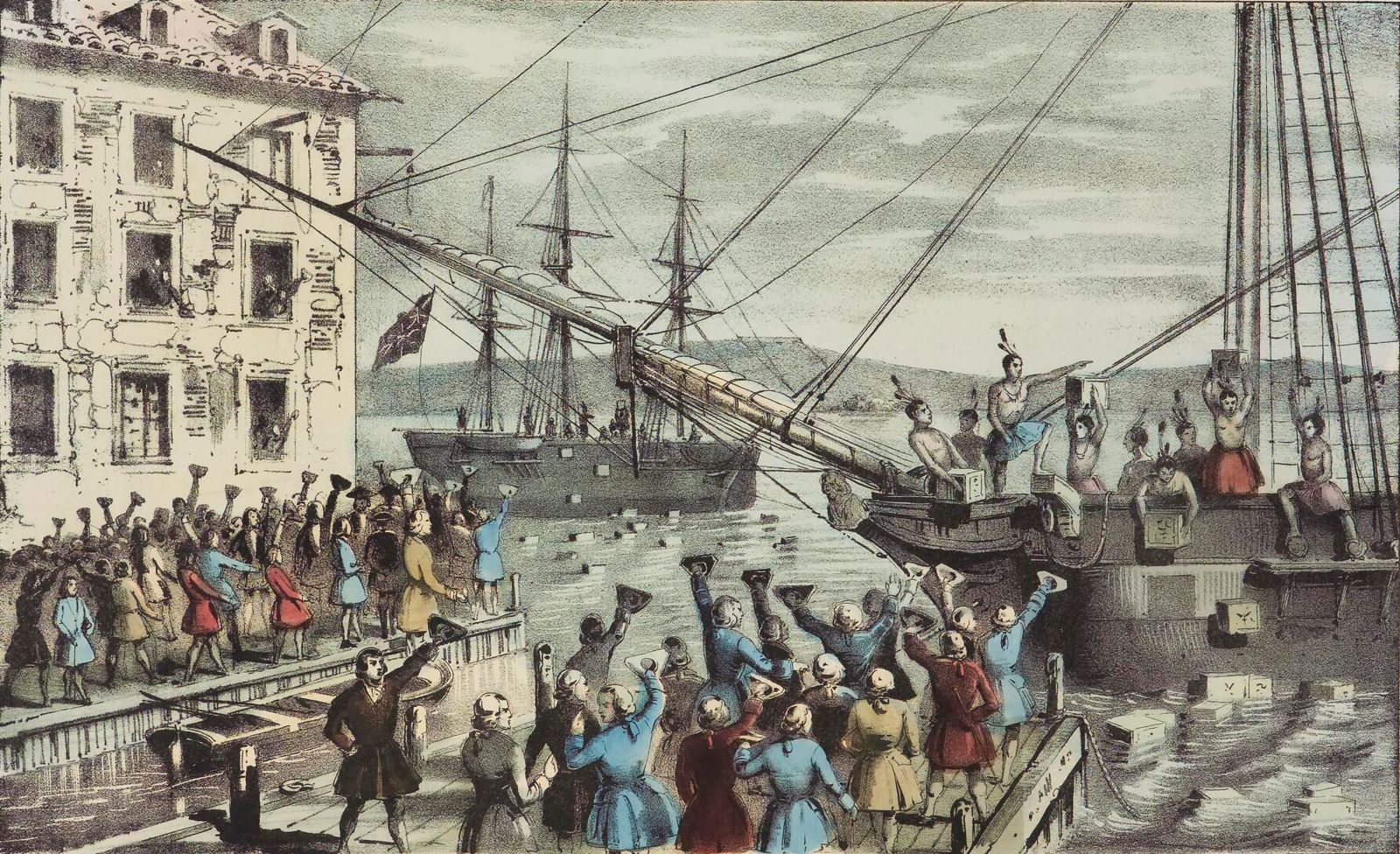
From Paul Revere’s House to the Boston Tea Party site, each stop tells a story. Even if you’ve walked it before, there’s always something new to notice. So go ahead—join the crowd.

6
No need to go in order

Image: Vika Chartier

Unlike history books, the Freedom Trail doesn’t follow a strict timeline. It’s organized by geography, not chronology, which means you can hop around without feeling lost. For instance, Boston’s North End has a cluster of must-see sites close together. It’s totally fine to explore them first and double back later. Just follow your curiosity—and your feet—along the red bricks.

7
Oldest this, oldest that, it’s a record-breaker

Image: Kelly Sikkema

The Freedom Trail is a goldmine of American "firsts." You’ll find the country’s oldest public park (Boston Common), its oldest public building (the Old State House), and even the site of the first major battle of the Revolutionary War (Bunker Hill Monument).

Paul Revere’s House is the oldest building still standing in Boston. And the Old North Church? That’s right—it’s the oldest church still standing in the country!

8
Rest in peace, revolutionaries

Image: Wenhao Ruan

Cemeteries might not sound exciting, but on the Freedom Trail, they can be. The Granary Burying Ground is the final resting place of Paul Revere and victims of the Boston Massacre.

Over at Copp’s Hill Burying Ground, you’ll find figures connected to the Salem Witch Trials and shipbuilders like Edmund Hartt. These aren’t just graves—they’re chapters in America’s story. And you’ll be walking right through them.

9
No replicas here

Image: Liubov Ilchuk

Every building and site along the Freedom Trail is the genuine article. Thanks to meticulous preservation, nothing is a recreation or reimagining—you’re standing where revolutionaries stood, seeing what they saw.

There’s something special about touching the same walls and walking the same halls. It’s as close to time travel as you’re going to get. How great is that?

10
Past meets present in every step

Image: Brett Wharton

Sure, you're here for the history, but Boston’s modern charm is hard to miss. Between historic stops, you'll find lively markets, cozy restaurants, and the buzz of city life all around. Grab a cannoli in the North End or sip coffee where patriots once plotted revolts. The Freedom Trail offers a perfect blend of old and new.

Culture Culture 5 min read

Jefferson uncovered

Jefferson: 10 fun facts about the Founding Father you thought you knew!

Image: David Trinks

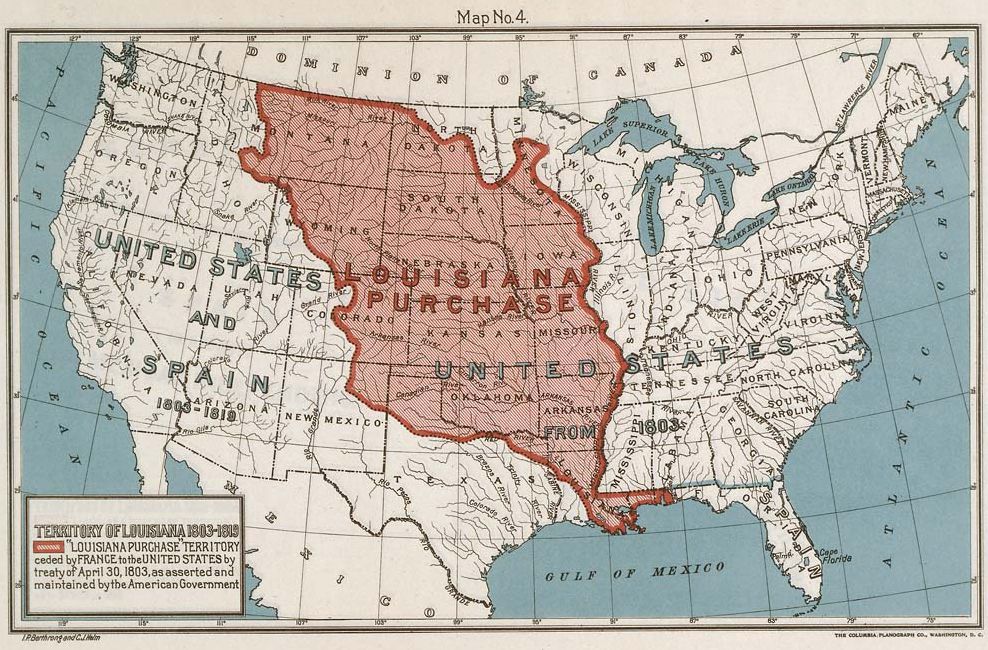
We all know Thomas Jefferson, the Founding Father, the main author behind the Declaration of Independence, the third President of the United States, and the man who spearheaded the Louisiana Purchase. But in addition to all these impressive titles, Jefferson was also a man of many talents, tastes, interests, hobbies, and a few curious anecdotes. If you want to know more about The Sage of Monticello, stick around as we share 10 fascinating facts about the great Thomas Jefferson!

1
The sweet tooth

Image: Michelle Tsang

What's your favorite ice cream flavor? With so many options available today, it's hard to choose just one, right? Like us, Thomas Jefferson also loved ice cream. Not only that, he's often credited with making this treat famous in America.

The third US president discovered his sweet tooth during his time in France. It's impossible not to imagine Jefferson doing important paperwork with a bowl of ice cream on his desk. In addition, it's said that he often served the sweet dessert to his guests at the White House.

And that’s not all! A recipe for vanilla ice cream, handwritten by Jefferson himself, is still kept to this day in the Library of Congress.

2
The handshaker

Image: Erika Fletcher

It seems that Jefferson was a man who set trends and influenced fashions. Ice cream wasn’t the only custom that spread across the country thanks to him.

Today, the handshake is a very common and popular form of greeting. But this was not always the case. Before Jefferson's presidency, handshakes were less frequent, and people often used other formal greetings, such as bowing.

Jefferson argued that handshakes were horizontal and, therefore, more democratic. This belief illustrates how he integrated his principles into every aspect of his life, even small habits and customs.

3
The friend

Image: Joanna Kosinska

Thomas Jefferson and John Adams first met in 1775 at the Continental Congress in Philadelphia. Despite their differences, they liked and respected each other. Together, they were part of the committee that drafted the Declaration of Independence in 1776 and became even closer when they both served as diplomats in Europe during the 1780s. Jefferson later served as vice president to his friend Adams when the latter took office in 1797. Although they drifted apart after Adams' presidency, they reconciled in 1812, and their regular letters returned.

As if all this weren’t enough, they both died on the same day. And not just any day—both passed away on July 4, 1826, the 50th anniversary of the Declaration of Independence.

4
The polyglot

Image: Thomas Kelley

Can you speak more than one language? It's hard not to be impressed when you see a bilingual person developing their skills, right? And then there are those who speak three or four languages!

In this regard, Jefferson’s case is remarkable. The third president of our country was fluent in no less than six languages! In addition to his mother tongue, English, and the widely spoken French (which he used during his time as American minister to France in the 1780s), Jefferson also had strong skills in Latin, Ancient Greek, Italian, and Spanish. Furthermore, some sources suggest he also knew some German. A true polyglot!

5
The musician

Image: Baher Khairy

During his childhood in Virginia, Thomas Jefferson developed a strong interest in and passion for music. Music was a fundamental element in his home, and this art form was also a main part of his education.

The Father of the Declaration of Independence played the violin perfectly. His father, Peter Jefferson, taught him to play this instrument when Thomas was very young, and his talent only grew over the years.

Less frequently than the violin, Jefferson also played the cello—another stringed instrument known for its sophistication.

6
The architect

Image: Richard Hedrick

Jefferson's talents were even more varied! He was not only a polyglot and a musician but also an accomplished architect.

Thomas Jefferson played a major role in the design and construction of his plantation home in Virginia, the magnificent Monticello, which would later earn him one of his famous nicknames. Inspired by classical and Renaissance architecture, Monticello is considered one of the greatest works of American architecture. To add further merit to his work, Jefferson began the design of the plantation and its house in 1768, when he was only 25 years old!

Fun fact: Today, Monticello is a UNESCO World Heritage Site.

7
The family man

Image: Heike Mintel

If you're a family person, you'll love this aspect of Thomas Jefferson.

In addition to politics, business, and his many talents, Thomas Jefferson was also a devoted family man—and, we must say, he had quite a large family. But how big was his family? Jefferson was born to Peter Jefferson and Jane Randolph Jefferson and was the third of ten siblings.

In 1772, he married Martha Wayles Skelton, with whom he had six children. However, only two daughters survived to adulthood: Martha and Mary, who also gave him many grandchildren.

8
The farmer

Image: Stephen Radford

Agriculture was central to Jefferson's vision at the national policy level and also in his personal life.

Monticello was not only his home but also a 5,000-acre plantation where he experimented with different crops, including wheat, corn, tobacco, and various vegetables and fruits.

In addition, he was also an enthusiast of flower gardens. His interest in horticulture led him to import seeds and plants from around the world to experiment with in America!

9
The pet lover

Image: Dawn McDonald

Among his many qualities, his appreciation for animals truly stood out.

At Monticello, he had a variety of farm animals, including geese, turkeys, chickens, horses, cows, and pigs, all of which played an important role in maintaining the plantation. But his true love was for horses. He loved riding and spending time with them, both at his home in Virginia and even during his presidency.

It’s also said that he had a soft spot for birds. One of his most beloved pets was a mockingbird named Dick, who, according to historians, was allowed to fly around the house. Cute, isn't it?

10
The astronomer

Image: Matthew Ansley

Jefferson's interests and passions were not limited to earthly matters. In fact, he was an amateur astronomer. The stars and the cosmos sparked a deep curiosity in him.

In line with this interest, he developed a taste for telescopes, through which he could approach that mysterious object of study. He had several telescopes in his house and would spend hours and hours observing the night sky.

This inclination played a key role in the famous Lewis and Clark Expedition (1804-1806), as it’s believed that Jefferson provided precise astronomical guidance and instructions to the two explorers.

General General 5 min read

12 alternative Coca-Cola flavors that are as crazy as delicious!

Image: Olena Bohovyk

Just when we think we know the brand like the back of our hand, Coca-Cola surprises us with a new flavor that reminds us there is always room for creativity and originality. One of the most successful American companies, Coca-Cola is so much more than just a secret recipe. Throughout its history, it has introduced different versions of its signature drink. Some were a success —as is the case with Cherry Coke and Vanilla Coke— and others were more audacious and lasted only a short time in the market. Join us as we look back at 12 alternative Coca-Cola flavors that transformed a legendary beverage into a taste adventure. Check out if your favorites made it to the list!

1
Original Coke

Image: Deepal Tamang

How it all started. On May 8, 1886, Dr. John Pemberton served the world's first Coca-Cola at Jacobs Drug Store in Atlanta, Georgia, and American life would never be the same again. Based on coca leaf and cola nut, the recipe for the original Coke is one of the best-kept secrets in history. Since its invention almost 140 years ago, this mysterious, dark, sweet, bubbly, and stimulating liquid has become one of the world's most widely known and consumed soft drinks.

2
Vanilla Coke

Image: kkk

Vanilla Coke was first introduced in the United States in 2002. The new drink consisted of original Coca-Cola flavor with natural vanilla extract added to the formula. Shortly after its launch, the vanilla soft drink became a success, selling millions of units. However, by 2006, sales had dropped considerably, and the product was eventually withdrawn from the market.

Yet, Vanilla Coke would not give up so easily. Its fans began to campaign online to make the company reintroduce it. Luckily for them, the drink eventually returned to the shelves in 2007.

3
Coca-Cola with Lime

Image: stevepb

​​Many people add a few drops of lime to their glass of Coke, so why wouldn't the company launch a ready-to-drink product? Coca-Cola with Lime was first introduced in the United States in 2005 during a broadcast of American Idol. As the name suggests, it has the taste of Coca-Cola with the addition of lime flavor. Did you like it, or were you one of the many naysayers?

4
Starlight

Image: Joey Csunyo

A Coke inspired by space? Believe it or not, in 2022, Coca-Cola launched —no pun intended— a variant of the drink to bring the taste of space down to Earth. You're probably wondering what it tastes like, and so are we! According to the company, Coca-Cola Starlight’s taste "includes additional notes reminiscent of stargazing around a campfire, as well as a cooling sensation that evokes the feeling of a cold journey to space." Would you dare to try it?

5
Dreamworld

Image: Marjan Blan

Like Starlight, Dreamworld was a 2022 limited edition. In this case, Coca-Cola wanted people to be able to taste dreams. We have no idea what that means exactly, but it sure has sparked our curiosity. Not convinced yet? According to the company, Coke Dreamworld "bottles up the technicolor tastes and surrealism of the subconscious." If only we could travel back in time to put it to the test!

6
Cherry Coke

Image: Frank Tunder

Based on a mix of cherry syrup and Coca-Cola, Cherry Coke was first introduced in 1982 at the World's Fair in Knoxville, Tennessee. It wasn’t until three years later that the new soft drink officially hit supermarket shelves worldwide. Cherry Coke was the first flavored Coca-Cola, and its success was so great that in the following years not only did Light and Zero versions emerge, but it also has a large and strong cult fan base.

7
Coca-Cola Blāk

Image: himanshu Chaudhary

As if the caffeine already in Coca-Cola wasn't enough to wake up any sleepyhead, in 2006 the company launched Coca-Cola BlāK. This soft drink that blends the taste of Coke with coffee was introduced in response to the overwhelming success of the early 2000s energy drinks and coffee chains. Despite its novel and sophisticated packaging design, consumers didn't quite like the sweetener’s artificial aftertaste, and it was finally discontinued just 2 years after its launch.

8
Coke Plus Coffee

Image: Nikolai Chernichenko

Coca-Cola Wouldn’t give up and, despite Coca-Cola BlāK's fiasco, in 2021 introduced a new product that paired the legendary soft drink with coffee. The difference with its predecessor was that Coke Plus Coffee contained more real coffee, specifically 100% Brazilian coffee. If you think the company got the experiment right this time, you're wrong. Coke Plus Coffee barely lasted a year on American shelves.

9
Coca‑Cola Zero Sugar OREO

Image: Shubham Kumar

Soda that tastes like cookies and cookies that taste like soda? Coca-Cola and Oreo thought this was a good idea and in 2024 launched a limited edition collaboration that included an Oreo-flavored Coca-Cola and a Coca-Cola-flavored cookie. According to the companies, the products are "a delicious duo that celebrates friendship with every sip". Those who have tried them claim that indeed the drink tastes like Oreo and the cookies like Coke —whatever that means. The Oreos even contain popping candy for a real fizzy vibe! Would you be willing to try them?

10
Coke Cinnamon

Image: Alex Bayev

If they tried cherry, lime, and vanilla, cinnamon was the obvious next step. Coca-Cola Cinnamon was introduced in September 2019, just in time for the holiday season. It was supposed to be a limited edition, but it was such a success that it was re-released the following winter. The taste? As expected!

11
Diet Coke Plus

Image: Brett Jordan

With the turn of the century, sugary drinks got a backlash from groups advocating healthier eating. In an attempt to improve its image, in 2007, Coca-Cola launched Diet Coke Plus, a drink that, they claimed, was enriched with vitamins and minerals. The attempt ended up backfiring: the United States Food and Drug Administration wrote a warning letter to the company for violating its guidelines. Coca-Cola stated that Diet Coke Plus didn’t involve any health or safety issues, but the product was eventually discontinued.

12
California Raspberry and Georgia Peach

Image: One Day

Locally inspired by these states' signature fruits, California Raspberry and Georgia Peach were the first new Coca-Cola flavors since 2002. Launched in 2018 to compete with craft sodas, these new drinks promised to " add a pop of local flavor to the timeless taste you love." Although many people actually loved the new beverages, the company pulled them from the market in 2020. Ever got the chance to try them?

Explore more American facts

Choose your favorite category!

General
General

As American as apple pie—the very best America has to offer!

Culture
Culture

Delve into the astounding richness of American lore.

Geography
Geography

Hop in and explore vast and diverse American landscapes.

History
History

Discover the key moments that shaped the United States.