General General 4 min read

People’s early favorites

Every American remembers at least one of these children's books

Image: Josh Applegate

Do you remember the books you read as a kid? When we open those colorful pages at an impressionable age, the characters jump out and become our friends. Ducklings, wild things, and hungry caterpillars are still very much alive both in bookshelves and in our memories. Let’s explore some of the dearest children’s books in the US —we hope you find your favorite among them!

1
"The Very Hungry Caterpillar" by Eric Carle

Image: rbu1249

A must to start off this list: The visuals of The Very Hungry Caterpillar are ingrained in the upbringing of millions of kids throughout the country —and the world!

Eric Carle wrote and illustrated the story of a bug eating through several foods before transforming into a butterfly. Who could forget the tactile experience of finding different holes in the pages?

2
"Corduroy" by Don Freeman

Image: Susanne Jutzeler, suju-foto

In the world of children’s literature, Corduroy is a tear-jerker. A teddy bear sits on a store shelf hoping a kid will pick him. Little Lisa spots him but can’t afford him, and leaves. So the bear embarks on a quest to fix his missing button, hoping this will make him more likable.

In the end, Lisa comes back and buys him as he is —because, of course, he was always enough . Is there a sweeter story to teach kids about self-acceptance and love?

3
"Make Way for Ducklings" by Robert McCloskey

Image: David Trinks

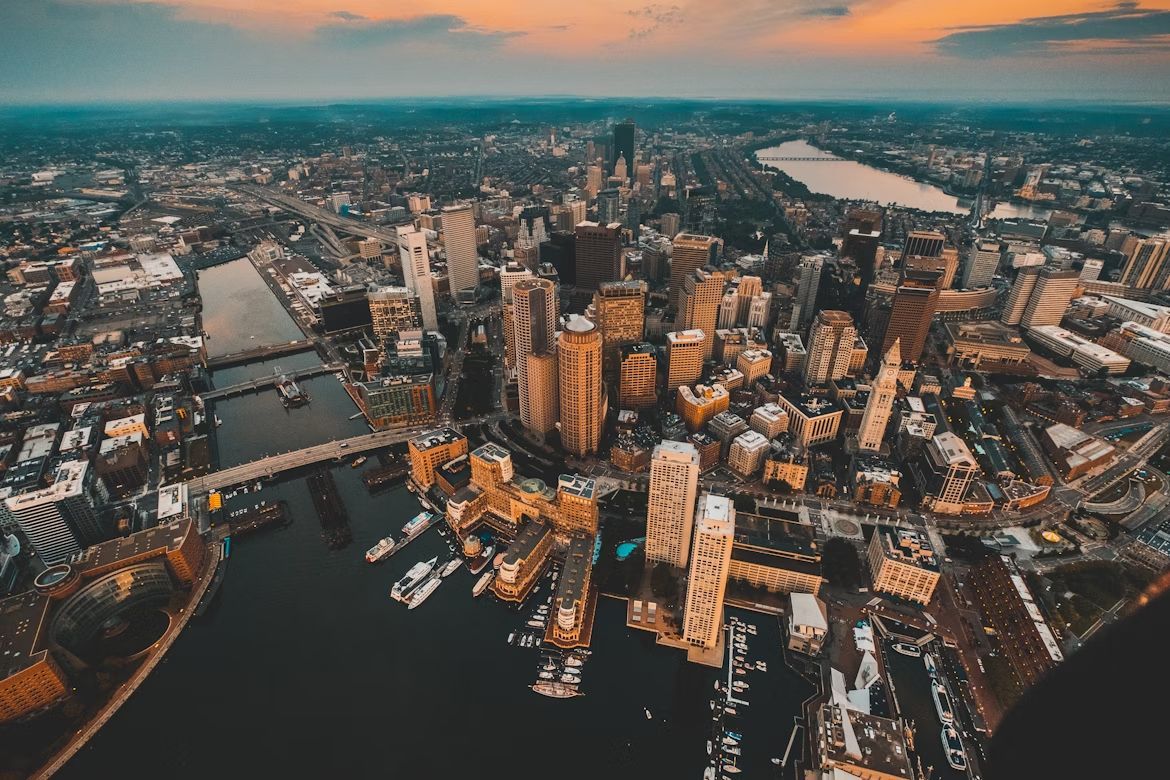
A row of bronze statues in Boston’s Public Garden celebrates Make Way for Ducklings, the sweet book by illustrator and author Robert McCloskey.

He got the idea for this story when he observed ducks causing traffic issues on Beacon Street. The book follows Mr. and Mrs. Mallard as they search for the perfect place to raise their family —ducklings Jack, Kack, Lack, Mack, Nack, Ouack, Pack, and Quack. They finally settle, of course, in the lagoon of the Boston Public Garden.

4
"Charlotte's Web" by E.B. White

Image: Annie Spratt

Author E.B. White had a farm in Maine, and his daily observations of barnyard animals gave him an idea: What if a pig and a spider became best friends?

In the book, the spider weaves messages to convince humans that Wilbur is an extraordinary pig and should not be slaughtered. Charlotte’s Web brushes on themes like mortality and loss —certainly bold for a children’s book. Nonetheless, it became a timeless classic.

5
"The Cat in the Hat" by Dr. Seuss

Image: Franco Monsalvo

"Thing One" and "Thing Two" have to be among the longest-standing Halloween costumes in use. They were born thanks to Dr. Seuss’ famous The Cat in the Hat in the 50s, and every kid still seems to know its iconic characters.

The story shows a day in the life of two kids left home alone when a whimsical magical cat shows up to unleash some fun chaos. The author said that he wrote the book as a response to an article in Life Magazine that lamented the dullness of children’s primers.

6
"Frog and Toad Are Friends" by Arnold Lobel

Image: Jared Evans

Images of Frog and Toad still abound on the internet, which proves how beloved and timeless the pair became. Frog and Toad Are Friends was published in 1970 as the first in Arnold Lobel's famous series.

The wholesome dialogue, tender narratives, and classic illustrations left a lasting mark on generations of readers. Who could forget the simplicity of these two loyal friends riding a bike, flying a kite, or fishing from a boat?

7
"Goodnight Moon" by Margaret Wise Brown

Image: David_Miram

We couldn’t leave Goodnight Moon out of this list! Margaret Wise Brown wrote over 100 children’s books, but this one won the hearts of little readers and their parents.

It’s a bedtime story about a young bunny saying goodnight to everything around him , from "the great green room" to "the quiet old lady whispering ‘hush’." It shows an appeasing and sweet ritual that taught kids about routines through soothing rhymes.

8
"Where the Wild Things Are" by Maurice Sendak

Image: Adnan Uddin

In Where the Wild Things Are, mischievous young Max escapes into a vivid fantasy world after being sent to his room without dinner. There, he crosses a land of endearing monsters whom he leads as their king.

Maurice Sendak’s story and iconic illustrations captivated many generations of readers. The text was adapted into short films, a live-action film, and even an opera!

9
"Brown Bear, Brown Bear, What Do You See?" by Bill Martin Jr. and Eric Carle

Image: Daniel Diesenreither

Remember Eric Carle, author of The Very Hungry Caterpillar ? Before that big hit, he had been the illustrator for another unforgettable kid’s book: Brown Bear, Brown Bear, What Do You See?

This one was written by Bill Martin Jr. The rhyming question-response structure introduces readers to a series of animals described by their vibrant colors : a brown bear, a red bird, a yellow duck, and so on.

10
"The Phantom Tollbooth" by Norton Juster

Image: Jon Tyson

Maurice Sendak, the author of Where the Wild Things Are​ , said that The Phantom Tollbooth was a masterpiece.

This 1960s book by Norton Juster follows Milo, a bored young boy who unexpectedly receives a mysterious tollbooth that allows him to travel through fantastical lands. Juster said that the idea for this book was sparked from a random encounter with a curious child asking about infinity.
History History 3 min read

Remembering the fallen

Did you know Memorial Day was first called Decoration Day?

Memorial Day is an occasion to honor and mourn those who gave their lives in defense of the United States . This federal holiday, observed on the last Monday of May, has a long and evolving history, and it wasn’t always celebrated the way we know it today. Here are 10 facts about how Memorial Day came to be.

Decoration Day

Image: Caroline Attwood

Memorial Day was originally called Decoration Day and was first observed on May 30, 1868, as a way to honor Union soldiers who had died in the Civil War. However, the idea behind it actually came from the South. Mary Ann Williams , whose husband died during the conflict, wrote a letter to a newspaper urging women to set aside a day to decorate the graves of fallen soldiers.

The end of May

Decoration Day was instituted by the Army’s commander-in-chief, General John A. Logan , and was quickly adopted by most states. There are several theories about why the date was chosen: some say Logan purposely picked a day that was not the anniversary of any Civil War battle, while others believe he chose it because it’s the time of year when most flowers bloom.

National Cemeteries

During the American Civil War, the U.S. Congress passed an act to create military burial places for Union soldiers. By the end of that year, 12 national cemeteries had been established. Today, the National Cemetery System maintains 164 military burial sites, the most well-known being Arlington National Cemetery and Gettysburg National Cemetery .

Renaming

The term Memorial Day was first recorded in the 1880s and grew increasingly popular after World War II. However, the holiday wasn’t officially renamed until 1968, when the Uniform Monday Holiday Act moved its observance from May 30 to the last Monday in May.

A moment for remembrance

The establishment of Memorial Day weekend has been seen by some as a benefit to the travel, sports, and entertainment industries. Veterans’ organizations have urged that the holiday be returned to its original date, arguing that the three-day weekend undermines its intended meaning. In response, Congress passed the National Moment of Remembrance Act , which encourages people to pause at 3:00 p.m. for a moment of silent reflection and remembrance.

Poppies

Several English-speaking countries adopted the poppy flower as a symbol of remembrance for fallen soldiers after World War I. This tradition was inspired by the poem In Flanders Fields , written by Canadian military doctor John McCrae , which describes poppies growing among soldiers’ graves. In the United States, the poppy was originally associated with Veterans Day but is now primarily worn during Memorial Day weekend.

The flag

The national flag flies at half-staff during periods of mourning. While special instances of mourning can be proclaimed by government authorities, remembrance holidays follow a set protocol. On Memorial Day, the U.S. flag is briskly raised to the top of the staff, then solemnly lowered to half-staff, where it remains until noon. At that time, it is raised again to full staff to honor the nation’s living heroes and those still serving.

The Unknown Soldier

One of the focal points of Memorial Day is the Tomb of the Unknown Soldier at Arlington National Cemetery . This symbolic monument was established in 1921 and originally held the remains of an unidentified soldier who died in World War I. Later, unidentified soldiers from World War II and the Korean War were also interred at the site. A permanent military guard stands watch year-round, honoring the sacrifice of all unidentified service members.

Memorial Wreaths

Wreaths are a common sight on Memorial Day—but where does the tradition come from? In 1992, Morrill Worcester, owner of a wreath company in Maine, found himself with a surplus of holiday wreaths. Wanting to put them to good use, he donated them to Arlington National Cemetery as a tribute to the fallen—a gesture that soon became an annual tradition. After a photo of the wreath-covered graves went viral in 2005, the nonprofit organization Wreaths Across America was established to help volunteers place wreaths on veterans’ graves across the country.

The start of the summer

Even though it is a day of remembrance, Memorial Day weekend also marks the unofficial start of summer . The holiday often coincides with the end of the school year, and the warmer weather encourages families to gather for barbecues and cookouts, attend parades, and visit the graves and memorials of fallen soldiers.

General General 6 min read

Timeless inventions

12 amazing American patents that shaped technology and culture

Image: Markus Winkler

The United States Patent and Trademark Office has issued over 12 million patents since its establishment in 1836. Many of the inventors who applied for these patents are well known—such as Elisha Graves Otis or Orville and Wilbur Wright —while others may come as a complete surprise, like President Abraham Lincoln . Some of the patents listed in this article are grandiose; others are smaller and seemingly insignificant. However, they all have something in common: they were invented in our country and changed the course of history. Wondering what they might be? Read on to find out!

1
Locomotive steam-engine for rail (Patent #1)

Image: National Archives at College Park - Textual Reference, Public domain, via Wikimedia Commons

Between 1790 and 1836, the United States granted 9,802 patents that were not awarded on their merits and didn’t have an identification number. The Patent Act of 1836, which established the official Patent Office, aimed to make the system more transparent. Among other reforms, it introduced a numbering system for easier identification.

This system started on July 13, 1836, and remains in effect today. United States Patent No. 1 was issued to John Ruggles —an inventor, attorney, and senator from Maine—for improvements in locomotive traction.

2
Anesthesia (Patent #4,848)

Image: National Library of Medicine

How did patients endure surgery before anesthesia? Before the discovery of an effective anesthetic, surgery was synonymous with excruciating pain. Many large hospitals placed their operating rooms in isolated and remote sections of the hospitals so patients’ screams couldn’t be heard. Alcohol, opium, and even hypnotism were tried as methods of pain relief, but these had little effect.

Fortunately, we no longer have to endure such experiences, thanks to a Boston dentist named William T. G. Morton, who—along with Charles T. Jackson—received the first United States patent for an anesthetic in November 1846.

3
Buoying vessels over shoals (Patent #6,469)

Image: invented by Abraham Lincoln. Issued by United States government Patent Office, Public domain, via Wikimedia Commons

This may be the most unique patent ever issued by the United States Patent Office: it is the first and only U.S. patent granted to an inventor who later became president. Although at least three presidents—George Washington, Thomas Jefferson, and Abraham Lincoln—were inventors, Lincoln is the only one who formally applied for and received a patent .

In 1849, he was awarded Patent No. 6,469 for a flotation device designed to lift boats over shoals and other obstacles in the water. While the invention itself had little bearing on his election, Lincoln’s inventive mindset and mechanical curiosity served him well during his presidency. Although the device was never commercially produced, his appreciation for innovation helped shape the nation's future.

4
Beehive (Patent #9,300)

Image: Bianca Ackermann

Beekeeping arrived in America with the early settlers, and by the end of the 18th century, bee colonies were widespread. However, early efforts met with only partial success.

The first U.S. patent for a practical and effective movable-frame beehive—which revolutionized traditional methods of beekeeping—was granted to American apiarist, clergyman, and teacher Lorenzo Lorraine Langstroth on October 5, 1852. His invention of the "bee space" laid the foundation for all modern beekeeping and hive management.

5
Elevator (Patent #31,128)

Image: Copie de gravure ancienne, Public domain, via Wikimedia Commons

The New York skyline would look very different today had it not been for the invention of the elevator. The man responsible for the forerunner of the modern elevator was American industrialist Elisha Graves Otis , who, on January 15, 1861, received the first U.S. patent for a safety-type passenger elevator.

The concept of vertical travel was not new. However, the first successful passenger safety elevator was installed in 1857 by Otis in the E. V. Haughwout & Company building, a department store in Manhattan. Otis also held patents for other inventions, including railroad trucks and brakes, a steam plow, and a bake oven. But it was the elevator with its safety feature that brought him fame and his sons great fortune.

6
Lock (Patent #31,278)

Image: Parastoo Maleki

The idea of the lock probably stems from the time man first acquired goods he wanted to safeguard from others. However, the first commercially successful modern lock and key system was invented by American mechanical engineer and metalsmith Linus Yale Jr., who received a U.S. patent in 1861.

Yale developed several types of locks, including the Yale Double Treasury Bank Lock, created at the request of the U.S. government. These designs brought him nationwide recognition, but the invention that made him truly famous was the pin-tumbler cylinder lock . Yale died just a few years after receiving his patent. However, every lock and key produced by the Yale & Towne Lock Company since then has proudly carried the Yale name.

7
Barbed wire (Patent #157,124)

Image: Lexis Chadwick

In an age of video surveillance, barbed wire might seem obsolete. Yet it was crucial to the settlement of the American plains in the late 19th century—and it remains widely used around the world today .

On November 24, 1874, Joseph F. Glidden, a farmer from Illinois, received a U.S. patent for the first commercially successful barbed wire . While several earlier patents had been granted for wire fencing, it was Glidden’s design that proved durable, affordable, and easy to mass-produce—making it the dominant form of fencing on the frontier**.**

8
Air conditioner (Patent #808,897)

Image: Prasopchok

On those hot and humid days of summer, we should all be thankful for the work of Willis Haviland Carrier, often called the father of air conditioning. For his efforts, he received the first U.S. patent for a modern air conditioning system on January 2, 1906.

Air conditioning is a complex process that involves refrigeration, dehumidification, air purification, and circulation. Before Carrier’s invention, various individuals had worked on these individual components. But it was Carrier, an American engineer, who successfully integrated them —focusing on the crucial relationship between temperature and humidity.

9
Airplane (Patent #821,393)

Image: John T. Daniels, Public domain, via Wikimedia Commons

Orville and Wilbur Wright are credited with achieving the first controlled, manned flight in history. For their pioneering work, they received the first U.S. patent for an airplane, issued on May 22, 1906.

Many had been intrigued by the idea of human flight before them. However, it was the Wright brothers who succeeded in building, flying, and promoting the world's first successful airplane —an invention that revolutionized transportation.

10
Bakelite (Patent #942,809)

Image: Call Me Fred

The modern plastics industry wouldn’t exist without Belgian-American chemist Leo Hendrik Baekeland , who received the first U.S. patent for a thermosetting plastic in 1909. Before him, others had attempted to produce synthetic resins but were unsuccessful.

Baekeland corrected his predecessors’ mistakes. The result was the first thermosetting resin —one that, once set, would not soften under heat. Bakelite was the first in a long series of resins that shaped the U.S. economy, paving the way for materials such as cellophane, acetate, vinyl, Plexiglas, acrylic, Formica, and polyester.

11
Frozen food (Patent #1,773,080)

Image: United States Patent Office (Clarence Birdseye, inventor)., Public domain, via Wikimedia Commons

Do you know where the name Birds Eye Frozen Food comes from? From its inventor! In 1930, American entrepreneur Clarence Birdseye received the first U.S. patent for this type of product.

Food preservation has been a concern since the beginning of time. Techniques such as salting, pickling, smoking, curing, canning, and later inventions like the icebox and home refrigerator have all contributed to preserving food.

However, one of the most successful methods was developed and commercialized by Birdseye. His process involved quick-freezing meat, seafood, vegetables, and fruit in convenient packages without altering their original taste. Birdseye’s name became a household word, and his innovation created a multibillion-dollar industry.

12
Instant photography (Patent #2,543,181)

Image: Missouri Historical Society, Public domain, via Wikimedia Commons

When we think of instant photography, Polaroid is often the first name that comes to mind. But how much do we know about the man behind the company? American scientist, inventor, and co-founder of the Polaroid Corporation, Edwin Herbert Land , was granted the first U.S. patent for a one-step photographic process in 1951.

While on vacation with his family, Land conceived the idea for a camera and film that could produce an immediate photograph. In 1948, the first Polaroid Land Camera went on sale, though without much public approval. Polaroid continued to improve the Land Camera and, in 1965, introduced the affordable Swinger model , which became an immediate success. Throughout his life, Land was granted more than 533 patents, was inducted into the National Inventors Hall of Fame, and received the Presidential Medal of Freedom.

Explore more American facts

Choose your favorite category!

General
General

As American as apple pie—the very best America has to offer!

Culture
Culture

Delve into the astounding richness of American lore.

Geography
Geography

Hop in and explore vast and diverse American landscapes.

History
History

Discover the key moments that shaped the United States.