Geography Geography 4 min read

Let’s ride!

Enjoying America while exercising: discover 10 great bike trails

Image: Pixabay

The vast American landscapes offer a virtually infinite array of opportunities to explore nature from various perspectives. Hikers, drivers, cyclists, campers, motorhome travelers, and more can enjoy this beautiful country in their own unique ways. Exploring it on a bicycle has numerous benefits : it provides valuable physical exercise, fosters closer contact with the environment compared to motorized vehicles, and allows for a deeper exploration of the surroundings. To say that the country has many bicycle trails would be a huge understatement. There are trails within city and town limits, inside national parks, and in almost any other location you can think of. The following 10 trails are meant to inspire anyone willing to explore and take their bike for a spin.

1
Florence Trail, Vermont

Image: Rod Long

Intermediate mountain bikers will love this berm-and-jump-filled descent, which can be incorporated into a 5-mile ride at Cady Hill . The Florence Trail is known as the best flow trail in Stowe, and one of the finest trails in the state of Vermont.

Advanced riders seeking to add some swoop and flow to their biking adventures will also find this trail enjoyable.

2
Devil's Den, Arkansas

Image: Oliver Graham

A mountain bike trail with history attached to it, Devil's Den State Park is a hallmark in the Arkansas mountain biking scene. At the very trailhead, a sign proudly declares that the lower area of the park, known as Fossil Flats, was the "Birthplace of Arkansas Mountain Biking" in 1989.

Recently designated as a "Monument Trail," the park underwent renovations to update sections of the historic trail while expanding the network with brand-new segments. Featuring impressive rock formations, jumps, and drops, Devil's Den truly is a biker’s paradise.

3
Citrus Tech Trail, Michigan

Image: Aishwarya MV

Despite being the most remote mountain bike destination in the Lower 48, Copper Harbor is home to some of the highest-quality trails in the nation. The newest additions to the network, located on Rock Solid's privately owned East Bluff mountain, include some of the best trails that have been built in the nation . Among them, the Citrus Tech trail stands out, earning praise from every mountain biker who has ridden it.

4
South Boundary Trail, New Mexico

Image: Richard Hedrick

An epic trail that winds through stunning mountain meadows and aspen groves before descending into the desert town of Taos , the South Boundary Trail features 4,500 vertical feet of downhill riding. However, it’s worth noting that bikers will face 2,000 feet of climbing along the way—but the breathtaking ride more than makes up for the effort.

5
Doctor Park, Colorado

Image: Holly Mandarich

One of the most thrilling descents in the country, the Doctor Park singletrack takes riders on an unforgettable journey. Starting at a high elevation, the trail winds through an alpine meadow , descends into an aspen grove, and continues down into pine forests before reaching a dry, lower-elevation climate zone .

Bikers from across the country and around the world can either shuttle to the top or pedal their way up to experience this incredible ride.

6
The Presidio, California

Image: Tim Trad

California is brimming with bike trails, making it difficult to recommend just one. However, this former military base turned national park stands out with its 25 miles of paved or hard-packed trails. Offering sightlines to the bay, coastal cliffs, beaches, forests, Alcatraz, the city skyline, and, of course**,** the iconic Golden Gate Bridge , it’s an unforgettable biking destination.

7
DuPont State Forest Slickrock, North Carolina

Image: Leslie Cross

The DuPont State Forest is a rarity on the East Coast due to its exposed bedrock trail. The biking experience in the North Carolina mountains offers epic descents, small mountains, and trails that flow nicely on soft rocky terrain , giving visitors a great experience, with the Slickrock (Cedar Rock, Big Rock, and Burnt Mountain) trail being one of its highlights.

8
Alpine Trail, Oregon

Image: everett mcintire

There are many trails named "Alpine Trail" but this one, at least, honors its name. Beginning high in the mountains, it goes downhill on soft and beautiful black dirt . A few open meadows and exposed outcroppings provide brief panoramic views of the Cascade Mountains, before dropping back into the timber for more high-speed ripping.

9
Tahoe Rim and Flume Trails, Nevada

Image: Abhi Verma

The Flume Trail wasn’t originally designed for bicycles—it began as the grade for a water flume that delivered lumber from high in the mountains above Lake Tahoe to the towns below. Today, remnants of the flume are still visible, but the old flume bed has been repurposed for use by mountain bikers and hikers.

10
Osberg Ridgeline Epic, Idaho

Image: Karsten Winegeart

The Osberg Ridgeline Epic isn’t for everyone. While it requires a shuttle to reach the trail’s starting point, bikers are still faced with over 3,000 feet of uphill pedaling. However, on the other hand, that 3,000 feet of climbing rewards riders with 5,500 feet of thrilling descent, along with a 15-mile ridge traverse with amazing views .

History History 6 min read

Lights, camera, action!

Where does the word "Hollywood" come from? 10 glamorous secrets revealed

Image: MaxWdhs

Hollywood is, for many, the birthplace of cinema—and in a way, it is. But do you know how the first studios were set up, what the first film shot entirely on the West Coast was, the true story behind the famous Hollywood sign, or the reason for its name? Read on to discover 10 hidden secrets about the most famous—and glamorous—district of Los Angeles!

1
Origin of the name

Image: Brady Bellini

Contrary to what you might think, the name "Hollywood" has nothing to do with the film industry. The origin of the name of the city that would later become the Mecca of cinema is surrounded by many myths. One comes from the personal diary of a real estate developer named H. J. Whitley. Whitley recounts encountering an Asian man carrying logs on a dolly. When asked about it, the man reportedly replied, "hauling wood," which, to Whitley, sounded something like "holly-wood."

As colorful as this story may be, it is unlikely to be true. The legend that likely comes closest to reality involves Harvey Henderson Wilcox and his wife, Daeida, who purchased 120 acres of land west of Los Angeles. According to different theories, Daeida may have overheard the word on a train or picked it up from the estate name of an acquaintance from Illinois. Whatever the case, since the name was first written on Wilcox's 1887 land deed, it seems plausible that Daeida was the one responsible for naming the area.

2
Movie theaters were prohibited

Image: Arthur Rothstein, Public domain, via Wikimedia Commons

H. J. Whitley may not have christened the area, but he did a lot to promote its development. He invested heavily in installing electricity, built the Hollywood Hotel to attract land buyers, and developed the residential neighborhood of Whitley Heights. The area began to flourish, and by the early 20th century, the new municipality boasted a post office, a local newspaper, and two markets.

The inhabitants of Hollywood, by majority vote, decided to forbid the sale of liquor within the city, including in restaurants and hotels. Movie theaters were also banned . However, when Hollywood was incorporated into Los Angeles in 1910, which had no such restriction, history changed forever.

3
The motion picture industry conquers Hollywood

Image: Bain News Service, Public domain, via Wikimedia Commons

​​In the early 1900s, most film production companies were based in New York and New Jersey. However, the so-called "patent wars" encouraged them to move to the West Coast. At the time, the industry was virtually monopolized by Thomas Alva Edison, who owned the majority of the camera equipment patents.

Many companies rebelled against the abusive rates and decided to relocate to Los Angeles, where they could more easily evade these restrictions. In addition, the weather there was better and the days were longer, which allowed them to work more hours and spend less on electricity. If we add the low land prices to the mix, it’s no surprise that Hollywood became the ideal location to establish the capital of the motion picture industry.

4
The first film

Image: See page for author, Public domain, via Wikimedia Commons

The prolific film director D. W. Griffith, who had already made around 50 short films in New York, was one of the many who migrated to Hollywood to get rid of patent restrictions. In fact, he directed the first film shot entirely in Hollywood. In Old California is a 17-minute western set during California’s Mexican era.

Later, in 1915, Griffith would release The Birth of a Nation , one of the most important and controversial films in the history of the seventh art. This film, also shot in Hollywood, solidified Griffith’s reputation as one of the pioneers of narrative filmmaking .

5
The first studio

Image: masbet christianto

The first permanent motion picture studio established in Hollywood was the Nestor Motion Picture Company, a subsidiary of the Centaur Film Company from New Jersey. In 1911, brothers David and William Horsley built a rudimentary stage behind the Blondeau Tavern, at the intersection of Sunset Boulevard and Gower Street. Production started immediately, with films such as Her Indian Hero and The Law of the Range .

Despite their pioneering efforts, the Nestor Company faced the same fate as many other small studios of the era: its lifespan was short . In 1912 it was absorbed by the emerging Universal Studios, although it kept its name until 1917. In the 1930s, the original building was demolished to build the Columbia Square facility.

6
The truth about the Hollywood sign

Image: waterandpower.org, Public domain, via Wikimedia Commons

The Hollywood Sign is a cultural icon not only of Los Angeles but of the entire United States. Do you know how it ended up on top of Mount Lee? In 1923, a publicist erected the famous 50-foot-tall white uppercase letters to promote a local real estate development called "Hollywoodland." The sign was originally intended to last only a year and a half, but the booming movie industry ensured its longevity.

With the great economic crisis of the 1930s, the company went bankrupt and the famous sign was neglected—even losing the "H," leaving it to read "Ollywoodland" for several years. In the late 1940s, the city decided to restore it, but the Chamber of Commerce ordered the last 4 letters to be removed so that it would no longer be associated with the company but with the town.

7
First Oscars ceremony

Image: Engin_Akyurt

Everyone knows that the Oscars are the world's most prestigious film awards. But did you know that the ceremony has been held annually for almost 100 years? On May 16, 1929, as talkies were just beginning to rise in popularity, 270 film industry personalities gathered at the Roosevelt Hotel. That evening, 15 statuettes were awarded to give the booming film industry an air of prestige and glamour.

The inaugural night was filled with interesting curiosities. For instance, the recipients of the awards were announced publicly three months before the ceremony . Additionally, the event was not broadcast in any form of media. Another fun fact: In the early years, the Academy Awards included a banquet. However, in 1942, due to increased attendance and the impact of World War II, the banquets were replaced with more modest theater ceremonies.

8
Walk of fame

Image: Neelix at en.wikipedia, Public domain, via Wikimedia Commons

Every high-profile artist has a star on the Hollywood Walk of Fame—even the Muppets have one! Along 15 blocks in Hollywood Boulevard, approximately 2,800 five-pointed terrazzo-and-brass stars honor some of the world’s most beloved celebrities, including actors, directors, musicians, athletes, and even fictional characters.

In 1953, the head of the Hollywood Chamber of Commerce came up with the idea of creating a publicity stunt to promote those whose names stand for glamour and prestige. Finally, in 1960, the first star prototypes were installed, honoring icons such as Joanne Woodward and Burt Lancaster. Today, this popular landmark is visited by millions of tourists every year.

9
Time capsule

Image: StockSnap

Few people know that beneath the mythical stars lies a very special treasure. To commemorate the Hollywood Walk of Fame's half-century of existence, the Chamber of Commerce buried a time capsule beneath the spot where it originated, at the corner of Hollywood Blvd. and Highland.

The 16 x 16 x 18-inch capsule holds an array of artifacts that celebrate Hollywood’s enduring mystique. Among its contents are the screenplay of Casablanca , recordings of Oscar ceremonies from 1960 to 2010, programs from the musicals Wicked and The Lion King , and messages from various Academy members. These priceless mementos are set to resurface during the Walk of Fame's 100th anniversary celebration in 2060.

10
The Hollywood Forever Cemetery

Image: Judyfan1922 at English Wikipedia, Public domain, via Wikimedia Commons

With its legendary sign, iconic Walk of Fame, and countless beloved films and celebrities, Hollywood truly has it all. For this reason, it is only fitting that the city also boasts a peaceful and beautiful resting place for stars after their deaths. Founded in 1899, the Hollywood Forever Cemetery is the final resting place of many stars, including Judy Garland, Cecil B. DeMille, Don Adams, and Peter Lorre.

Located in the heart of Hollywood and adjacent to Paramount Studios, today this cemetery is a tourist attraction visited by many. In fact, on weekends during the summer the cemetery screens outdoor films for everyone to enjoy!

History History 4 min read

AMERICANA FLASHBACKS

From Rock’n Roll to Suburbia: 10 defining moments of 1950s America

Image: Brett Jordan

The 1950s was a turning point in American history. A decade marked by innovation and prosperity, this era witnessed major societal shifts, ranging from technological advancements to the emergence of iconic brands and cultural phenomena like rock 'n' roll. It also saw the rise of the civil rights movement and the beginning of the Cold War, kickstarting a new global era. As Americans dreamed of space exploration and new technologies, they suddenly gained access to unprecedented comforts. Here are 10 hallmarks of this remarkable time.

1
Rock 'n' Roll Revolution

Image: Provincial Archives of Alberta

The 1950s marked the explosive rise of rock 'n' roll, with artists like Elvis Presley, Chuck Berry, and Little Richard leading the charge. This novel genre blended rhythm and blues with country, creating an energetic and rebellious sound that resonated with the youth.

Rock 'n' roll quickly became a cultural phenomenon, challenging traditional norms and promoting a new sense of freedom and expression. But the genre's influence extended way beyond music, as it impacted fashion, dance, and even social attitudes. As a symbol of teenage rebellion, it is now considered a catalyst for the social revolutions of the 1960s.

2
Space Race Begins

Image: Brian McGowan

The Space Race, ignited by the Soviet Union's launch of Sputnik in 1957, became a key aspect of the Cold War rivalry between the United States and the USSR. In response, the U.S. accelerated its space program, leading to the creation of NASA in 1958.

The race to space was not just a technological competition but also an ideological battleground. It captured the American imagination, inspiring dreams of exploration and boundless innovation. This era laid the groundwork for major achievements, including the Apollo moon landing, forever cementing the United States’ place in the history of space exploration.

3
Television Takes Over

Image: Randy Jacob

The 1950s also saw television become the dominant medium of entertainment and information in American households. With the widespread adoption of TV sets, shows like I Love Lucy and The Ed Sullivan Show brought families together and became cultural touchstones, influencing fashion, language, and social norms.

Simultaneously, television's ability to massively broadcast news and live events made it a powerful tool for shaping public opinion. As the number of channels and programs grew, television became a central part of American life, affecting politics, advertising, and culture in general.

4
Fast Food Frenzy

Image: Alora Griffiths

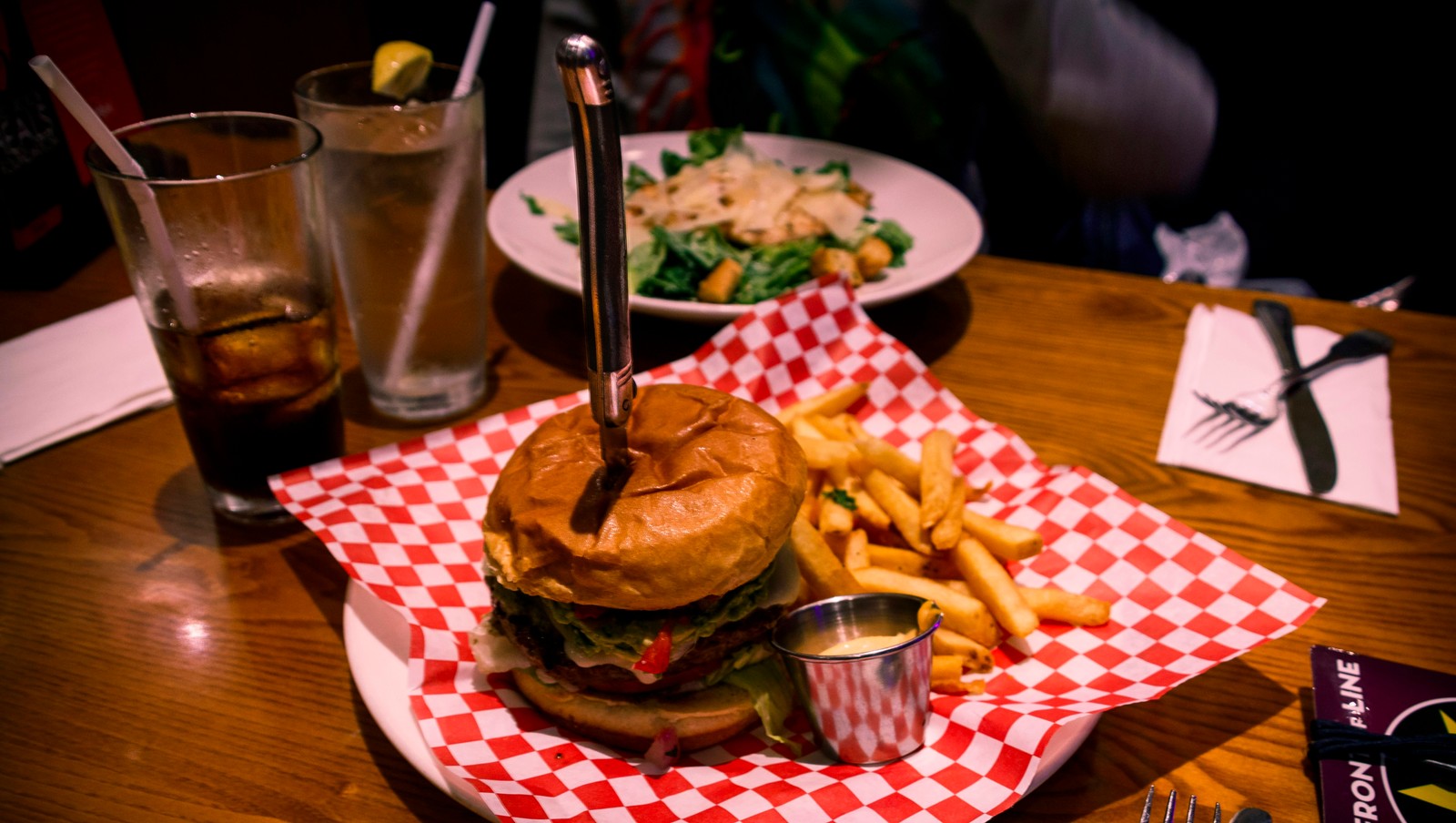
The fast food industry boomed in this decade, revolutionizing the American dining experience. Chains like McDonald's, founded in 1955, popularized the concept of quick and affordable meals. This phenomenon was also closely tied to the emerging car culture, as drive-thru restaurants became commonplace.

This convenience appealed to the growing suburban population and busy families, making fast food synonymous with modernity, speed, and the American lifestyle.

5
Iconic Cars

Image: Photo Person

A golden age for American automobiles, the 1950s saw the emergence of iconic models like the Chevrolet Bel Air, Cadillac Eldorado, and Ford Thunderbird . These streamlined machines were not only more affordable than ever but also captured the public's imagination with their enhanced comfort and sophistication.

Cars soon evolved from mere transportation to symbols of status, freedom, and identity. Their innovative designs, characterized by chrome, tailfins, and vibrant colors, reflected the themes of the Space Age and the technological optimism of the era.

6
The Birth of Teenagers

Image: Fern M. Lomibao

While today we think of adolescence as a normal stage of life, the concept of the teenager as a distinct demographic didn’t truly emerge until the 1950s. With increased disposable income, young people soon became a powerful consumer group, influencing fashion, music, and entertainment.

They flocked to new cultural phenomena like rock 'n' roll, drive-ins, and soda fountains. By challenging traditional authority, this generation of teenagers pushed for freedom and independence, in many ways setting the stage for the social changes that would unfold in the subsequent decades.

7
Modern Design

Image: Matt Briney

Characterized by clean lines, organic shapes, and an emphasis on functionality, mid-century modern design was forged during this decade. Designers like Charles and Ray Eames, Eero Saarinen, and George Nelson became iconic figures, creating furniture, architecture, and household items that seamlessly blended form and function.

Technological advancements and the introduction of new materials, such as molded plywood, fiberglass, and plastics, enabled innovative and affordable designs. To this day, futuristic design remains closely associated with mid-century modern aesthetics.

8
Consumer Culture

Image: Jaxon Gee-Dub

This era marked the rise of consumer culture in America, with the proliferation of advertising and the introduction of new products. Brands like Coca-Cola, Pepsi, General Electric, and RCA became household names, and synonymous with the abundance and convenience of modern American life.

Shopping emerged as a popular pastime, with the expansion of department stores and the advent of shopping malls, which consolidated a variety of stores under one roof. As a result, for many, the pursuit of happiness became increasingly intertwined with the acquisition of material goods.

9
The Cold War Era

Image: Marie Rouilly

The Cold War shaped the tense geopolitical landscape of the 1950s, with the United States and the Soviet Union locked in a prolonged ideological struggle. Policies such as the "Marshall Plan" aimed to counter Soviet influence globally, while massive investments in defense and aerospace industries spurred significant technological advancements.

Fears of nuclear conflict and espionage permeated the era, influencing American culture and reflecting in movies and television. Despite these anxieties, the Cold War also fostered a strong sense of unity and patriotism as Americans rallied against a common adversary.

10
Suburban Boom

Image: Nikola Knezevic

The post-World War II era saw a massive migration to the suburbs, spurred by economic prosperity, supportive legislation such as the GI Bill, and a desire for affordable housing. Suburban developments like Levittown offered uniform, mass-produced homes that were accessible to middle-class families.

This suburban expansion reshaped American society, fostering a culture centered around family life, homeownership, and car-centric lifestyles. The move to the suburbs also led to the growth of shopping malls, schools, and community organizations, creating a distinct suburban culture that came to define the American Dream.

Explore more American facts

Choose your favorite category!

General
General

As American as apple pie—the very best America has to offer!

Culture
Culture

Delve into the astounding richness of American lore.

Geography
Geography

Hop in and explore vast and diverse American landscapes.

History
History

Discover the key moments that shaped the United States.