General General 4 min read

Embracing our multilingual nation

Do you know what is the second most spoken language in the United States?

Image: Houcine Ncib

In the United States, the number of people who speak a language other than English at home has nearly tripled over the last three decades, increasing from 23.1 million to 67.8 million. According to the 2019 American Community Survey by the Census Bureau, more than 350 languages are spoken across the country , making it one of the world's most linguistically diverse nations. In this article, we’ll explore the 12 most spoken languages in the United States. Can you guess how the rankings go?

1
12. Portuguese

Image: Etienne Girardet

Today, there are over 845,000 Portuguese speakers in the United States, making it the 12th most spoken language after English.

The Portuguese-speaking community is composed of immigrants from both Portugal and Brazil. Since the 1960s, many Portuguese immigrants have settled along the coast of Massachusetts, where they could continue their traditional fishing activities. Besides Massachusetts, Portuguese is most commonly spoken in Connecticut, Rhode Island, and Utah.

2
11. Hindi

Image: Rohan Solankurkar

Hindi is the most widely spoken Indian language in the United States, with more than 890,000 people speaking it . Hindi belongs to the Indo-European language family and has been included on the U.S. State Department's list of critical languages due to strategic commercial interests in South Asia.

Hindi-speaking Indians began immigrating to North America in the early 19th century. The community has primarily settled in large cities such as New York City, Washington D.C., San Francisco, Los Angeles, and Chicago.

3
10. Russian

Image: Tessakay

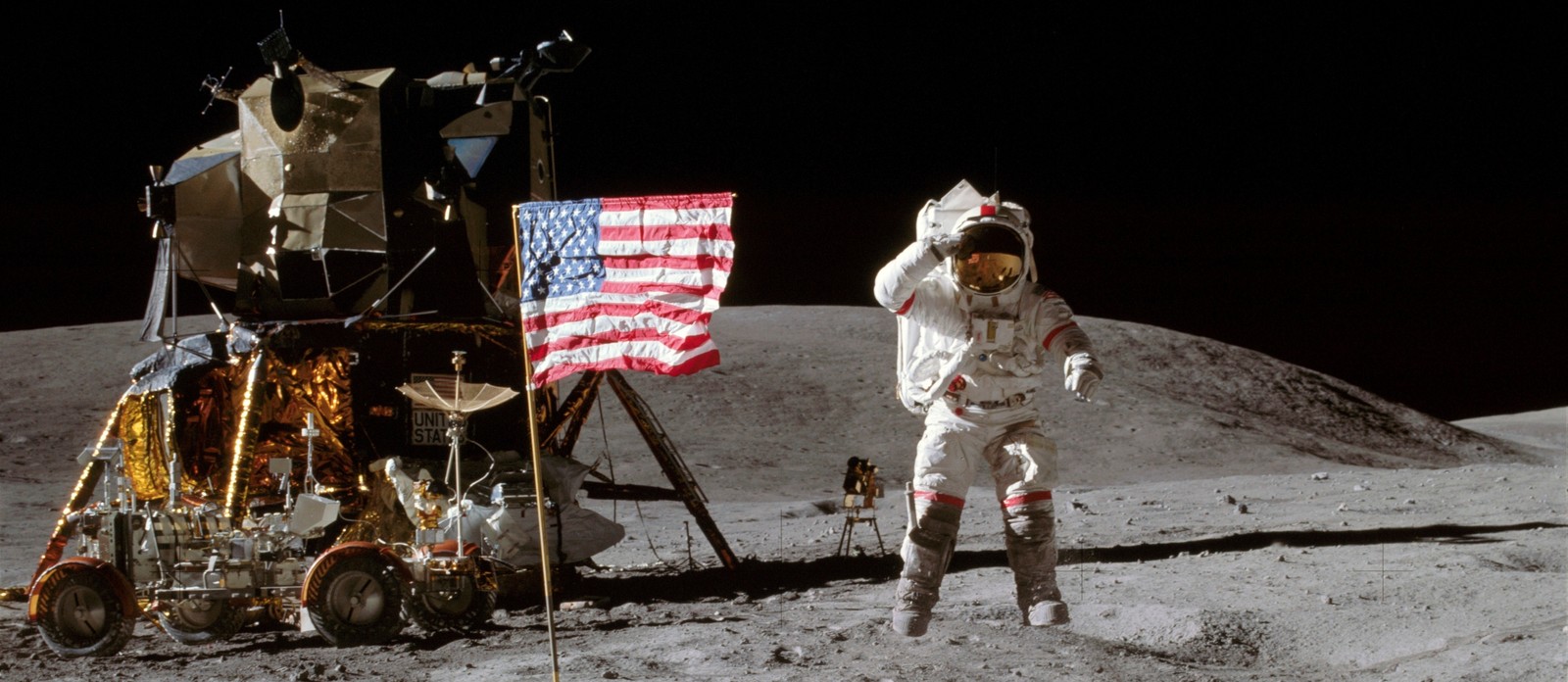
There are currently almost 950,000 Russian speakers in the United States. Did you know that Russian is one of the two official languages aboard the International Space Station? NASA astronauts typically take Russian language courses to communicate with their Russian counterparts.

Another well-known Russian-speaking community is in New York's Brighton Beach neighborhood, often referred to as "Little Odessa." Cultural events, festivals, and markets featuring traditional Russian foods, music, and crafts are common sights here. Los Angeles is another city where Russian is regularly used.

4
9. Korean

Image: 昆 阿

Over the past few decades, the number of Korean speakers in the United States has grown significantly, with nearly 1,100,000 people now speaking Korean .

Los Angeles is home to the largest Koreatown in the country, and many residents in other major cities speak Korean at home, helping to maintain and promote the heritage of this Asian culture in the United States.

5
8. Arabic

Image: Rawan Yasser

With more than 1.2 million speakers, Arabic is the eighth most spoken language in our country.

Arabic is spoken in immigrant communities from countries such as Egypt, Lebanon, Syria, Iraq, and Yemen. These communities are most prominent in states like California, New York, and Michigan, where Arabic is commonly heard in homes and community centers.

6
7. German

Image: FotosFuerBlogger

German is widely spoken in states with high populations of German ancestry, such as Pennsylvania, Wisconsin, and Texas. When including Yiddish, Pennsylvania Dutch, and other West Germanic languages, there are over 1,450,000 German speakers in the United States.

Cities like Fredericksburg and New Braunfels, Texas, were founded by German immigrants and continue to celebrate their heritage with festivals such as Oktoberfest. In Pennsylvania, a large number of Pennsylvania Dutch speakers—predominantly among the Amish and Mennonite communities—speak this German dialect, which is not, as one might expect, Dutch.

7
6. Vietnamese

Image: Huynh Van

The number of Vietnamese speakers in the United States is similar to that of the previous language on this list, with more than 1.5 million people speaking the language of this Southeast Asian country.

In recent decades, the number of Vietnamese immigrants has been increasing exponentially. Most have settled in California, followed by Texas, Florida, Washington, and Georgia.

8
5. Tagalog

Image: Emmanuel Nicolas Jr.

Despite being the fifth most spoken language in the United States, Tagalog is often overlooked. For those who have never heard of it, Tagalog is one of the official languages of the Philippines.

A significant number of Filipino immigrants have settled in the United States since the early 19th century. According to the U.S. Census Bureau, there are currently more than 1.7 million Tagalog speakers . Thirty-eight percent of Filipinos in the United States live in California, with relatively large concentrations also in Hawaii and Texas.

9
4. French

Image: Erik Mclean

If we include Patois, Cajun, Haitian, and Louisiana Creole—a hybrid of French and various African languages—French is the fourth most widely spoken language in the United States.

The French influence, which dates back to the 17th century, is evident in a wide variety of American English words and phrases. Today, there are nearly 2.1 million French speakers in the country.

10
3. Chinese

Image: 五玄土 ORIENTO

The Chinese language, including its different variants such as Mandarin, Cantonese, and Hokkien, contributes significantly to the cultural diversity of the United States. Although the gap between the second and third most spoken languages in the country is considerable, the number of people who speak Chinese is still representative.

With approximately 3.5 million Chinese speakers across the country, the greatest influence of this culture can be found in states with the highest concentrations of Chinese immigrants, such as New York and California.

11
2. Spanish

Image: Leeloo The First

Spanish is the second most spoken language in the United States and one of the fastest-growing languages in the country. This is no surprise, as approximately 19% of the total population is of Hispanic origin.

According to the U.S. Census Bureau, more than 40 million people speak Spanish in addition to English in the United States. Hispanic communities are found throughout the nation, with the largest concentrations in California, Texas, Florida, and New York.

12
1. English

Image: Wilhelm Gunkel

Although it is not surprising that English is the most widely spoken language in the United States, it is still not recognized as an official language. However, more than half of the 50 states have passed laws granting it official language status.

English speakers make up a large percentage of the U.S. population, with approximately 78 percent speaking only English . American English is also incredibly rich, composed of dozens of regional dialects with distinct grammar, vocabulary, and pronunciation.
General General 4 min read

Were you fooled?

Myths and stories behind famous brands: Are they true?

Image: Ana Dvoranen

Can you tell fact from fiction when it comes to major brands? Some stories sound too wild to be true—a $35 logo that became iconic, a soda once laced with cocaine, a chocolate tycoon who dodged the Titanic. In this article, your challenge is to guess whether the myths are true or false before we decode them. Ready to play Fact or Fiction ?

1
Nike’s Swoosh was created for $35

Image: Shubham Mittal

Yes, it was. The iconic Nike swoosh was sketched in 1971 by Carolyn Davidson, a graphic design student, for the grand sum of $35. She was helping out a friend—Nike co-founder Phil Knight—who needed a logo for his up-and-coming sneaker brand.

Years later, as Nike soared, the company gave her a thank-you gift: a gold swoosh ring and stock options that ended up being worth millions .

2
Coca-Cola originally contained cocaine

Image: Olena Bohovyk

It sounds like an urban legend, but it’s true: early versions of Coca-Cola did contain coca leaf extract , which naturally included trace amounts of cocaine. When pharmacist John Pemberton invented the drink in 1886, it was marketed as a "brain tonic" and nerve remedy, back when cocaine was legal and considered medicinal. By 1929, the formula was fully decocainized.

3
Neither Ben nor Jerry had any previous business experience

Image: Hybrid Storytellers

Absolutely. Longtime friends Ben Cohen and Jerry Greenfield took a $5 correspondence course in ice cream making from Penn State and launched their first scoop shop in a converted gas station in Vermont in 1978.

4
Barbie was based on a German adult doll

Image: Peyman Shojaei

True! She sure was. In the 1950s, Ruth Handler spotted a German novelty doll called Bild Lilli while on vacation. Originally sold as a gag gift for men, Lilli was fashionable, curvy, and definitely not meant for children. But Handler saw potential: she reimagined Lilli as a stylish role model for girls, and the first Barbie debuted in 1959.

5
Milton Hershey missed the Titanic voyage

Image: Janne Simoes

He definitely wasn’t on board—lucky for him! But just how close he came to sailing is uncertain. Legend has it that Milton Hershey and his wife were set to sail on the Titanic in 1912, but canceled at the last minute.

The only clue? A check stub showing a $300 deposit to the White Star Line. While there’s no confirmed ticket, the story has stuck.

6
GM hated (and banned) the nickname "Chevy"

Image: Jose Mueses

This one is partially true. In 2010, GM sent a memo urging employees to stop using the nickname "Chevy" in favor of the full "Chevrolet." The public backlash was swift—critics called the move tone-deaf. After all, "Chevy" was beloved, catchy, and woven into Americana.

Within days, the company backpedaled , assuring fans that "Chevy" wasn’t going anywhere. You just can’t mess with a nickname that’s already set in people’s hearts.

7
Apple was named after the forbidden fruit

Image: TheRegisti

Not quite. Steve Jobs chose the name "Apple" in 1976 because it sounded "fun, spirited, and not intimidating." It also gave the young company a strategic edge—it came before "Atari" in the phone book, which mattered in the era of printed directories.

8
Starbucks was named after Moby Dick’s first mate

Image: Athar Khan

Yes, though it was a winding path. The founders were searching for a name that evoked the seafaring tradition of coffee trading. After toying with " Pequod " (Captain Ahab’s ship), they landed on "Starbuck"—the first mate in Moby-Dick and a name with a strong, classic ring to it.

9
Harley-Davidson was going bankrupt, but its logo saved it

Image: Donald Teel

This one is sort of true. In the early 1980s, Harley-Davidson was revving on empty. The rise of Japanese bikes had them cornered—until the brand leaned hard into nostalgia . The bar-and-shield logo, dating back to 1910, became the centerpiece of a marketing push built on American pride, leather jackets, and the unmistakable growl of a V-twin engine.

It worked. The logo became a badge of rebellion, and Harley rebounded.

10
There’s an arrow hidden in FedEx’s logo

Image: Toni Pomar

Once you see it, you can’t unsee it. Look closely between the "E" and the "x" in the FedEx logo—there’s a white arrow formed by the negative space. It’s a perfect symbol for speed, direction, and efficiency.

The logo was designed in 1994 by Lindon Leader, and the hidden arrow was no accident. It’s a subtle nod to the company’s core promise: to get it there fast .

11
"Breakfast at Tiffany’s" launched the brand

Image: Sam Lashbrooke

False! Breakfast at Tiffany’s didn’t launch the brand. Tiffany & Co. had been around since 1837, known for fine jewelry and that iconic blue box. However, after the 1961 film, Audrey Hepburn’s little black dress and wistful gaze into the Tiffany’s shop window helped cement the brand’s image of elegance .

12
Levi’s blue jeans were created for gold miners

Image: Varun Gaba

Absolutely. In 1873, Levi Strauss and tailor Jacob Davis patented durable denim trousers with copper rivets— perfect for miners during the California Gold Rush . The jeans were tough, practical, and ideal for the grueling work conditions out west. In time, what began as rugged workwear became an American icon.

13
Amazon was named after "the biggest river"

Image: Sunrise King

Yes, it was intentional. Jeff Bezos wanted a name that conveyed vastness, exoticism, and would appear early in web listings . "Amazon" fit the bill—although it could have been named "Nile," which is often cited as the world’s longest river. Bezos liked the idea of building the biggest online store in the world, just like the Amazon is the biggest river by volume.

General General 6 min read

Happiness in a bowl

What’s your favorite cereal? The top 10 most popular brands in America

Image: DS stories

On any given day, one out of every two Americans starts his or her morning with a bowl of cereal. Altogether, Americans consume roughly 2.7 billion boxes every year. Although the story of cereal began around 10,000 years ago with the advent of agriculture, cold breakfast cereals are a more recent and decidedly American development that quickly expanded to the rest of the world. Whether you prefer Corn Flakes or Froot Loops over Cheerios and Lucky Charms, you'll likely find your favorite cereal in this article. Join us as we look back on 10 of America's most popular breakfast brands!

1
Corn Flakes

Image: Sten Ritterfeld

Who hasn't started their day with a bowl of Corn Flakes at least once? While Corn Flakes weren't exactly the first packaged cold cereal product sold in America, they are undoubtedly the most iconic. As early as 1902, William Keith Kellogg began mass production of his first cereal after proving its efficacy and popularity with patients at the Battle Creek Sanitarium, where he worked alongside his prestigious doctor brother.

The Kellogg brothers were focused on offering a healthier alternative to the traditional pork-and-beef heavy English-style breakfasts that most Americans were eating at the end of the 19th century. Therefore, they developed a process that allowed them to transform thin slices of cereal into small toasted flakes of wheat or corn. Since then, Corn Flakes, combined with fresh milk, have been one of the most popular breakfasts among Americans, young and old.

2
Cheerios

Image: Deena Englard

Did you know that a one-ounce serving of Cheerios contains nearly 250 individual "O's."? Crazy, right? Introduced in 1941 by the American company General Mills, Cheerios is one of the first oat-based ready-to-eat cereals and remains one of the most widely consumed in the United States.

Back in the 1930s, General Mills engineers tested more than 500 formulas and experimented with 10 different shapes and sizes before perfecting the now-iconic "O." They finally came up with the delicious cereal that offers the nutrients of 4 cereals: oats, corn, wheat, and rice. Today, there are about 20 different flavors of Cheerios available in the U.S., including Honey Nut, Chocolate, and Apple Cinnamon. Which one is your favorite?

3
Rice Krispies

Image: Lisa Fotios

Kellogg’s is one of the most influential breakfast cereal companies in the United States and the world, and we have them to thank not only for Corn Flakes but also for our beloved Rice Krispies. This breakfast cereal made from crispy rice first appeared on the shelves in 1928. It was revolutionary at the time because the company used a new patented process called "oven-popping" to manufacture them.

Rice Krispies’ success may have been due to its claim that the cereal would remain floating even after 2 hours in milk. The brand's classic slogan honoring this unique quality—"Snap! Crackle! Pop!"—was introduced around 1939 and is still used on packaging today. For decades, Rice Krispies has been one of the most popular cereals among consumers, so much so that even the Rolling Stones recorded a short song for a television commercial promoting the brand in 1964. Do you remember the catchy tune?

4
Cap'n Crunch

Image: Samantha Gades

Cap'n Crunch cereal, a combination of corn and oats, was developed in the early 1960s by Pamela Low, a flavorist who was inspired by a brown sugar and buttered rice recipe from her grandmother. Since its debut, additional flavors have been introduced, including Berries, Peanut Butter, and Chocolate.

But did you know that Cap'n Crunch’s full name is Horatio Magellan Crunch ? The iconic cartoon mascot was developed for the Quaker Oats Company by Allan Burns, a screenwriter and television producer who later co-created popular shows like The Munsters and The Mary Tyler Moore Show . Since its introduction in 1963, the late 18th-century naval captain, born on Crunch Island—a magical land in the Sea of Milk—has won the hearts (and bowls) of countless consumers across America.

5
Trix

Image: Sascha Bosshard

General Mills introduced Trix in 1954 as the first fruit-flavored cereal. Initially, it wasn’t marketed exclusively for kids, but because of the bright colors, it soon became a favorite among the little ones. When Trix was first launched, it featured round cereal balls in three flavors: "Raspberry Red," "Orange Orange," and "Lemony Yellow." It wasn't until 1991 that Trix became the first fruit-shaped breakfast cereal.

But as with other brands on this list, Trix is best remembered for its mascot rather than the cereal itself. In fact, the Trix Rabbit is one of the single longest-running ad campaigns in television history. Since the 1960s, the brand has kept the same character, the same slogan—"Trix are for kids!"—and the same storyline: the rabbit’s endlessly thwarted attempts to steal a box of cereal.

6
Frosted Flakes

Image: Engin Akyurt

If we talk about the sweetest cereals on the market, we cannot fail to mention Frosted Flakes. The concept and technology of a "frosted" cereal was developed in 1939 by Jim Rex, a salesman from Philadelphia who unfortunately didn’t have much success with his product Ranger Joe Wheat Honnies. The idea, though, was soon adopted by the breakfast cereal industry, and by 1952, Kellogg introduced Sugar Frosted Flakes to its lineup.

That same year, Kellogg launched a campaign featuring Tony the Tiger, Frosted Flakes’ famous mascot, who proudly declared, "Sugar Frosted Flakes are Grrr-reat! The slogan and the character became so popular in the United States that it's probably more quintessential than the cereal itself.

7
Lucky Charms

Image: Céline Druguet

The mini marshmallows found in Lucky Charms, whose technical and copyrighted name is Marbits , were invented, along with the cereal, by General Mills product developer John Holahan in 1963. One morning, he cut up a few orange marshmallow Circus Peanuts, mixed them into a bowl of Cheerios, and was delighted with the result. The rest, as they say, is history.

Lucky Charms is inspired by Irish culture. Its mascot, Lucky the Leprechaun debuted on St. Patrick's Day in 1964. The successful combination of this endearing character, delicious shaped oat pieces, and colorful little marshmallows was quickly embraced by children around the world. Tasty, crunchy, and fun, this cereal has undeniably revolutionized American breakfasts forever.

8
Froot Loops

Image: Yusuf Timur Çelik

Toucan Sam has been a part of our lives for more than 60 years now. Kellogg’s iconic mascot—a blue, anthropomorphic toucan with the ability to smell Froot Loops from great distances—was introduced alongside the O-shaped cereal in 1963.

Froot Loops were developed after Kellogg attempted to displace General Mills' Cheerios from the market. The idea of introducing fruity flavors proved to be a success, even though, years later, the company admitted that the different colors did not correspond to unique fruit flavors. In recent years, Froot Loops have faced criticism for their use of artificial colorings and high sugar content. Yet, they still have plenty of fans and they remain one of the best-selling cereal brands in America.

9
Cinnamon Toast Crunch

Image: Francisco Jacquier

Another popular breakfast cereal created by General Mills is Cinnamon Toast Crunch. In fact, the company sells over 100 million boxes a year of this brand alone, putting it just behind Cheerios and Frosted Flakes in sales. How about you—do you have a box of Cinnamon Toast Crunch waiting in your pantry?

These delicious little squares of whole wheat and rice, topped with cinnamon and sugar, were first launched in 1984 and were an instant hit. And it makes sense, given that, in a way, they were invented by a child. Cinnamon Toast Crunch was developed by General Mills scientists and product managers after an unnamed child suggested the idea of a cinnamon toast-flavored cereal during a radio contest. Since then, it has remained one of America's favorite cereals and we don't expect its popularity to wane any time soon.

10
Life

Image: Binyamin Mellish

More than 60 years after its creation, Life remains one of the top 10 best-selling cereal brands in the United States. Introduced on the market in 1961 by the Quaker Oats Company under the slogan "The most useful protein ever in a ready-to-eat cereal," Life is a multigrain cereal enjoyed by millions of family households across the country.

Like its competitor Trix, Life has also made history in marketing and advertising. A famous Life commercial featuring Little Mikey, a hard-to-please four-year-old boy, aired nationally from 1972 to 1984, making it the longest-running commercial in television history . Have you seen it? We bet you have!

Explore more American facts

Choose your favorite category!

General
General

As American as apple pie—the very best America has to offer!

Culture
Culture

Delve into the astounding richness of American lore.

Geography
Geography

Hop in and explore vast and diverse American landscapes.

History
History

Discover the key moments that shaped the United States.