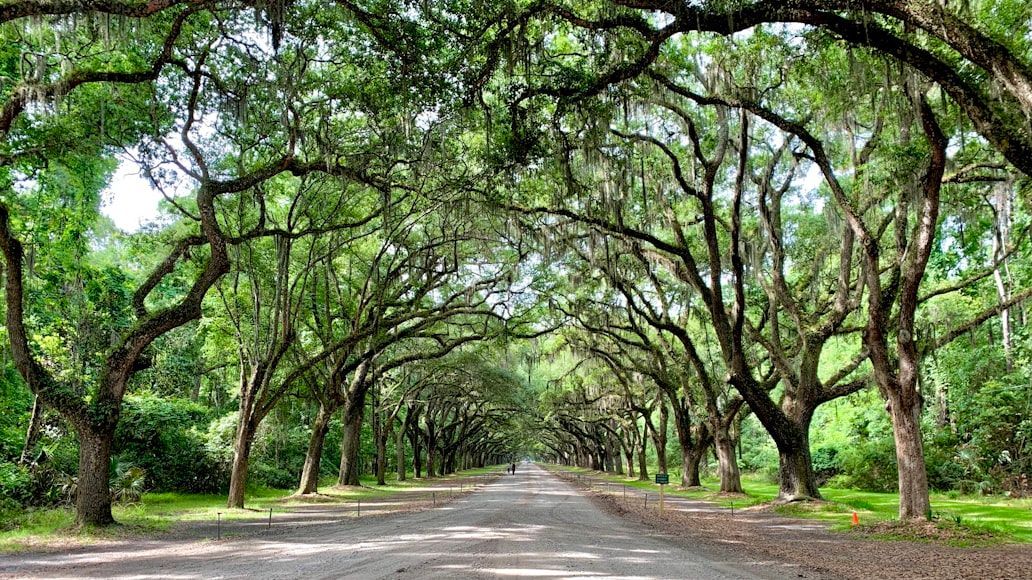
General General 4 min read

Not everything is digital

Do you remember these 12 gifts people used to give but don’t anymore?

Image: Joshua Lam

No one can deny that the modern age has brought an almost infinite number of advantages. But, be it for nostalgic reasons or otherwise, everybody misses something from the past that was rendered obsolete by technology, social convention, or simply fell out of fashion at some point in time. Among those are many things that we used to gift to each other and we don’t anymore, from music to DVDs, to preserves. Which one do you miss the most?

1
Music

Image: Jamakassi

Back in the day, the gift of music used to mean something. It was a connection between the person who made the gift and the one who received it . It was a beautiful object, to be played on a music player and stored at home. Nowadays, music is something much more abstract that is streamed from online services and is not given as a gift of discovery anymore.

2
Movies
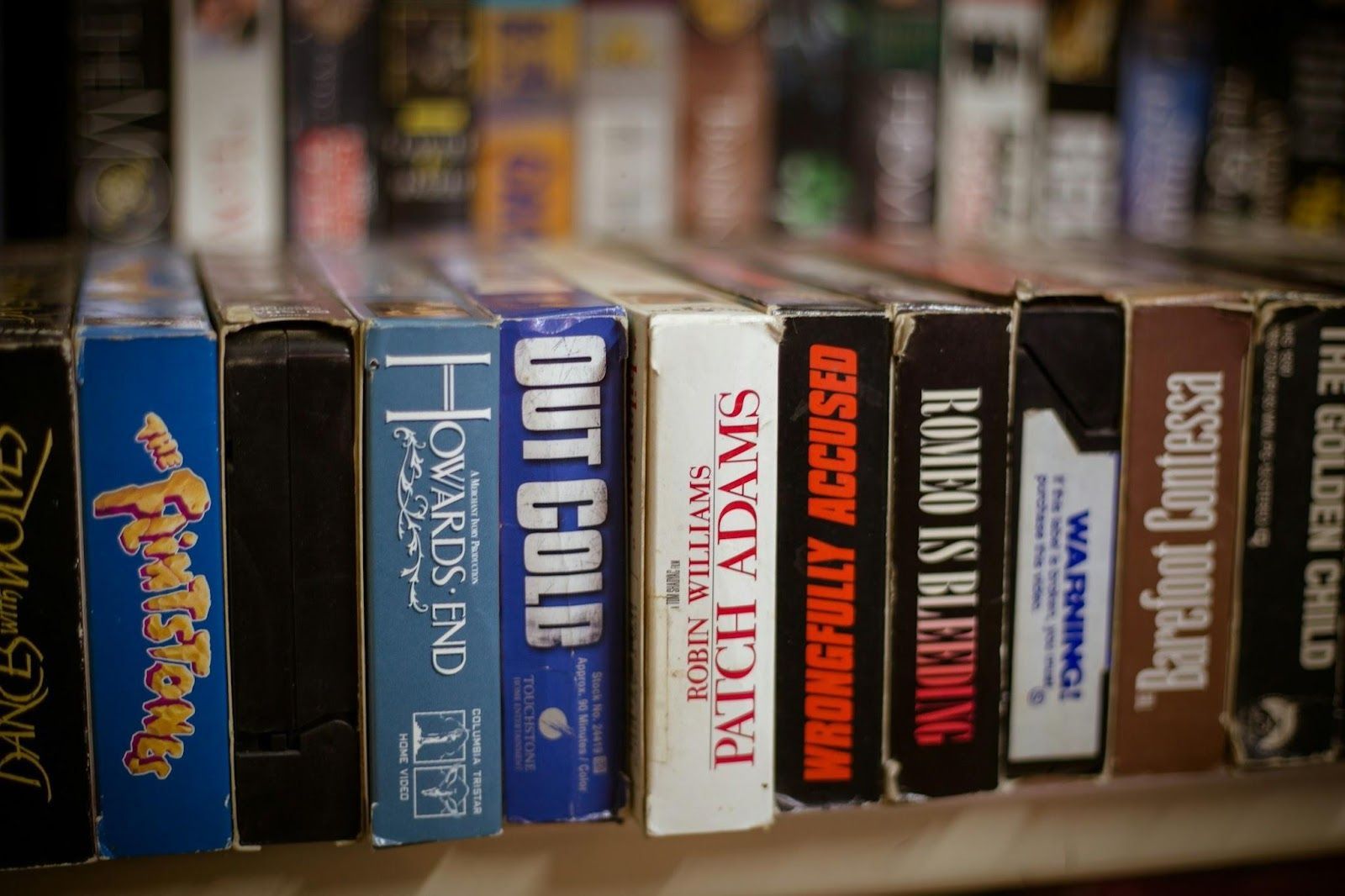
Image: Delaney Van

Movies have experienced a fate similar to the one suffered by music. Thanks to streaming services like Netflix, Amazon Prime, and the rest, movies are available to watch online, and no one owns a VHS, DVD, or Blu-Ray player anymore . It used to be a fun thing to give as a gift. "You are going to love this movie". Not anymore. Nowadays, we just recommend things from HBO or Disney to each other.

3
Preserves
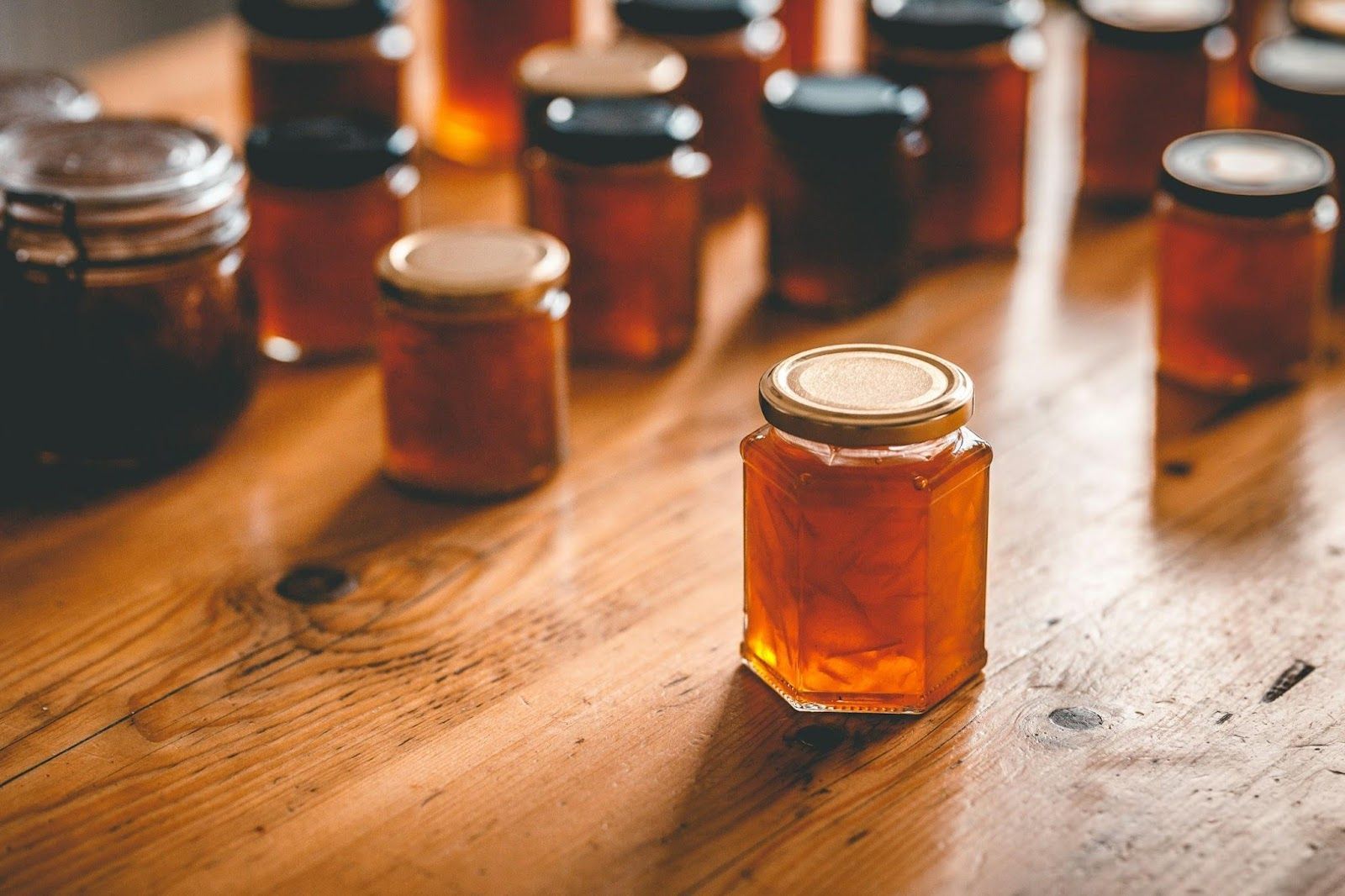
Image: Rob Wicks

Since the dawn of time, preparing a meal with care and dedication for somebody else has always been a way to show affection. Until not so long ago, gifting preserves used to be a common practice and a way to express love from a distance . Nowadays, if you want strawberry jam, you can just go to the store.

4
Knitted clothes

Image: Liana S

The many hours invested in knitting a clothing item are an integral part of the gift that the person who created it is giving . The warm embrace of a knitted sweater, scarf, socks, or any other item created similarly cannot be replaced by store-bought clothes.

5
Fresh flowers
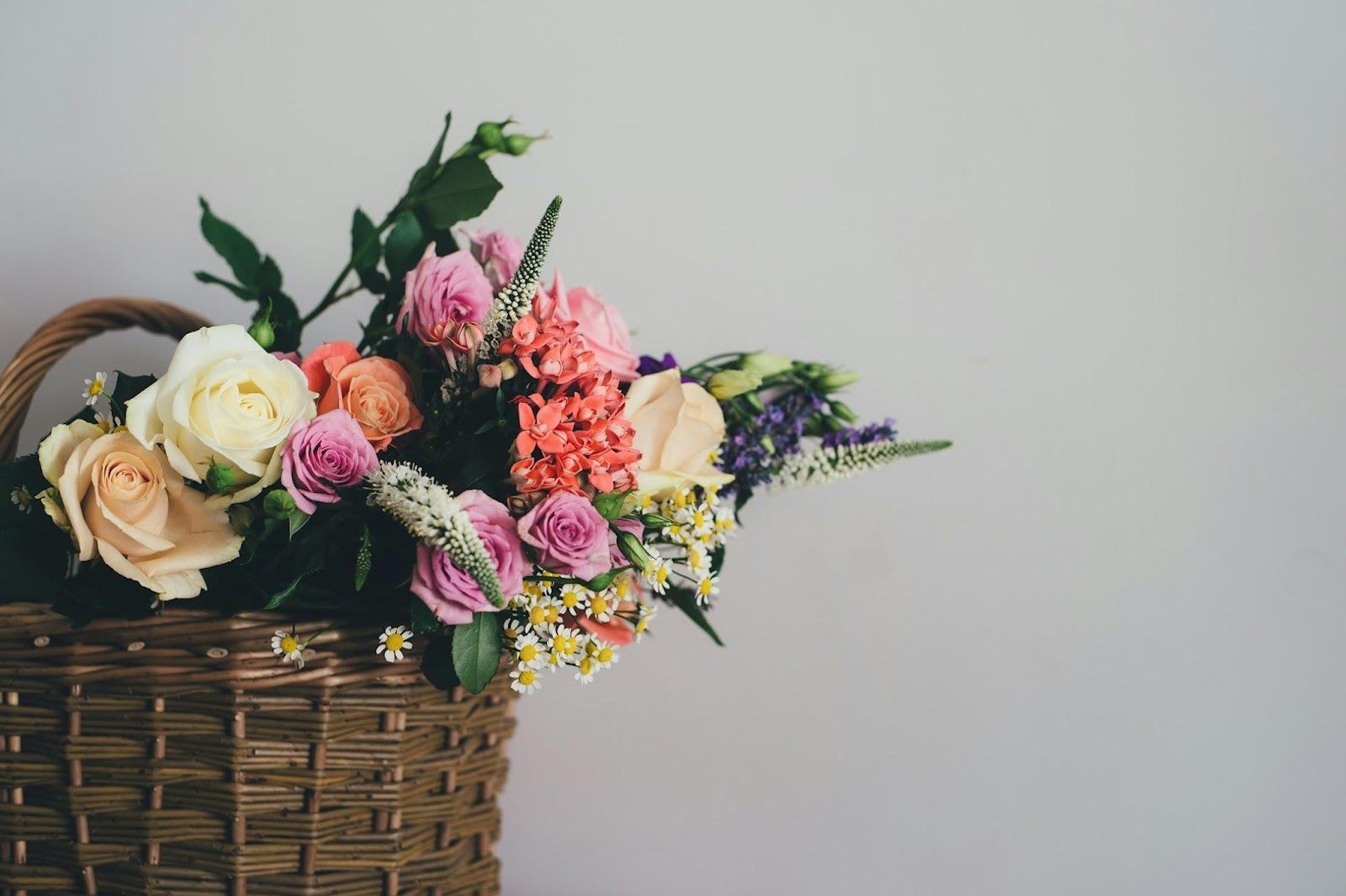
Image: Annie Spratt

Giving someone a fresh bouquet, especially harvested from one’s own garden, used to be a thing in the past, at least for people who had gardens. It was meant as a kind gesture that said "I thought about you when I picked these flowers" and embellished the home of the one who received it.

6
Homemade cooking
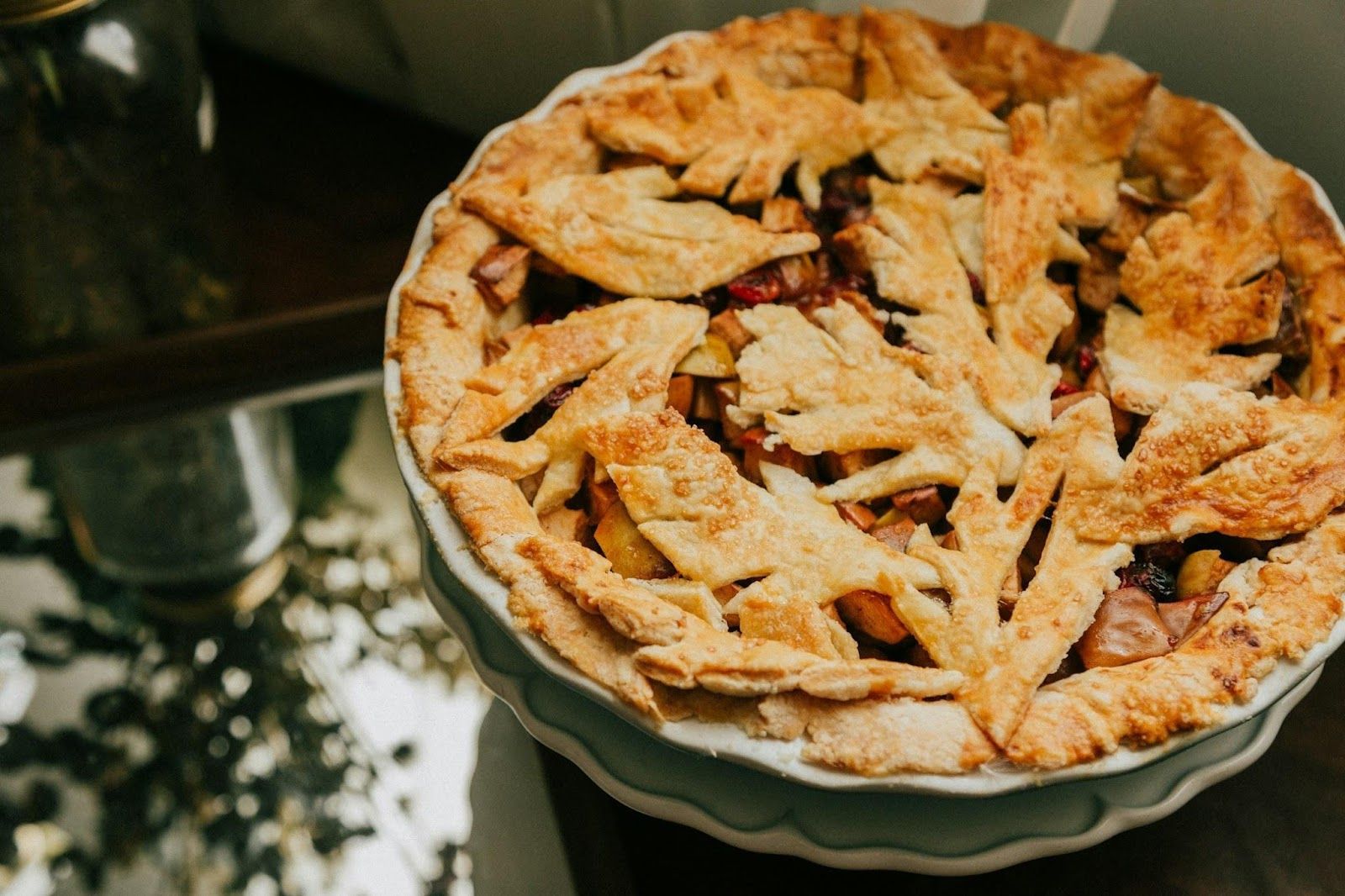
Image: Priscilla Du Preez 🇨🇦

A delicious homemade pie or a nice dessert used to be a common thing for house guests to bring to their hosts. While it still happens from time to time, it used to be much more common. These days, the usual drill involves stopping by the deli to get a packaged item, at best.

7
House plants
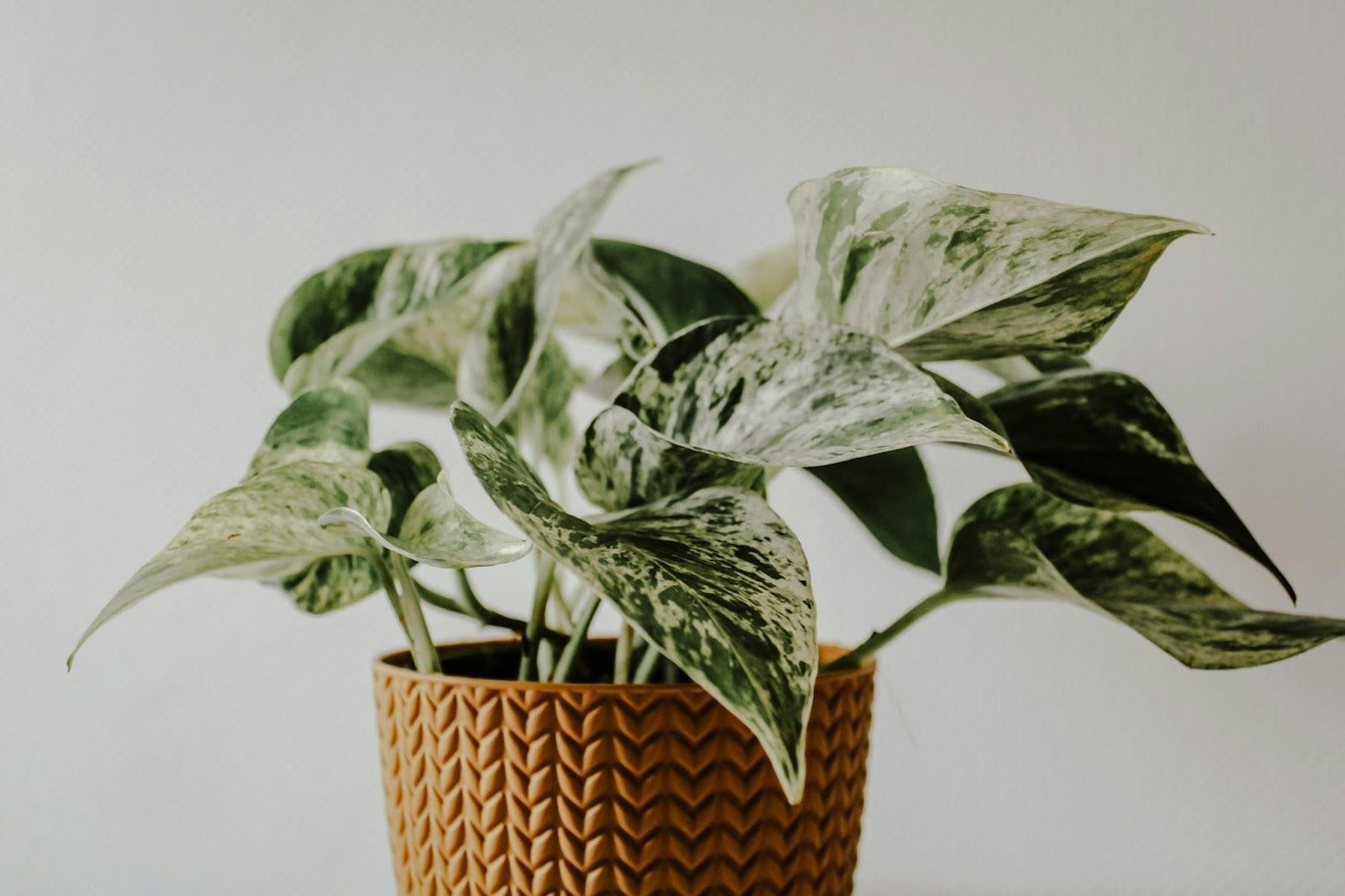
Image: Lasma Balode

Plants can really upgrade a room, and people used to know this, at least to a larger extent than today. Bringing a small house plant to a new home is a great gift , and it used to be a much more common practice than it is these days.

8
Framed artwork

Image: Jonny Caspari

Paintings have the reputation of being expensive things. And in some cases, they are. But beautiful artwork by unknown artists can be found for low and reasonable prices everywhere . People used to know this and bought paintings to decorate their walls and, taking into consideration the personal taste of the receiver, to give as gifts.

9
Maps

Image: Hutomo Abrianto

In the age of smartphones, paper maps have become somewhat irrelevant and cumbersome. But they make for beautiful objects and can be framed into beautiful works of art . Gifting maps depicting places that are relevant to the gift receiver is a habit that should come back.

10
Greeting cards
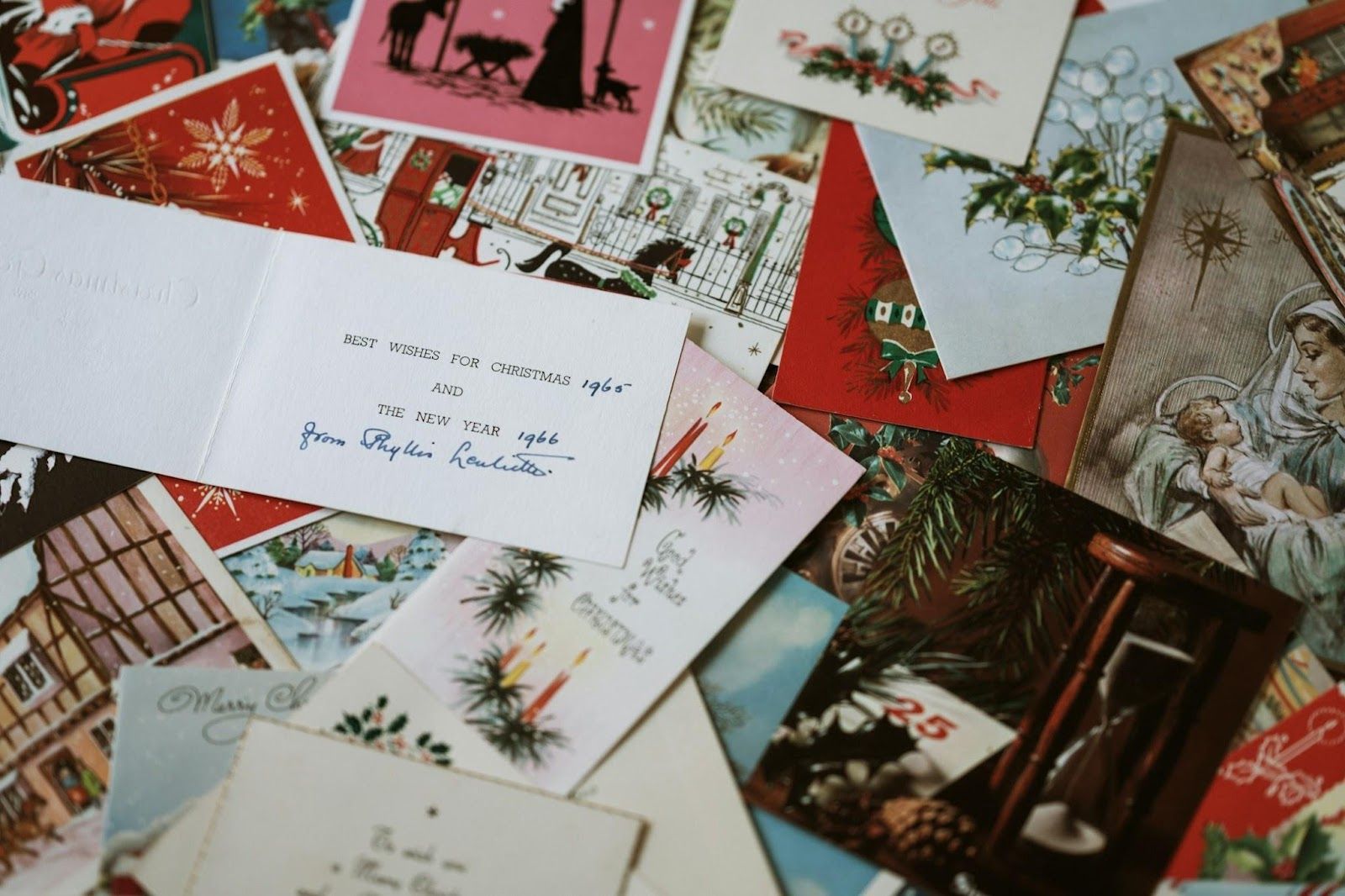
Image: Annie Spratt

Be it of the Hallmark kind or any other, greeting cards used to be given for many different occasions throughout the year. Since the Internet came around with emails, social media, and WhatsApp messages, these cards have all but faded into oblivion.

Even if you only kept them for a couple of months before throwing them away, it was fun to receive those cards as a reminder of the fact that someone cared about you enough to buy, write, and mail the card.

11
Handwritten postcards
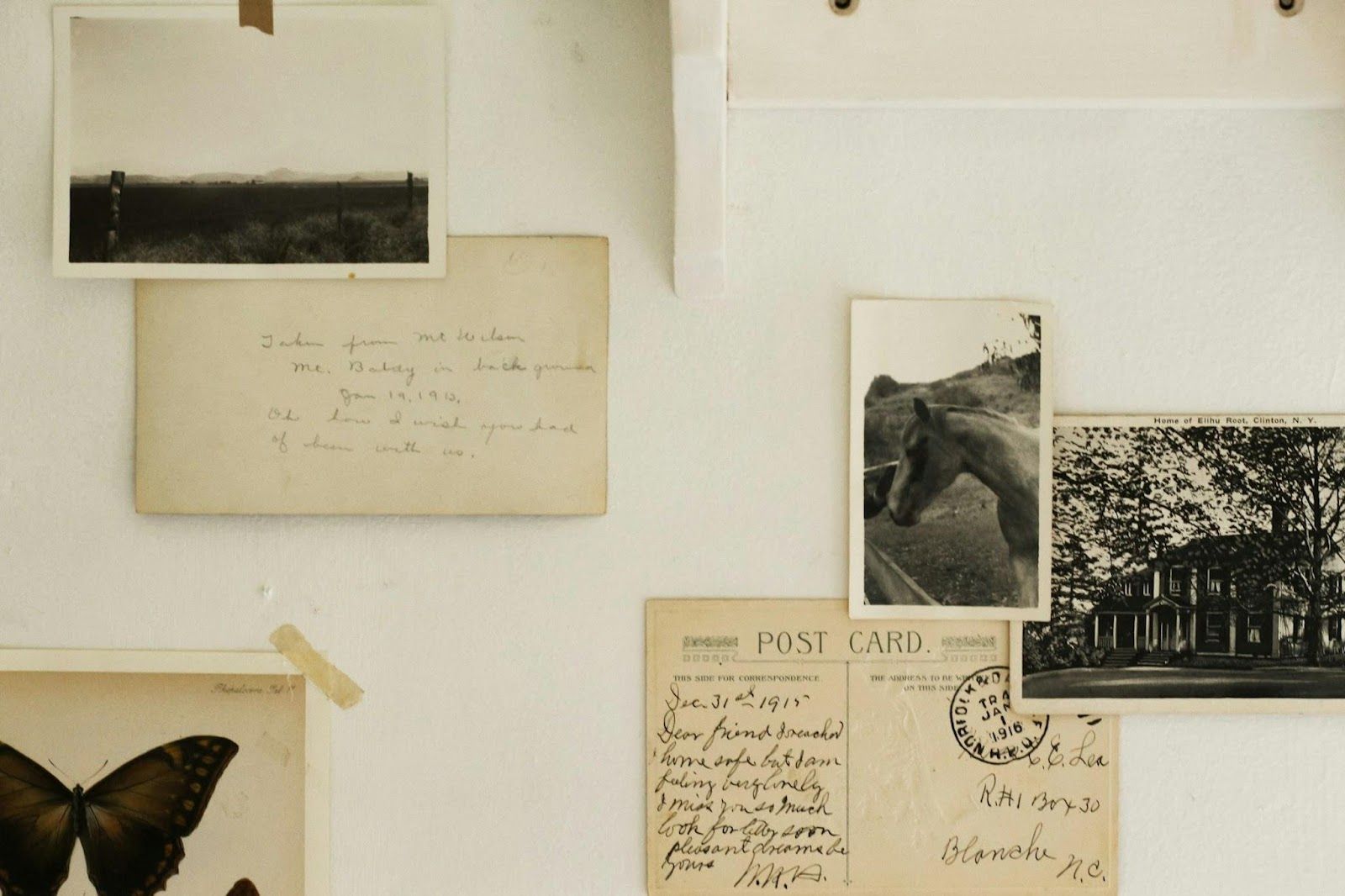
Image: Ireland Rogers

Somewhat similar to greeting cards but not quite the same are postcards. These lovely reminders of a friend or a relative’s trip brought the comfort of knowing that whoever wrote the postcard was thinking about you .

Again, the internet has rendered postcards obsolete, but that does not mean that, even to this day, receiving one would be a very nice gesture.

12
Framed pictures

Image: Natalia Rüdisüli

Giving someone a framed picture of a significant moment can be a great gift, and it used to be much more common. Just like in the case of the framed artwork, it is important to understand the personal taste of the person who is receiving this gift . But if this is understood and taken into account, there is no reason why this shouldn’t come back as a great gift idea.

General General 4 min read

Which is the craziest street name you remember?

Which are the strangest street names in America?

Image: Albert Stoynov

"Maple" is a good name for a street, yes. But we already have many of those. Streets with names that stand out are easier to remember, and the ten examples provided in this list are memorable, to say the least. From a street named Pig’s Eye Lake to a road named Psycho Path, America displays its creativity and humor at every corner. Did you know any of these?

1
Frying Pan Road

Image: Ashwini Chaudhary(Monty)

As we discuss our first entry on the list, we must prepare you for the incoming spoonful of roads and streets named after various things, starting with the namesake one. There is a suburb in Hendon, Virginia with a community named Fryin Pan that dates back to at least the 1700s. However, in the 1890s, they changed the name to Floris. The original name has remained as a road.

2
Chicken Dinner Road

Image: Karyna Panchenko

Believe it or not, there is a road in Idaho called Chicken Dinner. According to the main story, the origin of the name lies with a resident who lobbied the governor to improve the road outside her house. Laura Lamb was known for her chicken, and when a couple of vandals painted the words "Lamb's Chicken Dinner Avenue" on the freshly oiled road, they inadvertently christened the street with the name that is known today.

3
Bad Route Road

Image: Markus Spiske

While the name doesn’t sound very enticing, a trip down this residential Montana street may not be as bad an idea as it sounds. This street possibly received its unfortunate name from Bad Route Creek, an offshoot of the Yellowstone River. The creek's name itself may have originated from the difficult conditions and the challenges faced by early explorers and settlers in the region.

4
Psycho Path

Image: Jorge Salvador

It was voted as the nation’s wackiest street name, and for good reason. Psycho Path is a small private road in Traverse City, Michigan . Owners of private roads can register whatever name they choose with the local authorities. We prefer to think that the owner of this road is not a particularly dangerous person but rather someone with a sense of humor.

5
Alcohol Mary Road

Image: Timothé Durand

A memorable street named, indeed—Alcohol Mary Road in Greenwood, Maine, is named after a local woman who was known for producing alcohol during the Prohibition years. To the residents, it symbolizes the town's spirit of independence.

The Hertell family, who lives on the road and has a family matriarch named Mary, has grown tired of fielding questions about whether their beloved grandmother was an outlaw.

6
Zzyzx Road

Image: Diego Jimenez

Sounds like "Six Six," but it’s not spelled in the same way. Not only is there a town in Southern California named Zzyzx, but there is also a street that leads to the town.

According to the story, Curtis Howe Springer created the name Zzyzx and gave it to the area in 1944, claiming it to be the last word in the English language.

7
Five Forks Trickum Road

Image: Prayag Tejwani

There is a road in Gwinnett County, Georgia , named Five Forks Trickum Road, which has only four forks. The reason for this is simple: in decades past, it once had a five-fork intersection.

As for the "Trickum" part, local lore suggests that this comes from a shop owner who once lived there, and often swindled customers out of their money.

8
Liquid Laughter Lane

Image: Surface

A poetic image if we ever heard one, Liquid Laughter Lane is a real street in Columbia, Maryland . When the local community was planned, names for the streets were needed and the team in charge of coming up with these names resorted to statistics, demographics, and geographical locations, among common elements. But they also took inspiration from things like literature and poetry, which helped them come up with beautiful names like Liquid Laughter Lane.

9
Pig’s Eye Lake Road

Image: Fabian Blank

Pig’s Eye Lake Road is a nod to an actual person named Pierre "Pig’s Eye" Parrent (nicknamed as such because he had only one eye), who played an important role in the history of St. Paul and Minnesota . He established a tavern that served as a meeting place for traders and settlers, making it a focal point in the community.

Today, Pig's Eye Lake Road continues to serve as a reminder of the area's history and the colorful characters who contributed to its development.

10
Ninth and a Half Street

Image: Nick Hillier

Since the second part of an address is typically a number, it is advisable to name the first part with a word rather than another number; however, there are exceptions. Ninth and a Half Street runs along the north-south boundary between what used to be Old Nebraska City and South Nebraska City (which now make up Nebraska City).

If you are wondering where this name came from, it has to do with the fact that the city was formed from three preexisting cities, and when they went to rename the streets of the newly formed city, the numbers didn’t quite line up.

History History 7 min read

The history before the history

What were the thirteen colonies named after?

Image: Aaron Burden

The thirteen original colonies are the birthplace of America as a free country, but their history started way before 1776 . Did you know that there were actually only twelve proper colonies? Or that not all colonies were originally settled by the British? How did they come to be? What is the origin of their names? Let’s explore all these questions and more!

1
Virginia (1607)

Image: Praswin Prakashan

Before being an established colony, the entirety of England’s territories in North America was referred to as Virginia. While it is commonly accepted that Sir Walter Raleigh named it after Elizabeth I, the Virgin Queen , some historians have suggested that it is the European rendering of Wingina , the name of that region’s native ruler.

The first two English settlements (in modern-day Newfoundland and North Carolina) were not successful. The third one, Jamestown, was settled by the Virginia Company as a charter (a sovereign’s permission to establish a colony). Eventually returned to the crown’s authority, it was officially known as the Virginia Colony. After the English Civil War, Charles II conferred on it the title of "Old Dominion" as a token of gratitude, a name that survives as the state’s current nickname.

2
Massachusetts (1620)

Image: Pascal Bernardon

Also established by charter, the Massachusetts Bay Colony was not only created for trading purposes, like other settlements. It was also intended as a safe haven for English Puritans who desired to escape persecution . Its charter and name changed several times due to the Civil War and political unrest. Eventually, several colonies were merged into the Dominion of New England and later into the Province of Massachusetts Bay.

The name Massachusetts was taken from the indigenous population of the region, an Algonquian tribe called the Massachusett or Muhsachuweesut . It is believed that the name means ‘by the great hills’ or ' at the range of hills’, in reference to the Blue Hills.

3
New Hampshire (1623)

Image: Peter Lewis

The first settlements in New Hampshire were the result of land being granted to John Mason and Sir Ferdinando Gorges , neither of whom ever traveled to the region. Additional settlements in the area were established by colonists from Massachusetts Bay, who were unhappy with the strict Puritan rule of the colony.

Although John Mason had been born in Norfolk, he had ties to Hampshire County in South East England, after whom he decided to name his newly granted land . After Mason’s death, the region lacked a proper authority, and the settlers voted to be part of the Massachusetts Bay Colony. After the Civil War, the Province of New Hampshire was established by Charles II.

4
Maryland (1634)

Image: Liz Guertin

A similar situation to the Massachusetts colony, Maryland was also established as a refuge from religious persecution, this time for Roman Catholics . With this purpose in mind, George Calvert, 1st Baron Baltimore, secured a land grant from Charles I. Despite several religious conflicts, Maryland remained one of the most tolerant colonies.

Maryland was named after Charles I’s wife, Henrietta Maria , who was a devout Catholic. Lord Baltimore had initially intended to use the name Crescentia (or ‘the land of growth’), but he decided to let the King choose the name. Charles named it Terra Mariae (Maria’s land), although the English version quickly became more widely used.

5
Connecticut (1636)

Image: Rusty Watson

The first settlements in the area were established by Dutch explorers, but English settlers soon arrived from the Plymouth colony in Massachusetts. The colony took its name from the Connecticut River , a corrupted form of the native words quinetucket and kwinitekw , meaning ‘beside the long, tidal river’.

Connecticut's current nickname, ‘the Constitution State’, is a reference to the Colony’s constitution, the Fundamental Orders of Connecticut , one of the earliest constitutions in modern history.

6
Rhode Island (1636)

Image: Steve Anton

Founded by a Puritan minister who had been expelled from the Massachusetts Colony, Rhode Island was initially named Providence Plantations . Committed to ensuring religious freedom, it became a refuge for religious dissenters who found it difficult to live in the strict Puritan colonies. Later on, it merged with several other settlements —among them, Aquidneck Island, also known as Rhode Island— and took the name of the Colony of Rhode Island and Providence Plantations.

It’s uncertain where the name Rhode Island came from, but the two most likely theories cite either a connection with the Greek island of Rhodes or the Dutch phrase "een rodlich eylande" (‘a reddish island’) . All three names (Rhode Island, Island of Rhodes, and Red Island) are used in 17th-century documents.

7
North and South Carolina (1663)

Image: Clint Patterson

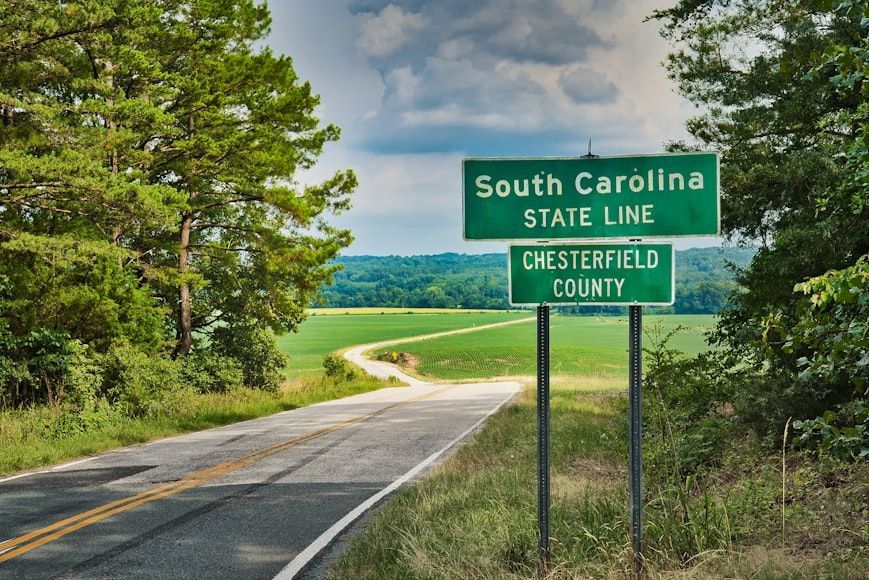
Before there was a North and a South Carolina, there was just Carolina . The land of both colonies had been granted to various nobles as a reward for their role in the restoration of the monarchy. The charter granting the lands —which included areas from present-day North Carolina, Tennessee, South Carolina, Georgia, Alabama, Mississippi, and Florida— named them Carolina (from the Latin Carolus ) after King Charles I .

The area covered by the province of Carolina was divided into two distinct parts, and communication and transportation between the two proved difficult. A deputy governor for the northern region was initially appointed, but the noble proprietors eventually decided to divide the province into two , North Carolina and South Carolina.

8
New York (1664)

Image: Matthias Kinsella

It is a widely known fact that modern-day New York was initially colonized by Dutch settlers under the name ‘New Netherland’, with ‘New Amsterdam’ as its capital city . In 1664, King Charles II and his brother, the Duke of York, gathered a fleet to seize the New Netherland territories, a conquest disputed by the Dutch West India Company, the colony administrator.

The Duke of York was made proprietor of the territory, now renamed ‘New York’. In the following decade, the ownership of the territory was disputed, and the Dutch made several attempts to recover it. Eventually, the Treaty of Westminster was signed in 1674, where the Dutch forfeited the New York territories in exchange for the Suriname colony in South America.

9
Delaware (1664)

Image: Gökhan Kara

The territory of Delaware was originally part of New Netherland, which made it part of the New York Province after British conquest, but it was never effectively controlled by the New York government. These counties had taken their name from the neighboring Delaware River , which in turn had been named after Thomas West, 3rd Baron De La Warr, governor of Virginia at the time the English gained control of that territory.

While they were never a colony of their own, the Delaware counties had an independent legislature and functioned as a de facto colony. Later included in the land granted to William Penn, they refused to merge with the Pennsylvania government and were eventually granted their own assembly. At the start of the Revolutionary War, the Delaware assembly voted for separation from Britain, thus creating the state of Delaware.

10
New Jersey (1665)

Image: R

Originally part of the New Netherland territory, half of the New Jersey territory was conferred by the Duke of York to Sir George Carteret as a reward, while the other half was sold to Lord Berkeley of Stratton. The territory was named after Carteret’s homeland, the island of Jersey .

A few years later, New Jersey was divided into two provinces, East and West Jersey , with their respective governors and constitutions, which were eventually incorporated into the New England Dominion, alongside the province of New York. However, the Dominion was dissolved after a few years, and the East and West Jersey territories were unified as the Province of New Jersey.

11
Pennsylvania (1681)

Image: Donnie Rosie

Pennsylvania, alongside Carolina, is one of the two major Restoration colonies, chartered by Charles II to reward loyal subjects after the war. In this case, it was conferred on William Penn, an influential Quaker thinker, to settle a debt owed to his father. Penn and his associates had already purchased most of the New Jersey territory to establish a Quaker haven, but religious tensions in England made him propose a mass emigration of Quakers to the King.

The king conferred Penn a large territory —which made him the largest private non-royal landowner— with almost absolute rights. While Penn intended to name the colony either ‘New Wales’ or ‘Sylvania’ (Latin for ‘forests’), the king named it Pennsylvania after Penn’s father . Penn personally travelled to the territory to establish the first settlements, signed treaties with the Lenape tribes of the area, and established a proto-constitution which guaranteed freedom of religion, elections, and trials by jury.

12
Georgia (1732)

Image: Jacob Mathers

The last colony to be established, Georgia was chartered to James Oglethorpe by King George II, after whom it was named . A social reformer, Oglethorpe, wanted to establish the territory as a haven for debtors and poor people, and implemented measures such as the banning of alcohol and slavery. He also disliked the large plantation system, favoring smallholdings.

The colony was also intended to be a ‘buffer’ between the British colonies and the Spanish territories in Florida. Despite Oglethorpe’s well-intentioned designs, the colony was difficult to manage, and it was returned to the crown two decades later. Upon becoming a royal colony, Oglethorpe’s measures against slavery and the plantation system were overturned.

Explore more American facts

Choose your favorite category!

General
General

As American as apple pie—the very best America has to offer!

Culture
Culture

Delve into the astounding richness of American lore.

Geography
Geography

Hop in and explore vast and diverse American landscapes.

History
History

Discover the key moments that shaped the United States.