Culture Culture 4 min read

FATHER OF HIS COUNTRY

Discovering the Founding Fathers: 10 Facts About George Washington

Image: Library of Congress

Born on February 22, 1732, George Washington was, undoubtedly, a key figure in the construction of our nation. He shaped the role of President of the United States, and his name is commemorated across the country in various ways: streets, lakes, buildings, a newspaper, and, of course, the capital of our country. This Founding Father has inspired all kinds of tributes to thank him for his services. In this article, we’ll go through ten facts about George Washington , the person, the president, and the legend.

1
Self-Educated

Image: Wojciech Pacześ

George Washington’s father, died when he was just 11 years of age. There isn’t much information about his childhood and most of his virtues and qualities were invented by an admirer after he passed.

However, we do know one thing: George Washington was mostly self-educated since there was little money to support formal education.

Most of his knowledge and education came from his curiosity and eagerness to learn and become a better soldier, then farmer, and, in turn, president.

2
First Official Job

Image: Matt Briney

Since he lost his father at such an early age, Washington started working very young. His first official job was as a surveyor, which was a pretty respectable job for the 18th century. His aim in this job was to measure the land.

At the age of 16, he took on an expedition across Virginia’s western frontier in order to map the land. This experience provided him with a deep understanding of the land, the resources, and the insight he would later need in his political and military career.

3
His Only Trip Off the Mainland

Image: Tom Jur

At the age of 19, George Washington accepted going on a trip to the tropics with his half-brother Lawrence who was suffering from tuberculosis.

Now, during this trip, Washington kept a diary in which he narrated his days on the ship and the island of Barbados, confessing being struck by the beauty of the place. The trip went South shortly after his arrival: On the island, he contracted smallpox, a dreaded disease during the 18th century.

Curious enough and dreadful as it was, this gave him immunity which ultimately saved him from death during the Revolutionary War, since smallpox rapidly spread across his army.

4
Agriculture Innovator

Image: Raphael Rychetsky

It is no surprise that Washington was an innovator, a forward-thinking kind of person. Besides politics and, as we learned, whiskey, he was also interested in technology.

In the 1760s, he went from growing tobacco to cultivating wheat, which revolutionized the farming practices in his estate. He experimented with crops, fertilizers, and tools to improve productivity.

He didn’t keep innovations for himself: As a president, he patented Oliver Evans’s automated mill technology, and he designed a 16-sided, two-story threshing barn that enhanced the efficiency of wheat processing.

5
Never Lived in Washington, D.C.

Image: Edoardo Cuoghi

Washington is the only president to have never lived in the White House! He, together with his family, lived in different houses along New York and Philadephia where he used to receive members of Congress, officials, and people of the sort.

The Residence Act, which moved the capital from Philadelphia to a new city along the Potomac River (later named Washington, D.C.), actually set the White House as the official presidential residence.

6
Only President To Have a State

Image: Vlad Tchompalov

Have you ever noticed that there is no Lincoln State or Jefferson State? George Washington is the only U.S. President to have a state named after him .

As a Founding Father, the first President of the United States, Hamilton, Madison, and Jefferson thought it was necessary to pay homage to his great contributions by naming a state after him.

Together with the president’s name, the state of Washington is named Columbia, after the female personification of the country.

7
First To Sign The Consitution

Image: Anthony Garand

George Washington is a Founding Father, and we all know that. As such, he was deeply involved in the writing of the Articles of Confederation, the first frame of government.

He suggested changes and his voice was regarded in the highest esteem by his fellow countrymen. In this sense, he was chosen president of the Constitutional Convention which took four months and gave, as a result, the Constitution of the United States. In his role as president, Washington was given the privilege of signing the governing document first .

8
He Was a Natural Entertainer

Image: Adam Nemeroff

When you look at pictures of Washington, you may think he was unapproachable, stiff, and serious, but history tells us otherwise.

According to many accounts, he actually loved entertaining and welcoming guests, and having company. Parties, cotillions, balls, these kinds of events were a perfect opportunity to combine entertainment and dancing, which he also enjoyed. Did you know this?

9
Post-retirement Hobby

Image: Thomas Park

Of course, they are considered national heroes, but the Founding Fathers were people with diverse interests and pursuits. George Washington was not the exception and, after he retired he took up a most interesting hobby: whiskey.

Once he ended his life in politics, he built up a whiskey distillery where he created whiskey from rye, corn, and barley. Even if it began as a hobby, the distiller became one of the most productive in the nation and, by the time he died, it remained as one of the largest.

10
One-Dolar Bill Face

Image: Marek Studzinski

Washington’s portrait on the one-dollar bill was inspired by a painting created by Gilbert Stuart. Back in 1795, Stuart painted Washington, but this piece of work comes with a few curious facts.

The first one is that the work is known only from copies. The second is that the painting was so successful that Washington’s wife commissioned a second portrait for herself. However, the painter never finished the first commission and kept it as a reference for future work.

That incomplete painting, known as the "Athenaeum," served as the reference for creating the portrait on the dollar bill.

Geography Geography 5 min read

INCREDIBLE AMERICA

Land of Freedom: 10 Striking Natural Landscapes Of The United States

Image: Robert Murray

Inspired by Thomas Jefferson's belief that America's wild beauty reflects our national spirit and heritage , in this article we want to celebrate the stunningly diverse and awe-inspiring landscapes that make the United States of America. We believe that the majesty of our nation’s natural wonders is as much part of our national heritage as our shared history of resilience and independence.

From the vast expanses of the Grand Canyon to the misty peaks of the Great Smoky Mountains, join us as we explore 10 breathtaking natural scenarios that embody the essence of our nation's spirit.

1
Grand Canyon, Arizona

Image: Tim Hart

A natural monument of unparalleled beauty, painstakingly carved over millions of years by the Colorado River , The Grand Canyon’s layered bands of red rock reveal more than just a part of the history of the land, but also offer a humbling window into deep time and Earth’s origins.

President Theodore Roosevelt himself was one of the foremost advocates for the preservation of the Grand Canyon area , frequently visiting to hunt and revel in its natural beauty. Before the arrival of Europeans, the area was continuously inhabited by various Native American groups, who often dug and carved their settlements directly into the ancient rock.

2
Yosemite Valley, California

Image: Robby McCullough

Located in the western Sierra Nevada mountains of Central California, Yosemite Valley’s granite cliffs, towering waterfalls, and ancient sequoias draw millions of visitors each year. Shaped by the action of glaciers during most of the last 30 million years , today its lush forests and incredibly diverse fauna are a living monument to our country’s biodiversity.

The towering granite peaks that encircle the valley, including Half Dome and El Capitan , are famed for their impressive rock walls and the breathtaking vistas they offer to hikers from above.

3
Yellowstone National Park, Wyoming

Image: Nicolasintravel

A geothermal wonderland, home to geysers, hot springs, and bubbling mud pots , Yellowstone is a wildlife haven where bison, grizzly bears, and wolves roam freely amidst its stunning natural features. Moreover, Yellowstone not only holds the distinction of being the first national park in the U.S. but also in the whole world, setting a precedent for conservation laws and standards that would be emulated worldwide.

Interestingly, the Yellowstone Caldera—the volcanic system responsible for the park’s intense geothermal activity—is the largest in North America and is considered a dormant "supervolcano." In the past, large eruptions from this region likely contributed to the extinction of many species, blanketing much of central North America in ash.

4
Denali National Park, Alaska

Image: Bryan Goff

At the heart of Alaska lies Denali, North America's tallest peak. Officially named Mount McKinley until 2015, the peak was renamed after the native word for the mountain, which fittingly means "the high one."

The region surrounding the legendary mountain became a National Park in 1917 , and since that time the rugged landscape of the park has been a haven for outdoor enthusiasts, offering unique opportunities for wildlife viewing. The pristine landscape features a diverse mix of forests, deciduous taiga, tundra, and glaciers , preserving a slice of untouched wilderness that highlights the raw, untamed beauty of Alaska.

5
Great Smoky Mountains, North Carolina/Tennessee

Image: Div Pithadia

With its mist-shrouded peaks and verdant forests, the Great Smoky Mountains are one of the most scenic and alluring landscapes of the United States.

A subrange of the Appalachian Mountains, the soothing vistas of lush forests growing above the ancient peaks are often veiled by a hazy blue-ish mist , which gives the name to the region. The mysterious fog is caused by various organic compounds emitted by the lush vegetation, which end up forming dense vapor columns.

6
Zion National Park, Utah

Image: Jamie Hagan

Zion's breathtaking sandstone formations are truly a sight to behold. The region is renowned for its towering cliffs, narrow slot canyons, expansive mesas, and captivating natural arches , each sculpted by the forces of time and nature into awe-inspiring works of art.

With a geological history that spans over 150 million years , Zion National Park is a testament to the immense geological forces that have shaped our land over millennia.

7
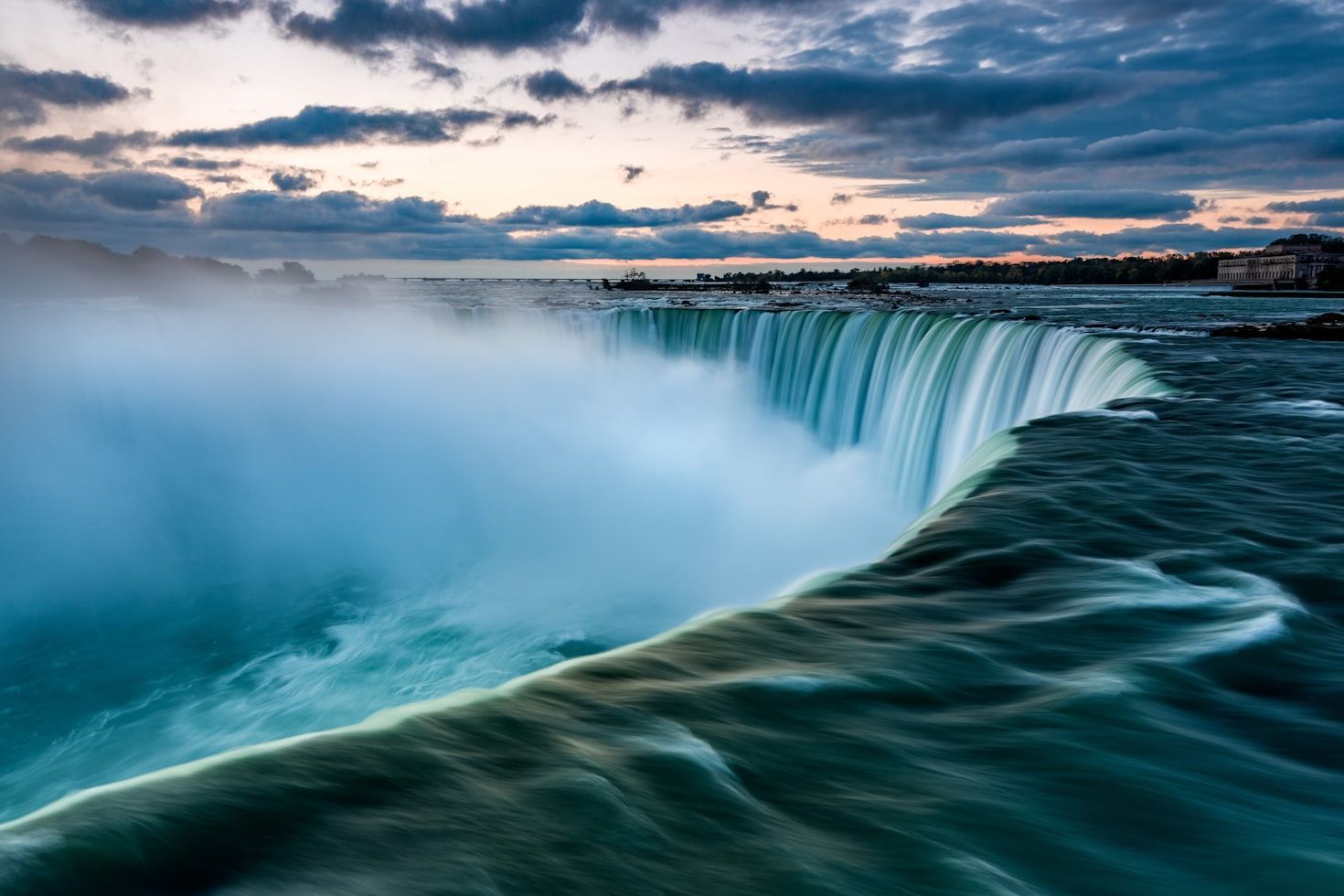
Niagara Falls, New York

Image: Kalen Emsley

One of the world's most famous waterfalls, Niagara Falls is an emblem of America’s diverse natural beauty. Straddling the international border between Canada and the United States, millions of gallons of water cascade over its cliffs every minute , drawing visitors from both nations to marvel at this awe-inspiring natural spectacle.

Formed by the Niagara River, which channels the waters from Lake Erie into Lake Ontario before ending up in the Atlantic, the falls experience a rate of erosion of almost a foot per year. If the erosion continues at this pace, in about 50,000 years the falls will completely erode the remaining 20 miles to Lake Erie and cease to exist.

8
Glacier National Park, Montana

Image: Justin Kauffman

One of the most pristine landscapes in the United States, Glacier National Park harbors ancient peaks and valleys that provide sanctuary to a diverse array of wildlife, home to thousands of unique species.

With more than one million acres, several glaciers, and over a hundred named lakes, this landscape offers a glimpse into the untouched beauty that greeted the first inhabitants of this land upon their arrival.

9
Acadia National Park, Maine

Image: Benjamin R.

Maine’s Atlantic coastline offers a stunning landscape of timeless beauty and rich history. From the towering Cadillac Mountain - the highest peak on the Atlantic coast - to the U-shaped valleys, and cobble beaches, Acadia's natural wonders are captivating.

Inhabited over 10,000 years ago by the Wabanaki people, Acadia's story is full of tales of exploration and resourcefulness. Amidst the harsh terrain, John D. Rockefeller Jr.'s historic carriage road system still meanders , a testament to human resilience amidst nature's raw beauty.

10
Hawaiʻi Volcanoes National Park, Hawaiʻi

Image: Cedric Letsch

If you are eager to witness the true raw power of nature in action, Hawaiʻi Volcanoes National Park is the place to go. Home to two of the world's most active volcanoes, Kilauea and Mauna Loa , the park is teeming with primeval scenes and dramatic contrasts. From lava tubes to lush rainforests and stunning beaches, the islands abound with natural wonders.

Acknowledging its unique natural attributes, the park earned the prestigious designation of International Biosphere Reserve in 1980, followed by World Heritage Site status in 1987.

Geography Geography 3 min read

Which is your favorite season?

Beyond Vermont: Discover 12 amazing places to watch the fall foliage

Image: Pixabay

Everybody knows that Vermont is a popular destination for watching the leaves change color in the fall. However, as locals know, there are many other places in our gorgeous country where one can marvel at the rainbow created by nature during the autumn months. Did you know about these 12?

1
McKenzie River Scenic Byway, Oregon

Image: Atanas Malamov

Oregon is famous for its stunning landscapes, and autumn months are no exception. The McKenzie River Scenic Byway stretches from the vineyards of the Willamette Valley to the forests of the Cascade Mountains .

The best time of the year to visit if you want to enjoy the vibrant colors is mid-to-late October.

2
Charlottesville, Virginia

Image: Mitchell Kmetz

The endless forests and rolling hills of Virginia, especially in the foothills of the Blue Ridge Mountains, create breathtaking landscapes painted in red, orange, yellow, and green during October and November.

3
French Lick West Baden, Indiana

Image: Adam Bouse

Nestled in the hills of Hoosier National Forest, French Lick West Baden is a resort town that showcases some amazing views when it comes to fall foliage . The best time to visit is from mid-October to early November.

4
Mississippi River Valley, Minnesota

Image: Josh Hild

The Mississippi River Valley in southern Minnesota is home to vibrant forests, steep hillsides, and picturesque river towns , waiting to be explored by those eager to make the trip.

The best time to see the foliage change is from late September to mid-October.

5
Breckenridge, Colorado

Image: Thomas Morse

Breckenridge, Colorado, bursts into vivid colors every late September, with the changing leaves of the aspen trees creating a gold, red, and orange rainbow in the heart of the Rocky Mountains.

6
Northwoods, Wisconsin

Image: Dave Hoefler

Thousands of lakes and vast forests that stretch across five counties can be found in the Northwoods of Wisconsin. From mid-September to early October, visitors are treated to some of the best foliage in the region, with vibrant shades of orange, red, yellow, and purple.

7
Highlands, North Carolina

Image: Wes Hicks

Imagine a lush rainforest with waterfalls, rivers, and lakes to explore, combined with the typical colors of the leaf change season. Such a place exists in North Carolina. The mountain town of Highlands, perched at over 4,100 feet on the Highlands Plateau in Nantahala National Forest, offers breathtaking fall foliage, with the best viewing time in mid-October.

8
Whidbey Island, Washington

Image: Toan Chu

Washington’s ultimate road trip, the Cascade Loop, winds along the Puget Sound via the Whidbey Island Scenic Byway . Peak fall colors along this drive commonly occur between late September and mid-October showcasing brilliant shades of gold, orange, and red.

9
Tunnel of Trees, Michigan

Image: AJ Yorio

A place known as the Tunnel of Trees will hardly disappoint visitors who come during the foliage change season. This 20-mile scenic route follows the historic Michigan 119 highway between Harbor Springs and Cross Village . The canopy of gold, orange, yellow, and purple leaves is typically on display from late September to mid-October.

10
North Lake Tahoe, California & Nevada

Image: Ben Carless

The stunning Lake Tahoe is framed by the peaks of the Sierra Nevada range on its north shore. Its hundreds of hiking trails wind through diverse tree species that display vivid red, orange, and yellow foliage from mid-September to late October.

11
The Ozarks, Arkansas

Image: Derek Livingston

The Ozark Mountains are most famous for their neighboring lake of the same name, but the amazing autumn colors are a spectacle that deserves all the attention during October. The palette of bright golds, reds, and oranges is especially stunning in the Buffalo National River area near the small town of Ponca.

12
Anchorage to Kenai drive, Alaska

Image: Derek Livingston

Alaska is nothing short of breathtaking, and fall is no exception. Its vast landscapes come alive with vibrant shades of red, purple, yellow, and orange from late August through September.

One of the best ways to experience the season is on the 160-mile drive along the Seward and Sterling highways from Anchorage to Kenai, following two National Scenic Byways.

Explore more American facts

Choose your favorite category!

General
General

As American as apple pie—the very best America has to offer!

Culture
Culture

Delve into the astounding richness of American lore.

Geography
Geography

Hop in and explore vast and diverse American landscapes.

History
History

Discover the key moments that shaped the United States.