General General 5 min read

Meaningful relationships

Discover the amazing sister cities of these 10 American cities!

Image: Mikhail Nilov

As the great '70s band Sister Sledge once sang, "We are family, I got all my sisters with me." Family is definitely important, and having a few siblings to accompany us along the journey of life is certainly a blessing. In that sense, most American cities are fortunate to have their fair share of sister cities spread around the world. We have decided to select a few of the most prominent. While we would have loved to include all the sister cities we found, there are simply too many to count, so we’ll have to settle for highlighting 10 of our favorites. Enjoy!

1
Santa Fe, New Mexico

Image: Doni Rath

We’ll start with one of the most logical sisterhoods on this list: Since the capital city of New Mexico shares a name with the Spanish city of Santa Fe (full name "Santa Fe de La Vega"), it seems only reasonable for them to become sister cities—a relationship that was established in 1983.

Santa Fe was one of the first sister cities to the American city, and their bond remains strong. Both cities engage in various ways, whether through true cultural exchanges, economic insights, or tourism opportunities.

2
New York City, New York

Image: Alex Haney

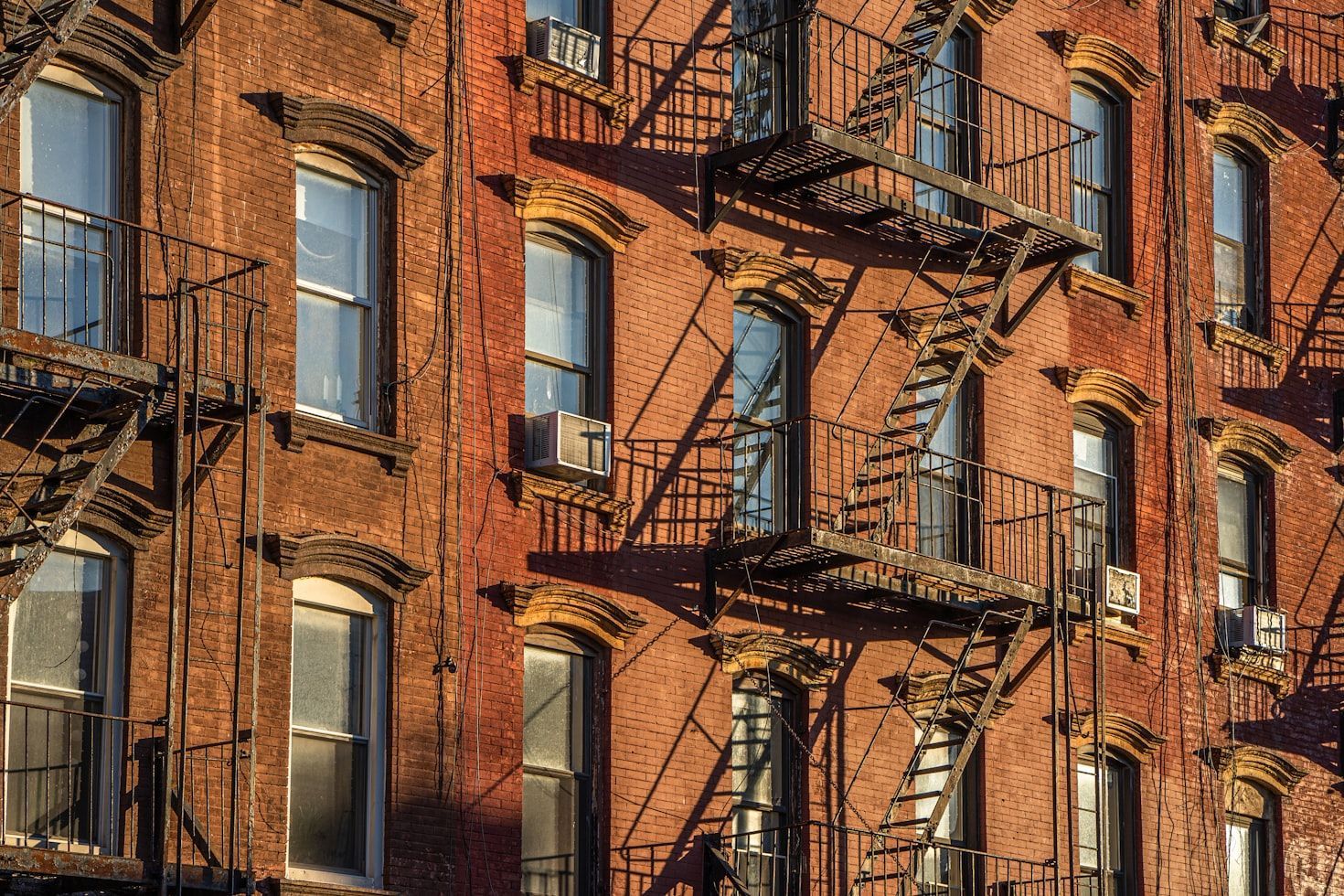
Since New York City is probably the most famous American city in the world, it stands to reason that "The City That Never Sleeps" has many sister cities around the globe. We could have chosen from a long list of truly outstanding cities like London and Budapest, but we ultimately decided to showcase Tokyo. After all, both NYC and the Japanese capital share a buzzing and energetic atmosphere, filled with dazzling lights and exciting opportunities.

Interestingly, many of New York City’s boroughs have sister locations of their own. For instance, Brooklyn is the sister borough of Lambeth, a neighborhood located in southern London. Not only that, Manhattan is related to the Seocho district in Seoul, South Korea, while the municipality of Ulcinj in Montenegro is a sister to Staten Island.

3
Los Angeles, California

Image: Jeremy Bishop

As a cultural hub and "the Entertainment Capital of the world," Los Angeles has several noteworthy siblings. In fact, it is one of the American cities with the most related cities, with 25 sisters as of 2024.

The city of Eilat, Israel, has the distinction of being Los Angeles’ first sister city, established in 1959. That same year, "The City of Angels" also became sister cities with Nagoya, Japan. Other notable sister cities of L.A. include Berlin, the capital of Germany, as well as Mexico City and Bordeaux, France.

4
San Francisco, California

Image: Alexey Komissarov

As we are sure you know, San Francisco was built on a monastery founded by Spanish explorers in the 18th century, and it is from this early settlement that the city gets its name. In that sense, it stands to reason that the "Golden Gate City" shares a relationship with one of the most prominent cities in Spain.

While San Francisco is a sister city to 17 other locations (including Osaka, Japan, and Sydney, Australia), Barcelona is its only Spanish sister city. The relationship was established in 2010, and in 2018, Barcelona was honored alongside all of San Francisco's sister cities with a signpost in Hallidie Plaza.

5
Austin, Texas

Image: Tomek Baginski

Who could be a better sister city to the capital of our largest Southern state than someone from the "Land Down Under"? Since 1983, Austin, Texas, has been a sister city to Adelaide, one of the most prominent southern cities in Australia.

Remarkably, these cities share a number of amazing qualities: they are both filled with lush green scenery from their many parks, and they are crossed by equally beautiful rivers. Not only that, they are both music lovers: Adelaide is the first Australian city to be declared a UNESCO City of Music, while Austin is globally known as "the live music capital of the world."

6
Boring, Oregon

Image: everett mcintire

The town of Boring, Oregon , surely has had some tough luck: after all, would you like to visit a town with that name? The truth is that there’s nothing dull about this town; it was built in a former lava field (a rather exciting landscape, if we do say so ourselves) and named after William Harrison Boring, an early resident who helped build the town.

In any case, Boring’s rather unusual name has landed this town with kindred spirits. Since 2012, this town has been part of a group known as the "Trinity of Tedium." Alongside the village of Dull, Scotland, and the community of Bland, Australia, Boring has proven again and again that friends can be found in the most unusual of places.

7
Hackettstown, New Jersey

Image: Hunter Reilly

This is the only town on this list that shares an (almost) identical name with its sister. Hackettstown, New Jersey , is famous for being the headquarters of the beloved Mars corporation, which caters to the "sweet teeth" of many Americans. It was named after Samuel Hackett, an early settler of the area who helped build the community.

In 2011, this New Jersey town declared Hacketstown, Ireland, as its sister city. In case you are not familiar with this small Irish town, here’s a fun fact that might make you fall in love with it: Hacketstown was once the home of William Presley, an ancestor of the King of Rock 'n' Roll himself.

8
Boston, Massachusetts

Image: Matthew Landers

In 1959, the city of Kyoto, Japan, became Boston’s first sister city . When you think about it, this relationship makes perfect sense: both cities are known as cultural and economic hubs and have strong and independent identities. According to the city of Boston’s official website, both of these metropolises share "strong neighborhood identities."

Throughout the decades, Boston and Kyoto have hosted several events, including annual exchange programs for high school students. Not only that, Kyoto gifted the Boston Children's Museum a "Japan House" in a display of kinship that is still warmly remembered by the capital city of Massachusetts.

9
Seattle, Washington

Image: Thom Milkovic

You might be familiar with a traditional Irish song called "Galway Bay." It has been covered by iconic American artists like Johnny Cash and Bing Crosby. This lovely tune is particularly famous among Irish Americans and speaks about nostalgia and the longing to gaze upon Ireland’s breathtaking shores. In that sense, should you suddenly feel overwhelmed by the powerful message of this song, we can offer you the next best option in America: Galway’s very own sister city, the wonderful Seattle .

Seattle and Galway became sisters in 1986, and two corresponding bronze markers were placed in each city to mark the distance between them. Many cultural events and exchanges are organized by the Seattle Galway Sister City Association, which helps build the relationship between these two wonderful cities.

10
Washington, D.C.

Image: Sara Cottle

Our capital city is considered by many to be the personification of American democracy. After all, it houses both the White House and the Capitol Building and is named after the Father of our Country. Bearing that in mind, can you think of a better sister city for Washington D.C., than the birthplace of democracy?

Washington D.C., became the sister city of Athens, Greece, in 2000. Curiously, Athens is also the sister city to another American city, although perhaps less famously: the Greek capital city also maintains a relationship with the identically named city of Athens, Georgia.

General General 3 min read

Animal masonry 101

Can you believe these 12 incredible structures were built by animals?

Image: Matthias Zomer

From forests to backyards, America is full of incredible animal-made structures that rival—and sometimes even surpass—human architecture. Bees craft intricate hexagonal hives, ants build elaborate underground colonies, and many other creatures create amazing structures without using any kind of blueprint. Take a look at these 12 remarkable constructions and be inspired by their ingenuity.

1
Beehives

Image: Meggyn Pomerleau

The first entry on the list goes to perhaps the most famous and finest example of animal architecture: the beehive. Built by incredibly industrious insects, beehives are among the most efficient structures in nature .

The regular hexagons provide the least-perimeter way to enclose infinitely many unit areas in the plane: the best way to separate the surface of their hives in equal parts all around, using the least possible total perimeter, thus reaching 100% efficiency in design.

2
Ant colony

Image: Morten Jakob Pedersen

If beehives aren’t the first thing that comes to mind when thinking about animal architecture, there’s a good chance you’re thinking of ant colonies.

Ants build the elaborate colony structure by hollowing out the area with their mandibles, grain by grain, without a blueprint, without a leader, and in total darkness . Unless the soil dries out dramatically, the chambers will keep their form.

3
Prairie dog town

Image: Moritz Kindler

These cute creatures excavate their homes by digging burrows into the ground, primarily in the Great Plains of North America. The region experiences extreme seasonal weather variations from season to season, requiring their homes to be built to withstand extreme temperatures, floods, and fires.

These underground "towns" have nursery rooms, pantries, living quarters, and temporary refuges —each smartly separated to serve a specific purpose.

4
Beaver dam

Image: Derek Otway

Another famous animal architect, the beaver, uses felled trees to build dams . These dams create still ponds where beavers can construct their winter homes, called lodges.

These creatures prepare for winter by covering their lodge with a fresh coat of mud, which hardens to create a barrier against the cold and predators.

5
Caddisfly larvae case

Image: Wolfgang Hasselmann

Caddisfly larvae construct protective cases using silk and whatever materials are available , such as sand, small stones, and plant debris.

These cases camouflage the larvae from predators and can be remarkably diverse in appearance, reflecting their creativity and resourcefulness.

6
Octopus den

Image: Serena Repice Lentini

It’s no secret that octopuses are incredibly intelligent animals, and their dens are proof of it. These clever mollusks use shells, stones, and even discarded human objects to reinforce their homes . Some species go a step further, decorating their dens with seaweed and other found materials.

7
Bagworm silk tent

Image: Maëva Vigier

Bagworms construct silk tents around themselves using bits of leaves, twigs, and other debris . These tents serve as mobile homes, providing protection as the insect feeds and grows.

Some species even camouflage their bags to blend into the environment, helping them avoid predators.

8
Osprey nest

Image: Jorge Coromina

Ospreys build massive nests in tall trees or on human-made structures near bodies of water. These nests are carefully constructed with sticks and lined with softer materials , creating a sturdy platform that can last for multiple breeding seasons.

9
Coral reef

Image: Hiroko Yoshii

Coral reefs are massive structures built by tiny coral polyps. These marine architects secrete calcium carbonate to form hard skeletons, gradually creating vast and complex habitats for a myriad of marine species. They are often referred to as the "rainforests of the sea" due to their biodiversity.

10
Spider web

Image: freestocks

Another famous architect from the animal kingdom, the spider, creates webs that serve as both homes and hunting tools . The silk used in these webs is incredibly strong, and different species produce a variety of designs, including sheets, orbs, and funnel shapes.

11
Swallow nest

Image: Tobias Arweiler

Swallows build cup-shaped nests that can house entire colonies , using mud pellets, usually attached to vertical surfaces like cliffs or man-made structures.

The construction is precise and stable, providing protection for their young against predators and environmental elements.

12
Burrowing owl burrow

Image: mana5280

As their name suggests, burrowing owls make their homes underground , often taking over burrows abandoned by prairie dogs or other mammals.

They use these subterranean homes to protect their young and hide from the heat of the day.

General General 5 min read

Native marvels

What 600-pound animal climbs trees? 10 amazing American animals

Image: Bryan Hanson

America is home to a rich tapestry of unique wildlife found nowhere else on Earth. These species thrive in diverse ecosystems, from mountains to oceans, and form an integral part of our natural heritage. Some have even become national icons, symbolizing the spirit of our country. From the majestic bald eagle to the resilient black bear, discover 10 animals that embody the wild essence of our nation.

1
American Bison

Image: Chloe Leis

The American bison once roamed the Great Plains in vast herds, a true icon of the American West. These massive mammals can weigh up to 2,000 pounds and stand 6 feet tall at the shoulder. Due to overhunting and habitat loss in the 1800s, their numbers dwindled dangerously low, with the species being driven to the brink of extinction.

Fortunately, thanks to dedicated conservation efforts, bison populations have rebounded miraculously and now roam freely through many of the United States' national parks, particularly in Yellowstone, where they have lived continuously since prehistoric times.

2
California Condor

Image: Kacie Long

The California condor is North America's largest flying land bird, boasting an impressive wingspan of nearly 10 feet. In the 20th century, populations dramatically declined due to various threats, including DDT and lead poisoning, poaching, and habitat loss. By 1987, only 27 individuals remained, with the species facing near-extinction.

Rigorous conservation efforts, including captive breeding programs, have increased the condor's numbers, and many individuals have been reintroduced to their natural habitats near the Grand Canyon area, Zion National Park, and the coastal mountains of California.

3
American Alligator

Image: David Clode

The American alligator, a formidable reptile, is native to the southeastern United States. As apex predators, they consume a wide range of prey, including fish, amphibians, reptiles, birds, and mammals. These powerful creatures can grow up to 15 feet long and weigh over 1,000 pounds.

Once hunted nearly to extinction for their hides, American alligators have made a remarkable comeback thanks to strict protection laws. Today, they thrive in swamps, marshes, and rivers, where they play a crucial role as ecosystem engineers. By constructing small ponds known as alligator holes, they create both wet and dry habitats that support a variety of other organisms.

4
Bald Eagle

Image: Ingo Doerrie

The bald eagle is not only America's national bird but also a powerful symbol of freedom all over the world. An opportunistic feeder that primarily subsists on fish, it is classified as a type of sea eagle, closely related to the European white-tailed eagle. Found throughout North America, this majestic bird has a wingspan of up to 7.5 feet and uses its sharp talons to snatch prey from the water.

Despite its name, the bald eagle is not actually bald. The name comes from an older use of the word "bald," which used to mean "white-headed." This bird of prey is also known for building the largest nest of any North American bird—a structure that can be up to 13 feet deep, 8 feet wide, and weigh almost 1 metric ton on average.

5
Gila Monster

Image: David Clode

The Gila monster, native to the southwestern United States, is one of the few venomous lizards in the world. These brightly colored reptiles are slow-moving and rarely attack humans, but they can deliver a powerful bite if threatened or mishandled. Gila monsters are a unique part of America's desert fauna, often inhabiting burrows or sheltering under rocks where conditions are favorable.

The name "Gila monster" refers to the Gila River Basin in Arizona and New Mexico, where these lizards were once abundant. Because the species has remained relatively unchanged morphologically since at least the Miocene, they are occasionally regarded as living fossils.

6
Red Wolf

Image: Patrick Fobian

A canid native to the southeastern United States with a size that falls between a gray wolf and a coyote, the red wolf is often classified either as a subspecies of the gray wolf or as a type of coywolf (a genetic hybrid of wolf and coyote). Despite their size, red wolves play a crucial role in their ecosystem as apex predators.

While their original range covered the southeastern United States to as far north as the state of New York, the species is currently critically endangered, with fewer than 20 individuals remaining in the wild. Efforts to save the species include captive breeding and reintroduction programs aimed at restoring their presence in the wild.

7
Florida Panther

Image: Maheera Kulsoom

The Florida panther, a subspecies of the cougar, roams the forests and swamps of southern Florida. Its modern range includes national parks and natural reserves such as the Big Cypress National Preserve and Everglades National Park. With only around 200 individuals left in the wild, these solitary and elusive cats are considered endangered and currently occupy only 5% of their historic range.

Conservation efforts focus on habitat preservation and reducing vehicle collisions, the leading cause of death for these big cats. Since 1982, this majestic feline has been officially recognized as Florida’s state animal.

8
Hawaiian Monk Seal

Image: Sebastian Coman Travel

Found only in the Hawaiian Islands, the Hawaiian monk seal is one of the only two mammals endemic to the islands, alongside the Hawaiian hoary bat. Its common name comes from the short hairs on its head, resembling a monk's tonsure, but native Hawaiians know it as ʻIlio-holo-i-ka-uaua, which translates to "dog that runs in rough water."

Considered one of the most endangered marine mammals in the world, with a population of about 1,400 individuals, these seals are protected by the Marine Mammal Protection Act and the Endangered Species Act.

9
Pronghorn

Image: Patrick Hendry

The pronghorn, native to North America's grasslands, is the second fastest land animal in the world, capable of reaching speeds up to 55 mph. Often mistaken for antelopes, pronghorns are actually unique to the American continent and are not related to Old World antelope species.

In fact, the pronghorn's closest living relatives are the giraffe and okapi. Remarkably, their incredible speed evolved as a defense mechanism against now-extinct predators, such as Miracinonyx , commonly known as the American cheetah.

10
Black Bear

Image: Robert Thiemann

The black bear, the most widely distributed bear species in North America, is found in forested areas from Canada to Mexico. These adaptable omnivores can weigh up to 600 pounds and are skilled climbers and swimmers.

Not related to grizzly or polar bears, black bears share more genetic similarities with the Asian black bear than with any other species. And before the migration of brown bears to the continent, American black bears were likely the only bear species present in much of North America. Despite their size and strength, black bears are generally shy and tend to avoid human contact whenever possible.

Explore more American facts

Choose your favorite category!

General
General

As American as apple pie—the very best America has to offer!

Culture
Culture

Delve into the astounding richness of American lore.

Geography
Geography

Hop in and explore vast and diverse American landscapes.

History
History

Discover the key moments that shaped the United States.