Culture Culture 5 min read

Heroines of the American Revolution

Discover 10 amazing Founding Mothers who often get forgotten
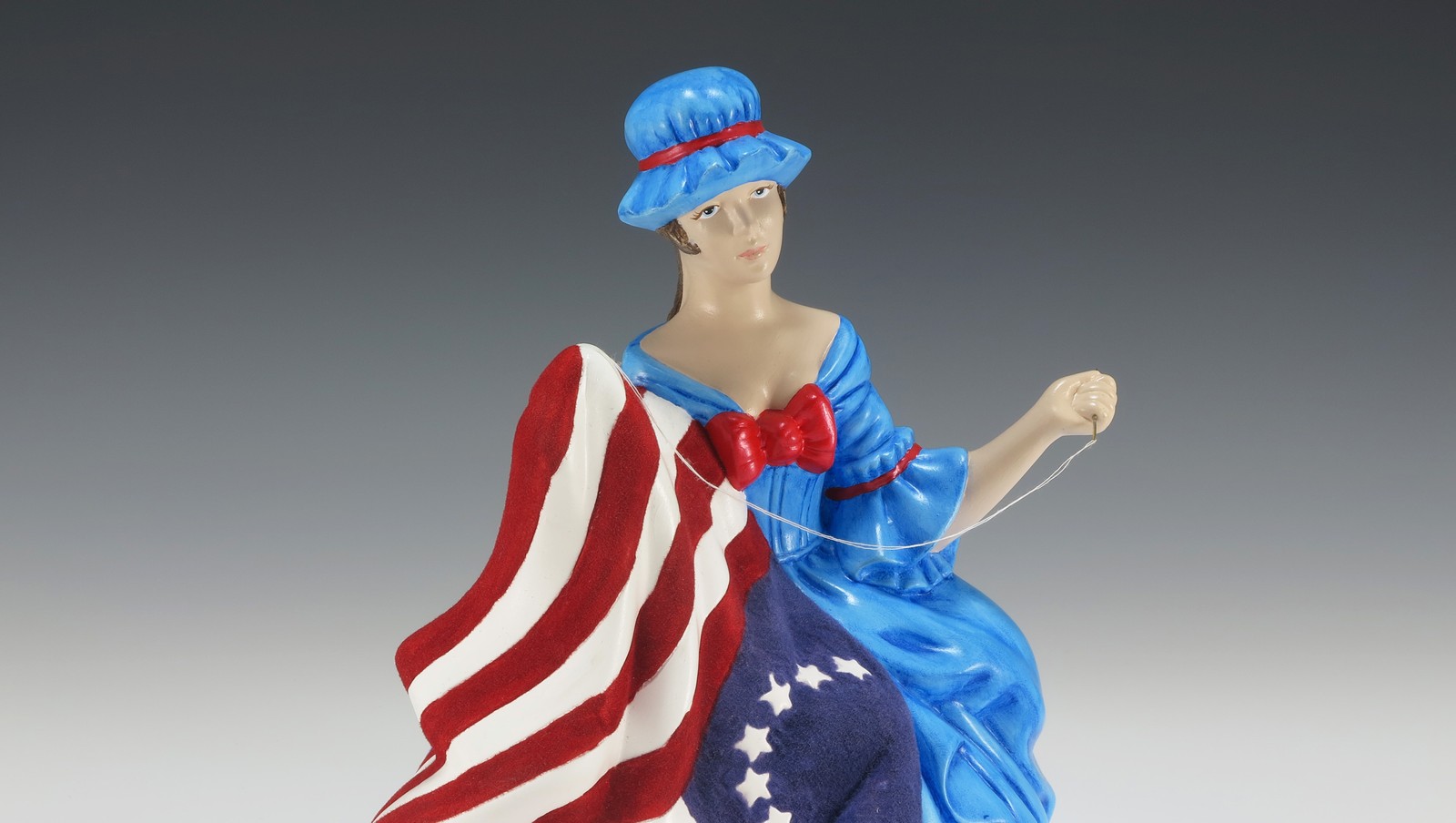
Image: Gerald R. Ford Presidential Museum, Public domain, via Wikimedia Commons

Stories about the American Revolution are usually about battles, generals, and soldiers. Since most women did not fight in battles, they are often left out of this period in history. But they did contribute to the struggle for American freedom, just in less conventional ways. From influential politicians' wives to journalists, artists, and spies, this article about revolutionary heroines is a reminder that women's patriotism and bravery also helped to win American independence.

1
Abigail Adams
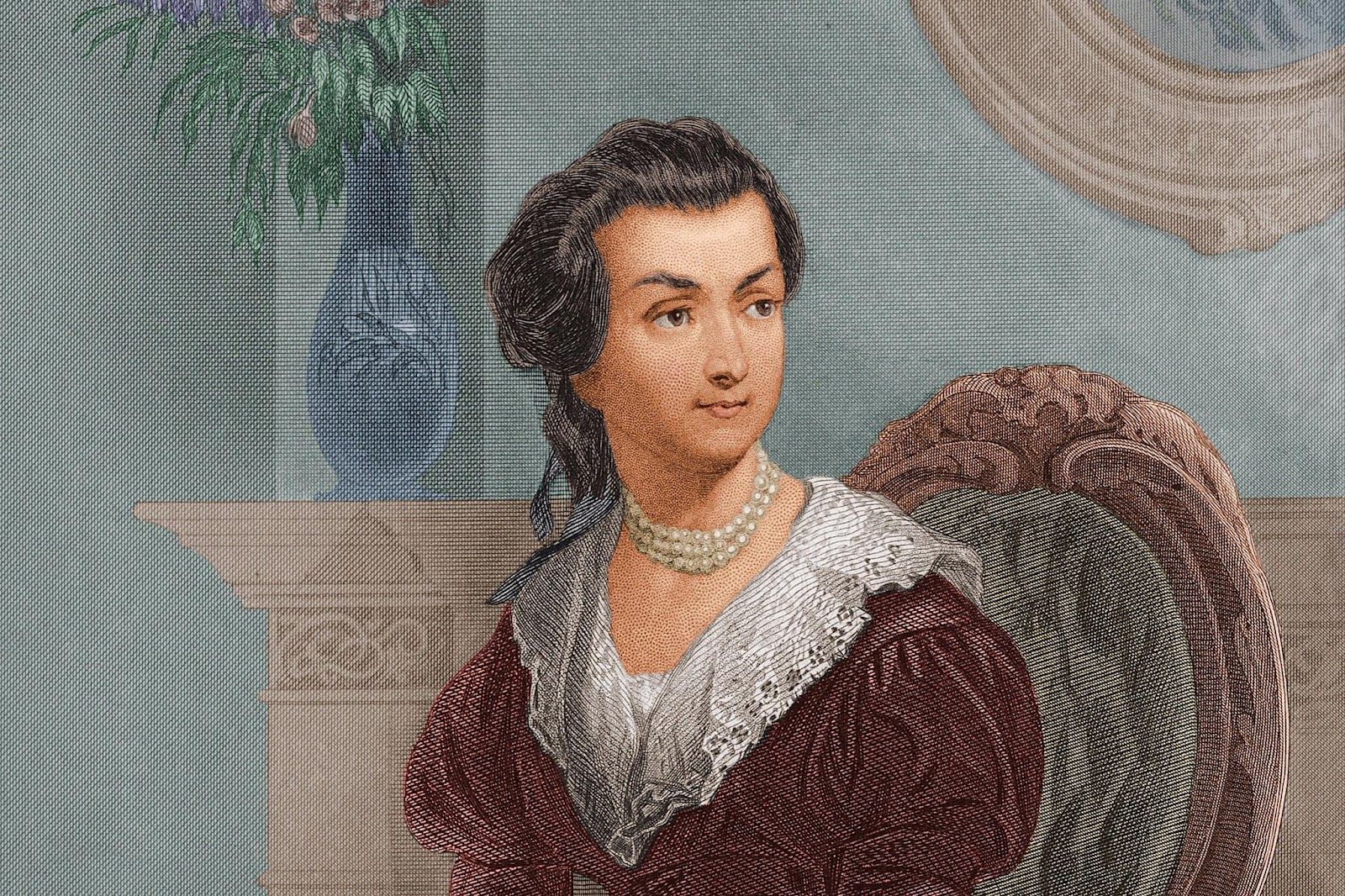
Image: Christian Schussele, Public domain, via Wikimedia Commons

Women in the 1770s were not supposed to be concerned about politics. But Abigail Adams, wife of the second president of the United States, talked and wrote about politics with extraordinary insight. She was one of the earliest supporters of independence, and her ideas influenced the Founding Fathers.

Often ill as a child, Abigail educated herself in her father’s library. Her studies prepared her for a life of public service in which she fought for freedom from England and women’s rights, and stood firmly against slavery. She even wrote the famous "Remember the ladies" letter 150 years before women were allowed to vote. Abigail’s influence over John Adams was so great that some rival politicians nicknamed her "Mrs. President."

2
Mary Katherine Goddard

Image: Thomas Jefferson, Public domain, via Wikimedia Commons

Mary Katherine Goddard was the director of the Baltimore Post Office and one of the world's first female publishers. Her greatest contribution to the Revolution, however, was the printing of the first copy of the Declaration of Independence that included the names of all signatories.

During the war, she ran the Providence Gazette and Maryland Journal , two newspapers that actively supported the American patriots' efforts. Despite the challenges she faced as a woman trying to make her way in a male-dominated society, Mary Katherine Goddard left an invaluable legacy as a pioneering woman in journalism and federal government work.

3
​​Martha Washington

Image: Billy Hathorn, CC0, via Wikimedia Commons

During her lifetime, she was known as Lady Washington, but Martha Dandridge Custis Washington will always be remembered as the first in a long line of first ladies of the United States. Martha married George Washington in 1759 and would be by his side in private and public life, even joining him on the battlefield.

While Washington was in office, Martha was in charge of the Presidential galas held to entertain members of the administration and foreign dignitaries. Although at that time she had no official duties or title, her warm temperament and classy poise laid the foundations for a key role that continues to this day.

4
Esther de Berdt Reed

Image: National Portrait Gallery, Public domain, via Wikimedia Commons

Even though Esther was born and raised in England, she sided with her husband, an aide to General Washington, in the American fight for independence. Five years into the war, Esther felt it was time for women to support the Continental troops in a more active way.

Esther's group, the Philadelphia Association, went door to door to ask for contributions. They ended up raising a large sum of money, which they used to supply soldiers in desperate need of provisions. Eventually, they stitched over 2,000 shirts by hand. Esther's vision and the group's dedicated efforts helped remind the men fighting the American Revolutionary War how much they were appreciated.

5
Elizabeth Schuyler Hamilton

Image: Ralph Earl, Public domain, via Wikimedia Commons

Elizabeth Hamilton, sometimes called "Eliza" or "Betsey," was the daughter of one of New York State's wealthiest and most politically influential families. In 1780, Eliza married Founding Father Alexander Hamilton. During their more than 20 years of marriage, she helped Hamilton write his letters and newspaper contributions and accompanied him on numerous historic events.

Strong-willed but caring, Eliza would devote her long widowhood to charity, helping to found New York's first private orphanage. In addition, she worked tirelessly to spread her husband's legacy and ensure that Hamilton had the place he deserved in American history.

6
Patience Lovell Wright

Image: William Faden, Public domain, via Wikimedia Commons

Did you know that during the American Revolutionary War, the Patriots had an American spy in the heart of King George's court? More interestingly, it was a woman! Famous for molding incredible wax sculptures, Patience Lovell Wright had to move to England after her New York studio caught fire.

Her friend, Benjamin Franklin, introduced her to London society. Soon enough, word of her talent reached King George III, who invited her to Buckingham Palace. But she remained loyal to her "dear America," as she called it, and when trouble started back home, Patience decided she could help America's fight for independence by providing decisive information her prominent clients revealed while posing for her.

7
Mercy Otis Warren

Image: John Singleton Copley, Public domain, via Wikimedia Commons

At a time when women were expected not to air their views on political issues, Mercy Otis Warren was a poet, playwright, and activist.

During the American Revolution, Warren not only maintained a close relationship with leading political figures such as George Washington, Thomas Jefferson, and John Adams, but she also became a historian and outspoken commentator, as well as the leading female intellectual of the early republic.

8
Penelope Barker

Image: Attributed to Philip Dawe, Public domain, via Wikimedia Commons

In the 18th century, women had no public outlet to express their convictions or to take a stand. Rebellion was considered men's business. Yet, the courageous Penelope Barker proved to everyone that women could contribute a great deal to the efforts for independence.

In 1774, in Edenton, North Carolina, a group of fifty-one women signed a declaration by Penelope, stating they would not drink tea or wear clothes made in England. The British press called it the "Edenton Tea Party" and ridiculed them. But soon enough, women all over the colonies were boycotting British products. Thanks to Penelope Barker's declaration, every woman in America discovered a smart and original way to rebel against the colonists.

9
Mary Norris Dickinson

Image: Prateek Katyal

The daughter of wealthy Pennsylvania Quakers, Mary Norris Dickinson was well-educated and owned one of the largest libraries in the colonies. She believed in a life without violence and in equal rights for men and women, ideas that she did not shy away from voicing in public to the dismay of some more conservative individuals.

For her fundamental role in political thought, influence on other women, and involvement in events related to the Constitutional Convention, the wife of Founding Father John Dickinson definitely deserves her place in history.

10
Phillis Wheatley

Image: Phillis Wheatley, CC0, via Wikimedia Commons

Brought to America as a slave, Phillis Wheatley became the first African-American author. Her poems celebrated learning and virtue and described a yearning for freedom. She also wrote a number of patriotic verses on subjects like the peace treaty of 1783 that ended the American Revolutionary War.

Her most famous piece was a poem to George Washington, in which she refers to him as "first in peace." The poem was published several times during the war to promote the Patriot cause, and Washington liked it so much that he asked to meet her. A true patriot and later a symbol for the abolition of slavery, Phillis Wheatley will always be known as a key contributor to freedom.
General General 3 min read

Will you miss them?

Wedding traditions that are slowly being forgotten

Image: Aranprime

Love, family, and centuries-old customs. Not all of those traditions are making it to the altar anymore, though. Some were born from superstition, others from practicality, and a few from trends that have, well, gone out of style. Many rituals are fading as modern couples trade formality for personality. Do you embrace new forms of celebration, or are you on the nostalgic side? Let’s look at the little old moments that once defined "I do."

1
Not seeing each other before the wedding

Image: Katy Duclos

Not seeing each other before the wedding was once considered essential. This superstition comes from the era of arranged marriages, when it was feared the couple might back out if they met beforehand. It evolved into the romantic "first look" at the altar. Many couples now skip it in favor of private pre-ceremony photos. Understandable!

2
Marrying in white

Image: Javier González Fotógrafo

Popularized by Queen Victoria in 1840, the white gown symbolized purity and wealth. U.S. brides embraced the trend for over a century, but modern weddings increasingly feature colorful gowns or non-traditional attire. Some pick their favorite color! Why not?

3
Wearing a veil

Image: Honey Yanibel Minaya Cruz

Once meant to protect brides from evil spirits or hide them from jealous eyes, the veil became a symbol of modesty. In the U.S., it persisted more as a fashion choice. Today, many brides favor hairpieces, flowers, or nothing at all.

4
Roast speeches

Image: Mads Eneqvist

Roast-style speeches became popular as toasts with a humorous edge, sometimes poking fun at the couple, especially at casual receptions. While funny for some, they’ve also led to plenty of awkward moments. Have you ever seen a video online of particularly harsh ones? As a result, many weddings now stick to heartfelt speeches to avoid offense.

5
Throwing a bouquet

Image: Michal Mikulec

This playful tradition gave single women a "good luck" charm for marriage. It replaced older customs where guests tore pieces from the bride’s dress for luck. Many couples now swap it for alternative games or skip it entirely.

6
Receiving queues

Image: Shardayyy Photography

For decades, couples stood in a formal line after the ceremony to greet each guest in turn. It was a way to ensure everyone felt acknowledged. But some prefer not to miss that informal mingling during the reception! Instead, they spend time with their loved ones more casually, enjoying the natural flow of the party.

7
Matching bridesmaids’ dresses

Image: Joeyy Lee

Tradition once had bridesmaids dressed alike in the same color, cut, and fabric to create a uniform look. Today’s weddings often mix styles, shades, and even prints. The change allows friends to choose something flattering—and something they can actually wear again.

8
Full sit-down dinners

Image: Hồng Xuân Văn

The classic multi-course plated meal was once a wedding reception staple. Today, many couples opt for food trucks, buffet tables, or hearty hors d’oeuvres for a more social, less formal vibe. And, let’s face it, it also helps with costs and keeps the timeline flexible.

9
Saving the top tier of the cake

Image: Raquel Ming

Couples once froze the top tier of their wedding cake to eat on their first anniversary, as a symbol of enduring love. But after a year in the freezer, the result was often stale and unappetizing. These days, many order a fresh mini cake instead.

10
Rice throwing

Image: Emma Miller

Showering the couple with rice at the exit was a long-held sign of prosperity and fertility. Concerns over mess, safety, and wildlife led to alternatives like bubbles, sparklers, or flower petals. The celebration remains, just with less sweeping.

11
Dollar dance

Image: Tiko Giorgadze

In this tradition, guests paid for a short dance with the bride or groom, contributing to the couple’s honeymoon fund. It was playful and personal, but could feel awkward or even outdated. Many couples now skip it in favor of more inclusive group dances.

12
Matching family seating sides

Image: Thomas Beaman

Traditionally, guests sat on the side of the family they knew best—the bride’s family on the left, the groom’s on the right. Today, signs inviting guests to "sit anywhere" reflect a blending of families and a more casual approach. Alternatively, tables may be intentionally assigned to mix new people together.

13
Garter tosses

Image: Jeanie de Klerk

Once a bawdy medieval custom where guests scrambled for proof of consummation, it became a lighthearted party moment in American weddings. The groom removes and tosses the bride’s garter to single men. Today, it’s often skipped because it can feel outdated or awkward.

General General 3 min read

US money mysteries

Did you notice this detail on the $100 bill? 10 surprising currency facts

Image: Alicia Razuri

You use it every day, you keep it in a safe place, and yet there are still so many things you may not know about it. Yes, we’re talking about US currency! From their size and composition to the details of their designs, both our bills and coins have a fascinating history behind them, and some secrets you probably never imagined. Join us as we uncover them.

1
Clock change

Image: Jonathan Borba

US currency is full of symbolism, and the $100 bill is no exception. Since 1928, we have seen Independence Hall depicted on the back of this bill. But in 2013, it was redesigned, and one change stands out: the clock tower, which previously showed 4:10, now reads 10:30. Did you notice?

2
Jackie Kennedy’s choice

Image: Florida Memory

Jackie Kennedy played a key role in designing the coin that would feature the portrait of her ex-husband. When the U.S. Mint planned the Kennedy half dollar in 1964, she was consulted and provided input on various aspects of the coin, including its imagery and symbolism.

3
Not paper

Image: Giorgio Trovato

Although it is called paper money, our bills do not contain any paper at all. In fact, they are made of a blend of 75% cotton, 25% linen, and fine silk fibers embedded. This mixture is not random; it was specially chosen so that your bills can withstand everything: folds, wrinkles, stains, and even an accidental shower in the washing machine.

4
The unfinished pyramid

Image: Marek Studzinski

The one-dollar bill also has its secrets and details. On its back, you’ll find an unfinished pyramid, part of the Great Seal of the United States designed in the 1780s. Why unfinished? The pyramid has 13 steps, representing the original 13 colonies, and its incomplete form symbolizes the nation’s ongoing growth and expansion.

5
50% larger

Image: Bozhin Karaivanov

Before 1929, US banknotes were significantly larger, measuring approximately 7.375 x 3.125 inches. Today, collectors refer to these as "large-size" notes, sometimes even nicknamed "Horseblankets." In contrast, modern bills measure just 6.14 x 2.61 inches. The government decided to reduce the bill's size to cut production and design costs.

6
Andrew Jackson’s preference

Image: Giorgio Trovato

Andrew Jackson has been the face of the $20 bill since 1928, when he replaced Grover Cleveland. Ironically, Jackson was opposed to paper money. He didn't trust that form of payment, believing it could be easily manipulated. According to historians, the 7th U.S. President favored "hard money": gold and silver coins.

7
Alexander Hamilton’s portrait

Image: engin akyurt

Most portraits on US bills face left, with one exception: Alexander Hamilton on the $10 bill, the only one facing right (toward the viewer’s left). You might wonder why, but there’s no official explanation; it seems to have been simply a design choice.

8
"In God We Trust"

Image: rc.xyz NFT gallery

In 1956, Congress passed a law declaring "In God We Trust" the national motto, making it mandatory on all U.S. coins and banknotes. But this wasn’t its first appearance: the phrase first appeared in 1864 on the two-cent coin. Beyond faith, it also carried political weight, suggesting that God favored the Union during the Civil War.

9
The change that never happened

Image: Ryan Quintal

In 2015, the Treasury announced plans to redesign the $10 bill, stating that Hamilton's portrait would be replaced by that of an influential woman from US history. However, the change never happened. Why? Those years saw a surge in Hamilton's popularity thanks to the hit musical of the same name, leading the Treasury to backtrack on the replacement plan.

10
Criteria

Image: Live Richer

As is well known, not just any portrait can appear on US currency. But beyond historical significance, the figures on our bills and coins must meet other criteria you might not know: They must also be deceased and well recognized by citizens, ensuring that the people represented are familiar and meaningful to the public.

Explore more American facts

Choose your favorite category!

General
General

As American as apple pie—the very best America has to offer!

Culture
Culture

Delve into the astounding richness of American lore.

Geography
Geography

Hop in and explore vast and diverse American landscapes.

History
History

Discover the key moments that shaped the United States.