Culture Culture 3 min read

Halloween secrets

Why is Halloween orange and black? The surprising meaning behind it
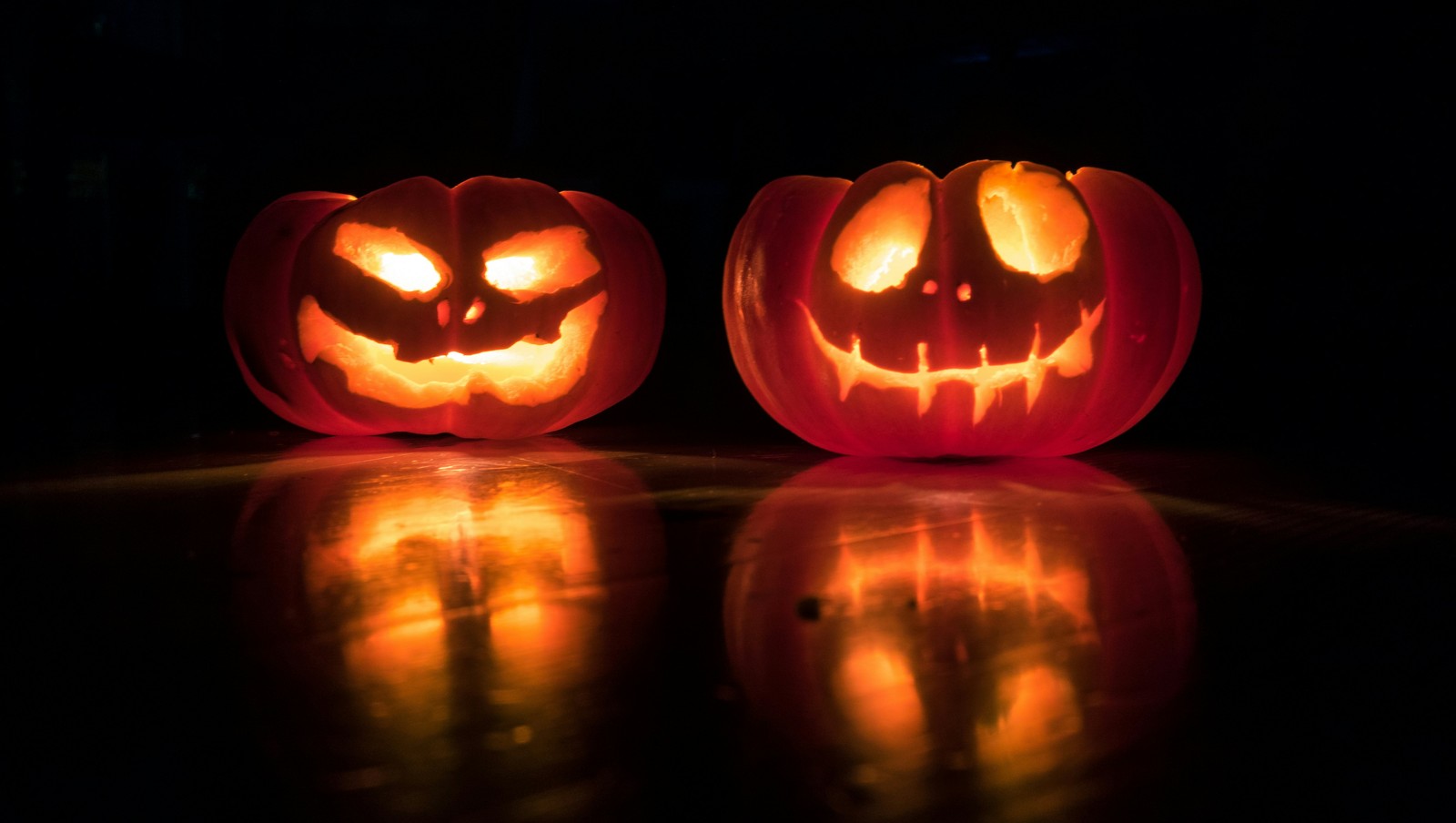
Image: David Menidrey

It’s hard not to love Halloween. It’s a time for celebration, jack-o’-lanterns, and of course, candy. But behind today’s traditions lie plenty of spooky secrets about the holiday and where it came from. From the meaning behind costumes to the origins of trick-or-treating, we’re exploring 10 facts you probably didn’t know about Halloween. Let’s get started!

1
Ancient roots

Image: Miguel Teirlinck

Believe it or not, what we call Halloween began more than 2,000 years ago. The ancient Celtic festival of Samhain, held from October 31 to November 1 in what is now Ireland, Scotland, and parts of Britain, marked the shift from the harvest season to the dark days of winter. The Celts believed that, on that night, the boundary between the living and the dead grew dangerously thin. Spirits could slip through that barrier... both benevolent and darker ones.

2
Why scary costumes?

Image: JOHN BEARBY IMAGES

If the spirits of the dead were roaming the earth, what would you do? The Celts had a clever solution: they disguised themselves with animal skins and masks to look frightening and protect themselves from any spirits that might not have the best intentions. The hope was that ghosts would either mistake them for one of their own or be scared off entirely. Over time, the tradition evolved, but its roots remained; just look at all the little witches, skeletons, and other spooky costumes we see on Halloween today.

3
There's a reason for black and orange
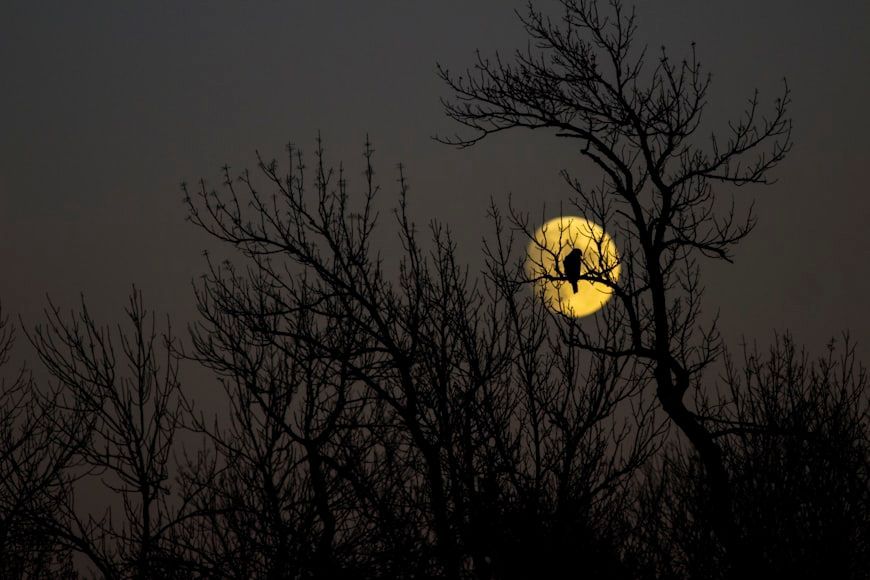
Image: Gary Fultz

Orange and black take over homes and streets every Halloween, but why? The answer goes back to the Celtic festival of Samhain as well. Orange symbolized the end of autumn and fallen leaves, while black represented the darkness of the long winter nights ahead.

4
Witches weren’t always seen as scary

Image: Halanna Halila

Witches have been part of Halloween lore for ages. Countless stories cast them as spooky figures with flying broomsticks, pointed hats, and bubbling potions. But it wasn’t always this way. Among the Celts, many practices now labeled as "witchcraft" were connected to healing, spirituality, and nature, and weren’t seen as evil at all; that association came much later with the spread of Christianity. In fact, the English word "witch" is often linked to the Old English wicca (masculine) and wicce (feminine), meaning "wise one."

5
Trick-or-treating origins
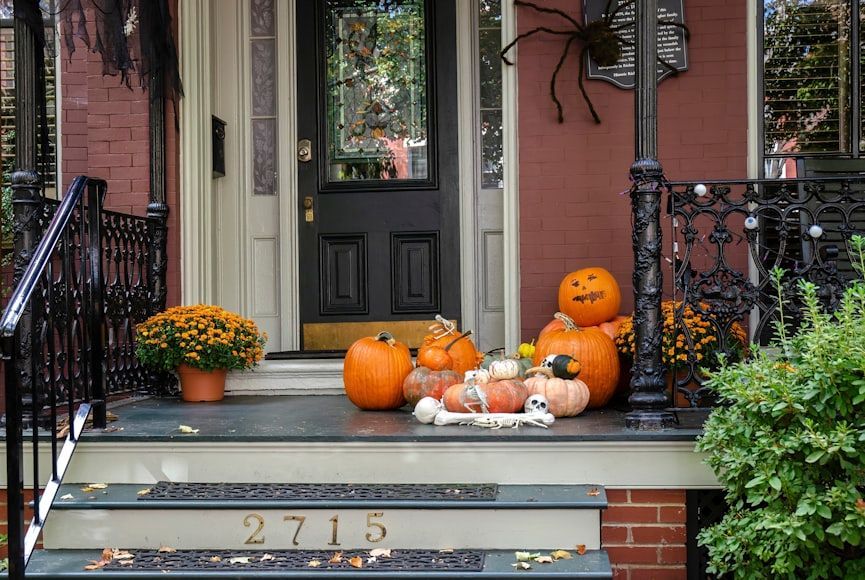
Image: Robin Jonathan Deutsch

In addition to dressing up to protect themselves, the Celts also left treats on their doorsteps to appease wandering spirits. Over the centuries, that custom changed and spread. By medieval times in Europe, people—especially children—would go door to door during this season, offering prayers for departed souls or performing small songs and jokes in exchange for food or treats. This tradition, known as "souling" or "guising," eventually inspired the trick-or-treating we know today.

6
Scary tricks
Image: Nick Fewings

In the recent past, the "tricks" in trick-or-treating were no joke—they could be genuinely frightening. In the late 19th and early 20th centuries, Halloween was known far more for mischief than for candy. Kids pulled off pranks like tying doors shut or slamming windows to make homeowners think their houses were haunted. Scary? Yes. Fun? Definitely.

7
In the past, they weren't pumpkins
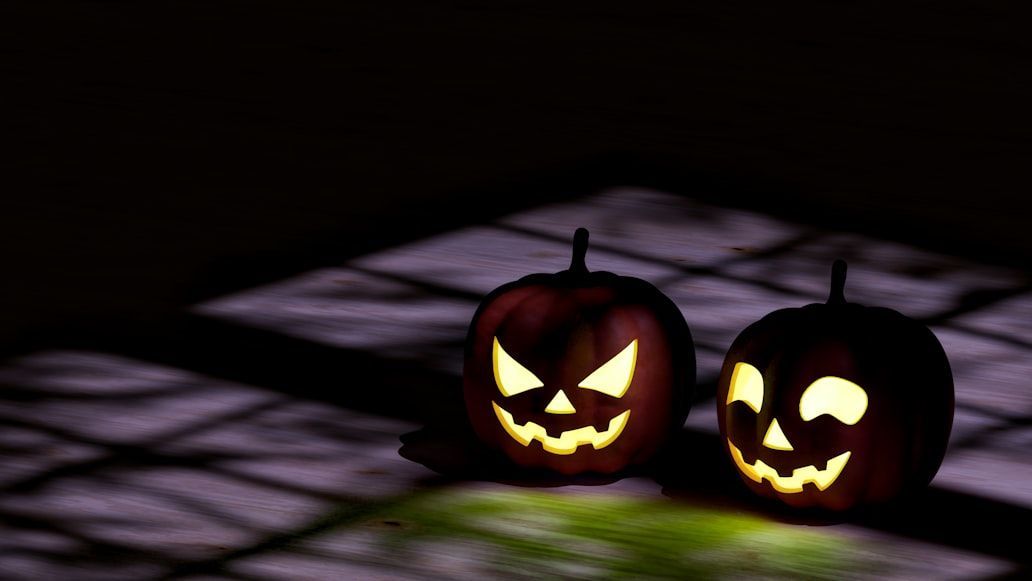
Image: Igor Omilaev

Pumpkins may be the stars of Halloween décor today, but they weren’t always the first pick. The tradition of carving Halloween lanterns also began in Ireland and Scotland, but not with pumpkins. In the old days, people carved turnips, beets, and other root vegetables. When Irish immigrants arrived in the United States in the 19th century, they found that pumpkins were bigger, softer, and far easier to carve, so pumpkins quickly replaced the turnips.

8
Halloween, SC
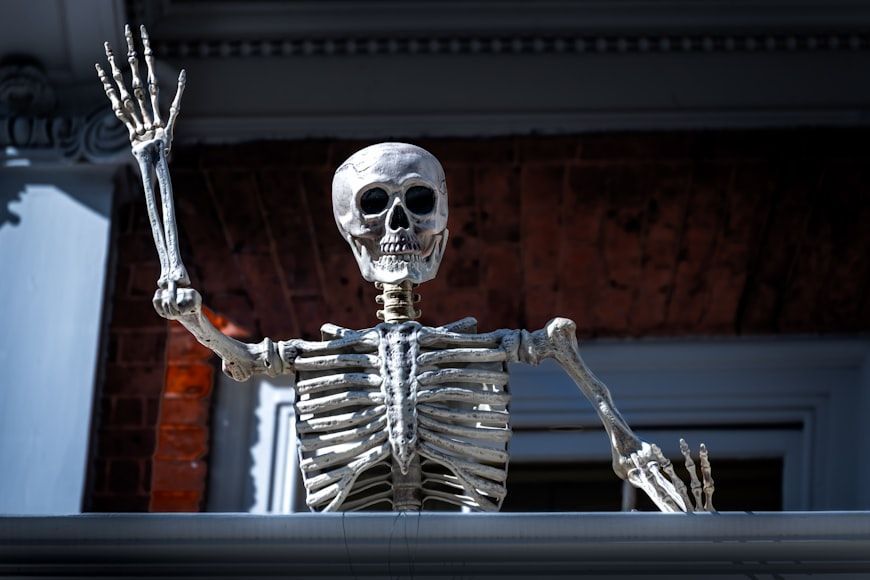
Image: Joseph Corl

Today, Americans put a lot of effort into Halloween celebrations. But perhaps no one embraces it more than the residents of Conway, SC, who made headlines for a bold decision. In 2022, the city officially adopted the monikers "City of Halloween" and "Halloween, SC" for the month of October. Although "Conway" remains its legal name year-round, the town uses the spooky nickname during the holiday season to attract visitors eager to experience its larger-than-life celebrations and decorations.

9
Parents also have their "tricks"
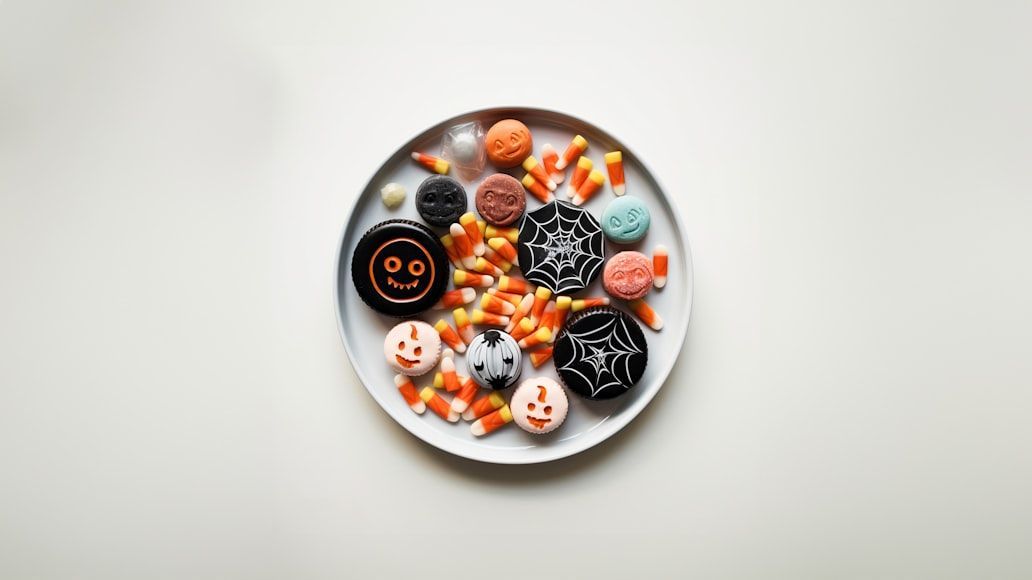
Image: Tolgahan Akbulut

Although trick-or-treating is mostly for kids, parents definitely get in on the fun. According to a 2019 survey, 74% of parents admitted to stealing a few pieces of their children’s candy. And honestly, who can blame them? A pumpkin bucket overflowing with sweets is hard to resist.

10
Paranormal full moon
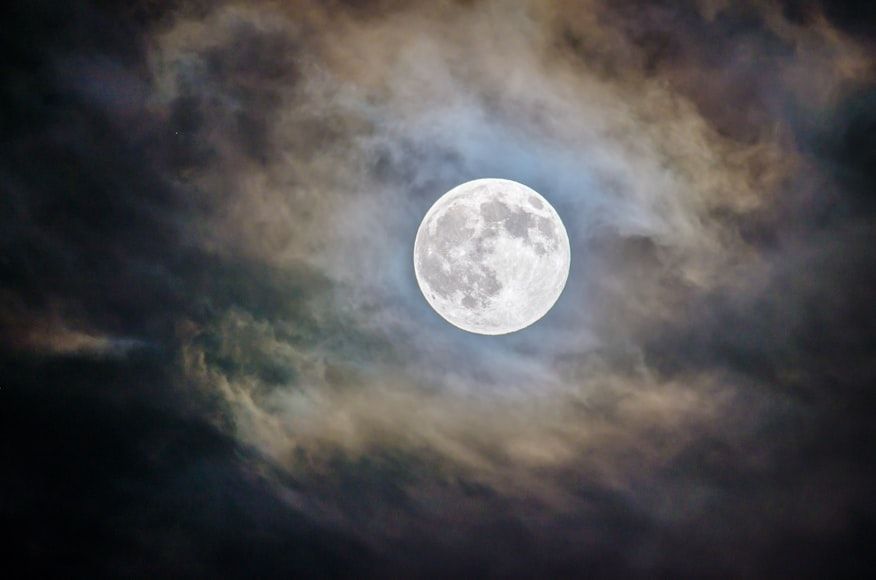
Image: Ganapathy Kumar

Celebrating Halloween under a full moon has a special charm, as that lunar phase has long been linked to heightened paranormal activity. But this coincidence is rare: a full moon on Halloween only happens about every 18–19 years. The last full moon during Halloween was in 2020, and according to forecasts, we won’t see another until 2039.

General General 4 min read

Lights out!

10 tips to save electricity at home and save money

Image: Kelly Sikkema

The many electrical appliances and systems in a modern home can quickly raise your electricity bill if you don’t take steps to minimize consumption. Fortunately for us, there are many ways to save energy at home. From choosing energy-saving appliances to avoiding leaving lights on in empty rooms, there are countless techniques to save both power and money. Take a look at the following 10 tips. You may already know a few, but perhaps you’ll learn something new that can help!

1
If it’s not in use, turn it off

Image: Chris Haws

We start the list with this well-known advice: turn off the lights when nobody is in the room .

Additionally, switch off appliances completely rather than leaving them on standby, as standby mode continues to consume electricity. Most computers have energy-saving settings that automatically turn off the computer and screen after a period of inactivity.

2
Keep the temperature where you need it

Image: Natalia Y.

Whenever you are heating or cooling a room, remember to close the doors and windows that connect to other unoccupied parts of the building . This way, the heating or cooling equipment you are using will not require more energy than is necessary to maintain the desired temperature where you are.

During cooler months, ensure your curtains or blinds are properly sealed to keep the cold out. In warmer months, keep your curtains closed during the day to prevent heat from entering.

3
Wash and dry clothes once the basket is full

Image: engin akyurt

Avoid using your washing machine when your laundry basket is only half full; instead, use it when you have accumulated a full charge. Also, remember to select the appropriate washing cycle to optimize energy use.

On a related note, clothes dryers consume a significant amount of energy, so consider hanging clothes outside to dry or using a fan to help dry them indoors.

4
Save energy in the kitchen

Image: Jason Briscoe

Your kitchen offers many energy-saving opportunities. The fridge, one of the most energy-intensive appliances, runs 24/7 for obvious reasons but measures can be taken to make it a more efficient device. The ideal fridge temperature for the fridge is between 35° and 38°F. Make sure the door seal is tight, with no gaps or cracks that allow cold air to escape.

As for cooking, always put frozen food in your fridge in the morning to thaw out and reduce cooking time in the evening. Whenever possible, use a microwave, as it consumes significantly less energy than an electric oven. Plan to cook more and have leftover meals for the next day or the week ahead. Keep leftover meals in the freezer for convenience and minimal waste.

5
Smart heating and cooling

Image: Everett Pachmann

It may be tempting to adjust the thermostat a degree or two above or below the recommended settings depending on the season, but there is good reason to avoid doing that. Every degree above 20 can increase your heating bill by up to 10%. In winter, set your thermostat between 18 and 20 degrees. In summer, aim for 26 degrees or higher.

Additionally, some ducted systems allow you to disable heating or cooling in unoccupied rooms, which can help save energy.

6
Use energy-saving LED lights

Image: Anton Belashov

LED lighting has been around for a while and can save up to 80% on lighting costs. LED bulbs consume less power and last longer, which means that users spend less money and time replacing them.

Another perk, LEDs generate very little heat compared to incandescent and halogen bulbs, which convert much of their energy into heat. This can reduce cooling costs, especially in warm climates.

7
Solar energy

Image: Andreas Gücklhorn

The energy given to us by the sun can be harvested in solar panels that reduce the amount of energy we need to buy from the electricity company . Similarly, solar hot water systems can minimize gas usage, reducing reliance on gas-fired water heaters.

Solar panels and solar hot water systems used to be very expensive and had to be replaced much more often but, their costs have dropped significantly in recent years, making them more accessible.

8
TV settings

Image: Jonas Leupe

Today's high-definition televisions use around 60% less energy than earlier models. However, some Internet-ready models consume extra power even when turned off due to a "quick start" feature that enables faster boot-up . You can disable that option in your television's settings .

While perusing through the settings, you can also see if your model has an automatic brightness control, which will adjust the picture brightness to the level of light in the room. This can make a big difference in energy consumption.

9
Efficient appliances

Image: Vlad Zaytsev

Most of today's new appliances use half the energy of those from a couple of decades ago. If you're thinking of buying a new one, look for products with the Energy Star label, as they typically use 10 to 40 percent less energy than other models.

If you are going to buy a new computer, keep in mind that laptops use significantly less energy than desktop versions.

10
Insulate your roof

Image: Erik Mclean

Temperature affects air in different ways: heat rises, while cool air sinks. This means that if a house's roof is not properly insulated, heat will escape in the winter, and the cold from outside will seep in through the roof.

An insulated ceiling can make a big difference to your energy bills . Effective ceiling insulation can save up to 20% on cooling and heating costs.

Geography Geography 6 min read

Gotham secrets revealed

Start spreadin' the news: 10 fun facts about New York City

Image: Roberto Vivancos

Welcome to New York, a city as bustling as it is fascinating. From towering skyscrapers and breathtaking parks to delicious food and riveting culture, New York City boasts such a rich history that it would be impossible to capture its essence in just one article. Therefore, this time around, we have selected 10 curious facts about the Big Apple that you may not know about. Join us!

1
New York’s many names…

Image: ian dooley

Did you know that New York has had several names throughout its history? The first documented European visit to New York Harbor was in 1524 by Giovanni da Verrazzano, an Italian explorer who claimed the area for France and named it Nouvelle Angoulême (New Angoulême), after the French city located on the banks of the Charente River.

Almost a century later, English explorer Henry Hudson rediscovered New York and claimed it for the Dutch East India Company, who christened Manhattan Island as Nieuw Amsterdam (New Amsterdam). In 1664, due to the war between The Netherlands and the United Kingdom, the British took over the area and renamed it New York , as a tribute to King Charles II's brother, James, Duke of York.

2
…and nicknames

Image: Artem Zhukov

In addition to its various official names, New York City has earned a good number of nicknames over the years. For example, Canvas Town, The Empire City, The City of Churches, Second City of the World, The Melting Pot, The City that Never Sleeps, The Center of the Universe, The City So Nice They Named It Twice, The Five Boroughs, and Metropolis, among many others.

But perhaps the most iconic New York City monikers are Gotham —coined by writer Washington Irving in 1807— and, of course, The Big Apple . In May 1921, sportswriter John Joseph Fitz Gerald of the New York Morning Telegraph first used The Big Apple in a feature on horse racing. As he later explained, that was the way New Orleans grooms' referred to New York City. Later, in the 1970s, an advertising campaign revived the nickname, and the rest is history.

3
National capital

Image: Cornelius Tiebout, artist and engraver of the original; this copy engraved by Hatch & Smillie and printed by J. &. G. Neale., Public domain, via Wikimedia Commons

Given its cultural, political, and financial richness, it's curious that New York is not the capital of the United States. However, although it was only for five years, at one point in history it became a reality. Between January 11, 1785, and August 12, 1790, The Empire City served as the last capital under the Articles of Confederation and the first capital under the U.S. Constitution .

While the capital resided in New York, the representatives of Congress met in Federal Hall, a building located close to the current site of the Wall Street Stock Exchange. In fact, this is where George Washington was sworn in as president in 1789. However, a year later the Residence Act established the temporary seat of government in Philadelphia until the construction of the new capital, Washington, DC, was completed. Congress met for the first time in its new and current location on November 17, 1800.

4
Linguistically diverse

Image: Dan Gold

Did you know that New York is one of the most linguistically diverse places in the world? It’s like a modern-day Tower of Babel, which is no surprise given its nickname, The Melting Pot . It is estimated that up to 700 different languages are currently spoken in New York, many of them endangered. For example, in Queens, there is a small community that speaks Tagalog, the language on which Filipino is based. In the Bronx, on the other hand, several families still speak Laotian at home.

Alongside these lesser-known dialects, other more widespread languages such as Spanish, Chinese, Arabic, Hebrew, Russian, and Italian, are spoken daily by communities that migrated to New York from their native countries. And that today, after several generations, still have a relevant representation in the most cosmopolitan city on the planet.

5
First pizza

Image: Jon Tyson

Not surprisingly, the first pizzeria in the United States is located in New York. The Italian immigrants who arrived in the city at the end of the 19th century brought with them their language, customs, and of course, their delicious food. One of these immigrants, Gennaro Lombardi, used leftover dough from the bread he sold in his Little Italy grocery store to make "tomato pies," following his Neapolitan family's recipe.

This pizza was so successful that in 1905, Lombardi converted his store into a pizza place. Little by little, he adapted his pizza to American ingredients and tastes, and lo and behold in a short time he had created what we now know as New York-style pizza. Lombardi's Pizza, today one of the most legendary pizzerias in New York, is the oldest in the United States. Be sure to grab a slice next time you visit The Big Apple — you won’t regret it!

6
Golden city

Image: Zlaťáky.cz

A city of firsts and mosts, New York is also home to the world's largest known depository of monetary gold. Buried 80 feet below street level, on the bedrock of Manhattan Island, hides an incredible treasure. Established in 1924, the vault of the main building of the Federal Reserve Bank of New York, located in the Financial District, stores more gold than The United States Bullion Depository, better known as Fort Knox.

As of 2024, it houses approximately 507,000 gold bars. This reserve is enclosed in a 140-ton steel-and-concrete frame protected by a state-of-the-art security system. About 98% of the gold belongs to foreign governments, while the rest is owned by the U.S. government and other financial institutions, such as the International Monetary Fund.

7
Unique ZIP codes

Image: William Wachter

Apart from being home to major companies, the most photographed building in the world, and getting struck by lightning about 25 times a year, the Empire State Building is also notable for having its own ZIP code: 10118.

Although located in South Midtown, the building is so large that the U.S. Postal Service needed to assign it a unique zone improvement plan—ZIP for short—to handle its high volume of mail more accurately and efficiently. To be fair, other buildings in New York also have their own ZIP codes , including 30 Rockefeller Plaza, the Chrysler Building, The Pavilion, Park Avenue Plaza, and the Pennsylvania Building, among others.

8
Birding paradise

Image: Laila Zouaki

New York has something for everyone, but wildlife? Who would have thought! When it comes to fauna, New York is much more than just rats, squirrels, and cockroaches. In fact, this concrete jungle has had animals at its heart since the beginning: two beavers adorn the official city seal. But not many New Yorkers know that Central Park is one of the nation's top spots for bird-watching.

The city is located at a concentration point on the Atlantic Flyway bird migration route, making it possible to observe birds year-round. In 1886, the park's first official bird census counted 121 species. Since then, 282 have been observed, including cuckoos, warblers, sparrows, owls, gulls, and Peregrine Falcons, among many others. Some of the best places in Central Park for birding are North Woods, The Ramble, Hallett Nature Sanctuary, and The Pond.

9
Times Square

Image: graphicsdays1989

The busiest street in the Big Apple owes its current name to a newspaper . Formed by the junction of Broadway, Seventh Avenue, and 42nd Street, this area is now a spectacle of lights, screens, neon signs, theaters, and hordes of people. However, it was once the center of New York's horse carriage industry. For this reason, in the late 19th century it was known as Longacre Square.

In the early 20th century, The New York Times moved its offices to a skyscraper on 42nd Street. A new subway station soon followed and the area was given the name we know it by today, Times Square. Although the newspaper moved out a few years later, that building is still famous for the Times Square Ball drop on its roof every New Year's Eve.

10
Film mecca

Image: Marta Wave

Declared a National Historic Landmark, Central Park is a staple of New York City. It’s no wonder that this area, in addition to its natural beauty, is a world cultural icon. Central Park is, in fact, the most-filmed location in the world , having been featured in movies as far back as 1908.

With silver screen classics like An Affair to Remember or Breakfast at Tiffany's and modern films including Home Alone and The Avengers , more than 300 productions have chosen this 843-acre park in the heart of the bustling city to film some of the most iconic scenes in movie history. Have you ever spotted Central Park in a film or TV show? Now you won't stop seeing it everywhere!

Explore more American facts

Choose your favorite category!

General
General

As American as apple pie—the very best America has to offer!

Culture
Culture

Delve into the astounding richness of American lore.

Geography
Geography

Hop in and explore vast and diverse American landscapes.

History
History

Discover the key moments that shaped the United States.