History History 3 min read

Got mail?

Did you know these 12 facts about the evolution of mail delivery?

Image: Wolfgang Vrede

We take many things for granted, especially when they have been around forever. Their stability is reassuring and commanding. But everything has to start somewhere, and mail delivery certainly has had an interesting history in America. From humble tavern-based post offices to airplanes and ZIP codes, the postal service has a few stories to share. Did you know about these 12?

1
The first post office? A Boston tavern

Image: Mick Haupt

In 1639, the first organized mail service in British North America started at Richard Fairbank’s tavern . The owner collected and distributed mail brought by ship.

Although informal and modest by today’s standards, this post office laid the foundation for communal mail collection and delivery.

2
Enter Benjamin Franklin
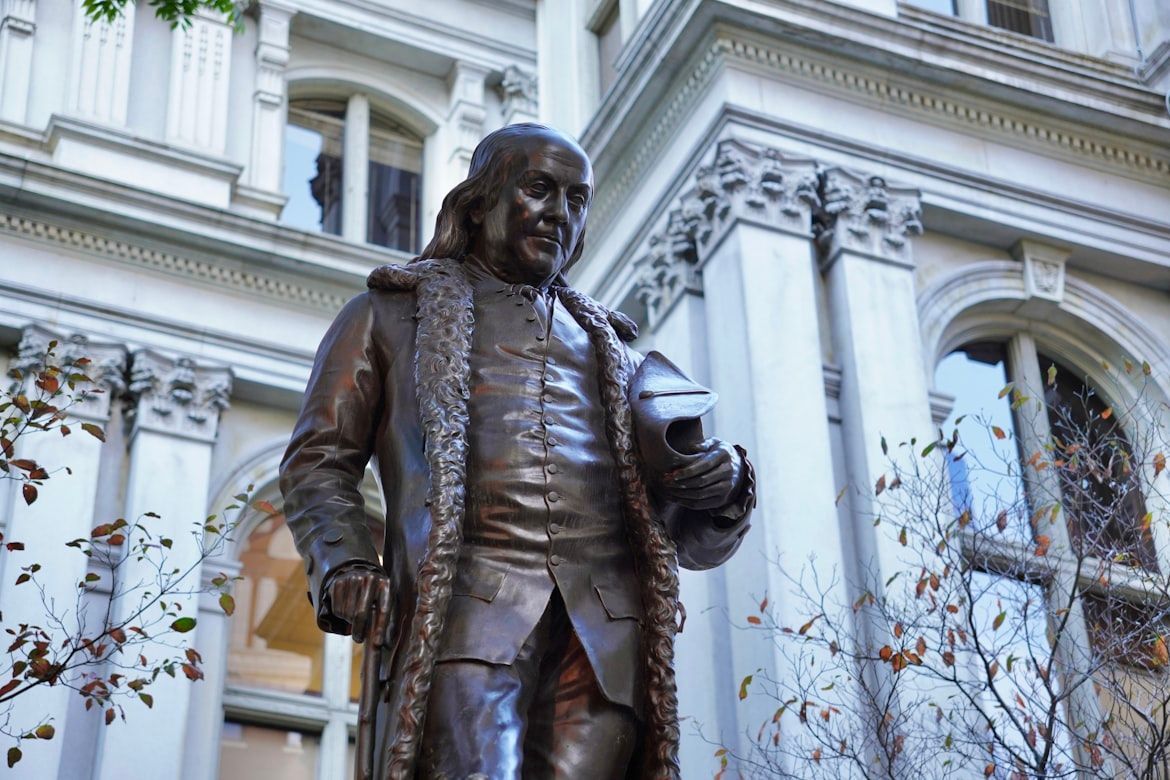
Image: Brett Wharton

From 1753, Franklin served as joint Postmaster General for the colonies and undertook a sweeping reform: he organized delivery routes, aligned them with major roads and rivers, and cut the mail travel time between Philadelphia and New York to about 33 hours .

He also introduced the first rate chart, standardizing delivery costs based on weight and distance, turning what had been a scattered courier network into a more reliable, structured mail system.

3
National Postal System founded

Image: David Trinks

With the American Revolution underway, the Second Continental Congress established the first national postal agency in 1775 , appointing Benjamin Franklin as the first Postmaster General.

This new postal service initially handled mostly military and diplomatic correspondence, but the agency laid the groundwork for what would become a national communications service.

4
The Age of Steam: mail by steamboat
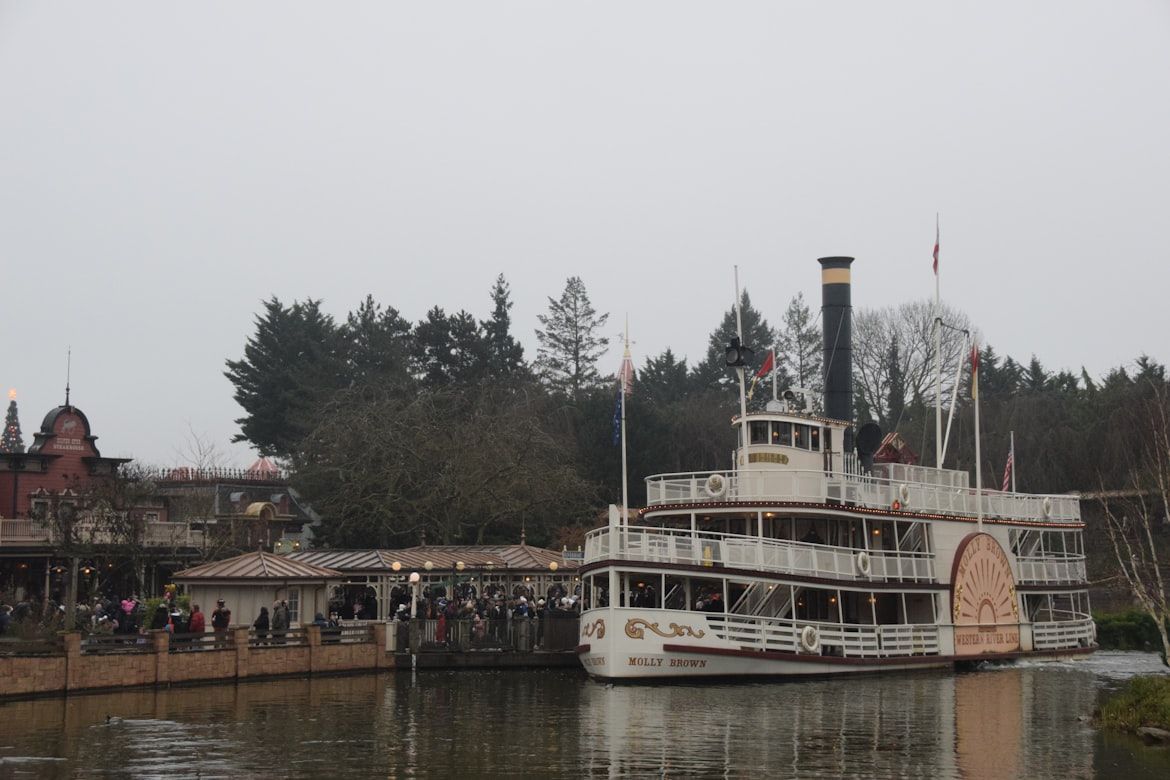
Image: mandylin

In 1813, Congress authorized the Postmaster General to contract steamboat companies to carry mail. Soon, steamboats were ferrying mail up and down the East Coast and the Mississippi River .

By 1848, mail even traveled to California via steamship and across the Isthmus of Panama, a three-week voyage.

5
Overland stagecoaches and the Butterfield Overland Mail
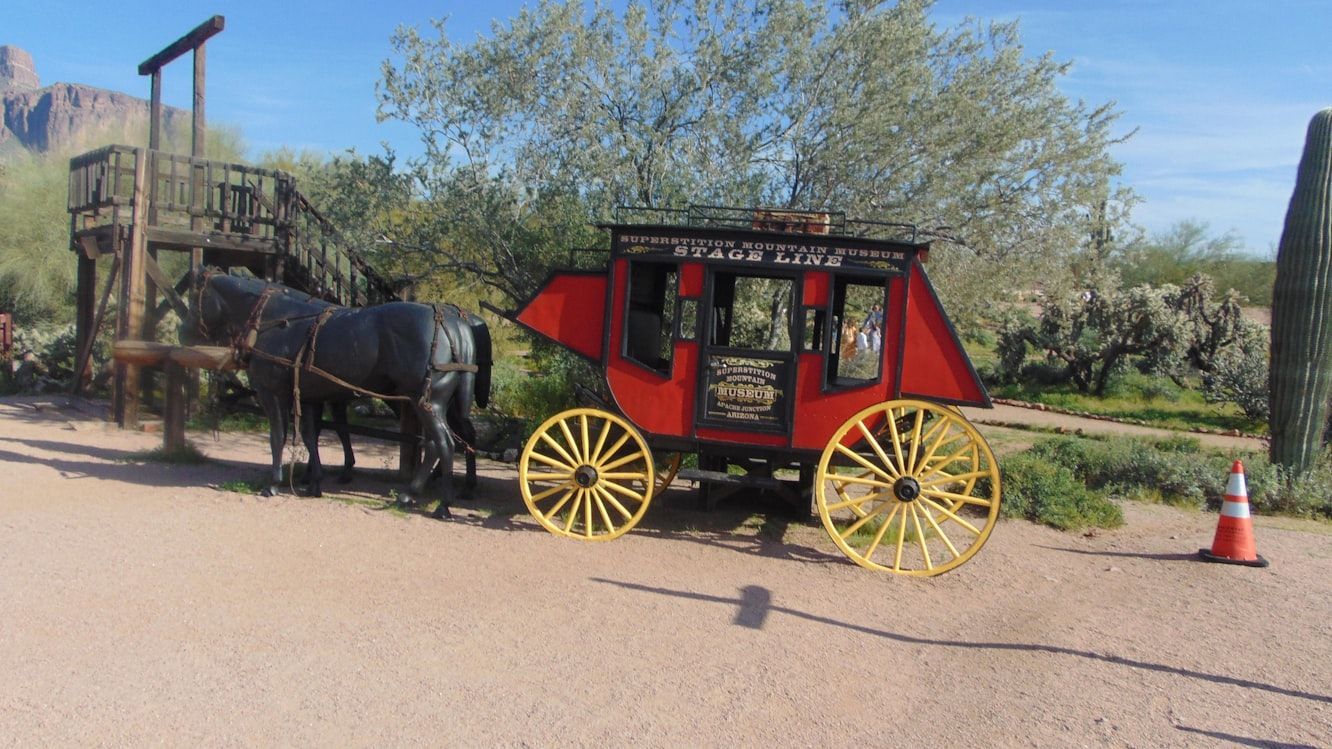
Image: Ricky BiggsSr

Between 1858 and 1861, the Butterfield Overland Mail stagecoach service carried U.S. mail across the western frontier, from eastern posts like Memphis and St. Louis to San Francisco .

This service helped connect the eastern U.S. with rapidly growing western settlements long before the completion of the transcontinental railroad.

6
Railroads enter the picture

Image: Jay Kettle-Williams

As railroads expanded, the postal service started to use this new technology: in 1832, the first mail deliveries by train were made.

Rail transport vastly improved speed and reliability compared to horse and stagecoach travel , and became a key advance as mail traffic increased and the nation expanded westward.

7
First U.S. postage stamps
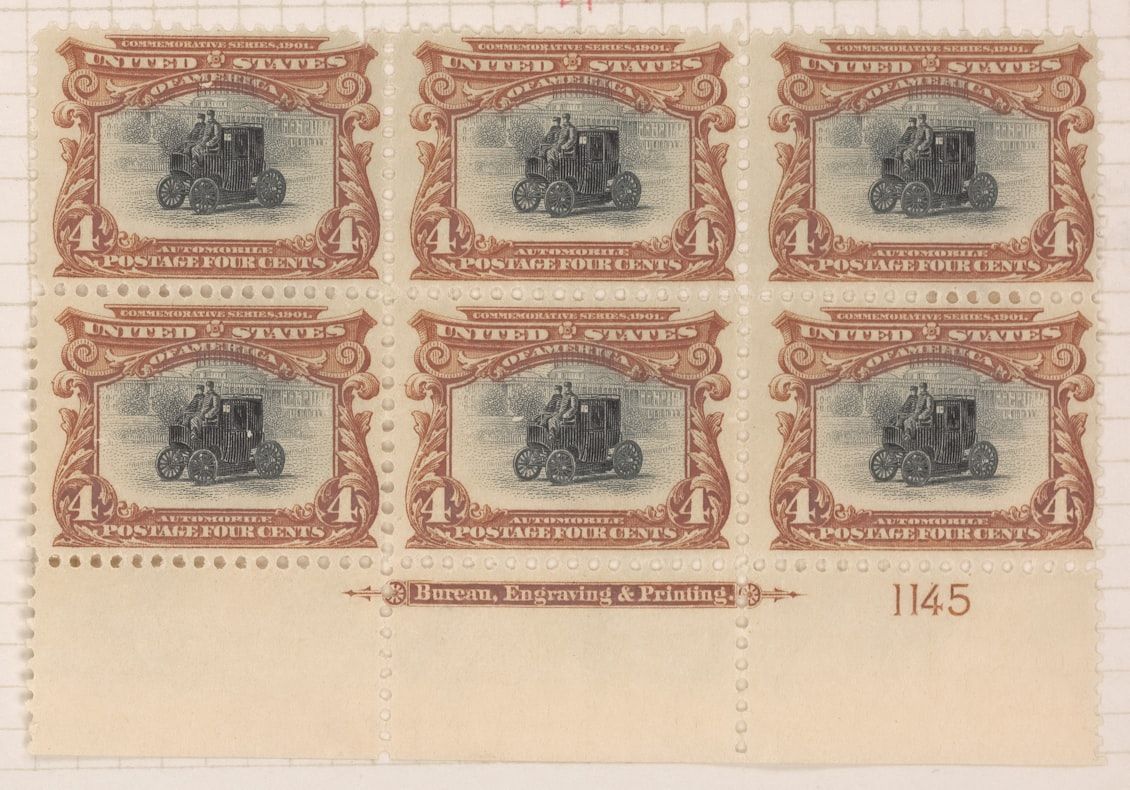
Image: The New York Public Library

In 1847, the first official U.S. postage stamps were issued: a 5-cent stamp featuring none Ben Franklin and a 10-cent stamp featuring George Washington .

Prepaid stamps simplified payment and collection of postage, removing complications from pay-on-delivery systems and helping the postal system function more efficiently.

8
The Pony Express
Image: The New York Public Library

In 1860, the Pony Express started its overland mail route between Missouri and California, nearly 1800 miles of relay horseback riding . The mail took 10 days between endpoints.

Although short-lived (it ended in 1861), the Pony Express demonstrated the demand for rapid cross-country communication.

9
City-wide home delivery

Image: Lesli Whitecotton

In 1863, free city mail delivery began , allowing residents in major cities to receive letters directly at their homes rather than picking them up at a post office.

This represented a major shift: mail became a part of everyday domestic life, not just something dropped off and picked up by hand.

10
Pneumatic tube mail in NYC

Image: The New York Public Library

In 1897, a pneumatic-tube mail system began operation in New York City. Mail could travel underground at high speeds, from the General Post Office to other offices in Manhattan within minutes .

At its peak, the system carried thousands of letters daily: at one point, nearly 30% of New York City mail went through this immense underground network.

11
Parcel post service launches

Image: Olivier Rouge

On New Year’s Day 1913, the U.S. Post Office inaugurated the first official parcel post service , allowing packages, not just letters, to be sent through the mail.

The impact was immediate: within the first five days, millions of packets passed through post offices, fueling mail-order business and expanding commerce everywhere.

12
First airmail route

Image: Qihao Wang

In 1918, the postal service launched the first regularly scheduled air mail route between Washington, D.C., and New York , marking the beginning of mail carried by airplane.

Airplane mail allowed far faster coast-to-coast and long-distance communication, a major leap from sailboats, stagecoaches, or railroads.

Culture Culture 6 min read

From pages to heart

Jay Gatsby or Tom Sawyer? 10 unforgettable American literary characters!

Image: Chris Lawton

Whether you're a book lover or not, there are certain books that everyone has read, and they've touched the hearts of many Americans. Between meticulous descriptions, unique stories, and unforgettable dialogues, these books have something that particularly stands out: their characters . From classics like Huckleberry Finn and Tom Sawyer to iconic names such as Jay Gatsby and Atticus Finch, these literary characters have become a fundamental part of American culture , and for excellent reason. Today, we're celebrating 10 beloved characters from American literature!

1
Huckleberry Finn

Image: Pedro Forester Da Silva

Mark Twain has given us some of the most iconic characters in our country's literature, and Huckleberry Finn is one of them.

He stole our hearts as the main character of The Adventures of Huckleberry Finn (1884), where his experiences and charm made him unforgettable. Adventurous, independent, rebellious (rightly so), and very smart, "Huck," as he is called in the novel, surprises us with reflections and critiques on the society of his time.

Huck not only escapes an abusive home but also makes an incredible journey down the Mississippi River in search of freedom. Along the way, he forms deep connections with those he meets, making it impossible not to feel attached to him.

2
Atticus Finch

Image: Scott Graham

When discussing classics of American literature, it is impossible not to include in the list the Pulitzer Prize-winning novel To Kill a Mockingbird (1960) by Harper Lee.

And if there's one thing this novel has to offer, it's some unforgettable characters. At the center of it all is none other than Atticus Finch. Atticus is described as an honorable lawyer with a profound commitment to justice and equality, serving as a moral beacon in a society defined by its lack of both. He always stands up for his principles , even when they go against the dominant norms.

One of his most iconic lines in the novel is a phrase that defines him very well: "The one thing that doesn't abide by majority rule is a person's conscience."

3
Holden Caulfield

Image: Hiroyoshi Urushima

J.D. Salinger's novel The Catcher in the Rye (1951) is undoubtedly a landmark of American literature. And one name that has stayed with us forever is Holden Caulfield, the novel's unforgettable protagonist.

With his characteristic red hat , Holden Caulfield is the definitive teenager: rebellious, curious, somewhat cynical , selfish, and mischievous. As he roams New York City after being expelled from several prep schools, we are witnesses of his intense and often smartly critical thoughts and experiences. However, despite his disillusionment with the world, Holden demonstrates a deep sensitivity .

4
Jay Gatsby

Image: Hardini Lestari

Published almost 100 years ago, F. Scott Fitzgerald's The Great Gatsby (1925) has become one of our classics , portraying life during the Roaring Twenties and inspiring many film adaptations. Jay Gatsby, with his ambition, idealism, and charisma, gets all the attention in this novel as an enigmatic character who is proof of the majesty of its author.

Much like Dante's Beatrice, the character of Daisy Buchanan inspires in Jay Gatsby an almost obsessive love that drives him to make key decisions and take powerful actions throughout the novel. It is this passion that fuels his rise to wealth and eventually leads to his downfall.

5
Tom Sawyer

Image: Lawrence Chismorie

Endlessly reproduced in other art forms, Tom Sawyer by Mark Twain is one of the most representative characters of American literature.

The first and most famous book featuring the Missouri boy is, of course, The Adventures of Tom Sawyer (1876), but we also see him in the sequel named after his friend, a character we have already talked about: The Adventures of Huckleberry Finn (1884).

Despite his mischievous nature and penchant for getting into trouble with his tricks and pranks, Tom is a clever and independent boy who constantly seeks out new adventures.

6
Scarlett O'Hara

Image: Lizelle De Wit

Gone with the Wind (1936) by Margaret Mitchell is a title everyone has heard of, whether you've read the book or not. Its characters have also become famous beyond the pages of this iconic novel.

One of them is none other than Scarlett O'Hara, the central character of this story. The novel portrays the American South during and after the Civil War , where Scarlett O'Hara, shaped by her circumstances, appears as a self-centered and spoiled character. However, as the story progresses, Scarlett evolves, showcasing her tenacity , determination, and protective spirit when she sets her mind to something. You probably remember the iconic line, "Tomorrow is another day."

7
Dean Moriarty

Image: Rémi Jacquaint

A fundamental member of the so-called Beat Generation , Jack Kerouac gifted us with one of the most famous novels in American literature: On the Road , published in 1957.

One of his most remembered characters is Dean Moriarty, who was based on a real person , Neal Cassady, a close friend of the author. Moriarty embodies some of the most outstanding characteristics of the Beat Generation, portraying an enthusiastic, adventurous, free-spirited, energetic, and charismatic character. With such a personality, it's no surprise that Dean Moriarty creates unforgettable moments and becomes an important figure in the story.

8
Hester Prynne

Image: Chris LaBarge

Hester Prynne, from Nathaniel Hawthorne's acclaimed novel The Scarlet Letter (1850), is undeniably one of the earliest and most significant female characters in our country's literature.

Hester defies the norms of her time by having an illegitimate child, making her a target of dramatic criticism and punishment from her contemporaries. Set in 17th-century Puritan Massachusetts, the story unfolds in a society defined by strict rules and oppression. In this context, Hester Prynne appears as a strong woman who endures the severe judgment of her time with courage.

Despite her harsh circumstances, Hester Prynne is described as a powerful, dignified, and empathetic character with extraordinary sensitivity.

9
Santiago

Image: Anastasiya Chervinska

Another undisputed classic is Ernest Hemingway's The Old Man and the Sea , published in 1952.

Santiago is the central character in this novel, which explores various aspects of the human condition in depth. Santiago, the old man of the title, is a fisherman who has gone many days without catching a single fish. Faced with diverse challenges and, above all, his own physical limitations , Santiago is described as a strong character of great constancy , dignity, and resilience who has a strong bond with the sea and its mysteries.

The character's perseverance shines through in his battle with the giant marlin , which stands as one of the most important moments in this story.

10
Ishmael

Image: Richard Sagredo

Continuing our journey along the sea, let's talk about one of the most iconic narrators in American literature: Ishmael. His name is perpetuated in the very first line of Herman Melville's great novel, Moby-Dick (1851). Who could forget the iconic opening: "Call me Ishmael" ?

Ishmael serves as the first-person narrator of one of the most memorable tales in literature, a sailor distinguished by his profound, analytical, and reflective personality.

Though he shares few details about his background or appearance, Ishmael masterfully narrates the events aboard Captain Ahab's whaling ship , giving us a unique perspective on the events.

General General 6 min read

Fossil treasures

10 jaw-dropping dinosaurs discovered in America

Image: Fausto García-Menéndez

The territory of the United States is a real goldmine for paleontologists. Over the years, some of the most impressive and well-preserved dinosaur fossils in the world have been discovered in our country. From the likable Apatosaurus to the fearsome Tyrannosaurus rex, the finds have provided a fascinating glimpse into prehistoric life. Read on to learn about the 10 most famous and influential American dinosaurs.

1
Anchisaurus

Image: Simon Infanger

Anchisaurus is one of the first dinosaurs discovered in American territory, although it was not correctly identified at the beginning. The first fossil of this herbivore was found in East Windsor, Connecticut , in 1818, but it was then believed to be part of a human skeleton. In subsequent years, other specimens of this species were uncovered in the area.

It measured 8 to 20 ft in length and lived 210 million years ago in the Portland Formation, Northeastern United States. In the late Triassic and early Jurassic periods, the Connecticut Valley was a dry, steep depression, and it was possible to pass from here to the east and the center of what is now Africa. This explains why some dinosaurs lived both in America and other continents.

2
Triceratops

Image: photo_steff

One of the most iconic dinosaurs found in America is the Triceratops, a herbivore that lived 70 to 65 million years ago, right at the end of the Age of Dinosaurs, in the Late Cretaceous. Its name derives from Greek and means "face with three horns". One of the largest horned dinosaurs**,** it stood around 7.5 ft tall and weighed about 5 rhinoceroses, the equivalent of 10 tons.

Fossils of this dinosaur have been found in abundance in the Hell Creek Formation in Montana and South Dakota. No fossils of this dinosaur have been found on any other continent. Triceratops has been the state dinosaur of Wyoming since March 1994.

3
Allosaurus

Image: WikiImages

Allosaurus was one of the largest carnivores of the Jurassic period and its remains in the United States have been found mainly in the Morrison Formation, which covers states such as Colorado, Utah, and Wyoming. It lived 155 to 145 million years ago in North America, Africa, Australia, and possibly China. Also, did you know that the Allosaurus fragilis is the state fossil of Utah?

This bipedal dinosaur was an agile hunter with powerful jaws and sharp teeth. It was a theropod, not as huge as the largest carnivore, Tyrannosaurus rex, but just as fearsome. Allosaurus was bigger than an elephant and heavier than a rhino. Its name means "different lizard" due to its rare concave vertebrae.

4
Stegosaurus

Image: ariesa66

Another inhabitant of the Morrison Formation was the Stegosaurus, famous for its dorsal plates and spines on its tail, which it used for defense. Stegosaurus used to walk on all fours, grazing on low vegetation. Its head was perfectly adapted to this way of feeding. It was first described in 1877 by Yale paleontologist Othniel Charles Marsh, and its name means "roof(ed) lizard".

This Jurassic herbivore has been discovered in several states in the western United States. Scientists have found many fossils, showing that it was a very common creature for 10 million years, despite its tiny brain, small head, and useless teeth. The discovery of the Stegosaurus has helped them better understand the anatomy and behavior of armored dinosaurs.

5
Tyrannosaurus rex

Image: Elly Enn

Is Tyrannosaurus rex the most famous dinosaur on the planet? Portrayed by pop culture to the hilt, this formidable predator is known for its gigantic size, razor-sharp teeth, and bipedal posture. However, its popularity has a logical explanation. T. rex is also one of the best-represented dinosaurs in the fossil record, with several complete specimens discovered, particularly in the states of Montana, South Dakota, and Wyoming.

Based on bones found in the late 19th century, paleontologist Henry Fairfield Osborn recreated the first drawing of this gigantic creature. He named it Tyrannosaurus rex, meaning "tyrant lizard king," because it is believed to have been the most dangerous dinosaur and the largest land carnivore of all time. Although it is estimated that up to 1.7 billion T. rex dinosaurs lived on Earth, only about 30 nearly complete skeletons have been found. Think about that!

6
Deinonychus

Image: Steve Wrzeszczynski

This small but ferocious theropod lived during the Cretaceous period about 115-108 million years ago. Deinonychus is known for its sickle-shaped claws on its feet, used for hunting. Its name, unsurprisingly, means "terrible claw". Like all bipeds, it moved only on its hind legs and is believed to have been able to run at 25 miles per hour: more than the average Olympic champion.

Deinonychus fossils were found in Utah, Oklahoma, Montana, and Wyoming, in rocks of the Cloverly Formation and Antlers Formation. The study of this species, beginning in the 1960s, revolutionized the way scientists thought about dinosaurs, providing fascinating new insight into smaller predators.

7
Ankylosaurus

Image: mdherren

Ankylosaurus is one of the best-known armored dinosaurs, which lived at the end of the Cretaceous period. It had bony protrusions on its head and all over its body as protection against the teeth and claws of predators. The armor was made up of small plates of bone welded together, constituting a shell as effective as that of turtles.

This gigantic herbivore roamed the jungles of North America about 68-66 million years ago, almost as well protected as a modern tank. The first specimen of Ankylosaurus was found in 1906 in the Hell Creek Formation, near Gilbert Creek, Montana. Other fossils of this species were discovered in other parts of Montana and Alberta, Canada, in the following years. However, to this day, it has not been possible to obtain a complete skeleton.

8
Hadrosaurus

Image: Jordyn St. John

The first Hadrosaurus fossils were discovered by William Parker Folke, an amateur paleontologist, in 1838 in Haddonfield, New Jersey. The excavation site, known as the Hadrosaurus foulkii Leidy site, is now a National Historic Landmark. Hadrosaurids are known for their duck-billed mouth, with a powerful jaw containing several rows of teeth for chewing all kinds of leaves.

In 2004, scientists found a mummified Hadrosaurus specimen in North Dakota. This fossil is extremely unusual and valuable, as dinosaur soft tissue including skin and muscle is rare. This find allows us to learn more about this species and how they lived 67 million years ago.

9
Diplodocus

Image: michaelwedermann

Diplodocus means "double beam" and is so named because of the double bones in its tail. This was one of the longest animals on earth. It was about 79-85 ft long, 15 ft high, and weighed 15 tons. It could reach the tops of towering trees for food, and its small head allowed it to forage in vegetation where few other dinosaurs could reach.

Although some Diplodocus fossils were discovered earlier near Cañon City, Colorado, the most notable find came a few years later. In 1899, Funded by Scottish-American steel tycoon Andrew Carnegie, members of the Carnegie Museum of Natural History found a well-preserved Diplodocus skeleton in the Morrison Formation of Sheep Creek, Wyoming. With these fossils, the museum created a composite mount that became very popular and even got to tour the world.

10
Apatosaurus

Image: Cup of Couple

Apatosaurus is one of the best-known sauropods that inhabited North America during the Jurassic period. These herbivorous giants, with their long necks and tails, have also been discovered in the Morrison Formation, mainly in Colorado and Utah. It is believed to have lived 150 million years ago, at the end of the Jurassic period.

Apatosaurus could reach 69-75 ft in length, 20 tons in weight, and was one of the largest sauropods. It had a long neck containing 15 huge bones supported by powerful muscles that allowed it to feed on the leaves of the tallest trees. Perhaps this dinosaur sounds familiar. It has been the inspiration for numerous beloved animated characters: Littlefoot from The Land Before Time and Arlo and Poppa Henry from Pixar's The Good Dinosaur are Apatosauruses.

Explore more American facts

Choose your favorite category!

General
General

As American as apple pie—the very best America has to offer!

Culture
Culture

Delve into the astounding richness of American lore.

Geography
Geography

Hop in and explore vast and diverse American landscapes.

History
History

Discover the key moments that shaped the United States.