History History 4 min read

Face the history!

Did you know there’s a secret room within Mount Rushmore?

Image: Josh Miller

Mount Rushmore isn’t just a stunning piece of rock, it’s a piece of American history carved into the Black Hills of South Dakota. If you’ve visited or it’s on your travel list, you might be surprised by how much more there is to know. From secret rooms to explosive carving methods, this national memorial has quite a story. Below, we’ll dig into the lesser-known facts behind those four famous faces. Keep reading!

1
A mountaintop with a maintenance plan

Image: Sebastian Enriqu

Each year, around two million visitors make their way to see the monument. But keeping the presidential faces looking sharp takes serious work. Park Service staff actually rappel down the mountain to inspect for cracks. They use silicone sealant to block out moisture and keep the granite from breaking apart in the cold. This isn’t a quick job, it’s a regular, careful operation. The mountain's top sits 5,725 feet above sea level, so it’s not for the faint of heart.

2
One historian’s tourism dream

Image: Engin Yapici

Back in 1923, South Dakota historian Doane Robinson had an idea to attract visitors to the Black Hills. Now, what was his original plan? Carve Western legends like Buffalo Bill and Native American leaders into the rock. The vision then shifted to feature US presidents for broader national appeal.

President Calvin Coolidge helped land the funding, even during tough economic times. The carving began in 1927 and stretched on until 1941. Sculptor Gutzon Borglum died before finishing, and his son Lincoln carried the torch to completion.

3
Four presidents, four chapters

Image: Jeromey Balderrama

Each face on the mountain stands for a key period in our nation’s story. Can you imagine what they are?

Washington symbolizes the birth of the country, while Jefferson represents growth and expansion. Lincoln stands for unity and the preservation of the nation during the Civil War. Roosevelt brought development and the rise of the US on the world stage. Together, they tell a chronological story in stone. The idea was to highlight leadership through the ages, not just popular figures.

4
A presidential switch

Image: Andrew Ling

Originally, Thomas Jefferson was supposed to be on Washington’s left. But during the carving, the rock proved too unstable. So they scrapped the partially finished face and started over, this time on the right side.

It was a major do-over that cost time and money, a lot of it! But ultimately, it worked out for the best, structurally speaking. Today, most visitors never realize Jefferson had a false start.

5
Dynamite and a dream

Image: Takefreebies

It’s easy to forget that Mount Rushmore wasn’t sculpted with tiny chisels: It was blasted into shape. Most of the work was done with dynamite, followed by finer detailing with jackhammers and drills.

From 1927 to 1941, about 400 workers shaped the mountain. Amazingly, no lives were lost during the entire project. Many of the workers were former miners, used to rough terrain and heavy tools. It wasn’t easy, but it was efficient.

6
The presidents were supposed to have torsos

Image: Thomas Fields

The original vision for the monument wasn’t just heads, it included bodies from the waist up! Imagine that! Like many grand ideas, it ran into budget troubles. Funding dried up, and with time running out, the project was scaled back.

What we see today is actually an unfinished version of Borglum’s full plan. Still, the heads alone have become iconic. Imagine how much more impressive it would’ve been with shoulders and coats.

7
Secrets behind Lincoln’s head
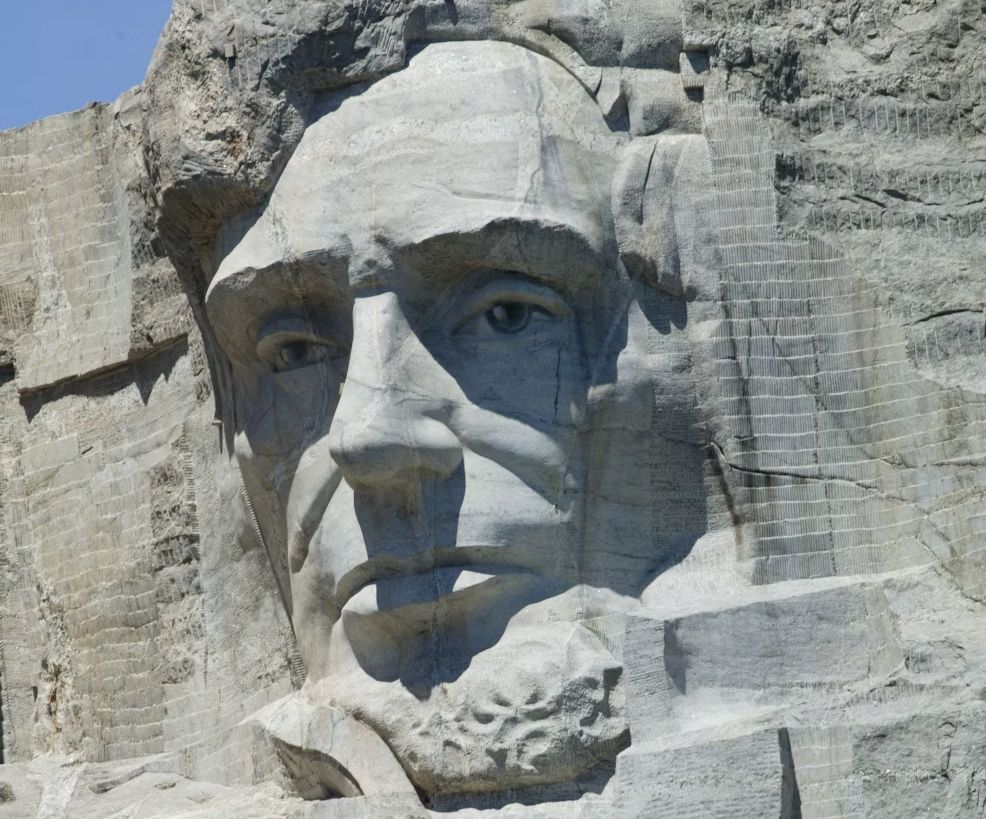
Image: Rosanne Rapata

There’s a hidden room carved into the mountain, did you know that? Called the Hall of Records, it was Borglum’s idea to store important American documents and artifacts.

While the grand plans for a museum inside the mountain were never fully realized, a titanium vault was placed there. It contains copies of key US documents, including the Constitution and the Declaration of Independence. Located behind Lincoln’s head, it’s not open to the public. Still, it adds an air of mystery to the site. It makes you wanna visit, right?

8
Step off the beaten path

Image: Nils Huenerfuerst

Most visitors snap their photos from the Grand View Terrace, and it’s lovely. But for those willing to take a short walk, the President’s Trail offers even better views.

This loop takes you closer to the monument and into nature. You might spot local wildlife like mountain goats or deer along the way. The trail includes about 422 stairs, so make sure you’re wearing comfy shoes. It’s a quieter, more personal way to experience the monument.

9
Entablature

Image: Tommy Bond

Gutzon Borglum didn’t just want Mount Rushmore to be a visual tribute, he wanted it to tell the story of America, too. His idea was to chisel a brief summary history, covering events from 1776 to 1906, right into the rock face.

This massive engraving, called "Entablature," was to be etched into an 80-by-120-foot depiction of the Louisiana Purchase. President Calvin Coolidge even agreed to write it, but when Borglum edited Coolidge’s draft without permission, the president was so annoyed he refused to try again. Despite the grand vision, the project was eventually scrapped, partly because the lettering wouldn’t have been visible from a distance, and partly because the budget ran dry.

10
Don’t expect a fifth face anytime soon

Image: Ronda Darby

Over the years, people have suggested adding more figures to the mountain. Names like Susan B. Anthony, FDR, JFK, Reagan, Obama, and Trump have all come up. But the National Park Service has said a firm "no." Structurally, there’s just no safe place to add another carving. Plus, the monument is considered complete in its message. So, while the debate pops up now and then, don’t hold your breath. The original four are here to stay.


General General 4 min read

Do you know how to sew a button?

How prepared are you?

Image: Mariah Hewines

In a world where most of us have specialized knowledge about certain things, we often neglect to learn about other basic areas that can also affect us greatly. Knowing how to use a compass, cook some basic recipes, knowing how to sew a button, light a fire, stay fit, and keep a budget are all things that everybody should know about because they can either make your life a bit easier or, if disaster strikes, can save your life. Check out these 12 useful skills. Which ones do you already have?

1
Basic computer skills

Image: Christin Hume

An increasingly larger chunk of our world requires at least some basic form of digital literacy to interact with it. Knowing your way around a computer, your smartphone, and the Internet makes everything a little bit easier .

You don’t need to be a hacker or anything like that; just knowing the very basics allows us to access most of the advantages that modern technology provides.

2
Housekeeping skills

Image: Slaapwijsheid.nl

Living in a clean and comfortable environment is something that almost everyone can achieve with just a little bit of effort. Learn to use a vacuum cleaner, your washing machine, and the dishwasher, if you have it ; learn how to iron your clothes, make a bed, and clean your home.

3
Navigation skills

Image: Tabea Schimpf

The aforementioned basic computer and smartphone skills are a great aid in this department. But even if you have those incorporated, it is always a good idea to learn how to use a map and a compass. Ask for directions and memorize them . Just in case technology fails.

4
Survival skills

Image: Courtnie Tosana

Learn how to make a fire. Learn how to perform CPR and a Heimlich maneuver on adults, children, and infants. Learn to use a portable electricity generator. Learn a few basic knots. All of these abilities are very rarely used. But whenever you need them, you'd better know how to perform them correctly . Your life or someone else’s might depend on it.

5
Time management

Image: kylefromthenorth™️

The best way to make time is to manage it correctly. Learn to set daily and weekly goals , prioritize your tasks and responsibilities, create to-do lists, and review your schedule periodically.

6
Financial education

Image: Sasun Bughdaryan

Track your money. Learn to check, build, and repair, if necessary, your credit score . Learn how to apply for a loan or a credit card. And hire or at least consult with a tax professional to make sure that you are doing your taxes correctly.

7
Social skills

Image: Chris Liverani

While it is true that some people are born with social skills, these can be learned by anyone . The ability to accept criticism in good spirit, the ability to have a productive conversation, patience, knowing how to speak clearly and succinctly, and knowing how to negotiate are all things that can be learned and add significant benefits to whoever acquires these skills.

8
Fitness

Image: Emma Simpson

Your body is your vessel. And it is the only one you are going to get for your life. Therefore, make sure to keep it as fit as possible . Strengthen your muscles and bones with activities that suit you. Learn how to stretch properly, learn bodyweight exercises, and look for ways to stay active at any age. A fit body will always get you farther.

9
Healthy cooking

Image: Alyson McPhee

This one goes hand in hand with the previous item. Healthy cooking involves preparing nutritious and balanced meals. This is essential for maintaining good health and can be a fun and creative activity.

Learn some basic recipes that you can make at home, quickly, with a few ingredients, and you will never go hungry again.

10
Learn to keep a budget

Image: Mediamodifier

This one is related to the previous item regarding financial education, but on a more basic level. Keeping a good track of the money you earn and the money you spend helps you make ends meet and save more at the end of the month.

Create a spreadsheet and write down your expenses and your income, or use an app to help you do the same thing on your phone.

11
Sew on a button

Image: Merve Sehirli Nasir

The constantly decreasing quality of clothing makes this simple skill all the more important as time goes by. Learn how to sew on a button. It is not difficult, and it will save you a trip to the tailor or having to ask somebody else for a very easy task.

12
Change a tire

Image: Wade Lambert

If you drive a car, you should know how to change a tire. Yes, maybe you have an insurance service that can aid you, and maybe there is always someone around who can help until there is no service available and you are all alone.

Changing a tire is very simple, and there are techniques to do so with very little physical effort . Learn how to perform this simple task, and you will be much safer when driving a car.

History History 3 min read

Say what?!

Believe it or not, these foods were once marketed as health remedies

Image: Barnabas Davoti

For much of American history, grocery staples didn’t just promise flavor, they also claimed to heal. Yes, you read that right: before strict regulations, inventors, pharmacists, health reformers, and plain snake oil salesmen pushed new products as cures for nerves, digestion, or things as abstract as "vitality". Take a look at 11 everyday food items that were once considered medicinal.

1
Coca-Cola

Image: Artem Beliaikin

The first item in our list is one of the most famous examples. Created in 1886 by a pharmacist named John Pemberton, Coca-Cola was introduced as a nerve tonic meant to calm headaches and boost energy . Early ads called it a "brain elixir," and it was sold from pharmacy counters.

Over time, the drink’s medicinal claims faded as its sweet and refreshing flavor alone won over the public.

2
Grape-Nuts

Image: Mona Bernhardsen

Grape-Nuts arrived in 1897 with big promises about health benefits, including digestion and even appendicitis . Ads insisted on its remarkable healing power.

As science advanced, the claims faded, but the cereal stayed popular. Its crisp texture and hearty flavor became the true selling point once the medicinal hype fell through.

3
Corn flakes

Image: Deepak N

Developed at the Battle Creek Sanitarium, Kellogg’s Corn Flakes were created as a bland, calming food meant to improve digestion and overall health . They were part of a larger awareness movement.

The cereal’s simple crunch won broad appeal, and the medical message softened. It ultimately became the breakfast staple that we know today.

4
Ovaltine

Image: pariwat pannium

Introduced in the early 1900s, Ovaltine claimed to boost strength, improve sleep, and support children’s growth . It was marketed as a malt-based health enhancer.

As breakfast habits changed, Ovaltine’s tine softened, but its cozy appeal endured. It became more of a nostalgic treat than a serious health product.

5
7-Up

Image: Shawn Powar

This one had some backing to its claims. When 7-Up was launched in 1929, it contained lithium citrate, an ingredient used in mood-stabilizing treatments . Early advertising pitched it as a mood-lifting, calming tonic.

As formulas changed and regulations grew, the lithium disappeared, and 7-Up’s identity shifted. It ultimately took its place as a crisp lemon-lime soda with no therapeutic claims.

6
Jell-O

Image: Girl with red hat

When Jell-O debuted, it was pitched as a pure, digestible food for children and invalids . Doctors were encouraged to recommend it as a gentle nourishment.

Its colorful aspect soon eclipsed any medicinal sales angle. Today, Jell-O is tied to family gatherings, not medicinal prescriptions.

7
Fig Newtons

Image: Armando Brenlha

Early ads promoted Fig Newtons as a digestive biscuit thanks to their fruit filling . They were considered easy to assimilate and helpful for regularity issues.

Modern marketing focuses on wholesome snacking rather than health claims. Their soft, chewy texture is their lasting appeal.

8
Marshmallow candy

Image: Ricardo Loaiza

Before becoming modern candy, marshmallow confections were sold in pharmacies as throat soothers made from marshmallow root. They were considered medicinal lozenges.

As recipes changed, and gelatin replaced the plant extract, their purpose shifted entirely. Today, they’re tied to desserts and campfires.

9
Peanut butter

Image: Towfiqu barbhuiya

Health reformers promoted peanut butter as a protein-rich substitute for meat , ideal for the ill or elderly who struggled with chewing. It was part of a therapeutic diet.

Soon, its versatility outshone its medicinal beginnings. Peanut butter became beloved for sandwiches and snacks rather than health regimens.

10
Ginger Ale

Image: Nancy Hughes

Ginger Ale entered the market positioned as a stomach soother . Ginger’s long-standing reputation as a digestive remedy made the drink appealing to pharmacies.

Over time, ginger ale settled into its role as a refreshing mixer and comfort beverage. Its gentle reputation lingers, though it’s no longer pitched as a medical aid.

11
Welch’s Grape Juice

Image: Callum Hill

Welch’s promoted grape juice as a pure, healthful alternative to alcohol . Early ads suggested it supported vitality and overall well-being.

Its wholesome image stuck, though the medical claims did not. Today, Welch’s is associated more with family and wholesome habits than with old health ideals.

Explore more American facts

Choose your favorite category!

General
General

As American as apple pie—the very best America has to offer!

Culture
Culture

Delve into the astounding richness of American lore.

Geography
Geography

Hop in and explore vast and diverse American landscapes.

History
History

Discover the key moments that shaped the United States.