Culture Culture 6 min read

Redefining success

Degrees of success: How these 10 college dropouts became icons

Image: Jonathan Borba / Celyn Kang

Many stars, artists, politicians, and all kinds of influential figures have gone through college. While some of them have one or more degrees, others have decided to drop out of college to take another path. And this doesn't have to be a bad thing! In fact, many of them have achieved great success. Today, we're going to review 10 famous college dropouts who have succeeded with flying colors.

1
Oprah Winfrey

Image: Ilyass SEDDOUG

If it wasn't for a professor's advice, we might have never got to meet the incredible Oprah Winfrey!

After graduating with honors from high school, Oprah attended Tennessee State University to study Communication. During her college years, she already participated in several different radio shows. While in one of her classes, she received a call that changed her life: CBS Channel Five offered her a very important job. At first, Oprah said no, as her father always insisted that she complete her studies. Accepting the position would mean putting her education on hold, so it was a difficult choice for her.

Winfrey told the situation to her Scenic Design professor, who immediately encouraged her to take the job. "This is what you study for, to get a call from CBS!" he allegedly said.

2
Bill Gates

Image: Tadas Sar

Bill Gates' work, intelligence, and journey as an entrepreneur to become the famous co-founder of Microsoft are admirable. Maybe that's why many are surprised to learn that Gates dropped out of college.

He began his education at a private school in Seattle, Washington. It's said that he demonstrated high capacities in math and science. During the early years of his education, he came into contact with computers, awakening his passion at a young age.

When he was 18 years old, Gates enrolled at Harvard to pursue a degree in computer science. During his time there, he became interested in programming languages. In particular, he wanted to design one for the Altair 8800, an early personal computer developed by MITS. In 1975, Gates decided to leave Harvard to create BASIC, which later evolved into the well-known Microsoft, co-founded by Gates and Paul Allen.

3
Steve Jobs

Image: Sumudu Mohottige

A similar path to Gates was that of Steve Jobs, the co-founder of Apple Inc.

Jobs attended elementary and high school in Cupertino, California. In the 1970s, while he was still in high school, he met Steve Wozniak, an engineering student who would join him in creating Apple.

Jobs was said to have a free and rebellious nature. Perhaps it was that spirit that led him to leave Reed College in Portland, Oregon, after the first semester in order to have more time to pursue his true interests: technology and design.

Although he didn't pursue what we know as a formal education, Jobs educated himself in numerous fields in different parts of the world.

4
Mark Zuckerberg

Image: Deeksha Pahariya

Jobs and Gates aren't the only tech geniuses who decided to drop out of college to take another path. Mark Zuckerberg joins this list.

Zuckerberg already stood out during his elementary and high school years for his mathematics and computer science skills. But it was at Harvard University that he really explored his potential.

Mark Zuckerberg enrolled at Harvard in 2002 to study computer science and psychology. There, he developed a number of applications and platforms, but one gained him all the fame. We're talking about Facebook, one of the most famous social networks in the world today. Two years after entering the university, he left to fully dedicate himself to his company, which was growing in success every second.

5
Ellen DeGeneres

Image: Ioann-Mark Kuznietsov

Not all the names on this list belong to the tech world. There are also some other showbiz figures. One of them is Ellen DeGeneres, the unmistakable comedian, actress, and TV host who has won the hearts of many Americans.

Her comedy and acting talents shone during her high school years in Atlanta, Texas. After high school, Ellen enrolled at the University of New Orleans in 1976 to study communications. However, after a couple of months, she dropped out in order to concentrate on her entertainment career. During those years, she did comedy and stand-up shows, gaining fame first locally and then nationally, eventually having her first sitcom, "Ellen," and then her successful daytime talk show, "The Ellen DeGeneres Show."

6
Steven Spielberg

Image: George Patient

Steven Spielberg is a talented and successful American film director whose name reached the ears of the whole world thanks to such classics as Jaws (1975), Raiders of the Lost Ark (1981), E.T. the Extra-Terrestrial (1982), Jurassic Park (1993), and many others.

In 1965, Spielberg enrolled at California State University Long Beach to pursue a career in film production. There, he started to work on many projects, and in 1968, he decided to drop out of college to pursue his passion.

In the 2000s, the famous director returned to college and completed his degree, presenting the iconic Schindler's List !

7
Brad Pitt

Image: César Guadarrama Cantú

The art of acting is truly admirable, and we can say, without a doubt, that the best actors and actresses in the world have a great mix of natural talent and hard work. A perfect example is Brad Pitt, who also has one more ingredient: his spectacular appearance.

After graduating from high school in 1982, Pitt enrolled at the University of Missouri to study Journalism and Advertising. There, he became interested in acting and participated in different creative and theatrical projects.

Two weeks before graduating, Pitt made the decision to quit college and move to California, where he would evolve as an actor into the world-renowned superstar he is today.

8
Larry Page

Image: Greg Bulla

Lansing, Michigan, was the birthplace of Larry Page, the co-founder of one of the world's largest technology companies. But before becoming the CEO of a huge corporation, Page also walked the halls of college, earning several degrees before his dropout.

Page earned a Bachelor of Science with a major in Computer Engineering with honors from the University of Michigan in 1995. He then enrolled at Stanford University, where he earned his Master's degree in 1998.

During his years at Stanford, he met Sergey Brin, with whom he would later co-found none other than Google! The success of their co-creation led Page to not complete his PhD, which he was pursuing during those years.

9
Ashton Kutcher

Image: Nathan Dumlao

When it comes to talented, hard-working, and handsome actors, Brad Pitt isn't the only one. Another one with all those attributes is Ashton Kutcher.

Kutcher is really smart. His hard work and intelligence led him to enroll at the University of Iowa in 1996, where he pursued a degree in biochemical engineering. But his student life was cut short when a talent agency discovered him.

In 1998, he decided to drop out of college to pursue his growing modeling and acting career. A few years ago, the actor famously declared, "I pursued something I was passionate about [...] So, that was the right decision for me."

10
Alicia Keys

Image: Soundtrap

Another artist on this list is none other than Alicia Keys, a major name in the entertainment world.

From a very young age, Alicia was encouraged to pursue her talent and artistic interests. She attended elementary and high schools specialized in arts, where she developed many of her musical talents.

After graduating from high school at 16, Keys was accepted into the Juilliard School in Manhattan, which is proof of her immense talent. However, the singer and songwriter decided to drop out of college a few months after being accepted in order to pursue her dreams as a singer. She signed her first record deal shortly after, and the rest is history!


Culture Culture 5 min read

"To be true to ourselves, we must be true to others."

Presidential goals: The 12 moments that defined Jimmy Carter

Image: National Archives and Records Administration, Public domain, via Wikimedia Commons

Long before he set foot in the Oval Office—and for decades afterward—Jimmy Carter built a life filled with unexpected achievements and heartwarming stories that showed his true character. From growing up in the small town of Plains, Georgia, to working side by side with volunteers well into his later years, Carter’s journey has been as remarkable as it has been relatable. These 12 moments offer a closer look at the farmer, the naval officer, the peacemaker, and the neighbor next door who happened to become the 39th President of the United States.

1
A farm boy from Georgia

Image: Pezibear

Before Jimmy Carter became a household name, he was a small-town boy with dusty feet and big skies overhead. Life on his family’s peanut farm in Plains, Georgia, was all about early mornings and honest work —milking cows before breakfast, hauling feed, and tending rows of peanuts under the hot Southern sun. There were no shortcuts, just neighbors lending a hand, Sunday suppers, and the comfort of familiar faces. Those long, simple days gave Carter a lasting respect for hard work, humility, and the quiet rewards of a life well lived.

2
Graduating from the Naval Academy

Image: Guy Kawasaki

In the spring of 1946, Jimmy Carter proudly accepted his diploma from the U.S. Naval Academy in Annapolis, Maryland. It was the result of years of study, drills, and determination. From the moment he first stepped onto campus, the call of the sea seemed to be in his blood. The Navy offered him adventure, discipline, and the chance to serve his country aboard vessels that carried him far beyond the red clay fields of Georgia.

3
Training in nuclear engineering

Image: Daniil Zameshaev

Long before campaign trails and speeches, Jimmy Carter was studying the technology that powered the Navy’s most advanced submarines. The training was intense: every calculation had to be precise, every decision double-checked. There was no room for guesswork, only methodical thinking and steady hands. Those long hours in classrooms and labs didn’t just prepare him for service at sea; they built a mindset grounded in patience, careful planning, and practical problem-solving that he carried into every chapter of his life, including his presidency.

4
Running the family peanut business

Image: Ivan Bandura

Once his naval service came to an end, Jimmy Carter headed back to Georgia, ready to take the reins of the family peanut farm. But he wasn’t comfortable with just preserving the status quo. Carter rolled up his sleeves and introduced fresh ideas and more modern farming practices to the fields. Thanks to his hard work and smart management, the farm grew into one of the top operations in the area. He knew every inch of those acres, not just as farmland, but as the foundation of his family’s legacy.

5
Governor of Georgia

Image: Mick Haupt

When Jimmy Carter became governor of Georgia in 1971, he brought a refreshing promise: honest leadership with open doors. People appreciated how down-to-earth he was, whether chatting with them at the state capitol or sharing a meal at a local diner. His style was all about being accessible and straightforward. Over time, Carter built a reputation as a hardworking leader who stayed close to everyday people, earning their respect by listening carefully and delivering results.

6
The President with a warm smile

Image: National Archives and Records Administration, Public domain, via Wikimedia Commons

In 1977, Jimmy Carter stepped into the role of the 39th President of the United States. He wasn’t one for stuffy ceremonies or rigid protocols; instead, he valued a friendly handshake, a sincere smile, and honest conversations in which people felt genuinely listened to. With Carter around, the atmosphere at the White House became a bit more casual and welcoming, reflecting his easygoing and approachable nature.

7
The Camp David peace talks

Image: Central Intelligence Agency from Washington, D.C., Public domain, via Wikimedia Commons

During the first year of his presidency, Jimmy Carter welcomed the leaders of Egypt and Israel to Camp David. For nearly two weeks, he played the roles of attentive listener, skillful negotiator, and steady encourager. His calm and determined approach helped bring both sides together, resulting in the Camp David Accords, a historic agreement that still stands as a powerful example of Carter’s dedication and perseverance.

8
A love for fishing

Image: National Archives and Records Administration, Public domain, via Wikimedia Commons

Carter’s passion for the outdoors remained strong throughout his life. Whether he was wading knee-deep in a cool river or casting a line from a modest boat, fishing offered him a respite from his demanding duties as president. With a rod in hand, he found time to think, connect with nature, and recall the easygoing rhythm of his childhood days in rural Georgia.

9
Energy-saving sweaters

Image: Jimmy Carter's Presidential Photographs, Collection: White House Staff Photographers Collection, Public domain, via Wikimedia Commons

At a time when energy was in short supply, Carter didn’t just give speeches about saving power; he led by example. On national television, he appeared wearing a cozy cardigan sweater, encouraging Americans to lower their home thermostats and put on a warm layer instead. That small, relatable act sent a clear message: Carter wasn’t just asking people to conserve energy; he was doing it himself, showing that simple changes could make a big difference.

10
Nobel Peace Prize

Image: [null Courtesy], Public domain, via Wikimedia Commons

In 2002, Jimmy Carter received the Nobel Peace Prize, honoring his decades-long commitment to promoting peace and defending human rights around the world. This award wasn’t about politics or prestige; it celebrated a lifetime devoted to bridging divides and working toward understanding among people of different nations, cultures, and beliefs.

11
Building homes

Image: Photo by Chris Wingard. – U.S. Department of Energy from United States, Public domain, via Wikimedia Commons

Long after leaving the White House, Jimmy Carter showed he wasn’t one to shy away from hard work. Through Habitat for Humanity , he picked up a hammer and rolled up his sleeves, helping to build homes for families in need. It was hands-on, honest labor, the same kind of hard work he’d been familiar with since his childhood on the Georgia farm.

12
The farmer who wrote books

Image: National Archives and Records Administration, Public domain, via Wikimedia Commons

From heartfelt memoirs to thoughtful poetry, Jimmy Carter has authored more than 30 books over the course of his life. Writing became his way of sharing experiences, wisdom, and dreams for a better world. Much like tending his farm or casting a line in a quiet river, Carter approached writing with patience, care, and a personal warmth that will surely connect with readers for decades to come.

Geography Geography 3 min read

A deep look at the map

America’s place names have wild origins – here are 12 of the strangest

Image: Mackenzie Cruz

Every place name has a story— especially in America ! While some come from Indigenous languages, others trace their origins to European tongues or ancient legends. These names are more than just labels; they offer glimpses into our past , revealing the diverse cultures and pivotal events that have shaped the nation. From Greek influences to names that predate European conquest, we've gathered 12 of the most fascinating origins behind America's place names.

1
Miami

Image: Avi Werde

Miami’s name comes from the Mayaimi people, who lived around Lake Okeechobee. The name itself is thought to refer to the "big water" of the lake, a defining feature for the region's Indigenous inhabitants.

2
Chicago

Image: Neal Kharawala

The name "Chicago" comes from the Potawatomi word shikaakwa, meaning "wild onion" or "wild garlic." These plants were once abundant along the banks of the Chicago River, and early French explorers who heard this term adapted it into the city's name.

3
Philadelphia

Image: Chris Murray

The name "Philadelphia" comes from the Greek words philos (love) and adelphos (brother). Founded in 1682 by William Penn, the city was intended to be a haven for religious freedom and peaceful coexistence—hence its name.

4
Cincinnati

Image: Matt Koffel

Cincinnati's name comes from the Society of the Cincinnati, a patriotic organization formed in 1783 to honor officers of the Continental Army. The society itself was named after Lucius Quinctius Cincinnatus, a legendary hero of the Roman Republic.

5
California

Image: Vital Sinkevich

The name "California" comes from Las Sergas de Esplandián, a 16th-century Spanish novel by Garci Rodríguez de Montalvo. The book describes a mythical island where gold could be found in great quantities. When Spanish explorers reached the Baja Peninsula, they mistakenly believed it was an island and, inspired by the novel, named it after the fictional paradise.

6
Boise

Image: Attorney Sluice

The name "Boise" comes from the French word boisé, meaning "wooded" or "forest." French fur traders were some of the earliest European explorers in the region, and they named the Boise River after observing the thick forests that lined its banks.

7
Albuquerque

Image: Raychel Sanner

Albuquerque was named by the Spanish in the 18th century, but its origins trace back to the Latin words albus (white) and quercus (oak), referring to the white oak trees that are found in the area.

8
Mississippi River

Image: Mathew Benoit

The Mississippi River gets its name from the Ojibwe word Misi-ziibi, meaning "Great River." Certainly a fitting name, given the river’s key role in the development of American trade and transportation, a vital route for settlers and Indigenous people alike.

9
Yellowstone National Park

Image: Meina Yin

Yellowstone National Park takes its name from the Yellowstone River, which was in turn named by fur trappers who used the word "yellow" to describe the river’s striking sandstone cliffs . Established in 1872, Yellowstone became the first national park in the U.S., preserving its unique geological and natural wonders.

10
Appalachian Mountains

Image: Elijah Mears

The Appalachian Mountains, among the oldest in the world, take their name from Apalachee , a term used by the Spanish to refer to a Native American tribe in northwestern Florida . Interestingly, the name was later applied to the distant mountain range, despite no direct connection between the two—perhaps they had run out of names?

11
Niagara Falls

Image: Sergey Pesterev

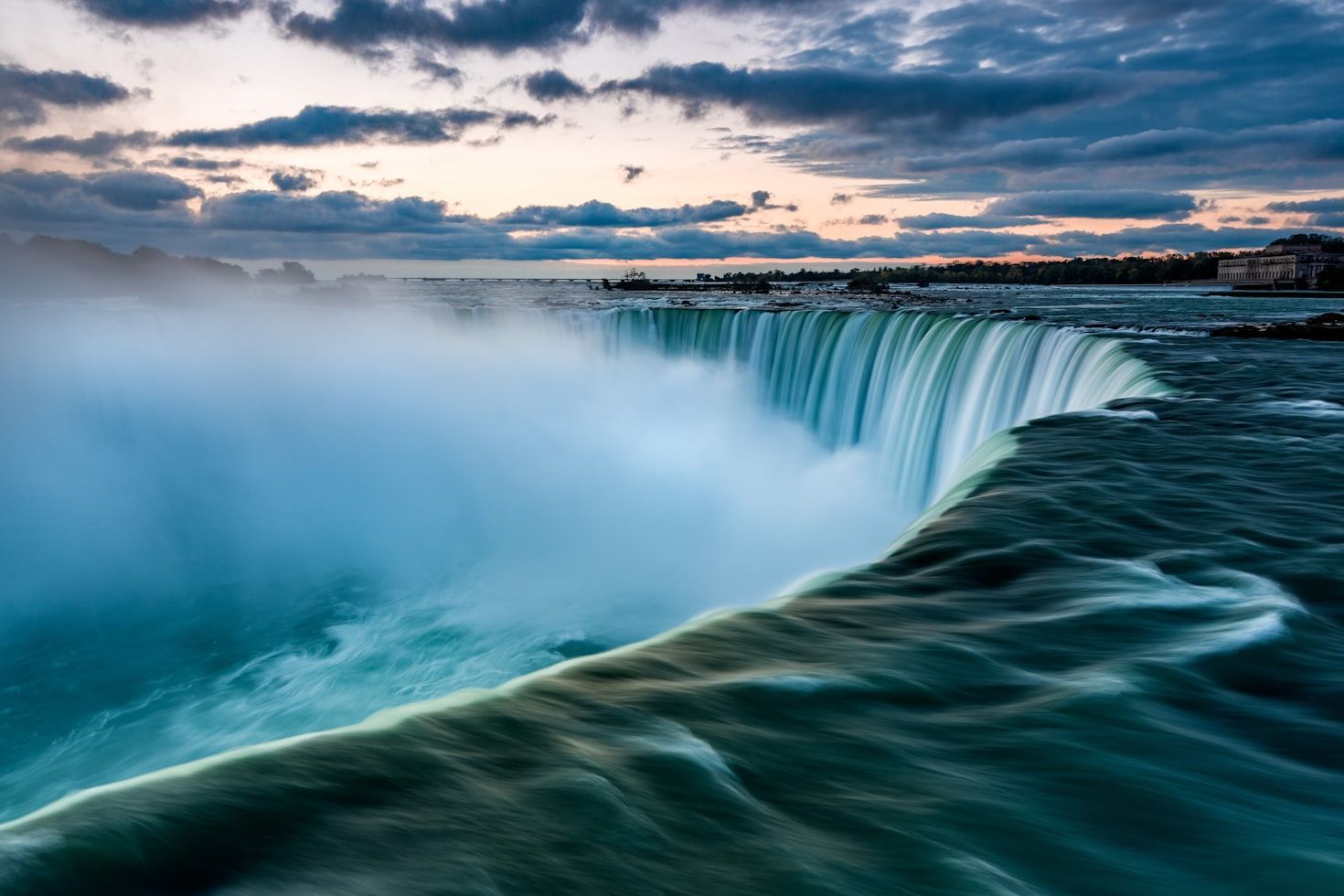
Niagara Falls takes its name from the nearby Niagara River, which derives from the Iroquois word Onguiaahra , meaning "the strait" or "narrow water." Unsurprisingly, given their breathtaking beauty, the falls have long been a significant natural landmark for both Indigenous peoples and European explorers.

12
Adirondack Mountains

Image: Ty Finck

The Adirondack Mountains in New York are believed to take their name from the Algonquin word adirondacks , meaning "they eat trees" or "bark eaters." This name likely referred to another group of Indigenous inhabitants who relied on the region’s lush forests for food and shelter.

Explore more American facts

Choose your favorite category!

General
General

As American as apple pie—the very best America has to offer!

Culture
Culture

Delve into the astounding richness of American lore.

Geography
Geography

Hop in and explore vast and diverse American landscapes.

History
History

Discover the key moments that shaped the United States.