Culture Culture 6 min read

An American legend

“Chairman of the Board”: How much do you know about Frank Sinatra?

Image: Alesan Aboafash

Frank Sinatra truly needs no introduction: from "The Sultan of Swoon" to "Ol’ Blue Eyes," we could fill this entire introduction only with all the iconic nicknames Sinatra collected throughout his life. This singer and actor’s amazing talent and magnetic personality have truly cemented him as one of America’s most iconic artists. While his remarkable career is definitively too extensive to cover in this article, we have selected 10 moments in Sinatra’s life to celebrate the legacy of this groundbreaking American. Enjoy!

1
Early life

Image: Laith Abuabdu

Let’s start with the very beginning, in a small tenement in Hoboken, New Jersey. It’s no secret that Frank is one of the Garden State’s favorite sons, and we like to believe that the feeling was mutual. According to biographers, Sinatra developed his love of music at an early age, becoming interested in big band jazz and singers like Gene Austin and Bing Crosby.

By the time he was a teenager, Frank began singing professionally with a group called "the 3 Flashes," which renamed itself "the Hoboken Four" after Sinatra joined. A few years later, he became the lead singer of the band, which was conducted by Tommy Dorsey, one of the most influential figures in Sinatra’s early career.

2
Time to go solo

Image: Dushawn Jovic

In 1942, Sinatra convinced Dorsey to allow him to record a few solo songs ; these included some of his first hits, like "Night and Day" and "The Song is You." Impressed by the way these recordings sounded, Frank decided it was time to go solo. This was easier said than done, since his contract stipulated that he had to give Dorsey 43% of his lifetime earnings.

After a lengthy legal battle, Frank was able to become a solo artist , although his relationship with Dorsey never recovered. Part of their dispute included the fact that Sinatra offered Dorsey’s conductor, Axel Stordahl, five times his salary to sign with him and become his personal arranger.

3
"Sinatramania"

Image: Ethan Rougon

By the start of the 1940s, Frank’s popularity was soaring, and the whole country seemed to be enraptured by a wave of "Sinatramania." He topped the male singers' polls and was the quintessential idol of "Bobby Soxers," a subculture of teenage girls characterized for their fondness of popular music.

Perhaps this following anecdote can encapsulate how hard the "Sinatramania" had hit America: In 1944, Sinatra returned to the Paramount Theatre in New York after two amazing performances a few years earlier. The audience that gathered for that show was so massive that only 250 people were allowed to enter the theatre, while the remaining 35,000 protested outside. They were so determined to see "the Sultan of Swoon" that their rejection caused a riot known as the "Columbus Day Riot."

4
World War II

Image: Museums Victoria

Sinatra’s birth was a difficult one, and his eardrum was perforated during delivery. This condition made him ineligible for military service during the onset of World War II. However, he did serve his country by raising morale, traveling through Europe, and entertaining the troops towards the end of the war.

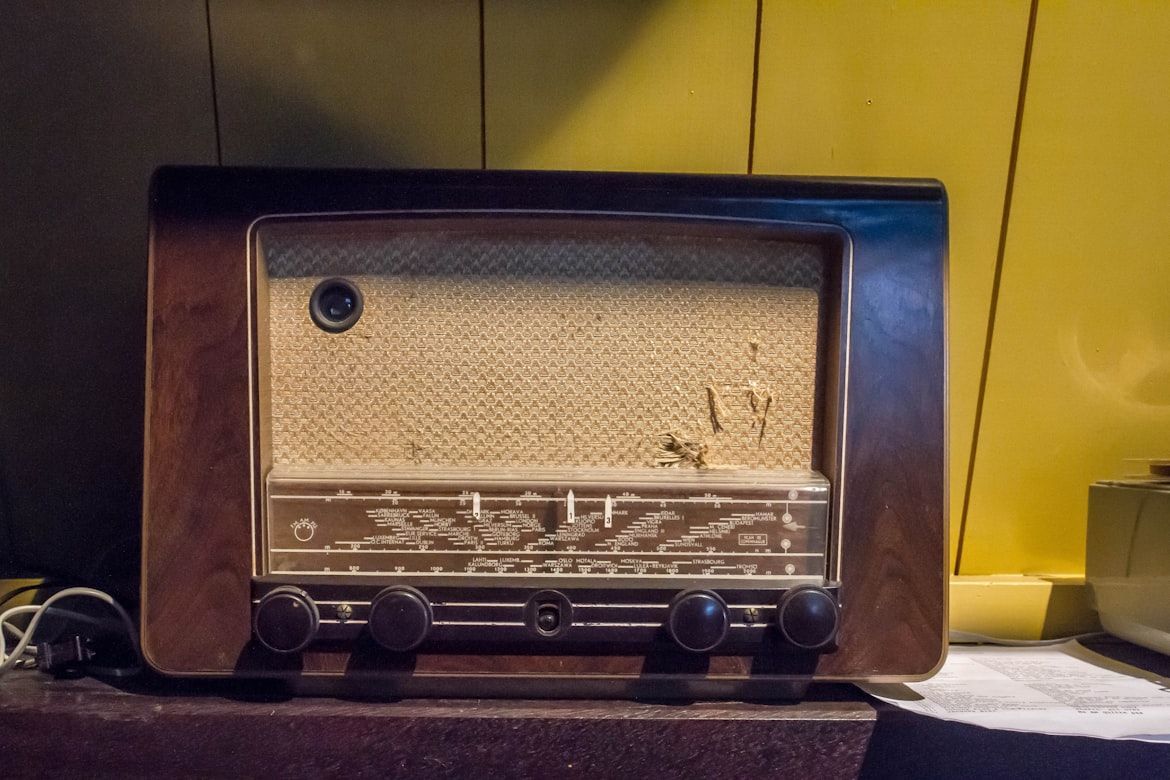
Frank performed in several USO tours alongside comedian Phil Silvers. Not only that, many of his radio performances with the "Andrews Sisters" harmony group were broadcast to the soldiers through the American Forces Radio service.

5
Acting career

Image: Los Angeles Times, CC BY 4.0

Sinatra’s acting chops are sometimes overshadowed by his singing career, which is an absolute shame. While he had small singing roles and cameos in 1940 films like Las Vegas Nights and Reveille with Beverly , his breakthrough came with the 1945 musical Anchors Aweigh , in which he starred alongside Gene Kelly and Kathryn Grayson. The film’s success and Academy Award nominations ensured a series of movies with Gene Kelly, including the now iconic On the Town in which Sinatra plays a sailor.

However, Frank’s acting credits are not limited to musicals that showcased his amazing voice; he starred in groundbreaking films like The Manchurian Candidate , High Society, and The First Deadly Sin . Not only that, he was the first choice to play the legendary Detective Harry Calahan in Dirty Harry , but he had to turn down the role. Picture this: There’s an alternate universe in which "The Voice" is the one that utters the film’s famous line, "Do you feel lucky, punk?"

6
The Rat Pack

Image: Los Angeles Times, CC BY 4.0

What’s life without a few friends? The term "rat pack" is an old New Yorker slang name used to describe a group of friends. However, today we use it to refer to a distinct group of actors and singers, the quintessential "Rat Pack" of which Frank Sinatra was one of the shiniest stars.

Alongside Frank, the Rat Pack included iconic singers like Dean Martin, Sammy Davis Jr., Judy Garland, Mickey Rooney, and Nat King Cole. According to legend, the group received its name from Humphrey Bogart and Lauren Bacall after they were seen returning from a night in Las Vegas. Many remember the original iteration of the classic heist film Ocean’s Eleven, which starred five members of the Rat Pack.

7
The Capitol years

Image: Dane Deaner

The 1950s were truly a Renaissance time for Sinatra. While interest in his music had slowly waned over the years, Frank saw the success of the 1953 film From Here to Eternity as an opportunity to revitalize his career. In that sense, that same year, the singer made a move that would prove to be essential in this revival: his signing with Capitol Records .

SInatra’s seven-year contract with Capitol produced some of this singer’s most beloved albums , including "Where Are You?" and "Come Fly with Me." One of the strongest elements behind these albums was arranger Nelson Riddle, who was wonderfully adept at matching Sinatra’s perfectionism.

8
Family life

Image: Jorge Moncayo

Let’s step away from the spotlight for just a moment and focus on Sinatra’s family life . Frank’s four marriages were highly publicized; some of them included Ava Gardner and Mia Farrow, two of the biggest actresses of their time. However, we have decided to instead highlight the most important things that came from his relationships: his children.

Frank had three children with his first wife, Nancy Barbato: Nancy, Frank Jr., and Christina, known as "Tina." Most biographers agree that, while his relationships may have been tumultuous, Frank was by all accounts a devoted father. Two of his children, Nancy and Frank Jr., went on to follow in their father’s footsteps and became singers themselves, with Nancy turning out to be one of the most prominent artists of the ‘60s and ‘70s.

9
Retirement

Image: Los Angeles Times, CC BY 4.0

As the saying goes, "All good things must come to an end," and in 1970, Sinatra announced he would be retiring from recording and performing. However, it should come as no surprise that his retirement was definitively short-lived or, at the very least, as packed with excitement as his career had been.

By the 1970s, Sinatra’s voice had grown coarsened after years of demanding use. However, this only added a new layer of depth to Frank’s singing; audiences loved the deeper and rougher tones he added to his performances. Not only that, in 1980, Sinatra starred in his final film The First Deadly Sin , an extraordinary goodbye to his acting career.

10
Legacy

Image: IrishFireside, CC BY 2.0

On May 14, 1998, Frank Sinatra bid farewell to the world. While he is surely missed, his outstanding legacy still lives on, so we thought dedicating this final entry to some of the many homages this American icon received would be a fitting tribute.

In 1995, to honor Frank’s 80th birthday, the Empire State Building was lit blue to show its appreciation for "Ol’ Blue Eyes." Ten years after his death, the United States Postal Service issued a postage stamp honoring Frank, and Congress passed a resolution declaring May 13 as "Frank Sinatra Day."
General General 2 min read

Shocking the neighbors

These things are not as common outside the US

Image: Jennifer Kalenberg

America is a land of unique customs and rituals, many of which leave outsiders scratching their heads. From super-sized food to partying habits, these traditions reflect the country’s history, creativity, and widespread patriotism. Here are 10 American practices that are often admired, misunderstood, or simply confusing to people abroad.

1
Tipping everywhere

Image: Sam Dan Truong

Americans tip for almost every service, from coffee to taxis. The standard is 15–20% of the bill. Unlike most countries where service charges are included, tipping is often expected and essential for workers’ income.

Restaurants, bars, and even hair salons rely on it. Since this is not as common elsewhere, tourists often miscalculate or under-tip, causing awkward interactions.

2
Super-sized portions

Image: Nima Naseri

Restaurant portions in the U.S. are notoriously large, often doubling or tripling international standards.

This stems from both historical abundance and marketing strategies that equate quantity with value. All-you-can-eat and combo meals reinforce the "more is better" mentality.

3
College tailgating

Image: Josh Applegate

Fans arrive hours before football games, grilling and partying in parking lots. Tailgating mixes sports passion with social gatherings, showing regional pride and university loyalty.

This uniquely American tradition often shocks outsiders with the devotion shown to local sports.

4
Black Friday mania

Image: Artem Beliaikin

Originating in Philadelphia in the 1960s, Black Friday marks the start of the holiday shopping season. It’s a consumer spectacle tied as much to capitalism as to tradition.

Retailers use extreme discounts to generate sales; the frenzy often leaves international observers bewildered by the ensuing chaos.

5
Wearing patriotic clothes year-round

Image: Shari Sirotnak

Americans often wear flag-themed clothing even outside national holidays. The practice intensifies during major sporting events, but displaying the flag as apparel reflects civic pride in everyday life.

For many outsiders, wearing a flag as clothing seems unusual, yet this custom embodies American individualism and patriotism.

6
Driving everywhere

Image: why kei

Unlike many countries with extensive public transit, Americans rely heavily on cars. Suburban expansion and urban planning favor personal vehicles.

Gas prices, infrastructure, and cultural identity reinforce driving as normal. Tourists accustomed to walking or trains find long drives mandatory, and as a result, the layout of U.S. cities is unusually spread out.

7
High school proms

Image: Long Truong

Proms evolved in the 20th century as a rite of passage. Teenagers dress formally for dances with elaborate rituals, including crowning kings and queens.

While other countries almost always have some form of graduation celebrations, the formality, expense, and emphasis on dating customs in American proms often confuse foreigners.

8
Obsession with college sports

Image: Riley McCullough

Universities dominate cities with massive stadiums and fanfare. College football and basketball inspire loyalty rivaling professional leagues.

The intensity is unusual internationally, where professional sports typically overshadow collegiate athletics.

9
Yard sales

Image: Clem Onojeghuo

Communities host sidewalk sales for secondhand goods. This tradition emphasizes recycling, community interaction, and bargain hunting.

This casual sale of used goods in public spaces is uncommon in many countries, making it a uniquely American practice.

10
Spelling bees

Image: Brett Jordan

Americans hold intense competitions where kids spell increasingly difficult words aloud. Spelling bees originated in the 19th century as educational contests, promoting literacy and vocabulary skills.

The National Spelling Bee, held annually since 1925, draws contestants nationwide and often surprises outsiders due to English’s tricky spelling rules.

History History 6 min read

LEADING THE WAY

Let's Remember 10 Iconic American Firsts in History

Throughout the history of the United States , many historical facts and events have taken place. But there's always a first time for everything , right? While things like space travel may seem normal today, it is important to remember that there was a time when it had never been done and was also unimaginable.

If you want to remember the American pioneers who changed history, read on! Today, we will commemorate 10 of the most iconic "firsts" that shaped our nation . Maybe you witnessed one of them!

1
The Everest

Image: Martin Jernberg

James Whittaker made history as the first American to achieve one of the most difficult things in the world.

In 1963 , Whittaker, then 34 years old , became the first American to reach the summit of the highest mountain on the planet, Mount Everest , as part of the American Mount Everest Expedition led by Norman Dyhrenfurth.

Facing challenging weather and low temperatures, Seattle-born Whittaker conquered the summit of the Himalayan giant, which stands at 29,035 feet high! Can you picture yourself on such an expedition?

2
The astronauts

Image: NASA

The 1960s definitely transformed history, marking a period when humanity first traveled into outer space. The first American to reach space was Alan Shepard on May 5, 1961 . After a successful flight of 15 minutes and 22 seconds, Shepard's spacecraft splashed down safely in the Atlantic Ocean. Shepard didn’t complete an orbit of Earth on that trip, but John Glenn arrived and became the first American to orbit our planet on February 20, 1962 .

Of course, these amazing achievements were necessary for Neil Armstrong to take his historic step onto the lunar surface on July 20, 1969 , becoming the first American -and the very first human- to do so.

Want to know who was the first American woman in space ? The title went to Sally Ride , who reached outer space in 1983 .

3
The Skyscraper

Image: Pedro Lastra

Yes, skyscrapers dominate the skyline of many cities in our country today. However, there was a time when there were none. And the title of America's first skyscraper went to the Home Insurance Building in Chicago.

Designed by architect William Le Baron Jenney and completed in 1885 , it was the first to use a structural steel frame. Although iconic and unique in its time, it was demolished in 1931 to build what is now the Bank of America Building.

4
The Nobel

Image: caleb weiner

You'll be happy to know that the first Nobel Prize won by an American was in the Peace category. It was awarded to none other than Theodore Roosevelt in 1906 for his role and contribution to ending the Russo-Japanese War.

Roosevelt stood out precisely for inviting representatives from Russia and Japan to a peace conference in Portsmouth, New Hampshire, in 1905. Of course, the task was not an easy one, but Teddy was determined. His efforts ended in a historic peace agreement known worldwide as The Treaty of Portsmouth.

5
The flight

Image: History in HD

The Wright brothers ' story is one of the most famous. Coming from Dayton, Ohio , these two brothers are credited with inventing the first powered airplane and making the world's first successful flight with it.

But which of them was the first American to fly? Well, it seems Wilbur Wright, the older of the two, gave the honor to his younger brother. So, it was Orville who made history as the first to pilot the successful aircraft.

Orville piloted the first sustained flight of a powered aircraft in December 1903 near Kitty Hawk, North Carolina . His flight lasted 12 seconds and flew a distance of 120 feet. True pioneers!

6
The University

Image: Somesh Kesarla Suresh

388 years is a really long time, right? Well, that's the amount of time that has passed since the first university was founded in the territory of what would eventually become the United States of America.

We are talking about the prestigious Harvard University , born in 1636 in what was then the Massachusetts Bay Colony , with the aim of training clergy. Originally called "New College," the institution was later renamed Harvard College in honor of John Harvard , its first major benefactor.

7
The baseball team

Image: Caitlin Conner

Whether you prefer football, ice hockey, baseball, or basketball, it's undeniable that these four sports best represent our nation.

But only one has earned the title of "America's pastime." Of course, we're talking about baseball . One of the most popular sports today, it was also the earliest to establish a professional team.

The Cincinnati Red Stockings , established in 1869 , were the first professional baseball team in our country. When all the teams were still amateur, the Red Stockings became the first team with paid players, leading the way for the rest of the teams and for the eventual establishment of the National Association of Professional Base Ball Players in 1871.

8
The Flag

Image: Samuel Branch

Every independent country needs a flag to symbolize its identity and ideals. The US flag , in particular, has gone through a series of changes that show the nation's journey through history. First hoisted by George Washington on January 1, 1776 , at Prospect Hill in Somerville, Massachusetts , our first National Flag was born during the years of the Revolution .

Known as the "Continental Colors," this unofficial flag was adopted in 1775 as a symbol of the Continental Army . Its design had 13 red and white stripes , symbolizing the 13 original colonies, and the Union Jack in the upper left corner.

As the Revolutionary War progressed, the Continental Congress considered a series of changes to our flag to better represent the united colonies and their desire for independence. Thus came the "Stars and Stripes" new design on June 14, 1777 , which replaced the Union Jack with 13 white stars, initially often arranged in a circle.

9
The Oscar

Image: Mirko Fabian

If you are a movie enthusiast , this fact is probably already in your memory. And if you're not, it's still a good fact worth knowing.

The first Academy Awards ceremony was held on May 16, 1929 , and featured nominations for classic films like The Racket and Seventh Heaven , both released in 1927.

But the movie that stole the show was Wings , also from 1927 , directed by William A. Wellman and starring Clara Bow, Charles Rogers, and Richard Arlen. This silent film about WWI was the very first to win the category then known as "Outstanding Picture," which today we call "Best Picture." It was notable for its realistic aerial battles and special effects of excellent quality for its time. If you haven't seen it yet, this is your cue to do so!

10
The National Park

Image: Austin Farrington

From expansive deserts to dense forests, and from delightful beaches to impressive mountains, our country's landscapes and biodiversity are truly amazing.

Many of these natural sites have earned the title of National Parks , which guarantees their protection and conservation for the joy of locals and tourists. And while today we have many national parks to visit, there was once a first.

The very first was the great Yellowstone National Park , designated by President Ulysses S. Grant on March 1, 1872 . Located in the states of Wyoming, Montana, and Idaho, this natural site set a precedent for the conservation of our land's natural areas. Have you already visited it?

Explore more American facts

Choose your favorite category!

General
General

As American as apple pie—the very best America has to offer!

Culture
Culture

Delve into the astounding richness of American lore.

Geography
Geography

Hop in and explore vast and diverse American landscapes.

History
History

Discover the key moments that shaped the United States.