General General 4 min read

Which one are you?

Beatniks, hippies, yuppies, and beyond: 10 subcultures decoded

Image: Cottonbro Studio

Unlike generations, which can be easily grouped by years, social labels attached to groups of people with similar interests are not as rigid. Their boundaries blur into each other, and intersections appear. Aesthetic reasons, like music and clothing, bind some of these groups, philosophical reasons bring together others, and some, like hipsters, don’t even recognize themselves as such. Do you recognize yourself as a member of one of the following subcultures?

1
Bohemians

Image: Kinga Howard

Bohemianism, an original subculture that ended up lending its name as an adjective often used to describe other subcultures, is a social and cultural movement that embraces a way of life away from society's conventional norms and expectations . The term comes from the French bohème , and it was used to describe mid-19th-century non-traditional lifestyles, especially those of artists, writers, journalists, musicians, and actors.

Today, the term is used to describe anyone who shows disdain for money, dresses in hippie fashion (more on this later), and appreciates everything art-related.

2
Greasers

Image: Alberto Bigoni

Think John Travolta in _Grease_—yes, Grease . Think Biff Tannen in the 1950s segment of Back to the Future . Greasers emerged in the 1950s and early 1960s from predominantly working-class and lower-class teenagers and young adults in the United States and Canada.

An interest in cars, motorcycles, leather jackets, jeans, and rock music was the common theme among greasers. According to some sources, the subculture’s name was applied to its members partly because of their characteristic greased-back hair.

3
Beatniks

Image: Clem Onojeghuo

The first subculture on this list to adopt the adjective "bohemian," beatniks were a mid-20th-century social movement that embraced an anti-materialistic lifestyle, rejecting consumerism and expressing themselves through art, spirituality, drugs, and sexuality.

The term "beat" was first used by Jack Kerouac in 1948 to describe his group of friends and fellow writers, including Allen Ginsberg, William S. Burroughs, and Neal Cassady. Kerouac said that "beat" had multiple meanings, such as "beaten down," "beatific," "beat up," and "beat out." Beatniks are often stereotyped as wearing black clothing, and speaking in hip slang that incorporates words like "cool," "dig," "groovy," and "square."

4
Hippies

Image: Trevar Skillicorn-Chilver

One of the most famous countercultures of all time, hippies are deeply associated with the 1960s. The term "hippie" originally came from "hipster" (more on this later) and was used to describe the aforementioned Beatniks, who were "hip" to all things sophisticated and fashionable. In fact, early hippies adopted much of the language and values of the Beat Generation.

The festivals of Human Be-In (1967), Monterey (1967), and Woodstock (1969) popularized hippie culture, with its fashion and values influencing culture, popular music, television, film, literature, and the arts. Since the 1960s, mainstream society has assimilated many aspects of Hippie culture.

5
Mods

Image: Michael Schofield

The Mods were a group of stylish, London-based young men and women in the late 1950s, named for their preference for modern jazz. This subculture was known for its distinctive fashion, including tailor-made suits, as well as its love for music and scooters.

By the mid-1960s, their musical tastes had shifted toward rock and blues, with bands like The Who and Small Faces gaining popularity among Mods. Mod fashion was a defining element of the "Swinging London" era, and during this time, the subculture spread to other countries, becoming emblematic of the larger youth culture of the period.

6
Punks

Image: Viktor Forgacs

Another popular subculture, thanks in no small part to its striking visual component, is the punk movement, which encompasses music, fashion, ideologies, dance, film, and visual arts, among other forms of expression. Its strong anti-establishment views, stances on individual freedom, and DIY ethic make punks easy to identify.

Punk fashion includes T-shirts, leather jackets, boots, distinctive hairstyles such as brightly colored hair and spiked mohawks, as well as cosmetics, tattoos, jewelry, and even body modification.

7
Yuppies

Image: Nick Fewings

Anyone who has seen the movies Wall Street (the one with Charlie Sheen and Michael Douglas) or American Psycho knows what a yuppie is. The term stands for "young urban professional" and was coined in the early 1980s as a way to describe young professionals living in a city.

Those labeled as yuppies generally dislike the association, because this characterization often suggests a very materialistic approach to life in general and a cutthroat attitude towards the workplace environment.

8
Skaters

Image: Parker Gibbons

An offshoot of the punk subculture, skater culture rose to prominence in the 1980s when a massive drought in California left numerous empty pools, which skaters used to practice their sport. The rise of magazines like Thrasher and stars like Tony Hawk helped the movement transition from an underground scene to a mainstream sport.

Its aesthetics centered around the preferred type of clothes for skateboarding: baggy and sturdy pants, sneakers, and oversized shirts. Its music was shared by the punk and hardcore movements.

9
Straight Edge

Image: Evgeniy Smersh

Going deeper down the rabbit hole, we encounter the Straight Edge subculture, an offshoot of both skater and hardcore punk cultures. Its followers reject the excesses of the punk scene by abstaining from alcohol, tobacco, and recreational drugs . Many also refrain from casual sex, follow a vegetarian or vegan diet, and avoid caffeine or prescription drugs. The name "Straight Edge" was inspired by the 1981 song "Straight Edge" by the hardcore punk band Minor Threat.

Overall, Straight Edge culture promotes a lifestyle of self-discipline, health, and community, and it continues to evolve while maintaining its roots in the hardcore punk scene.

10
Hipsters

Image: John Fornander

The final entry on the list is dedicated to the most modern subculture in it: the hipsters. Mostly associated with perceived upper-middle-class white young adults who gentrify urban areas , hipster culture has been critiqued for lacking authenticity and focusing on consumption.

As mentioned earlier, members of this subculture typically do not self-identify as hipsters, as the term’s connotations are often unflattering. It is no coincidence that the term evokes the previously mentioned Beatniks, as that subculture can be seen as an early precursor to hipster culture.


History History 4 min read

American athletic history

Who did America defeat in "The Miracle on Ice"?

Image: Fredrick Lee

Sports have a remarkable way of keeping us on the edge of our seats during an exciting game, filling our hearts with joy when we see our country claim victory. With that in mind, the sports moments we’ve selected are among the most iconic American wins in history. However, we’re putting a twist on this: While we undoubtedly celebrate the incredible Americans behind these achievements, we’ve decided to highlight those who were defeated by the United States in these legendary contests.

Can you remember the teams and athletes who fell to America in these unforgettable moments? Let’s find out! You’ll find the answers at the end of this quiz, so keep reading!

1
The Miracle on Ice

Image: Jerry Yu

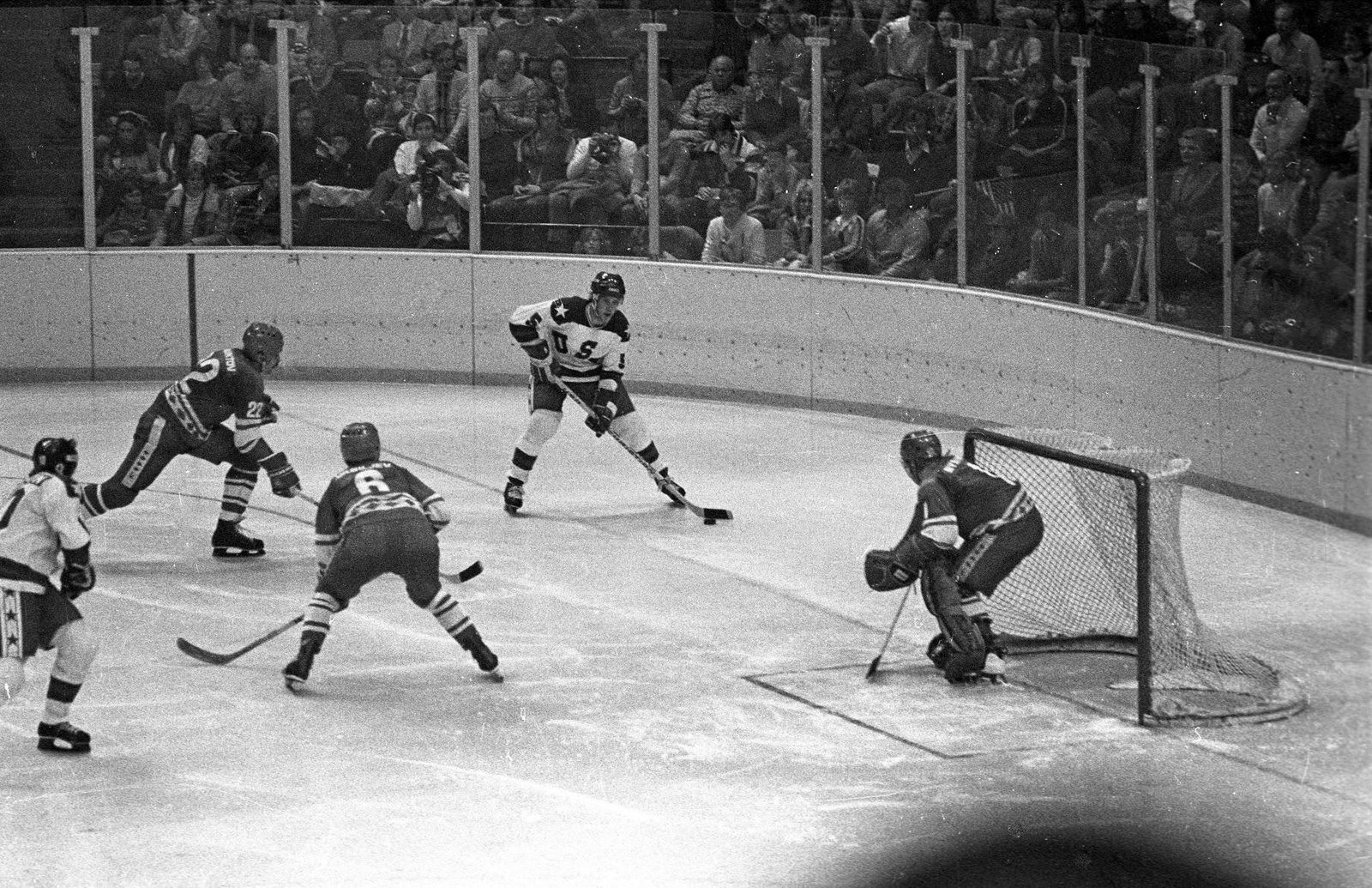
We begin with an unforgettable underdog story. At the 1980 Winter Olympics in Lake Placid , New York , the United States faced what many considered a leviathan in ice hockey history. Adding to the challenge, the American team was composed mostly of 21-year-olds, making it the youngest U.S. squad in Olympic history . Yet, against all odds, these determined players triumphed over a heavily favored opponent in what became known as the " Miracle on Ice ."

Do you remember which formidable rival they defeated?

2
Rumble in the Jungle

Image: Attentie Attentie

Many sports historians consider " The Rumble in the Jungle " to be the greatest boxing match in history. Held in 1974 in what is now the Democratic Republic of the Congo, this legendary bout cemented Muhammad Ali’s place in boxing history. Even more impressively, Ali’s victory came against an undisputed and undefeated heavyweight champion, whom he knocked out in the eighth round.

Though he is not as widely remembered as "The Greatest," this American boxer is still regarded as one of the best fighters of his generation. Can you guess his name?

3
Michael Jordan’s Last Shot

Image: Mike Von

It’s no exaggeration to say that Michael Jordan completely revolutionized basketball worldwide. Over his 15-season career , he delivered countless jaw-dropping moments. As you’d expect, choosing just one was no easy task, but we ultimately selected what is now known as Michael’s "Last Shot."

In the final seconds of the 1998 NBA Finals against the Utah Jazz , Jordan sank a game-winning shot that secured the Bulls’ victory. While you already know which team he scored against, there’s a certain player who is always featured in retellings of this iconic moment. Do you know who we’re talking about?

4
Serena Williams’ Golden Medal in London

Image: Josephine Gasser

What can be said about Serena Williams that hasn’t already been said? Arguably the greatest American tennis player in history, Williams’s career is a collection of remarkable achievements. However, we’ve chosen to highlight one of her later triumphs—her dominant performance at the 2012 London Olympics , where she became only the second woman to complete a career Golden Slam in singles.

Even more impressive was the way she secured her victory, defeating her opponent 6-0, 6-1 to claim the gold medal. Do you know who she faced in that historic match?

5
Michael Phelps's record-breaking achievements in Beijing 2008

Image: Gentrit Sylejmani

During the 2008 Beijing Olympics, the world was introduced to Michael Phelps , an affable kid from Baltimore who achieved the impossible: breaking seven world records and earning eight gold medals —the first step in his journey to becoming the most decorated Olympian of all time.

Phelps’s incredible feats often overshadow his competitors, so we thought we’d take a moment to recognize the swimmers who came close but couldn’t overcome " The Baltimore Bullet ." Do you remember them?

Answers:

6
Miracle on Ice - Soviet Union

Image: Markus Spiske

If you guessed that the Soviet Union was the Goliath defeated by the American team at the Winter Olympics, you were right! At the time of the match, the Soviet team was a four-time defending gold medalist and the heavy favorite to win. Although the United States pulled off a legendary upset, the victory didn’t come easily . The game was a thrilling showdown , with the American team scoring the decisive goal exactly 10 minutes before the final buzzer.

7
Rumble in the Jungle - George Foreman

Image: Johann Walter Bantz

Known as " Big George ," Texas-born boxer George Foreman was defeated by Muhammad Ali in the legendary "Rumble in the Jungle." As mentioned earlier, Ali’s victory was even more remarkable given Foreman’s dominance in the sport—he was a two-time world heavyweight champion , an Olympic gold medalist , and the favorite to win the match. Today, Foreman is remembered not only for his boxing achievements but also for his entrepreneurial success: Since 1994, his iconic George Foreman Grill has sold over 100 million units.

8
Last shot - Bryon Russell

Image: Markus Spiske

The play that would become known as " The Last Shot " began when Michael Jordan stole the ball from Karl Malone and raced down the court. Before taking the shot, he swiftly dodged Utah Jazz defender Bryon Russell , causing him to trip and fall. By the time Russell got back on his feet, the ball was already soaring through the air, swishing through the net and sealing victory for the Bulls.

9
Serena Williams’ Golden Medal - Maria Sharapova

Image: Valentin Balan

Throughout their careers, Serena Williams and Maria Sharapova maintained a high-profile rivalry as two of the biggest names in women’s tennis. Fortunately for tennis lovers everywhere, the 2012 Olympics brought these titans head-to-head, and while Serena dominated the match , it was far from the end of Sharapova’s career—she continued to showcase her talent until retiring in 2020.

10
Michael Phelps - László Cseh and Milorad Čavić

Image: Serena Repice Lentini

As mentioned earlier, Michael Phelps' historic victories at the 2008 Beijing Olympics were unprecedented, and narrowing it down to just one of his competitors wouldn't do justice to the event. Instead, we’d like to highlight a few remarkable runner-ups. Hungarian swimmer László Cseh secured multiple silver medals, often finishing just fractions of a second behind Phelps . Meanwhile, Serbian swimmer Milorad Čavić lost the 100m butterfly by an astonishing one-hundredth of a second —though he still managed to break the European record in the process.

General General 5 min read

HAUNTED CELEBRATION

Unmasking Halloween: the origins behind our spookiest traditions!

Image: Łukasz Nieścioruk

It’s that time of the year when all things spooky reunite to provide everyone with a fair dose of fun and jump-scares. Halloween in the U.S. is full of quirky traditions—from trick-or-treating to carving pumpkins and stuffing ourselves with candy. Above all, it’s a magical time of the year. But do you know where these traditions come from? Why do we use black and orange? Or why do children dress up? Join us as we go through 10 Halloween traditions and their origins. Are you ready?

1
Choose a villain

Image: Paige Cody

If reason were to govern our thoughts on the matter, no one could deny that seeing people of all ages dressed up as their favorite villains is a weird thing. We’ll discuss the treating part later, but let’s get into the costumes first.

This tradition has deep roots, and it goes all the way back to the Middle Ages and the ancient festival of Samhain. Now what was the purpose of the costumes? People used to believe that spirits roamed the earth on this particular night so, dressing up in costumes was the way to ward off these phantoms. Quite original, don’t you think?

2
Apple bobbing

Image: Nathan Dumlao

Among the spooky traditions, there is also one that relates to romance and love: bobbing for apples, and we’ve got Great Britain to thank for it.

In this game, an apple represented a potential husband, and, faith for young women who wished to marry was settled by how many attempts it took her to retrieve an apple. One bite meant jolly matrimony. Two bites, a not-so-long-lasting courtship. And three… Well, that relationship was doomed altogether.

Samhain was celebrated at the end of the harvest, and when Irish immigrants brought their costumes to America, this game fit fall festivities to perfection becoming a beloved Halloween game.

3
Jack-o’-lanterns

Image: Szabó János

Who is Jack, and why was he immortalized in a Halloween lantern? Well, it is all, of course, part of a curious legend. As the story goes, Jack tricked the devil twice. The first time, he tricked the Devil into becoming a coin and then, by making him promise not to claim his soul. However, all these tricks only brought nasty consequences—neither hell nor heaven wanted him.

So what happened? He was left to wander the earth with only a burning coal inspiring a carved-out turnip to light his way.

Turnips were just the start for the Scottish and Irish, soon they turned to beets and potatoes, and the tradition took the shape of pumpkins for Americans.

4
Trick or treat yourself!

Image: Nick Fewings

We’ve discussed the costumes, so let’s dive into the sweets. What’s the origin of knocking on doors and asking for candy?

When the Catholic Church established All Souls’ Day, in the Middle Ages, the costume tradition remained and a new one was added: knocking on doors and offering prayers for the dead in exchange for food. This was a practice called "souling."

But souling also suffered some changes and, in modern times, it evolved into what we know as "trick-or-treating," an activity in which children go door-to-door promising mischief if they don’t receive candy. Now you know this, we bet you’ll always give treats away!

5
Black cats, good or bad?

Image: Adél Grőber

In some cultures, spotting a black cat is a one-way ticket to destruction. In others, a black cat is a good luck omen, a sign that you’ll even find love. However, in America, black cats are part of the first group and have become a key symbol in Halloween celebrations and decorations.

Why is that? Because, in the Middle Ages, these poor animals were associated with witches and witchcraft. They were believed to have powers and to be connected to the evil spirits roaming the earth. True or not, they certainly add to the eerie atmosphere of Halloween, don’t you think?

6
Black and orange

Image: Bee Felten-Leidel

Have you ever wondered why we use these particular colors during the Halloween season? Well, the choice was not random at all, it has to do with the meaning behind orange and black.

For one, orange is related to the autumn season, and the end of the harvest (the original time of the Celtic celebration).

Black, on the other hand, brings in the spookiness and the mystery that we all love about Halloween night. It represents the color of the night sky, the shadows, and all things that add to the eerie atmosphere of the evening.

7
Haunted houses

Image: Bee Felten-Leidel

This tradition reveals the true essence of the Halloween spirit: to get as many scares as one can in a single night. All across America, on October 31st, families get their houses ready to invite people over for a thrilling experience.

Haunted houses aim to evoke tension and fear through ghostly figures, spooky decorations, dimmed lights, and chilling sounds with special effects. Have you ever visited one?

8
Bonfires

Image: henry perks

Bonfires, another tradition inherited from the Celtic celebration, are less common but they are still a Halloween tradition. As you can imagine, the original intention of the bonfires was to ward off evil spirits and to honor the Gods.

In the more modern Irish and Scottish traditions, the bonfires were part of a protective and communal custom that later made its way to America. In turn, this tradition has only remained to add warmth and a sense of togetherness to the holiday.

9
Candy Frenzy

Image: Mary Jane Duford

If you ask any child, candy is the best reason to celebrate Halloween. And we can’t blame them— they get to dress up, knock on doors, and get dozens of candies they will later exchange and eat in the company of their loved ones.

In our country, it’s not just the children or the houses who get ready for Halloween—the Marketing industry does too! Every year, countless candy brands (any brand really) adapt their products to make them Halloween-themed. The season kicks off when your local supermarket hangs those spiderwebs up and you start spotting black and orange packaging all over!

10
Scary stories

Image: Nika Benedictova

After collecting all the candies that were rightfully theirs for dressing up, children and young adults all over the country get together to end the night devouring their treats and immersing themselves one last time in the eerie atmosphere: It’s time for the spine-tingling tales.

No Halloween celebration is complete without a good dose of scary stories, fables of ancient times with mysterious characters and details that send shivers down the listeners’ spines. Why? For the sake of fear, after all, Halloween night is all about the supernatural!

Explore more American facts

Choose your favorite category!

General
General

As American as apple pie—the very best America has to offer!

Culture
Culture

Delve into the astounding richness of American lore.

Geography
Geography

Hop in and explore vast and diverse American landscapes.

History
History

Discover the key moments that shaped the United States.