General General 4 min read

DID YOU KNOW THESE 10 REGIONALISMS?

Asking for a pancake in Michigan: 10 American foods with varying names

Image: charlesdeluvio

Like love, food is a universal language that bonds us together through shared experiences. However, much like love, the world of food and dishes can also change its names from place to place. Listed below are ten examples of everyday foods that are known by different names in various parts of the country. Stick around until the end, and you will learn some curiosities, including where you should ask for a mango if you want a bell pepper!

1
Pancakes

Image: Ala

Imagine you are a tourist in Michigan and decide to go for pancakes. You enter a suitable establishment, sit at the counter, and ask… what, exactly? Yes, most people call them pancakes, and there is a fair chance that you will receive just that without further questions, but if you want to speak like a local, you will ask for flapjacks .

The "flap" part of flapjack is derived from the word the British used to mean "flip." As for the "jack" part, historians say it may refer to the small size of the pancake because "jack" referred to something that was small. You’ll hear pancakes more in the North and flapjacks in the South, but there are exceptions, such as the Flapjack Shack in Traverse City, Michigan.

2
Dessert Toppings

Image: Kate Trysh

For many Americans, dessert toppings for ice creams and milkshakes are like cheese on a pizza: a must. If you happen to be one of them and are visiting New England, you should know that the local word for toppings is " with jimmies. "

Jimmies are a subgroup of the larger category of dessert toppings known as sprinkles, although people across the U.S. might use the terms interchangeably. Jimmies are cylindrical sprinkles, but some people use the word to refer specifically to chocolate or colored varieties. As for round sprinkles, they are technically marketed as nonpareils.

3
Cold Sandwiches

Image: Allen Rad

The word "sandwich" has come to represent practically any food that is stuffed between two pieces of bread and can be eaten—usually—with your hands. But in certain regions of America, this ubiquitous food item goes by different names.

Pennsylvania has its own term: hoagie . Back in the day, the Italian-American community lived in an area called Hog Island, and local cooks were known for their big "Hog Island Sandwiches," which eventually became known as "hoagies." In New England, many people call a sandwich a grinder . That’s because it’s traditionally made from Italian bread, which has a thicker crust than the typical sandwich bread.

4
Stuffing or Dressing?

Image: Louis Hansel

In the northern parts of the U.S., stuffing refers to the thick mixture of seasoned breadcrumbs or croutons often used to fill poultry dishes.

But, in the southern parts of the country, the word used to describe that is dressing . Yes, the same word that is used in the North to describe any kind of liquid topping for salads. It can be confusing, right?

5
Pop or Soda?

Image: Taylor Swayze

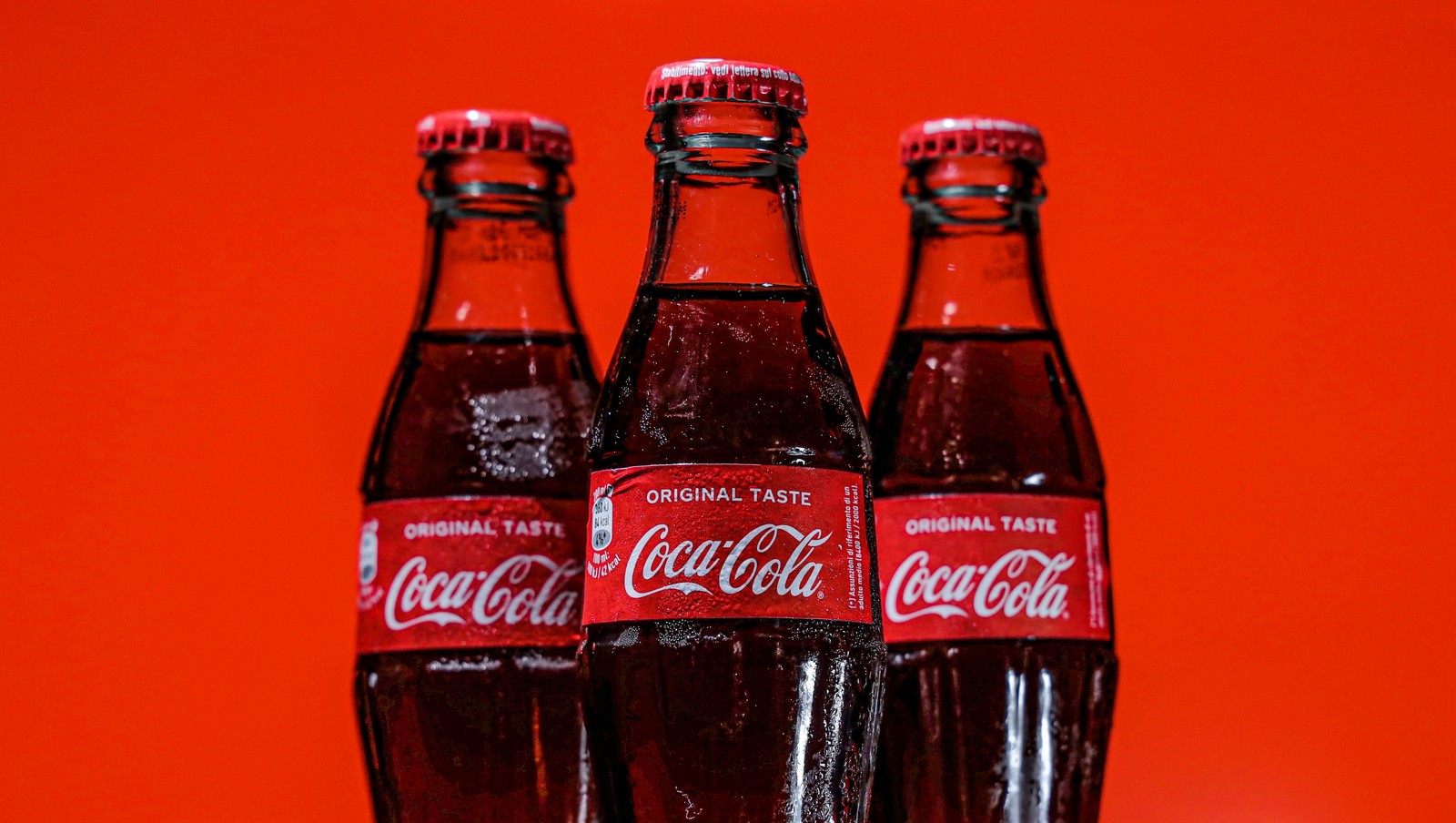
Soft drinks are referred to by different names in different parts of the country. If you are on the East Coast, along the Illinois-Missouri border, in southeastern Wisconsin, California, or nearby areas, you probably call it soda .

However, if you are from the Great Plains region or the Midwest, you likely refer to it as pop . And, if you refer to it as Coke or cola —whether it’s Coca-Cola or something else—you’re most likely from the South.

6
Jelly donuts as Bismarck

Image: Leon Ephraïm

Jelly donuts are quintessentially American. These delicious pastries filled with sweet jelly are everywhere—and for good reason. However, in the midwestern region of the country, as well as in Alberta and Saskatchewan in Canada, jelly donuts have a different name altogether.

That is because the German immigrants who settled in the region named the dessert "Bismarck" after the 19th-century Prussian chancellor, Otto von Bismarck because those pastries were a favorite snack of his.

7
Milkshakes as "frappes"

Image: Sebastian Coman Photography

A milkshake and a frappe are pretty much the same thing across most of the country—and even the world, we dare say. However, that’s not the case in New England. If you were to ask for a milkshake in that area, you would receive a slightly different—but equally delicious—beverage.

Nearly everywhere else in the U.S., a milkshake is made with milk, ice cream, and syrup blended together. But in New England, that's a recipe for a frappe . A milkshake in that part of America consists of just milk and syrup, shaken or blended until a foamy head appears.

8
Casseroles as a hotdish

Image: sheri silver

A casserole is a warm dish made by layering meat, vegetables, and noodles, along with a can of condensed soup thrown into the mix and then taken to the oven. However, in Minnesota, that same recipe is called a hot dish.

According to Howard Mohr, author of How to Talk Minnesotan , "A traditional main course, hotdish is cooked and served hot in a single baking dish and commonly appears at family reunions and church suppers."

9
Poached Egg vs. Dropped Egg

Image: Unsplash

New England has appeared a couple of times already on this list, and it’s about to make another appearance. In most parts of the country, the cooking technique of gently dropping an egg into boiling water is called "poaching an egg."

But in New England, the name for this technique has a much more literal term, calling this particular preparation a dropped egg .

10
Peppers and Mangoes

Image: Paul Morley

We’ll close this list with perhaps the most curious case of regional naming we came across. In the Midwestern region of the country, a "mango" does not refer to the tropical fruit commonly known as a mango.

Instead, if a midwesterner asks for a mango at a local grocery store, they will receive a mild, green bell pepper . The suggested explanation for this is that as green bell peppers ripen, they develop red-gold splotches that make them look similar to mangos.

General General 3 min read

What’s in a nickname?

Did you know the stories behind the nicknames of these Americans?

Image: Capitol Records (File No. 3860-25)

Nicknames can be affectionate, teasing, intriguing—or all of these at once. Who comes up with the labels that remarkable people end up carrying forever, and what makes them stick? Here, we explore a list of quirky stories behind some of the most colorful nicknames in American history.

1
"The Chairman of the Board" – Frank Sinatra

Image: Ethan Rougon

Frank Sinatra co-founded Reprise Records in 1960, giving him full creative control over his music. The nickname "Chairman of the Board" was first used by radio host William B. Williams and quickly caught on. Although Sinatra didn’t particularly love it, the nickname came to symbolize his power and influence in the music industry.

2
"His Accidency" – John Tyler

Image: Library of Congress

The 10th U.S. president earned this snarky nickname after unexpectedly taking office in 1841, when William Henry Harrison died just one month into his term.

It was the first time a vice president had assumed the presidency due to a president’s death, and many questioned the legitimacy of his authority. His critics called him "His Accidency," a somewhat unfriendly pun that stuck.

3
"The Sphinx of the Potomac" – Calvin Coolidge

Image: Lea Kobal

President from 1923 to 1929, Coolidge was notoriously silent and stoic. His reluctance to speak in public and his poker-faced demeanor earned him the nickname "The Sphinx of the Potomac," a nod to the famous Egyptian statue and his Washington, D.C. post. One oft-repeated anecdote claims he once remarked, "I have nothing to say."

4
"The Boss" – Bruce Springsteen

Image: Jose Antonio Gallego Vázquez

Bruce Springsteen earned this nickname in the early days of playing Jersey Shore clubs, where he was responsible for collecting and distributing gig money to his band. Originally an internal nickname within the group, it quickly caught on with the media. Ironically, Springsteen has admitted that he’s never really liked being called "The Boss."

5
"The Mad Stork" – Ted Hendricks

Image: Wynand Uys

This Hall of Fame linebacker for the Raiders stood 6’7" and had a long, lanky build. His towering figure and unpredictable style of play earned him the nickname "The Mad Stork." Despite the unusual moniker, he was a feared and legendary player in the NFL.

6
"The Snake" – Ken Stabler

Image: Timothy Dykes

Another Raiders legend, quarterback Ken Stabler, earned the nickname "The Snake" from his college coach after a long, twisting touchdown run. The name stuck because he became known for his slippery, cool-headed play under pressure.

7
"Jane the Grabber" – Hester Jane Haskins

Image: sombre

A dark figure in 19th-century New York, Hester Jane Haskins was a "procuress," luring women with promises of work and then forcing them into brothels. Her nickname, "Jane the Grabber," became infamous in the press.

8
"The Black Swallow of Death" – Eugene Bullard

Image: Heather Wilde

Born in Georgia and later a French WWI pilot, Eugene Bullard was the first African American military pilot. He earned the nickname "The Black Swallow of Death" for his fearless flying and deadly accuracy. Despite his heroism, he still faced racial discrimination upon returning to the U.S.

9
"Little Miss Sure Shot" – Annie Oakley

Image: Jp Valery

Annie Oakley was a folk heroine and a famed sharpshooter from an early age. She earned the nickname "Little Miss Sure Shot" from the Native American leader Sitting Bull, who bestowed it after watching her flawless shooting in Buffalo Bill’s Wild West show.

10
"Kid Gloves" – Benjamin Harrison

Image: Aaron Lefler

Benjamin Harrison, the 23rd president, frequently wore soft kid-leather gloves in public due to hand ailments. Political opponents seized the opportunity to mock his stiff demeanor and perceived elitism, dubbing him "Kid Gloves." The nickname pointed not only to his physical appearance but also to his aloof attitude.

General General 5 min read

Survival foraging in America

These 10 plants could save you from starvation

Image: Alisa Golovinska

Ever felt those hunger pangs while hiking through the countryside and wondered if you could forage to fuel up in an emergency? You absolutely can—if you know where to look. America is blessed with a variety of wild edible plants that could help you out in a pinch—and maybe even add a fresh twist to your next salad. From versatile cattails to delicious blackberries, nature’s pantry offers a surprising amount of nutrition to those who know what to seek. But remember, not every plant is safe, so don’t just sample everything you see. That’s why we’ve compiled this list of 10 common wild edible plants in the U.S. to help you forage smartly!

1
Cattails

Image: Vlad Tchompalov

If you’ve ever seen a cattail and thought it looked kind of yummy, you were on the right track! Cattails grow abundantly in marshy areas across the U.S., and nearly every part of this plant is edible. Often called the "supermarket of the swamp," cattails are incredibly rich in carbohydrates and are a highly versatile food source. These plants not only provide nutrition but also materials for shelter and fire-starting, making them a top resource for wilderness survival in America.

The roots, once cleaned and cooked, have a potato-like quality and can also be dried and ground into flour. Impressively, they even outperform potatoes in starch yield per acre. Young shoots are edible as well, offering a fresh bite when raw or a tender taste when boiled, much like asparagus.

2
Dandelions

Image: Keegan Houser

Often dismissed as a pesky weed, dandelions are actually among the most nutritious plants you can find in the wild. In fact, dandelions are considered even more nutritious than broccoli or cabbage! Every part of the dandelion is edible, from the leaves to the roots. With a taste and texture similar to chicory, the leaves are packed with vitamins A and C and be eaten raw in salads or cooked like spinach.

The bright yellow flowers can also be used to make tea, while the roots can be roasted as a coffee substitute. Dandelion tea is loaded with powerful antioxidants, including beta-carotene and polyphenols, and studies suggest it may benefit heart health.

3
Wild Asparagus

Image: Gil Ndjouwou

Who knew you could harvest your own asparagus in the wild? Wild asparagus grows across much of the U.S., particularly in moist, sunny areas. While it looks similar to its cultivated cousin, wild asparagus tends to be thinner and tougher. When foraging, look for young shoots, which are more tender and can be eaten raw or cooked.

Like its commercial counterpart, wild asparagus is high in fiber and vitamins, offering a nutritious snack or even a potential side dish in a survival situation.

4
Acorns

Image: Annie Spratt

You’re likely already familiar with acorns, the nuts of oak trees. Found abundantly across the U.S., particularly in forests and woodlands, these wild nuts are indeed edible after some processing. Acorns contain bitter tannins, which can be toxic and need to be removed by repeated boiling or soaking in water.

Once safe to eat, acorns can be either roasted or ground into flour. Though they don’t taste like much, they’re packed with carbohydrates, fats, and proteins. Historically, acorns were a staple food for Native Americans and ancient cultures worldwide, proving their value as a survival resource.

5
Cactus (Prickly Pear)

Image: George Pagan III

In the arid landscapes of the American Southwest, prickly pear cacti offer both nourishment and hydration. The pads (nopales) and the fruit (tunas) are not only edible but are also staples in Mexican cuisine.

The cactus fruit, known as a prickly pear, is super sweet and can be eaten raw right off the plant. Depending on ripeness, the flavor ranges from mildly sweet to syrupy. Packed with vitamin C and water, prickly pear cacti can be a true lifesaver if you find yourself stranded in the desert.

6
Wild Onions

Image: Zoe Schaeffer

Wild onions grow widely across the U.S., thriving in fields, forests, and even backyards. Their bulbs, stems, and leaves are all edible and can be used just like store-bought onions to add flavor and nutrition to any meal. But foragers, beware—there’s an important distinction to keep in mind!

A highly toxic lookalike called death camas can be easily mistaken for wild onions, and as its name kindly suggests, it can have potentially lethal effects if consumed. The easiest way to tell them apart? Wild onions have a strong onion scent, while death camas has no odor. When in doubt, always trust your nose. That being said, unless you are 100% confident in your ability to identify wild onions, it’s wise to consult an expert or avoid foraging them altogether.

7
Pine Nuts

Image: Leila Issa

Pine trees are scattered across America, and their seeds—pine nuts—are a nutritional powerhouse. These small seeds, found inside pine cones, are rich in fats and proteins, making them a concentrated source of energy. In fact, pine nuts have sustained Native American tribes for centuries.

While they are labor-intensive to harvest, the effort is worthwhile. Packed with calories and bursting with flavor, they are an abundant and reliable food source. But it doesn't end there—surprisingly, most parts of a pine tree can be consumed, including the bark, needles, cones, and resin, either as food or for medicinal purposes.

8
Chicory

Image: Christopher Luther

Chicory is often found along roadsides and in open fields throughout the U.S. The plant is recognizable by its bright blue flowers, and while its leaves can be eaten like lettuce, its roots are also useful—they can be roasted and used as a coffee substitute.

During the American Civil War, soldiers used chicory to stretch their coffee supplies, and even today some beer brewers occasionally use roasted chicory to add a bitter flavor to stout varieties.

9
Blackberries

Image: Eric Prouzet

Who hasn't enjoyed picking a few blackberries during a walk? Blackberry bushes thrive across the country, especially in sunny, open areas. These delicious berries are loaded with vitamins C and K, along with fiber, making them an excellent survival food when in season. Additionally, their leaves can be brewed into a soothing tea.

Wild raspberries and strawberries are similarly plentiful in the American backcountry. Their unmistakable appearance and sweet flavor make them a great choice for novice or inexperienced foragers to safely enjoy nature’s pantry.

10
Clover

Image: Kelly Sikkema

Who knew that stumbling upon a clover patch could bring more than just good luck? Clover grows abundantly across the U.S., from lawns to meadows, and both its leaves and flowers are edible. The flowers are often dried to make tea, while the leaves can be tossed directly into salads or soups an added nutritional boost.

Rich in protein and minerals, clover has historically served as fodder for livestock, but it can also provide essential nutrition for humans, especially in a survival situation! Its versatility certainly makes it a valuable addition to any forager's repertoire.

Explore more American facts

Choose your favorite category!

General
General

As American as apple pie—the very best America has to offer!

Culture
Culture

Delve into the astounding richness of American lore.

Geography
Geography

Hop in and explore vast and diverse American landscapes.

History
History

Discover the key moments that shaped the United States.