General General 4 min read

Not as common as you think

Aren’t doggy bags and tipping not the norm when dining abroad?
Image: Diane Picchiottino

Dining in the U.S. comes with its own set of unwritten rules. Many of these customs feel perfectly normal to Americans, but can surprise visitors from other parts of the world. From how meals are served to how bills are paid, there are many differences that we only notice when we visit other countries. Take a look at 12 of these habits you probably take for granted, but that are uncommon outside of the U.S.

1
Tipping is expected, not optional

Image: Sam Dan Truong

In the U.S., leaving a tip is considered part of the cost of the meal, not a bonus . Diners typically add 15 to 20 percent to the bill, especially in full-service restaurants.

This practice exists because many servers earn lower base wages and depend on tips. In many other countries, service charges are already included in the bill, making the American system feel unusual or even confusing.

2
Free refills are the norm

Image: Roman Kraft

Many American restaurants offer unlimited refills on soft drinks, iced tea, and coffee . Once you order a beverage, it often keeps coming at no extra cost.

Elsewhere, each drink is typically billed separately, and refills are rarely free. For visitors to the U.S., this can feel surprisingly generous compared to their dining experiences at home.

3
Ice comes with everything

Image: Giorgio Trovato

In the U.S., drinks are often served filled with ice, whether it’s soda, water, or even juice . It’s considered a refreshing standard, especially in warmer climates.

In many other countries, ice is used sparingly or avoided altogether. Some people prefer drinks at room temperature, making the American preference for ice stand out immediately.

4
Portions are huge

Image: Sanjip Kadel

American restaurant portions are known for their size. Many meals are large enough to serve more than one person or to provide leftovers for later .

In contrast, other countries tend to serve smaller, more balanced portions. The American approach reflects a culture of abundance, but it can be unexpected for first-time visitors.

5
Taking leftovers home is typical

Image: Roberto Catarinicchia

Asking for a take-home container, also known as a "doggy bag," is a normal part of dining in the U.S. Restaurants are prepared for it, and many people expect to leave with leftovers.

In some countries, this practice is less common or even discouraged. The American "doggy bag" reflects both larger portion sizes and a practical approach to reducing food waste.

6
Waiters check in frequently
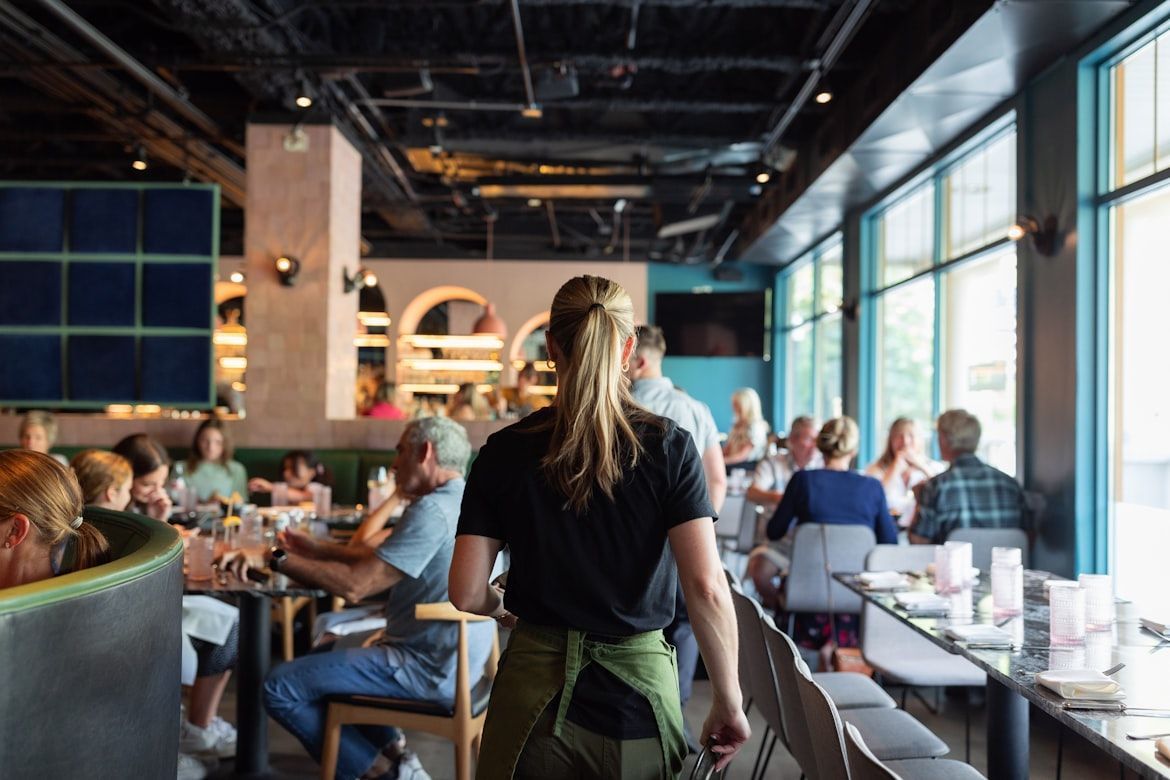
Image: Negley Stockman

In the U.S., servers often return to the table several times during a meal . They may ask how everything tastes, refill drinks, or check whether anything else is needed.

While meant to be attentive, this can feel intrusive to foreign visitors. In many other cultures, less interruption is preferred, and diners typically signal the server only when necessary.

7
Customizing your order is normal

Image: Artur Tumasjan

In the U.S., it's common to request changes to a dish, such as removing ingredients or adding extras . Restaurants are usually flexible and expect these requests.

In other parts of the world, altering a menu item may be frowned upon. The American habit reflects a strong emphasis on personal choice and individual preferences.

8
Tap water is served automatically

Image: Sugarman Joe

In American restaurants, a glass of tap water is often brought to the table without being requested . It is typically free and refilled throughout the meal.

In many other countries, bottled water is the default and must be ordered separately.

9
Meals tend to move quickly

Image: Louis Hansel

Dining in the U.S. often follows a faster pace. Food arrives quickly, and the bill may be brought shortly after the meal is finished .

In contrast, in many other cultures, meals are meant to be long, relaxed experiences. The American approach reflects efficiency and a faster daily rhythm.

10
Splitting the bill is common

Image: Vitaly Gariev

In the U.S., restaurants commonly allow separate checks , making it easy for each person to pay their share. This is especially helpful in group settings.

In many other countries, splitting the bill can be more complicated or is actively discouraged. The American system emphasizes convenience and individual responsibility at the table.

11
Sweet foods are common at breakfast

Image: Brian J. Tromp

Breakfast in the U.S. often includes sweet items such as pancakes, waffles, pastries, or cereal, alongside eggs, bacon, and toast. Syrup and sugar are common additions at the start of the day.

In many other countries, breakfasts tend to be exclusively savory, featuring foods like bread, cheese, or eggs. The American preference for sweetness can feel like a treat to visitors.

12
Dining is generally casual

Image: Dan Gold

While there are many exceptions at five-star, fine dining establishments, American dining culture is typically relaxed, with fewer formal rules about dress or behavior . People often eat out in casual clothing and informal settings.

In other countries, meals, especially dinner, can be more formal events. The American style reflects a focus on comfort rather than tradition.

General General 3 min read

Absurd laws still on the books

You’re probably breaking these laws and you don’t even know it!

Image: Tingey Injury Law Firm

Yes, we know that laws are meant to keep society running smoothly, but some of them are really puzzling. Across the US, you’ll find laws that ban everything from dancing on Sundays to stealing crawfish. Even if many of these laws are outdated , quirky, or just bizarre, they’re still technically on the books. So, if you’re planning a road trip, you might want to brush up on these strange state laws, just in case!

1
Georgia: No eating fried chicken with utensils

Image: Shourav Sheikh

In Gainesville, Georgia, it’s i llegal to eat fried chicken with a fork . This law, passed in 1961, was meant as a publicity stunt to promote the city’s status as the "poultry capital of the world."

While no one’s actually getting arrested for improper chicken consumption, a tourist was once jokingly "arrested" for breaking this law in 2009. If you visit Gainesville, just remember, fingers only!

2
Alabama: No stink bombs or confetti

Image: Damiano Lingauri

If you love a good prank or enjoy tossing confetti at celebrations, Mobile, Alabama, is not the place for you. The city has made it illegal to possess or use stink bombs , "funk balls," and anything designed to create unpleasant odors.

That’s not all, confetti and spray string are also outlawed, so don’t plan any glittery parades. Mobile prefers its air fresh and its sidewalks clean. We cannot blame them!

3
Arizona: No spitting in public

Image: Pete F

In Goodyear, Arizona, it’s not just bad manners to spit in public, it’s illegal. The law specifically bans spitting on sidewalks, roads, parks, and public buildings, and if you’re caught doing it, you could face a $2,500 fine or even six months in jail.

So, if you have a bad habit of spitting on the sidewalk , you might want to think twice before visiting Goodyear. Besides, it’s just gross!

4
Louisiana: No crawfish theft

Image: Rasmus Gundorff Sæderup

Think stealing crawfish is a minor offense? Not in Louisiana! Swiping someone’s crawfish , especially if the value exceeds $1,500, is taken so seriously that it can lead to a $3,000 fine or up to ten years in prison.

So, next time you’re enjoying a seafood boil in the Bayou State, make sure you’re not swiping from someone else’s plate!

5
Massachusetts: No dancing to the National Anthem

Image: Jeffrey F Lin

Patriotism is important, but nobody gets it like Massachusetts! In this state, a 1917 law makes it illegal to dance to the national anthem , though enforcing it would likely be a First Amendment nightmare.

It’s unclear why lawmakers felt the need to crack down on patriotic grooves, but to be safe, keep your hand over your heart and save the dancing for later!

6
South Carolina: No working (or dancing!) on Sundays

Image: Jess Bailey

Did you know that in South Carolina, you may technically have an excuse to skip work on Sundays?

An old law still on the books prohibits working on Sundays , though it’s rarely enforced. Strangely enough, dancing is also banned on Sundays. If you were hoping for a weekend filled with productivity and footloose fun, you might have to sit this one out!

7
North Dakota: No late-night fireworks

Image: Ray Hennessy

In Devil’s Lake, North Dakota, you can buy fireworks between December 26th and January 1st, but you can’t set them off after 11 p.m. What?

Let us explain: This law was originally passed for the millennium celebrations in 1999, but it’s still on the books today. Are you planning to ring in the New Year with a bang? Make sure you light those fireworks early or risk breaking the law!

8
Montana: No "folf" allowed

Image: Oskar Kadaksoo

Montana’s wide-open spaces might seem perfect for throwing a Frisbee, but in Helena, playing Frisbee golf (also known as "folf") outside of designated areas is illegal.

If you get caught, you could face a $500 fine or even six months in jail. Where are all these weird laws coming from, anyway?

9
Indiana: Black cats must wear bells on Friday the 13th

Image: Andreea Popa

Are you superstitious? You’ll love this one. In French Lick Springs, located in Indiana, black cats must wear bells around their necks on Friday the 13th.

This law was introduced in 1939 as a "war measure" to reduce stress among the public. While it’s unlikely anyone enforces this rule today, it’s still an amusing nod to old-school superstitions!

10
Hawaii: No billboards allowed

Image: Dennis Maliepaard

Ever notice that Hawaii’s landscapes are free of massive billboards ? That’s because billboards are banned statewide! The law, dating back to 1927, is part of an effort to preserve the state’s natural beauty.

Hawaii is one of the few places in the US where advertisements don’t compete with breathtaking ocean views. Now, that’s a law we can all enjoy!

Geography Geography 5 min read

INCREDIBLE AMERICA

Land of Freedom: 10 Striking Natural Landscapes Of The United States

Image: Robert Murray

Inspired by Thomas Jefferson's belief that America's wild beauty reflects our national spirit and heritage , in this article we want to celebrate the stunningly diverse and awe-inspiring landscapes that make the United States of America. We believe that the majesty of our nation’s natural wonders is as much part of our national heritage as our shared history of resilience and independence.

From the vast expanses of the Grand Canyon to the misty peaks of the Great Smoky Mountains, join us as we explore 10 breathtaking natural scenarios that embody the essence of our nation's spirit.

1
Grand Canyon, Arizona

Image: Tim Hart

A natural monument of unparalleled beauty, painstakingly carved over millions of years by the Colorado River , The Grand Canyon’s layered bands of red rock reveal more than just a part of the history of the land, but also offer a humbling window into deep time and Earth’s origins.

President Theodore Roosevelt himself was one of the foremost advocates for the preservation of the Grand Canyon area , frequently visiting to hunt and revel in its natural beauty. Before the arrival of Europeans, the area was continuously inhabited by various Native American groups, who often dug and carved their settlements directly into the ancient rock.

2
Yosemite Valley, California

Image: Robby McCullough

Located in the western Sierra Nevada mountains of Central California, Yosemite Valley’s granite cliffs, towering waterfalls, and ancient sequoias draw millions of visitors each year. Shaped by the action of glaciers during most of the last 30 million years , today its lush forests and incredibly diverse fauna are a living monument to our country’s biodiversity.

The towering granite peaks that encircle the valley, including Half Dome and El Capitan , are famed for their impressive rock walls and the breathtaking vistas they offer to hikers from above.

3
Yellowstone National Park, Wyoming

Image: Nicolasintravel

A geothermal wonderland, home to geysers, hot springs, and bubbling mud pots , Yellowstone is a wildlife haven where bison, grizzly bears, and wolves roam freely amidst its stunning natural features. Moreover, Yellowstone not only holds the distinction of being the first national park in the U.S. but also in the whole world, setting a precedent for conservation laws and standards that would be emulated worldwide.

Interestingly, the Yellowstone Caldera—the volcanic system responsible for the park’s intense geothermal activity—is the largest in North America and is considered a dormant "supervolcano." In the past, large eruptions from this region likely contributed to the extinction of many species, blanketing much of central North America in ash.

4
Denali National Park, Alaska

Image: Bryan Goff

At the heart of Alaska lies Denali, North America's tallest peak. Officially named Mount McKinley until 2015, the peak was renamed after the native word for the mountain, which fittingly means "the high one."

The region surrounding the legendary mountain became a National Park in 1917 , and since that time the rugged landscape of the park has been a haven for outdoor enthusiasts, offering unique opportunities for wildlife viewing. The pristine landscape features a diverse mix of forests, deciduous taiga, tundra, and glaciers , preserving a slice of untouched wilderness that highlights the raw, untamed beauty of Alaska.

5
Great Smoky Mountains, North Carolina/Tennessee

Image: Div Pithadia

With its mist-shrouded peaks and verdant forests, the Great Smoky Mountains are one of the most scenic and alluring landscapes of the United States.

A subrange of the Appalachian Mountains, the soothing vistas of lush forests growing above the ancient peaks are often veiled by a hazy blue-ish mist , which gives the name to the region. The mysterious fog is caused by various organic compounds emitted by the lush vegetation, which end up forming dense vapor columns.

6
Zion National Park, Utah

Image: Jamie Hagan

Zion's breathtaking sandstone formations are truly a sight to behold. The region is renowned for its towering cliffs, narrow slot canyons, expansive mesas, and captivating natural arches , each sculpted by the forces of time and nature into awe-inspiring works of art.

With a geological history that spans over 150 million years , Zion National Park is a testament to the immense geological forces that have shaped our land over millennia.

7
Niagara Falls, New York

Image: Kalen Emsley

One of the world's most famous waterfalls, Niagara Falls is an emblem of America’s diverse natural beauty. Straddling the international border between Canada and the United States, millions of gallons of water cascade over its cliffs every minute , drawing visitors from both nations to marvel at this awe-inspiring natural spectacle.

Formed by the Niagara River, which channels the waters from Lake Erie into Lake Ontario before ending up in the Atlantic, the falls experience a rate of erosion of almost a foot per year. If the erosion continues at this pace, in about 50,000 years the falls will completely erode the remaining 20 miles to Lake Erie and cease to exist.

8
Glacier National Park, Montana

Image: Justin Kauffman

One of the most pristine landscapes in the United States, Glacier National Park harbors ancient peaks and valleys that provide sanctuary to a diverse array of wildlife, home to thousands of unique species.

With more than one million acres, several glaciers, and over a hundred named lakes, this landscape offers a glimpse into the untouched beauty that greeted the first inhabitants of this land upon their arrival.

9
Acadia National Park, Maine

Image: Benjamin R.

Maine’s Atlantic coastline offers a stunning landscape of timeless beauty and rich history. From the towering Cadillac Mountain - the highest peak on the Atlantic coast - to the U-shaped valleys, and cobble beaches, Acadia's natural wonders are captivating.

Inhabited over 10,000 years ago by the Wabanaki people, Acadia's story is full of tales of exploration and resourcefulness. Amidst the harsh terrain, John D. Rockefeller Jr.'s historic carriage road system still meanders , a testament to human resilience amidst nature's raw beauty.

10
Hawaiʻi Volcanoes National Park, Hawaiʻi

Image: Cedric Letsch

If you are eager to witness the true raw power of nature in action, Hawaiʻi Volcanoes National Park is the place to go. Home to two of the world's most active volcanoes, Kilauea and Mauna Loa , the park is teeming with primeval scenes and dramatic contrasts. From lava tubes to lush rainforests and stunning beaches, the islands abound with natural wonders.

Acknowledging its unique natural attributes, the park earned the prestigious designation of International Biosphere Reserve in 1980, followed by World Heritage Site status in 1987.

Explore more American facts

Choose your favorite category!

General
General

As American as apple pie—the very best America has to offer!

Culture
Culture

Delve into the astounding richness of American lore.

Geography
Geography

Hop in and explore vast and diverse American landscapes.

History
History

Discover the key moments that shaped the United States.