Culture Culture 5 min read

10 unforgettable times patriotism conquered pop culture
Image: STILLFX

Pop culture has always been a mirror of society, but few forces shape it as much as patriotism. From the birth of a new nation to the geopolitical tensions of the Cold War and the grief of a post-9/11 world, our national identity has spilled over into fashion, film, music, and television. Here is a look at 10 iconic moments when patriotism both captured and influenced the pop culture landscape.

1
Rocky IV
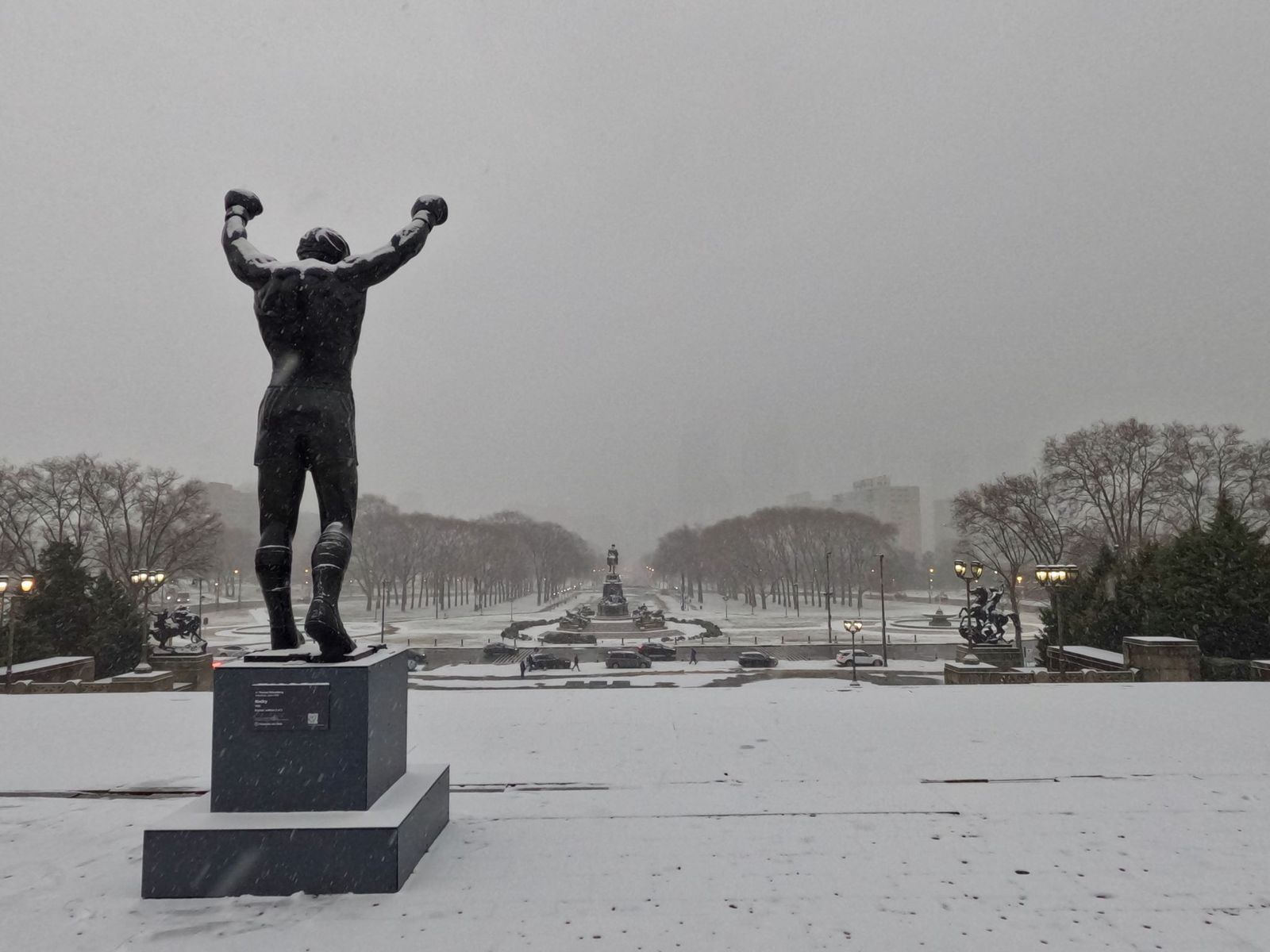
Image: Bryan Littel

If you want to see late Cold War patriotism condensed into a two-hour blockbuster, look no further than Rocky IV . Written, directed by, and starring Sylvester Stallone, the 1985 sequel details the rivalry between self-made American underdog Rocky Balboa and Ivan Drago (Dolph Lundgren), a state-sponsored Soviet boxer.

The film serves as an allegory for the geopolitical tensions between the USA and the USSR. With Rocky stepping into the Moscow ring wearing the late Apollo Creed's iconic stars-and-stripes trunks, his eventual victory symbolizes a triumphant win of Western individualism over Soviet collectivism.

2
Neil Diamond's "America"
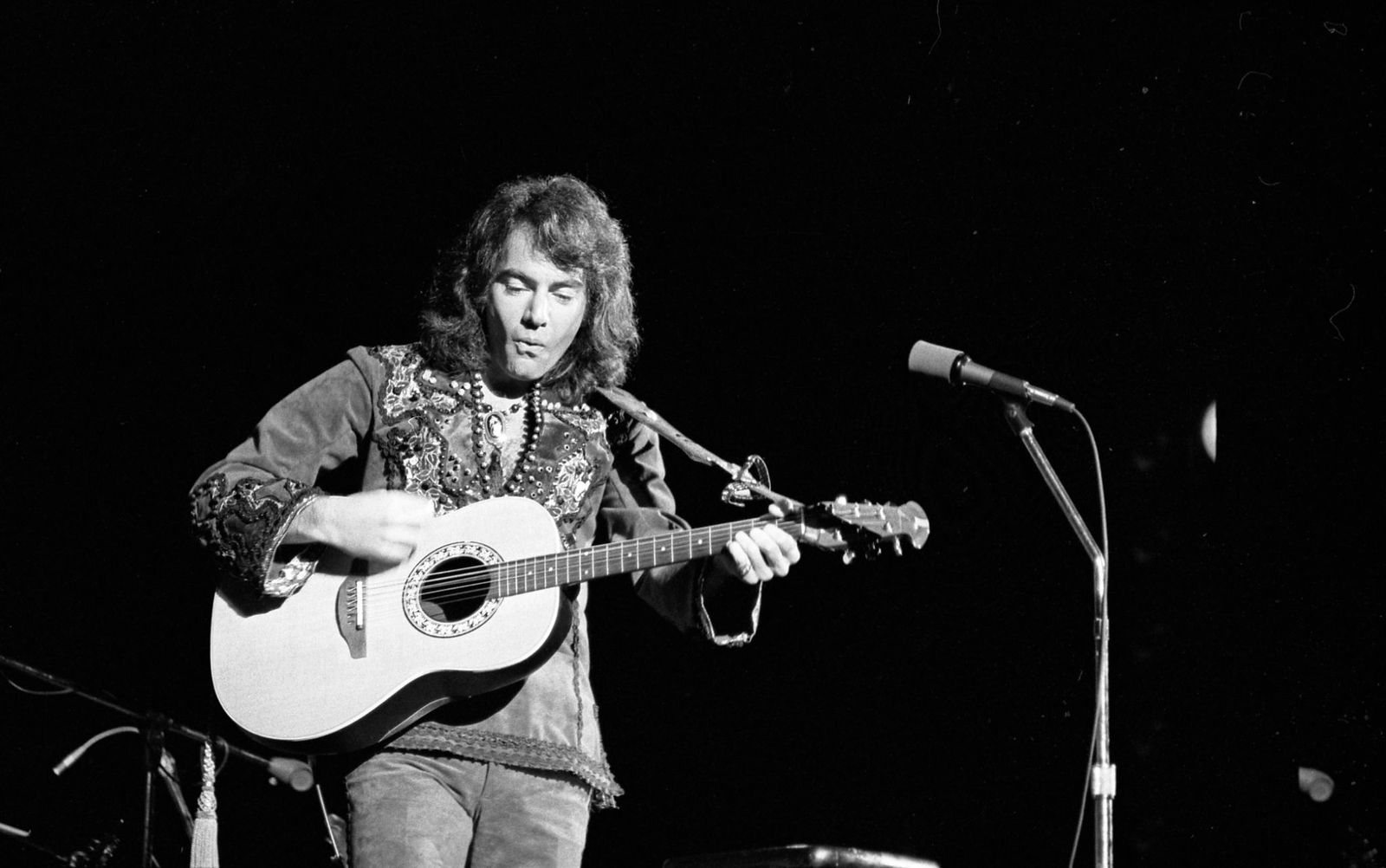
Image: Larry Bessel, Los Angeles Times, CC BY 4.0, via Wikimedia Commons

Patriotism is not just about defending borders, it’s also about celebrating our country’s diverse mosaic of people. Neil Diamond proved it with his 1980 hit "America", written for The Jazz Singer soundtrack.

With its optimistic beat and soaring chorus, the track serves as an anthem celebrating the immigrant experience. Diamond's lyrics honor the millions of people who braved the seas to find freedom and opportunity, and has become a constant at political rallies, naturalization ceremonies, and sporting events.

3
George Washington’s suit
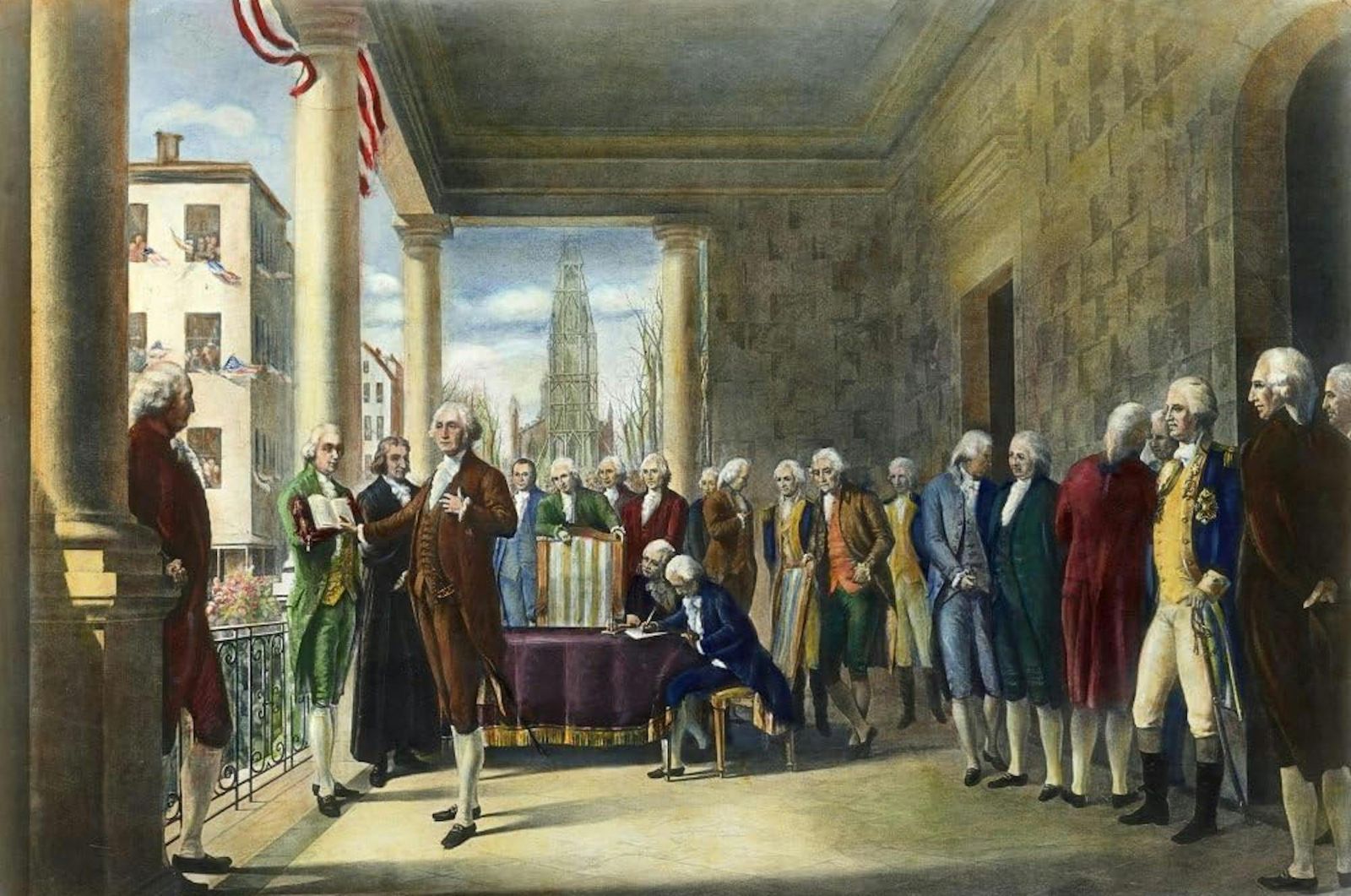
Image: Ramon Elorriaga, Public domain, via Wikimedia Commons

Did you know America’s very first president used his attire to send a message of national independence? For his 1789 inauguration, George Washington rejected the luxurious, imported silks favored by the European aristocracy. Instead, he arrived wearing a simple, American-made brown broadcloth suit crafted from wool produced at the Hartford Woolen Manufactory in Connecticut.

Featuring custom metal buttons engraved with the Great Seal of the United States, Washington's suit was an intentional statement meant to promote domestic industry, reject European economic dominance, and symbolize democratic equality.

4
Captain America
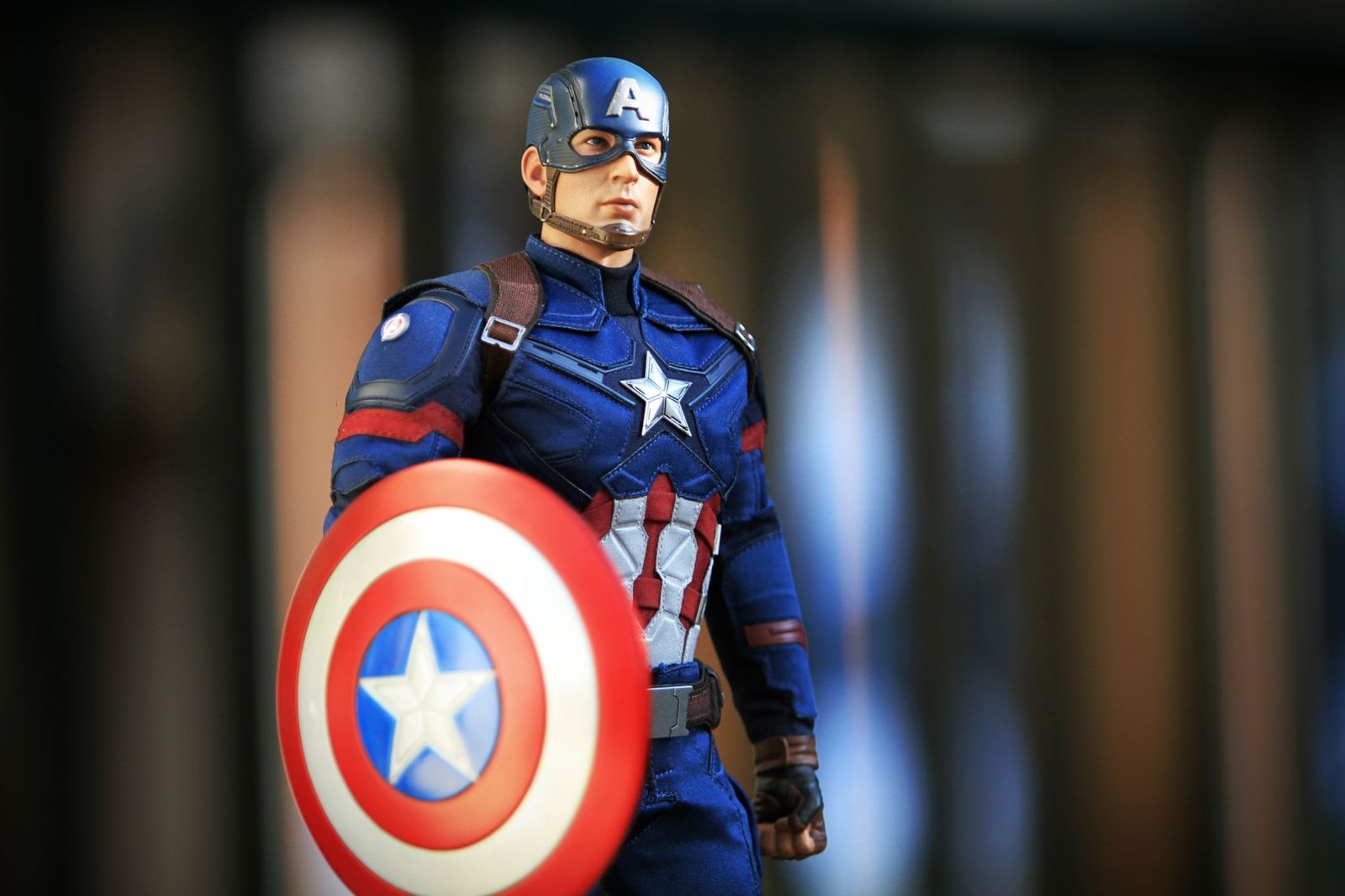
Image: phol_66

Comic books have long relied on patriotic superheroes to protect the innocent, but none achieved the legendary status of Steve Rogers. Created by Joe Simon and Jack Kirby, Captain America made his debut in March 1941, nearly a year before the United States officially entered World War II.

The iconic cover of Captain America Comics #1 featured the star-spangled hero delivering a right hook straight to Adolf Hitler’s jaw. Representing the ultimate underdog story, Captain America became an enduring symbol of anti-fascist determination that remains a multi-billion-dollar cinematic powerhouse today.

5
Catherine Malandrino's "Stars and Stripes" dress
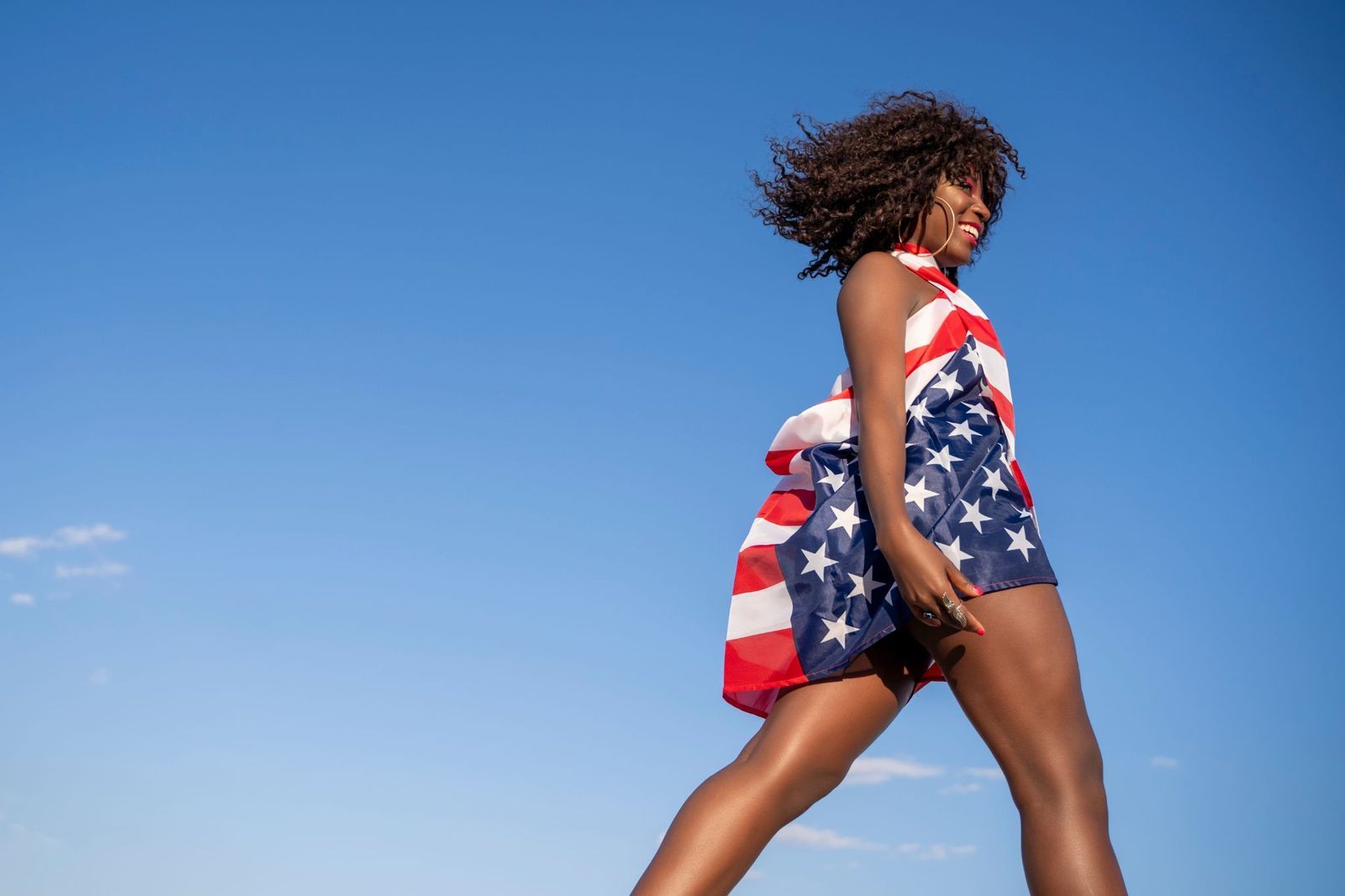
Image: Carrastock

Fashion and patriotism collided at the dawn of the 21st century. Following the tragic events of September 11, 2001, the American flag evolved from a standard national symbol into an emblem of resilience and unity. French designer Catherine Malandrino captured this cultural shift perfectly with her flag-print chiffon shirtdress.

Originally debuted by Halle Berry just days before 9/11 at a movie premiere, the "Stars and Stripes Dress" quickly became a post-tragedy uniform for Hollywood's elite. It was worn by icons like Julia Roberts, Sharon Stone, and Madonna to signal solidarity, hope, and patriotism on the red carpet.

6
Kid Rock's "Born Free"
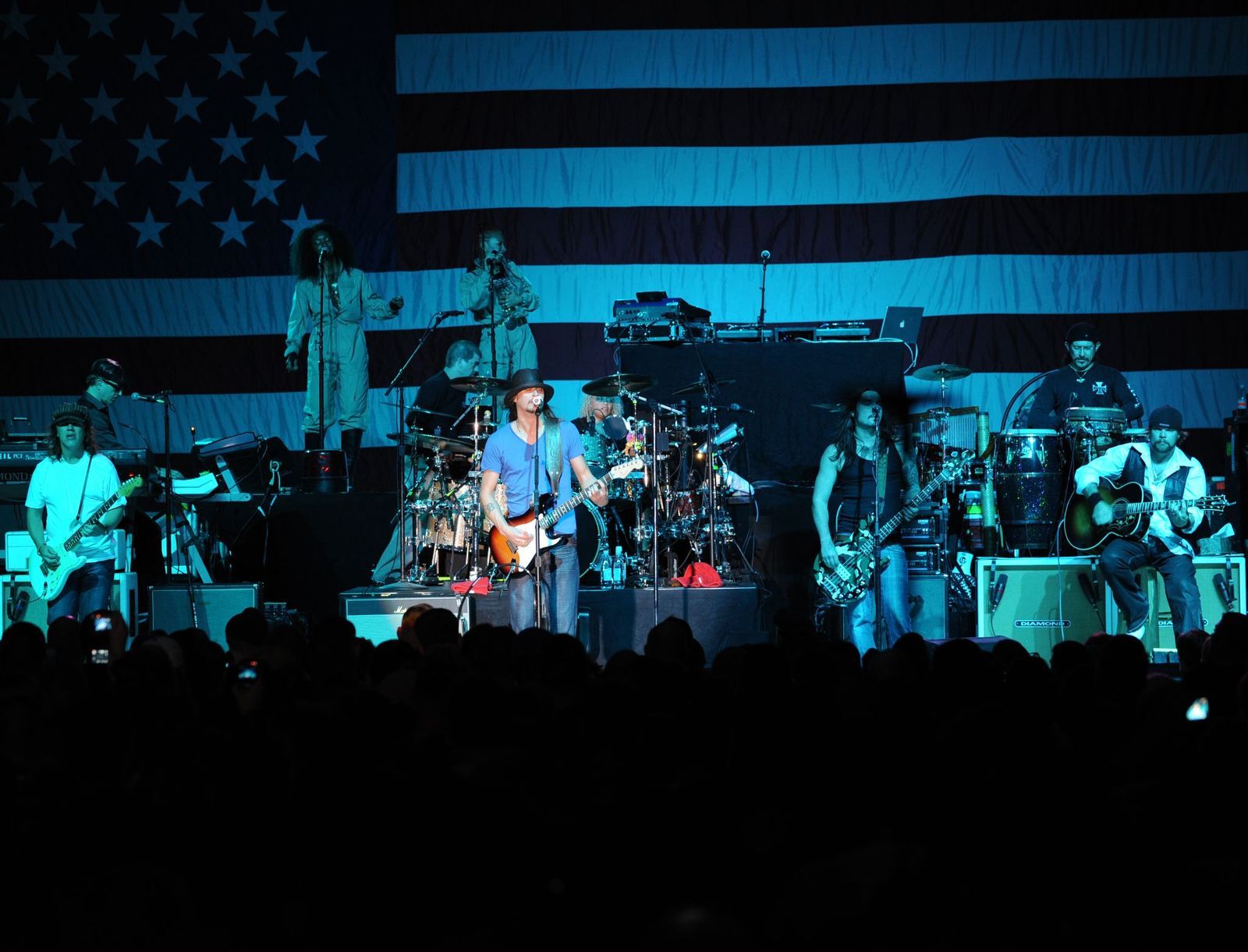
Image: U.S. Air Force photo by Airman 1st Class Caleb Pierce, Public domain, via Wikimedia Commons

Kid Rock’s 2010 single "Born Free" brought a raw energy to patriotic music. Blending elements of southern rock, country, and blues, the track was inspired by Kid Rock’s travels playing for American troops stationed overseas.

The musician has said that he penned the song as a tribute to liberty and personal freedom. The tune has been played at major sporting events, auto commercials, and has been adopted as a political campaign anthem.

7
The Americans
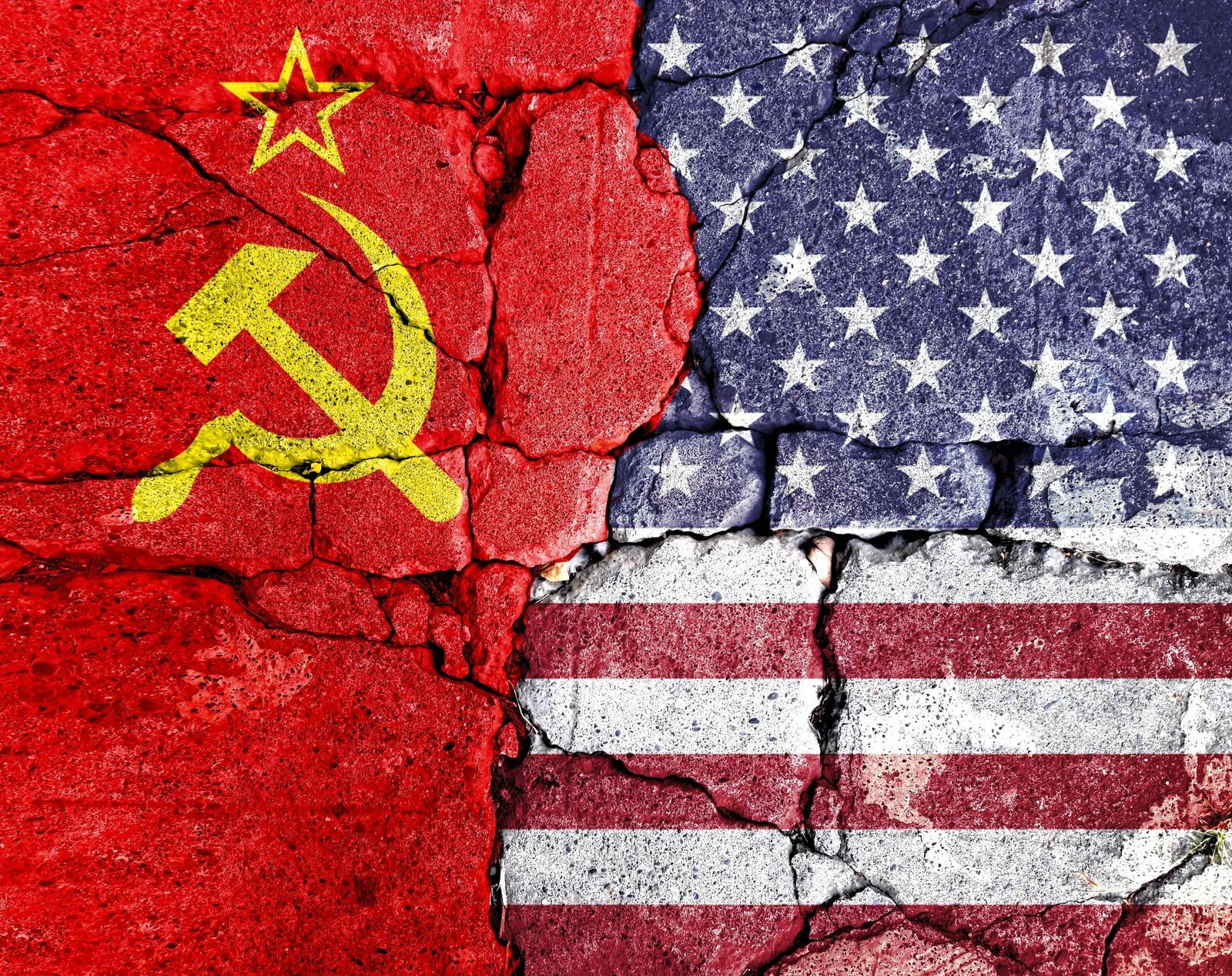
Image: Andy.LIU

Instead of waving the flag openly, the critically acclaimed drama The Americans (2013-2018) examined American patriotism from a different perspective. The series follows Philip (Matthew Rhys) and Elizabeth Jennings (Keri Russell), two undercover KGB spies living as a typical American family in suburban Virginia during the 1980s. As Philip increasingly finds himself seduced by the genuine freedom and lifestyle of the "American way", the series serves as an endorsement of democratic values.

8
Patton
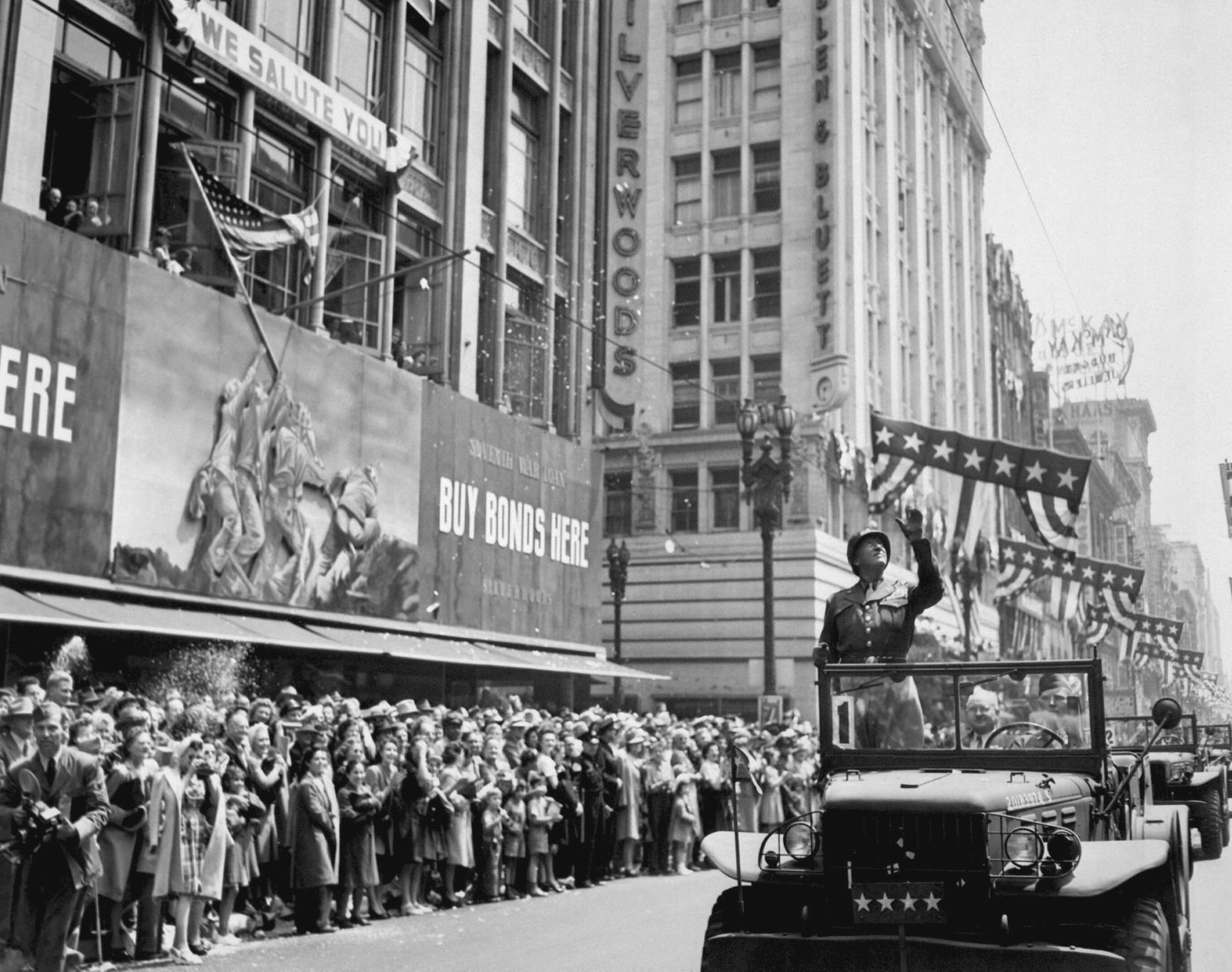
Image: Office of War Information, Public domain, via Wikimedia Commons

Biographical films often examine patriotism through a complex lens, and the 1970 masterpiece Patton is proof. Starring George C. Scott as General George S. Patton, the film opens with a legendary, six-minute monologue delivered in front of a colossal American flag.

The film, directed by Franklin J. Schaffner and written by Francis Ford Coppola and Edmund H. North, perfectly captures Patton's fierce love for his country alongside his military genius. Released during the height of the divisive Vietnam War, Patton managed to resonate across the entire political spectrum, even becoming a favorite of President Richard Nixon, who watched it repeatedly before making critical military decisions.

9
Toby Keith's "Courtesy of the Red, White and Blue"
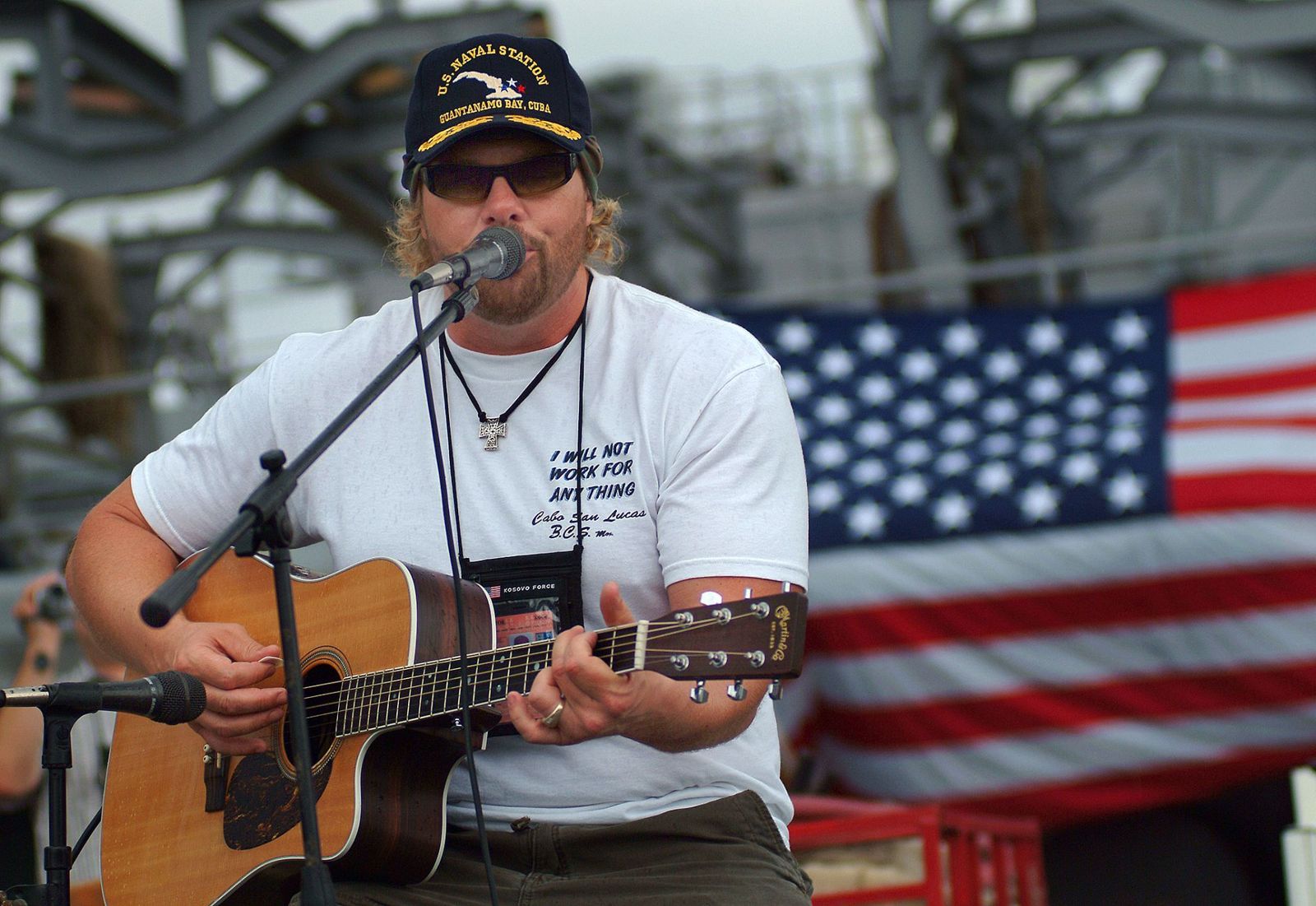
Image: U.S. Navy photo by Journalist 2nd Class Brandan W. Schulze, Public domain, via Wikimedia Commons

In 2002, Toby Keith aptly captured the raw emotion of the post-9/11 era with his "Courtesy of the Red, White and Blue." Written in a burst of intense emotion following the terrorist attacks and the recent passing of his military veteran father, the song became a patriotic anthem.

With its lines promising that America would "put a boot in your ass," the song resonated deeply with a grieving public. It dominated the country charts, fueled troops overseas, and cemented its place as one of the most defining musical examples of early 2000s nationalism.

10
Yankee Doodle Dandy
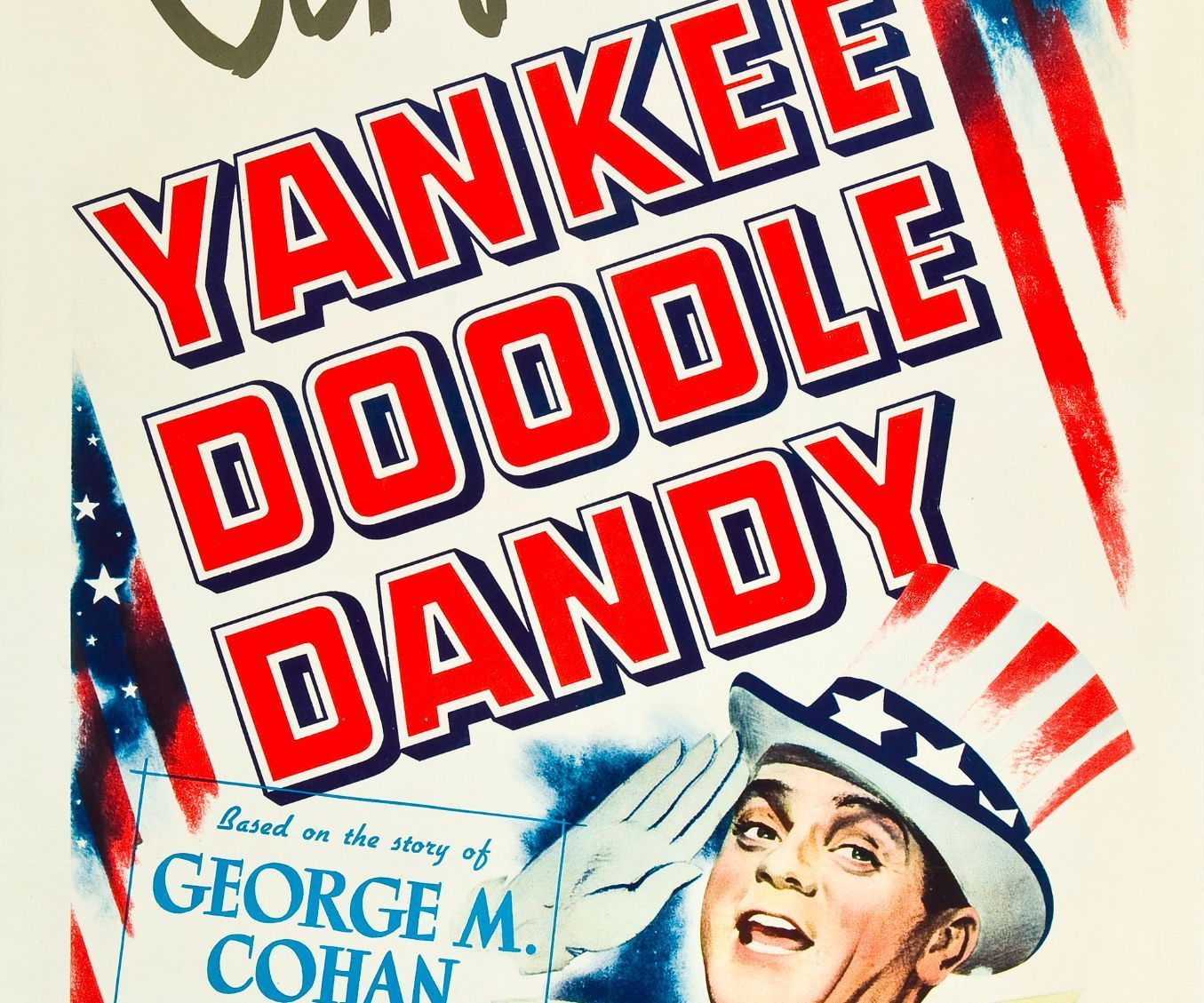
Image: Bill Gold, Public domain, via Wikimedia Commons

During the uncertain early days of World War II, Hollywood became a critical tool for boosting national morale. No film captured this era's patriotic fervor quite like Yankee Doodle Dandy , a 1942 biographical musical drama directed by Michael Curtiz.

Starring James Cagney in his Oscar-winning role as vaudeville legend George M. Cohan, the film celebrates the life of the patriotic showman who penned iconic wartime anthems like "Over There" and "The Yankee Doodle Boy". Released just months after the attack on Pearl Harbor, the film's tunes and celebration of American resilience served as a perfect cinematic cry for a nation entering a massive global conflict.

General General 6 min read

Frontier lingo

Learning is never “barkin' at a knot” 10 phrases from the Wild West!

Image: Anya Juárez Tenorio

We all know about the cowboys and the outlaws! But the Wild West, or the American Frontier, was much more than that! The culture, history, and geography of this time were fascinating, as was its dialect. Can you guess what "barkin’ at a knot" or "highfalutin" means? Many of these expressions may sound odd to our modern ears, but they once captured the rugged spirit of the time , and they helped early Americans describe their surroundings. So, keep reading if you’re eager to learn 10 expressions directly taken from the Wild West!

1
Higgledy-piggledy

Image: Peter Herrmann

Imagine a table full of random objects, all jumbled together, with no categories whatsoever. Chaotic, right? Well, that’s exactly what "higgledy-piggledy" means. Can you figure it out from context?

When things got all mixed up or disorganized , folks in the Wild West would call it "higgledy-piggledy." This playful phrase was used to describe chaos or confusion. But it’s not only about a mess of objects, a pile of papers sort of mess, it could also be a situation that got out of hand.

It’s believed to be of British origin, but it found a way to cross the pond and make its way into the American frontier lingo. The repeating sound of the words adds to the sense of disorder – kind of like a tongue-twister that reflects the state of things.

2
Bag of nails

Image: Blake Emge

Don’t take this too literally—it gets gross quickly. But when it comes to the meaning, it’s highly relatable. Ever had one of those days where nothing seems to go right ? The Wild West had a term for that: "bag of nails."

When things were in complete disarray, those personal situations that quickly escalated into chaos, they were described as a bag of nails.

Imagine spilling a bag of nails everywhere, gross at first, but then it’s also messy, frustrating, and hard to clean up.

The origin of the term is not very clear, but it paints a vivid picture of total disorder. If you are having a bag-of-nails kind of day, it’s time to take a deep breath and try again tomorrow!

3
Toad strangler

Image: Mike Kotsch

One curious thing about this phrase, originally from the South, is that in every variation it refers to the same animal in the same situation. For example, "frog choker."

In any case, when the rain came down so hard it could "drown a toad," you were in the middle of a "toad strangler."

This funny phrase (although it may not be so funny for the poor toad) was used to describe a heavy downpour , the kind that left everything soaked and muddy. In a land where the weather could change in an instant, such storms were both a blessing and a nuisance. Now, if you come to think about the mud, this wasn’t so funny for the people either!

4
Barkin' at a knot

Image: Robert Gramner

You could get the meaning of this phrase by simply picturing a dog barking at a not. What’s the first thought that crosses your mind? "What on Earth is that dog doing?" Well, that’s pretty much the gist of the expression.

In Wild West lingo, if you were "barkin' at a knot," it meant you were trying to do something impossible or wasting time on a rather pointless task .

This term comes from the image of a dog barking at a tree knot: the dog thinks the knot is a threat, but all the barking gets them nowhere.

It was used on the frontier to describe situations where people were expending effort for no reward. But it can be used today to talk, don’t you think? Time to move on, partner!

5
Leaky mouth

Image: Vitolda Klein

From the gross to the nonsensical and straight into the literal, in the Wild West, if someone had a "leaky mouth," it meant they couldn’t keep their lips sealed, that they talked too much, and, more often than not, spilled secrets. We all know someone like this!

Gossipers were everywhere back then, (and this is still the case!), and having a leaky mouth was definitely not a compliment, as you can imagine. People who shared too much information or spread rumors were seen as troublemakers, which made sense considering the number of outlaws around!

We may not have those kinds of outlaws anymore, but the leaky-mouthed ones are still around!

6
Raisin' sand

Image: Richard Lee

You may have heard the expression "to raise Cain," and if that’s the case, you can guess what this expression means!

When someone was causing trouble or creating a disturbance, they were basically "raisin' sand." You know the type—the kind of person who can’t sit still for a second, the kind that is always kicking up a storm of dust; mischief in every step they take. Well, this expression is about them.

Frontier towns had their fair share of rowdy folks, and raising sand could mean anything from a loud argument to a full-blown fight. And we’ve all seen enough Western movies to know how that usually ended!

7
High-falutin'

Image: Senya Mitin

Pretentious, fancy people have existed since the beginning of times. No society has escaped the "highfalutin’" sort of folks who are always bragging about. Can you guess what it means?

"Highfalutin" or "high-falutin’" referred to people in the Wild West who were acting overly fancy or pompous , and it was not precisely a compliment.

This term was used to poke fun at people who were full of themselves or trying too hard to appear important. The origin of the phrase is a bit hazy, but there seems to be consensus to believe the phrase is a combination of "high" and "fluting" which means having ornamental grooves. Either way, if you were labeled high-falutin’, it was time to dial it down a notch.

8
Guttersnipe

Image: Amsterdam City Archives

Kids on the street trying to survive are not just a thing of today; there have always been cases of children abandoned to their own fate. Back in the Wild West, "guttersnipe" was the term used to describe a homeless kid who was trying to make it on the streets.

These kids were scrappy survivors, navigating the rough streets much like birds picking through the gutters for food.

Dating back to the 1850s, the word became highly popular thanks to Mark Twain’s descriptions in his novels, and it stuck. Had you heard it before?

9
Four-flusher

Image: Klim Musalimov

Oh, who hasn’t had a fun game night with the family that didn’t end quite like one imagined? Suddenly, everyone is arguing over the rules of the game just because there was one four-flasher who couldn’t resist the temptation to cheat!

In the Wild West, a "four-flusher" was someone who tried to cheat their way to victory , and also someone who resorted to bluffing to win a game.

The phrase comes from poker, where a flush requires five cards of the same suit. A four-flusher, then, would be someone who tried to pass off four matching cards as a flush, hoping no one noticed. Outside of cards, the term grew to describe any liar, cheat, or fraud. If you were called a four-flusher, you were someone who couldn’t be trusted. And those were certainly not welcome in the typical Wild West saloons!

10
California widow

Image: gaspar zaldo

The term "widow" in this phrase is quite deceptive because the expression doesn’t refer to a woman whose husband has died. Instead, it referred to a woman whose husband had gone off to seek fortune, often in the California Gold Rush.

These women were left behind, sometimes for years, while their husbands pursued riches out West. Though they were still married, they were called "widows" because they were left to manage on their own.

It was a common term in the mid-1800s, as the Gold Rush drew many men away from their homes. For some women, this separation was temporary, but for others, their husbands never returned. Quite sad, huh?

History History 4 min read

History class is in session!

Follow this red line in Boston and end up in history class!

Image: BookBabe

Wanna take a stroll through the heart of American history? The Boston Freedom Trail is exactly that! With red bricks guiding your way, every step brings you closer to some of the most important moments that shaped the nation. So lace up those walking shoes (comfort is key for this one!), and let’s explore some surprising truths about one of the country’s most iconic trails.

1
Start here, end there: Boston Common to Bunker Hill

Image: Roger Starnes Sr

There’s no official rule about where to begin, but most people kick things off at Boston Common. From there, the trail snakes through the heart of the city and ends at the Bunker Hill Monument in Charlestown. That final stretch leads to one of the most symbolic sites of the American Revolution. Of course, if you’d rather do it backwards, nobody’s stopping you—it’s your patriotic pilgrimage! Either way, the journey between these two iconic spots is packed with stories.

2
Where the trail begins: Boston Common’s surprising start

Image: Yassine Khalfalli

Boston Common might be a peaceful green escape today, but it began with a much more practical purpose. Established in 1634, it’s the oldest public park in the US, and it was originally used for grazing livestock, not lounging on park benches.

The land was purchased from Anglican minister William Blackstone and soon transformed into a communal area by the Puritans. Over time, it has witnessed protests, public speeches, and even British troops setting up camp.

3
Short and sweet: the 2.5-mile trail

Image: Naoki Suzuki

The Freedom Trail may only stretch 2.5 miles, but don’t let that fool you—it’s packed with history. The route winds through downtown Boston, passing 16 official landmarks. Most of the trail is flat and fully accessible, making it friendly for everyone. Just remember to bring comfy shoes!

4
Follow the red-brick road

Image: Yassine Khalfalli

No need for a map or GPS—just follow the red-brick line! That bright path under your feet is the Freedom Trail’s signature feature. It weaves its way from site to site, keeping you on track with zero guesswork.

The trail’s design was first suggested by a local journalist in the 1950s, who wanted to link all the key historical spots. It’s Boston’s version of a historical yellow brick road—minus the flying monkeys, of course!

5
Millions make the trip every year

Image: Aubrey Odom

More than 4 million people walk the Freedom Trail each year—and not just tourists. Locals, history lovers, and school groups all flock to this living museum. It’s one of the most popular attractions in Boston, and for good reason.

From Paul Revere’s House to the Boston Tea Party site, each stop tells a story. Even if you’ve walked it before, there’s always something new to notice. So go ahead—join the crowd.

6
No need to go in order

Image: Vika Chartier

Unlike history books, the Freedom Trail doesn’t follow a strict timeline. It’s organized by geography, not chronology, which means you can hop around without feeling lost. For instance, Boston’s North End has a cluster of must-see sites close together. It’s totally fine to explore them first and double back later. Just follow your curiosity—and your feet—along the red bricks.

7
Oldest this, oldest that, it’s a record-breaker

Image: Kelly Sikkema

The Freedom Trail is a goldmine of American "firsts." You’ll find the country’s oldest public park (Boston Common), its oldest public building (the Old State House), and even the site of the first major battle of the Revolutionary War (Bunker Hill Monument).

Paul Revere’s House is the oldest building still standing in Boston. And the Old North Church? That’s right—it’s the oldest church still standing in the country!

8
Rest in peace, revolutionaries

Image: Wenhao Ruan

Cemeteries might not sound exciting, but on the Freedom Trail, they can be. The Granary Burying Ground is the final resting place of Paul Revere and victims of the Boston Massacre.

Over at Copp’s Hill Burying Ground, you’ll find figures connected to the Salem Witch Trials and shipbuilders like Edmund Hartt. These aren’t just graves—they’re chapters in America’s story. And you’ll be walking right through them.

9
No replicas here

Image: Liubov Ilchuk

Every building and site along the Freedom Trail is the genuine article. Thanks to meticulous preservation, nothing is a recreation or reimagining—you’re standing where revolutionaries stood, seeing what they saw.

There’s something special about touching the same walls and walking the same halls. It’s as close to time travel as you’re going to get. How great is that?

10
Past meets present in every step

Image: Brett Wharton

Sure, you're here for the history, but Boston’s modern charm is hard to miss. Between historic stops, you'll find lively markets, cozy restaurants, and the buzz of city life all around. Grab a cannoli in the North End or sip coffee where patriots once plotted revolts. The Freedom Trail offers a perfect blend of old and new.

Explore more American facts

Choose your favorite category!

General
General

As American as apple pie—the very best America has to offer!

Culture
Culture

Delve into the astounding richness of American lore.

Geography
Geography

Hop in and explore vast and diverse American landscapes.

History
History

Discover the key moments that shaped the United States.