Geography Geography 6 min read

NATURAL WONDERS

10 Breathtaking Waterfalls In The U.S. You Should Visit

Image: Jared Erondu

Waterfalls never disappoint. And the United States, with its vast and rich biodiversity, is home to some of the most impressive examples in the world: Niagara Falls, McWay Falls, and Tahquamenon Falls, just to name a few.

From stunning water slides overhanging white sandy beaches to gentle falls on the side of a glacier, here’s a list of 10 of the most dazzling American waterfalls that should be on your travel bucket list. Dive in!

1
Multnomah Falls (Bridal Veil, Oregon)
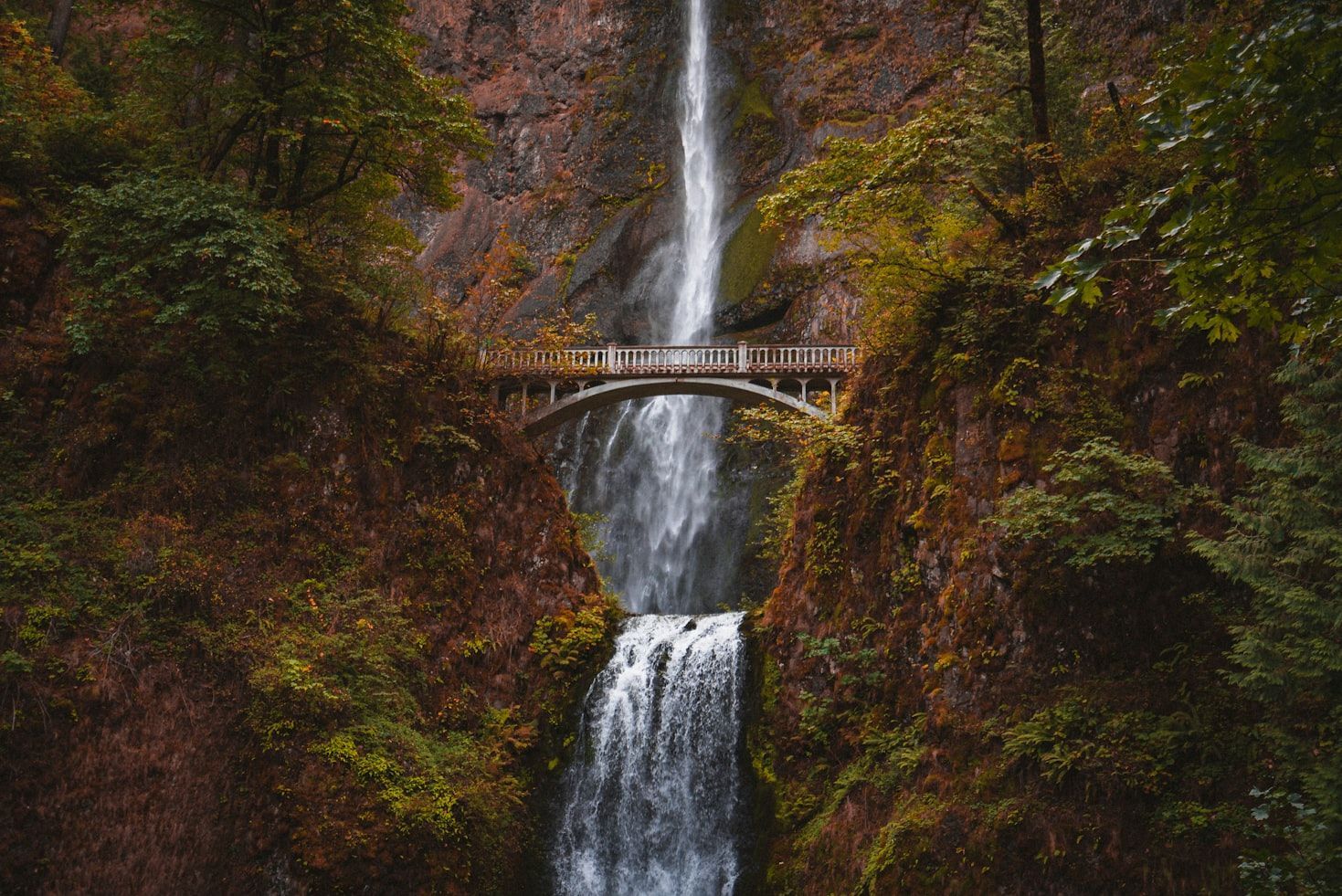
Image: Karsten Winegeart

Multnomah Falls is, without a doubt, the mother of all the 77 waterfalls that can be found in the gorge of the Columbia River in the state of Oregon. Located 30 miles east of Portland, it is one of the three largest waterfalls in the United States . Multnomah Falls has a staggering drop of 620 feet divided into two sections and is a natural wonderland of breathtaking beauty.

A stone bridge suspended between two cliffs offers the best views. The Benson Bridge, built in 1914, allows you to cross the lower falls and continue along a paved trail to the viewing platform at the top. From this privileged observation point, you’ll be able to appreciate the geology exposed by centuries of flooding. Multnomah Falls is the perfect place for hikers , especially during the autumn months. Its rich natural, cultural, and geological history is worth visiting at least once in a lifetime.

2
Bridalveil Fall (Yosemite, California)
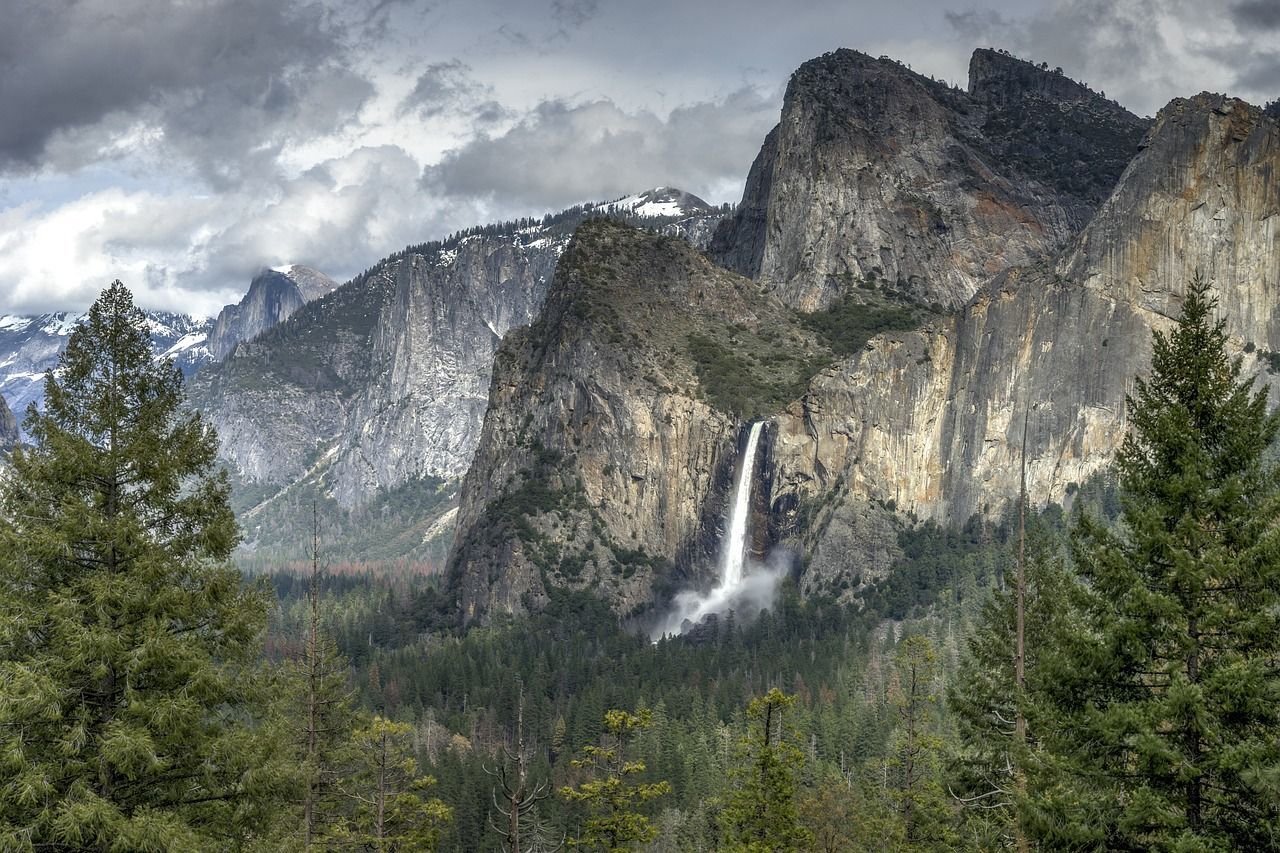
Image: PeterBowers

Bridalveil Falls is a 617-foot cascade and is one of the most iconic sights in the Yosemite National Park . This famous waterfall drops to the base in spring and early summer with enough water to spray its visitors with a gentle mist. In winter, Bridalveil Falls offers a soft yellow glow.

The Ahwahneechee tribe believed that Bridalveil Falls was home to a vengeful spirit named Pohono who protected the entrance to the valley and that those leaving should not look directly at the waterfall lest they suffer the curse. They also thought inhaling the mist from the waterfall would help them find someone to marry , hence the name it is known today.

3
Nugget Falls (Juneau, Alaska)

Image: Timon Cornelissen

Surrounded by snow-capped mountains, lush forests, and crystal-clear lakes, Nugget Falls is one of the most beautiful waterfalls in the United States. Although it’s a popular spot for outdoor enthusiasts , the scenery alone provides ample reasons for anyone to visit and explore.

Located at the tail end of Alaska's Mendenhall Glacier, these 377-foot falls are formed from a glacial stream making their way to Mendenhall Lake in the course of a two-tiered plunge. They can be accessed by a gravel road, but they are often visited as part of an excursion to Juneau Shore or Mendenhall Lake. Whether you’re an avid hiker or just looking for some tranquil moment in nature, Nugget Falls is sure to provide a memorable experience .

4
Wailua Falls (Līhuʻe, Hawái)
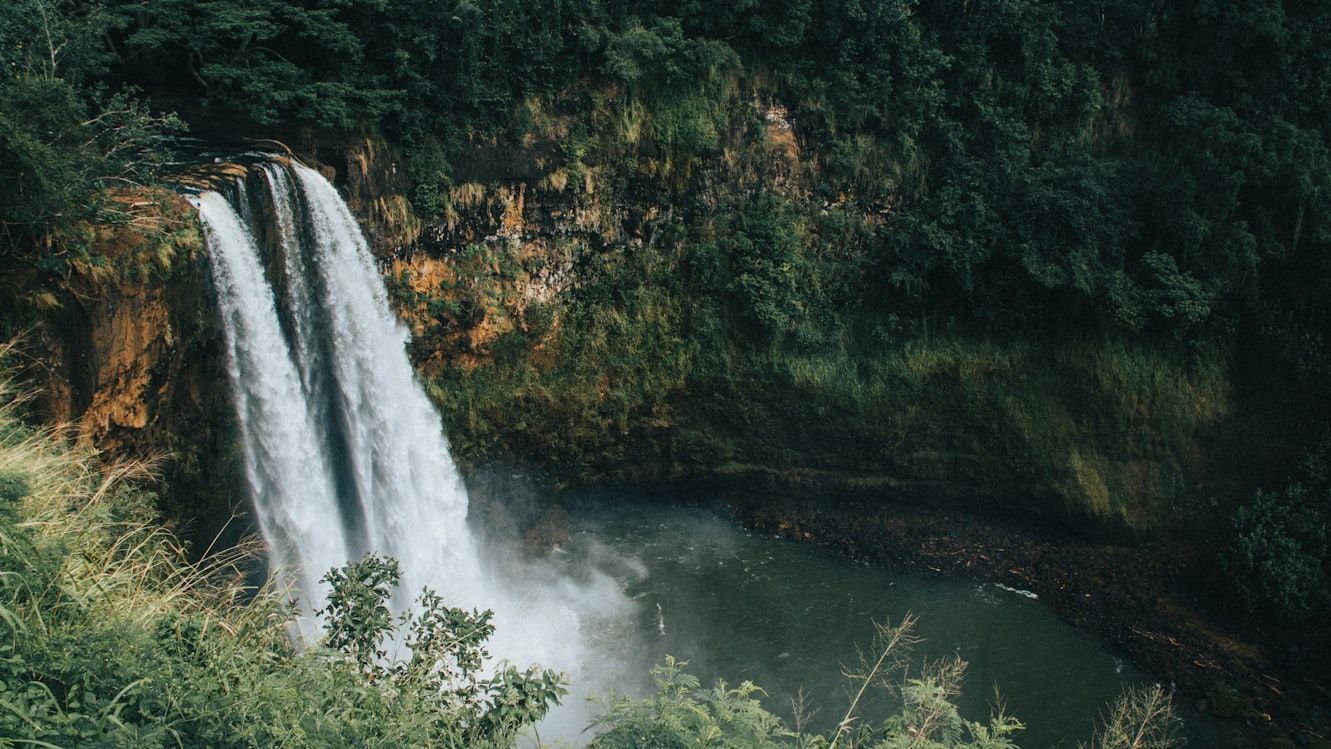
Image: Zane Persaud

You may recognize these waterfalls from their appearance in the opening credits of the hit TV show "Fantasy Island". Or you may have seen them in promotional materials for Kauai, as Wailua Falls are considered the most amazing waterfalls on this scenic Hawaiian island . It is located 5 miles north of downtown Līhuʻe and although there is no walking trail, it can be easily seen from the road.

The double-flow cascade spans an 80-foot drop, thundering and crashing into a small plunge pool below. A lush jungle wall surrounds Wailua Falls, a magnificent site, especially after heavy rains. If you visit in the morning, you may be greeted by a rainbow as the sunlight hits the mist rising from the waterfall . It's an excellent photo opportunity you don’t want to miss!

5
Tahquamenon Falls (Paradise, Michigan)
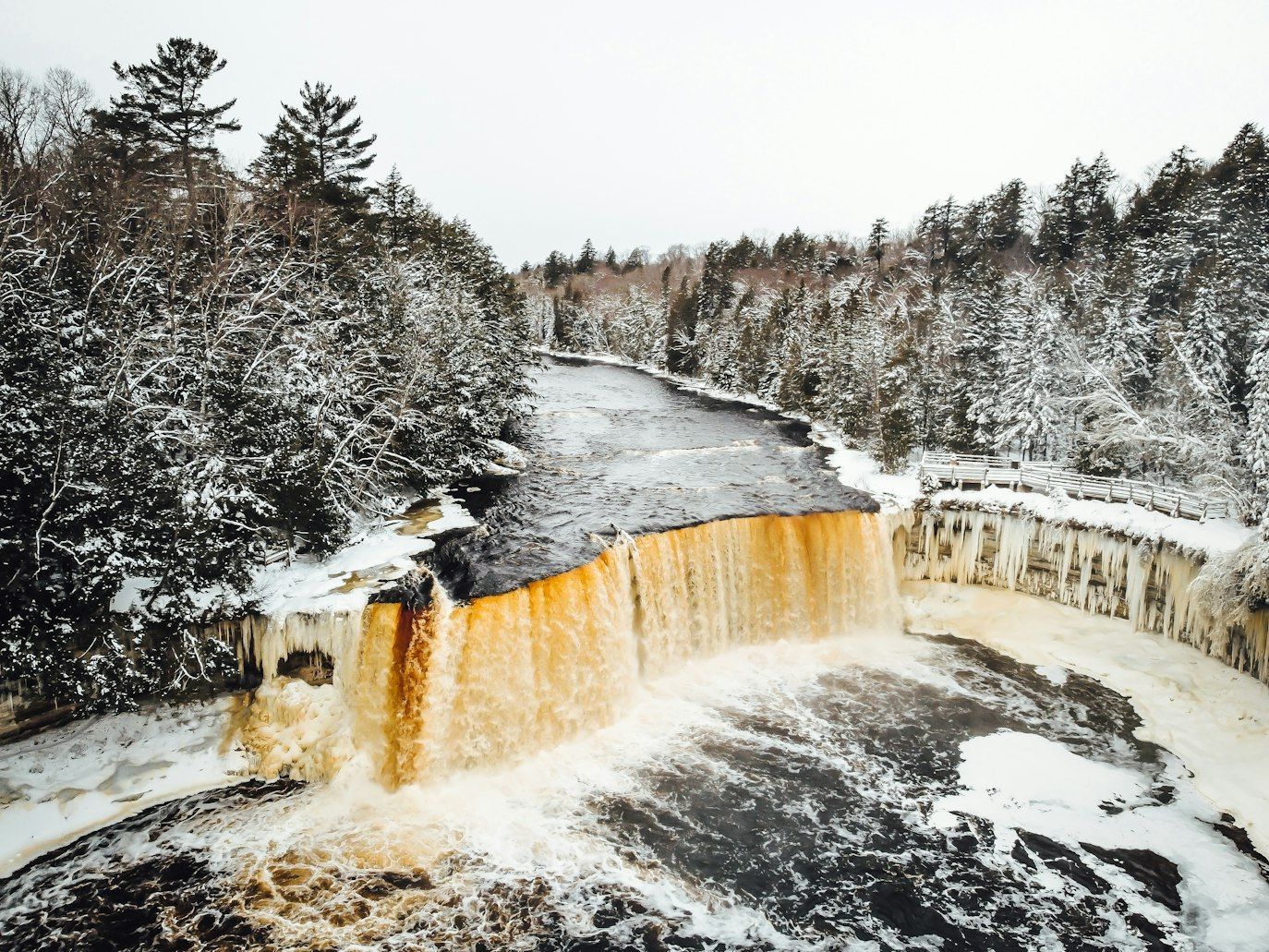
Image: Dillon Austin

The astonishing Tahquamenon Falls are divided into two equally impressive sections. You can visit the Upper Falls to witness the 200-foot-wide and 48-foot-high cascades before heading to the Lower Falls, a group of five waterfalls that drop around a freshwater island. This area was first popularized by Henry Wadsworth Longfellow’s "The Song of Hiawatha", but long before that, it was used as a hunting and fishing site by the Ojibwa natives .

Nowadays, these rust-colored cascades —the result of tannins released from cedar trees upstream— are known to some as "Root Beer Falls." They are located in Tahquamenon Fall State Park, an ideal location for fishing and swimming during the summer. In winter, it becomes a snow-covered paradise for snowmobiling and cross-country skiing . No matter the time of the year, the natural scenery of Tahquamenon is truly a sight to behold!

6
McWay Falls (Big Sur, California)
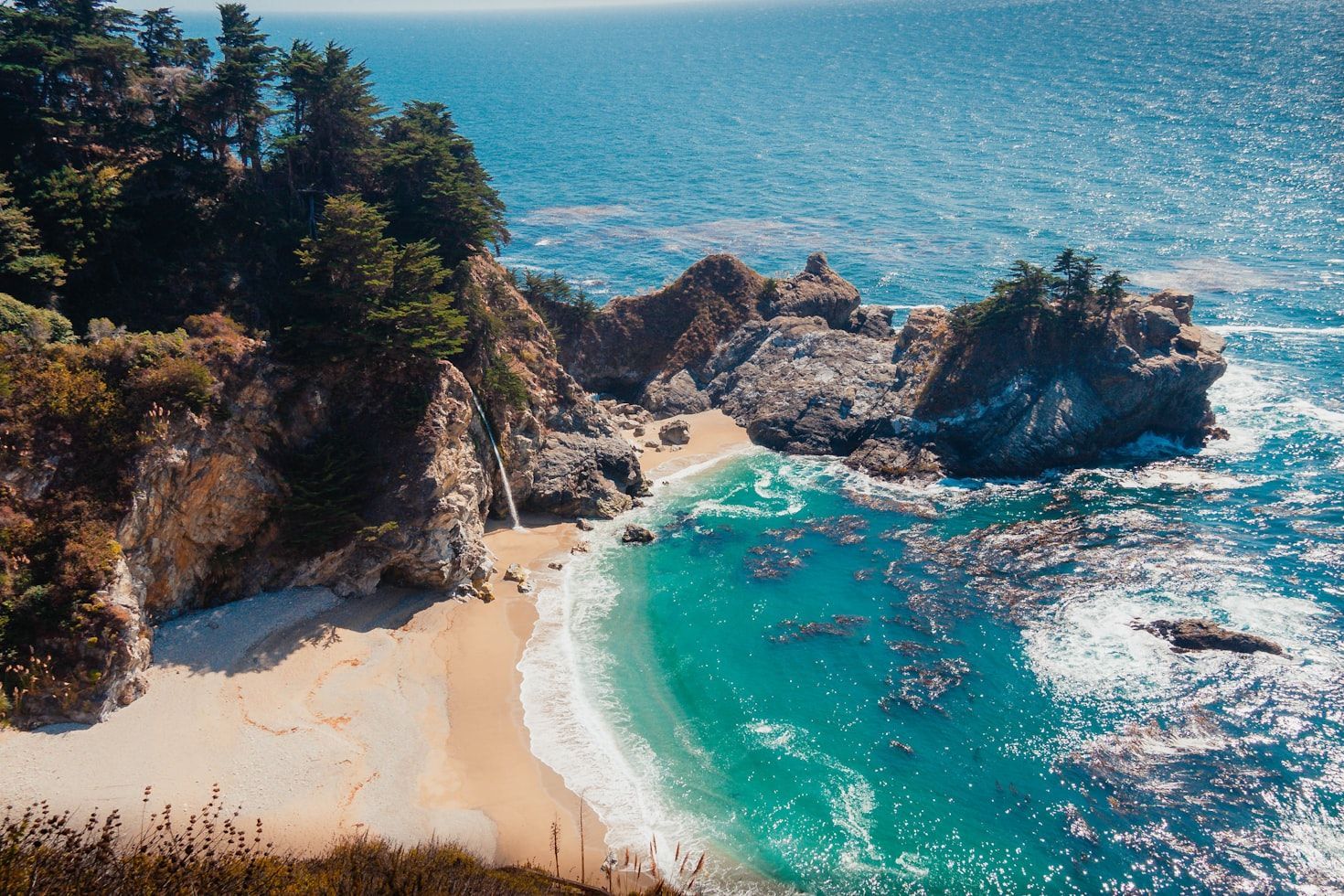
Image: Jairo Gonzalez

Located on the stunning California coast, McWay Falls is a true hidden gem. With its crystal clear waters cascading directly onto the white sandy beach, this 80-foot waterfall delights all visitors with its unique beauty . If you are planning to visit Big Sur and you're looking for spectacular views, McWay Falls is a must-see!

The history of McWay Falls dates back to the beginning of the 20th century when the area was acquired by the McWay family. Julia Pfeiffer McWay, a woman with an adventurous spirit and a passion for nature, fought all her life to preserve its native ecosystem. In 1983, the site was donated to the State of California and incorporated into Julia Pfeiffer Burns State Park, named in honor of Julia's generosity.

7
Crabtree Falls (Blue Ridge Parkway, North Carolina)

Image: Leslie Cross

North Carolina has many natural wonders that can be enjoyed all year round, and Crabtree Falls is no exception. Although it’s not as popular as other waterfalls in the state, it's a site worth visiting, especially during the warmer months . Located just 45 miles north of Asheville, this 70-foot-high cascade is surrounded by an oak and hickory tree forest.

Originally known as Murphy’s Falls, this area was renamed Crabtree Falls by the National Park Service when the Blue Ridge Parkway was constructed in the 1930s. If you are a flower and plant lover, Crabtree Falls is the place to be . In the spring, visitors can find a magnificent array of wildflowers along the trail, and during the summer, ferns fill the forest with rosebay rhododendrons in bloom.

8
Havasu Falls (Supai, Arizona)
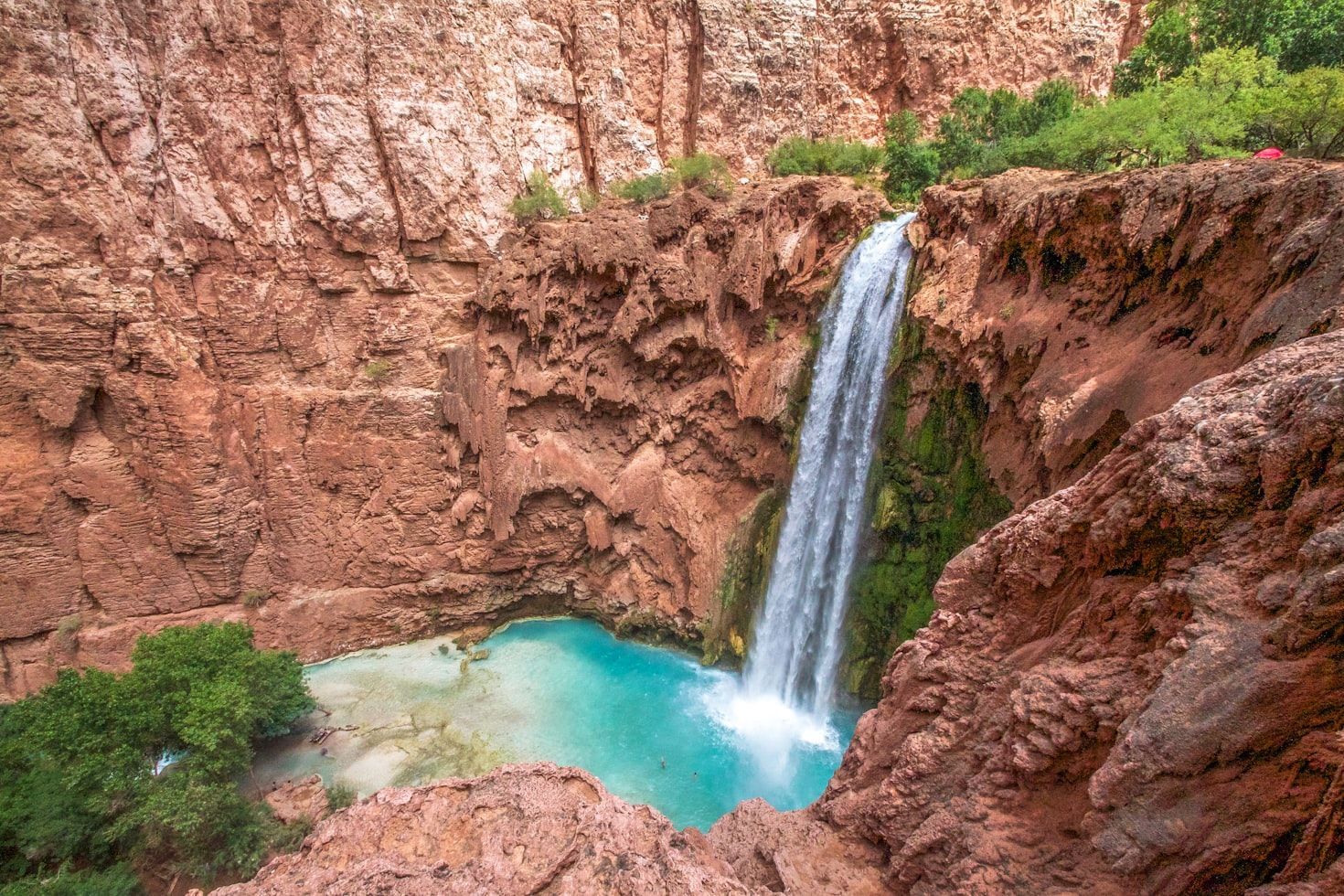
Image: Daniel Hernandez

The Grand Canyon attracts more than 5 million tourists every year and is considered one of the Seven Natural Wonders of the World. But hidden deep in the canyon, on the Havasupai reservation, there is a breathtaking site little known to most tourists: the Havasu Falls . Being in a protected reserve, a special permit is required to visit. If you're lucky enough to get one, the falls can be accessed by helicopter, horse, or mule. Another option is to hike 10 miles there and back, along a beautiful path of red rocks and ancient pictographs.

Havasu Falls is known for having a fantastic turquoise color due to the high levels of calcium carbonate present in the spring-fed waters of Havasu Creek, the main source of the waterfalls. These high levels also create the 70-degree travertine pools at the top, making them the perfect swimming spot!

9
Palouse Falls (LaCrosse, Washington)
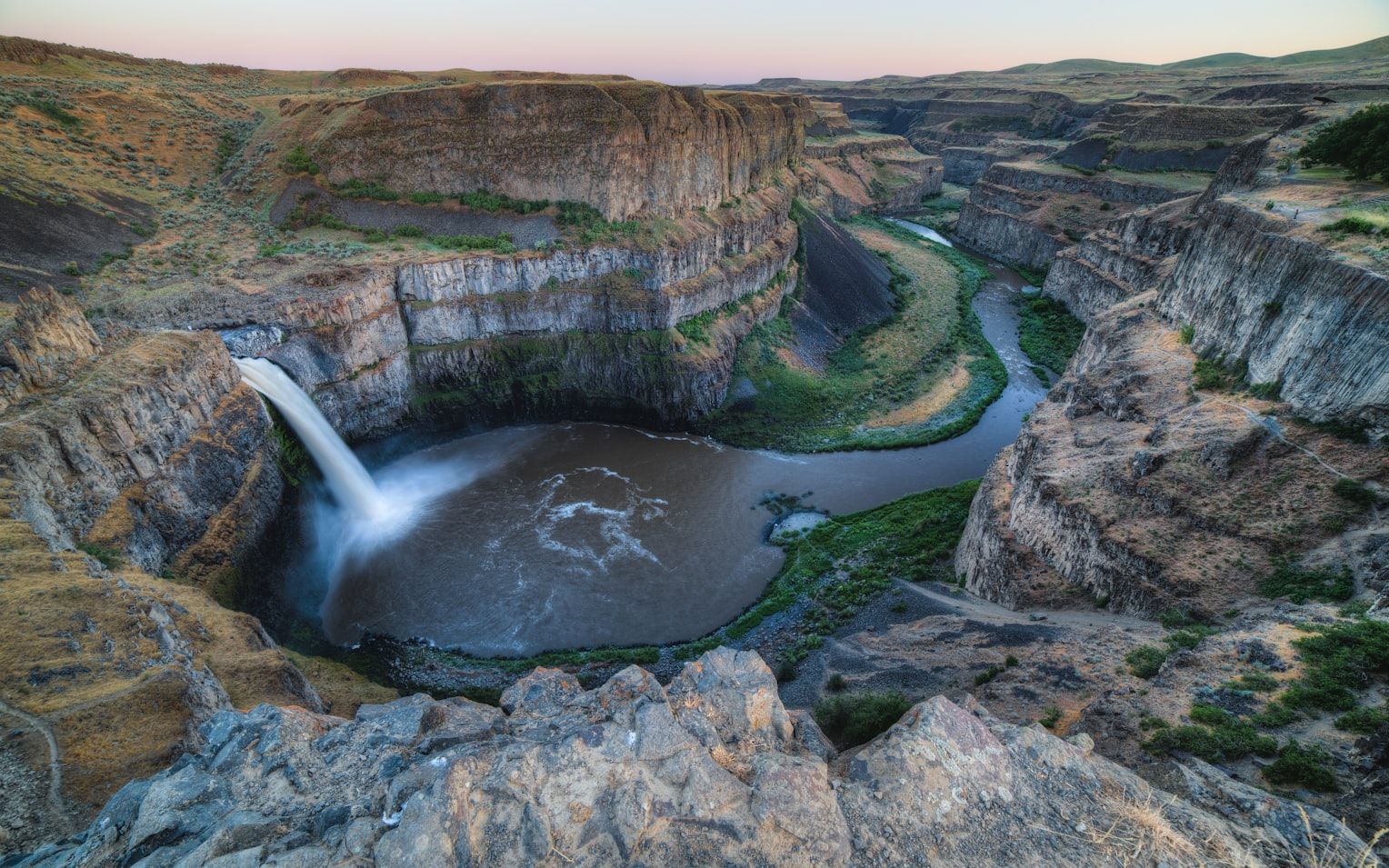
Image: Dave Hoefler

The unexpected beauty of Palouse Falls dominates eastern Washington, attracting thousands of visitors each year to experience the 200-foot drop from a stunning rocky outcrop into a swirling blue pool. The falls are surrounded by striking cliffs and can be seen from several vantage points throughout the State Park, including the trail that hugs the canyon's rim.

Palouse Falls is the result of the last Ice Age , the product of several glacial floods known as the Missoula Floods that swept across the region, creating the unique landscape that amazes us today. If you are feeling adventurous, just pack a tent and prepare to catch one of the best sunset views the country has to offer!

10
Niagara Falls (New York)
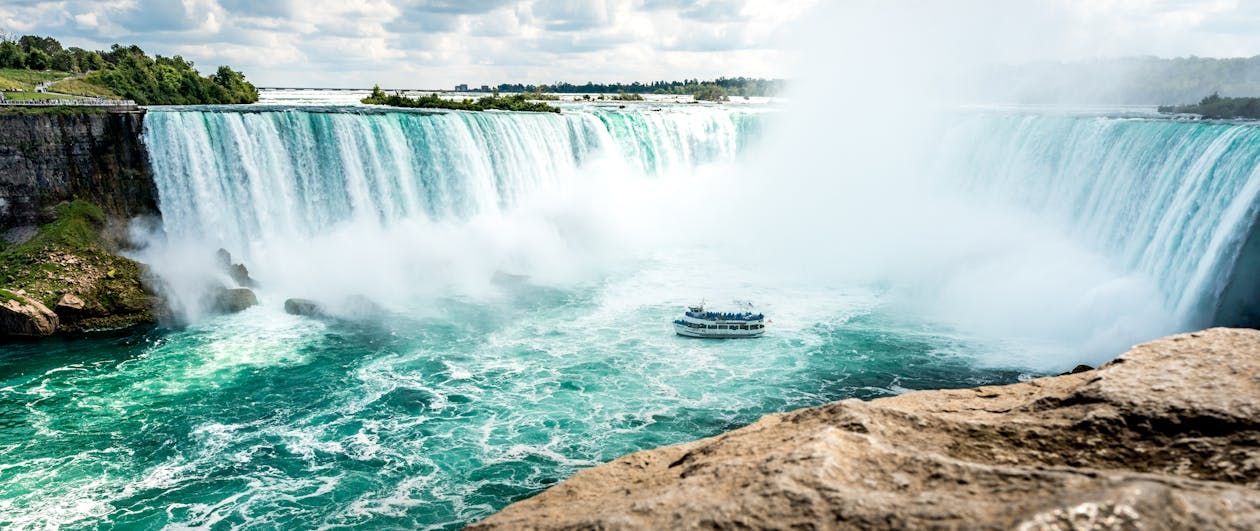
Image: Ivan Torres

Last, but certainly not least, Niagara Falls is one of the most beautiful sights in the United States and a unique destination that attracts millions of tourists from all over the world. With a width of more than 3,000 feet and a drop of 160 ft, these three magnificent falls —two American and one Canadian— are located 400 miles from New York City. Approximately 600,000 gallons of water flow over the falls every second and the average depth underneath is 170 ft.

Named by the Iroquois tribe, the word Niagara means "thunder of water" . Since its discovery by European settlers in the 17th century, Niagara Falls has become very popular, not only for their beauty but also as a source of energy. Niagara Falls is a marvelous spectacle that will remain in the memory of all those who have the chance to explore it . There’s no doubt about it, everyone should visit Niagara Falls at least once in their lifetime!

General General 3 min read

Only ours

Wait... doesn't everyone do that? 10 US traditions that confuse the world

Image: Courtney Hedger

If you're from the United States, there are plenty of things we do every day that feel completely normal... until you leave the country. From the legal drinking age of 21 to eating dinner very early, many familiar American customs leave foreigners scratching their heads. Want to know what makes us stand out? Here are 10 uniquely American traditions that the rest of the world finds strange!

1
Legal drinking age

Image: Elevate

When was the first time you tried a beer? Probably at 21 or later. While that's completely normal here in the US, it can seem a bit strange to people in other parts of the world. Why? In America, you can vote, serve on a jury, and even get married in some states at 18, but you still can't legally buy alcohol until you're 21. In many other countries, the legal drinking age is 18—or even younger—and that's why they find our law unusual.

2
The faces of real estate agents

Image: Tierra Mallorca

We're used to walking through a neighborhood and seeing signs with real estate agents' faces in front of homes for sale. But in other countries, that's pretty unusual! In many places, real estate transactions are more impersonal; you deal with an agency, not a specific person. Here in the US, we like to put a face to the name. Getting to know the person helping you buy or sell a home feels more personal and trustworthy. It makes sense, right?

3
Our coins

Image: Shot by Cerqueira

Many of us don't even notice this until we travel abroad, but some of our coins don't actually show their value! Sure, you'll see words like "Five Cents," "One Cent," or even "One Dime," but there's no actual number printed on them. When you think about it, that's kind of strange, right? Especially when most countries display the value on their coins using numbers.

4
American flag everywhere

Image: camera obscura

In many countries, their national flag is used only for formal or official purposes, but that's not the case in the US. We tend to see the American flag literally everywhere, not just at official functions or holiday celebrations, but also on all kinds of products and imagery. From T-shirts and caps to food packaging and even swimsuits, our flag is a constant presence in everyday life.

5
No bad words on TV

Image: Kevin Woblick

If you're in America and turn on your TV right now, you'll find everything from romantic scenes to shows about zombies or violent crimes, but you'll rarely hear any bad language. Our television generally doesn't include insults or swear words, while in other countries they often do, even in shows that air during times when children might be watching.

6
Dinner before 8 PM

Image: Or Hakim

Depending on the region, dinner in the United States is often served before 8 p.m., and sometimes even before 7 p.m. But in many other countries, that's considered too early. In Latin America, for example, most people eat dinner between 8 and 11 p.m.!

7
The Imperial System

Image: Jarosław Kwoczała

We Americans use miles, feet, pounds, and degrees Fahrenheit, but this is often very confusing for visitors from other parts of the world. We are totally used to the Imperial System, but in most countries, the Metric System reigns supreme, with everything measured in meters, kilometers, kilograms, and degrees Celsius.

8
Big portions

Image: mafe estudio

Large portions are deeply ingrained in our daily lives. Whether it's restaurant meals, snack packs, or soft drinks, everything tends to be bigger in America. This can be surprising for foreigners who come here and order food, since in many other countries, dishes are smaller, and the custom of taking leftovers home after eating at a restaurant isn't as common as it is in the US.

9
Turkey pardon

Image: Tyler Donaghy

The pardoning of the turkey by the US president is a big event for many Americans. But in other parts of the world, where Thanksgiving isn't celebrated, it can come as a surprise. To foreigners, this formal ceremony involving a turkey might seem quite strange. Since Thanksgiving traditions aren't part of their history, this custom is uniquely American.

10
Alumni homecoming

Image: Carol Highsmith's America

Perhaps you've had the chance to participate in Homecoming, the annual event that celebrates university spirit with parties, sports games, and other activities for students returning to campus. While it's a big part of our college tradition and communities are deeply involved, it's quite different in other parts of the world, where the return to school usually happens with little fanfare.

General General 6 min read

12 American inventions that shaped modern life

Image: National Gallery of Art, CC0, via Wikimedia Commons

From life-saving medical developments to groundbreaking technologies, American inventors have transformed how we live, work, and communicate. These innovations not only transformed everyday life but also ignited the flame of progress across the globe. Let’s dive into our selection of the 12 inventions that best reflect American creativity and ingenuity.

1
The light bulb

Image: Zach Lucero

Delivering electricity to the masses was one of the greatest technological advances in human history. The mid-1800s saw great competition in this area, as inventors around the world raced to invent their own electric light. The first filament bulb was developed by British inventor Warren de la Rue in 1840, but his use of a platinum filament made it expensive and impractical.

A few years later, Joseph Swan in the UK and Thomas Edison in the US each independently invented bulbs using cheaper elements. However, Edison received a patent on his bulb in early 1880, slightly before Swan. The light bulb, an invention that quickly reached every home, revolutionized life around the world, led to the development of the electrical grid, and set the stage for our modern electricity-dependent society.

2
The telephone

Image: viarami

In this modern era of emails and text messages, it can be hard to appreciate that the telephone was once revolutionary. The telegraph, the phone’s predecessor, only transmitted brief written messages. The telephone, however, allowed people to speak with one another in real time over long distances.

Inventor, scientist, and engineer Alexander Graham Bell invented the electric telephone in 1876. Although Bell was Scottish-born and also lived in Canada, he patented his invention in the US . The telephone was a game-changing technology that improved business efficiency, enabled instant global connections, and allowed emergencies to be reported as they occurred. It effectively made the world more connected and faster-paced.

3
The fire escape

Image: Lewis J Goetz

When we think of US inventions, the first things that come to mind are usually the light bulb or the telephone. But did you know that the modern fire escape was also a US innovation? Designed in 1887, this simple yet life-saving invention changed building safety forever.

In the late 1800s, fires were devastating cities across America. One woman, Anna Connelly, saw this horror up close and decided to do something about it. She designed an external iron staircase system, and in 1887, she patented it. At a time when women couldn’t even vote, Anna’s invention became a safety standard in most major cities, saving thousands of lives. Today her name is barely known, but next time you see a fire escape, remember the woman who made them possible.

4
The cash register

Image: Di Du

The first mechanical cash register for calculating and recording sales transactions was invented by saloonkeeper James Ritty following the American Civil War. He was looking for a way to stop cashiers from stealing, and finally patented his novel invention in 1879.

When a transaction was completed, Ritty's Incorruptible Cashier made a bell sound, and the amount was displayed on a large dial on the front of the machine. During each sale, a paper tape was hole-punched so the vendor could keep track of sales. Pretty ingenious, don’t you think?

5
Interchangeable parts

Image: gayulo

Standardized interchangeable parts for machines are now a staple of modern manufacturing, but it’s not a new idea. There’s evidence that thousands of years ago, ancient Carthage used them to build warships, and ancient China applied the idea to crossbows. Many centuries later, French experimentation with interchangeable musket parts inspired Thomas Jefferson.

In 1798, President George Washington and his Congress finally agreed to Jefferson’s idea of implementing the technology in America. They awarded a contract to Eli Whitney—the inventor of the cotton gin—to supply the government with 20,000 muskets. Whitney recognized the potential of developing firearms with identical parts and mechanisms. His advancements in interchangeable parts laid the foundation for modern manufacturing, enabling improved quality control, reduced costs, and faster production of goods.

6
The assembly line

Image: Public domain, via Wikimedia Commons

For most of human history, manufactured goods were custom-made. Every model of a machine, piece of clothing, or tool was unique. The development of interchangeable parts was a huge advancement, but automobile manufacturer Ransom Olds took it a step further with the assembly line in 1901. By standardizing and automating many aspects of manufacturing, uniform goods could be created faster and at lower costs.

Olds’ vehicle, the Oldsmobile Curved Dash, became the first mass-produced car . His method was later adopted and perfected by Henry Ford, whose moving assembly line for the Model T in 1913 revolutionized manufacturing. Today, the assembly line combines human labor and automation to produce nearly every mass-market product on Earth. Many experts agree it was one of the most significant technological developments of the 20th century.

7
The airplane

Image: Wright Brothers, Public domain, via Wikimedia Commons

People have always observed birds and insects and dreamed of flying. The Greeks told the story of Icarus and Daedalus, who crafted wings of wax and feathers; Leonardo da Vinci sketched and theorized flying machines, but it wasn’t until 1903 that the airplane became a reality in Kitty Hawk, North Carolina.

Wilbur and Orville Wright experimented with aeronautics for several years before achieving their successful first flight. A few years later, airplanes were first used in warfare. Within seven decades, their technology evolved and took us to the Moon. Today, the airplane is an indispensable technology that allows us to transport goods and people around the world in no time.

8
GPS

Image: Stanislav Kondratiev

It’s hard to imagine life without GPS—but do you know how it began? When the Soviet Union launched Sputnik in 1957, American physicists realized they could track the satellite’s radio transmissions using the Doppler effect.

Soon after, the U.S. military began testing and launching the Navstar Global Positioning System satellites. In 1983, President Ronald Reagan approved GPS for civilian use, and by the start of the 21st century, GPS devices were widely available in vehicles and mobile phones . Today, GPS is an essential technology for business, travel, and military operations.

9
Personal computers

Image: Unidentified U.S. Army photographer, Public domain, via Wikimedia Commons

The first electronic general-purpose computer, ENIAC, was built in 1946 at the University of Pennsylvania. It occupied 1,800 square feet of floor space and weighed 30 tons. At the time, imagining a consumer-grade computer small enough to fit in every home would have seemed impossible. Yet, just one generation later, the impossible became reality.

Over the years, computers became smaller, cheaper, and more powerful than the ENIAC’s creators could have imagined. In 1971, John Blankenbaker developed the first PC, the Kenbak-1. Fifty years later, it is clear that personal computing has fundamentally shaped the modern world.

10
The internet

Image: Lorenzo Herrera

Revolutionary technologies such as the wheel, the internal combustion engine, the telephone, and the airplane have forever changed the way we travel and communicate. The internet is no exception; it gives people access to the entirety of human existence with just a few clicks.

In 1969, computer scientists at the Advanced Research Projects Agency (ARPA) created the first network connecting labs at UCLA and Stanford. Over time, their network expanded, connecting anyone with a device. Since then, the internet has revolutionized the way human beings access resources and share information.

11
E-mail

Image: Brett Jordan

After the personal computer and the Internet, we only needed to invent a modern method of sending messages and letters to each other. The Advanced Research Projects Agency Network, known as ARPANET, sent the first email in 1971. Within five years, the majority of exchanges within the ARPANET community were via email.

With the introduction of attachments in the early 1990s, electronic mail became the fastest and easiest way to send information from point to point. By the start of the 21st century, email enabled people around the world to communicate quickly and inexpensively, and the technology quickly became one of the primary tools for global communications.

12
Magnetic resonance imaging

Image: MART PRODUCTION

The impact of the MRI machine on medicine is invaluable. The principles behind nuclear magnetic resonance (NMR) have been known since at least the end of World War II. Yet, two researchers in the late 1960s and early 1970s recognized the potential of this technology to revolutionize medicine forever.

American chemist Paul Lauterbur and physician Raymond Damadian separately experimented with NMR in scanning for cancer cells. After publishing the promising results of their experiments, a patent was filed. By 1977, the first full-body scanner was developed. Since then, millions of lives have been saved by the MRI machine. For his contributions, Lauterbur was awarded the Nobel Prize in Physiology or Medicine in 2003.

Explore more American facts

Choose your favorite category!

General
General

As American as apple pie—the very best America has to offer!

Culture
Culture

Delve into the astounding richness of American lore.

Geography
Geography

Hop in and explore vast and diverse American landscapes.

History
History

Discover the key moments that shaped the United States.