History History 5 min read

AHOY, CAPTAIN!

Which Is The Most Valuable Shipwreck Ever Recovered?

Image: Massimiliano Morosinotto

There is something equally fascinating and haunting about a huge ship lying on the bottom of the ocean or a lake. From the sad story of the Edmund Fitzgerald to the largest wooden ship, or the most valuable ship ever lost, you will find here 10 ships that met their untimely fate and remain hidden underwater. Keep reading to discover which of these famous wrecks you can recognize.

1
Nuestra Señora de Atocha (Our Lady of Atocha)

Image: NOAA

A ship that sank off the coast of the Florida Keys in 1622, the Nuestra Señora de Atocha is, to this day, the most valuable shipwreck ever recovered. Originally bound from Havana, Cuba to Spain, the Atocha was loaded with a large treasure, ranging from copper and gems to gold and indigo from the Spanish colonies.

But, shortly after launching from port, a major hurricane caught the ship and destroyed the Atocha , which sank 56 feet beneath the surface. In 1985, treasure hunters rediscovered the wreck off the coast of the Florida Keys. Currently holding a Guinness World Record for its recovered value, the Atocha is a continual treasure trove for divers and fortune hunters alike.

2
SS Republic

Image: Vlad Tchompalov

A ship that served both the US and Confederate governments, the SS Republic sank in 1865 during a hurricane off the coast of Georgia. After the Civil War, the Republic carried passengers and cargo from New York to New Orleans. On October 20, 1865, a hurricane off the coast of Georgia damaged the ship, which sank around four in the afternoon.

As a result of the sinking, the cargo was lost with the ship until 2003, when a commercial archaeology company rediscovered the wreck approximately 100 miles from Savannah, Georgia. About a third of the coins that were on board the ship have been recovered, and are now valued at over USD 75 million.

3
The Whydah Gally

Image: NOAA

The Whydah Gally was intended for service in the British Empire before it was captured by the infamous pirate Samuel "Black Sam" Bellamy. As Bellamy and his crew approached the Massachusetts coast the weather turned, creating a violent nor’easter cyclone. The ship capsized and its cargo, 144-man crew, and captain were consequently thrust into the sea.

In 1984, underwater archaeologist Barry Clifford discovered the Whydah Gally. Since its rediscovery, many artifacts have been retrieved from the ship, including the ship’s bell , inscribed with the words: "THE WHYDAH GALLY 1716." This helped authenticate the Whydah as the first pirate shipwreck to ever be found and confirmed.

4
SS Central America

Image: Giuseppe Murabito

The SS Central America was an American sidewheel steamer that operated between the East Coast and Central America. In September 1857, carrying 477 passengers, 101 crewmembers, 38,000 pieces of mail, and 30,000 pounds of gold harvested during the California Gold Rush to New York City, the Central America was engulfed by a Category 2 hurricane.

At the time of the boat’s sinking, over 400 people were still on board, making it the most deadly of any American commercial boat disaster. The gold on board was also lost. In 1988, explorer Tommy Gregory Thompson found the ship, and up to three tons of gold were excavated, leading to long legal battles that have continued to the present day.

5
SS Georgiana

Image: Jason Mavrommatis

The SS Georgiana was a Confederate steamer. Built in Scotland, the ship sailed its maiden voyage in 1863 to Charleston, South Carolina, where it was expected to be outfitted by Confederate soldiers. However, the Georgiana was not armed with any guns on its first journey and approached its destination on March 19, 1863, with minimal defense.

A member of a Union blockade alerted the nearby battleship USS Wissahickon , which shot and pierced both sides of the ship’s hull. Captain Davidson, signaled a surrender to the Union blockade before beaching the boat. Before the beached ship could be boarded Davidson purposefully sank the boat, before escaping to land with his entire crew. Found on March 19, 1965, the Georgiana was lost for exactly 102 years before its discovery.

6
Edmund Fitzgerald

Image: Nott Peera

Arguably one of the most famous shipwrecks in American history , the Edmund Fitzgerald was the largest ship on the Great Lakes until 1971. The freighter was fatally wrecked on Lake Superior during the winter of 1975, with all her crew losing their lives.

The exact cause of the sinking, with no outward signs of severe damage, is still heavily debated. The prominent theories include the vessel running aground or suffering damage during the storm. A U.S. Navy Lockheed P-3 Orion aircraft discovered the wreck of Edmund Fitzgerald in November 1975, 15 miles west of Deadman’s Cove, Ontario.

7
Carl D. Bradley

Image: Sandra Seitamaa

The SS Carl D. Bradley , a Great Lakes freighter built in 1927, was popularly known as the "Queen of the Lakes" because it was the longest and largest freighter on the Great Lakes at the time. In 1957, it collided with another vessel , the MV White Rose , causing damage to the hull.

It was caught in a storm in November of the same year and sank in Lake Michigan, killing 33 of the 35 crew members. The sinking was caused by structural damage caused by the poor choice of steel used in its construction. The wreck, lying 360 feet under the water, was discovered in 1959 by the Army Corps of Engineers.

8
Lady Elgin

Image: ALDO DE PASCALE

The Lady Elgin was a wooden-hulled steamship built in 1851 that served on the Great Lakes as a passenger ship. On September 6, 1860, while returning from Chicago, the vessel sank in an unfortunate accident.

While facing a strong gale, it was rammed by the schooner Augusta of Oswego and, due to the damages caused by the collision, the vessel sank sometime later, resulting in the death of more than 300 people. Though the exact number remains unknown since the manifest was lost during the accident, it remains one of the worst shipwrecks in the region.

9
SS Eastland

Image: Anton Repponen

The SS Eastland was a Chicago-based passenger ship , used for tours. On 24 July 1915, the ship rolled over onto its side while tied to a dock in the Chicago River. In total, 844 passengers and crew were killed in what was the largest loss of life from a single shipwreck on the Great Lakes.

After the disaster, the Eastland was salvaged and sold to the United States Navy which, after restorations and modifications, designated it a gunboat and renamed it USS Wilmette . It was used primarily as a training vessel on the Great Lakes and was scrapped after World War II.

10
Wyoming

Image: rashid

The largest wooden ship ever built , the Wyoming was a six-masted schooner built, completed in 1909 in Bath, Maine. It had a length of 450 ft from jib-boom tip to spanker boom tip.

Because of its extreme length and wood construction, the Wyoming tended to flex in heavy seas, which would cause the long planks to twist and buckle, allowing sea water to intrude into the vessel. For this reason, the Wyoming had to use pumps to keep itself relatively free of water. In March 1924, it foundered in heavy seas and sank with the loss of all hands.

Geography Geography 3 min read

Which is your favorite season?

Beyond Vermont: Discover 12 amazing places to watch the fall foliage

Image: Pixabay

Everybody knows that Vermont is a popular destination for watching the leaves change color in the fall. However, as locals know, there are many other places in our gorgeous country where one can marvel at the rainbow created by nature during the autumn months. Did you know about these 12?

1
McKenzie River Scenic Byway, Oregon

Image: Atanas Malamov

Oregon is famous for its stunning landscapes, and autumn months are no exception. The McKenzie River Scenic Byway stretches from the vineyards of the Willamette Valley to the forests of the Cascade Mountains .

The best time of the year to visit if you want to enjoy the vibrant colors is mid-to-late October.

2
Charlottesville, Virginia

Image: Mitchell Kmetz

The endless forests and rolling hills of Virginia, especially in the foothills of the Blue Ridge Mountains, create breathtaking landscapes painted in red, orange, yellow, and green during October and November.

3
French Lick West Baden, Indiana

Image: Adam Bouse

Nestled in the hills of Hoosier National Forest, French Lick West Baden is a resort town that showcases some amazing views when it comes to fall foliage . The best time to visit is from mid-October to early November.

4
Mississippi River Valley, Minnesota

Image: Josh Hild

The Mississippi River Valley in southern Minnesota is home to vibrant forests, steep hillsides, and picturesque river towns , waiting to be explored by those eager to make the trip.

The best time to see the foliage change is from late September to mid-October.

5
Breckenridge, Colorado

Image: Thomas Morse

Breckenridge, Colorado, bursts into vivid colors every late September, with the changing leaves of the aspen trees creating a gold, red, and orange rainbow in the heart of the Rocky Mountains.

6
Northwoods, Wisconsin

Image: Dave Hoefler

Thousands of lakes and vast forests that stretch across five counties can be found in the Northwoods of Wisconsin. From mid-September to early October, visitors are treated to some of the best foliage in the region, with vibrant shades of orange, red, yellow, and purple.

7
Highlands, North Carolina

Image: Wes Hicks

Imagine a lush rainforest with waterfalls, rivers, and lakes to explore, combined with the typical colors of the leaf change season. Such a place exists in North Carolina. The mountain town of Highlands, perched at over 4,100 feet on the Highlands Plateau in Nantahala National Forest, offers breathtaking fall foliage, with the best viewing time in mid-October.

8
Whidbey Island, Washington

Image: Toan Chu

Washington’s ultimate road trip, the Cascade Loop, winds along the Puget Sound via the Whidbey Island Scenic Byway . Peak fall colors along this drive commonly occur between late September and mid-October showcasing brilliant shades of gold, orange, and red.

9
Tunnel of Trees, Michigan

Image: AJ Yorio

A place known as the Tunnel of Trees will hardly disappoint visitors who come during the foliage change season. This 20-mile scenic route follows the historic Michigan 119 highway between Harbor Springs and Cross Village . The canopy of gold, orange, yellow, and purple leaves is typically on display from late September to mid-October.

10
North Lake Tahoe, California & Nevada

Image: Ben Carless

The stunning Lake Tahoe is framed by the peaks of the Sierra Nevada range on its north shore. Its hundreds of hiking trails wind through diverse tree species that display vivid red, orange, and yellow foliage from mid-September to late October.

11
The Ozarks, Arkansas

Image: Derek Livingston

The Ozark Mountains are most famous for their neighboring lake of the same name, but the amazing autumn colors are a spectacle that deserves all the attention during October. The palette of bright golds, reds, and oranges is especially stunning in the Buffalo National River area near the small town of Ponca.

12
Anchorage to Kenai drive, Alaska

Image: Derek Livingston

Alaska is nothing short of breathtaking, and fall is no exception. Its vast landscapes come alive with vibrant shades of red, purple, yellow, and orange from late August through September.

One of the best ways to experience the season is on the 160-mile drive along the Seward and Sterling highways from Anchorage to Kenai, following two National Scenic Byways.

History History 3 min read

NASA can be fun

Smuggled sandwiches, gorillas & more: 11 incredible space stories

Image: Gerhard Janson

Space exploration might seem like all rockets and science on the surface, but behind NASA’s historic missions lie some truly weird and hilarious moments. From smuggled sandwiches floating in zero gravity to surprise gorilla-suit pranks aboard the International Space Station, the U.S. space program has had its share of unexpected twists. Did you know about these 11?

1
Smuggled sandwich

Image: Gennady Zakharin

During the Gemini 3 mission, astronaut John Young secretly brought a corned beef sandwich into space . He and fellow astronaut Gus Grissom took a few bites while in orbit.

Needless to say, Mission Control wasn’t amused—there were serious concerns about crumbs floating around and interfering with the spacecraft’s systems.

2
A gorilla in the ISS

Image: Amy Reed

Astronaut Scott Kelly pulled off a wild prank during his year in space by dressing in a gorilla suit and chasing fellow astronaut Tim Peake around the International Space Station.

The costume had been secretly sent by Scott’s twin brother, Mark Kelly, as a surprise birthday gift during the mission.

3
Lunar picnic

Image: Lucie Capkova

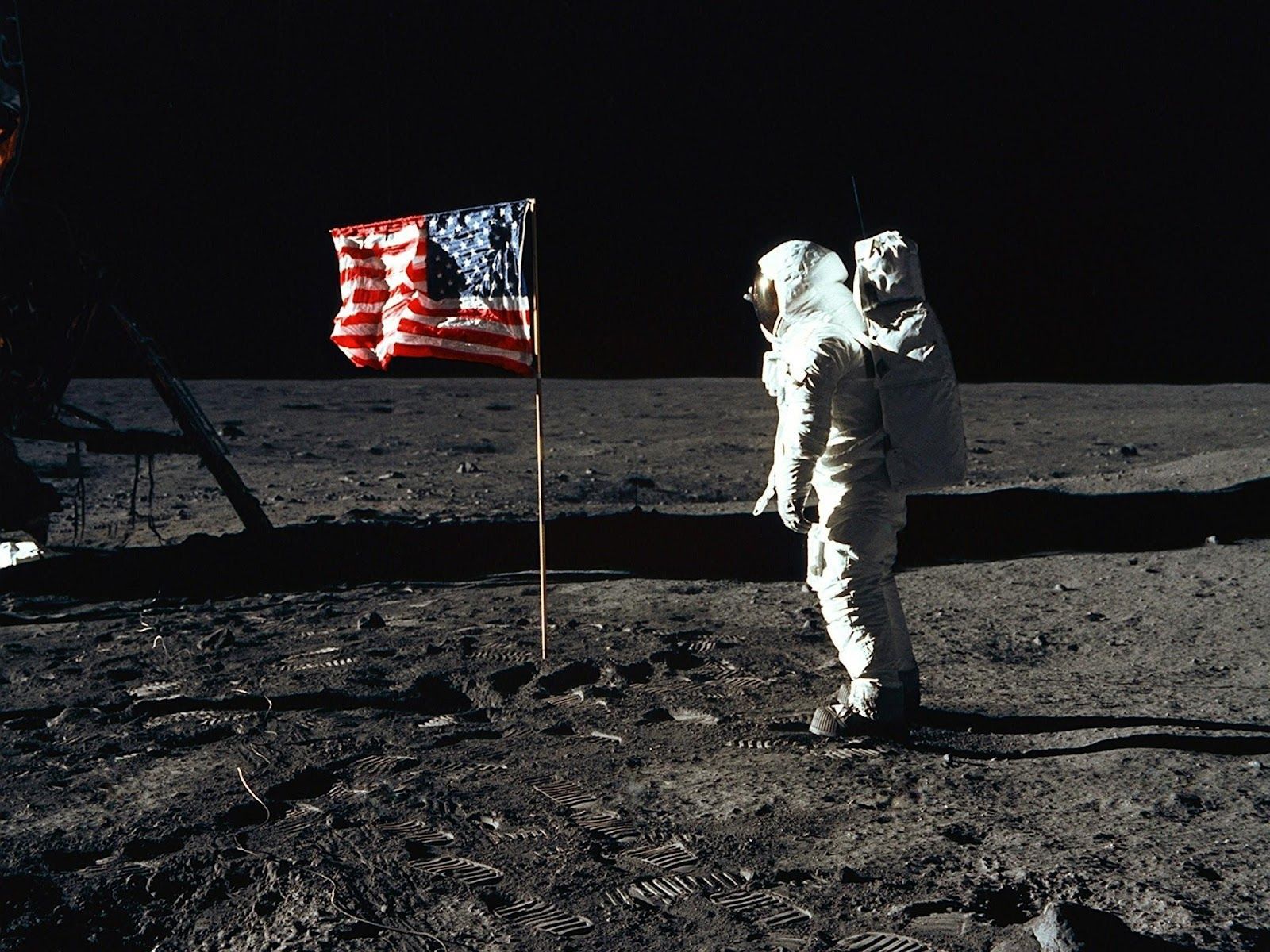
In 1969, Neil Armstrong and Buzz Aldrin made history as the first humans to walk on the Moon. But they didn’t stop there.

To mark the occasion, they also shared the first meal on the lunar surface . The menu included bacon squares, peaches, sugar cookie cubes, a pineapple-grapefruit drink, and coffee.

And unlike the smuggled corned beef sandwich incident, this meal was entirely mission-approved.

4
Fined by Mars "owners"

Image: Planet Volumes

In 1997, NASA was sued by three men from Yemen who claimed that Mars had been passed down to them by their ancestors.

They accused NASA of trespassing when the Pathfinder rover landed—and even began selling plots of Martian land for $2 per square meter. Of course, the case was never taken seriously.

5
Metric vs. Imperial

Image: Bozhin Karaivanov

Back in 1999, NASA lost a Mars orbiter due to a mix-up between metric and imperial units. One team used the metric system, while another used imperial units to track thruster force.

The error caused the spacecraft to veer off course and burn up in the Martian atmosphere. It had been intended to be the first satellite to study Mars's climate and weather in detail.

6
Another fine—for littering

Image: Attila Lisinszky

In 1979, NASA’s Skylab space station re-entered Earth’s atmosphere and broke apart, scattering debris across Western Australia, about 482 kilometers east of Perth.

In response, the Shire of Esperance , a local government body in Western Australia, jokingly fined NASA $400 for littering.

7
A building with its own weather

Image: reza shayestehpour

NASA’s Vehicle Assembly Building (VAB) at the Kennedy Space Center is one of the largest buildings in the world by volume, enclosing over 3.7 million cubic meters of space. It was originally built to assemble the massive Saturn V rockets used in the Apollo missions.

But its immense size—combined with Florida’s high humidity—once led to clouds forming inside . To prevent this, NASA installed a 10,000-ton air conditioning system to control moisture and protect delicate spacecraft.

8
Bathroom issues

Image: Jan Antonin Kolar

Early space missions didn’t have modern toilets—just plastic bags taped in place. During Apollo 10, this led to an awkward moment when a piece of human waste was spotted floating through the cabin .

Commander Tom Stafford asked for a napkin to grab it, but no one claimed responsibility. Minutes later, another one appeared. The crew laughed it off, but to this day, the mystery remains unsolved.

9
Mutiny in space

Image: Towfiqu barbhuiya

In 1974, the Skylab 4 crew spent 84 days in space—the longest mission at the time. Overworked and stressed, the astronauts staged the first space mutiny by taking a surprise day off and cutting communication with NASA.

They relaxed and enjoyed the view of Earth before resuming contact the next day. NASA wasn’t thrilled but learned a valuable lesson: space missions must care for astronauts’ mental health, not just their physical well-being.

10
Paid to stay in bed

Image: Kinga Howard

NASA once paid volunteers $15,000 to lie in bed for 90 days to simulate the effects of zero gravity on the human body.

It sounds like a dream job (pun intended)—until you realize they weren’t allowed to get up at all, not even for a second.

11
No insurance

Image: Vlad Deep

Before Apollo 11 launched, the crew couldn’t get life insurance due to the mission’s high risks . So Armstrong, Aldrin, and Collins came up with a clever backup plan.

They signed envelopes and postcards, which friends postmarked during the mission. If the astronauts didn’t return, their families could sell them to collectors for financial support.

Explore more American facts

Choose your favorite category!

General
General

As American as apple pie—the very best America has to offer!

Culture
Culture

Delve into the astounding richness of American lore.

Geography
Geography

Hop in and explore vast and diverse American landscapes.

History
History

Discover the key moments that shaped the United States.