General General 3 min read

Secret tracks

What's the meaning behind the acorns in Grand Central Terminal?
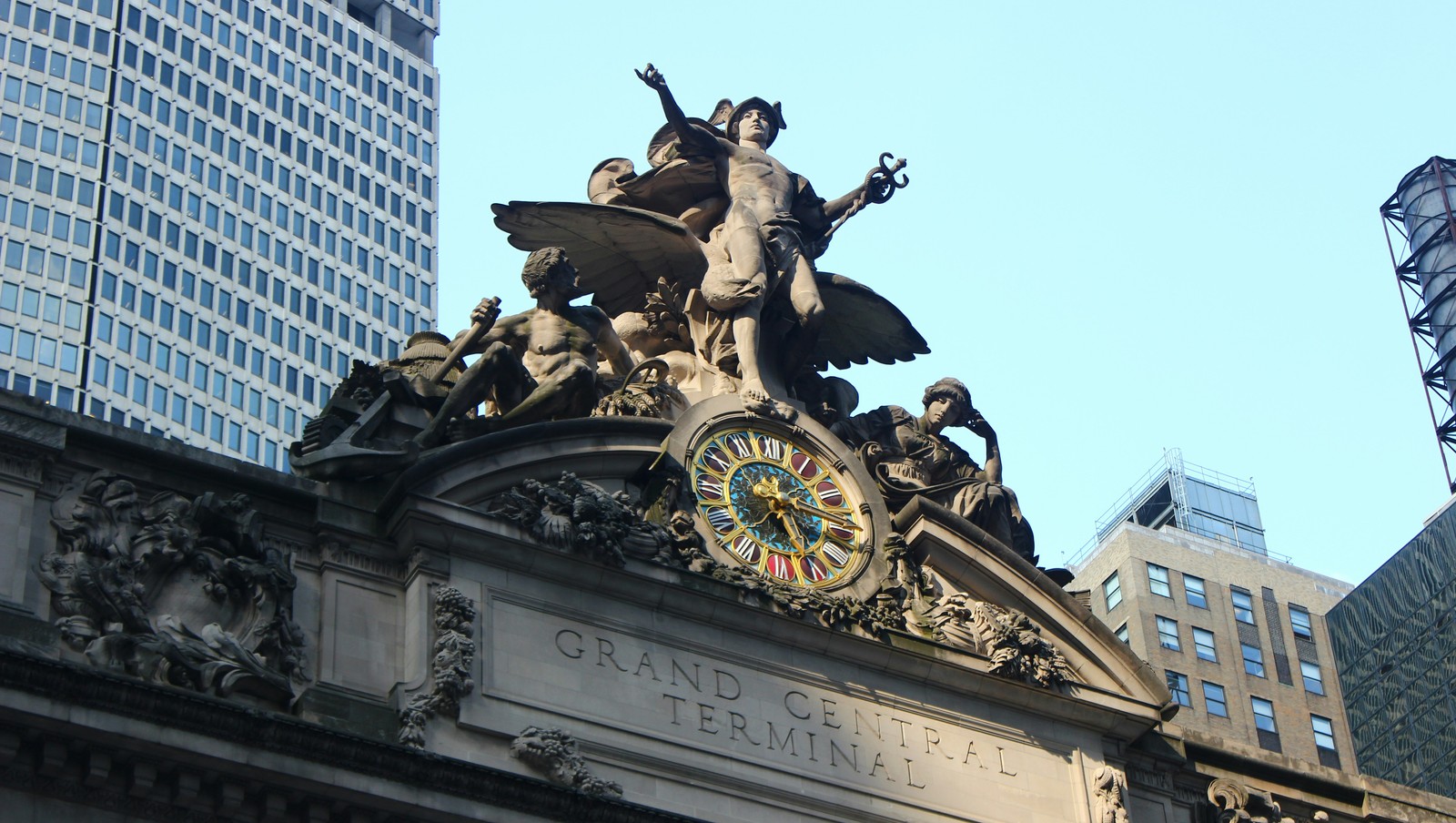
Image: Lāsma Artmane

Ever since its public opening in 1913, Grand Central Terminal has been a living piece of New York history. Millions of travelers pass through its marble halls each year, but few realize just how many surprises hide behind those iconic clocks and grand archways. From secret tunnels to a bar tucked inside an old tycoon’s office, Grand Central holds more than a century’s worth of hidden stories waiting to be uncovered. Let’s take a closer look.

1
A bar hidden in plain sight
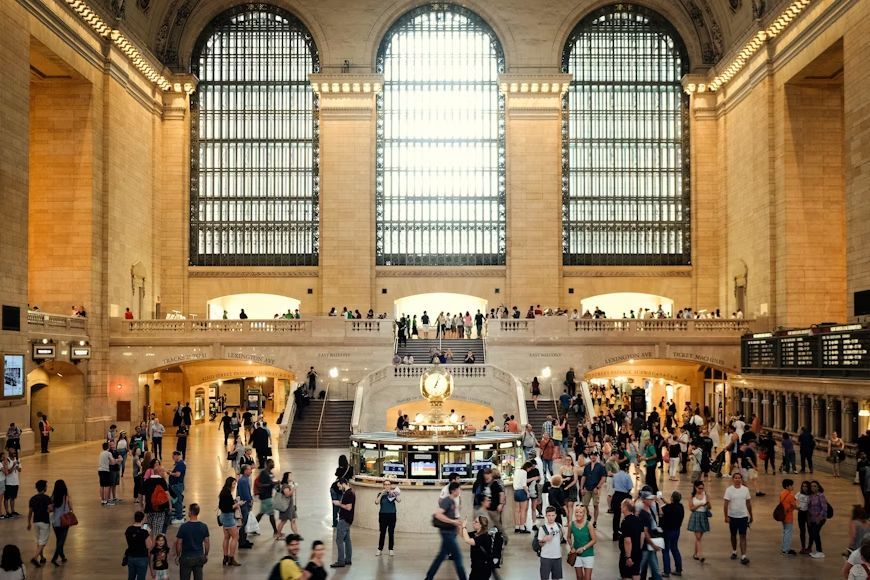
Image: Jad Limcaco

Most visitors know the famous Oyster Bar, but few stumble upon The Campbell, an elegant lounge tucked inside Grand Central. Originally the office of 1920s finance tycoon John W. Campbell , this spot sat forgotten for decades until 1999, before being restored to its former Jazz Age glory. Step inside today, and you’ll find velvet couches, grand rugs, and cocktails that make you feel like you’ve time-traveled back to the roaring 1920s.

2
Two clocks worth a fortune?
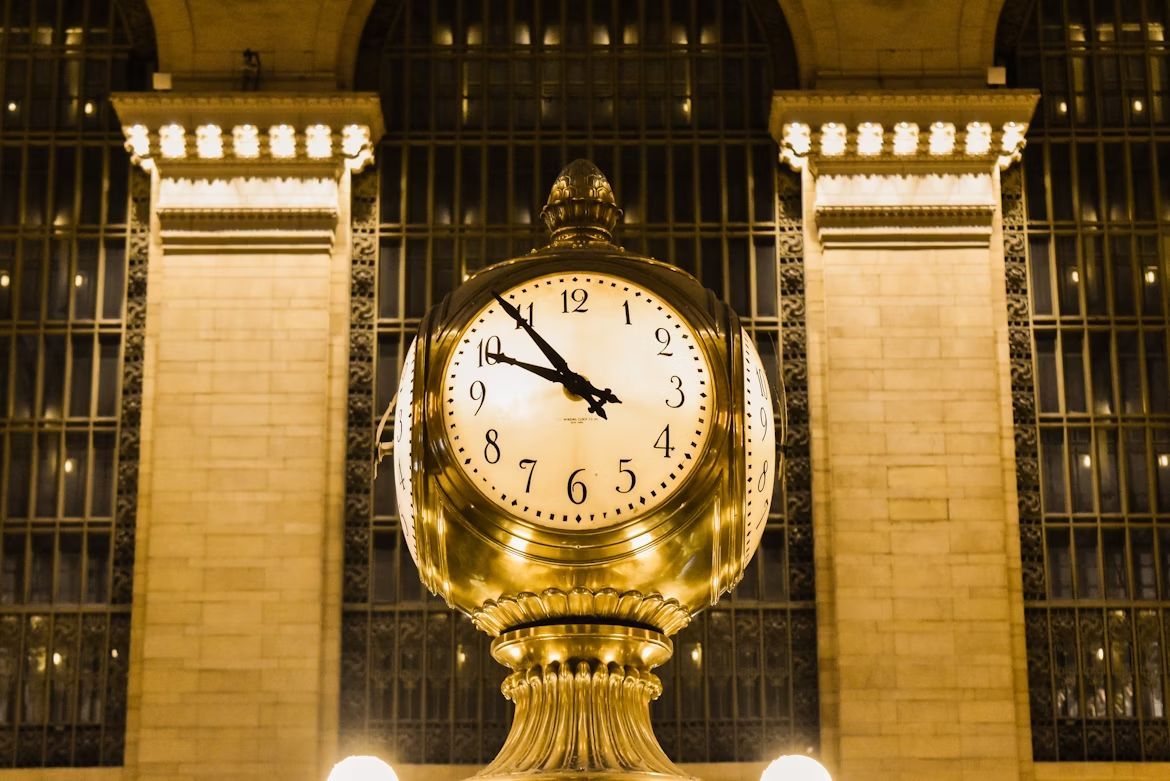
Image: DAVID NIETO

Grand Central has one of the most valuable clocks in the world , although there’s a myth that says there are two. The Tiffany clock outside towers 14 feet across, framed by Roman gods carved in stone. This clock is worth around $20 million. Inside the terminal, the four-faced opal clock crowns the information booth. Contrary to popular belief, this clock was not made of an actual opal, but out of opal glass, so there’s nothing priceless about it.

3
Hidden oaks and acorns
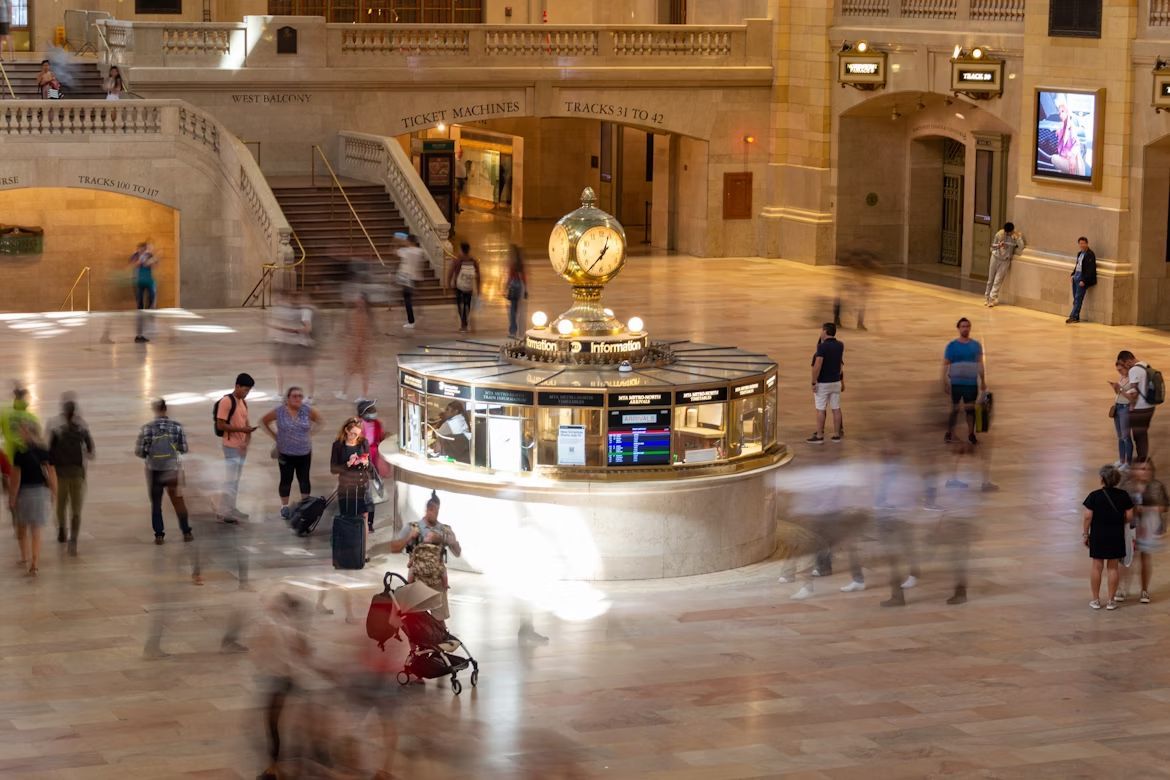
Image: David Vives

Take a closer look around, and you’ll start spotting oak leaves and acorns carved into chandeliers, railings, and stonework. These aren’t random designs. They’re a nod to the Vanderbilt family’s symbol: The acorn. The family funded the terminal’s construction in 1871 and wanted everyone to know it. Now, their family symbol quietly decorates every corner of their legacy.

4
The mysterious whispering gallery
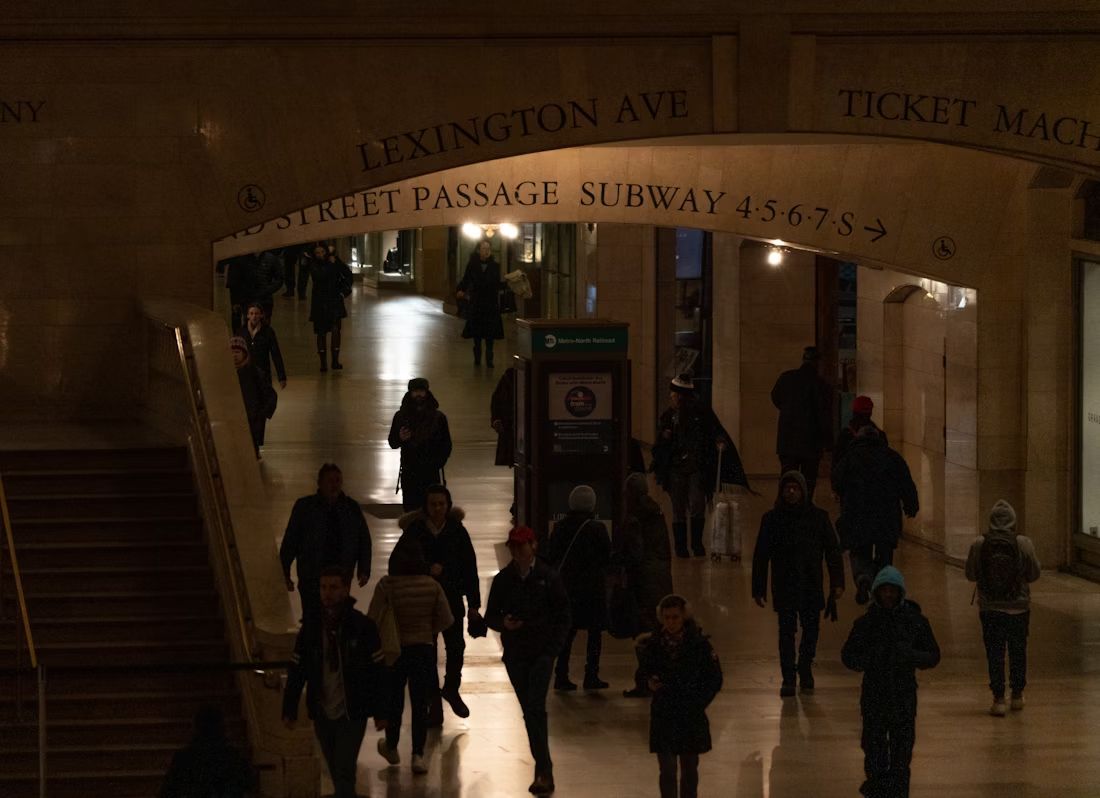
Image: Thierry Biland

If you whisper into one corner of the tiled archway near the Oyster Bar, someone standing diagonally across can hear you perfectly. The "Whispering Gallery" is one of Grand Central’s quirkiest secrets . The Guastavino tiles that make up the arched ceiling carry sound in an odd way, creating an intimate little magic trick, though no one really knows whether it was designed that way or just a happy accident.

5
A sky painted backward
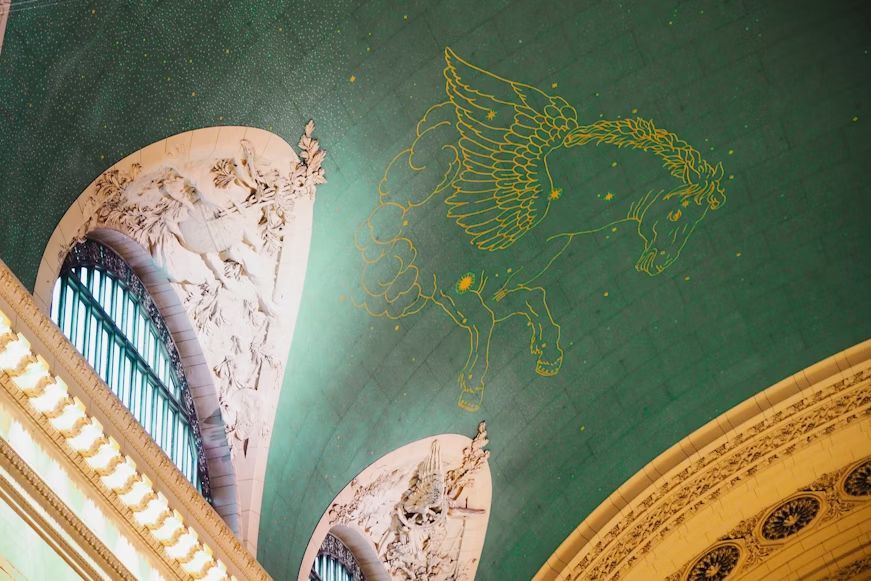
Image: Alexa Soh

Look up, and you’ll see the breathtaking celestial mural that covers the concourse ceiling. But here’s the kicker: the constellations are painted backwards . Whether it was a mistake or an artistic choice remains debated, but the Vanderbilts claimed it was intentional—to give us the "divine perspective" of looking down at the heavens. Either way, it’s still one of the most photographed ceilings in the world.

6
Game, set, match (inside a train station)
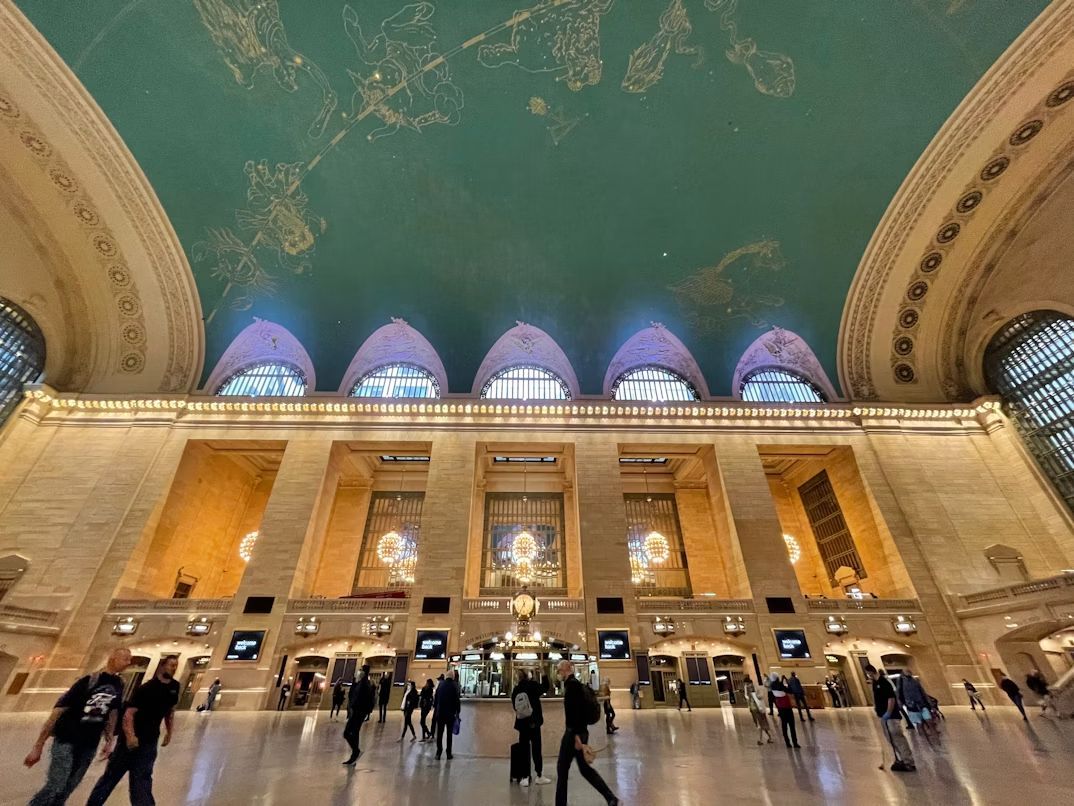
Image: lauren barton

If you think tennis in a train terminal sounds impossible, think again. The Vanderbilt Tennis Club, perched on Grand Central’s fourth floor, is open to the public . You can book a court, take a lesson, or just peek inside to see this unexpected slice of luxury tucked away above the bustling commuters below.

7
Secret walkways above the windows
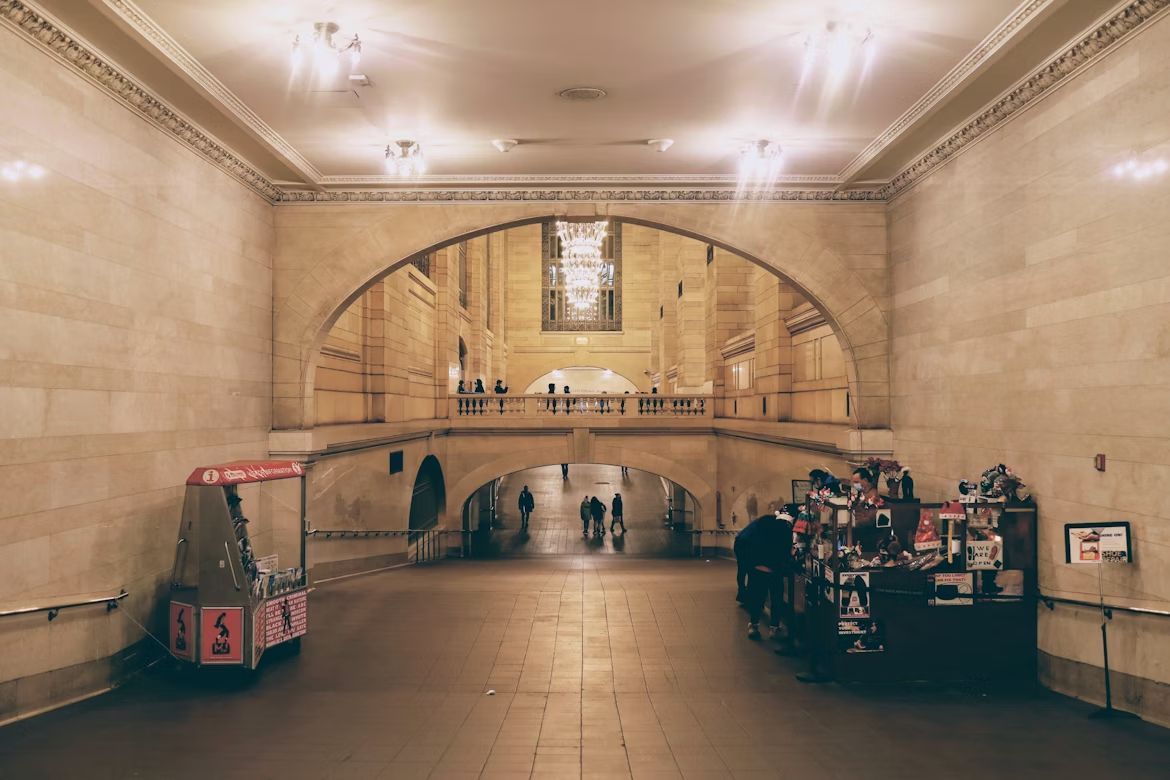
Image: Mitch Hodiono

Those grand arched windows in the main concourse aren’t just decorative; they hide narrow walkways used by staff to move unseen between offices . These catwalks give a bird’s-eye view of the terminal, though they’re strictly off-limits to the public. Only a select few with key passes get to experience the view from up there.

8
A hidden entrance to the Waldorf
Image: David Jones

Deep beneath Grand Central lies Track 61, a secret passage that once connected directly to the Waldorf Astoria Hotel. It was used by VIPs who preferred to travel without public attention —most famously, President Franklin D. Roosevelt, who used it to conceal his polio and wheelchair from the public eye. Today, it’s sealed off, but the legend remains.

9
Almost lost to the wrecking ball
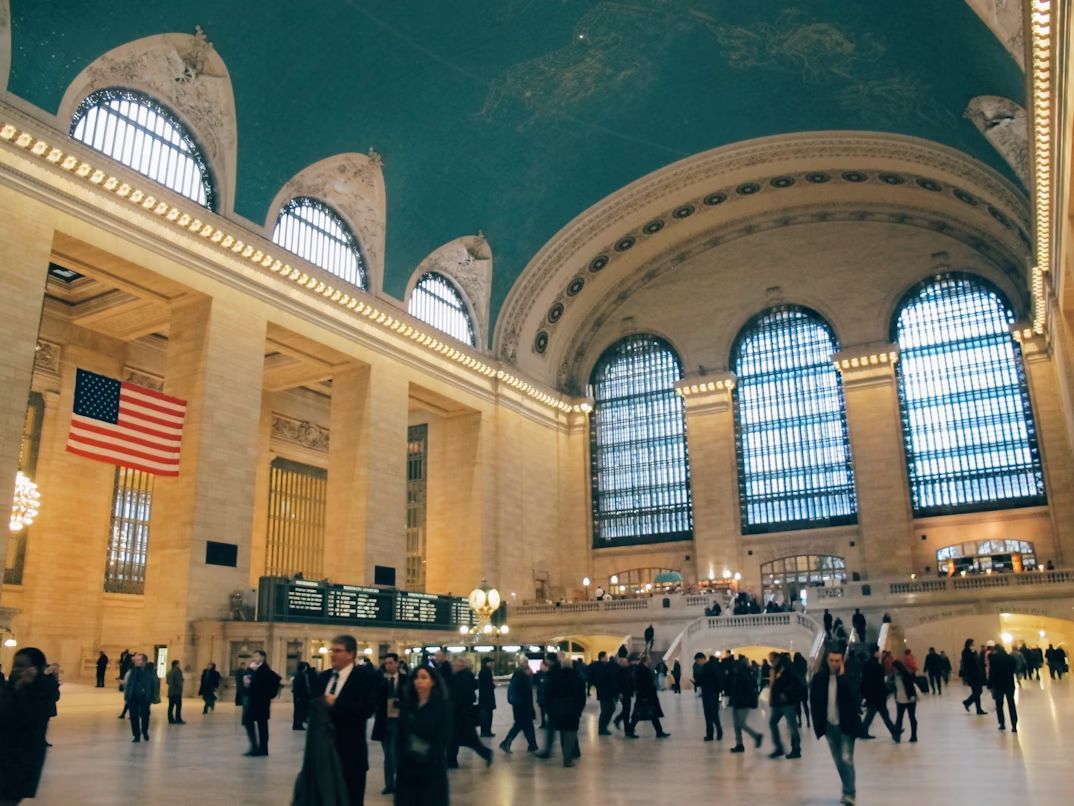
Image: Reiseuhu

In the 1960s, plans were made to tear down Grand Central and replace it with skyscrapers. After the destruction of Penn Station in 1963, New Yorkers were not having it. Thanks to the efforts of preservationists , Grand Central was saved and officially declared a landmark in 1967. Their fight ensured we could still enjoy one of the city’s true architectural gems.

10
A 21st-century makeover
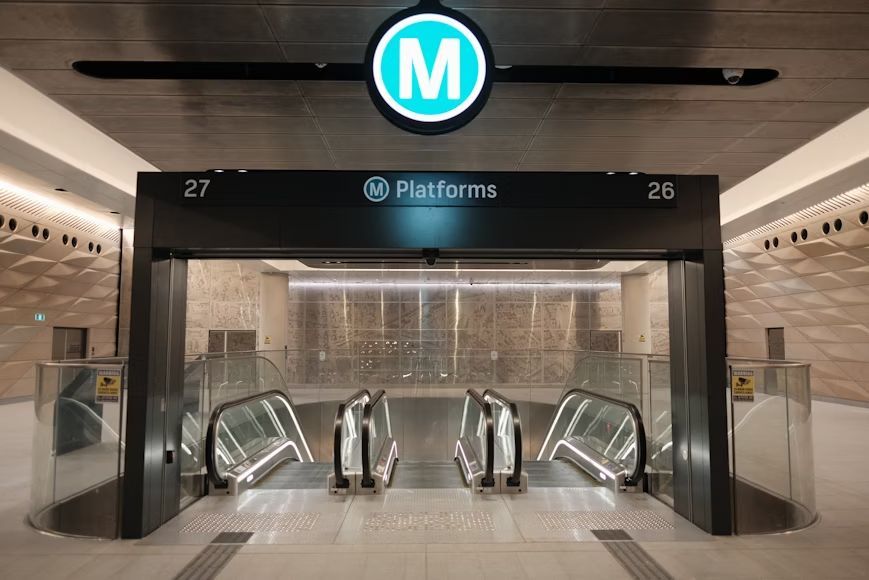
Image: Dominic Kurniawan Suryaputra

While much of Grand Central dates back to 1913, its evolution continues. The massive East Side Access Project, completed in 2023, added a new terminal for Long Island Rail Road passengers, complete with 40 miles of new track buried beneath Park Avenue. It’s a modern expansion of a century-old masterpiece.

General General 5 min read

20th-century marvels

Architecture in the Jazz Age: 10 Art Deco buildings that shaped America

Image: Kit Suman

Characterized by sleek lines, geometric shapes, and luxurious materials, the Art Deco style was a favorite among American architects during the 1920s and 1930s. They designed opulent skyscrapers and glamorous buildings that celebrated progress and modernity. Join us to learn more about this Jazz Age style, explore its fascinating history, and tour 10 of the most beautiful Art Deco buildings in the United States.

1
Empire State Building, New York City

Image: William Wachter

Undoubtedly, the Empire State is the most famous building in New York City. Every year, about 2.5 million people visit it, and it has been featured in countless movies and TV shows. Designed by American architect William F. Lamb, it was inaugurated in 1931.

For forty-one years, the Empire State Building was the tallest skyscraper in the world. The symmetry, limestone façade, huge windows, and the monumental and luxurious lobby are some of its main features. The design of this Art Deco masterpiece is so spectacular and breathtaking that in 1986 it was designated a National Historic Landmark.

2
The Carlyle, Miami Beach

Image: Luis Erives

Miami has the largest concentration of Art Deco buildings in the world. The city has a remarkable collection of around 800 structures built in this style. Visiting the Art Deco district along Collins Avenue, Ocean Drive, and Washington Avenue is like traveling back in time. And perhaps the Carlyle, for its sophisticated combination of horizontals and verticals, is one of the most emblematic.

It was built in 1939 by German-American architect Richard Kiehnel, and its façade has barely changed since then. Its interior, on the other hand, went from hotel rooms to apartments.

3
Boston Avenue United Methodist Church, Tulsa

Image: Quang Vuong

The Boston Avenue United Methodist Church in Tulsa, Oklahoma, is one of the few examples of an Art Deco church. Beginning in the 1920s, little Tulsa became the oil capital of the U.S., and the sudden influx of resources encouraged investors to build increasingly grandiose buildings. Thus, this church is considered the first ecclesiastical building strictly designed for an emerging automobile culture.

Constructed from Indiana limestone, the church features a steel-frame tower topped with a copper and glass lantern. A seven-pointed star symbolizes seven virtues: patience, purity, knowledge, suffering, kindness, love, and truth. The complex also includes a sanctuary, a small chapel, and offices, while the lobby serves as a social center.

4
Union Terminal, Cincinnati

Image: Fred Copley

Cincinnati Union Terminal in Ohio is one of the finest examples of Art Deco architecture in the United States. Its green terrazzo floors, fine-grained Indiana limestone façade, and vast rotunda adorned with industrial murals by Winold Reiss make the station a true architectural masterpiece. In fact, it is considered the pinnacle work of Alfred T. Fellheimer, who had previously designed Grand Central Terminal in New York.

Unfortunately, Union Terminal began construction in 1928, during one of the worst periods in the country's economic history. The Great Depression was marked by a decline in train travel, and the opulent Union Terminal was considered a white elephant. In 1972, it was finally closed. Years later, however, the building regained its former luster. Today, it is served by Amtrak’s Cardinal line, while the rest of the complex houses several museums.

5
Carbide & Carbon Building, Chicago

Image: Anthony Fomin

The Carbide & Carbon Building, a 37-story skyscraper completed in 1929, is one of Chicago's most striking architectural achievements. A bold example of Art Deco design , the building is clad in black granite and green terra cotta, with genuine gold leaf adorning its tower.

It is so luxurious that the Burnham Brothers architectural firm is said to have designed it to resemble a champagne bottle. In 1996, it was designated a Chicago Landmark, and in 2021, it was renovated and reopened as the Pendry Chicago Hotel.

6
The Guardian Building, Detroit

Image: G + L

This 43-story Art Deco skyscraper is located in downtown Detroit, Michigan. Nicknamed the Cathedral of Finance , it was planned by architect Wirt C. Rowland and completed in 1929. Both the interior and exterior feature numerous modern decorative elements, including mosaics, murals, stained glass, and even a historic Tiffany clock.

Forty craftsmen worked on its design and construction, which required granite, stone, terra cotta, and more than two million distinctive "Union Guardian Orange" bricks. In 1989, the Guardian Building was designated a National Historic Landmark.

7
Chrysler Building, New York City

Image: William Wachter

The Chrysler Building in New York City is one of the greatest examples of the Art Deco style in the world. It was designed by architect William Van Alen at the request of industrial magnate Walter Percy Chrysler and completed in 1930.

The building exhibits great attention to detail, featuring many elements that mimic Chrysler automobile pieces, such as the ostentatious ornamentation of the tower. In the lobby, the ceiling mural—once the largest in the United States—was painted by artist Edward Trumbull. Following the building’s automotive theme, it depicts scenes of progress, transportation, and energy.

8
Eastern Columbia Building, Los Angeles

Image: Jordan Rubin

Located in downtown Los Angeles, this emblematic 1930s building features a striking turquoise terra cotta exterior. The Eastern Columbia Building was designed by renowned architect Claud Beelman, who also created several of the city’s notable Art Deco structures. At the time of its construction, the building was so unique that the city allowed it to exceed the maximum height limit.

Its unique color, majestic vertical lines, iconic clock, and golden ornamentation attracted Hollywood moguls and stars from the beginning. It was first used as office space and was later converted into luxury apartments. In 1985, the Eastern Columbia Building was declared a Historic-Cultural Monument.

9
Circle Tower, Indianapolis

Image: Alejandro, CC0, via Wikimedia Commons

The construction of a 14-story skyscraper in Indianapolis was a major news event in the early 20th century. "Circle Tower Is Rising," declared the Indianapolis Times in 1929. Circle Tower stands as a magnificent example of Art Deco architecture.

Built of ornately carved granite and limestone and decorated with Egyptian figures, Circle Tower has a unique, trapezoidal shape. This unusual silhouette was promoted as an icon of luxurious office space. The interior, on the other hand, features marble and terrazzo floors, bronze elevator doors, geometric flowers, zigzags, and concentric swirls. Details in the lavishly marble-clad lobby exude elegance.

10
Griffith Observatory, Los Angeles

Image: David Vives

The Griffith Observatory is one of Los Angeles’ most important cultural attractions. This Art Deco icon opened in 1935 and was designed with a revolutionary idea in mind: the cosmos should be accessible to everyone, not just astronomers.

Built of reinforced concrete on a 3,015-acre site donated by Colonel Griffith J. Griffith, it is a blend of modern design and Greek and Beaux-Arts influences. The building's most emblematic feature? The planetarium in the central dome!

General General 6 min read

Only in America

Did you know Route 66 has 2,448 miles? 10 things that define America

Image: Polina Tankilevitch

This country has a character of its own, and certain things simply scream "American" to people around the world—and to locals as well. Take our love of Hollywood glamour, for example, or the national pastime of baseball. There are a handful of uniquely American icons that have influenced global culture and made our country truly stand out. In this article, we’ll take a look at 10 things people associate with the United States, each with its own slice of American flavor and history. But don’t count your chickens before they hatch—you might be surprised by what’s on the list!

1
Hollywood

Image: Jake Blucker

Palm trees, long roads, and one iconic mountain with a most recognizable sign that reads "Hollywood." This place is much more than just that—it’s become a symbol of big dreams and even bigger screens.

Since the early 1900s, Hollywood has been the heart of the world’s movie industry . Films that reach global audiences have been made every single day ever since. Americans popularized the blockbuster, and movie stars like Marilyn Monroe and James Dean became household names worldwide. With events like the Oscars, red-carpet premieres, and starry paths like the Hollywood Walk of Fame, the place keeps the mystique alive. This results in millions of tourists flocking to the iconic Hollywood sign every year, hoping to catch a glimpse of stardom. From romantic comedies to superhero flicks, Hollywood movies have a unique style that’s unmistakably American. And hey, who hasn’t secretly wanted to be in the movies?

2
The American Dream

Image: frank mckenna

Few phrases denote the American spirit as much as the "American Dream," and no, it’s not just that it’s right there in the phrase. It’s the fact that the phrase has become a source of inspiration for more than one generation. The American Dream is about the chance we all get (or should get) in life to achieve success, regardless of our background.

The idea is rooted in the belief that hard work and determination can lead to prosperity—a notion that has attracted immigrants and risk-takers for centuries. From the Gold Rush to Silicon Valley, the Dream has evolved but remained relevant because it speaks to the essence of the human spirit.

The American Dream can mean building a home, becoming a CEO, or attending an Ivy League college. It doesn’t matter—it's a concept that feels uniquely American, where ambition is practically a national pastime.

3
Fast food

Image: Kenny Eliason

When people think of American food, fast food chains like McDonald's, Burger King, and KFC often come to mind. While fast food wasn’t exactly created in our country, it certainly popularized the quick-and-easy dining experience.

There’s something uniquely American about the convenience of a drive-thru and the guilty pleasure of a cheeseburger and fries. Fast food became a symbol of the American lifestyle in the 1950s, when suburban families sought meals that were fast and tasty.

Today, we even have healthier options, which proves that the industry can adapt while keeping its original charm. It’s quick, it’s familiar, and for many, it just feels like home.

4
Baseball

Image: Joshua Peacock

Speaking of institutions, enter baseball! Rooted in the 19th century, baseball has been a staple of American culture—generations of families united through teams, ballparks, and timeless rivalries .

The crack of the bat, the seventh-inning stretch, and the smell of hot dogs are classic hallmarks of the American baseball experience. You can perfectly picture that, can’t you? The World Series is one of the most anticipated events each year, attracting fans from all over the country.

While it’s played elsewhere, no one embraces baseball quite like America. From Little League to Major League, it’s a sport that feels imprinted in our history. Baseball captures something timeless about America, just as it always has.

5
The Fourth of July

Image: Stephanie McCabe

Summer starts, and with it, one already starts thinking about a certain barbecue, under some certain fireworks, celebrating a certain national date, right?

Every summer for the past 246 years, Americans have gathered to celebrate Independence Day with a bang . Well, not precisely that many years, but you get the point.

The Fourth of July marks the anniversary of the US independence in 1776, and it is celebrated with parades, BBQs, and fireworks displays.

Patriotism meets tradition, and we get flags waving, sparklers shining, and people enjoying a day off work with loved ones. Many cities host grand parades, and fireworks shows light up the skies from coast to coast. There’s nothing quite like the Fourth in this country; it’s a holiday with heart and history.

6
The Wild West

Image: Jeremy Alford

The Wild West conjures images of cowboys, saloons, and dusty trails that are purely American. This period in the 19th century was marked by westward expansion, tales of rugged frontiersmen, and gold rushes.

That was the beginning of cowboy culture, but certainly not the end. Even today, the cowboy spirit lives on in American folklore and pop culture. People still visit old Western towns and attend rodeos to catch a glimpse of that era.

We mentioned Hollywood, and that’s also connected to this because Western movies helped immortalize the myths of the Wild West, with iconic gunslingers and epic standoffs. Although the frontier is long gone, the independent, adventurous spirit it represents still resonates. Don’t you think?

7
Silicon Valley

Image: Amy Vosters

First the cowboys, the gold rush, and the expansion of our territory. But after that was settled, development and innovation knew no bounds, and thus we got places like Silicon Valley—a city that represents modern times and the technology that will take us into the future.

Located in California, this is where major tech giants like Apple, Google, and Facebook all got their start, transforming the area into a hotbed for innovation . Silicon Valley has impacted everything from our daily routines to global communication, with inventions that changed the world. The region is home to countless startups, bringing together brilliant minds and bold ideas.

This technology-driven culture reflects the American spirit of invention and risk-taking. It’s a place where possibilities seem endless, and tech dreams come true.

8
American football

Image: Tim Mossholder

As if baseball wasn’t enough of a cultural activity, American football came to be the country’s favorite sport, bringing people together on fall weekends to cheer for their teams and boo the rivals—admit it!

While other sports are popular worldwide, football, the NFL, and the Super Bowl in particular, are unique to the US. The thrill of game day, with fans tailgating and players charging down the field, is unmatched.

The Super Bowl has even become a cultural event, complete with halftime shows and commercials that people actually watch! Where else have you ever seen something like that?

From high school games to professional leagues, football is a major community event. Fans don their jerseys and root for their team through thick and thin. As American as it gets, right?

9
Route 66

Image: Mateusz Szerszyński

The Main Street of America, the Will Rogers Highway, the Mother Road—how many nicknames can one route have? Well, apparently, that’s what you get when you become the most famous route on the continent.

Route 66 is an iconic symbol of American freedom and adventure. It stretches from Chicago to Los Angeles, and this historic highway takes travelers through diverse landscapes and all kinds of towns.

Route 66 has been immortalized in songs, stories, and even neon signs in roadside diners. Though parts of the road have faded, its legacy remains strong in American culture. Route 66 represents the spirit of exploration that defines our nation. After all, who doesn’t love a good road trip?

10
The Bald Eagle

Image: Mathew Schwartz

Think of words that describe our country. You might be thinking of words like "resilience," "freedom," or maybe even "fierceness." Did we get it right? In any case, if you agree with us on those words, you’ll see that they could describe America or the bald eagle, which was chosen as the national emblem in 1782. This majestic bird has come to represent the United States’ fierce independence.

With its impressive wingspan and piercing gaze, the bald eagle is often seen soaring high in American skies, symbolizing strength and vision. Although once endangered, conservation efforts helped bring the eagle back from the brink, making it an environmental success story. The bird appears on everything from coins to government seals, proudly representing the nation. Even in popular culture, the bald eagle is a go-to image for patriotism. Don’t you just love it?

Explore more American facts

Choose your favorite category!

General
General

As American as apple pie—the very best America has to offer!

Culture
Culture

Delve into the astounding richness of American lore.

Geography
Geography

Hop in and explore vast and diverse American landscapes.

History
History

Discover the key moments that shaped the United States.