General General 5 min read

The heart of the nation

What was the original plan for the Washington Monument?

Image: Stephanie Rhee

If you’ve been to Washington, D.C., you likely walked by the White House, the Washington Monument, and the many Smithsonian museums . And you’ve certainly seen photographs of presidential inauguration ceremonies, landmark events like Martin Luther King Jr.’s "I have a dream" speech, and annual Fourth of July fireworks — all of them on the National Mall. The heart of the capital and so-called "America’s front yard," the site is a mix of living history and remembrance , and a place for all Americans to gather. Here’s all you need to know about the National Mall.

1
The White House
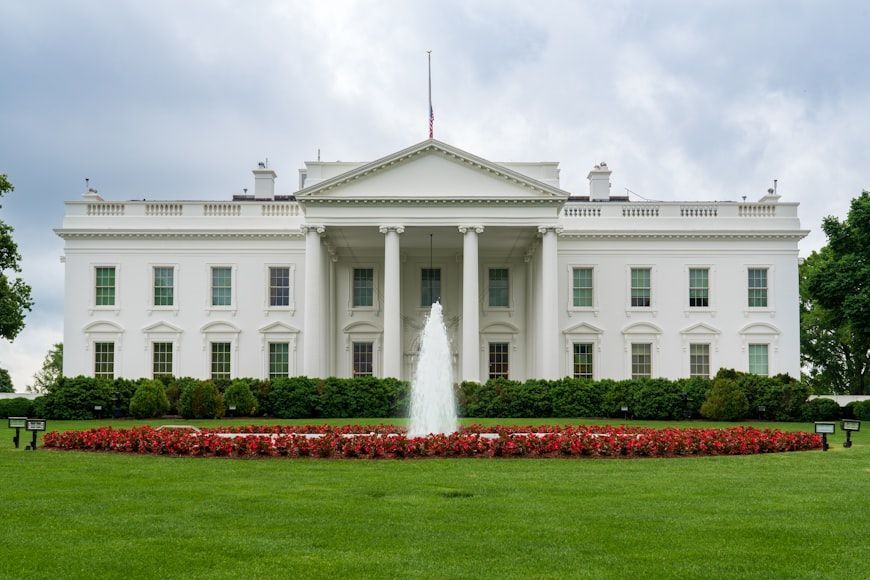
Image: Tomasz Zielonka

Though America’s most famous house, located at 1600 Pennsylvania Avenue, is not technically on the National Mall, it has been historically considered part of it due to its proximity and importance. It is separated from the National Mall by the Ellipse public park, and has a direct view of one of the most important Mall landmarks, the Washington Monument.

2
How America’s front yard came to be
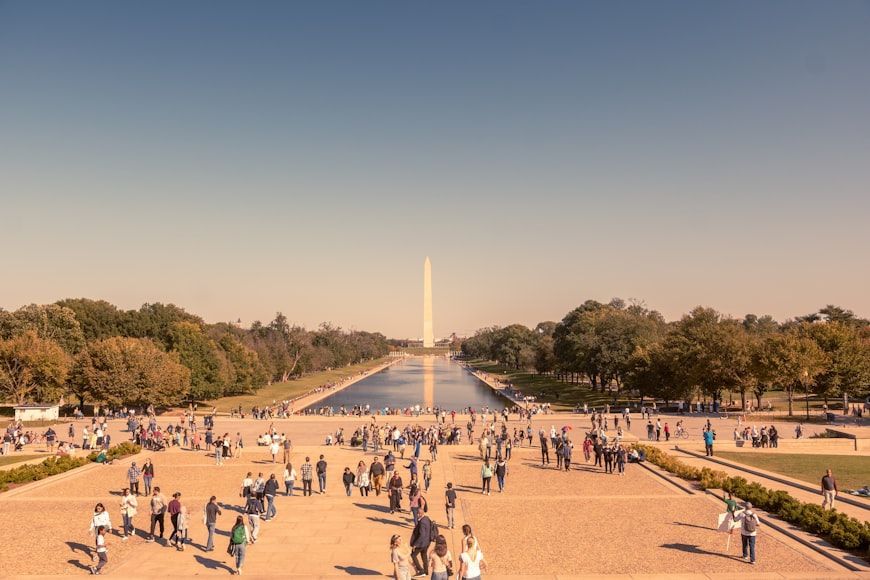
Image: Samuel Girven

When Pierre Charles L'Enfant designed Washington, D.C., in 1791, he envisioned a majestic avenue going from the Capitol to an equestrian statue of George Washington (now the site of the Washington Monument). The chosen name referenced the Mall in London, a fashionable avenue near Buckingham Palace. During the following century, L’Enfants’ plans for the Mall were ignored, and the space was used for canals, railways, and gardens. In 1901, the U.S. Senate decided to expand the number of monuments in Washington, D.C., which led to the renewal of the National Mall and to the addition of most of its iconic landmarks.

3
American history in action
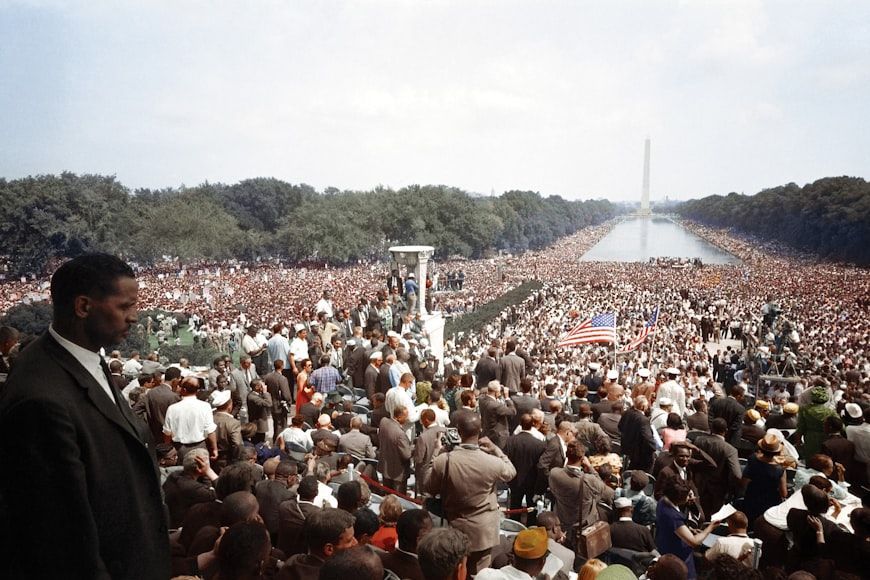
Image: Unseen Histories

As a space open to all Americans and one that is close to the Capitol and the White House, the National Mall has been the scene of many historical moments, from presidential inaugurations to festivals and protests. Among the most important events to take place in the National Mall, we can remember the 1963 March on Washington, the late 1960s Vietnam War protests, the 1987 AIDS Memorial Quilt, and the 1939 Marian Anderson concert.

4
Washington Monument
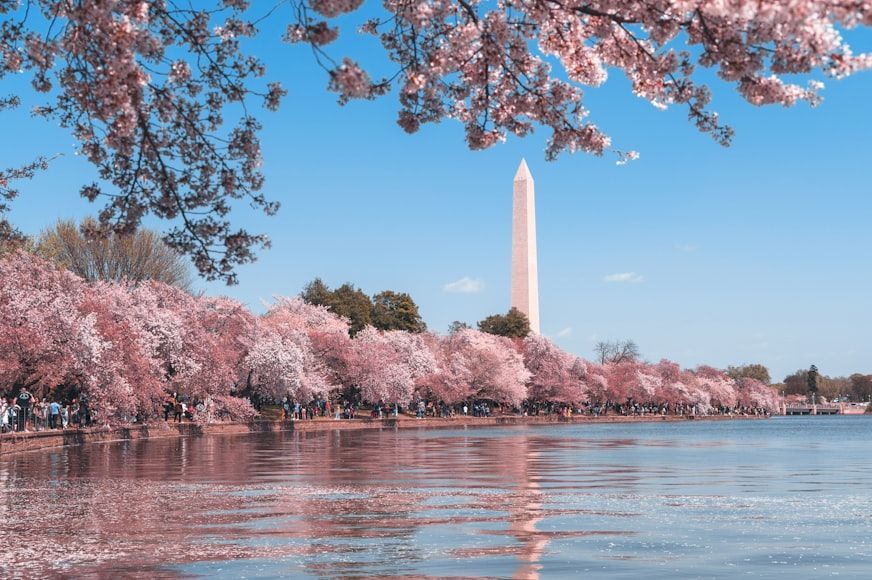
Image: Andy He

Located where L’Enfant initially envisioned an equestrian statue of George Washington, this 555-foot marble and granite obelisk was designed in the 1830s , but was not completed until 1884 due to fund shortages and political disputes. In 2011, damages caused by a 5.8 magnitude earthquake forced the closing of the monument, which reopened in 2014.

5
Lincoln Memorial
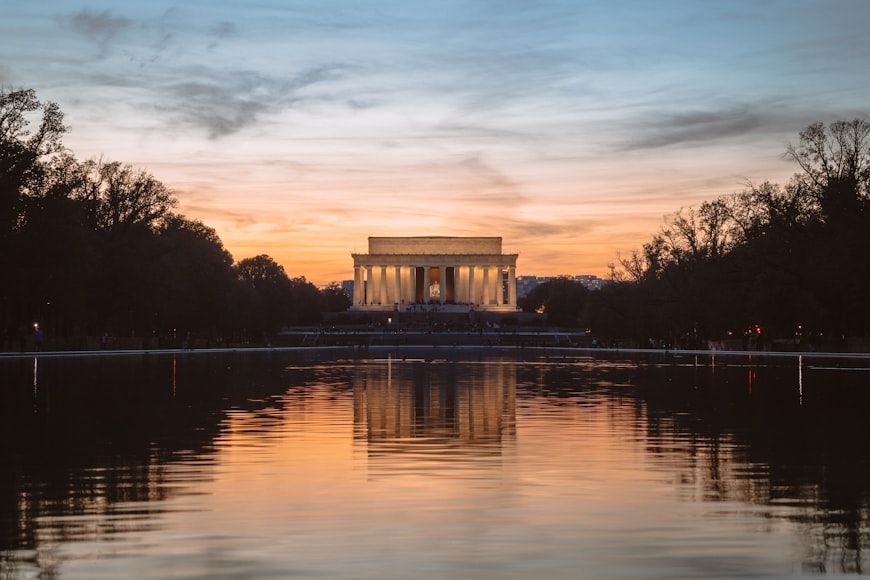
Image: Andy Feliciotti

Conceived shortly after Lincoln’s assassination in 1865, construction began only in 1914, and the memorial was dedicated in 1922. The Neoclassic structure is surrounded by 36 columns, representing the 36 states that formed the Union at the time of Lincoln’s death . The famous statue of Lincoln in the interior is 19 feet tall, and both the Gettysburg Address and Lincoln’s Second Inaugural Address are inscribed on the north and south interior walls.

6
Jefferson Memorial
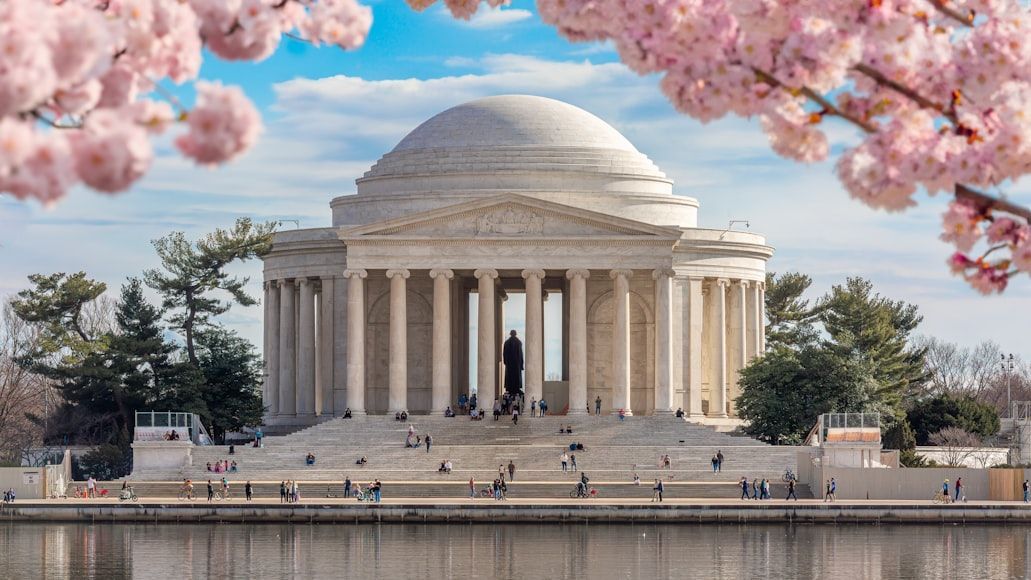
Image: Rafik Wahba

Authorized by Congress in 1934 and dedicated on April 13, 1943, the construction of this monument sparked outrage, as i t required clearing parts of the Tidal Basin and cutting down some of its cherry trees to make space for the memorial. In what is known as the 1938 Cherry Tree Rebellion, protestors chained themselves to the trees. In the end, a compromise was reached, and most of the trees were transplanted. The monument, an homage to Jefferson’s estate of Monticello and the rotunda of the University of Virginia, features excerpts of his most notable writings.

7
The Capitol
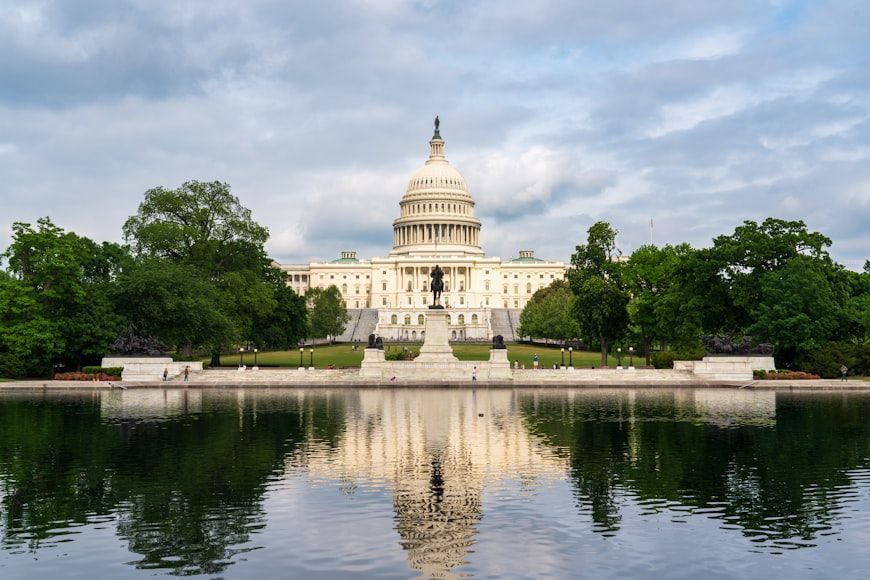
Image: Tomasz Zielonka

The first building to be constructed in the National Mall, the House of Congress is located in what was then known as Jenkins' Hill (now Capitol Hill) . George Washington laid the foundational stone in 1793, and the initial building was completed in 1800, but it was set on fire by the British during the War of 1812. It was reconstructed in 1826 and expanded during the 19th and 20th centuries.

8
War memorials
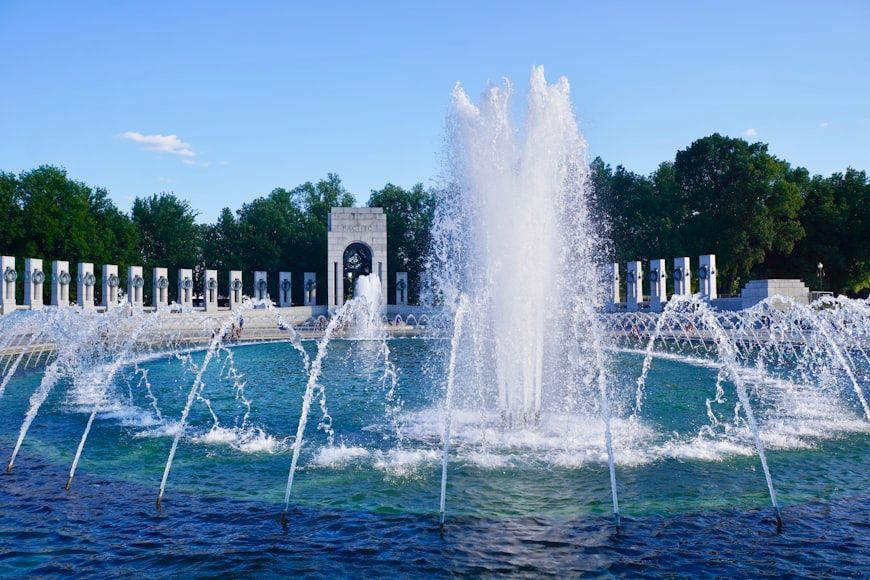
Image: Brett Wharton

Several memorials across the National Mall honor the thousands of Americans who gave their lives while serving the country . The first war memorial was the District of Columbia War Memorial of 1931, dedicated to honor residents of Washington, D.C. killed in WWI. Among the most significant memorials, we can find the National World War II Memorial of 2004, the Korean War Veterans Memorial of 1995, the Vietnam Veterans Memorial of 1982, and the National World War I Memorial of 2014.

9
FDR Memorial
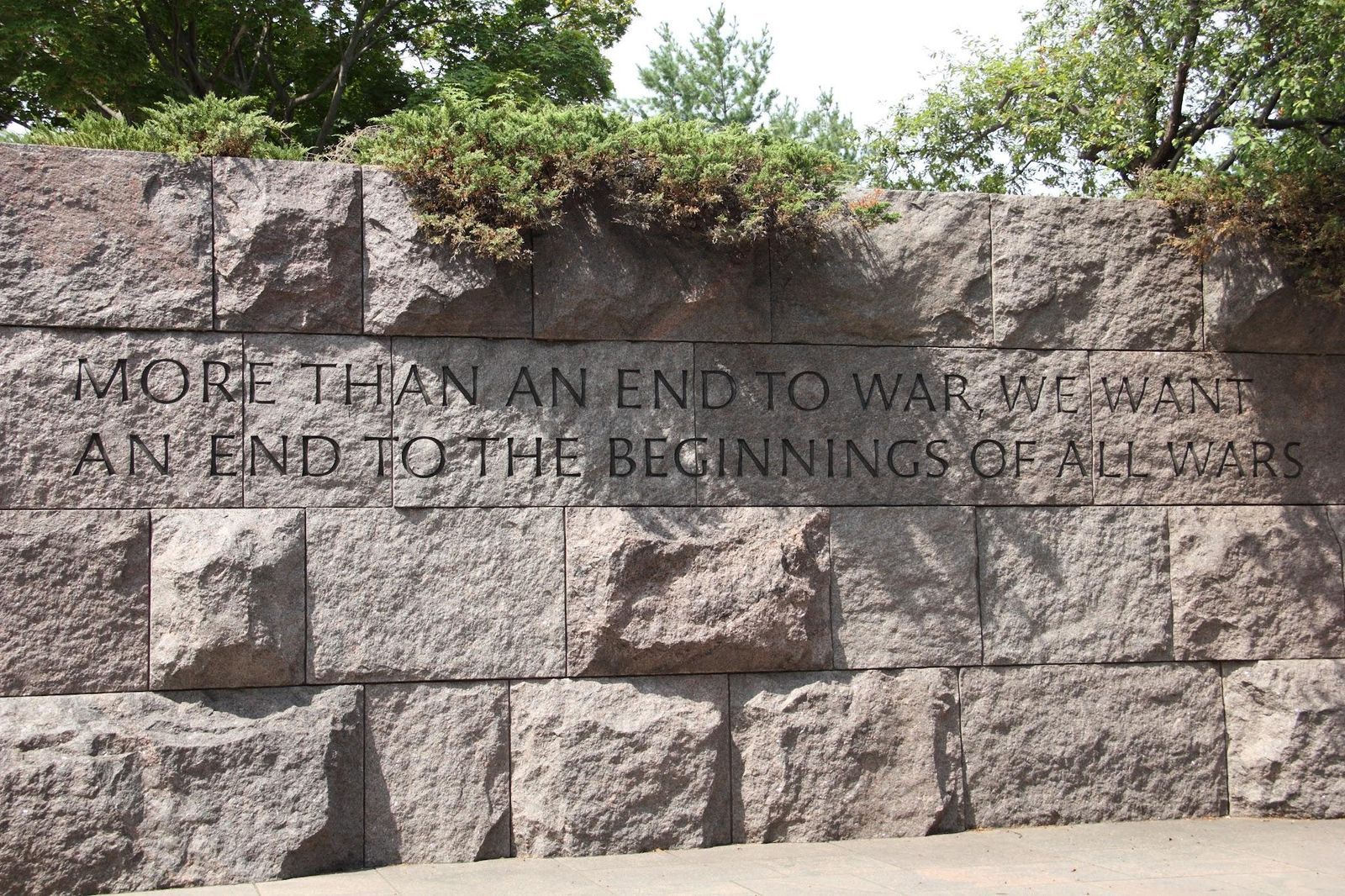
Image: Caroline Léna Becker, CC BY 3.0, via Wikimedia Commons

Despite President Roosevelt’s wish for an understated memorial near the National Archives, the project approved by Congress after his passing was much grander. Instead of a monolithic monument, the FDR Memorial consists of a park-like landscape , with areas representing the four terms he served and the conflicts he led the nation through. It is also the only presidential memorial to include a tribute to a First Lady, in the form of a bronze statue of Eleanor Roosevelt.

10
Museums
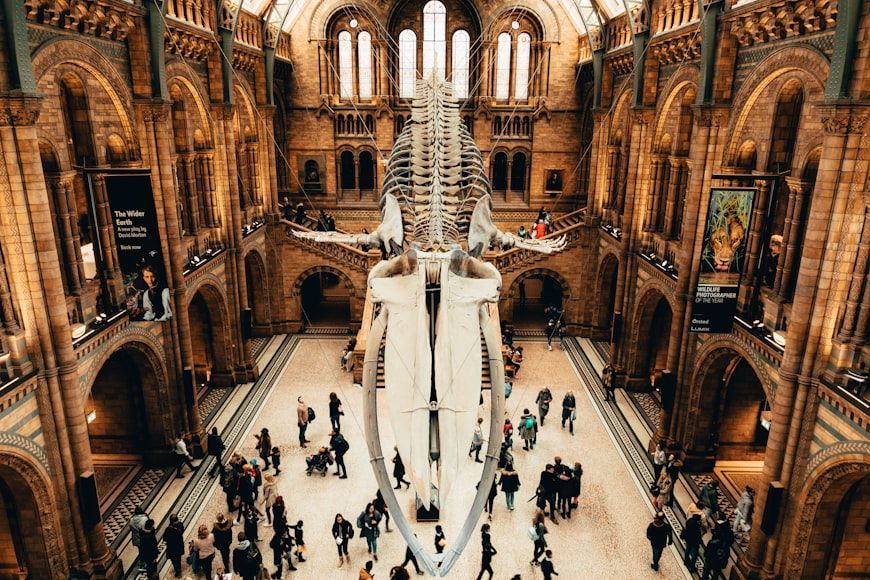
Image: Sheng L

The National Mall is one of the places with the highest concentration of museums in the world , most of them managed by the Smithsonian Institution. Among its most famous museums are the National Museum of American History, the National Museum of Natural History, the National Gallery of Art, the National Air and Space Museum, and the U.S. Holocaust Memorial Museum.

11
MLK Memorial
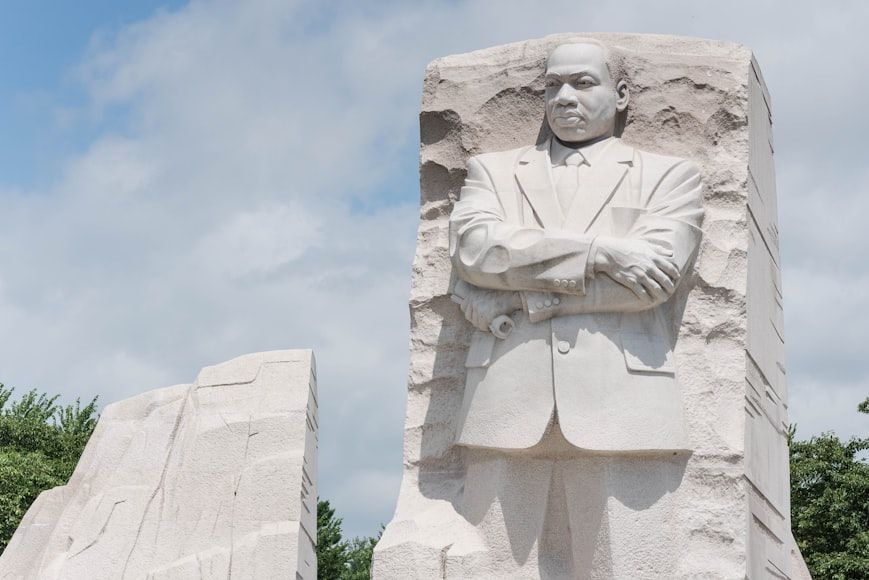
Image: E

In 1963, the National Mall was the stage for Martin Luther King Jr.’s most famous speech, "I have a dream" , during the March on Washington for Jobs and Freedom. After his 1968 assassination, members of the Alpha Phi Alpha fraternity —to which King belonged— petitioned to build a memorial in his honor on the National Mall, and were allowed by President Clinton in 1996. The memorial features a split rock —inspired by the iconic line "Out of the mountain of despair, a stone of hope."— and a central figure depicting MLK Jr.

12
Parks and Tidal Basin
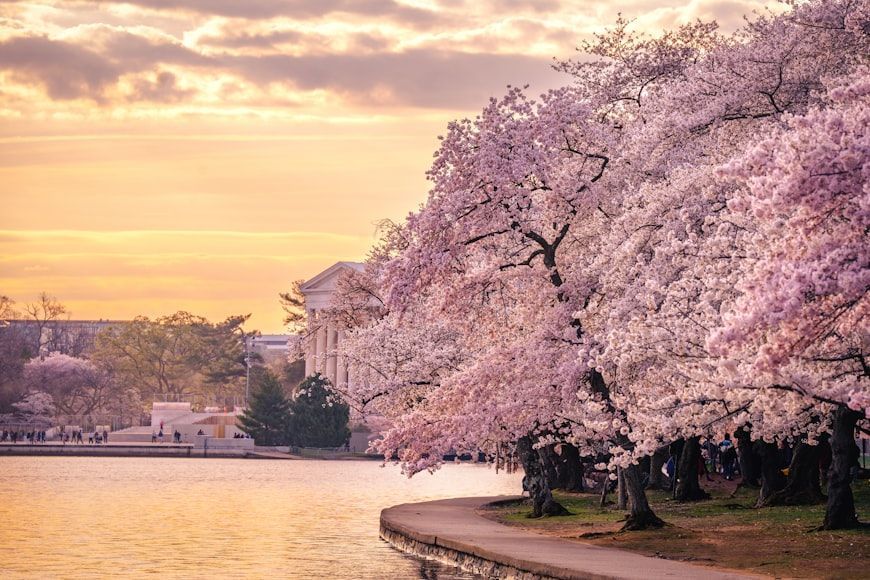
Image: Sharosh Rajasekher

The National Mall's original plan included several landscaped areas, but they were not designed as part of it until 1901, when the area was cleaned to include open lawns and rows of trees lining the different sections . In 1882, part of the Potomac River was dredged to reclaim 628 acres of land, creating the Tidal Basin and adding space for many of the current monuments. In 1912, the city of Tokyo gifted Washington, D.C., more than 3,000 cherry trees as a sign of friendship, now an iconic part of the Tidal Basin landscape. In 1965, the parks in the National Mall were consolidated as a unit as the National Mall and Memorial Parks.
General General 5 min read

Say cheese!

Did you know American cheese is not actually cheese?

Image: Jonathan Borba

Few foods trigger as much heated debate as the neon-orange, perfectly square slice of American cheese. To culinary purists, it’s an industrial piece of rubber. But to the backyard grill master and the late-night grilled cheese enthusiast, it is a scientific masterpiece of consistency and meltability. The truth is, American cheese has been both witness and party to U.S. history, from World War I to Apollo missions. Before you peel back the wrapper on your next slice, let’s dive into 10 mind-melting facts that prove American cheese is one of the most fascinating—and misunderstood—innovations in food history.

1
It was invented in Switzerland

Image: NastyaSensei

While the name suggests a US origin, the technology that created American cheese actually began in the heart of the Alps. It was developed in 1911 by Swiss researchers Walter Gerber and Fritz Stettler, who were looking for a way to extend the shelf life of their country’s famous Emmental cheese.

The problem with traditional cheese is that it eventually dries out, molds, or separates into a greasy mess when heated. By shredding the cheese, adding sodium citrate, and heating it, the Swiss duo discovered they could create a stable, smooth product that didn't separate. While they weren't trying to create "American" cheese as we know it today, their emulsification process laid the foundational science for every single-wrapped slice produced today.

2
It was popularized by a Canadian

Image: Martylunsford, CC BY-SA 4.0, via Wikimedia Commons

The man responsible for the global dominance of American cheese was James L. Kraft. Ring any bells? Kraft was a Canadian immigrant who moved to Chicago in 1903. While he didn't invent the concept of processed cheese, he perfected the industrial scale of its production and marketing.

Kraft noticed that retailers struggled with cheese spoilage; if a wheel of cheddar didn't sell quickly, it was a total loss. He experimented with various methods of heating and blending cheese until he found a formula that could be canned and shipped long distances without spoiling. In 1916, he received a patent for his "processed cheese," and during World War I, the U.S. government purchased millions of pounds of it for soldiers, cementing its privileged place in the American diet.

3
It was almost called "Embalmed Cheese"

Image: Internet Archive Book Images, No restrictions, via Wikimedia Commons

When processed cheese first hit the market, it had its detractors. Traditional cheesemakers were horrified, and so were pure food advocates. These critics argued that the product shouldn't even be called cheese. They’ve even gone so far as to call it "embalmed cheese" because of its unnaturally long shelf life and the chemical emulsifiers used to keep it stable. Yet, Kraft’s marketing prowess and the sheer convenience of the product ultimately won the naming battle. At least in the court of public opinion.

4
Technically, it isn’t cheese

Image: RDNE Stock project

Kraft may have won the battle among the people, but legally, American cheese is not considered cheese. If you look closely at the packaging, you will rarely see the word "cheese" on its own. Because of strict FDA regulations, most varieties are legally classified as "Pasteurized Process Cheese Product" or "Pasteurized Process American Cheese Food."

To be labeled "cheese," a product must be made primarily of milk, salt, and enzymes. Processed American cheese, however, is made by blending real cheese—usually cheddar or Colby—with emulsifying salts, whey, and sometimes extra milk or fats.

5
Any cheese can be made into American cheese

Image: Edita Brus

The term "American cheese" refers more to a process than a specific flavor. In theory, you could make "American-style" brie, blue cheese, or parmesan. The defining characteristic is the addition of an emulsifier, which breaks down the proteins and allows the fats and water to stay together.

In fact, some high-end chefs now make their own artisanal American cheese with aged cheddars processed with sodium citrate to create a slice that has the complex flavor of an expensive block but the melting point of a Kraft Single.

6
It isn’t naturally yellow

Image: jianwei zhu

The vibrant orange-yellow hue of American cheese is entirely a cosmetic choice. Traditionally, cheese color varied by the season; when cows ate fresh grass in the summer, their milk contained more beta-carotene, leading to a naturally yellowish cheese. To make their cheese look high-quality all year round, cheesemakers began adding dyes.

American cheese takes this tradition to the extreme. It is typically colored with annatto, a seed from the achiote tree. Without this dye, American cheese would be a pale, creamy white, which is how it is sold in many delis as "White American". Yes, that’s right, there is no flavor difference between the white and yellow versions.

7
It has an extremely low melting point

Image: Vinícius Caricatte

The scientific superpower of American cheese is its meltability. Traditional cheeses have a protein structure that tightens when heated, which is why a slice of aged cheddar on a burger often results in an oily puddle and a rubbery clump.

Because of the emulsifying salts, the proteins in American cheese can withstand heat without clumping together. This gives it an incredibly low and stable melting point, transforming the slice into a silky sauce. This is why it remains the undisputed king of grilled cheese sandwiches.

8
It’s been in space

Image: NASA, Public domain, via Wikimedia Commons

When you're hurtling through orbit in a cramped capsule, you need food that is stable, easy to eat, and won't crumble into thousands of tiny, electronics-clogging pieces. American cheese fit the bill perfectly for early NASA missions.

Processed cheese in tubes or cubes was a staple of the Apollo missions. Because it doesn't separate or sweat oil in varying temperatures and pressures, it was one of the few dairy products that could reliably provide flavor and calcium to astronauts.

9
It helped bring cheese to the masses

Image: Internet Archive Book Images, No restrictions, via Wikimedia Commons

Before the advent of processed cheese, cheese was often a seasonal luxury. It was difficult to transport, expensive to store, and highly variable in quality. James L. Kraft’s invention changed that. By creating a product that was uniform in flavor and shelf-stable, he made cheese affordable and accessible to every corner of the United States.

10
The U.S. Government once gave it out

The U.S. government not only bought tons of American cheese during World War I. In the 1980s, the term "government cheese" became a thing. During a period of dairy surpluses, the government bought millions of pounds of cheese to prop up prices for struggling farmers.

To avoid letting it rot, the Reagan administration began distributing five-pound blocks of cheese to low-income families, seniors, and schools. For many who grew up in that era, that pale orange processed cheese was a lifesaver.

Culture Culture 6 min read

KINGS OF COMEDY

These 10 legendary comedians will tickle your funny bone!

Image: Tim Mossholder

They say that laughter is the best medicine . If that old saying is true, then the 10 American comedians featured in this article are the most skilled doctors in the country! These masters of laughter have brought countless smiles to generations of Americans throughout history. They have entertained us, taught us invaluable life lessons, and even helped bring a little light to the darkest moments in our past. With that in mind, sit back and enjoy this homage to 10 of the most talented American comedians in history! Enjoy!

1
Marx Bros

Image: Braydon Anderson

We’ll start strong with the family of actors considered by many to be the most groundbreaking comedians of their generation: the five Marx Brothers. They truly took the world by storm, leaving an unforgettable mark that forever changed Hollywood.

Throughout a career that lasted over 40 years, the Marx Brothers starred in 14 films, five of which were included in the American Film Institute's list of the greatest 100 comedies of all time. While it is indeed a gargantuan task to select the best moments from this remarkable career, we feel inclined to select 1933’s Duck Soup and 1935's A Night at the Opera as our top picks.

2
Abbot and Costello

Image: Los Angeles Daily News, CC BY 4.0

In the very likely event that you’ve ever played a game of baseball, we can almost guarantee that someone jokingly asked you, "Who’s on first?" in a marked Jersey accent. After all, any American born after the 1950s knows this legendary Abbott & Costello routine, which is considered by many to be one of the finest pieces of comedy ever conceived.

This iconic duo met in New York City in 1935. After Bud Abbott’s comedy partner fell ill before a performance at the Eltinge Burlesque Theater, Lou Costello substituted for him, marking their first unforgettable performance. Many believe the duo’s groundbreaking chemistry was already present in that very first show. Over the course of their nearly 20-year career, Abbott & Costello produced several hilarious routines, including "Niagara Falls," "The Piano Bit," and, of course, "Who’s on First?"

3
Jerry Seinfeld

Image: Alan Light, CC BY 2.0

Years before he starred in his groundbreaking Show About Nothing , Jerry Seinfeld was a scrawny and hilarious comedian making appearances on talk shows like The Tonight Show Starring Johnny Carson and Late Night with David Letterman . While this young comedian’s talent was evident, little did anyone know that Jerry Seinfeld would soon become the world’s most famous comedian.

The TV show Seinfeld ran for 9 seasons between 1988 and 1998, winning a myriad of accolades and awards in the process. Part of the charm was that Jerry’s off-screen persona seemed like a carbon copy of his character: he was witty, sarcastic, and hysterically funny. After Seinfeld concluded, Jerry went on to produce several successful comedy specials, as well as the Emmy-nominated show Comedians in Cars Getting Coffee .

4
Johnny Carson

Image: Arthur Osipyan

While Johnny Carson was not the first host of The Tonight Show , he is definitively considered a pioneer in late-night TV history. This groundbreaking comedian hosted the iconic talk show for 30 years, earning the well-deserved title of "King of Late-Night Television" in the process.

It’s difficult to describe how immense Carson’s influence was, not only on the history of talk shows but also in American culture in general. It only takes someone mimicking a swing of a golf club for anyone to realize they are paying tribute to this legendary comedian. Johnny received numerous awards during his lifetime, including six Primetime Emmys and the Presidential Medal of Freedom.

5
Conan O’Brien

Image: Jay Dixit, CC BY 4.0

Conan O’Brien is truly a blue-collar comedian. Now, by no means are we trying to convey that other comedians didn’t work hard to get where they are; we are simply pointing out that Conan’s comedy resume dates back to his early twenties when he started writing for groundbreaking shows like Saturday Night Live and The Simpsons .

In 1993, Conan debuted as a late-night host with Late Night with Conan O'Brien . What followed was a 28-year career filled with hilarity and creativity, which only ended after Conan announced he would be retiring and taking a well-deserved break from performing. However, he still continues to host a hilarious series of podcasts called Conan O'Brien Needs a Friend .

6
Jackie Gleason

Image: Jazz Guy from New Jersey, United States, CC BY 2.0

If you happen to visit New York City (or if you are a New Yorker yourself), take a stroll to Port Authority Bus Terminal, and you’ll come across an eight-foot-tall bronze statue of a cheerful and lively bus driver. If you take a closer look, you’ll notice that this is not a homage to any real-life bus driver. In fact, the man depicted in the statue is none other than the legendary comedian Jackie Gleason , portraying Ralph Kramden, his iconic character from The Honeymooners .

First broadcast in 1955, The Honeymooners was a groundbreaking sitcom that depicted the life of bus driver Ralph Kramden and his wife Alice. This show served as the inspiration for countless other sitcoms, including America’s favorite prehistoric family, The Flintstones .

7
Robin Williams

Image: Alan Light, CC BY 2.0

Robin Williams’ legacy expands throughout several generations: People in the ‘70s adored him in Mork and Mindy , he inspired many ‘80s moviegoers with his films Good Morning Vietnam and Dead Poets’ Society , and he filled the childhoods of millions of ‘90s kids as the wisecracking genie from Aladdin .

What’s perhaps most astounding about Williams’ acting is the remarkable range he displayed. The fact that his performances in drama could move us to tears doesn’t diminish the effectiveness of his comedy chops. Not only that, but hundreds report that off-screen, Williams was an incredibly kindhearted and warm person, always ready to go the extra mile to make someone smile.

8
Chris Rock

Image: Maarten van den Heuvel

Don’t let the title of his Emmy-nominated TV show fool you: Not everybody hates Chris Rock . In fact, we are willing to go even further and state that, despite being known for his crude and sarcastic style, he is still one of America’s most beloved comedians.

Chris Rock's first jump to prominence came when he joined the main cast of Saturday Night Live in 1990. After that, he went on to perform in several stand-up specials and provided hilarious comic relief in films such as Lethal Weapon 4 , The Longest Yard, and Death at a Funeral .

9
Steve Martin

Image: Marianna Diamos, Los Angeles Times, CC BY 4.0

In 1967, thousands of American families tuned in to watch another episode of the extremely popular game show The Dating Game . While that particular installment came and went without a second thought, it marked legendary comedian Steve Martin ’s first appearance on national television. Little did anyone know that it wouldn’t be by any means his last.

It was only a few years after that appearance on The Dating Game that Martin took the world by storm. By the mid-1970s, he was already showcasing his hilarious routines on shows like The Tonight Show Starring Johnny Carson , The Muppets, and Saturday Night Live . Today, at 79 years old, Martin continues to be as hysterical as ever, starring in the acclaimed show Only Murders in the Building .

10
Charlie Chaplin

Image: Edo Nugroho

While it is true that Charlie Chaplin was English, it would feel wrong not to include such a Hollywood legend in this list. In that regard, we have reserved the last spot for someone who many consider to be the best comedian of all time. Chaplin’s career goes as far back as the early days of cinema, first appearing as his iconic "Tramp" character in the 1914 film Kid Auto Races at Venice .

What’s perhaps most remarkable about Chaplin’s legacy is not only his hilarious and groundbreaking skits but also his unique ability to both inspire and entertain his audience. We’ll close this article by remembering what is probably his most famous line of dialogue (and that’s saying something for a mostly silent actor): the final speech in his 1940 film The Great Dictator .

Explore more American facts

Choose your favorite category!

General
General

As American as apple pie—the very best America has to offer!

Culture
Culture

Delve into the astounding richness of American lore.

Geography
Geography

Hop in and explore vast and diverse American landscapes.

History
History

Discover the key moments that shaped the United States.