Geography Geography 4 min read

Only for true locals!

Wait, which city is “Charm City”?! Bet you’ll be surprised
Image: Erika Wittlieb

Think you know your US cities? Let’s put your nickname knowledge to the test! You probably know "The Big Apple" or "The Windy City," but there are many more out there. From crab cakes to cowboy hats, some of these monikers make perfect sense, others… Well, not so much. But all of them come with a story. So sit back, read on, and see if you can guess which city is hiding behind each funny nickname.

1
Charm City

Image: Girish Dalvi

Even with this nickname, this coastal spot wasn’t always known for its good looks . In fact, back in the '70s, it was struggling with a bit of an image problem. For that reason, a creative PR campaign worked some magic and gave it a nickname that stuck. Now it’s known for its iconic seafood and working-class roots. Oh, and locals are seriously proud of their blue crab dishes. This nickname has a certain sparkle to it, don’t you think?

2
The Bayou City
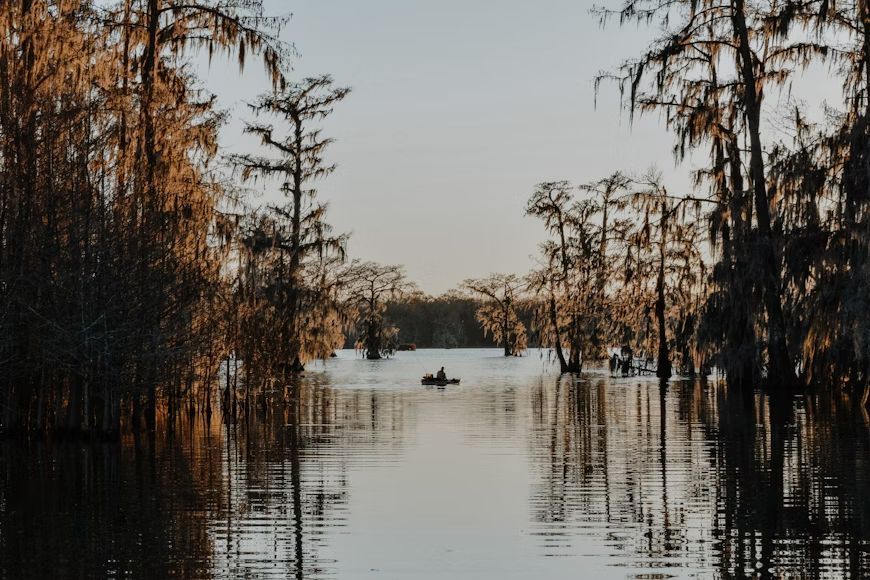
Image: Nicole Herrero

Think steamy summers, sprawling highways, and a whole lot of swampy waterways. This nickname may sound like it belongs in Louisiana, but don’t be fooled. It’s a nod to the bayous that weave through this massive southern city. It’s also a hub for space travel, energy, and some top-notch food. If you know the South, this one should ring a bell. Have you guessed it already?

3
The Big D
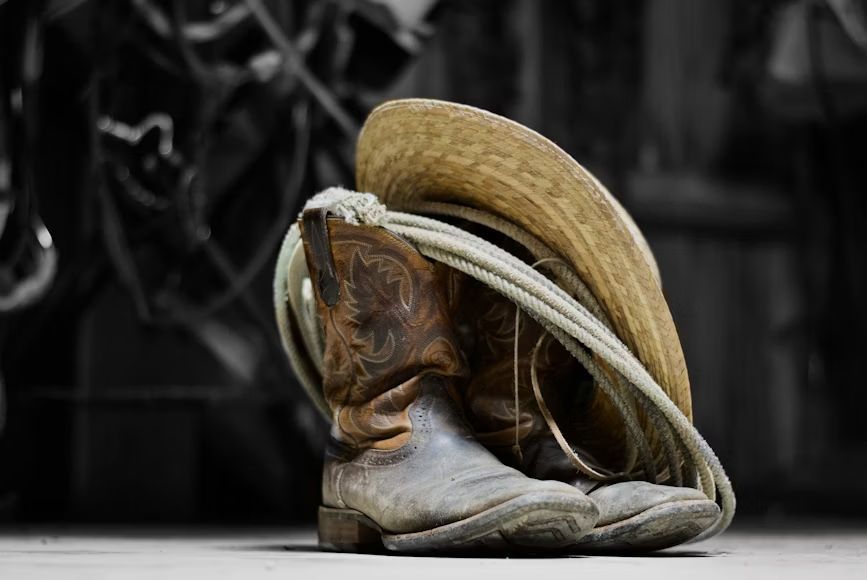
Image: JosephHershMedia

Everything’s bigger in Texas, and this city wears its size with swagger. The nickname itself is bold and simple: Just one big letter. It brings up images of cowboy boots, shiny buildings, and football fever. This place is known for business, barbecue, and a whole lot of bravado. You know the state, but do you know which Texas titan we’re talking about?

4
The Golden City

Image: IRa Kang

Between the shimmering water, a world-famous structure, and a "bright" past, this place practically glows. Its nickname is short and shiny, much like the hills it rests upon. Known for quirky charm and tech power, it’s a city where history and innovation collide. And yes, the fog does roll in, but somehow it just adds to the magic. Got it yet?

5
Rip City
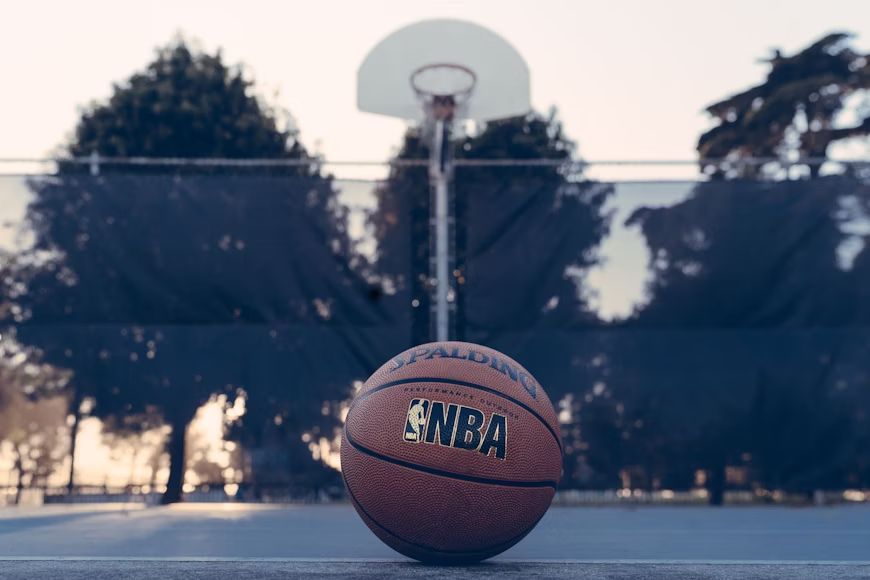
Image: Edgar Chaparro

This one’s a bit of a curveball… Yes, we’re referencing basketball here because this nickname started as a throwaway comment during a basketball game in the '70s, but it stuck like glue. Now you’ll see it on jerseys, bumper stickers, and maybe even a tattoo or two. It doesn’t make a lot of sense, but that’s part of the charm. Sports fans, this one’s for you!

6
Beantown
Image: Xuancong Meng

Baked beans might not sound glamorous, but they sure helped this historic place earn a nickname. That and a long list of American "firsts," this city is wonderful. It’s also been known to call itself the "Hub of the Universe." Has anyone seen modest? History buffs and chowder lovers, you’re probably already picturing cobblestone streets, aren’t you?

7
Baltimore
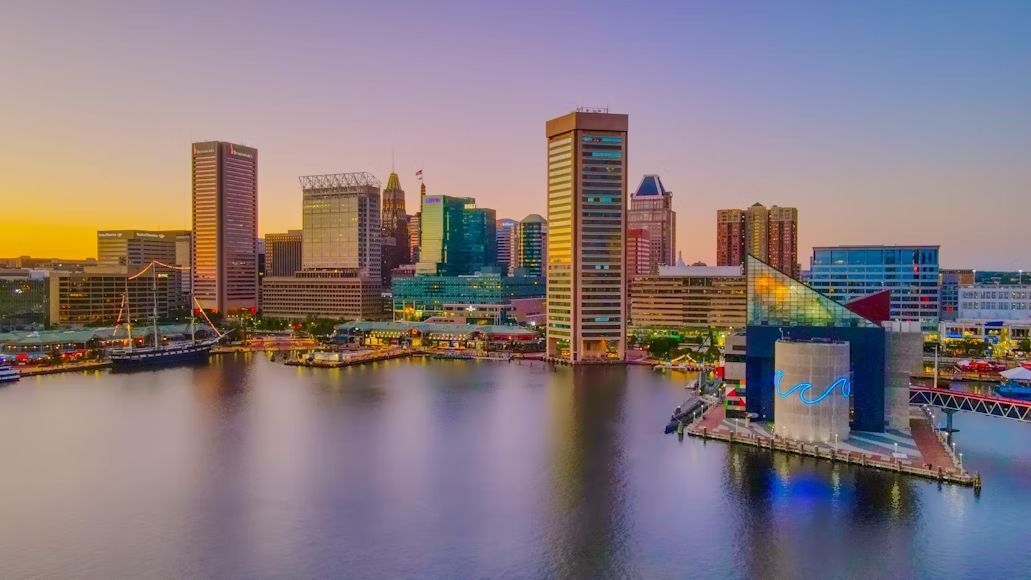
Image: Brendan Beale

Yep, Charm City is Baltimore! That catchy name was cooked up to shine a brighter light on the city’s best features. And guess what? It worked! Baltimore’s got a rich mix of culture, grit, and pride, plus some of the best crab cakes you’ll ever taste. Not bad for a city once overlooked, right?

8
Houston
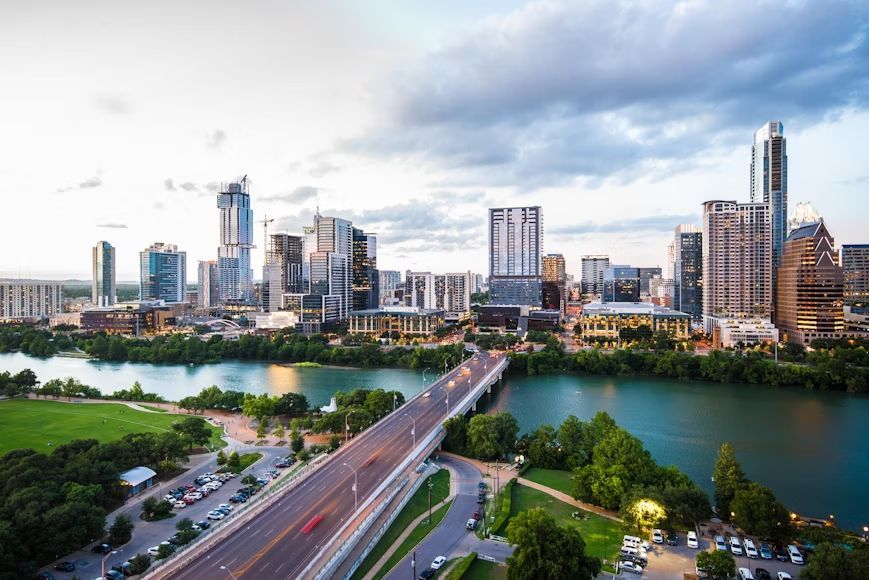
Image: Carlos Delgado

Say hello to The Bayou City: Houston! Its unique geography inspired the nickname, and the city’s grown into a powerhouse of space exploration, culture, and business. Between NASA connections and a killer food scene, Houston has more going for it than just the heat. And yes, those bayous are still winding through it all.

9
Dallas
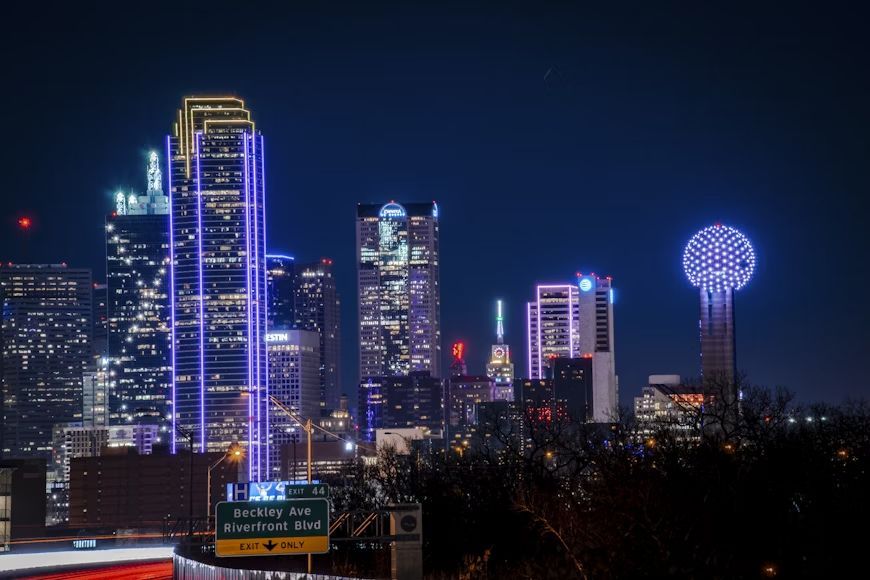
Image: Gabriel Tovar

That big old D? Dallas, of course. This city isn’t shy about its size or influence, and the nickname says it all. From skyscrapers to stadiums, Dallas lives large and wild. Add the cowboy flair, and you’ve got a Texas city that owns its identity. We love it!

10
San Francisco
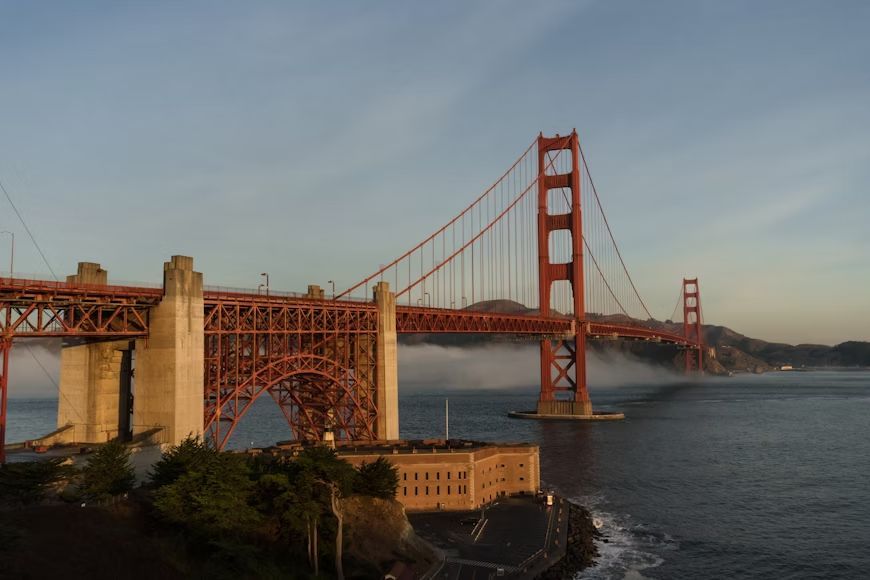
Image: Alexey Komissarov

The Golden City? None other than San Francisco, what else could it be? With its iconic Golden Gate Bridge and a history rooted in gold rush dreams, it’s an easy one to guess. But even beyond the sparkle, the city has got a heart of tech and a soul of protest. Yes, the fog is quite the character, but this city shines bright anyway.

11
Portland
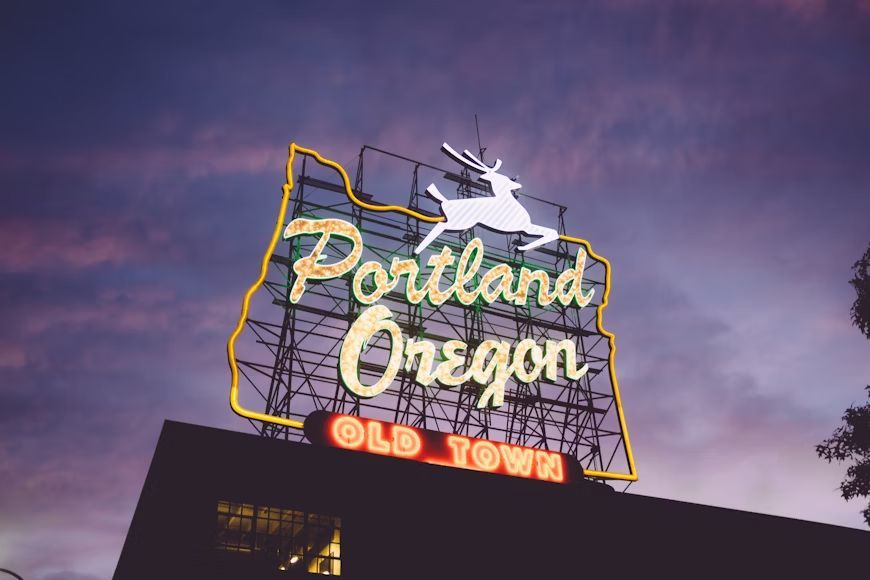
Image: Zack Spear

If you guessed Rip City was Portland, you guessed right! The name came out of a Trail Blazers game and somehow became a token of pride. That’s Portland for you: a little weird, totally charming, and full of surprises.

12
Boston
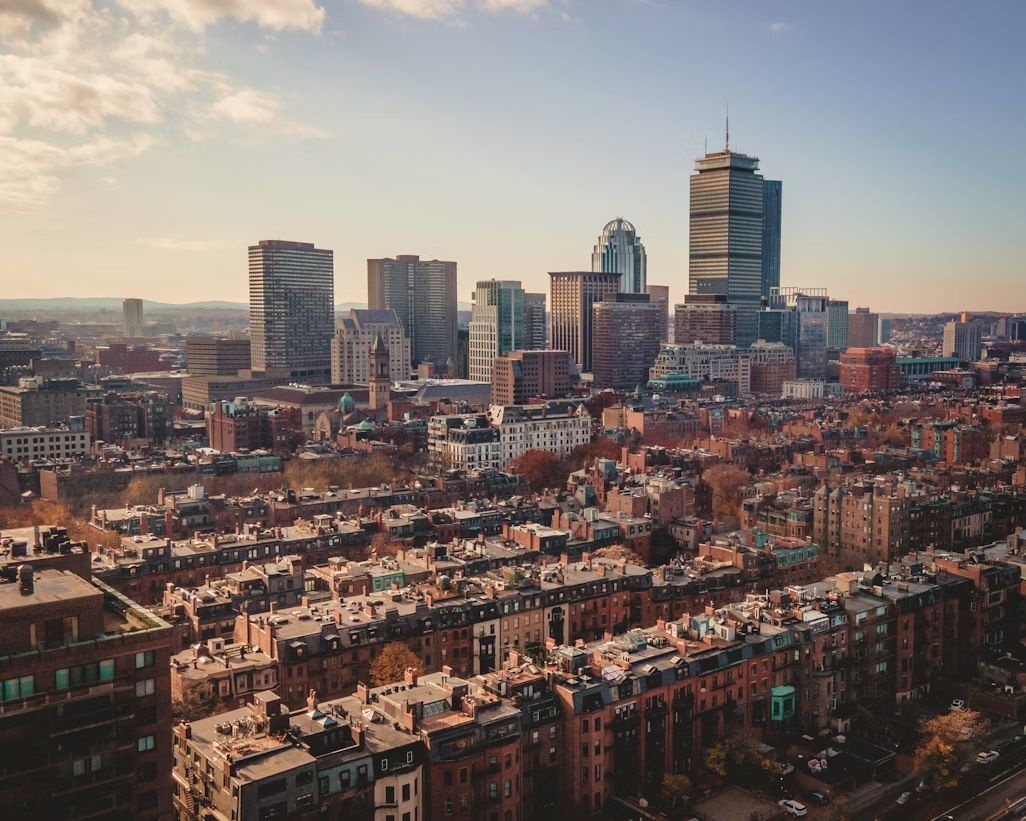
Image: todd kent

You guessed it: Beantown is Boston. The beans are just the beginning—Boston is packed with revolutionary charm, Ivy League brains, and a sports scene like no other. And if you hear someone call it "The Hub," now you know what they mean. It might just be the center of the universe after all.

History History 3 min read

Got mail?

Did you know these 12 facts about the evolution of mail delivery?

Image: Wolfgang Vrede

We take many things for granted, especially when they have been around forever. Their stability is reassuring and commanding. But everything has to start somewhere, and mail delivery certainly has had an interesting history in America. From humble tavern-based post offices to airplanes and ZIP codes, the postal service has a few stories to share. Did you know about these 12?

1
The first post office? A Boston tavern

Image: Mick Haupt

In 1639, the first organized mail service in British North America started at Richard Fairbank’s tavern . The owner collected and distributed mail brought by ship.

Although informal and modest by today’s standards, this post office laid the foundation for communal mail collection and delivery.

2
Enter Benjamin Franklin

Image: Brett Wharton

From 1753, Franklin served as joint Postmaster General for the colonies and undertook a sweeping reform: he organized delivery routes, aligned them with major roads and rivers, and cut the mail travel time between Philadelphia and New York to about 33 hours .

He also introduced the first rate chart, standardizing delivery costs based on weight and distance, turning what had been a scattered courier network into a more reliable, structured mail system.

3
National Postal System founded

Image: David Trinks

With the American Revolution underway, the Second Continental Congress established the first national postal agency in 1775 , appointing Benjamin Franklin as the first Postmaster General.

This new postal service initially handled mostly military and diplomatic correspondence, but the agency laid the groundwork for what would become a national communications service.

4
The Age of Steam: mail by steamboat

Image: mandylin

In 1813, Congress authorized the Postmaster General to contract steamboat companies to carry mail. Soon, steamboats were ferrying mail up and down the East Coast and the Mississippi River .

By 1848, mail even traveled to California via steamship and across the Isthmus of Panama, a three-week voyage.

5
Overland stagecoaches and the Butterfield Overland Mail

Image: Ricky BiggsSr

Between 1858 and 1861, the Butterfield Overland Mail stagecoach service carried U.S. mail across the western frontier, from eastern posts like Memphis and St. Louis to San Francisco .

This service helped connect the eastern U.S. with rapidly growing western settlements long before the completion of the transcontinental railroad.

6
Railroads enter the picture

Image: Jay Kettle-Williams

As railroads expanded, the postal service started to use this new technology: in 1832, the first mail deliveries by train were made.

Rail transport vastly improved speed and reliability compared to horse and stagecoach travel , and became a key advance as mail traffic increased and the nation expanded westward.

7
First U.S. postage stamps

Image: The New York Public Library

In 1847, the first official U.S. postage stamps were issued: a 5-cent stamp featuring none Ben Franklin and a 10-cent stamp featuring George Washington .

Prepaid stamps simplified payment and collection of postage, removing complications from pay-on-delivery systems and helping the postal system function more efficiently.

8
The Pony Express

Image: The New York Public Library

In 1860, the Pony Express started its overland mail route between Missouri and California, nearly 1800 miles of relay horseback riding . The mail took 10 days between endpoints.

Although short-lived (it ended in 1861), the Pony Express demonstrated the demand for rapid cross-country communication.

9
City-wide home delivery

Image: Lesli Whitecotton

In 1863, free city mail delivery began , allowing residents in major cities to receive letters directly at their homes rather than picking them up at a post office.

This represented a major shift: mail became a part of everyday domestic life, not just something dropped off and picked up by hand.

10
Pneumatic tube mail in NYC

Image: The New York Public Library

In 1897, a pneumatic-tube mail system began operation in New York City. Mail could travel underground at high speeds, from the General Post Office to other offices in Manhattan within minutes .

At its peak, the system carried thousands of letters daily: at one point, nearly 30% of New York City mail went through this immense underground network.

11
Parcel post service launches

Image: Olivier Rouge

On New Year’s Day 1913, the U.S. Post Office inaugurated the first official parcel post service , allowing packages, not just letters, to be sent through the mail.

The impact was immediate: within the first five days, millions of packets passed through post offices, fueling mail-order business and expanding commerce everywhere.

12
First airmail route

Image: Qihao Wang

In 1918, the postal service launched the first regularly scheduled air mail route between Washington, D.C., and New York , marking the beginning of mail carried by airplane.

Airplane mail allowed far faster coast-to-coast and long-distance communication, a major leap from sailboats, stagecoaches, or railroads.

Culture Culture 6 min read

The life and death of the teenage outlaw of the Southwest

Living legend: 10 actors who played Billy The Kid in movies & TV

Image: Boston Public Library, Public domain, via Wikimedia Commons

Did you know that Billy the Kid holds the record as the most portrayed individual in cinematic history ? The most wanted man on the American frontier has been played by numerous actors—and even actresses—from 1911 to the present day. From Paul Newman to Val Kilmer, each one of them gave the famous outlaw their peculiarity, keeping his legend alive in the collective memory of the American public for generations. Do you remember any of them? Don't worry, in this article, we review 10 actors who portrayed Billy the Kid in movies and TV shows.

1
Edna Foster and Edith Storey (1911)

Image: University of Washington, Public domain, via Wikimedia Commons

Even just thirty years after his death, the figure of Billy the Kid was so legendary that films were already being produced based on his life. The first two, both silent shorts, date from 1911 and share an intriguing peculiarity: both star women.

Billy the Kid was directed by Laurence Trimble and is very loosely based on the life of the famous outlaw. It is, however, believed to be a lost film. Edith Storey , an American actress who had played male characters in films such as Oliver Twist , stars as "the Kid."

The Adventures of Billy , on the other hand, was directed by the great pioneer American motion-picture director D. W. Griffith. In this film, the role of Billy is played by American child actress Edna Foster.

2
Johnny Mack Brown (1930)

Image: Ruth Harriet Louise, Public domain, via Wikimedia Commons

American college football player and film actor John Mack Brown was the first to play Billy the Kid in the talkies. He was directed by none other than the great film director and producer King Vidor in 1930's Billy the Kid . This film is a pre-Code Western and tells the story of Billy's escape after avenging his boss and the subsequent manhunt by Sheriff Pat Garret.

Johnny Mack Brown had started his career by appearing in a few minor films until he got his big break with this movie. Unfortunately, his career in mainstream cinema did not flourish, leading him to transition into low-budget Westerns. Eventually, he found significant success as a B-movie cowboy , becoming a beloved figure in the genre.

3
Jack Buetel (1943)

Image: here, Public domain, via Wikimedia Commons

Jack Buetel was an inexperienced actor when tycoon Howard Hughes cast him in his next film, The Outlaw , in 1940. Buetel signed a seven-year contract after Hughes promised him that he would make him a star.

The film faced many difficulties. It wasn’t immediately approved due to its erotic scenes, and although it was officially released in 1943, it was not until 1946 that the public was able to finally see it. Produced during the golden age of the genre, The Outlaw is considered a psychological Western. However, it was not well received by the critics of the time, and Buetel's work was especially bashed. After this, Hughes refused to allow Buetel to participate in other films, and his career never really took off.

4
Paul Newman (1958)

Image: Unknown authorUnknown author, dedicated to Bettmann Archive, Public domain, via Wikimedia Commons

Paul Newman is one of the most celebrated actors of the 20th century and is best known for his roles in several classic Westerns. But did you know that the first Western character Paul Newman portrayed was Billy the Kid? In the mid-1950s, Newman was cast to replace James Dean in The Left Handed Gun after Dean's untimely death. This was the beginning of a series of films about the Old West that the beloved American actor would play throughout his career.

Based on a teleplay by Gore Vidal and directed by Arthur Penn, The Left Handed Gun departs from the classic genre iconography to present the famous bandit much closer to the rebellious and tormented antiheroes of the era. Thus, in this film the characters are complex and nuanced, questioning and revising the traditional portrayal of the savage outlaw.

5
Clu Gulager (1960 - 1962)

Image: NBC Television, Public domain, via Wikimedia Commons

The first television series about Billy the Kid was The Tall Man , which aired on NBC from September 10, 1960, to September 1, 1962. Although we all know that the real story ends with Billy being killed by Pat Garrett, this light-hearted action series focuses on the duo's alleged happier days, when they had more of a father-and-son relationship.

Clu Gulager, born in Oklahoma and the son of a cowboy entertainer, plays Billy. Although he was already 32 years old when cast, the actor earned his well-deserved place in the role. After the success of this series, Gulager worked in other Westerns and later had a second career as a horror film actor. His last appearance on the big screen was in 2019, in Quentin Tarantino's Once Upon a Time in Hollywood.

6
Geoffrey Deuel (1970)

Image: Unsigned, Public domain, via Wikimedia Commons

While this is not a film specifically about Billy the Kid's life, he does appear as a supporting character. Starring the legendary John Wayne, Chisum tells the story of the 1878 Lincoln County War, an Old West conflict between rival factions involving some famous gunslingers, including William H. Bonney, better known as Billy the Kid.

In this film, Geoffrey Deuel plays Billy the Kid. Although he had already participated in some television series, Chisum was his debut on the big screen.

7
Kris Kristofferson (1973)

Image: Republic Country Club, CC BY 2.0 <https://creativecommons.org/licenses/by/2.0>, via Wikimedia Commons

Kris Kristofferson is best known for his career as a country musician and his appearance in the 1976 version of A Star is Born alongside Barbra Streisand. But did you know he also portrayed Billy the Kid? In 1973, he was cast in the revisionist Western film Pat Garrett and Billy the Kid , directed by Sam Peckinpah.

One of the most intriguing aspects of Kristofferson's involvement in this film is that he introduced Bob Dylan to the director. Dylan was initially hired to write the title song, but ended up composing the whole score and even played the role of "Alias." Among the songs Dylan wrote for the film was the iconic "Knockin' on Heaven's Door."

8
Val Kilmer (1989)

Image: Billy Hathorn at English Wikipedia, CC BY-SA 3.0 <http://creativecommons.org/licenses/by-sa/3.0/>, via Wikimedia Commons

American writer Gore Vidal was not pleased with the adaptation of his teleplay for The Left Handed Gun , so he decided to produce his own version. The resulting TV movie premiered on TNT in May 1989, with Val Kilmer cast as Billy the Kid.

Kilmer's version of Billy the Kid is a bit friendlier than his predecessors. He was also the right age for the character, making Gore Vidal's Billy the Kid one of the most historically rigorous accounts of the outlaw's life.

After this film, Val Kilmer's career continued to grow, with standout roles in The Doors and Batman Forever . Billy the Kid wasn’t the only gunslinger he portrayed—Kilmer also famously played Doc Holliday in the 1993 film Tombstone .

9
Dane DeHaan (2019)

Image: Gage Skidmore from Peoria, AZ, United States of America, CC BY-SA 2.0 <https://creativecommons.org/licenses/by-sa/2.0>, via Wikimedia Commons

American actor Dane DeHaan portrays Billy the Kid in the 2019 film The Kid , alongside Ethan Hawke as lawman Pat Garrett. The physical resemblance between DeHaan—a younger Leonardo DiCaprio lookalike—and the real William H. Bonney is striking, making the Vincent D'Onofrio-directed film not only a fresh take but also one of the closest onscreen renditions of the mythical character.

In an interview, DeHaan said that he accepted the role because he thought it was a very interesting character to play. He also explained that he considered Billy The Kid a victim of the media and explained that the film aims to depict the harsh realities of the Wild West, where survival often drove people to desperate and terrible actions.

10
Tom Blyth (2022 - )

Image: Asagan at English Wikipedia, CC BY-SA 3.0 <https://creativecommons.org/licenses/by-sa/3.0>, via Wikimedia Commons

The most recent version of Billy the Kid is played by Tom Blyth, a 29-year-old English actor from Birmingham. Blyth plays the infamous outlaw in the television series Billy the Kid, which premiered on MGM+ in April 2022. Produced by Michael Hirst, the English producer behind hits like The Tudors and Vikings , the series was renewed for a third and final season in 2024.

To prepare for this character, Blyth didn't just read a ton of books about Billy's story, he felt the need to do something more tangible to get into the skin of the famous outlaw. He traveled to Arizona, rented a car, and began a 7-day pilgrimage around New Mexico visiting all the places William H. Bonney had once been. He even visited his grave! His intention was to make the character more palpable and real as opposed to this exaggerated image of the mythical character we are used to.

Explore more American facts

Choose your favorite category!

General
General

As American as apple pie—the very best America has to offer!

Culture
Culture

Delve into the astounding richness of American lore.

Geography
Geography

Hop in and explore vast and diverse American landscapes.

History
History

Discover the key moments that shaped the United States.