History History 3 min read

Who would you write it for?

Mark Twain said what? Remarkable book dedications and their stories
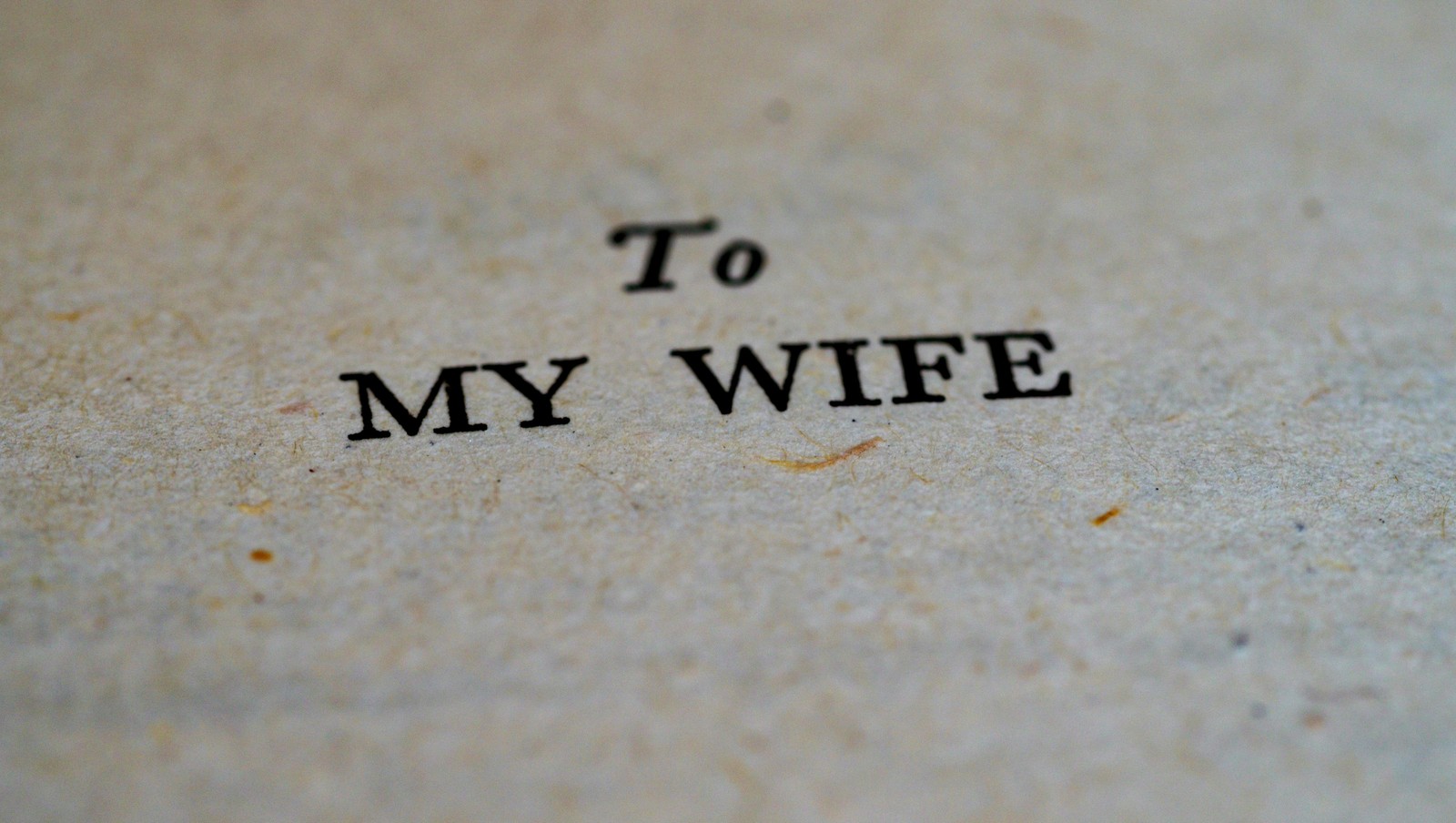
Image: Hưng Lê

These might be memorable titles written by renowned authors, but sometimes the dedications are just as remarkable as the rest of the volume. Have you ever read the lines tucked into the opening pages of famous books? Some are chilling, some funny, some thought-provoking—and we’ve gathered a list of particularly interesting ones!

1
Don’t question the author
Image: Amaan Ali

In his usual sarcastic style, Mark Twain wrote in the opening "Notice" of The Adventures of Huckleberry Finn : "Persons attempting to find a motive in this narrative will be prosecuted; persons attempting to find a moral in it will be banished; persons attempting to find a plot in it will be shot." It’s an unforgettable way to open a classic.

2
What you don’t know…

Image: Markus Spiske

In the book This Boy’s Life, Tobias Wolff wrote: "My first stepfather used to say that what I didn’t know would fill a book. Well, here it is."

It’s a dark but funny recounting of his turbulent youth in this memoir, so the line is a perfect setup for what’s to come.

3
About loyalty
Image: Niranjan V S

In her book Dark Places , thriller writer Gillian Flynn wrote: "What can I say about a man who knows how I think and still sleeps next to me with the lights off?"

The author of Gone Girl tipped her hat to her husband, Brett Nolan, here. Who doesn’t want a partner who accepts us fully—even if we spend our days writing about murky crimes?

4
Cosmic love

Image: Jayshree Sharma

If you’re a romantic, try not to swoon over Carl Sagan’s dedication in Cosmos : "In the vastness of space and the immensity of time, it is my joy to share a planet and an epoch with Annie."

This beautiful line of cosmic love was dedicated to his wife and collaborator, Ann Druyan. And the book that follows is a science classic.

5
A touch of fantasy
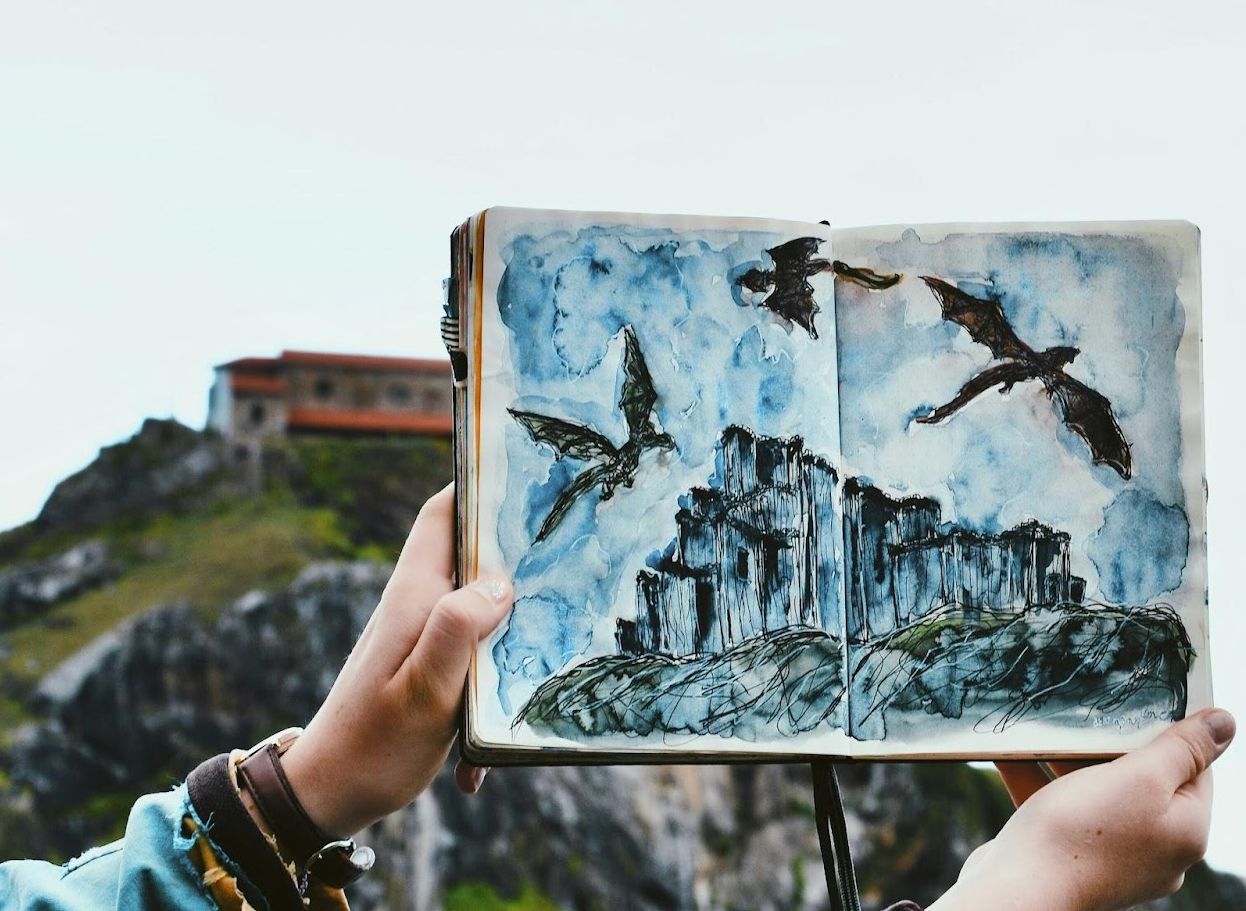
Image: Ali Müftüoğulları

Ken Kesey’s famous book One Flew Over the Cuckoo’s Nest , set in a psychiatric ward, wouldn’t be cataloged as fantasy at all. And yet, its memorable dedication reads: "To Vik Lovell, who told me dragons did not exist, then led me to their lairs."

6
The inclusive take
Image: Andrew Neel

John Cheever had a good idea in his dedication of The Wapshot Chronicle : "To M with love, and with best wishes to practically everybody else I know." A playful and inclusive way to make sure you leave out no one who matters! It was his debut novel, and it won the National Book Award.

7
The vengeful one
Image: Gaspar Uhas

This one is dark but packs a memorable punch. The dedication of No Thanks , by E. E. Cummings, is simply a list of names—the 14 publishers who turned his work down. But here’s the unforgettable bit: the words are arranged on the page in the shape of an urn.

8
Thanking the parents

Image: Lucas George Wendt

Comedian Judd Apatow dedicated his book Sick in the Head to his loving parents: "For Mom and Dad. Your support—and the mental health issues you gave me—made all of this possible." Tongue in cheek, just as fans would expect from him.

9
Chilling and sobering
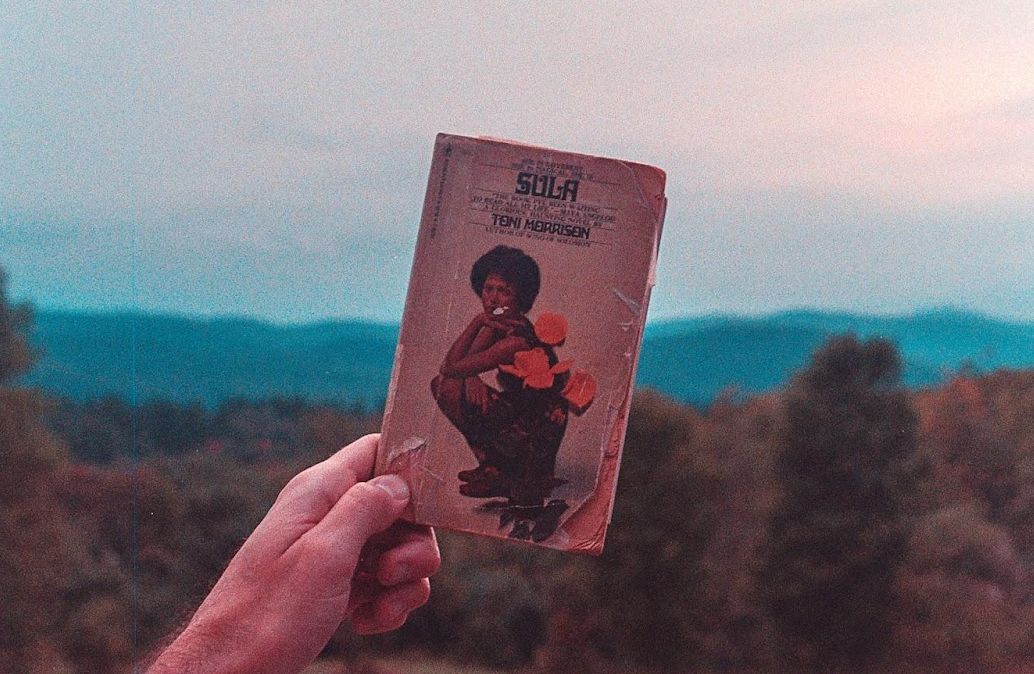
Image: Isaac N.

Powerful: Toni Morrison’s dedication in Beloved is simply the phrase "Sixty million and more," referring to the victims of the transatlantic slave trade. No verbs, no explanations—just five heavy, sobering words to leave readers thinking.

10
About undying love

Image: Girl with red hat

F. Scott Fitzgerald’s The Great Gatsby is, after all, a story steeped in undying love. His dedication was fitting: "Once again, to Zelda." It’s a brief but heartfelt nod to his wife and muse.

11
An offering
Image: Jouwen Wang

John Steinbeck’s East of Eden opens with a sort of letter. It’s longer than this, but it begins with an anecdote in which "Pat" asked him to give him a box to fill with things. The dedication reads:

"Dear Pat… Well, here’s your box… Nearly everything I have is in it… all the gratitude and love I have for you. And still the box is not full. JOHN."

General General 5 min read

Incredible creatures

You won't believe these 10 American animals' amazing traits and skills

Nature never ceases to amaze us. From mammals that can "glide" through the air to creatures that can twist their heads 180 degrees, America's wildlife is as diverse as it is impressive. While you probably recognize many of the animals in this article, they have some skills that could shock anyone. Join us to discover these 10 incredible American animals with amazing abilities and unique traits !

1
Blue jay

Image: Mark Olsen

The blue jay is a beautiful bird with –as its name suggests– striking blue plumage. It also has white feather details and a sort of black "collar" on its neck. But it is not just a pretty face; it also has wonderful abilities.

Blue jays are excellent mimics . They can imitate the calls of other birds, especially hawks, in order to frighten and scare away predators. Nature is wise!

In addition, these birds that live in family groups have a great memory . Blue jays have been seen storing nuts far from where they originally found them and then returning to those locations later without much effort.

2
Bald eagle

Image: Mathew Schwartz

As one of America's most iconic symbols, the bald eagle makes an imposing impression just with its presence. It is one of the largest birds in the world, with a wingspan ranging from 6 to 7.5 feet and weighing between 3 and 6.5 pounds.

One of its most outstanding traits is its vision , considered by many experts to be 4 to 5 times sharper than human eyesight. This bird has such precise vision that it can spot its prey from several miles away while flying!

In addition to that, its hunting skills are exceptional. Bald eagles rarely fail to catch a snack, thanks to their large and powerful talons. Their prey can be quite large, as their grip strength can reach 400 pounds per square inch.

3
Pronghorn antelope

Image: David Thielen

Despite its common name, the pronghorn is not an antelope. In fact, it belongs to another family called Antilocapridae , exclusive to North America. Yes, they only exist here!

Pronghorns have several characteristics that make them unique, including their iconic horns . First off, pronghorns shed their horns every year (because who doesn't want to renew their outfit?). And, unlike many other species, it's not just the males that have horns; the females do too.

But here's its best feature: the pronghorn is nothing less than the fastest land animal in America, capable of reaching speeds of over 50 mph. And that's not all; this animal can sustain its speed for very long distances. A true runner!

4
American alligator

Image: Joshua J. Cotten

The American alligator can measure between 13 and 15 feet long and weigh more than 900 pounds, making it one of the largest reptiles in the USA.

But its size is not the only thing that impresses. The American alligator, which inhabits the southeastern United States, has one of the fiercest and most powerful bites in the entire animal kingdom, reaching 2,980 pounds of pressure per square inch. Just picture that destructive power!

Biting so hard must have negative consequences for the teeth, right? True. But this is not a problem for the American alligator, as this reptile has the ability to regenerate its lost teeth more than 50 times in its lifetime!

5
Barn owl

Image: Bob Brewer

The barn owl is one of the several owl species found in America. Its most characteristic feature is its heart-shaped face. This distinctive quality is not only cute, but it also serves a purpose: it directs sound into the bird's ear cavities. The barn owl has exceptional hearing , allowing it to detect the smallest prey in the dark.

On the other hand, one of the most striking features of owls is their ability to rotate their heads about 180 degrees and, in some cases, even more. If you found The Exorcist disturbing, you don't want to watch videos of owls rotating their heads!

6
Wood frog

Image: Richie Bettencourt

The wood frog is a small amphibian native to the northeastern states, famous for the dark markings around its eyes. These markings are like a mask that extends, much like when someone's makeup smudges.

But this frog's appearance is not the only thing that distinguishes it. It also has an incredible skill: the ability to withstand freezing temperatures. And that's not all; during the winter, their bodies can actually freeze solid and then thaw out in the spring without sustaining serious damage. Amazing!

Although it is not Captain America, this ability allows the wood frog to adapt very well to temperatures as low as -10°F for several weeks.

7
Flying squirrel

Image: Saori Oya

Have you ever dreamed of flying through the sky like a superhero? Who wouldn't want that? There is a squirrel that has this advantage, which is why it is commonly called the flying squirrel.

Despite its funny name, the flying squirrel doesn't actually fly but glides through the trees. Even so, watching this small mammal deploy a membrane between its limbs to glide with great precision from the heights is impressive. In addition, they can perfectly regulate speed and direction during their ride through the air.

Have you ever seen one of these creatures?

8
Gila monster

Image: David Clode

There is only one venomous lizard in the U.S., and that title goes to the great Gila monster.

This lizard, naturally found in the southwestern regions of our country, has unique abilities that set it apart from other animals. The "monster" in its name is no coincidence: this lizard has a fearsome bite , capable of injecting painful venom. The Gila monster's venom is delivered through grooves in its teeth, something extremely rare for a lizard.

And there's more. This animal can go several months without eating! This is due to its slow metabolism , which allows it to survive even when food is scarce.

9
Eastern diamondback rattlesnake

Image: Leah Storme

The eastern diamondback rattlesnake is one of the largest rattlesnakes that inhabit our country, reaching 6 feet in length and weighing around 10 pounds. Its characteristic diamond-shaped pattern on its back is what gives it its iconic name.

Besides having one of the most potent venoms among rattlesnakes, this snake has another important advantage. The diamondback rattlesnake has thermo-detecting pits. But what is that? They are tiny orifices located between its eyes and nose, which allow it to detect the temperature of its warm-blooded prey even in the deepest darkness.

10
American beaver

Image: Tim Umphreys

Beavers are amazing animals. These rodents that inhabit freshwater environments are like the architects of the animal world. They have impressive building skills, with dams being their primary type of construction.

The dams that beavers build with sticks, logs, stones, mud, and other materials from nature are designed to protect their community and lodges. Beavers' lodges are perfectly engineered, featuring underwater entrances that keep them isolated and safe, just like a natural bunker!

They are also excellent swimmers . They have an affinity for water and use it in very creative ways. For example, they slap their flat tails against the water's surface to alert their families when danger is near.

History History 4 min read

AMERICAN PIONEERS

Old West Tales: 10 Key Moments of the Wildest Frontier

Image: Eniko Polgar

The Westward expansion that defined the American frontier during most of the 19th century was a time of daring pioneers and boundless possibilities, which ultimately shaped the nation in profound ways.

This expansion of our Nation’s territory to the vast lands of the American West brought about innovation, and progress, but also conflict. From the Louisiana Purchase to the Dawes Act, let’s take a deep dive into the moments that defined the frontier spirit and solidified America's path to greatness.

1
Louisiana Purchase (1803)

Image: Nik Shuliahin

It sounds crazy today, but the Louisiana Purchase almost doubled the size of the United States overnight. Thomas Jefferson, at the time, the third to occupy the position of President of the United States, bought the massive 828,000 sq mi territory from France for $15 million, securing vital land and resources.

The purchase, however, didn’t mean that the United States also gained control of the totality of the territory, as it was inhabited by Native Americans. But in any case, the acquisition paved the way for westward expansion, providing a vast area for exploration and settlement, while enhancing America's geopolitical influence.

2
Lewis and Clark Expedition (1804-1806)

Image: Charles Marion Russell

Commissioned by Jefferson, Meriwether Lewis and William Clark then embarked on a mission to map the newly acquired lands and find a viable route to the Pacific. Their legendary journey revealed the rich diversity of the western territories and established crucial relationships with Native American tribes.

Sacagawea, a Shoshone woman, played a crucial role as an interpreter and guide, helping the expedition navigate difficult terrain and gain trust with native tribes, significantly contributing to the mission's success. Ultimately, their detailed reports opened the frontier to future explorers and settlers.

3
The Oregon Trail (1811-1869)

Image: Dana Davis

Originally laid around 1811 by fur trappers and traders, the Oregon Trail soon became a critical route for thousands of emigrants moving west. Spanning over 2,000 miles from Missouri to Oregon, it was a perilous journey marked by harsh landscapes and, more often than not, disease.

Despite the hardships, the trail was improved to become passable by wagons, and it facilitated the mass migration of over 400,000 settlers during its peak, significantly contributing to the population growth and development of the Western United States.

4
California Gold Rush (1848-1855)

Image: Viviana Rishe

The discovery of gold at Sutter's Mill in 1848 triggered a massive influx of fortune seekers to California. The Gold Rush not only boosted the economy but also accelerated California's admission claim as the 31st state in 1850.

While prospectors initially used simple techniques like panning, the increasing complexity of gold extraction eventually required significant financing, favoring mining companies. And though the gold rush generated wealth worth tens of billions in today's dollars, only a few became rich; most participants earned little more than they had started with.

5
Homestead Act (1862)

Image: Kevin Butz

Signed by President Abraham Lincoln, the Homestead Act offered 160 acres of public land to settlers willing to farm it for five years. The policy primarily encouraged individual farmers who were looking to operate their own farms, as opposed to slave owners who sought to buy large tracts of land and use slave labor.

The legislation encouraged widespread migration to the Great Plains, accelerating agricultural development and expanding American settlements across the West.

6
Building of the Transcontinental Railroad (1863-1869)

Image: Johannes Plenio

The completion of the first Transcontinental Railroad in 1869 revolutionized transportation in the United States. Connecting the East and West coasts, it facilitated trade, travel, and communication.

The extensive railroad network was built by three private companies on public lands, financed with federal bonds and various subsidies. Instrumental in the nation's economic growth, the Transcontinental Railroad also helped forge a sense of national unity and identity in the American consciousness.

7
The Great Sioux War (1876-1877)

Image: Popular Graphic Arts

Also known as the Black Hills War, the Great Sioux War was a series of conflicts between the United States and the Sioux tribes. The war was sparked by the encroachment of settlers and gold prospectors on Native lands, a conflict that had been escalating since the early 19th century.

Despite many Native American victories, such as the Battle of Little Bighorn - better known as Custer's Last Stand -, the war ultimately ended in the tribes' displacement. The conflict officially finished with the Agreement of 1877, in which the Sioux tribes were forced to cede property rights of their lands to the federal government, while clearly demarcated Indian reservations were established.

8
Oklahoma Land Rush (1889)

Image: Raychel Sanner

On April 22, 1889 - soon after the signing into law of the Indian Appropriations Act, which freed over two million acres of land for settlement - thousands of settlers raced to claim land in the Oklahoma Territory during the first of several land rushes.

Those who followed the rules and waited for the official start of the land rush were known as "boomers," while "sooners" sneaked into the territory before the designated time, risking penalties but gaining advantageous claims. This sparked hundreds of legal contests that had to be settled at local land offices or even by the U.S. Department of the Interior.

9
The Dawes Act (1887)

Image: Boston Public Library

The Dawes Act aimed to assimilate Native Americans by dividing tribal lands into individual allotments. While intended to promote agriculture and integration, it resulted in the loss of tribal lands and culture.

The act was a controversial effort to reshape Native American society in the image of European-American settlers. It wasn’t until the Indian Reorganization Act, passed during the Franklin D. Roosevelt administration, that Native Americans regained some of their rights to own land collectively and form self-government.

10
Closing of the Frontier (1890)

Image: Aaron Burden

In 1890, the U.S. Census Bureau declared the frontier closed, as there was no longer a discernible frontier line. This marked the end of a significant era of American expansion.

The closing of the frontier signified the nation's transition from a period of exploration and settlement to one of modernization and industrialization.

Explore more American facts

Choose your favorite category!

General
General

As American as apple pie—the very best America has to offer!

Culture
Culture

Delve into the astounding richness of American lore.

Geography
Geography

Hop in and explore vast and diverse American landscapes.

History
History

Discover the key moments that shaped the United States.