General General 4 min read

GET A REFILL FOR YOUR COFFEE MUG AND READ ON

Top 10 Diner Staples Everyone Should Try A Least Once

Image: Chad Montano

Diner restaurants are so ingrained into American culture that each year, thousands of foreign tourists pass through their doors for a bite and a taste of what is perceived, all over the world, as a classic moment of American life . Their plastic-laminated menus offer a distinct array of dishes, ranging from site-specific treats to the most traditional food items that no respectable diner can go without. From cheeseburgers to waffles , we have selected 10 of these culinary monuments for your perusal. Which of these are your favorites?

1
Bacon Cheeseburger

Image: Erik Odiin

Let us begin with the most obvious and ubiquitous diner staple of all time: the bacon cheeseburger . This decadent concoction of ground beef, buns, melted cheddar, bacon, and a few more ingredients has graced the menus of diners forever.

While most are meant to be eaten as a sandwich, more than a few places offer monstrous creations that have to be opened and eaten in pieces or with a knife and fork, as the sheer size of the hamburger cannot fit in an open mouth.

2
Club Sandwich

Image: Suea Sivilaisith

Another menu classic, the club sandwich consists of three superimposed slices of toast with two fillings, cut into triangular quarters that point upward like they're reaching for the heavens. Fresh turkey breast and bacon are the standard ingredients, but some diners have come to specialize in clubs and their variations.

Supposedly, the sandwich was invented in Saratoga Springs, New York, at the racetrack clubhouse in 1894, hence its name.

3
Hash browns

Image: Uwe Conrad

An iconic breakfast side, hash browns are an omnipresent add-on to scrambled eggs, bacon strips, and many more classic dishes. They consist of finely julienned potatoes that have been fried until golden browned.

No matter which diner you visit to get breakfast, you’ll more than likely find these crispy potato strings on the menu, as they are appreciated for their simplicity, versatility, and satisfying crunch.

4
Eggs Benedict

Image: bady abbas

A breakfast or brunch dish with a funny name, Eggs Benedict consists of two halves of an English muffin, each topped with Canadian bacon, a poached egg, and hollandaise sauce.

While it was popularized in New York City, it is generally believed to have been created in New York City in the late 19th century, this dish can be found all over the country and is a menu staple in diners everywhere.

5
Biscuits and gravy

Image: John Cameron

A hearty breakfast ideal for chilly Midwest mornings and a cowboy diet staple, biscuits and gravy are made with warm, soft dough biscuits, covered in white gravy made from the drippings of cooked pork sausage, flour, milk, and often bits of sausage, bacon, ground beef, or other meat.

Most classic diners worth their salt will offer some variation of this delicious dish.

6
Tuna Melt

Image: Youjeen Cho

Even though the title of this diner favorite suggests it, nobody has ever melted a fish yet. The "melt" part of a tuna melt is achieved by a substance that is much more capable of reaching that state: cheese.

Supposedly, this delicious sandwich was invented when a lunch counter cook accidentally tipped a bowl of tuna salad onto a piece of toasted cheese already frying on the flat top. The result proved quite tasty, and thus, the dish was born. Whether one decides to believe it or not, tuna melt makes for a great diner menu item.

7
Meatloaf

Image: Verena Böttcher

A close cousin to the traditional diner hamburger, the meatloaf also has German origins. However, instead of the pork and veal meat that must be used in its homeland, the American meatloaf is done with ground beef. Its distinctive flavor comes from masses of onions that meld with the beef fat, and the flavor mellows as the meatloaf bakes.

The resulting dish is smothered in gravy, and presented with lots of mashed potatoes, fresh vegetables, and extra gravy on the side.

8
Pancakes

Image: nikldn

Passing on now to the desserts, we encounter a champion of American breakfasts and a menu item that no respectable diner should be without: the almighty pancake .

Whether it comes with fruit, chocolate chips, or more, this comfort food is covered with a generous amount of syrup to help lubricate and ease the journey from mouth to stomach with every bite.

9
Pie a La Mode

Image: Element5 Digital

French speakers might ask: "To Which Mode?" to which the answer would be: ice cream! Pie à la Mode is, simply put, a slice of -usually- apple pie with ice cream on top.

This sweet treat can be found in refrigerated glass display cases showcased in diners since refrigeration was invented. And there is a great reason for that, as the resulting mix of the crunchy base, the sweet apple, and the ice cream make for an amazing dessert.

10
Waffles

Image: Mae Mu

Sure, waffles can be thrown into a toaster right out of the box, in the comfort of your own home. But that is no match for a diner-style freshly made waffle (that is, if the diner is any good).

Waffles are a breakfast staple, readily available at your local eateries. There are few things better than biting into a waffle and being met with a pocket of melted butter and warm syrup.

Geography Geography 4 min read

Landmarks have secrets

Why does the Pentagon have so many bathrooms? Secrets about US buildings

Image: Zoshua Colah

Did you know that the Golden Gate Bridge wasn’t supposed to stay that color? Or that the White House wasn’t meant to have that name? Could you guess which of our iconic buildings shows a map of the stars that’s, err… wrong? We think we are somewhat acquainted with the basic facts about the most famous structures in our country. But here is a list of some behind-the-scenes stories you probably hadn’t heard before!

1
How the White House gained its name

Image: Suzy Brooks

Originally, the building was called the "President’s House." That only changed after the 1814 fire. During the War of 1812, British troops marched into Washington and set many buildings on fire, including the main one.

Walls were scorched, and smoke damage lingered inside and outside the building. When repairs began, painters coated the building white to cover the burn marks . This resulted in the "White House" nickname. Nearly a century later, Theodore Roosevelt made it official.

2
A hidden underground beneath America’s books

Image: Stephen Walker

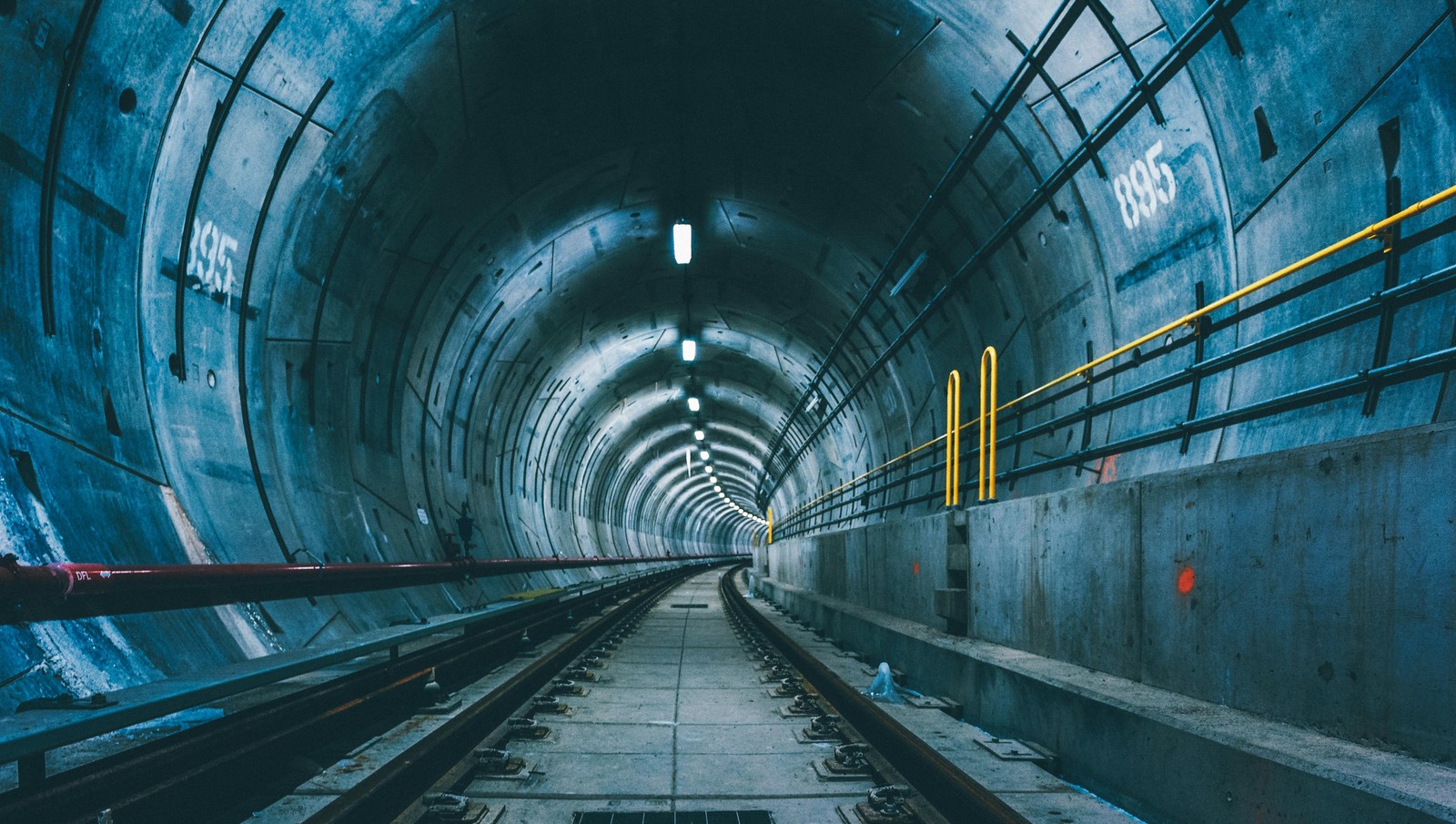
Have you ever heard of the Library of Congress's underground tunnels? Most visitors never see them or learn about them. They connect their buildings, allowing staff to transport rare books and documents safely and efficiently. Fragile, valuable materials had better be protected from the weather, the sunlight, and, well, the people!

3
The Golden Gate Bridge wasn’t supposed to stay red

Image: Trent Erwin

The reddish color of the Golden Gate Bridge (officially named "International Orange") was supposed to be a temporary priming coat to protect the steel.

However, when engineers looked at the bright color peeking through the fog against the stunning blue and green of the San Francisco Bay, they said, "You know what?" It should stay like that. The Navy proposed painting it black and yellow, but it was never done. The stunning color turned it into one of the most iconic buildings in the world.

4
The Empire State Building wanted to welcome airships

Image: Christian Ladewig

Back in 1931, the Empire State Building’s spire was intended as a mooring mast to serve as a docking station for airships. The idea was that passengers should be able to step directly into Manhattan from the sky!

Sure, it was a futuristic plan, but it was eventually dismissed for being wildly dangerous. Passengers would have had to climb out at dizzying heights in strong winds. Not ideal! And certainly not glamorous.

5
The famous ceiling that got the stars wrong

Image: Alexa Soh

You may have seen images of Grand Central Terminal’s celestial ceiling —or seen it with your own eyes. But there’s a twist: Did you know that the constellations in it are painted backward?

The way they are represented is as if viewed from outside the universe, rather than from Earth. Whether it was a mistake by the artist or it was an intentional reverse on cosmic perspective, the terminal ceiling has looked like this since its opening in 1913.

6
The president who quietly ran a whiskey empire

Image: Antonella Vilardo

George Washington is remembered as a general and a president, of course. But he was also a major whiskey producer. Hidden on the grounds of Mount Vernon was a fully functioning distillery, built in the late 1790s.

By the time of Washington’s death, it was producing nearly 11,000 gallons of whiskey a year. That made him one of the largest distillers in the young United States!

7
The iconic façade didn’t exist during the battle

Image: Eric Francis

When you think of the Alamo, you surely picture its iconic façade. However, that structure was not part of the original mission!

During the famous 1836 battle, the building looked far simpler, and it lacked its now-famous curved top. That façade was added decades later by the U.S. Army when the structure was used as a supply depot

8
Why visitors can no longer climb to the torch

Image: Jason Krieger

Did you ever hear some old relative’s anecdote ot climbing all the way to the top of Lady Liberty’s torch? They weren’t lying: Up until 1916, visitors could. However, around that time, some explosions in a nearby munitions depot sent shockwaves through the statue.

The blast damaged the torch and weakened its structure. For safety reasons, access was permanently closed to the public.

9
The concrete that is still hardening today

Image: Chase T

The Hoover Dam contains so much concrete that it generates heat as it cures. Engineers knew that if poured as one solid mass, it would take more than a century to cool and could crack.

Instead, they built it using interlocking concrete blocks, each cooled with circulating water. Even so, parts of the dam are still slowly curing today.

10
The building that accidentally cooked its neighbors

Image: Michael Beener

When the Walt Disney Concert Hall opened in Los Angeles, its gleaming metal exterior stunned visitors. But it also caused an unexpected problem…

The highly reflective steel panels bounced sunlight onto nearby sidewalks and apartments. In some spots, the glare was so intense that it melted materials! As a result, engineers eventually had to dull parts of the surface.

11
The Capitol’s dome isn’t stone

Image: Sins S

The grand, massive dome atop the U.S. Capitol looks like solid stone, doesn’t it? But, in fact, it is made of cast iron.

In the mid-1800s, stone was considered too heavy and expensive for such an ambitious structure. Cast iron allowed builders to create a taller, more ornate dome that weighs nearly nine million pounds.

General General 5 min read

Justice curiosities

Have you heard these 10 fun facts about the US Supreme Court?

Image: Fine Photographics

The Supreme Court of the United States, or SCOTUS for short, is the head of Federal Justice in our country. Fancy, right? Officially created in 1789, the Supreme Court is composed of 1 Chief Justice and 8 Associate Justices who are chosen by none other than the U.S. President and confirmed by the Senate. While all this information might be well-known, there are many other interesting facts about the Court that you may never have heard before. If you want to learn these colorful details, don't miss these 10 fun facts about the highest court!

1
Double title

Image: Tingey Injury Law Firm

Holding an important office is a tremendous honor, but it can also be a stressful experience, right? Well, imagine not only serving as the President of the United States but also becoming the Chief Justice of the Supreme Court! There has only been one person in the entire history of our country who has held both positions.

We are talking about William H. Taft, who was elected as Theodore Roosevelt's successor and served as President of the United States from 1909 to 1913. But another achievement awaited him a couple of years later: he served as Chief Justice from 1921 to 1930, appointed by President Warren G. Harding.

2
Bill cover

Image: Kenny Eliason

Being featured on the front of a banknote is an honor that only a few have received. Today, we can see Presidents, Founding Fathers, and other important figures from our national history on our banknotes and coins. But did you know that U.S. paper money has also featured Supreme Court Justices?

Yes, that's right! Only two Justices of the Court have had their faces on U.S. bills: John Marshall, whose picture appeared on an early version of the $500 bill, and Salmon P. Chase, who was featured on the $10,000 bill. Today, those bills are no longer in circulation.

3
Wig: yes or no?

Image: J. Amill Santiago

Towards the end of the 18th century, some judges still kept the tradition of wearing the classic white wigs. During the first session of the U.S. Supreme Court in 1790, only one Justice showed up wearing a wig: William Cushing.

Apparently, his fashion choice was not well received. In fact, one story has it that Thomas Jefferson saw him and allegedly said, "For heaven's sake, discard the monstrous wig!" Thus, Jefferson demonstrated his willingness to distance himself from certain European customs.

4
Justice and sportsman

Image: Melissa McGovern

Serving as a Supreme Court Justice is not a job for everyone, nor is being a distinguished sportsman. Surprisingly, there was one man who did both.

Justice Byron Raymond "Whizzer" White, born in Colorado in 1917, was a lawyer, jurist, professional football player, and Supreme Court Justice. Quite a resume, huh?

White became an NFL player in 1938, but his sports career ended in 1940 due to some injuries while playing for the Detroit Lions. A couple of years later, he decided to pursue a law career, and in 1962, he became an Associate Justice of the Supreme Court after being nominated by none other than John F. Kennedy.

5
Better late than never

Image: Tim Mossholder

The U.S. Supreme Court didn't have its own fully functional building until 1935. That means the Justices operated in different locations for 145 years!

The first session of the Court, in 1790, was held in New York City at the Royal Exchange Building. Later, the Court met in Philadelphia's Independence Hall until 1800, when it finally moved to Washington, D.C. However, the capital city at that time didn't have a designated building for the Highest Court, so its members met in different spaces within the Capitol Building, even in the basement!

In the early 1930s, construction on the current Supreme Court building finally began.

6
The Highest

Image: Edgar Chaparro

When someone says "The Highest Court of the Land," they're clearly referring to the Supreme Court. However, it seems there's another "Highest Court" that many of us haven't heard of before.

Located on the fifth floor of the Supreme Court building, you can find another court: a basketball court. Since it's literally on the highest floor, the Justices playfully call it "The Highest Court of the Land." Working is important, but so is exercising!

7
Many appointees

Image: Ben Noble

Among their many other tasks and duties, U.S. presidents are also responsible for nominating justices to the Supreme Court. These nominees must then undergo the Senate confirmation process before they officially become justices.

Throughout U.S. history, some presidents have appointed more justices than others. Want to know who appointed the most? That was George Washington, with a total of 11 justices! The second place goes to Franklin D. Roosevelt, with 9 justices during his time in office. In third place, though a bit further back, is Andrew Jackson, who appointed 6 justices to the Supreme Court.

8
The youngest

Image: Bermix Studio

Among the many names that have served on the Supreme Court, some have stood out for different reasons. That is the case of Joseph Story, who was officially the Court's youngest appointee, nominated by President James Madison in 1811. How old was he? Just 32! Despite his young age, Story served as a justice for 34 years and contributed to our country's justice in many ways.

Most Supreme Court justices reach their positions with a lot of experience, often between the ages of 50 and 55, around 20 years older than the young Story.

9
A long-standing tradition

Image: Constantin Wenning

Have you heard of the famous "conference handshake"? This tradition has been part of the Supreme Court for many, many years. Do you want to know its origin and what it is all about?

The conference handshake is a long-standing practice where the justices of the Court literally shake hands with each other before taking their seats.

This custom originated at the end of the 19th century, and one of its promoters was Chief Justice Melville W. Fuller. From its beginnings, the greeting was intended to demonstrate that, while they may have differences, the justices must ensure harmony and respect above everything else.

10
Quill pens

Image: Pierre Bamin

The black robes and the handshakes are not the only traditions at the Supreme Court. There is another longstanding custom that continues to this day.

Whenever an attorney presents an oral argument before the Supreme Court for the first time, they are gifted a fancy quill pen. That's a nice and thoughtful gesture, don't you think?

This gift symbolizes the importance of their role and their responsibilities. Many choose to keep the quill pen as a souvenir that reminds them of a crucial step in their careers.

Explore more American facts

Choose your favorite category!

General
General

As American as apple pie—the very best America has to offer!

Culture
Culture

Delve into the astounding richness of American lore.

Geography
Geography

Hop in and explore vast and diverse American landscapes.

History
History

Discover the key moments that shaped the United States.